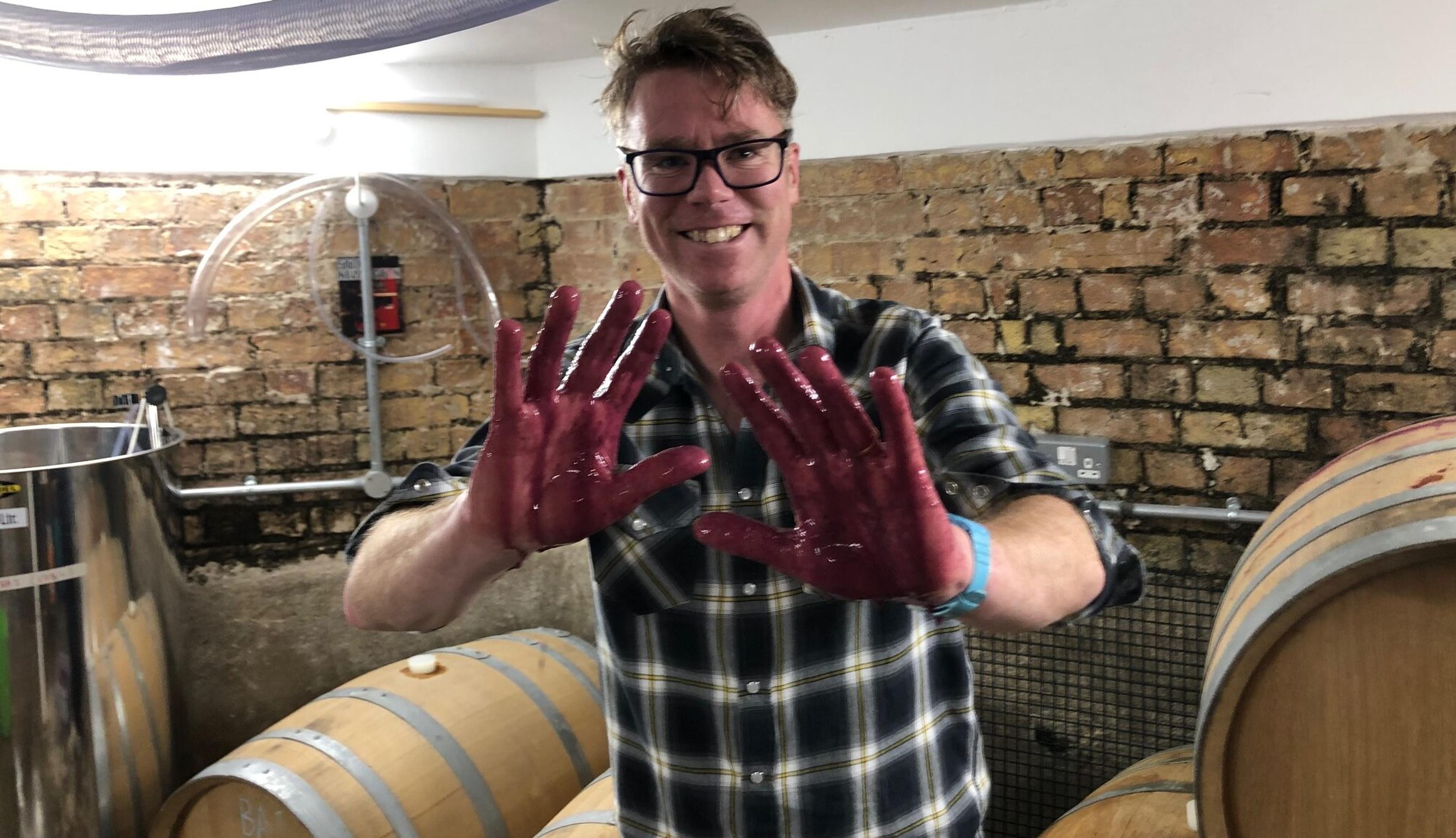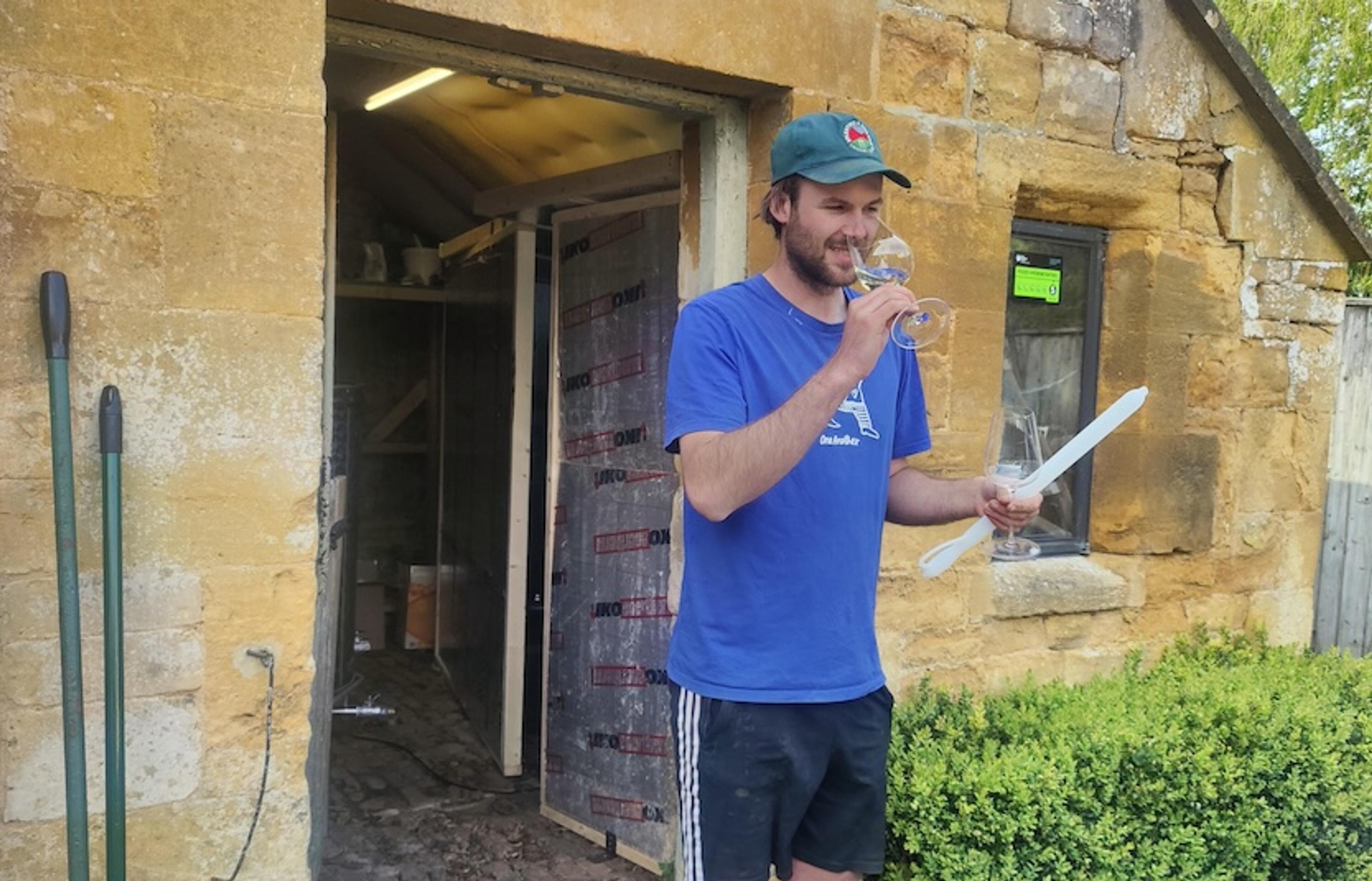

"It was actually through graphic design that I got into winemaking," George Loat told me, standing in the small courtyard outside his micro-winery, three small stainless-steel tanks of Bacchus and a couple of barrels of Pinot fermenting silently behind us.
He was studying at London Central Saint Martins when COVID hit and, rather than remote learning from an expensive London rental, he moved home and deferred the final portion of his degree. Not one to vegetate in front of the Xbox, he contacted a friend who was volunteering at Le Mazelet, a small winery in France’s remote and beautiful Cévennes, to ask if he could come and help too.
“The owner said yes! I thought it would be all sun, free wine – a free holiday really. But I soon discovered there’s a lot more to making wine than meets the eye. After a few weeks I really fell in love with the people and process. I stayed for three and a half months and worked the 2021 harvest.”
During the long cycle – yes, cycle – home from the south of France to Morton-in-Marsh, Loat decided he wasn’t finished with winemaking: he wanted to work another harvest.
“In 2022 I visited Zorzal in Argentina and mentioned that I’d just done a harvest in France – the winemaker immediately asked me if I wanted to stay and do another. Zorzal was a much bigger winery, everything was much more intense and more technical,” offering a completely different perspective on winemaking.
During his time there, Loat met Emi Tourano who was working on a personal project making wines with his friends in a shed.
“I went over there to help him at the weekends. It was interesting because the quality of the wines he was making was unbelievable, but the equipment was so basic and rudimentary. While I was helping him, I started to think, well, if you can make wine in your shed to this level of quality, there’s no reason why I can’t. […] This idea started to brew in my mind until I got back to England, and I thought, I need to do this, I’m itching to do this.”
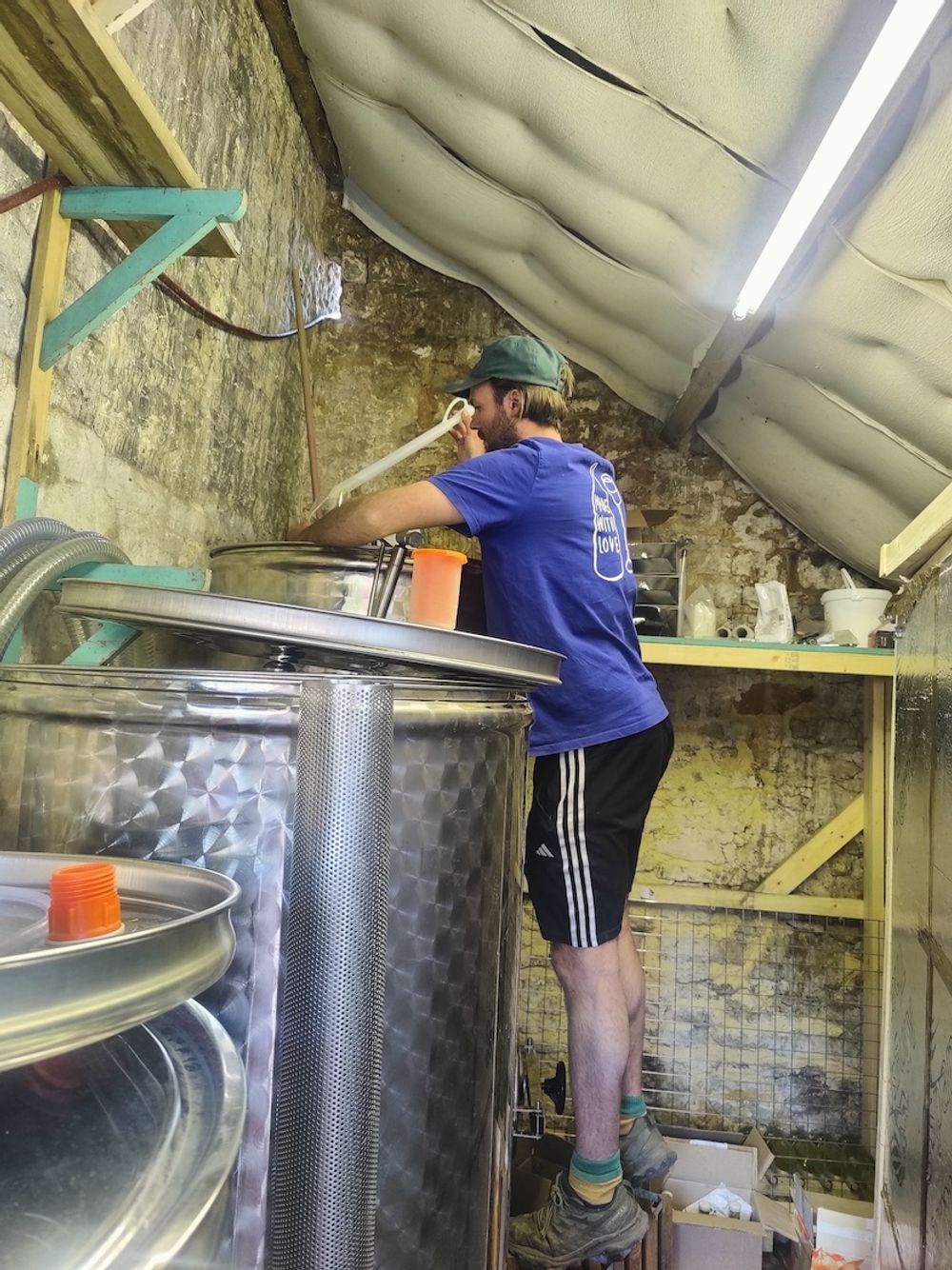
George Loat of One Another winery
“My parents thought I was a nutcase!”
When he got home and shared his big idea with his parents, they thought he was mad.
“But I was determined. The biggest challenge was funding it – I got back from Argentina with nothing, so I did a Kickstarter campaign. People were interested, and I just about raised enough money to buy the tanks, the barrels, and everything I needed to make my first batch. I had all this money and then I thought: what do I do? I’ve promised all these people I’m going to make wine, but I don’t have any grapes! This was obviously quite a big problem,” he says.
“It was a disaster!”
“I started phoning up lots and lots of people,” he adds. “Like, any vineyard. In 2022 I didn’t know anything about English wine or who was helpful. I was right at the bottom trying to figure it all out.”
Many phone calls later he stumbled across Dale Simmons at Clayhill Vineyard in Essex’s Crouch Valley, who not only promised to sell him some Bacchus, but was able to accommodate the tiny quantities he was looking for.
“Then I didn’t hear anything, for ages,” says Loat, the anxiety he felt at the time still discernible in his voice. “And then suddenly he calls me and was like ‘yeah your Bacchus is ready, can you pick it up tomorrow?’ And I was like, What!? So, I had to phone all my friends and find someone with a pick-up. Six of us drove down early in the morning, picked this tonne of fruit, and then came back here and I tried to replicate what I’d seen in France and Argentina – and it was a disaster!”
“I didn’t have the confidence. It’s easy in your mind, you can think, I’ve seen how they do it, you just move this here, pump that, add this, add that. But as soon as you’re doing it by yourself, you suddenly realise there’s a depth to making wine. There are so many people who just say, ‘we’re so hands-off, we do nothing’, but it does still require a level of knowledge to know that it’s going to go where you want it to go.”
That tonne of fruit Loat picked with his friends should have given him 600 bottles.
“I ended up with about 300 – I made so many mistakes. But it was all part of the process. The second year was 600 bottles, the third 1,000, and the fourth, 2025, gave me enough for 2,300. It’s growing modestly and the wine is well received. It’s fun,” he explains.
Loat attributes his success to the people he has learned from and collaborated with along the way. After he "messed everything up" that first year, Loat got back on the phone and called his contacts in the Cévennes, Argentina, and the Crouch Valley to go over everything that went wrong.
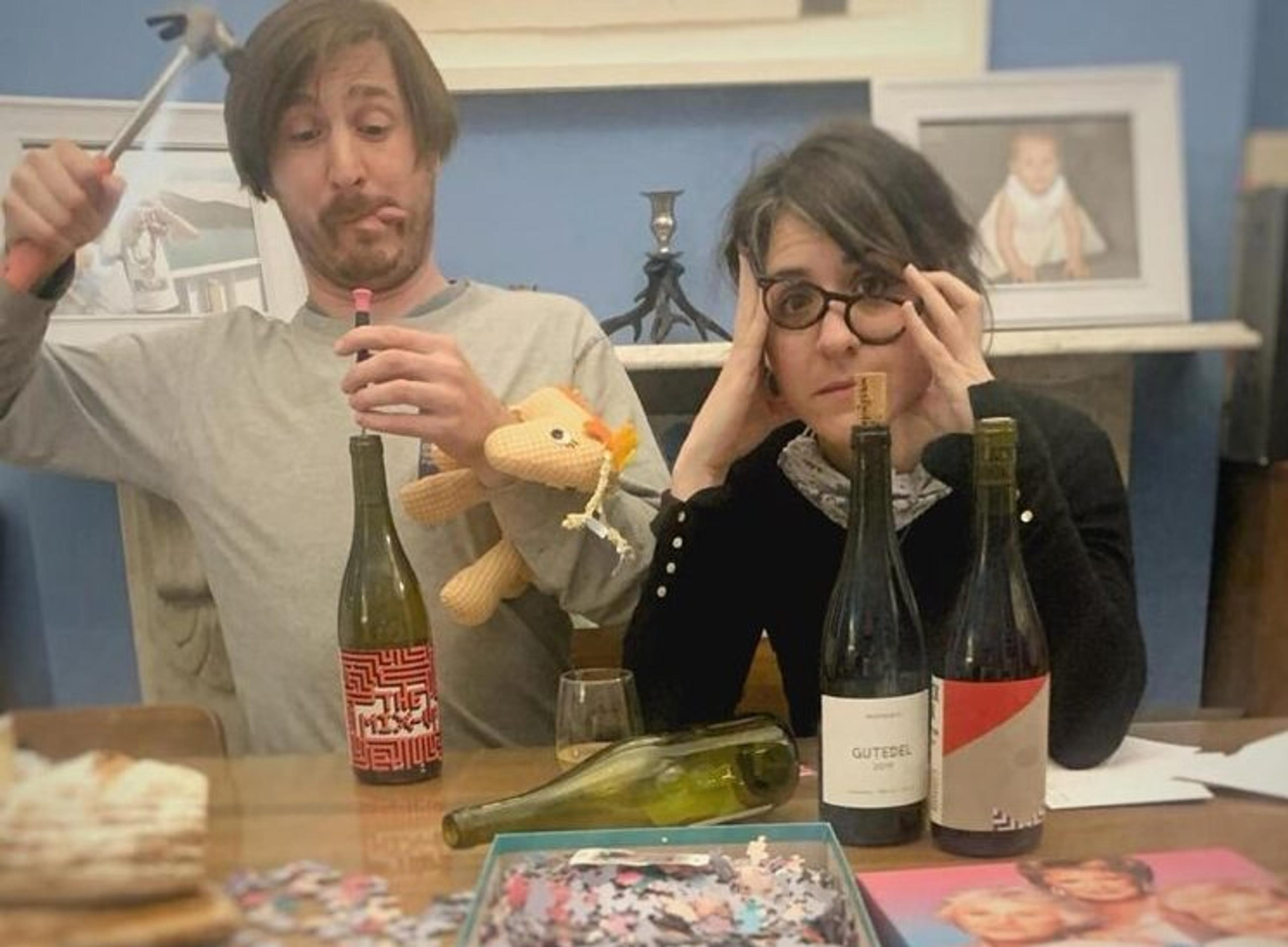
“I’ve used that as a tool over the last few years,” he says. “I’ve just had this constant rolling dialogue between four or five top winemakers who’ve been doing it for over 20 years. I’ll describe flavours and body and structure over the phone from Morton-in-Marsh to Mendoza. And, obviously, these people have never tried the wine either – so it’s quite a funny process, because it’s difficult to communicate about something that’s to do with the senses when the other person can’t directly sense it for themselves.”
One Another winery
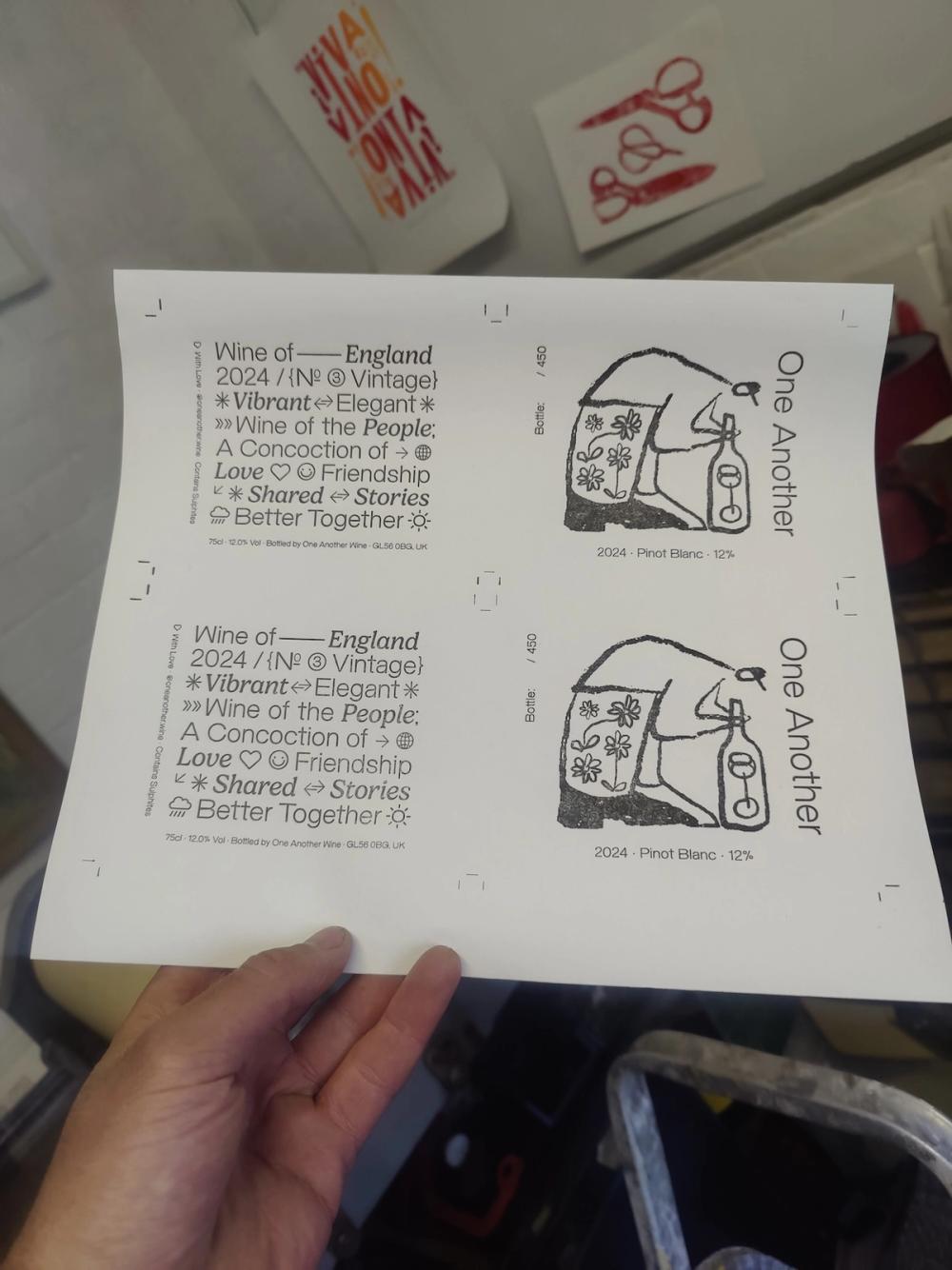
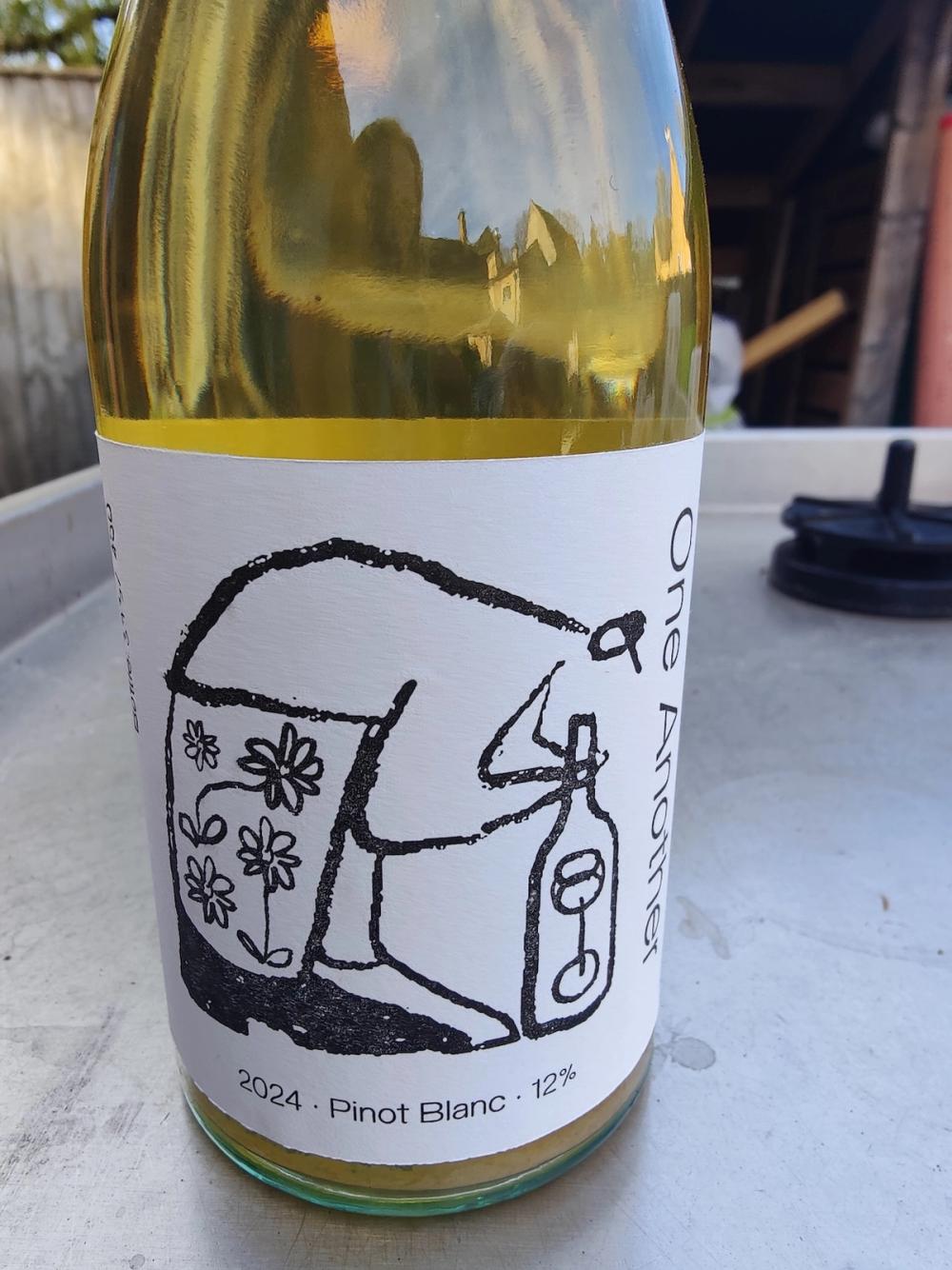
It's this spirit of collaboration and collective learning that inspired Loat when the time arose for him to come up with a name and look for his brand. He co-designed the labels with a friend he met at university and hand printed them on a vintage press of his dad’s.
“It’s really laborious and inefficient, but it’s so worth it,” he says. “And I chose the name One Another because it’s a reflexive pronoun referring to when two people do something together but also for each other. I’ve learned so much from my collaborations in France and Argentina and The Crouch Valley.” The name is a tribute to this.
In this sense, One Another is inspired by the sharing, learning, and connecting across borders that have made Loat’s wines possible. It’s a powerful message and a very impressive story from a small batch winery tucked away in a 20-something’s parents’ shed in Morton-in-Marsh. I can’t wait to see what George Loat does next.
The wines
One Another winery
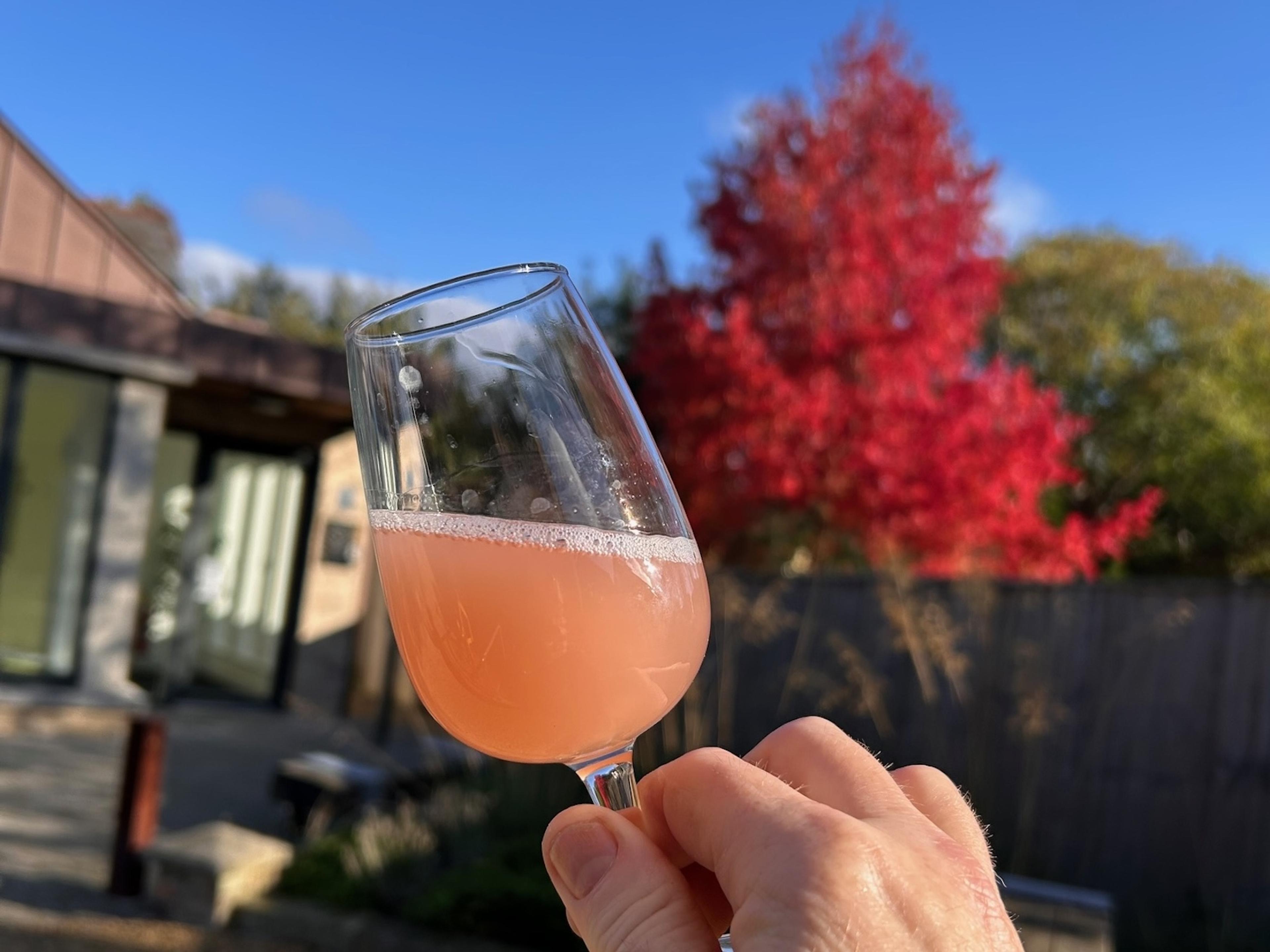
Loat gave me a sneak preview of the 2025s from tank and barrel and I found them as compelling as the story behind them. Made from grapes from The Crouch Valley and fermented following an ethos of "minimum intervention, maximum information" he picked up in Argentina, Loat’s wines are all made using a light-touch.
One Another Bacchus 2025
(tasted from tank approximately two weeks before bottling)
Inspired by a technique he learned fermenting Semillon in Argentina, the grapes underwent a short, 12-hour maceration on the skins. Loat then pumped off the juice and left the skins to macerate for a further three to four days before gently pressing them. He then added a small percentage of this to the free-run juice to create some of the qualities of an orange wine without any of the astringency.
On the nose it’s super vibrant and fresh with aromatic scents of apple blossom, pear skin, elderflower, and a tangy hit of gooseberry. The palate is lovely and rounded considering the variety and its youth. It’s all apples and pears and zingy fruit with bright, fine-tuned acidity – I can’t wait to try this now it’s bottled.
One Another Pinot Blanc 2025
(tasted from tank, yet to undergo MLF and will spend time in barrel before release)
Loat ferments 50% of his Pinot Blanc in stainless steel and 50% in 16th use Burgundy barrels. The nose is very pretty indeed: all green melon, unripe peach and nectarine with a hit of white almonds and a fresh lemony twist. It’s more full-bodied on the palate than I expected, with well-balanced freshness. This will be lovely.
Pinot Noir 2025
(tasted from tank, will spend several months in barrel before release)
There are three different fermentation processes behind the One Another Pinot Noir. One third ferments at 14-15°C to reduce extraction; another third undergoes more punch-downs at 23-24°C; and the remainder is worked harder at 28°C. This is all then blended to produce a wine combining floral notes with darker fruit.
I tasted the freshest, floral component, which was bright and delightful, full of scents of tart cranberry, wild strawberry, violets, and a lot of sour cherry. The palate was crunchy and perfumed, showing lovely red berry fruit and a little hint of funky undergrowth that reminded me of the best German Pinots. Very elegant indeed.
You can buy One Another wines at: Daylesford, Moreton Wine Merchants and The Grape Escape (Cheltenham).