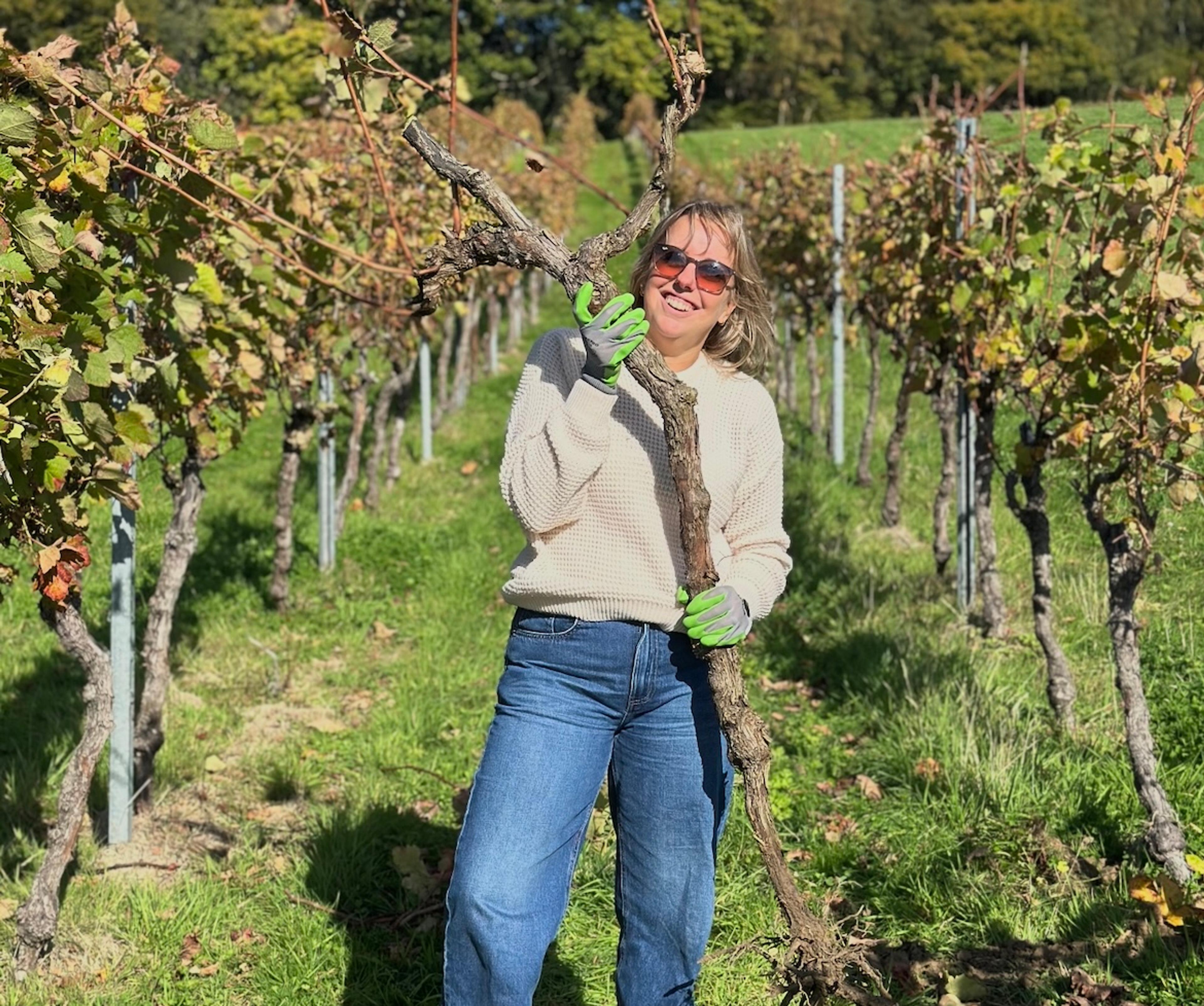
There is something symbolic about digging up a vine. When I was invited to Bolney Wine Estate for two landmark moments in its redevelopment programme, first helping grub up one of the estate's old vines in October 2025, and then planting one of its replacements to mark English Wine Week 2026. Standing in the vineyard, it was impossible not to reflect on the contrast between the two moments. One vine represented decades of history; the other is unlikely to reach its full potential for another seven to 10 years.
For Bolney, however, this isn't simply about replacing old vineyards. It is a strategic investment in the future of the business.
More than replacing old vines
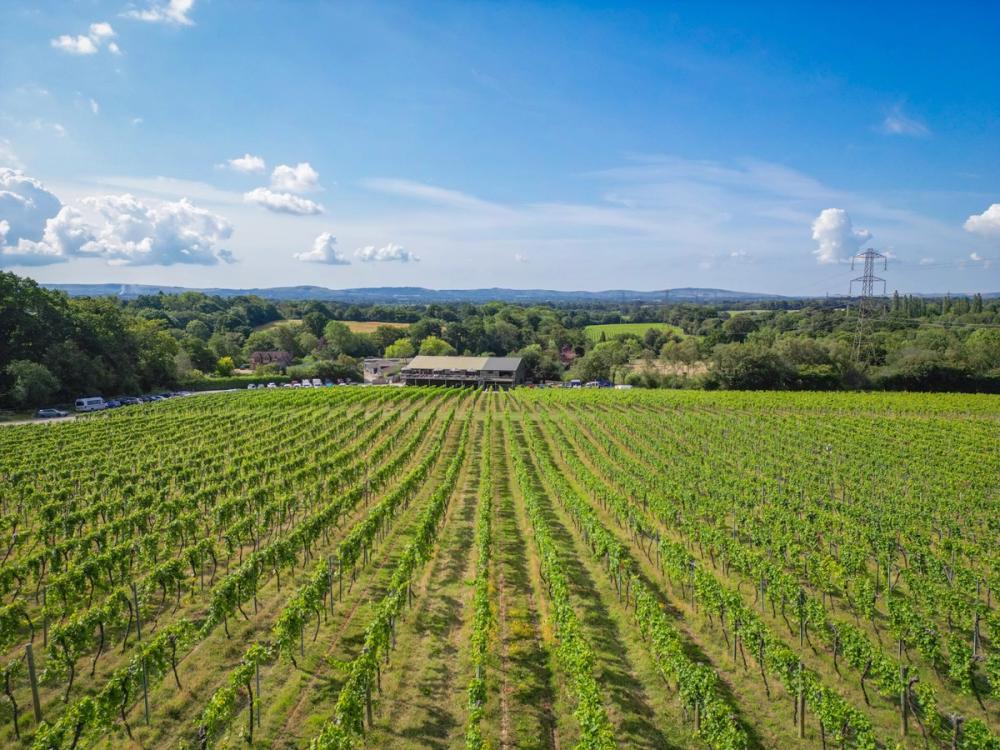
Before and after: Bolney has taken the bold move to replace 8ha of vines on its estate in Sussex and replace them with classic Champagne grape varieties
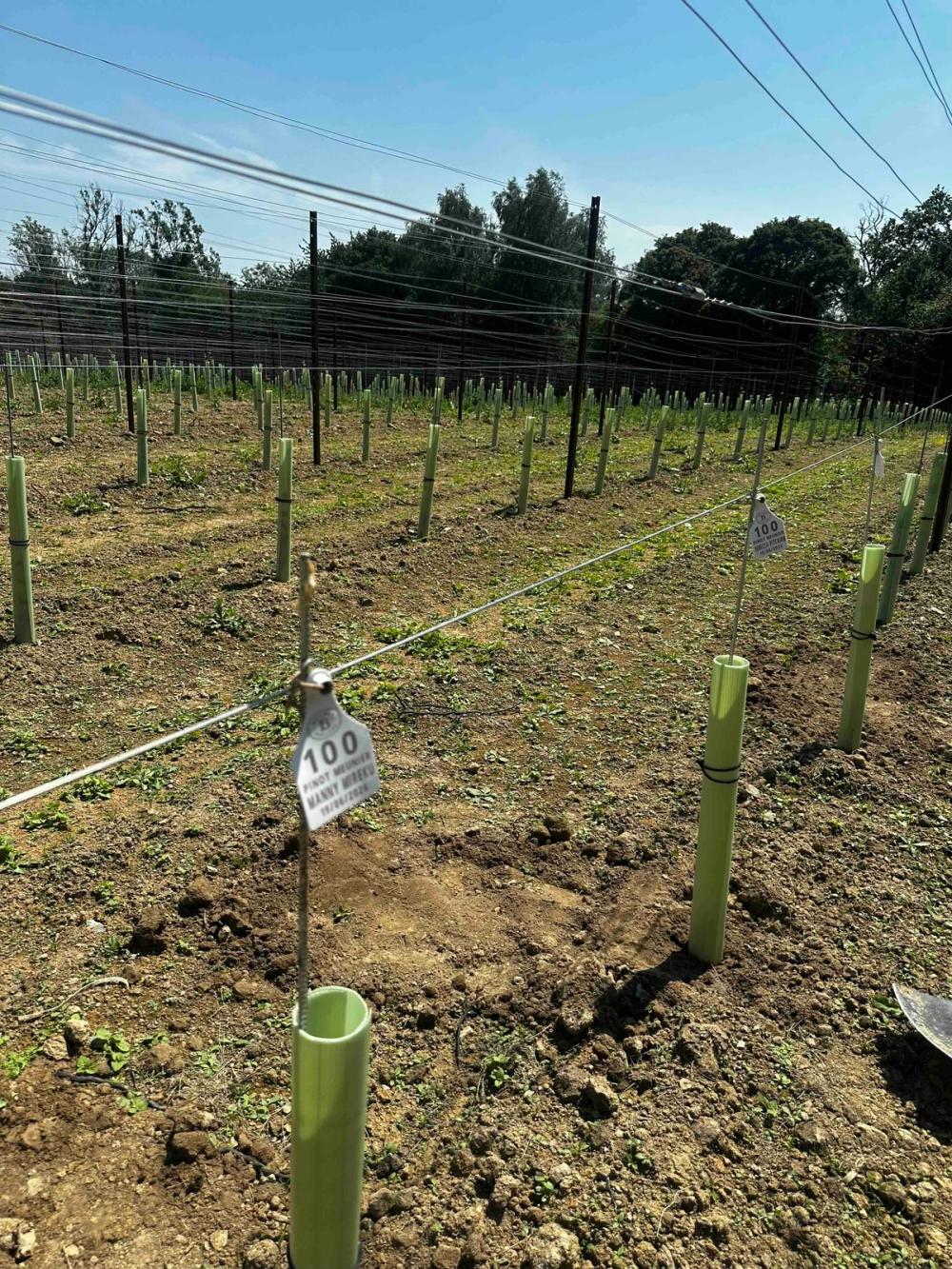
Bolney has replaced 8ha of vines on its estate in Sussex and replanted with classic Champagne grape varieties
The first phase of Bolney's redevelopment saw approximately two-thirds of its original vineyard grubbed up during autumn 2025. Around 16,000 new vines were planted in spring 2026, with the remaining older vines due to be removed after the 2026 harvest and a further 5,000 planted in spring 2027.
The decision wasn't driven solely by the age of the vines. The older vines were felt to be no longer delivering the consistent high-quality fruit required for its increasingly premium-focused portfolio.
Many dated back to the 1970s, 80s and 90s and were naturally becoming less productive and more susceptible to disease.
"When the original vineyard was planted, producers were still discovering which varieties would succeed in England," explains the Bolney team. "Today we have a far greater understanding of our soils, our climate and which combinations of varieties, clones and rootstocks will deliver the quality we are aiming for."
The project forms part of a long-term strategy to future-proof the estate for the next generation.
From experimentation to refinement
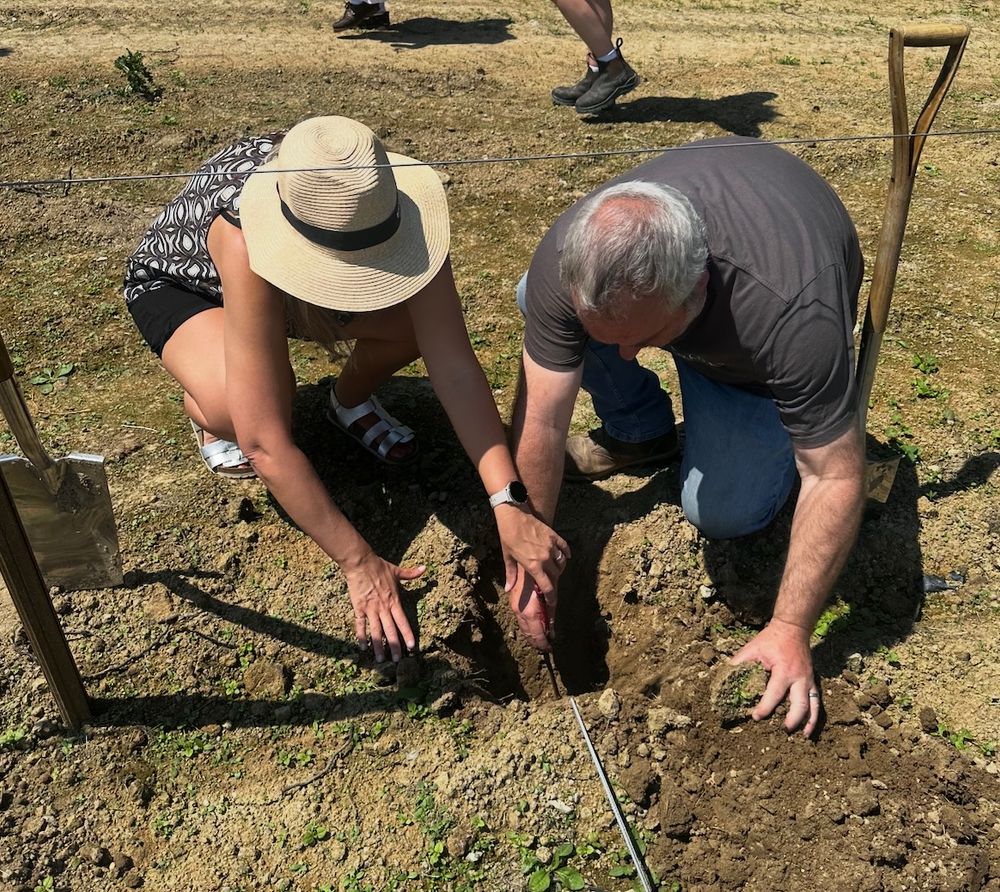
Bolney says it now has a greater understanding of what vines are best suited to its terroir and climate
The replanting programme also reflects the huge changes taking place across English viticulture.
For the vines being removed produced Dornfelder and Rondo grapes that played such an important role in the early development of English wine. Today, however, the estate is replacing them exclusively with Chardonnay, Pinot Noir and Pinot Meunier.
Choosing what to plant involves balancing multiple factors, including vineyard performance, soil composition, drainage, aspect, disease pressure, market demand and the overall direction of the business. Every vineyard block has its own characteristics, and matching the right grape to the right site is one of the most important choices a wine estate can make.
The decisions made by the Bolney viticulture team reflect not only consumer demand, but also the new found confidence and understanding what you can do with Sussex’s unique terroir. Rather than simply selecting grape varieties, the Bolney team has carefully chosen individual clones and rootstocks based on detailed analysis of the estate's soils and changing growing conditions.
Bolney has long been recognised for producing approachable, fruit-forward wines that appeal to a broad audience. However, English wine itself has evolved significantly over the past two decades.
Consumers are increasingly interested in provenance, site expression and premium wines with a strong sense of place, the replanting programme reflects that evolution. It demonstrates confidence not only in the future of English wine but also in Bolney's ability to continue refining its offering.
By focusing on varieties that have consistently proven their value, the estate is investing in quality, consistency and long-term sustainability.
The aim is to improve disease resilience, vineyard performance and fruit quality while expressing the site's unique characteristics. It also aligns Bolney more closely with premium traditional-method sparkling wine production, reinforcing both international recognition and long-term commercial positioning.
Greater understanding

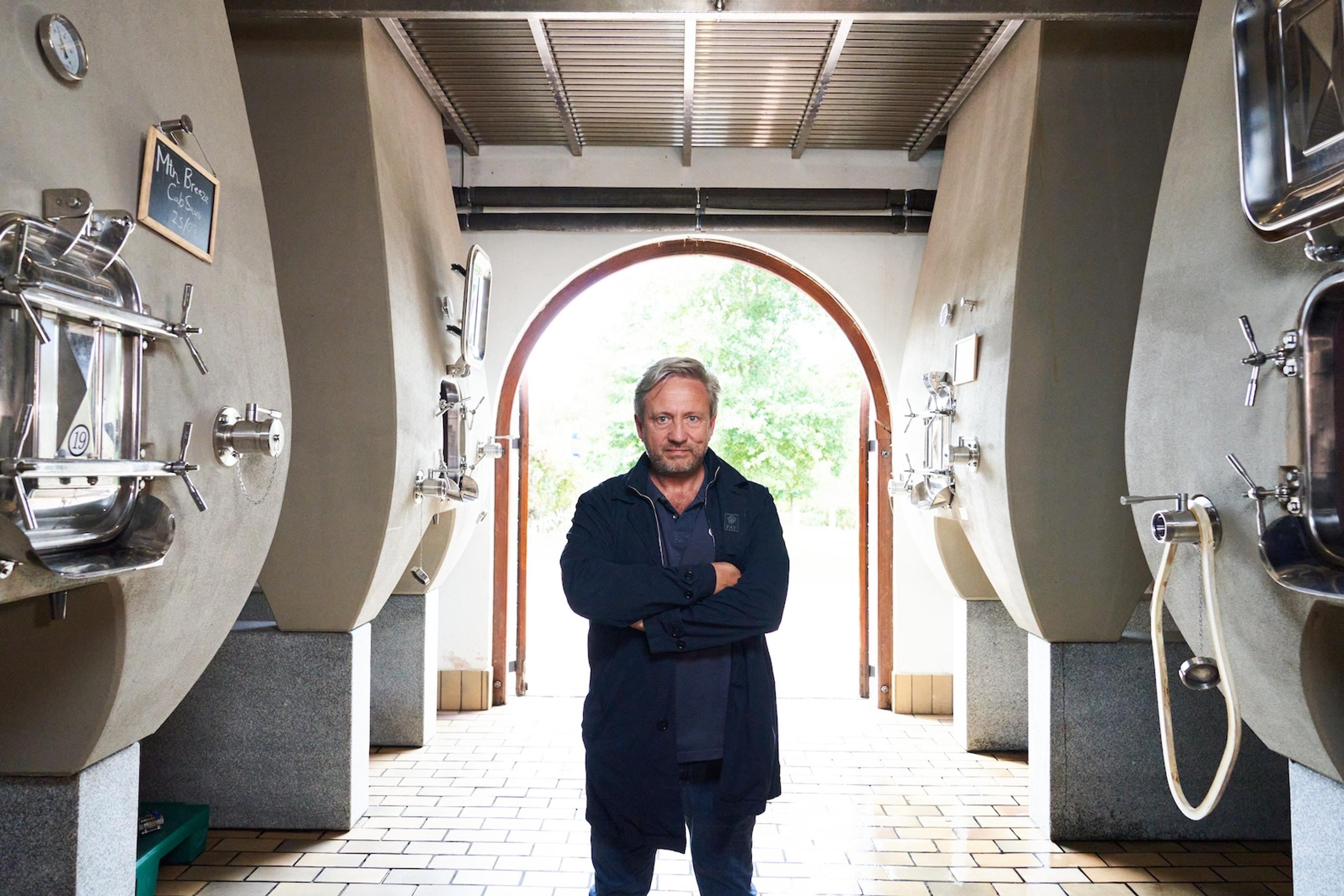
Rob Hilton, Bolney's operations director: “We know so much more now about vines than we did 20 years ago."
It also shows English wine producers now have a far greater understanding of their sites, and how much viticultural practices have evolved, and climate conditions have shifted. Also as the rest of the world begins to really see the potential in English wines, producing wines that consumers know and want.
It was easy to see this wasn't simply a case of replacing old plants. It was about applying years of knowledge and experience to shape the next chapter of the estate's story.
This is how Bolney’s operations director, Rob Hilton, explained the process to The Buyer in an interview in January: “We know so much more now about vines than we did 20 years ago. We are now putting in the best Champagne clone varieties for the soils we have here.”
While the newly planted vineyards will ultimately represent only a small percentage of the estate's overall production - around 8% with the rest coming from long-term trusted growers - they play an important role in its long-term vision. The older Dornfelder and Rondo vineyards reflected a period of experimentation, the new plantings reflect a period of refinement.
As the English wine industry matures, producers are increasingly focusing on varieties that align with consumer demand and the styles of wine they want to be known for.
For Bolney, Chardonnay, Pinot Noir and Pinot Meunier offer both versatility and quality potential, allowing the estate to continue developing premium wines that showcase the character of Sussex. Rather than dramatically changing the range, the new vineyards will help strengthen and support the estate's existing direction.
Playing the long game
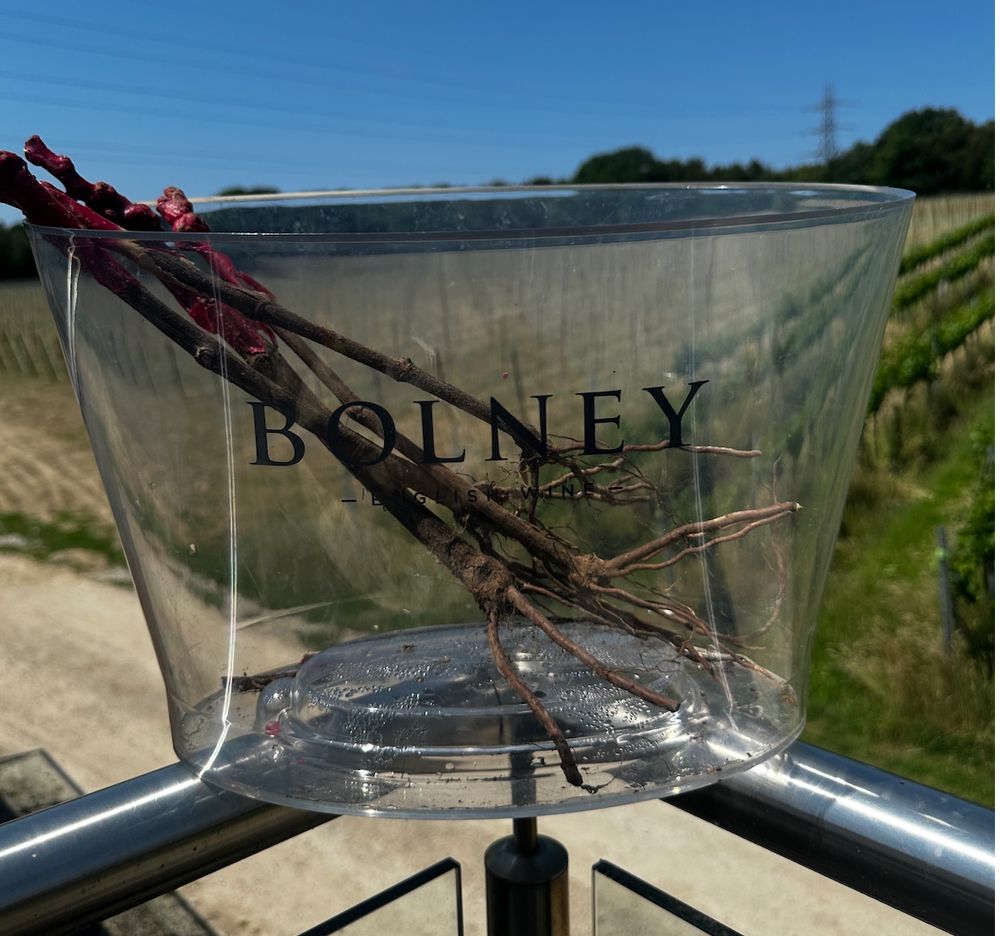
Bolney's commitment is a long-term one as it will take up to seven years for the newly planted vines to be producing commercial grapes
One of the biggest misconceptions about replanting is how quickly those decisions translate into bottles. The newly planted vines are expected to produce usable fruit after around three years, while full and consistent yields are likely to take between five and seven years.
As I planted one of those young vines, it struck me that the first people to enjoy its fruit may have little idea of the planning behind that moment. Every vine planted today is an investment in wines that may not be fully realised until well into the next decade.
Maintaining supply during transition
Replanting almost an entire vineyard inevitably raises questions around production. Bolney's answer lies in its grower relationships. The estate now works with growers across Sussex, Kent and Essex to source additional fruit. While these partnerships provide continuity during the redevelopment, they are also a permanent part of Bolney's business model, enabling the winery to maintain volume while complementing estate-grown fruit with high-quality grapes from across the south east of England.
Rather than being a temporary solution, sourcing fruit has become an integral part of Bolney's long-term production strategy.
Investment beyond the vineyard
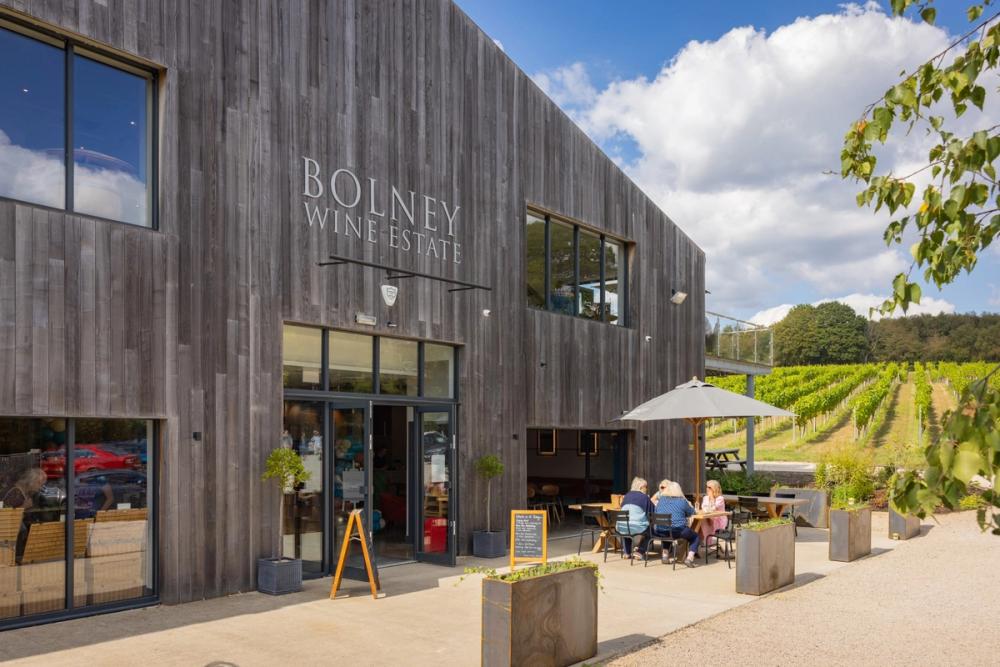
The redevelopment forms part of wider investment following Bolney's acquisition by Freixenet Copestick in 2022. Alongside improvements to hospitality, production facilities and winemaking infrastructure, the vineyard redevelopment demonstrates confidence in both the estate and the future growth of English wine.
A large proportion of Freixenet Copestick’s investment is going into the Bolney winery, which is now capable of handling 500 tonnes of fruit per harvest and producing 500,000 plus bottles.
The objective is clear: to strengthen Bolney's reputation as a producer of premium English sparkling wine while increasing consistency, quality and long-term production capacity.
A reflection of the industry
Bolney's redevelopment is about much more than replacing 21,000 vines. It reflects the wider evolution of English wine itself. The industry's first generation of vineyards proved what was possible.
Today's producers are refining those early decisions using decades of viticultural knowledge, improved plant material and a clearer understanding of their own sites.
Helping remove one of the estate's oldest vines before planting its replacement offered a rare glimpse into that transition. For Bolney, the removal of Dornfelder and Rondo marks the end of one chapter. The planting of Chardonnay, Pinot Noir and Pinot Meunier marks the beginning of another.
While the vines themselves are still young, the vision behind them is already firmly rooted in the future.
Not just for Bolney, but for a maturing English wine industry increasingly focused on quality, consistency and international recognition.
* You can find out more about Bolney Wine Estate here.