Regenerative viticulture seems to be the buzz word highlighted by every winemaker that one bumps into these days. In simple terms it is about going back to nature sustainably. Coming from a Michelin food background I have seen this happening with food produce for over twenty years, not of course in every aspect, but terms like ‘day boat’, ‘line caught’ and ‘hand dived’, have been common since the early 2000s. Farming with animals moved away from organics many moons ago, with the best farmers concentrating on welfare and care, especially in the way they looked after the animals’ bedding, environment and feed.
The wine industry, and the outer world, is facing some tough challenges; climate change, soil degradation, and very importantly changing consumer tastes. Sustainable wine growing is about finding ways to minimise these impacts while still making the best wine possible, from being responsible with resources, using fewer chemicals, and keeping the balance in the vineyards, and importantly keeping up with consumer trends.
Regenerative viticulture tries to take sustainability to the next level. It is about restoring and reviving our soil, biodiversity, and the whole ecosystem.
Masterclass over London
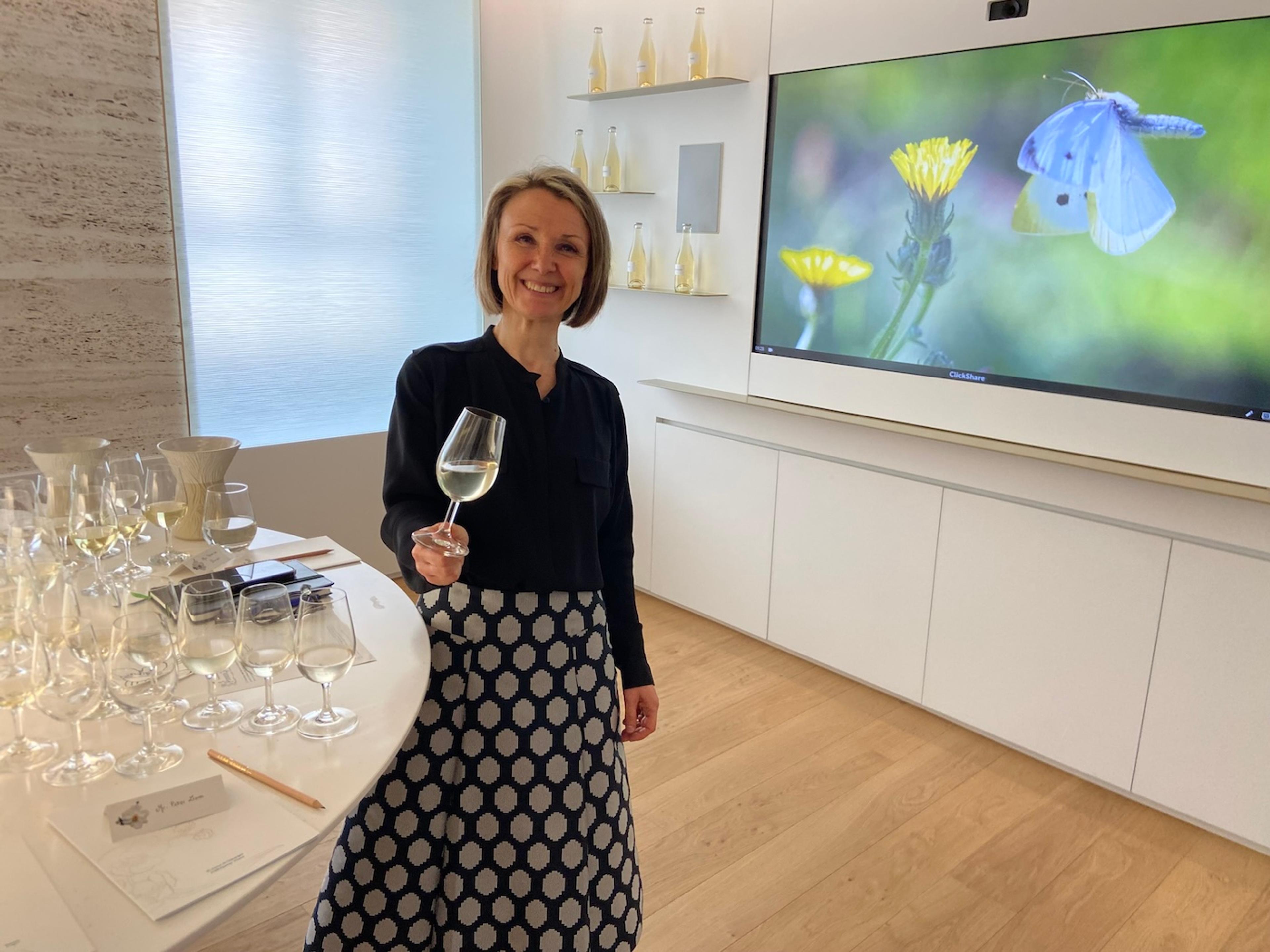
Last week Séverine Frerson, cellar master of Maison Perrier-Jouët, hosted a masterclass at Gordon Ramsay’s Lucky Cat sitting on the 60th floor of 22 Bishopsgate, the tallest building in the City of London.
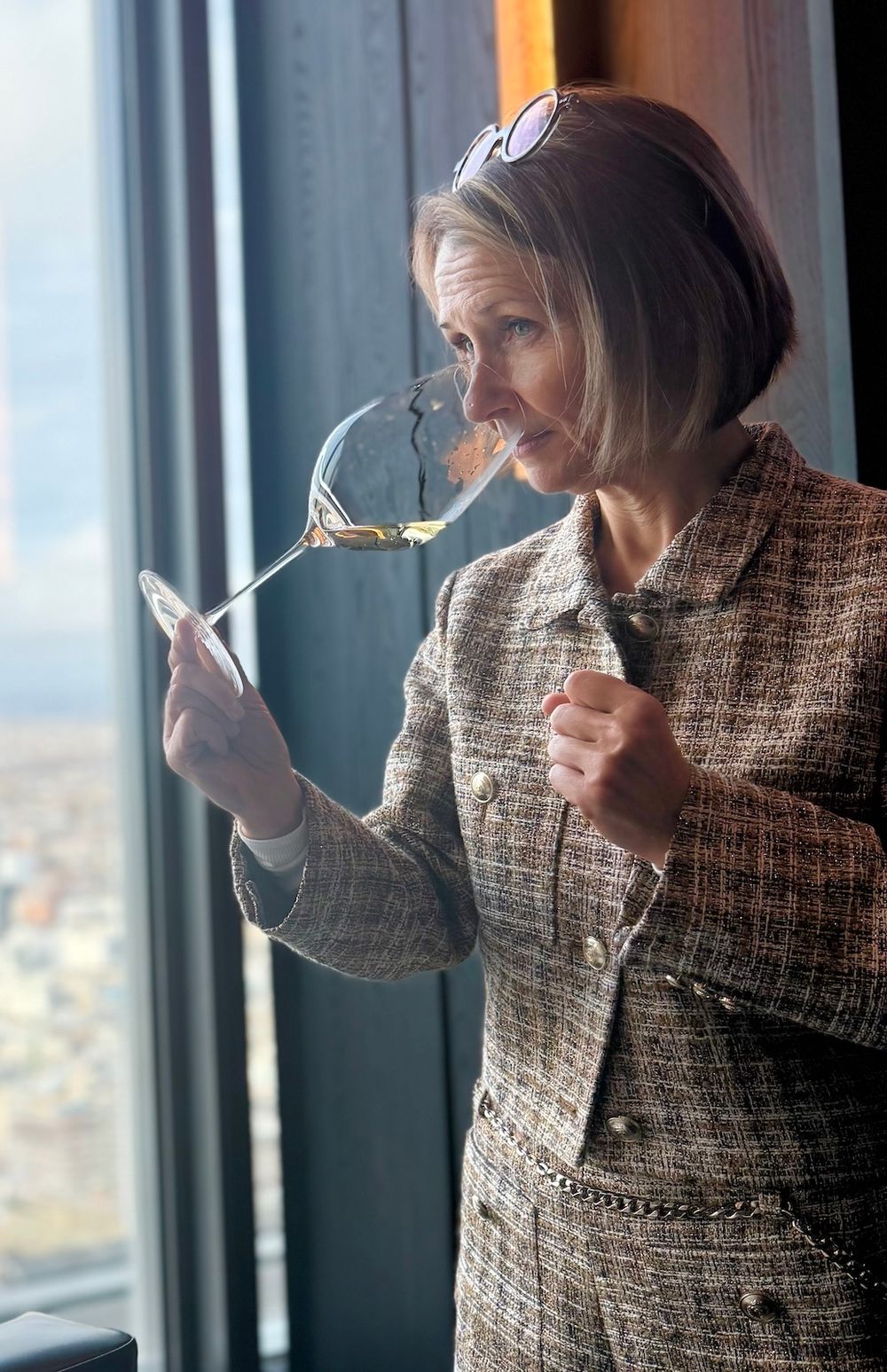
Séverine Frerson at Lucky Cat, London, November 12, 2025
Frerson highlighted her work in the vineyards with biomass cover crops and flowering cover crops. Biomass cover crops are sown after harvesting and grow in the spring, these provide nutrients that promote biodiversity in the soil (bacteria, earthworms, and fungi). These crops include forest rye, faba bean and clover. Whilst flowering (both wild herb and leguminous plants) crops offer food and shelter for pollinating insects, as well as helping the impact of nitrogen. Vitiforestry is another buzz word and reflects the planting of not only trees but bushes as well, forming hedgerows, thickets and copses.
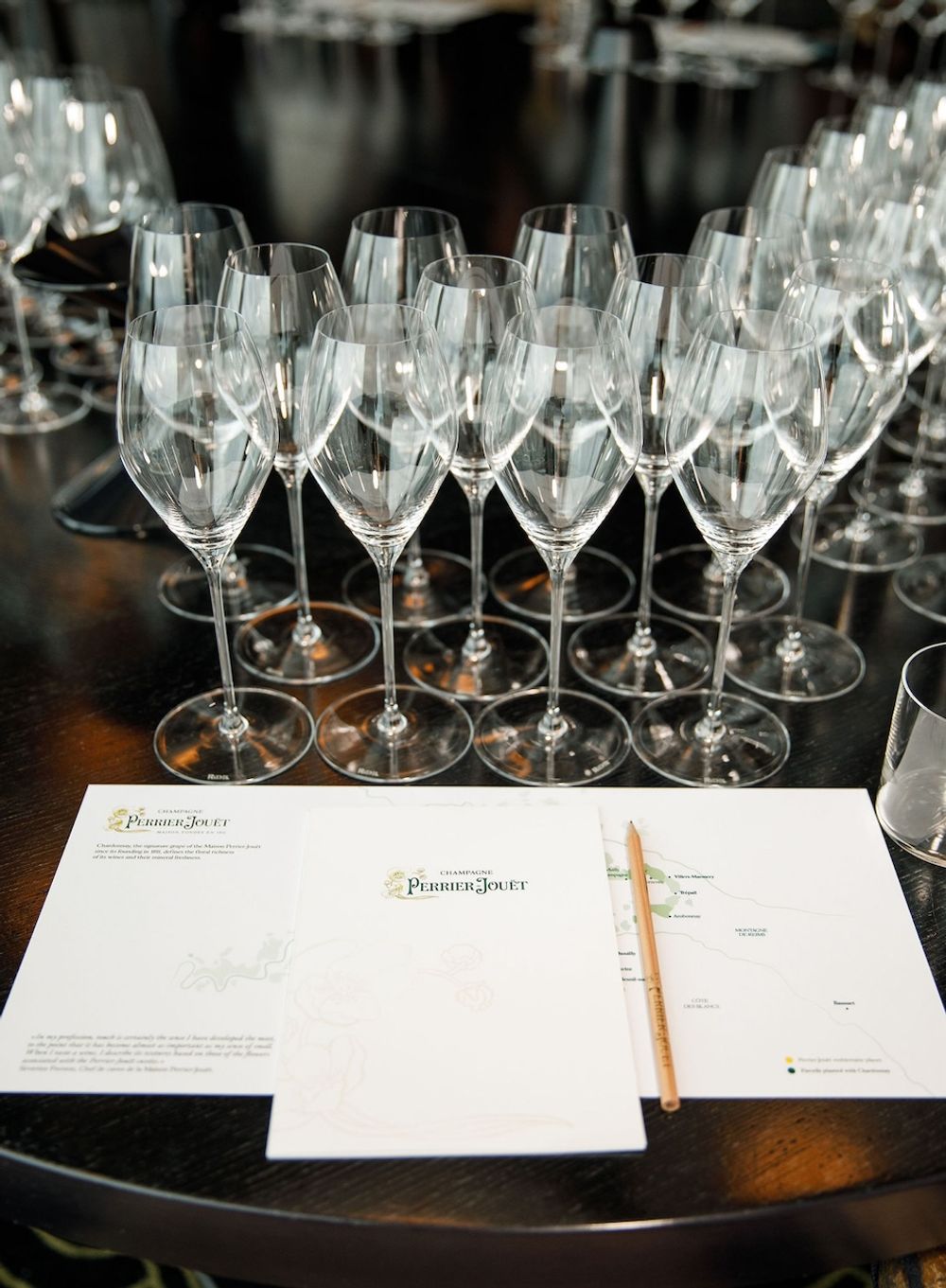
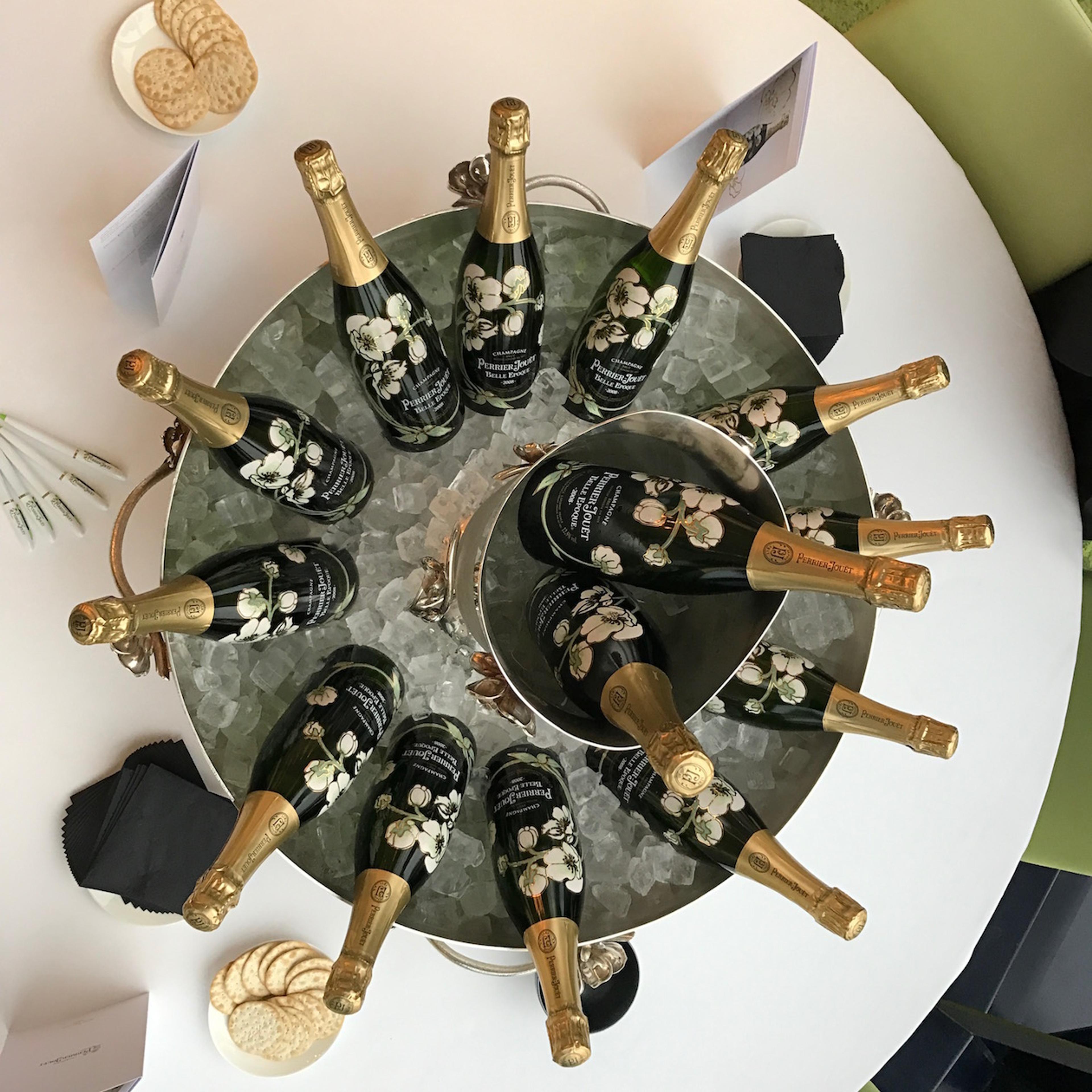
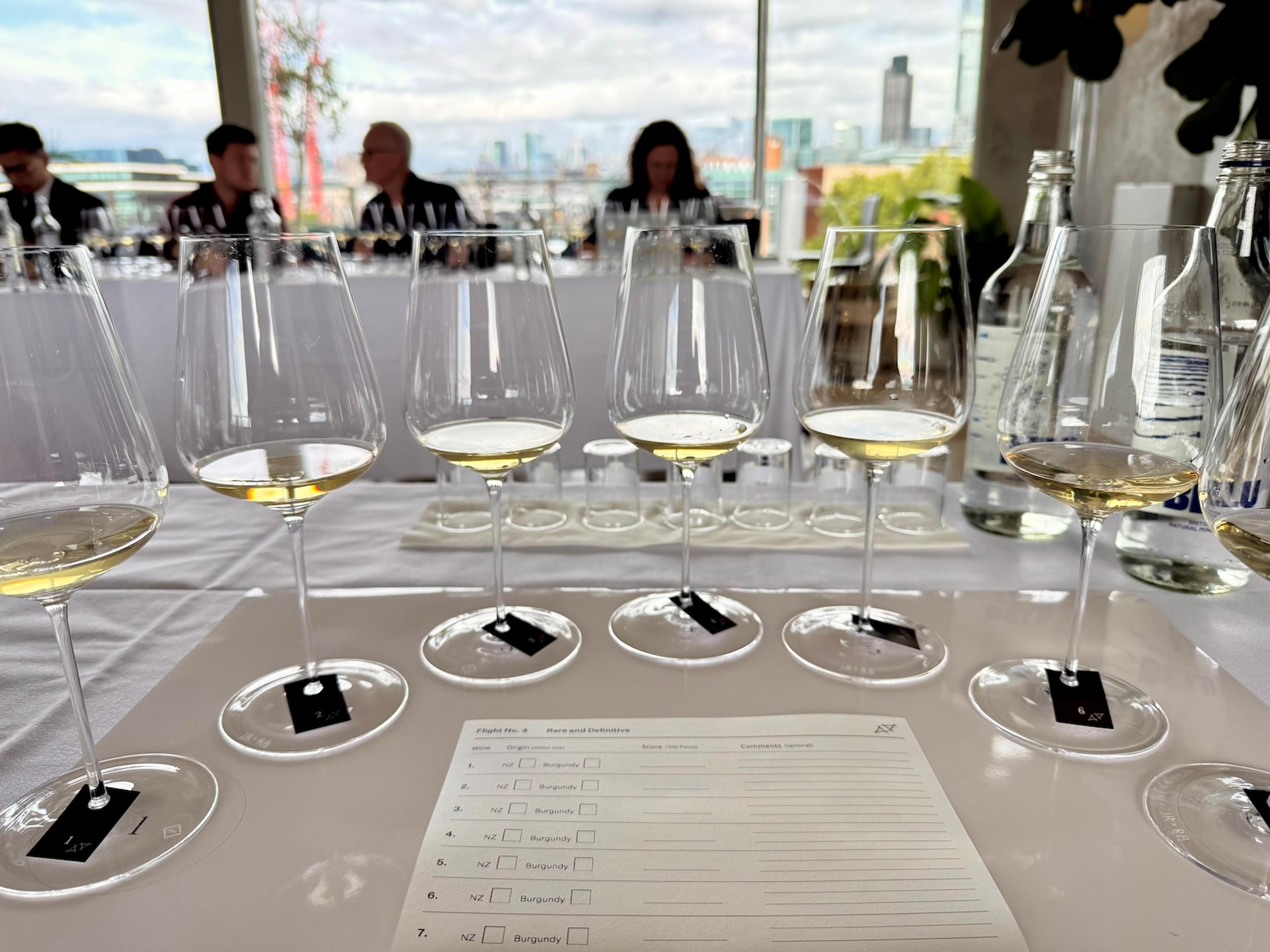
The masterclass was three-fold, one was to taste the ‘clear’ (base/still) wines that form the 2025 vintage, reflecting on each parcel and how each attribute in its own way to the overall vintage, secondly Frerson discussed her journey with regenerative viticulture and thirdly to taste the prestige Perrier-Jouët Belle Epoque range.
Having tasted base ‘clear’ wines many times over the years, it is interesting that these in general are becoming a lot purer than in the past, in fact quite pleasant to taste, which has not always been the case. Whether this is down to viticulture or just more care I am yet to work out.
Perrier-Jouët is led by Chardonnay, and it was clear the difference each village brought to the table. The Chardonnay from Avize gives stone fruit and floral notes, delicate freshness, whilst Chouilly gives more fruit and lemon citrus notes with refinement, and Villers-Margery offers roundness, a fuller texture, nutty notes and nectarines. The final blend for Belle-Epoque is made from parcels of Pinot Noir from Mailly Champagne and Lude with Pinot Meunier from Vallee de la Marne.
Perrier-Jouët Belle Epoque is the original Belle Epoque vintage cuvee, first appearing in 1964. The famous design on the bottle was commissioned by Art Nouveau master Emile Galle in 1902, depicting Japanese white anemones. Frerson highlighted this by saying; “At Perrier-Jouët it all started with a flower.”
Tasting the wines
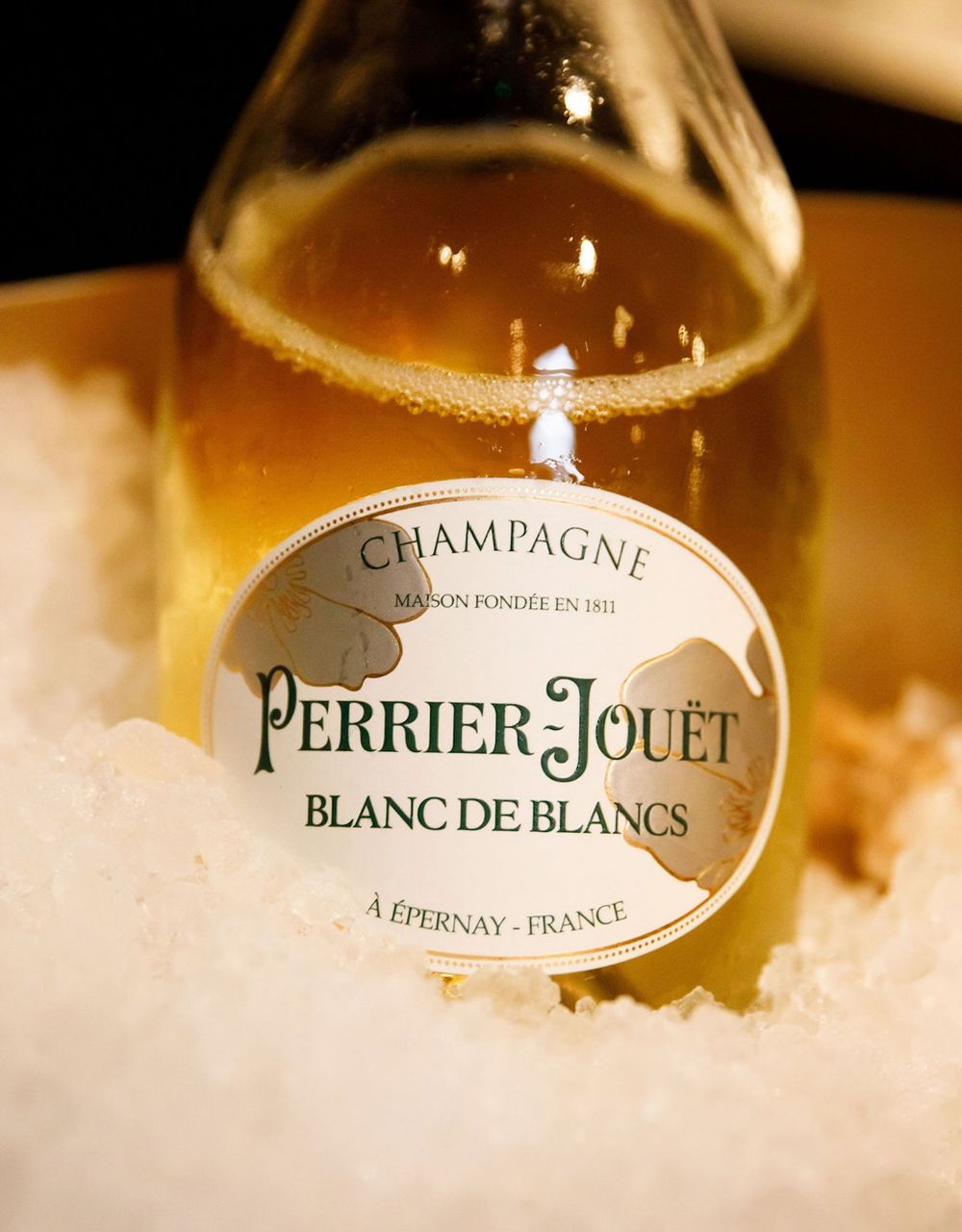
Perrier-Jouët Blanc de Blancs Non-Vintage (from Magnum)
To be honest I had not tried this Blanc de Blancs before, and I was impressed by the quality for this non-vintage champagne, I am sure it helped by being in magnum, but this was a joyful experience and delivered a wine of great elegance and refinement. A gentle floral note with essence of peeled stone fruit, it has brightness and freshness, it has a lovely purity and richness that combine well.
Perrier-Jouët Belle Epoque 2013 (from Magnum)
Ginger, lime zest, yellow peaches, fabulous purity and freshness, mandarin notes, pink grapefruit. This is drinking so well, delicate refined floral notes, honeysuckle with a fruity zesty uplifting balance. Quite stunning and perfect in a magnum.
Perrier-Jouët Belle Epoque, 2016
Spiced with a meaty context, beady notes, evolves in the glass with a silky, aromatic spiced feel, ripe apricots and white peaches, baked crusty bread, elderflower, pepper and allspice.
Perrier-Jouët Belle Epoque 2015
Fabulous Goldman gleaming colour, rose-hip, hedgerow herbs, nutmeg and cumin, with juicy pear William. There is a lovely brightness to this glowing wine – ginger biscuits and essence of white nectarines, bakery notes and ‘Italian meringue’, fresh zesty notes with an alluring white floral feel.
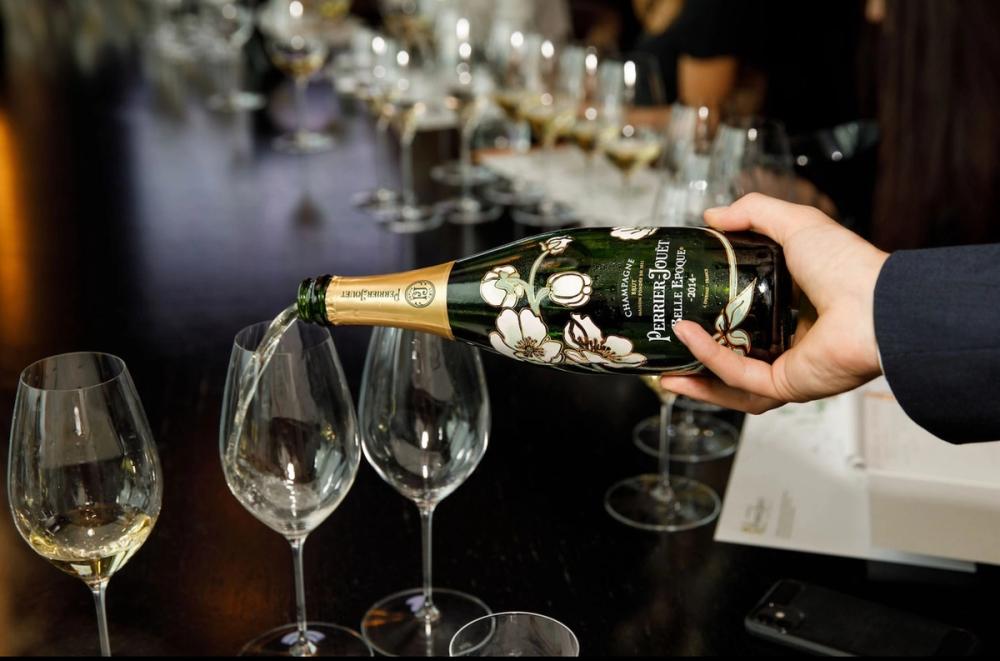
Perrier-Jouët Belle Epoque 2014
Vanilla notes, beautiful perfumed aromatics evolve from the nose, then a fruit bowl of perfect stone fruit with delicate floral notes, refined and pure, an exceptional one. White peaches, vanilla custard cream, textured, ginger crumbs, spice and freshness combine well together.
Perrier-Jouët Belle Epoque 2011
Hedonistic perfumed nose, layers and layers of texture and complexity, lilac, apricots, English rose buds, the layers just keep coming, this is perfectly balanced. Acacia and lime curd, almonds and freshly peeled white peaches, there is a lovely minerality to it, keeping it fresh and focused, pretty perfect.
Perrier-Jouët Belle Epoque 2004 (from Magnum)
Pure clean and focused, taut minerality keeping it focused, white floral notes, citrus, brioche, poached pear, this is full bodied with a lovely richness, great acidity which keeps it a point.