It is hard not to be seduced by Tasmania as a wine region after driving around it for a week. In that time, I covered 1400 kilometres and visited 17 wineries as well as one whisky distillery. That isn’t even half the number of wineries on the island, while there are several distilleries. The quality of ‘Tassie’ wines, and indeed that of its whisky, continues to reach new heights of excellence, with world-class examples of sparkling wines, Pinot Noir, Chardonnay and Riesling seemingly around every corner of Australia’s most picture-perfect state.
For the wine tourist, it is nothing short of heaven. For, apart from its wines, you can savour great cuisine, spectacular hiking or cycling, stunning national parks, historic villages and a number of delightful wine estates to stay at. For anyone wanting a round of golf, there is the lure of Australia’s number one links course, Barnbougle, on the north coast.
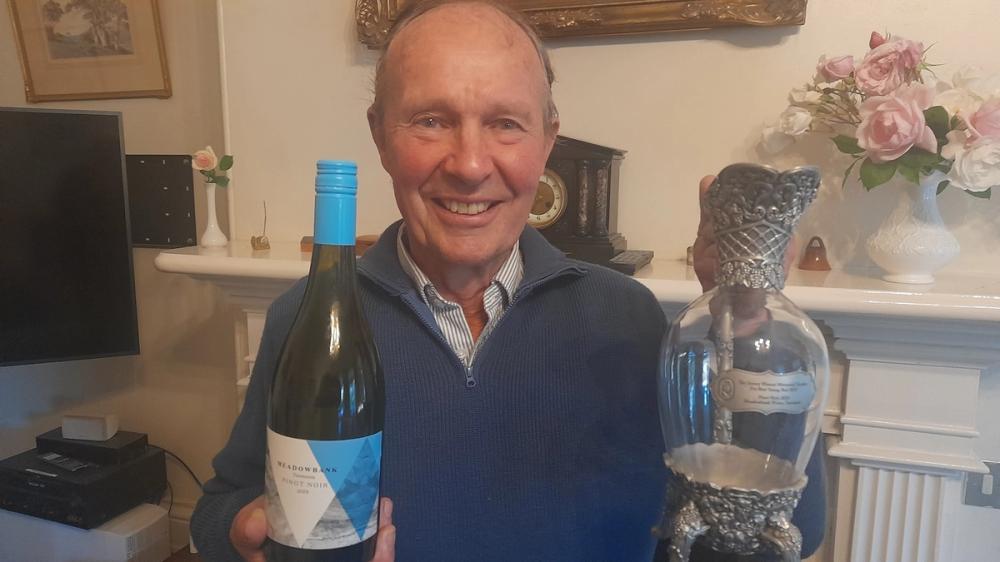
Gerald Ellis with champion Pinot Noir and Jimmy Watson Trophy
Where better to start than my first port of call, Meadowbank, whose Pinot Noir 2024 also happened to be the winner of the Jimmy Watson Trophy last November. That is one of Australia’s most cherished prizes at the Royal Melbourne Wine Awards, being given to the best young red wine of one or two year's age. Making up a triumvirate of Tasmanian all-Australia champions were Tolpuddle Vineyard (their 2024 vintage being crowned Best Chardonnay) and Freycinet Vineyard (whose Radenti Vintage Rose 2017 won Best Sparkling trophy).
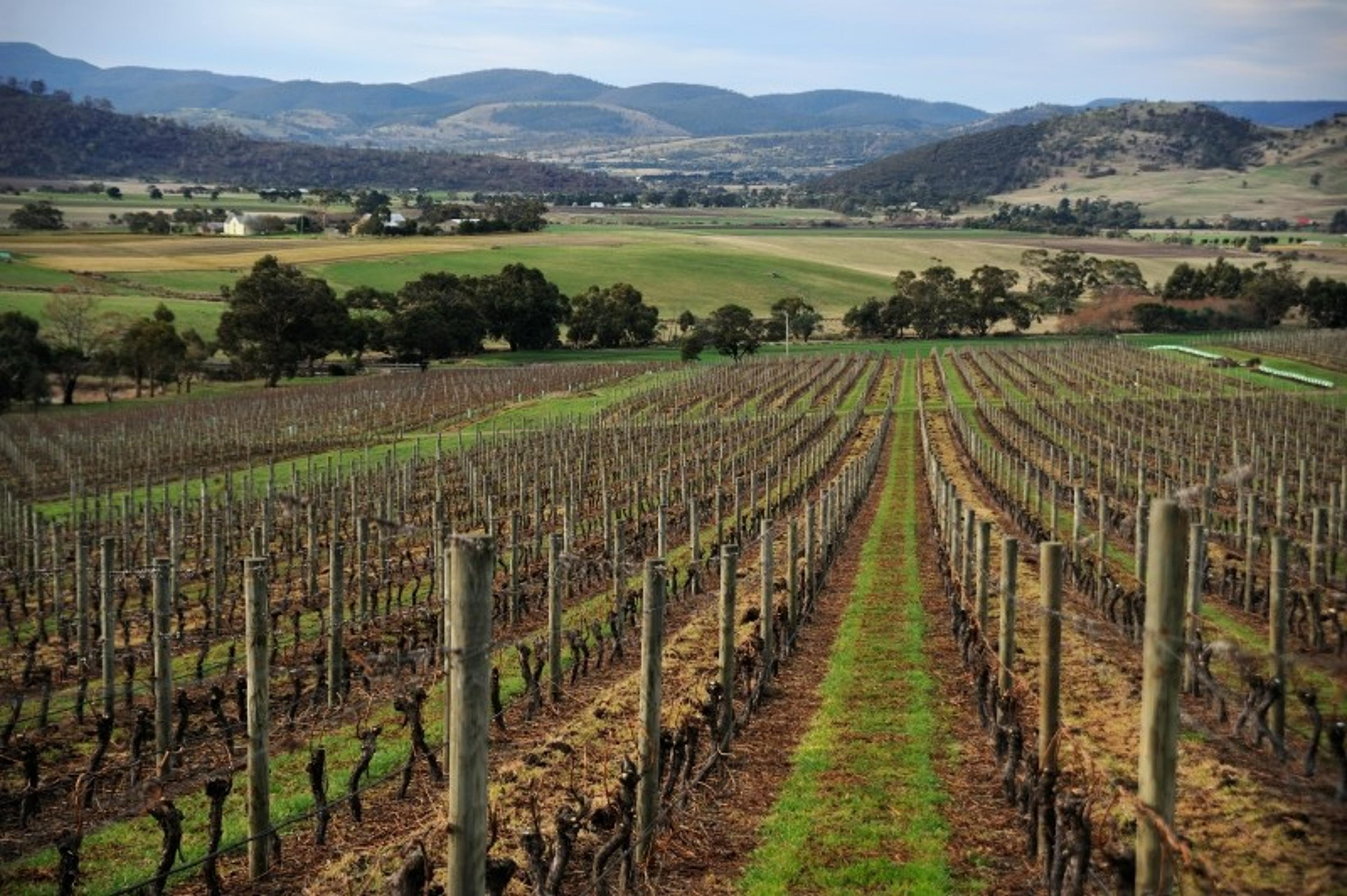
Meadowbank is situated at the top end of the Derwent River valley, some 40 miles north-west of Hobart. It is both a vineyard and a Merino sheep station, with owner/viticulturist Gerald Ellis having bought the property in 1976. He planted the Jimmy Watson-winning Pinot Noir vines in 1989 on a bedrock of sandstone over clay, with drip irrigation essential as he gets only 450mm of rain per year. Tastings are by appointment only, with visits from Hobart possible by flying boat, which lands on the river that runs through this scenic hillside property. Renowned vigneron Peter Dredge makes the wines.
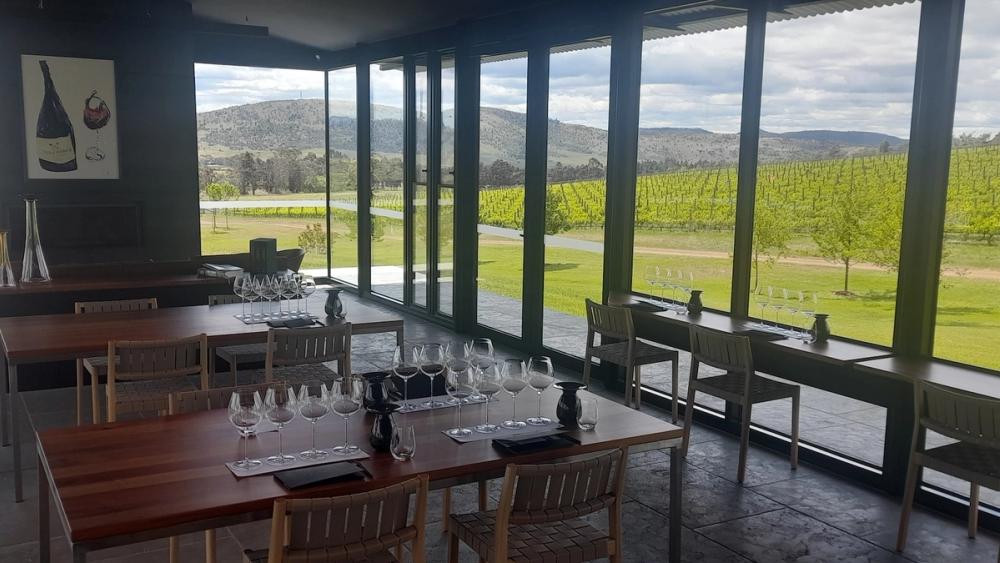
The tasting room at Tolpuddle Vineyard
Tolpuddle Vineyard, was named after the Dorset village where some farm labourers, later dubbed the Tolpuddle Martyrs, were deported as convicts to Australia in the 1830s but eventually pardoned. It is arguably Tasmania’s best-known site. Planted in 1988 in the cool and dry Coal River Valley near Hobart, the 31-hectare vineyard is on a north-east facing slope on light silica soils over sandstone, providing perfect conditions for Chardonnay and Pinot Noir.
Since buying it in 2011, Martin Hill Smith MW and Adam Shaw have made a great site even better thanks to soil and clonal improvement, conversion to cane pruning and trellis modifications. Vineyard manager Carlos Souris employs as many as nine Chardonnay and ten Pinot Noir clones. Tasting of current and older vintages is by appointment from Friday till Monday at the new cellar door, which also serves delicious light lunches from top chef Sam Bray. Liberty Wines imports both labels.
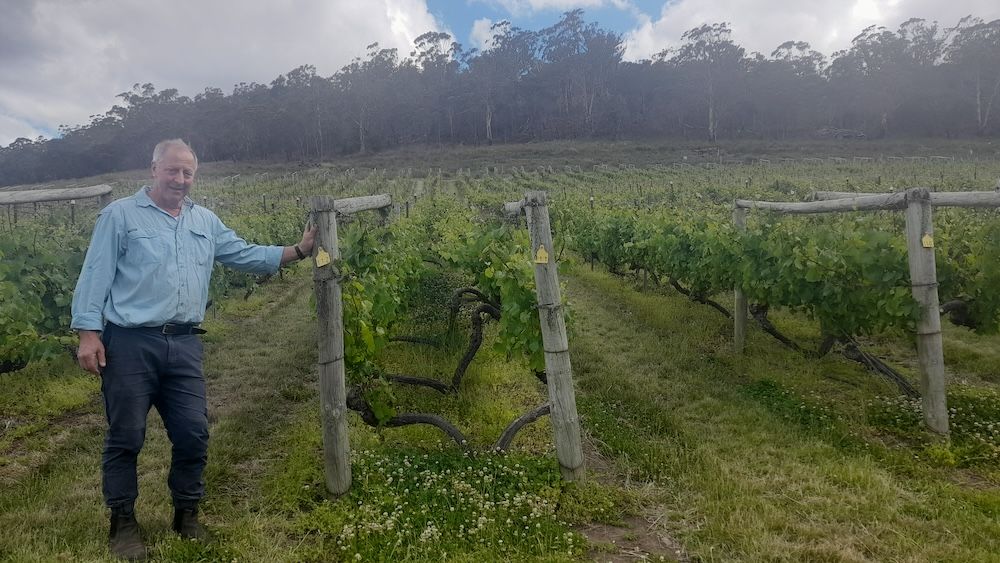
Claudio Radenti at the foot of the 42-degree Pinot Noir vineyard
Adam Wadewitz at Tolpuddle, and Claudio Radenti, are two of Australia’s most accomplished winemakers. The latter has 16 hectares under vine at his Freycinet Vineyard on the picturesque east coast, including a 46-year old block of Pinot Noir vines on one of Australia’s steepest slopes - 42 degrees, close to the maximum gradient found in viticulture. Radenti, one of the most affable of characters, presides over an outstanding range (imported by the Wine Society) that is available for tasting at his welcoming cellar door. Open seven days a week, it is well worth a visit.
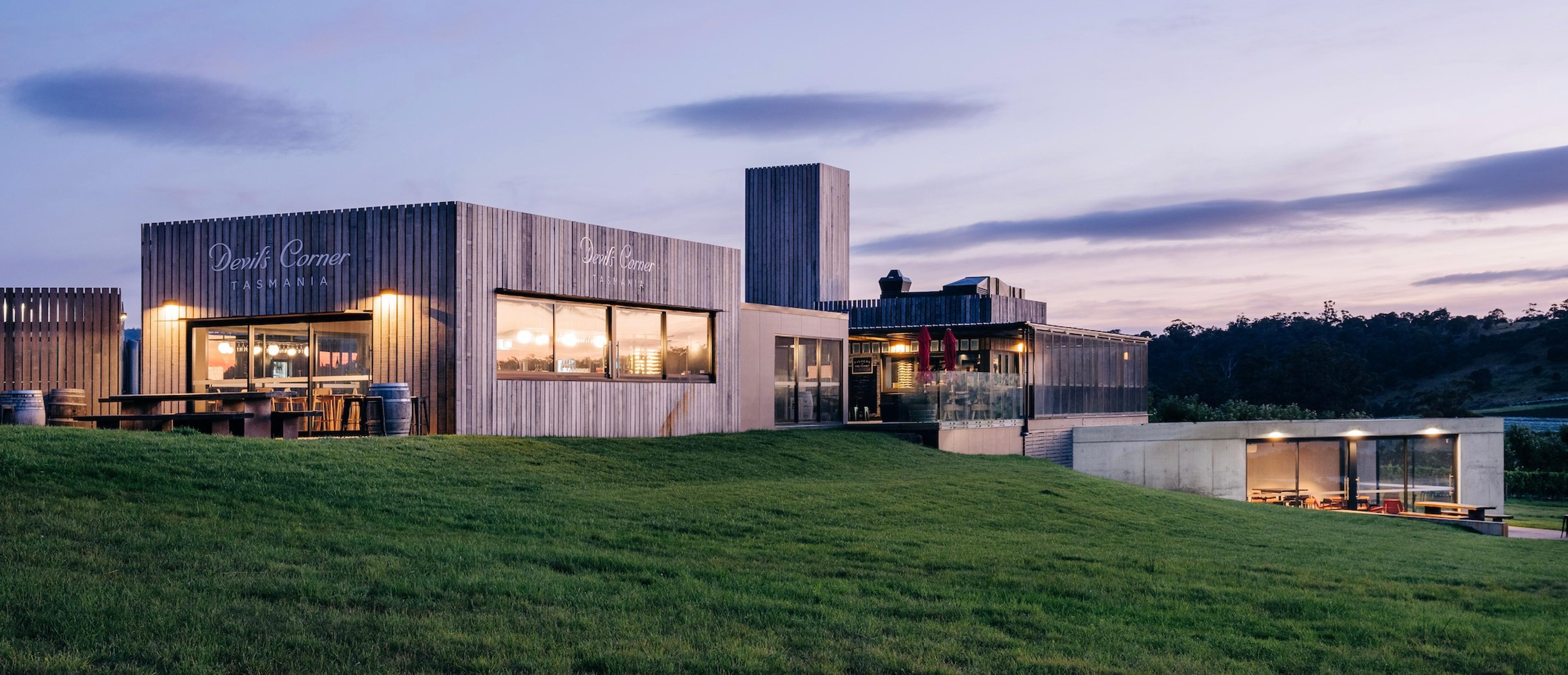
So too is the nearby Devil’s Corner winery, whose cellar door offers not just sensational views to the Freycinet Peninsula and the Hazards mountain range but also serious culinary delights. Wallaby bolognese, with its lean meat, is a popular favourite that I enjoyed. ‘Fishers of Freycinet’ has an on-site stall selling Pacific oysters delivered fresh every morning as well as crayfish, scallops, calamari and mussels.
Another attraction is the opportunity to catch one of Freycinet Air’s helicopters that take off from Devil Corner’s front lawn and treat you to a glorious 20-minute flight over the rugged Freycinet National Park and peerless Wineglass Bay. You also get a great view of the Devil’s Corner Hazard’s Vineyard which, with 188 hectares under vine, is the biggest on the island, featuring six varietals. The Mt Baudin Chardonnay 2022 showed especially well, being made by Tamar Ridge winemaker, Tom Wallace, as both wineries are owned by Brown Brothers.
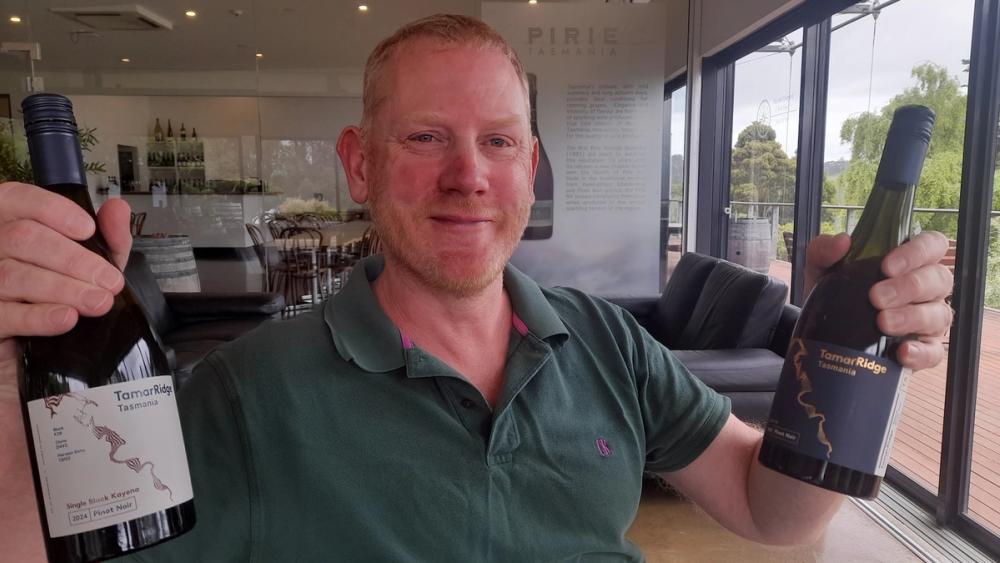
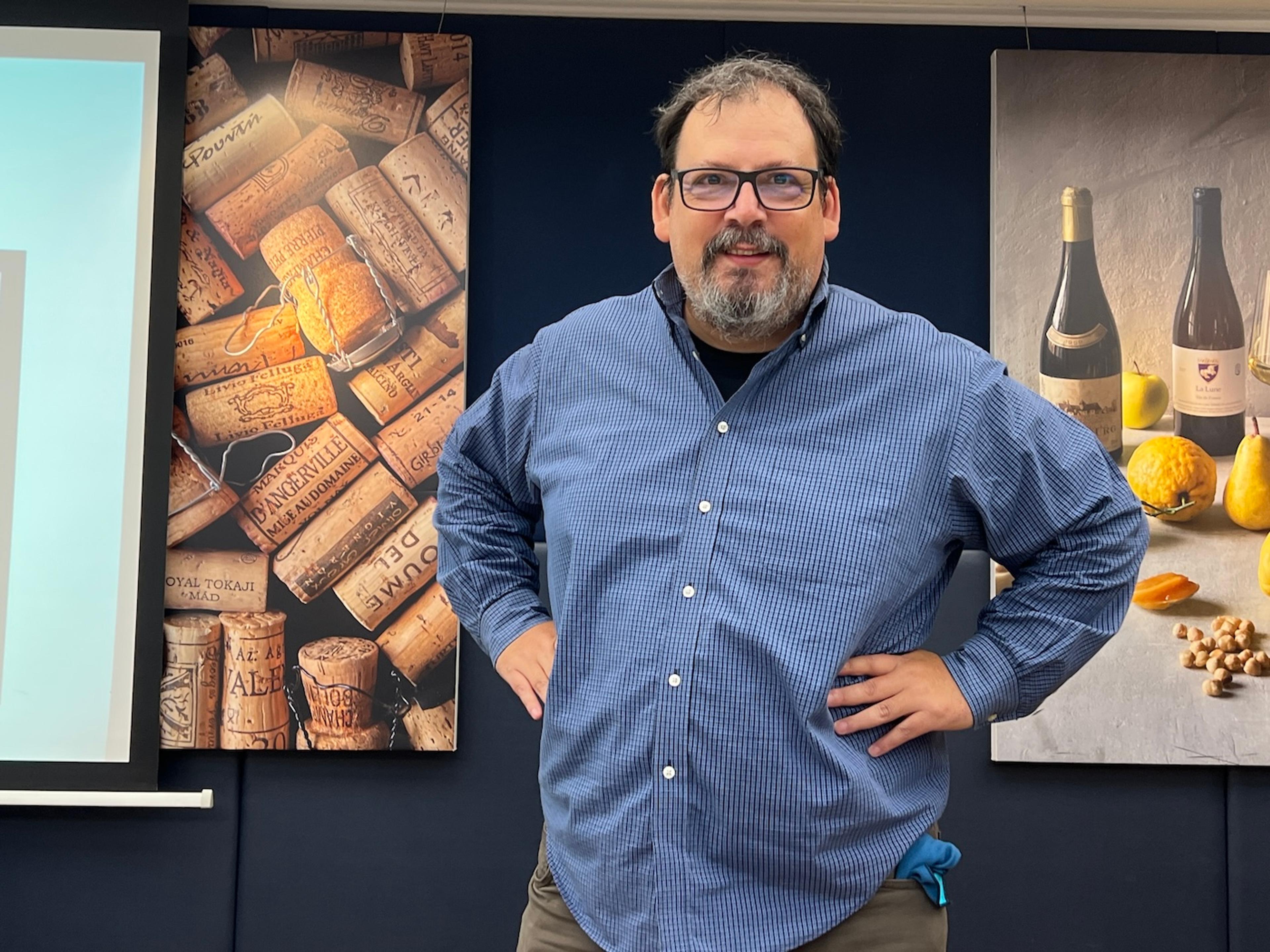
Tom Wallace, Tamar Ridge winemaker
The Tamar Ridge cellar door, which is near the town of Launceston in the north of Tasmania, is a must for any visitor. Perched high above the Tamar Valley beneath it, it has a superb range of sparkling and still wines. Most are imported by Enotria. The Rosevears Vineyard Pinot Noir 2024 was a personal favourite, being made from the 115 clone. Right next door to the cellar door, Tamar Ridge owns a dozen individual apartments that offer the wine tourist very comfortable accommodation with eye-catching views over the Tamar River.
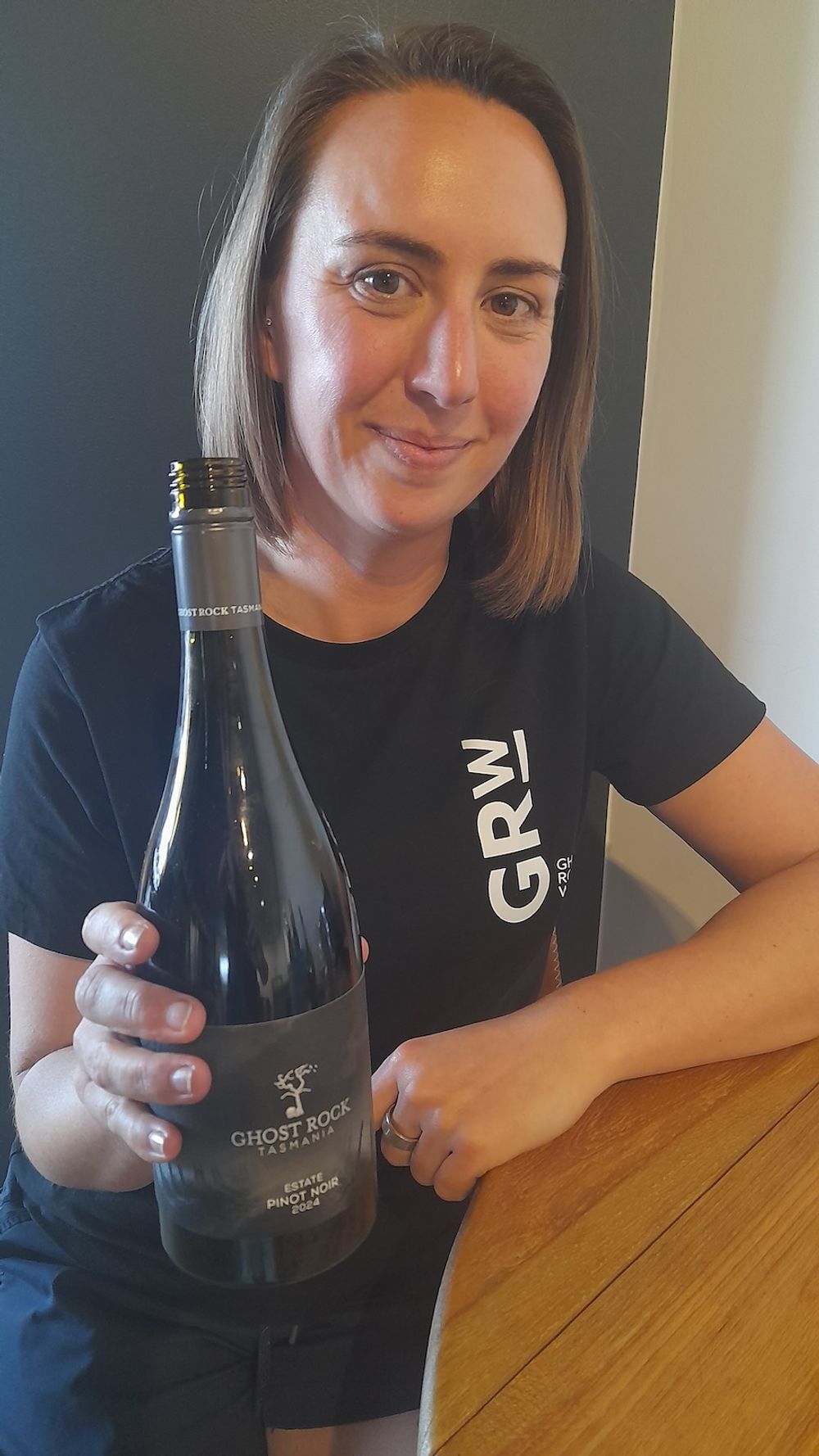
Sierra Blair, Ghost Rock winemaker
An hour’s drive west of Tamar Ridge on the north coast is another winery that is a wonderful place to stay at - Ghost Rock Vineyard, 17km east of Devonport. You can rent its stylishly-furnished three-bedroom ‘Vineyard House’, which looks down over the vines to Bass Strait. The restaurant there, open seven days a week for lunches, serves exquisite cuisine that includes Tarkine oysters, gin-cured ocean trout, chargrilled octopus and coal-fired venison.
Ghost Rock’s impressive range, which is made by Californian Sierra Blair and imported into the UK by The Vinorium, features some top-end Pinot Noir, with 14 clones of it grown on several single vineyard sites. Some fine Chardonnay, Riesling and Sauvignon Blanc is produced from amongst the most westerly vines on Tasmania. The further west you are in Tasmania the more rain you get, with 800mm per annum typically at Ghost Rock.
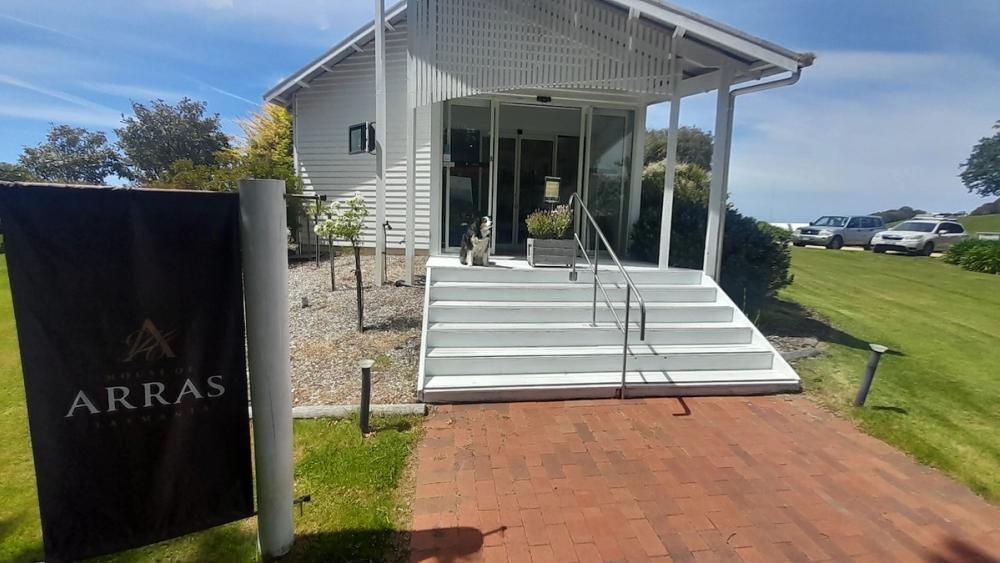
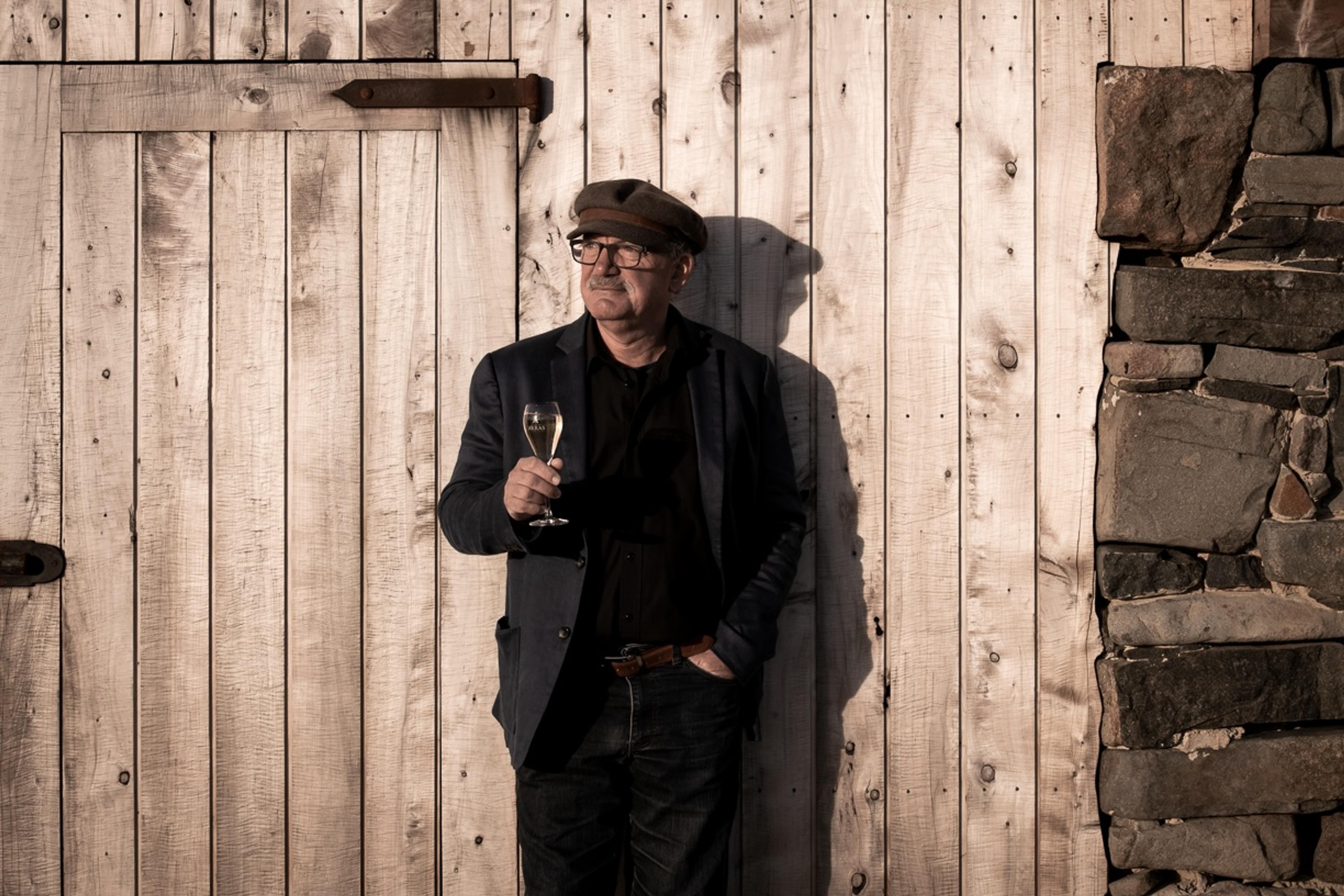
Some 90km east of Ghost Rock at Piper’s River can be found the House of Arras winery, widely viewed as home to Australia’s finest sparkling wines. Celebrated vigneron Ed Carr is certainly the country’s most-awarded sparkling winemaker. The cellar door, which is open seven days a week in summer, has 10am and 2pm tutored tastings with a walk through the vineyards included. Some older vintages may be opened. Tirage is generally four to seven years, although the 2006 Late Disgorged EJ Carr, which won the chairman’s trophy at the 2024 Champagne & Sparkling Wines World Championship in London, spent 16 years on the lees. Arras takes fruit from as many as 13 sites from seven different sub-regions across Tasmania in its quest for the best grapes.
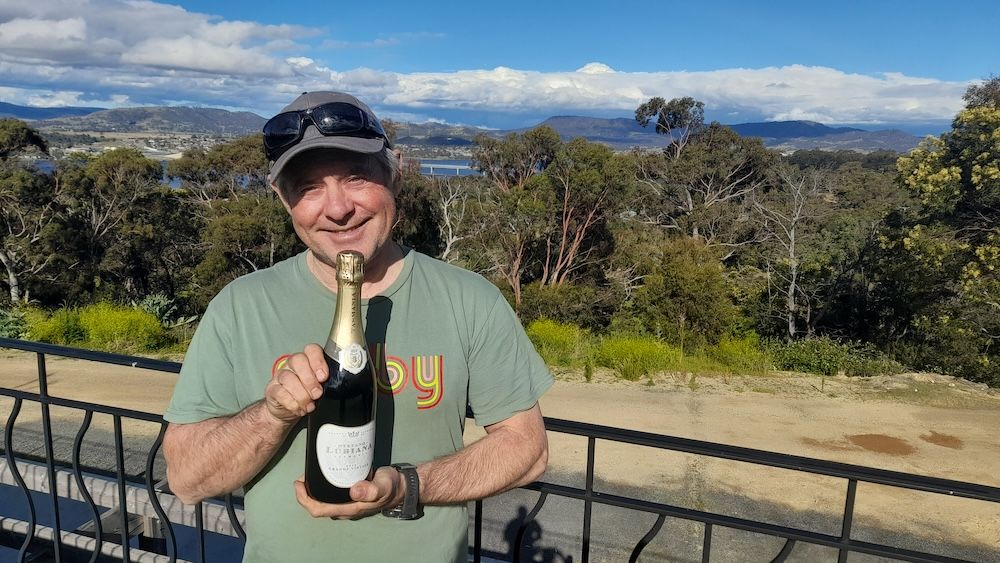
Steve Lubiana
Another outstanding traditional method producer, Stefano Lubiana, is located just outside Hobart in Granton on the banks of the Derwent River. It is also Tasmania’s first biodynamically-certified winery. Steve Lubiana, who is originally from South Australia, moved to Tasmania in 1990 to fulfil his dream of making top sparkling wines and Pinot Noir. He has succeeded in both aims, also crafting fine Chardonnay and Pinot Gris with son Marco. His Prestige 2011, a 50:50 blend of Pinot Noir and Chardonnay, which spent 12 years on the lees, was declared ‘best Aussie sparkling’ in Australia’s leading wine guide, while his La Roccia Pinot Noir 2022 won American critic James Suckling’s citation for Australian wine of 2024. Both are available for tasting from Wednesday till Sunday at the well-appointed cellar.
Of comparable quality are the Pinot Noirs of Jim Chatto, who grows nothing but that varietal on his 1.5h plot south-west of Hobart overlooking Glaziers Bay. It is one of the most idyllic vineyards, possessing a warm microclimate in one of the coolest parts of the island. Tastings are by appointment only, but highly recommended for the beautiful drive through the Huon Valley, Jim’s radiant positivity and, of course, his premium range of seven Pinot Noir labels (imported into the UK by Liberty Wines).
Next door to Chatto can be found another excellent Pinot Noir (and Chardonnay) producer by the catchy name of Sailor Seeks Horse. Owner-winemaker Paul Lipscombe, an Englishman who left his marketing job in London twenty years ago aged 29 to study oenology, married an Aussie and moved to Tasmania in 2010 where he bought an eight-hectare vineyard that was derelict with very poor ancient soils. Replanting 75% of it, he gets low yields of 2-3 tons per hectare, but the wines absolutely sing, with savouriness, salinity and minerality their hallmarks. In keeping with the winery’s wacky name (dreamt up by Lipscombe in a pub), his ‘cellar door’ is not a building but the back of his ‘ute’ (utility vehicle) from which tastings are done. He’s even enticed the finance director of Apple there.
Another top quality boutique producer is Stargazer, whose newly opened cellar door has dramatic 180-degree views down towards Tea Tree and the pretty village of Richmond beyond. Talented New Zealander Samantha Connew, who also makes the wines at the Pressing Matters winery, fashions a much-lauded range of Riesling, Chardonnay and Pinot Noir that is imported by Enotria. She also buys in Shiraz from the Brinktop winery that constitutes 75% of an alluring 2024 label (25% Pinot) that is named ‘Kura' after the Maori word for ‘scarlet.’
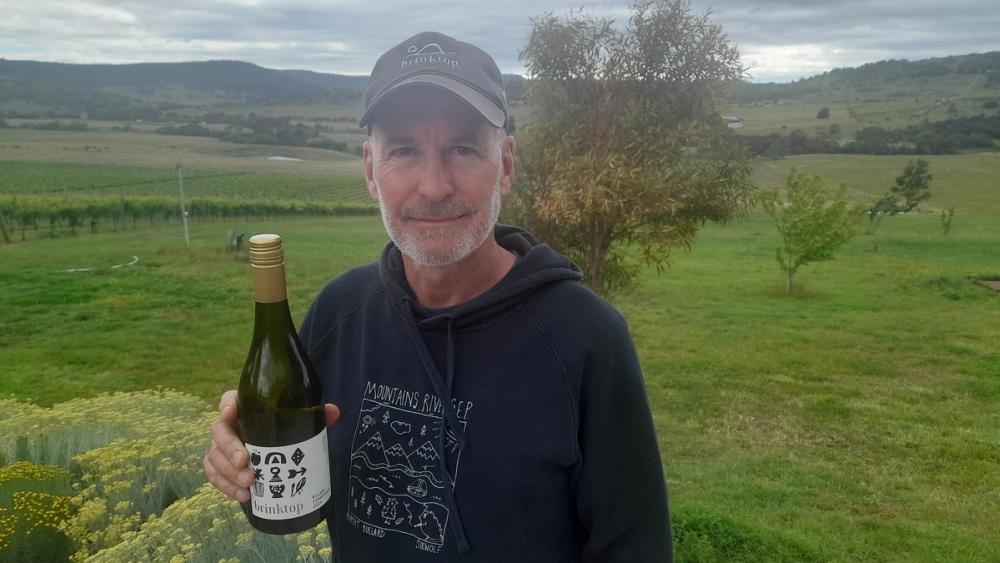
Brinktop, which lies 10km south-east of Richmond, is a boutique eight-hectare estate that not only produces high quality fruit but also has a very comfortable two-bedroom cottage that can be rented. Owners Todd Goebbel, a Canadian, and his Australian wife, Gill Christian, are a charming couple, who act as winemaker and viticulturist respectively. Their Killara Pinot Noir 2024 showed very well, with Chatto buying some of the fruit for it for one of his own labels. Giant Steps, the Yarra Valley producer, and Stargazer also take some of Brinktop’s Chardonnay and Pinot Noir.
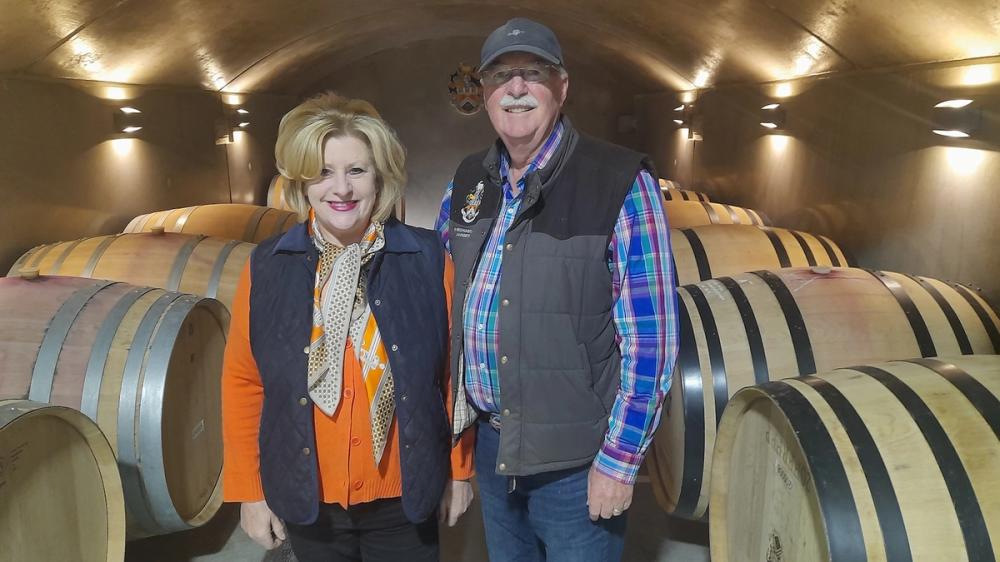
Ian and Wendy Roberts, owners of Riversdale
Situated, like Brinktop, in the Coal River Valley is the premium winery of Riversdale Estate. With 46 hectares under vine, it is the biggest privately-owned estate in Tasmania, having been bought in 1980 by Ian Roberts before he married joint-owner Wendy. Its location is second to none, being the only vineyard planted by the Pittwater waterfront, into which the Coal River flows. As such, it benefits from a maritime climate.
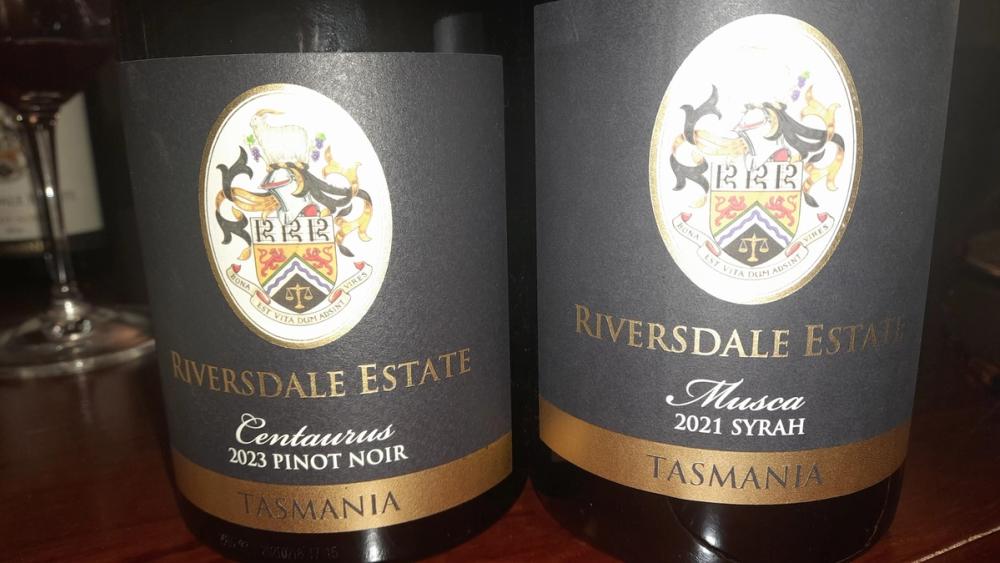
Fittingly, given the presence of a giant observatory next door, some wines are named after constellations. These include the excellent Centaurus Pinot Noir 2023, made from a selection of the best barrels, and the Musca Syrah 2021, which won best-wine-of-show at the 2023 Great Australian Shiraz Challenge (the first time a producer had done so back-to-back).
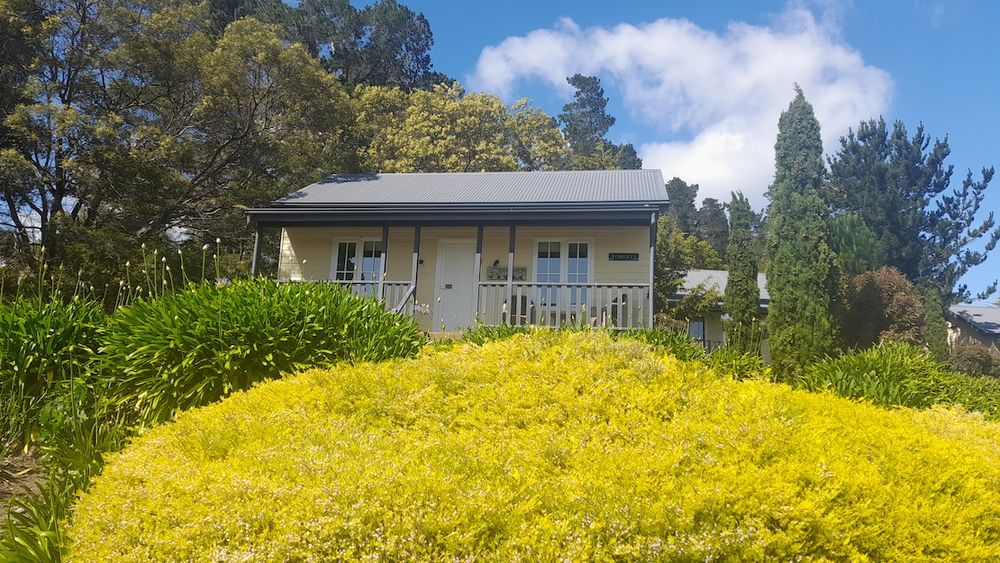
Riversdale Estate's Roberts Cottage
Riversdale is much more than a winery, with the Roberts farming 450 Border Leicester and Merino sheep. Lamb from them is used in the onsite French bistro as well as the nearby Richmond Arms & Crown Inn, a good place to eat. The estate has one of the largest olive groves in Tasmania, and also has four delightful French provincial-style cottages to stay in, with sweeping views down to the Pittwater. The striking cellar door does too, with the full Riversdale range available for tasting seven days a week. Two-hour winery tours can be made by appointment. The range is imported by VINVM Ltd.
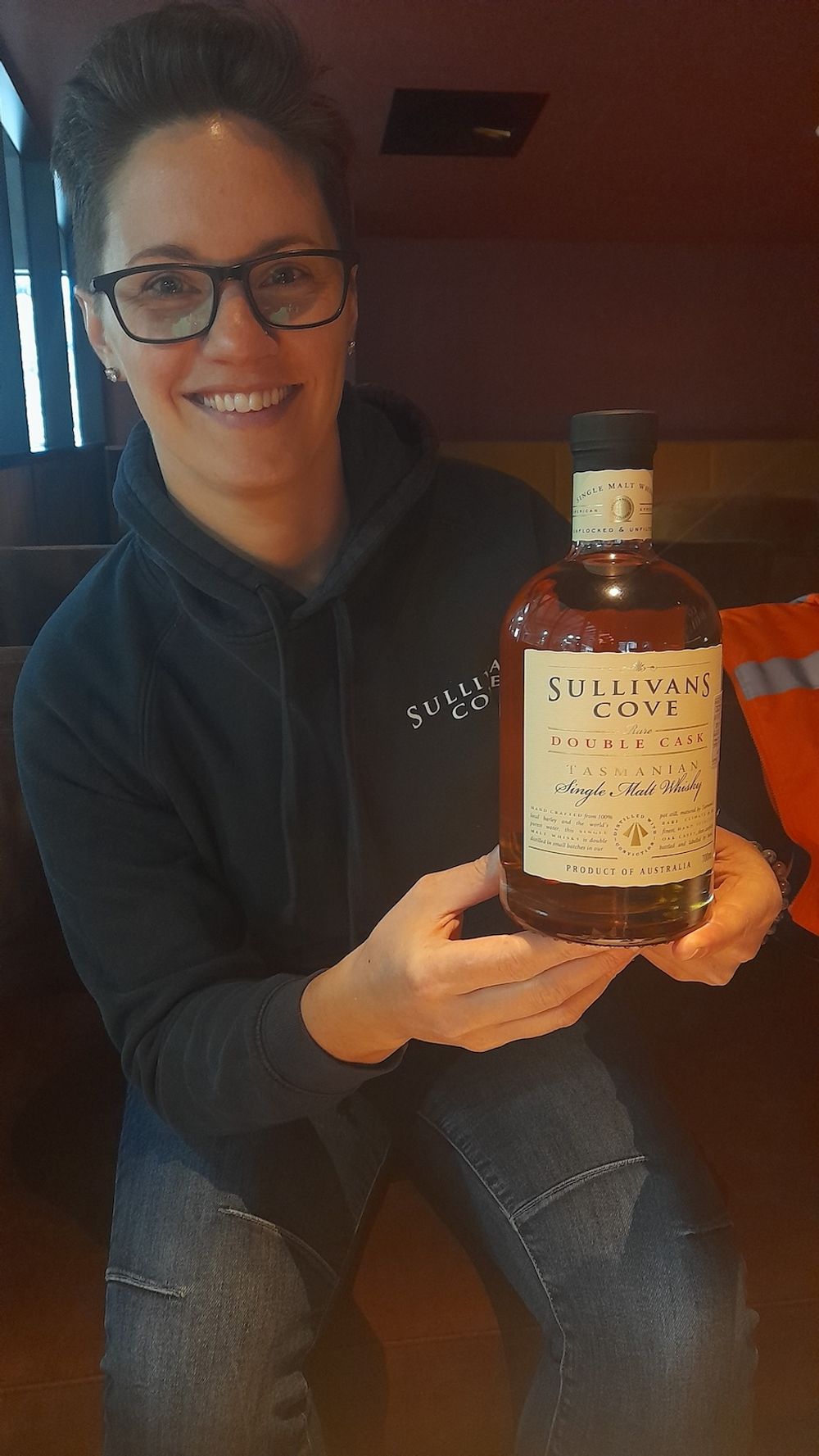
Very close to Riversdale is the Sullivans Cove distillery, which is Australia’s most awarded whisky producer. In 2014, it was the first distillery outside Scotland and Japan to be classified the world’s best single malt at the World Whiskies Awards, and the first to win the world’s best single cask twice (in 2018 and 2019). Head distiller Heather Tillott was adjudged distillery manager of the year in 2024. “It was nice recognition, but we don’t do it for the awards,” she told me. “Whether we are going to copy Scotch is something I often get asked. I like to perceive it through the lense of of our premium wine casks. We do some finishing but focus on full maturation in cask.” Her casks include Bourbon, Australian tawny port, Pinot Noir, Chardonnay and other still wine barrels. The distillery is open seven days a week for tours.
The Sullivans Cove 25-year old whisky is available at the excellent Restaurant Maria on the Brook Street pier in Hobart. Apart from its lovely views out over the capital’s harbour and delicious Mediterranean-inspired cuisine, it has an extensive wine list from both Tasmania and Latin countries alike as well as Tassie ciders, beers and spirits.
Finally, no trip to Tasmania would be complete without a visit to Moorilla Estate, the island’s second oldest winery, which is located in Hobart on an isthmus projecting out into the Derwent River. The combination of winery and restaurant, and beneath, the underground Mona Museum with its ancient and contemporary art, makes for a rewarding half-day visit. Canadian winemaker Conor van der Rees crafts a worthy range, notable for its sparklings and red/white blends.\
The cellar door and museum are open Thursday till Sunday, as is another leading Coal River Valley estate, Domaine A, where van der Rees is also winemaker. It produces Tasmania’s finest Cabernet Sauvignon, which ripens thanks to its unusually warm microclimate. Once thought too cool climate for certain black grapes, Tasmania has benefited from global warming, and arguably now has the best conditions for grape-growing in Australia thanks to its wide diurnal range. It is also the country’s premier wine tourism destination.