So why did Roebuck create the Viticulture Academy?
Michael Kennedy, Roebuck Estates' CEO, spent years in the spirits industry before joining English wine. What struck him most was the vineyard itself. "The magic happens in the vineyards," he explains. "The wine is developed in the vineyards. If you get it right in the vineyard, then you can get it right through the whole winemaking process."
When Kennedy and his team considered how to engage sommeliers, they identified a knowledge gap. "We realised that whilst everybody's incredibly knowledgeable about wines, in terms of understanding what goes on in the vineyard in detail, that was less obvious," Kennedy says. The solution: bring sommeliers into the vineyard and show them.
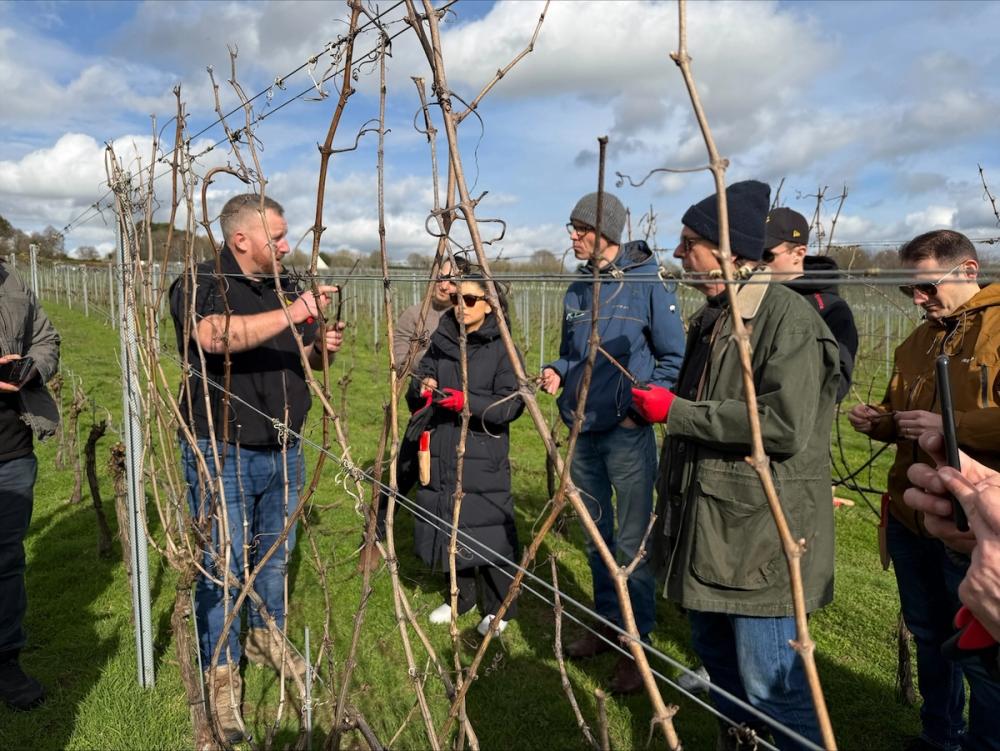
Jake Wicks demonstrates the art of pruning to this year's group of sommeliers
The programme was conceived by Danielle Whitehead, Roebuck's head of marketing and a qualified winemaker. It reflects Roebuck's distinctive approach: the estate produces only vintage English sparkling wine, with no non-vintage blends to smooth over challenging years. "We want to make an outstanding vintage every single year," Kennedy says. "To do that, you have to get it right in the vineyard first."
The stakes are high. Over four years, Roebuck has navigated the hottest growing season on record (2022), the coolest (2023), the wettest (2024), and the driest (2025). Producing exceptional wine regardless of what nature delivers demands meticulous vineyard management.
The day's experience: theory meets practice
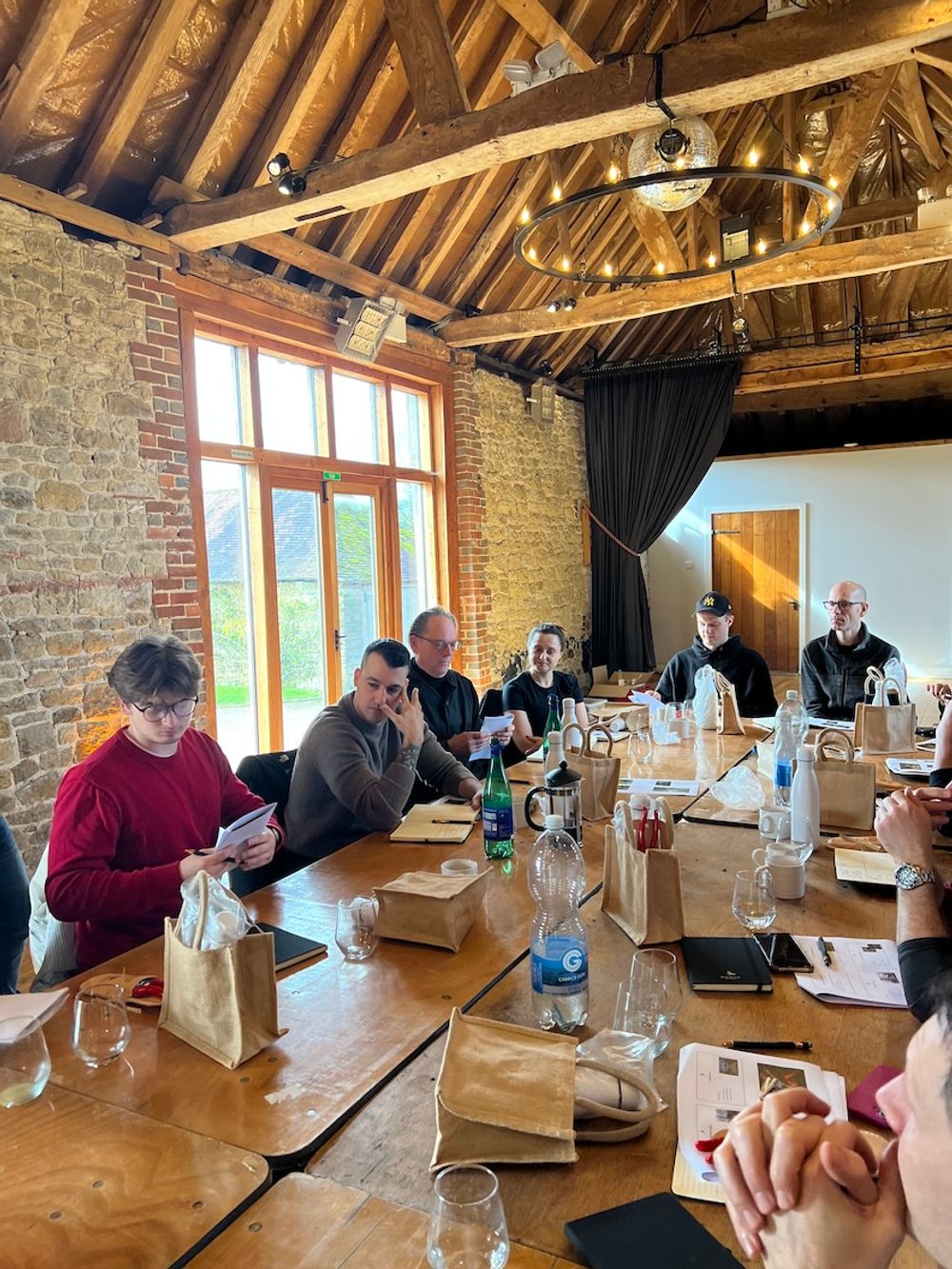
Learning the theory first at Roebuck Estate Viticulture Academy
Jake Wicks, Roebuck's head of viticulture, starts the morning theory session by covering the vineyard calendar: bud burst, flowering, veraison, harvest, explaining how decisions made in March will impact fruit quality in September. But it's the afternoon that reveals the real complexity of viticulture.
Pruning looks simple: remove last year's growth, leave the right buds for next season. In practice, it's detective work. Each vine tells its story through cane thickness, shoots reaching the top wire, overall vigour. The challenge is reading that story correctly and making informed decisions.
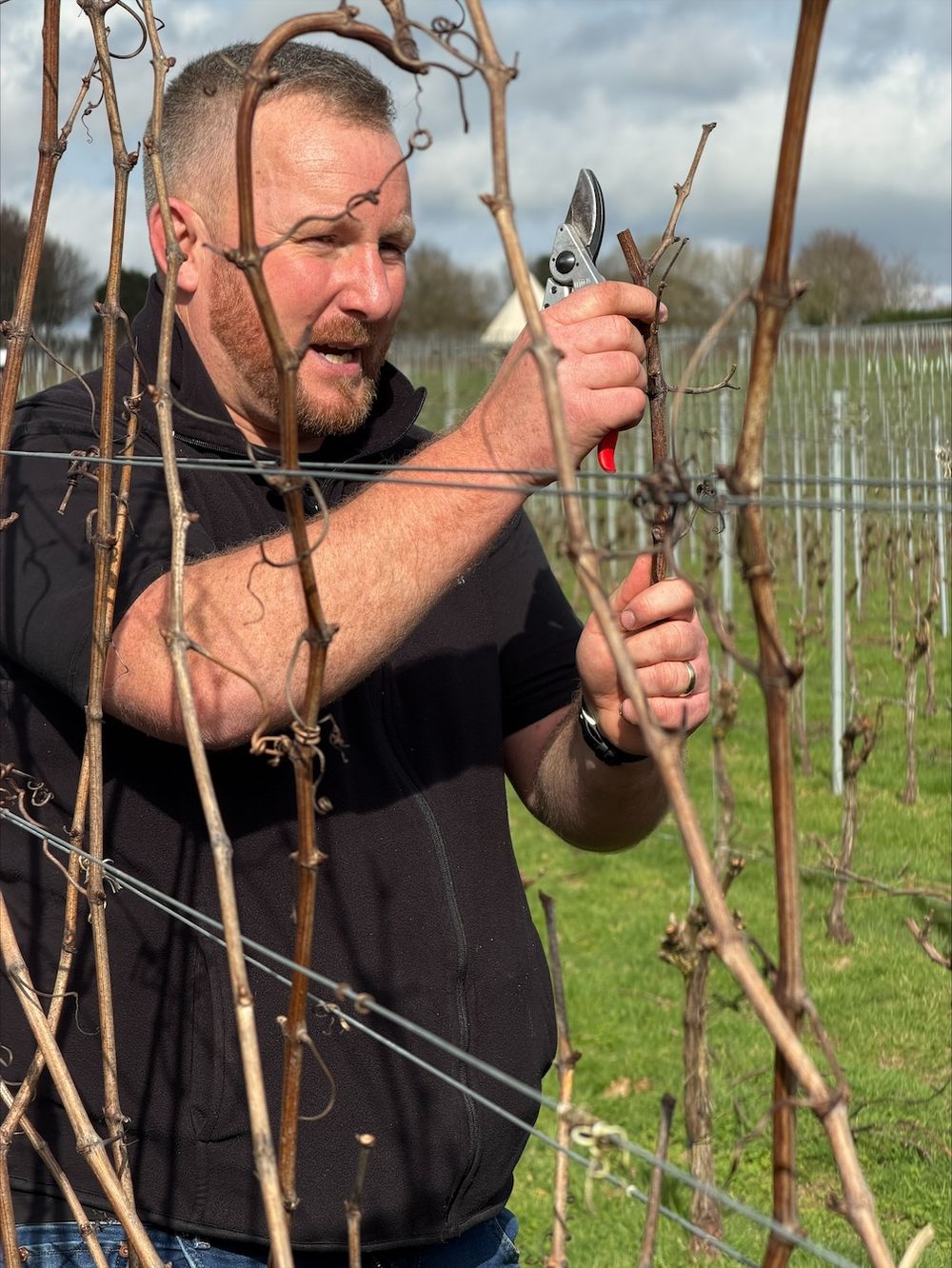
Now for the technical part....
Wicks demonstrates the principles in the vineyard. First, assess last year's performance by counting viable shoots (pencil-thick canes that reached the training wire). Each successful shoot equals one point. If ten shoots made it to the top wire, you might retain ten buds for next year. If only six succeeded, reduce to six buds.
Then comes the technical work: deciding between single or double guyot pruning based on bud count, cutting at ninety degrees to minimise wound surface area, leaving adequate internode space for dieback, positioning the cane correctly, tying it behind the last bud. Every cut matters. Too many buds and the vine struggles to ripen fruit properly. Too few and you've sacrificed potential quality.
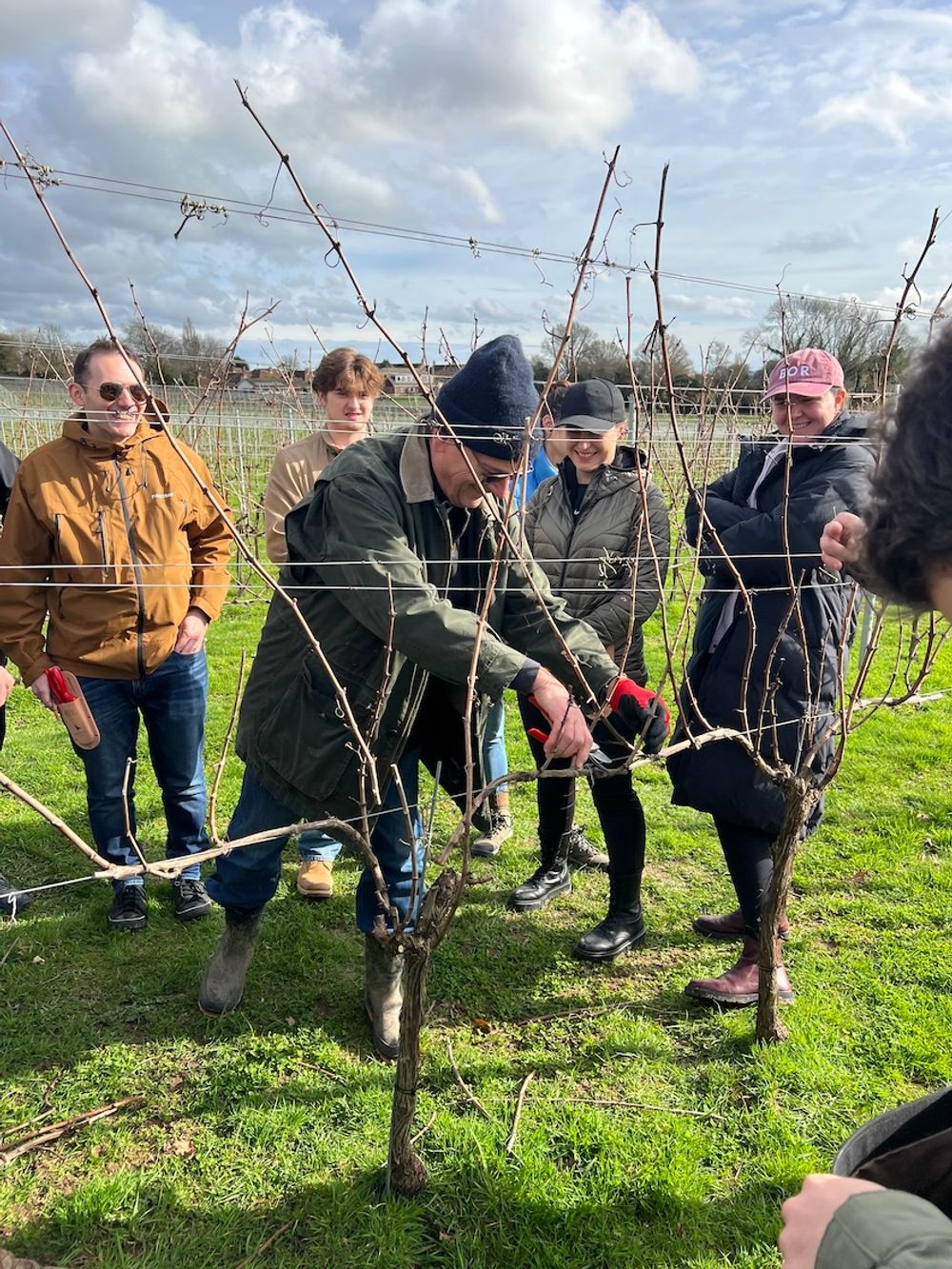
Not that bit! Sommeliers take their turn.
The sommeliers take their turn. Secateurs in hand, they work through decisions: which cane, where to cut, how to position next year's growth. It's harder than it looks. One participant tells Jake he'd heard about pruning twenty times but couldn't grasp it until he held the vine and made the cuts himself.
This is exactly what Roebuck wants to achieve: share not just theoretical knowledge, but the tactile understanding that comes from doing. "There's nothing quite like getting your hands on the vine," Kennedy says. "It brings confidence to what you’re doing."
Technical details emerge throughout the afternoon. Roebuck manages six vineyards divided into 82 blocks, each treated separately by soil, aspect, and microclimate. They're herbicide-free, employ an ecologist, graze 800 sheep over winter, maintain 16 beehives housing 400,000 bees. The estate holds the gold standard of sustainability certification, the first re-audited under new standards.
"If the wine is going to taste as good as it does, the fruit has to be really high quality, and for the fruit to be really high quality, the vineyards need to thrive," Kennedy says. "The best way they can thrive is naturally."
"Our founders viewed us very much as custodians of the land," Kennedy explains. The estate's name reflects this: the roe deer is one of two native deer species, renowned for leaving a light footprint. "We want to leave as light a footprint on our environment as possible."
Why it matters for English Wine
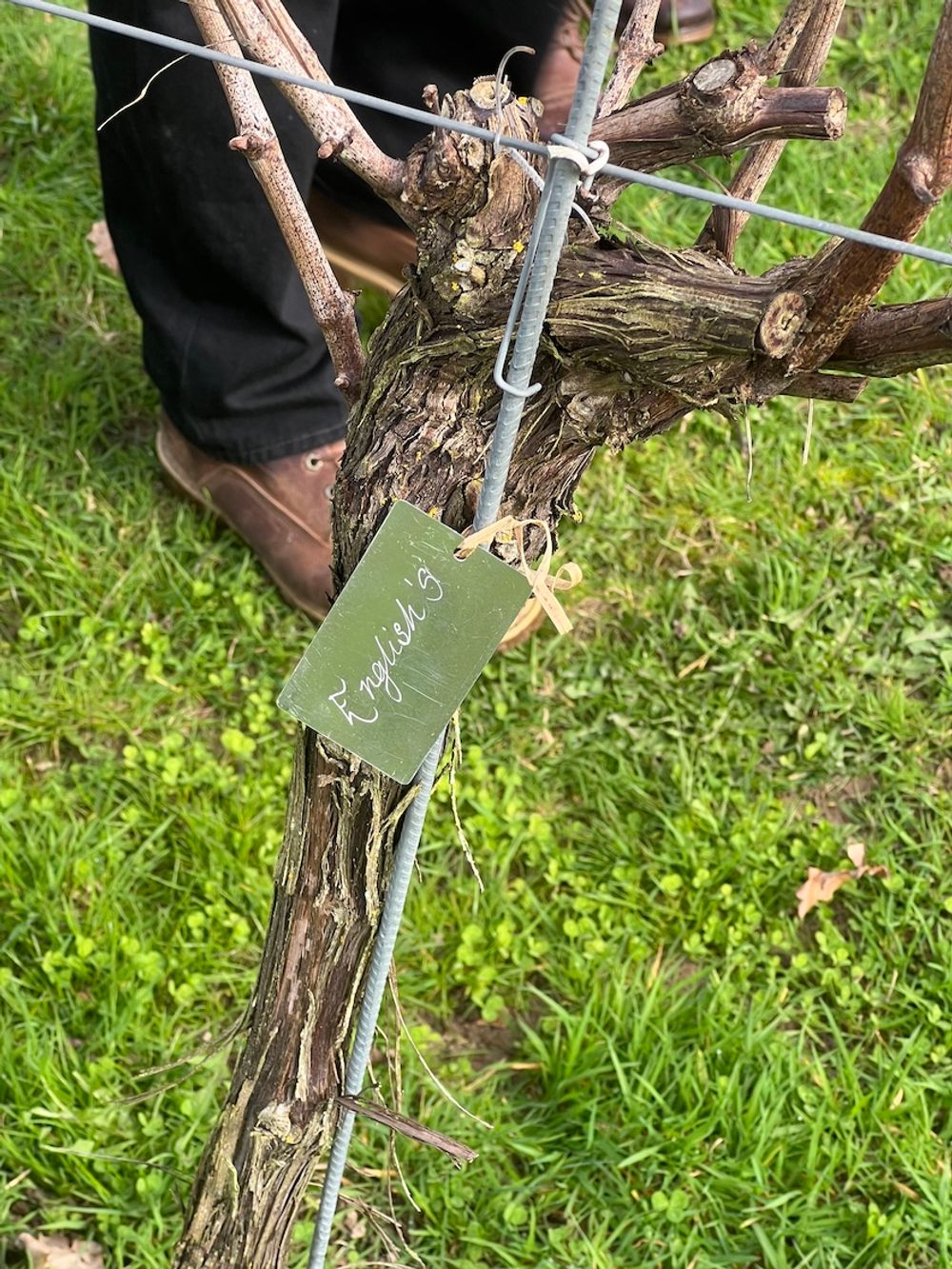
Vines are tagged so that sommeliers can return for the canopy management day and then harvest
For Kennedy, the Academy builds credibility for English wine as a serious, professional industry. "If you see it, you can believe it," he says. "If we bring sommeliers into the vineyard and they see what's happening, they believe this is genuinely an industry going somewhere, a wine-growing region that's established and growing, not a novelty."
He's aware of English wine's perception challenges. For years, the narrative positioned it as ‘enthusiastic hobbyists’: City high-fliers who'd bought country estates and planted vines. Roebuck Estate’s staff is internationally trained e.g. Jake Wicks has worked in wine regions worldwide (New Zealand, Australia and beyond) before moving back home to the UK. "What we're talking about is a professional industry," Kennedy emphasises. "There's expertise in English wine and sharing that is important."
When sommeliers return to The Berkeley or The Ned and recommend English sparkling wine, they can speak from their own experience. Feedback from previous years is unanimously positive: participants describe the experience as "magical," "passionate," "professional," and "purposeful." They return understanding not just that English wine is good, but why.
The year-long journey
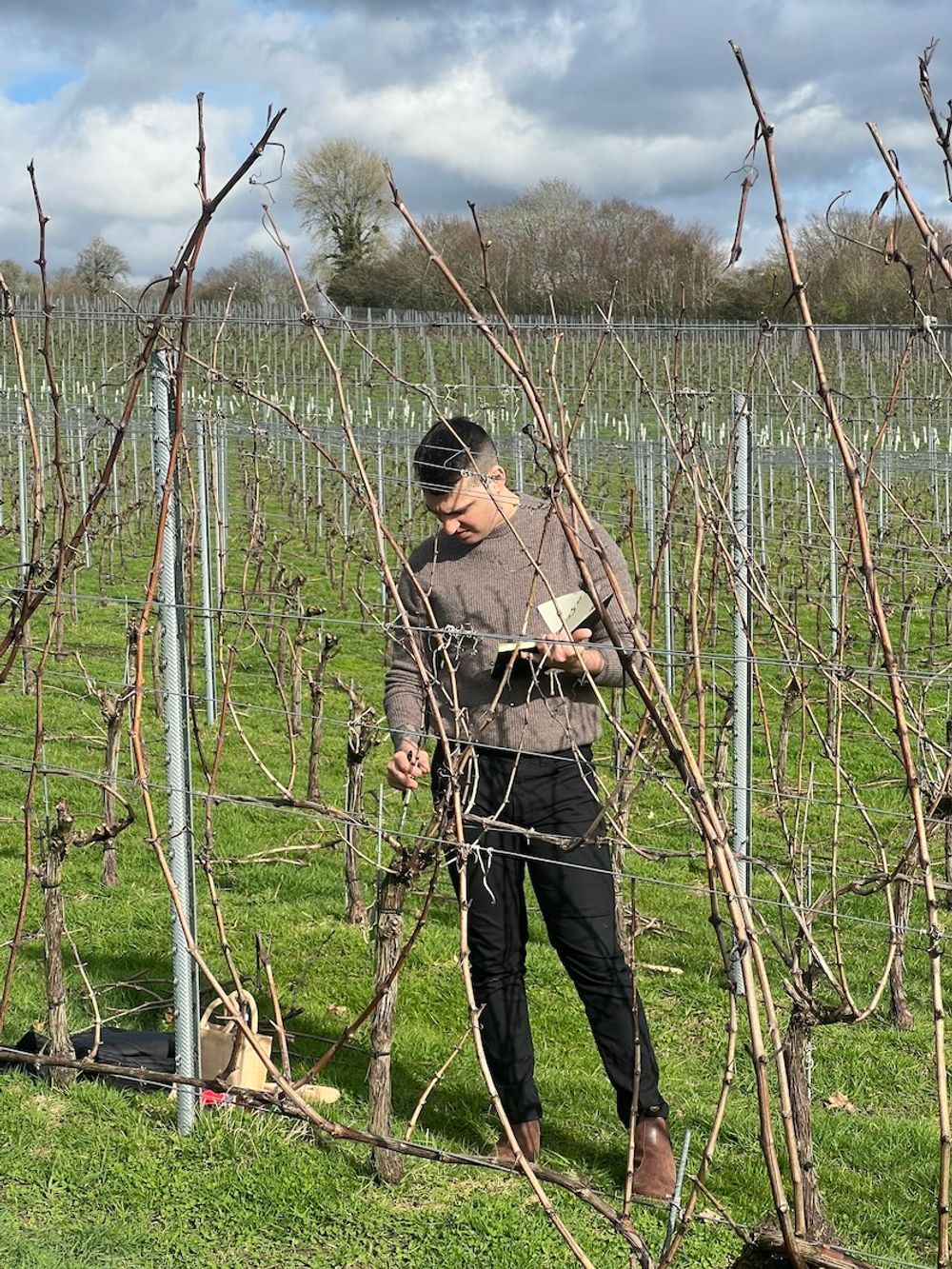
A sommelier assesses his work
After March's pruning session next comes July's canopy management: bud rubbing, leaf stripping (or not, depending on sunlight levels), and the complex decisions that balance vine health with fruit quality. Then October's harvest, where participants will make picking decisions based on ripeness and gather the fruit they've been tending since winter.
Each session builds on the last, creating a complete picture of what producing exceptional English sparkling wine demands year after year.
"We want people to do all three because we genuinely want people to see the fruit of their labour," Kennedy says. "By harvest, they'll be making decisions on when we harvest, whether it's at the right maturity. They'll do estimates on how much fruit each vine will deliver."
A ripple effect
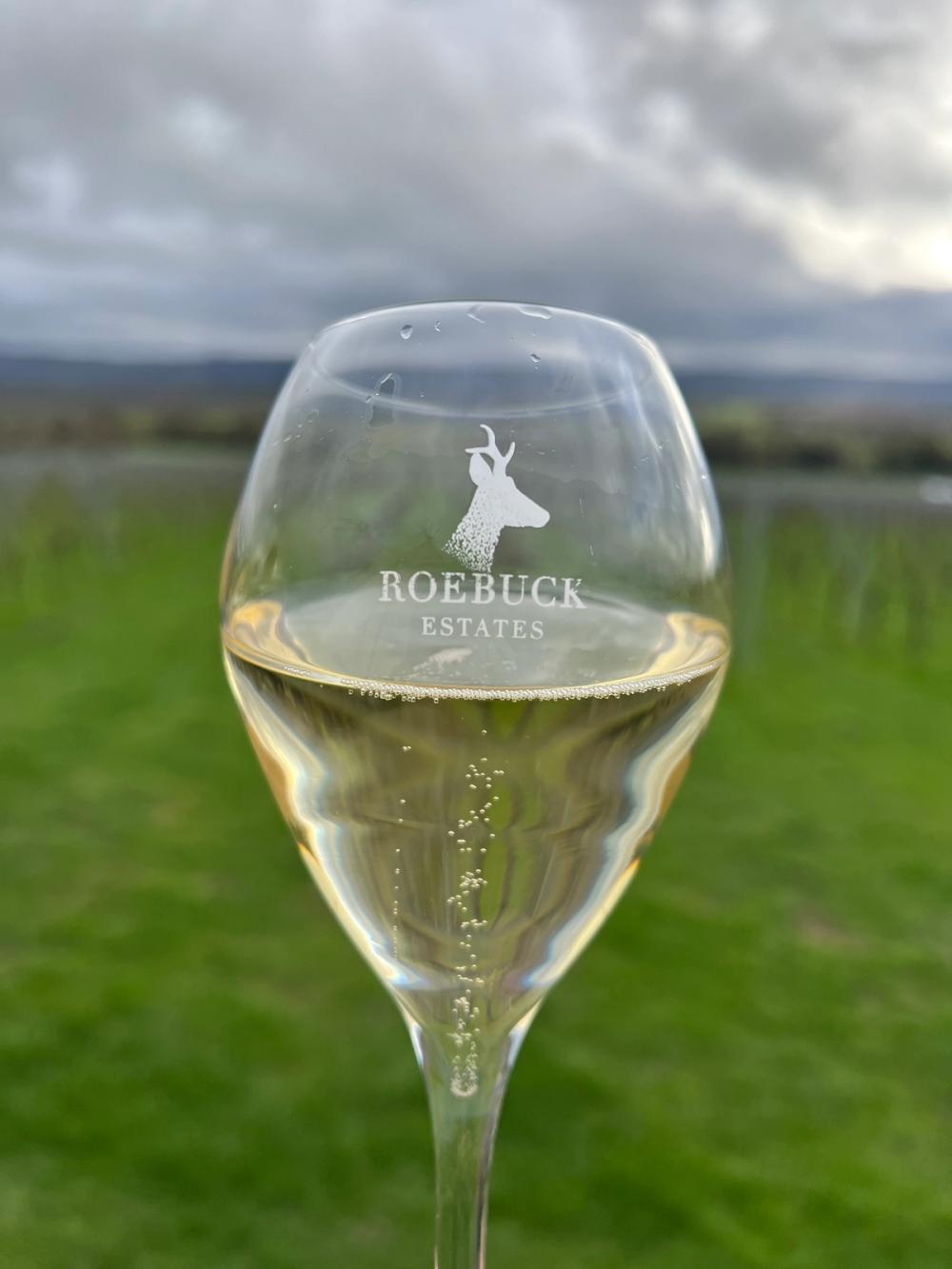
A toast to mark the end of Day 1 of Roebuck Estate Viticulture Academy
As the day ends and the group gathers for a taste of Roebuck's vintage sparkling, the impact is evident. These professionals now carry vineyard knowledge back to London's finest dining rooms, speaking with authority about English viticulture, understanding the work behind every bottle.
Kennedy puts it simply: "Vineyards are magical places. Getting people out into the vineyard, we love doing it." Based on the enthusiasm witnessed that grey March morning, the feeling is mutual.