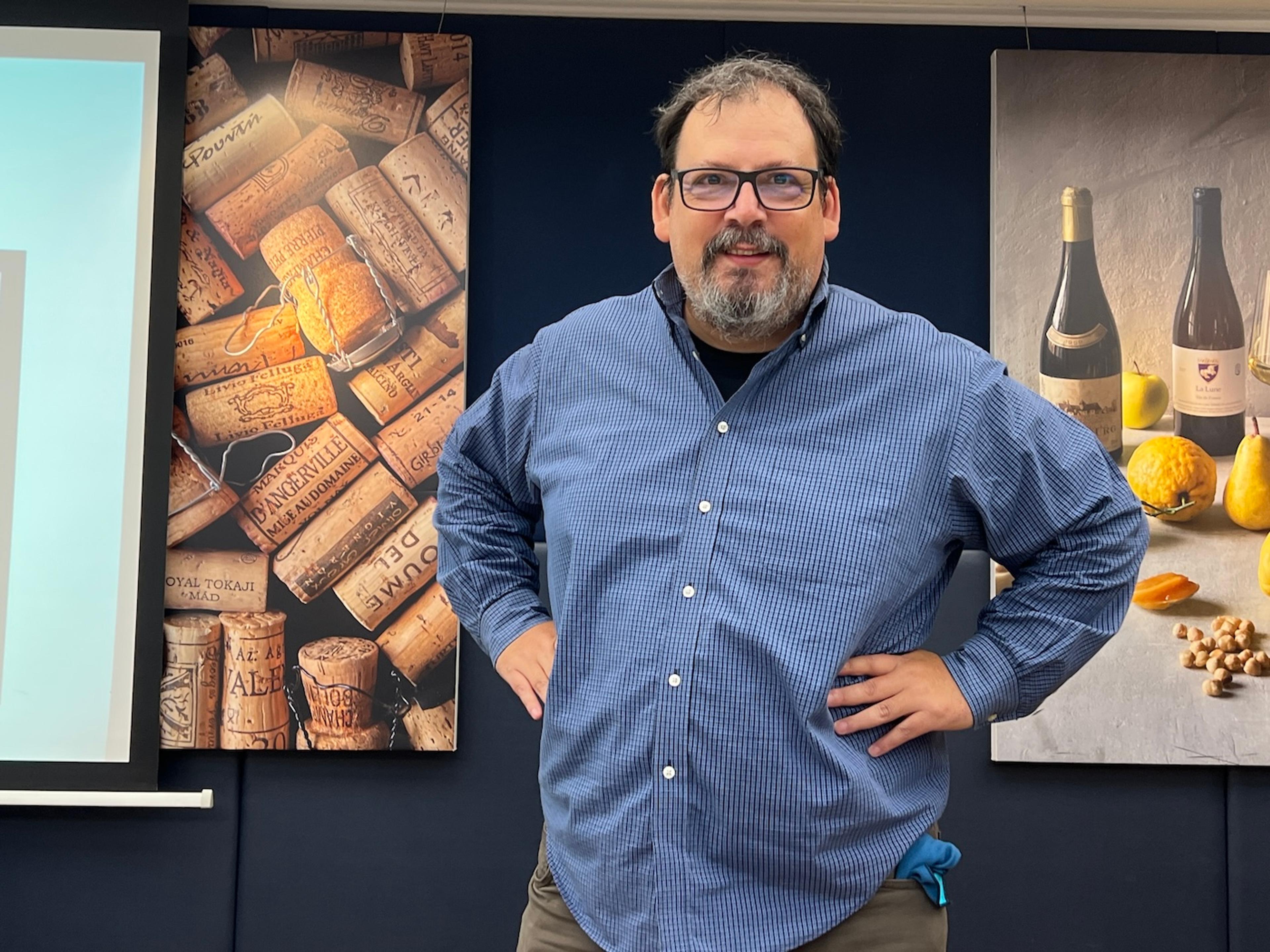
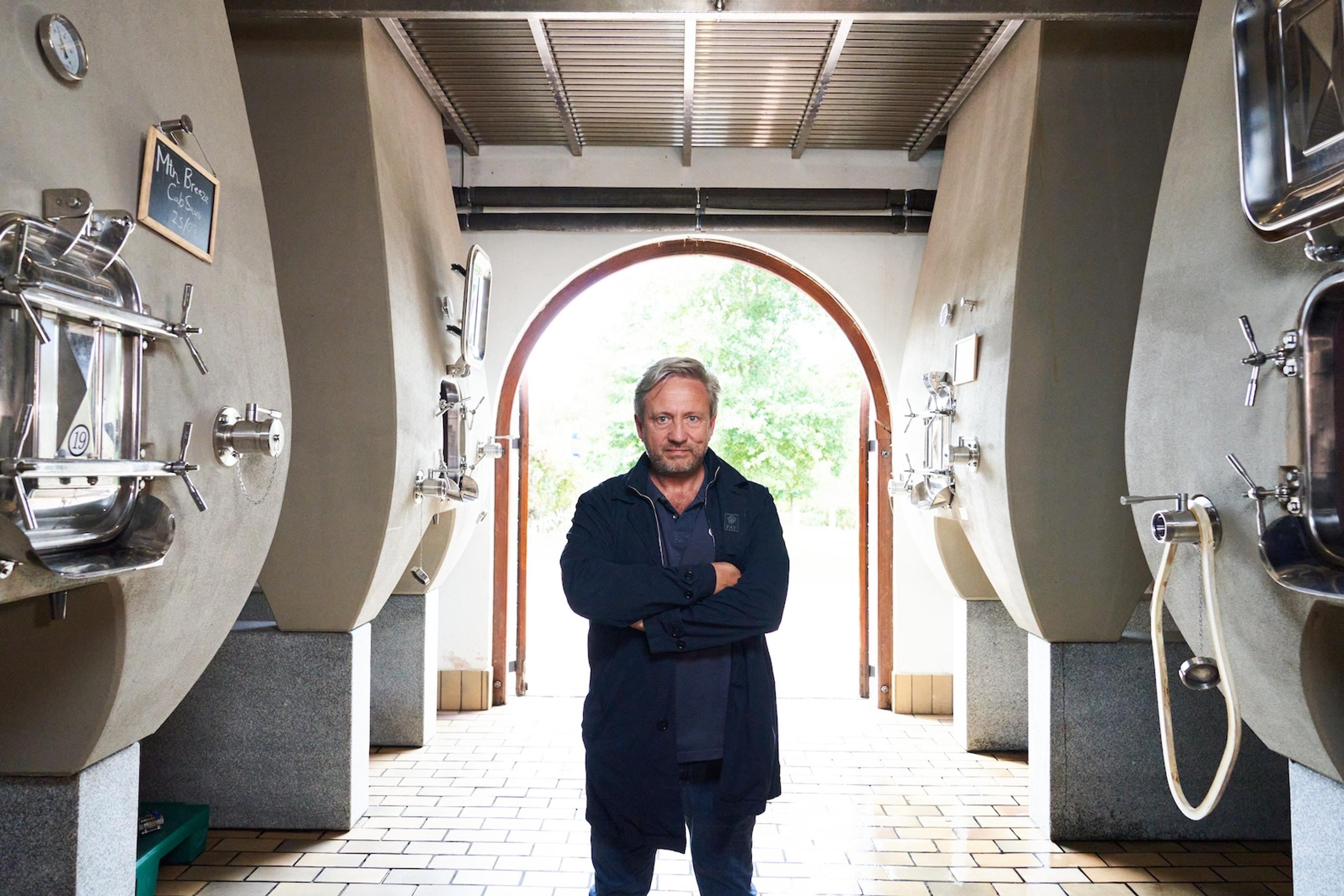
Veteran winemaker Rodrigo Soto has worked for three decades with some of the leading wineries in North and South America, until finally taking the plunge and setting up on his own in Sonoma, California, with his wife Mai Errazuriz of the eponymous Chilean winemaking family.
“I’ve always been a good ambassador for other people, and never thought about representing myself,” says Soto. “But when we did make the shift to our own project, we realised that we had been missing out. It was so rewarding in doing it for yourself, and felt very natural for us – it felt like it was meant to be.”
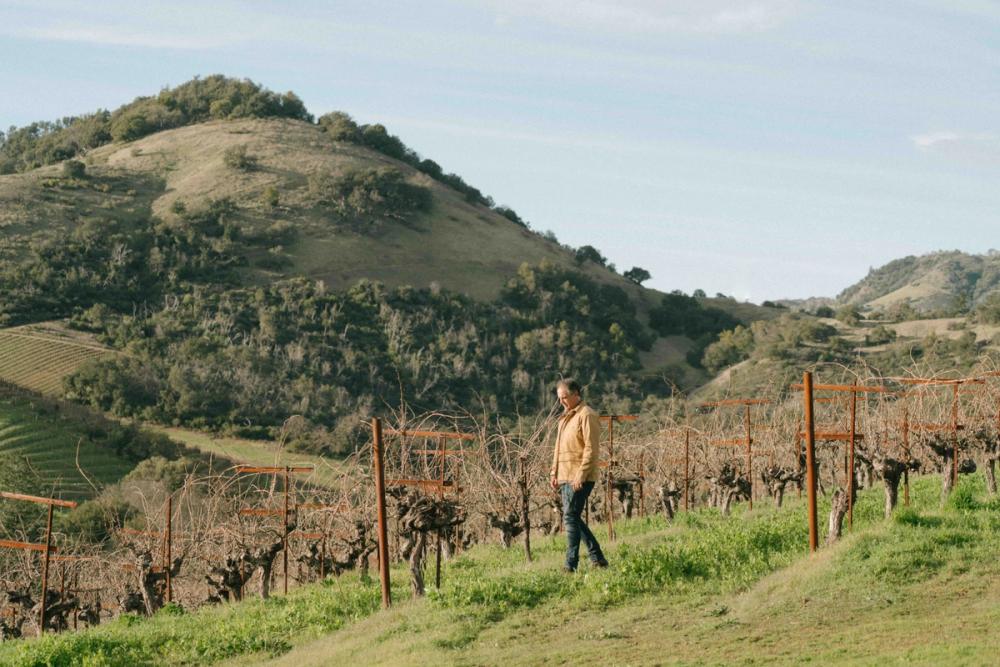
Rodrigo Soto walking through his Far Mountain vines
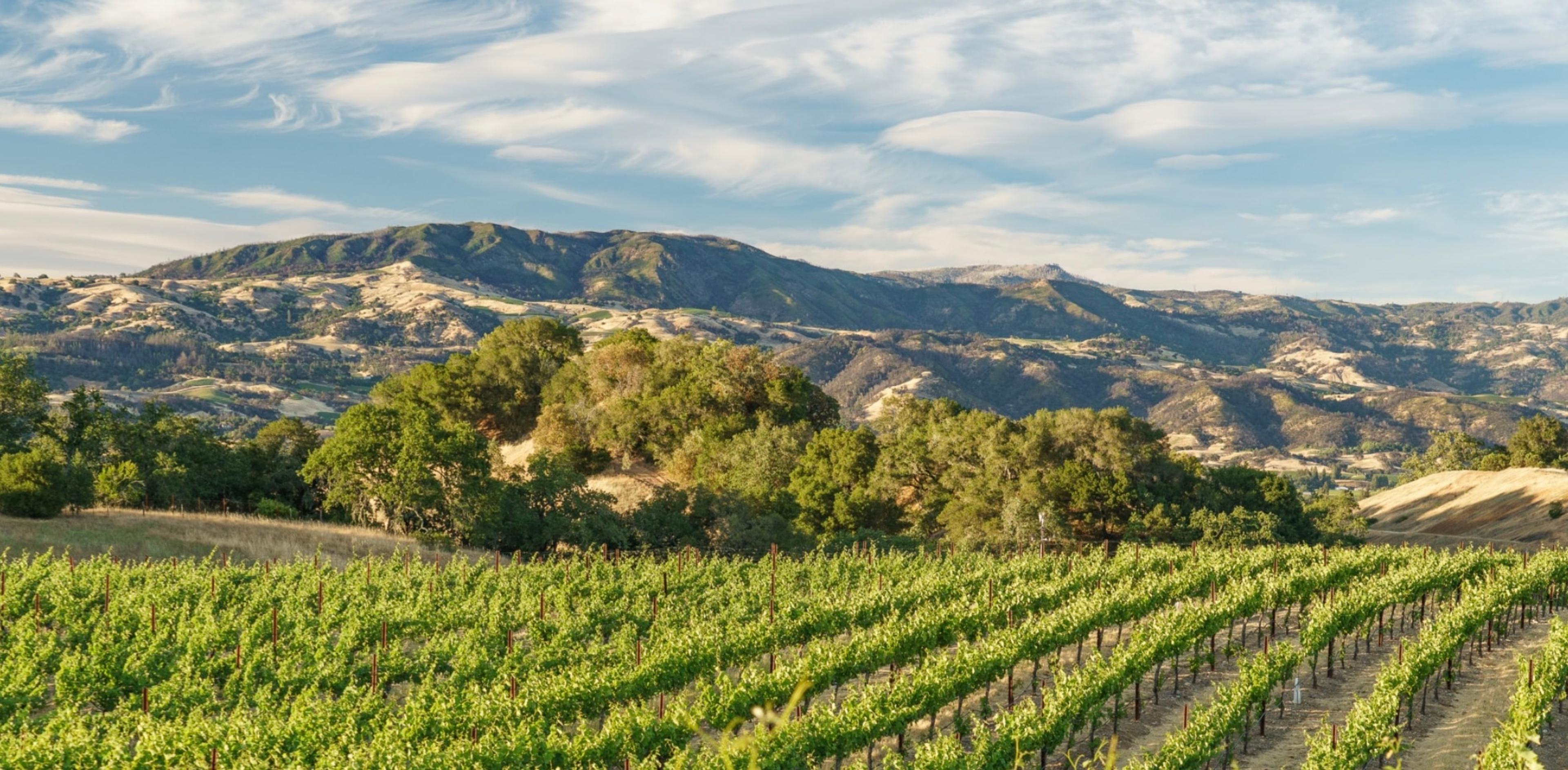
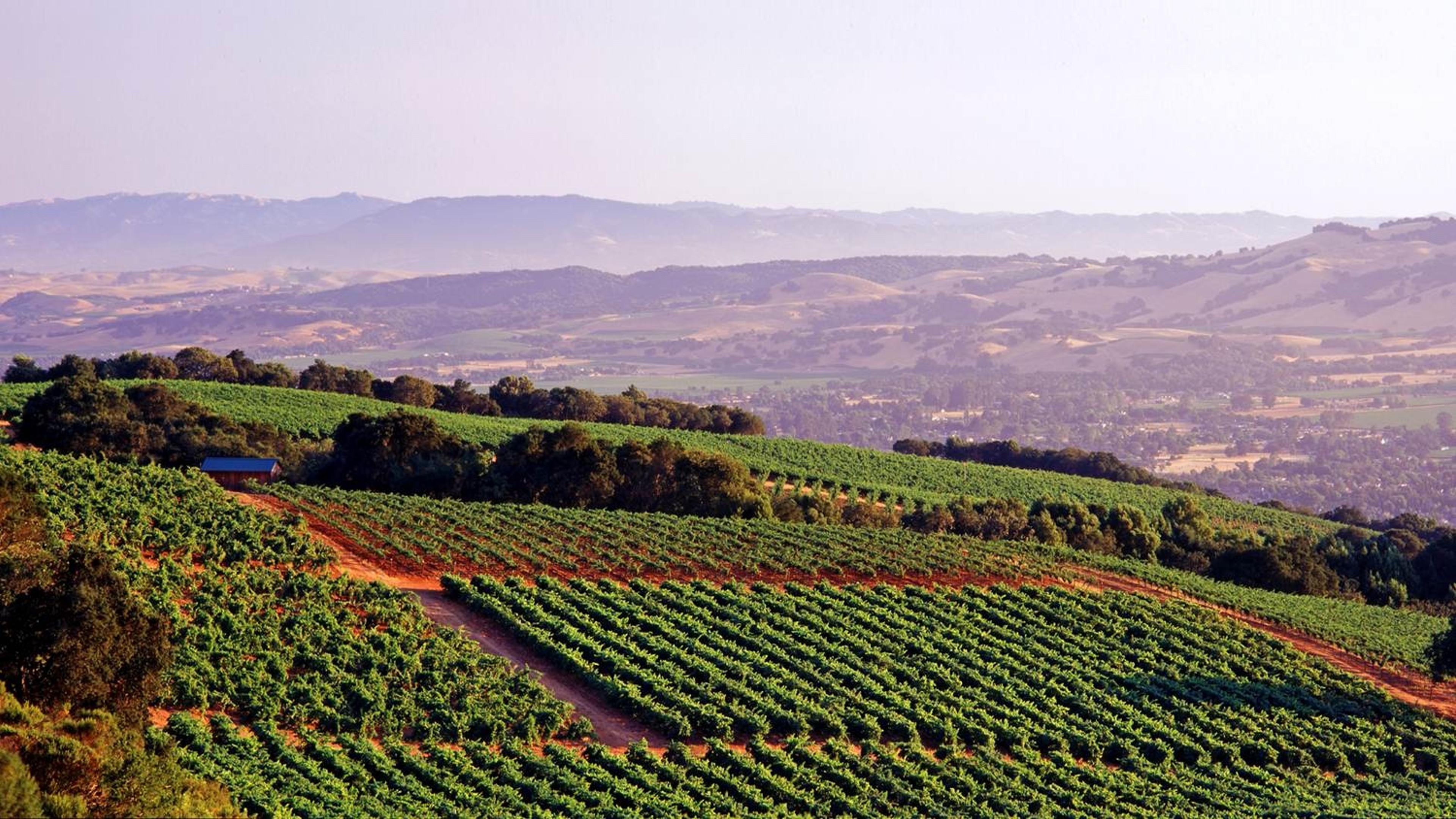
Far Mountain was established in 2018 after Soto found a suitable vineyard in the Moon Mountain district AVA. A remote area of Sonoma in California situated on the Pacific ocean where vines are tended on rugged mountain sites spread across more than 7,000 hectares.
Soto was confident the region had the potential to produce some of California’s most exciting wines.
Initially established as something of a side-hustle, the operation has since grown into a profitable, sustainable and award-wining winery, focusing on high elevation, low intervention wines.
It currently produces around six tons per hectare a year, making around 50,000 bottles in total and now ships to the UK and Chile.
Growing as a winemaker
But how did Soto and his wife reach this point? He says he first became interested in organic and biodynamic farming purely by accident.
As a self-confessed “mediocre student” studying agronomy in Santiago in the 1990s, Soto says that when it came to deciding what to choose for his thesis, it was one of the few subjects that was left.
“You were assigned a subject based on your grades, so I was basically given the leftover subject that no one else wanted!” he says.
But Soto has had the last laugh, becoming a champion of organic and biodynamic viticulture in Chile and acting as a pioneer for – at the time innovative - model of farming that back in the early 1990’s few winemakers were adopting – or even taking seriously.
One exception was Álvaro Espinoza, widely considered to be the godfather of biodynamic viticulture in Chile, launching the country’s first organic wine brand in 1997.
Needing to find a placement where he could carry out research for his thesis, Soto approached Espinoza and secured an internship, where the older man passed on his enthusiasm for the alternative farming methods.
“Alvaro had this passion for organics, despite everyone laughing at him – at the time nobody took him seriously, but he was making some phenomenal wines.”
A move to California and a spell working for Fetzer,one of the few wineries that were big in to organics, was where Soto met one of the most influential figures in his career, the biodynamic consultant Alan York.
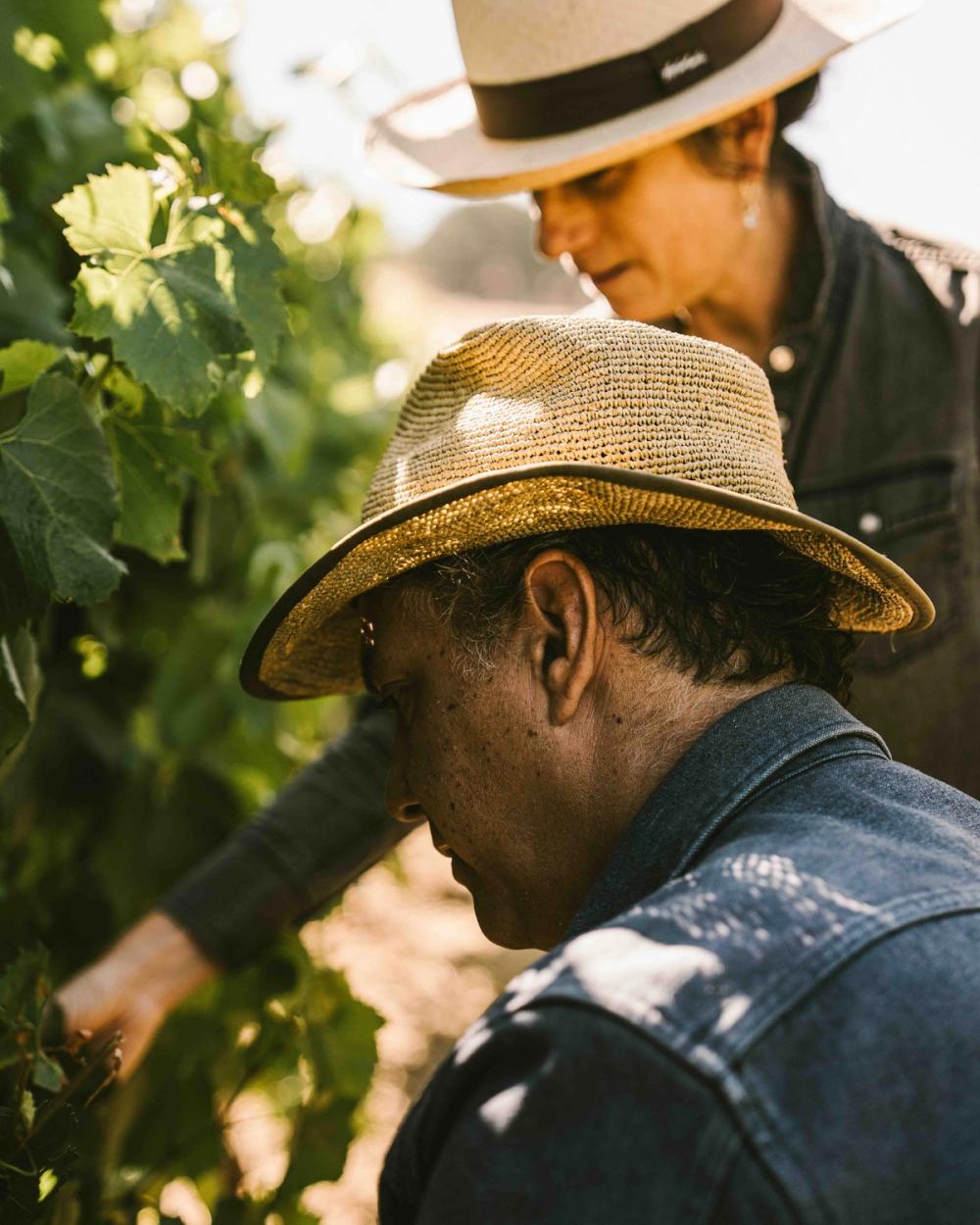
Rodrigo Soto has always been drawn to organic and biodynamics and is currently looking to convert his Far Mountain wines over firstly to organics
Work experience in New Zealand with Wither Hills followed, then “my first proper job” with Matetic in Valparaiso back in Chile.
At the time the winery was farmed along conventional lines, but Soto’s passion for organic and biodynamic winemaking helped him to persuade the owners to make the switch.
“We started making some fabulous wines, and persuaded Alan to come to Chile to help with the project, bringing biodynamic wine to Chile for the first time.”
A return to California and working as winemaker for the Benziger family ensued. By this time he was married to his wife, Mai Errazuriz, and with two young daughters in tow, the couple decided in 2012 that the time was right to return to Chile, where Soto joined the pioneering Casablanca winery Veramonte on the proviso that he could transform all their properties to organic farming.
Meanwhile, Mai started in a marketing role working with Eduardo Chadwick at Errazuriz.
“It was an incredible ride,” says Soto. ”Bringing Veramonte back to a very competitive level.”
Four years later, however, the business was sold to Gonzalez Byass, which Soto masterminded.
“Like every transition it was a process that I learned a lot from. I cannot say that I totally enjoyed it because change is often difficult.”
Setting up in California
After six years, Soto returned to California as estate director at Quintessa, which is when the seed of an idea to set up on their own started to take root.
By this stage in his career, Soto has spent enough time in the US for some of that famous American entrepreneurial spirit to have rubbed off, and the couple made the decision to start their own winemaking operation as a side line.
“It’s a very different culture in the US compared to Chile which is less entrepreneurial, or it certainly was at the time.”
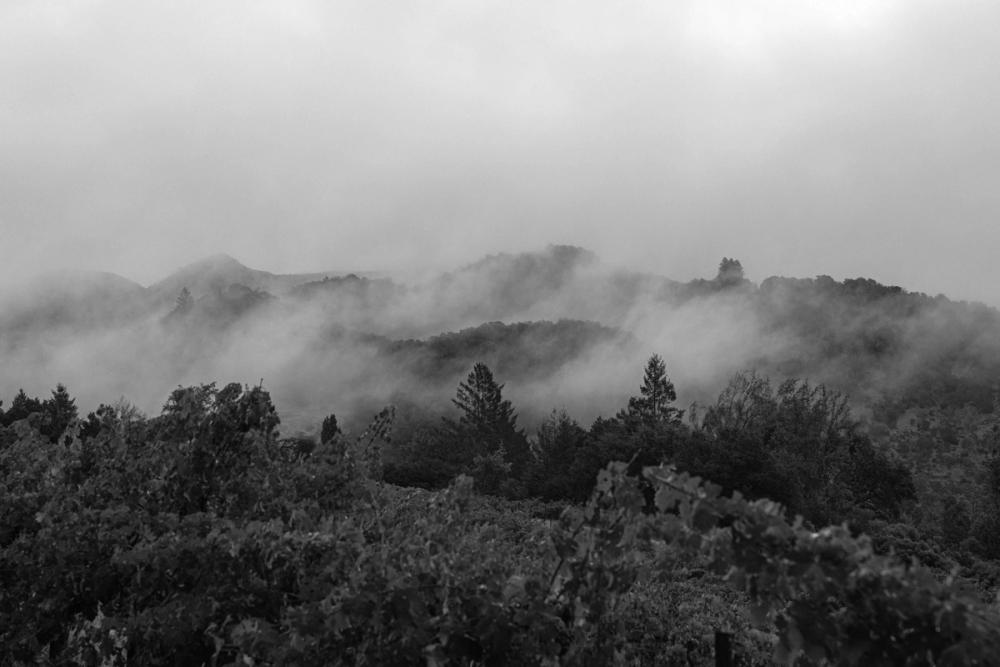
It's all about altitude and geology at Far Mountain
Soto and his wife started looking in the Moon Mountain region, a relatively new appellation established in 2013, confident the area had the potential to produce exceptional wines.
“Our search for Mountain fruit was very intentional,” he explains. “We strongly believed that you could produce wines with so much character, interest and depth in rocky high elevation locations rather than the valley floor.”
He adds: “But more than looking for property, we were looking to rediscover vineyards that had been forgotten or under-estimated. It feels very special when you find opportunities like that, which only happens when you apply a different ‘lens’ to observe what has been done in the past and been misjudged or mismanaged.”
After an extensive search the couple stumbled across the plot in the Moon Mountain District AVA in Sonoma, where elevations start at approximately 400 feet, and rise to a peak of 2,600 feet.
“The Moon Mountain District is the only appellation in the region that is defined by elevation and geology, and I thought that was a very cool concept, and that it had the potential to produce some great wine.”
And so Far Mountain was born, with the name alluding to the vineyards being far from the couple’s homeland of Chile, as well as the fact the vineyard is situated in such a remote location.
“Bigger businesses have no interest whatsoever in trying to get to these places because the logistics are complicated and it’s a bit of a headache, with long winding unpredictable roads – even though it’s only about an hour’s drive to San Francisco.”
Big potential
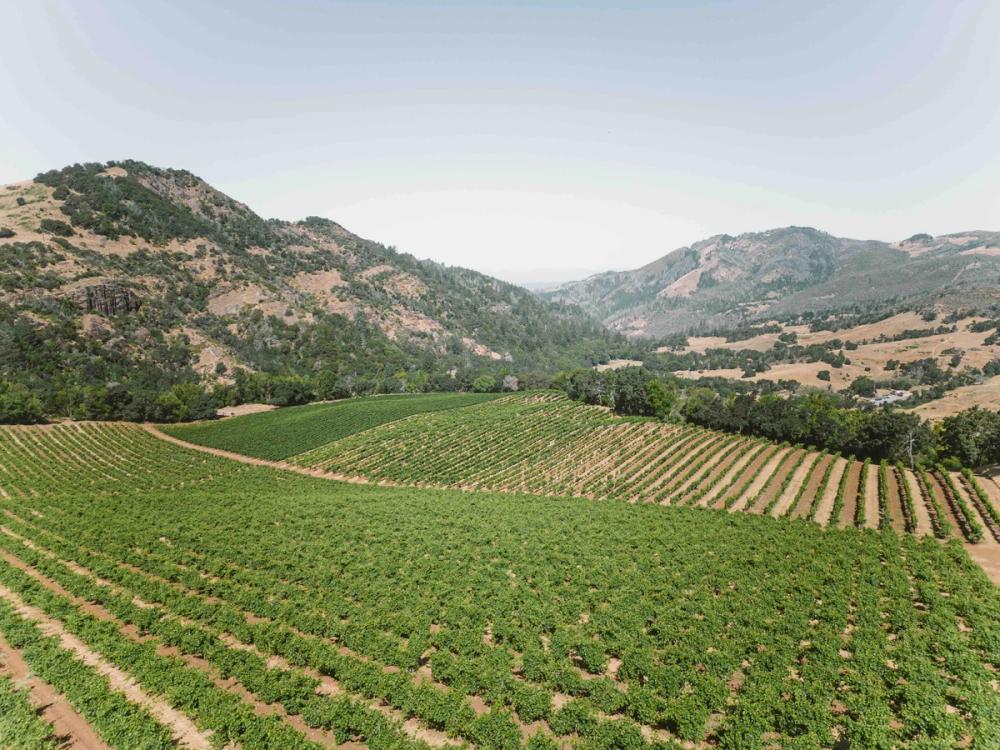
Rodrigo Soto has always been excited about the potential of the vines that the wines they could make at Far Mountain
But Soto immediately spotted the potential of the vineyard and its old vines, planted back in the 1970’s.
“They were considered under-performing vines but for me they were perfect. I saw that they were going to have a lot of character and a lot of variation.”
Variation, however, is not something that regions with greater resources such as Bordeaux and Napa are keen on.
“This is not for winemakers who are looking for consistency and predictability. They sell a very consistent product, and that’s what I was doing at Quintessa, for example. But you come to realise that there is a beauty in the unknown as well, and that is a component I like a lot. At the end, science can give you a lot of answers, but it can’t give you all the answers, and I accept that.”
The vineyard was dry-farmed and has never been irrigated, which Soto says “is unheard of” in the region.
“This means the roots go very deep, and through the cracks of the rocks, so the level of interaction between roots and rocks is very high and the grapes carry a powerful signature of the mountain in the vines.”
Soto struck a long-term contract with the vineyard owners to supply him grapes, rather than buying the land and so the Far Mountain journey began.
“To own land in this part of the world is a big financial commitment, and we are not prepared for that at this point.”
But he hopes that at some point in the future the couple can realise their dream of making that investment come true.
“Hopefully one day that will become a reality. We currently work with seven different properties in the area, and our relationship with them is exceptional.”
The business buys in grapes from different regions, but concentrates solely on Cabernet Sauvignon and Chardonnay. While the Cabernet grapes are supplied on an exclusive basis, the Chardonnay fruit is shared with another winemaker.
“I am happy to work with these two grapes, which are the best adapted to the region,” he says. “I have experimented with lots of different grapes in my time, and it’s interesting and challenging but now I want to keep it very focused, and go deeper rather than broader."
“Being a specialist is important, and while I enjoy other varietals, I don’t believe that you can do everything well. Something that is handcrafted is less credible when you try and do too many things, so less is definitely more in my book.”
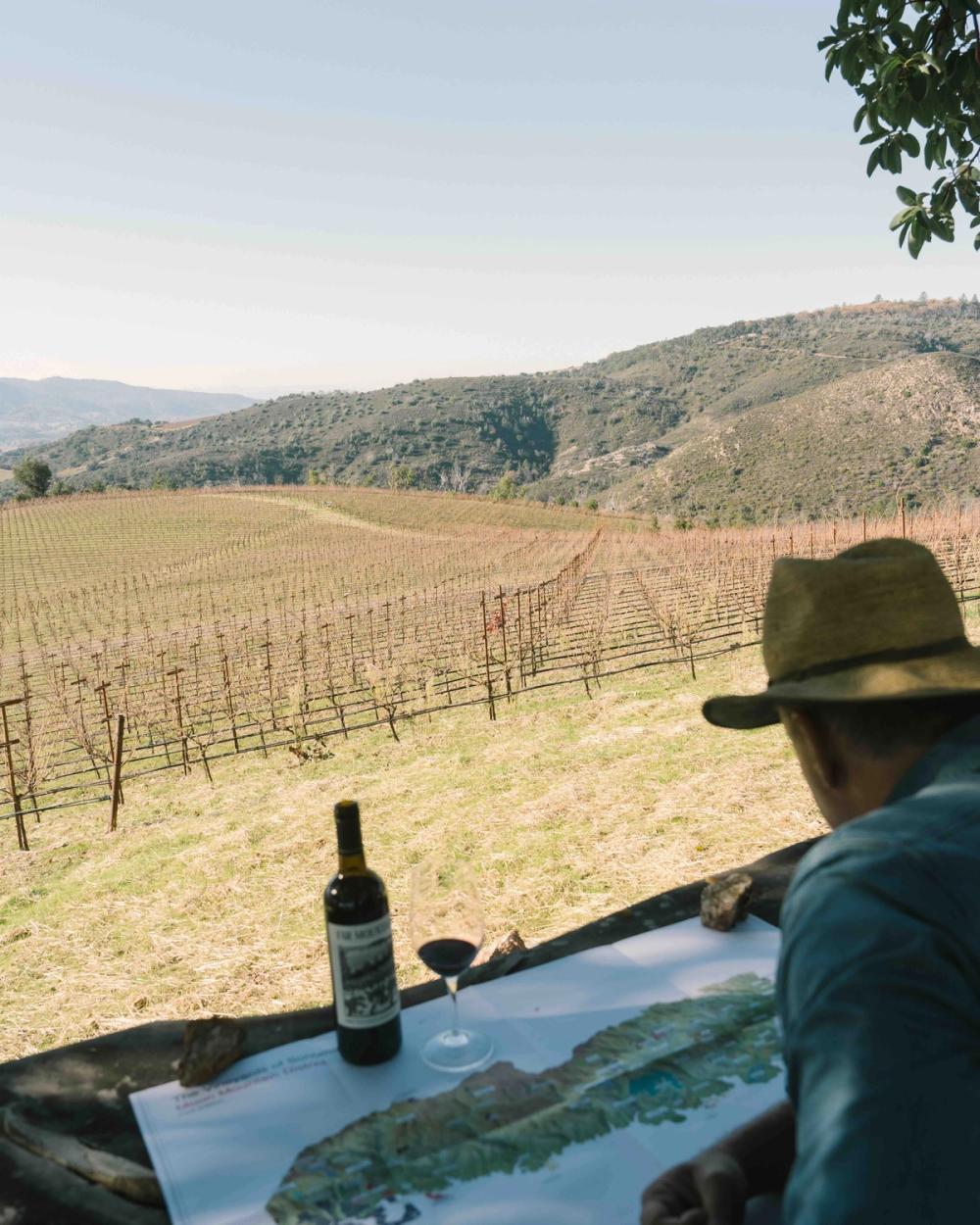
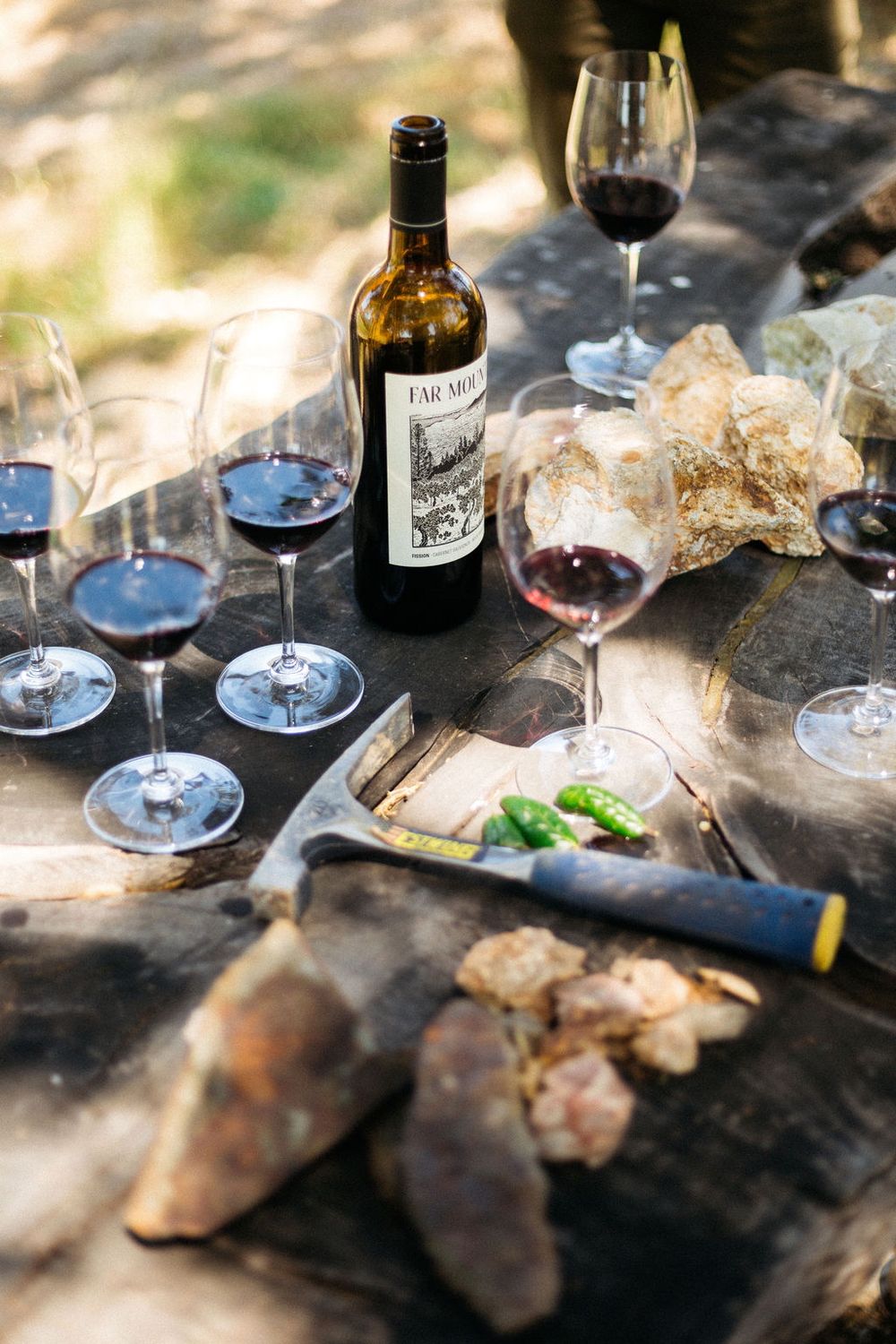
Sipping wine and making plans at Far Mountain
The vineyard was not originally farmed on an organic basis, so Soto launched a charm offensive to persuade the owners to make the switch.
“There was some resistance at first,” he says. “But in this part of the world with a dry, sunny Mediterranean climate where disease pressure is low, it is relatively easy to farm without pesticides and chemicals. It’s much more of a challenge in Bordeaux or Burgundy, for example, where they get far more rain than we do.”
A bigger concern for Californian winemakers, he says, are fertility and irrigation. “Once the soils dry out the fertility gets locked in so that’s why you need to work with specific rootstocks that give you the initial impulse for the vines to grow properly, and to carry on through the whole season.
Conversion to organics
The vineyards are currently in the three-year process of converting to biodynamic status.
After the organic conversion is completed he will then move towards biodynamics.
As he explains: “Biodynamics are very important for me and that is the goal but we are working on building its foundation first. Currently we have three organically certified properties that we worked with and two more are in transition. It is a step by step approach and the beauty is to keep moving forward with concepts that we feel very identified and part of our values.”
He adds: “It depends on the site, but when you start treating the land differently you see the changes very quickly. But the biggest step in my opinion is from conventional to organic farming – that’s a massive change, the biggest cultural shift.”
The favourable weather conditions mean that climate change poses less of a problem for vineyards situated at altitude, he claims.
“People are definitely trying to escape from the valley floor to altitude to reduce temperatures.”
But one overlooked aspect of changing weather patterns, says Soto, is the sheer ability of plants to adapt.
“When you work with old vines it’s a humbling process because you see their capacity to adapt to the circumstances. And they have adapted well over the years. The proof is that they are still there!
“What we are looking at is to add engineered solutions to our vineyards to mitigate. Meaning heat mitigation sprinklers, or adding more tools to control the process. But that’s what some people don’t like about vineyards like this – that they self-regulate and self-control, and you have to do very little except adapt your processes to the season.”
Far Mountain’s Myrna Chardonnay is produced from grapes grown in the Bald Mountain vineyard, which sits at 550 metres above sea level in the second highest peak in the Mayacamas mountains.
Planted in 1972, the vines grow in a cool valley in volcanic terroir at the base of the site and are planted with heritage California clones and rootstock. Dry farmed, which enables the vines to thrive in poor soil, the grapes have a distinct salinity to them.
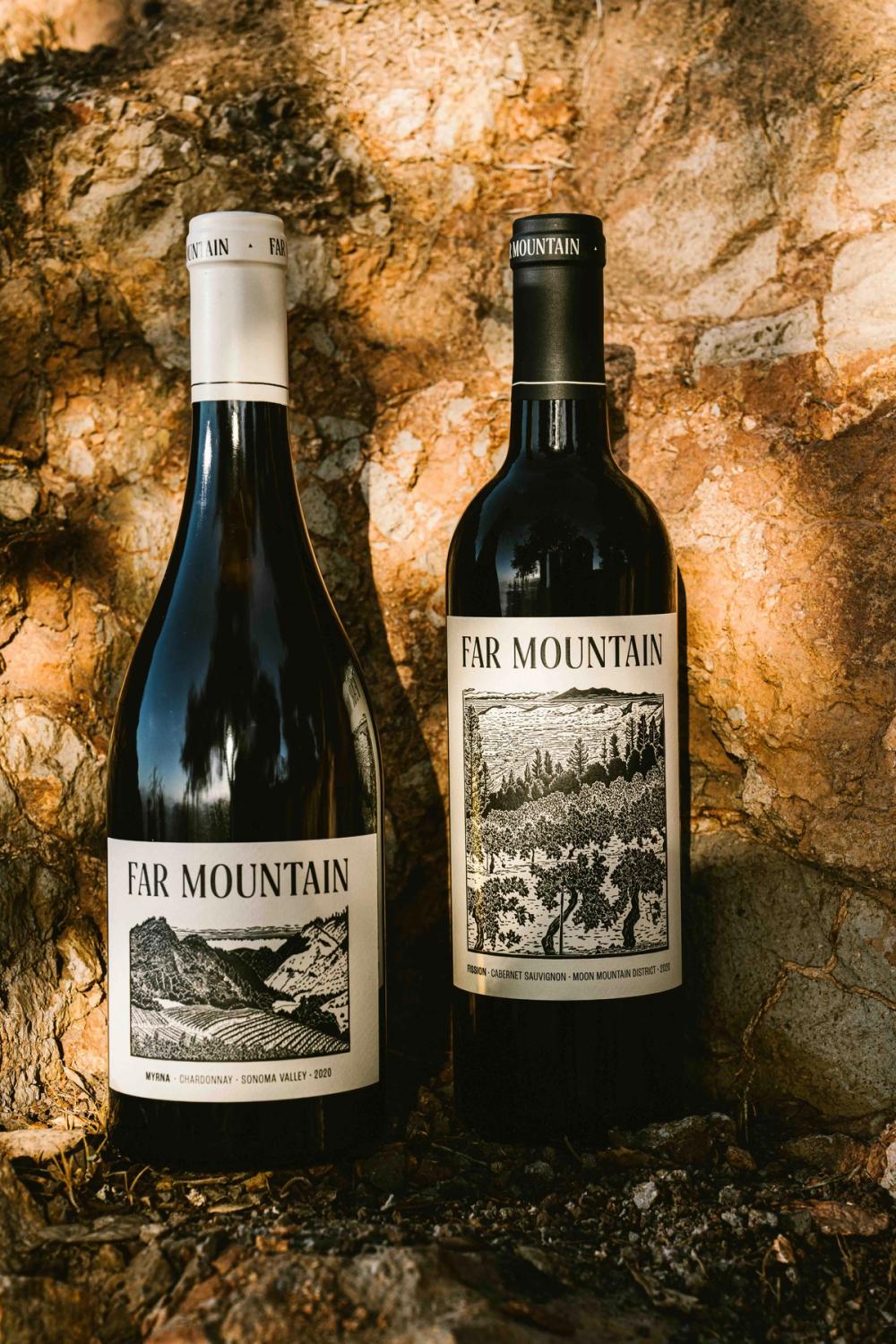
Far Mountain makes a wide selection of high elevation wines
Another of Far Mountain’s best-selling wines is its Fission Cabernet Sauvignon which is made from grapes grown in the Alta Vista vineyard where the 50- year old vines whose root systems burrow down 20 – 40 feet have also never been irrigated, and produce “exceptional fruit” at twice the age when most Californian vines need to be replanted.
Focused exports
Far Mountain exports little of its production but mainly sells to the US domestic market. However, it makes an exception for Chile and the UK, the latter of which is a small, but important market for Far Mountain, which has been working with Liberty Wines as its sole UK distributor for the past three years.
“I could easily sell our entire production in the US, but it’s important for our brand recognition and profile to be in foreign markets, especially the UK,”explains Soto. “It’s a key wine market where there is a high level of knowledge and readiness to experiment. It’s a very sophisticated market, as well as being curious and experimental.”
And it takes time to build a reputation, to get the word out and to meet key people in the market and to be considered a serious producer.
“I grew up in Chile, which means by definition we are exporters. Even if it takes a long time, the way to build a brand and position yourself where you want to be is via international presence. I think that’s fundamental, and worth the effort.”
Far Mountain is expanding its exports around the world
Far Mountain is now eyeing up various Asian markets particularly Japan, Korea and Hong Kong where the market for fine wine is strong.
While alcohol consumption continues its downward trajectory across the globe, Soto believes that what modern young drinkers are seeking out is “wines that have a purpose and a story to tell”.
He explains: “They are looking for wines that are meaningful, that come from a place they can relate to and that they feel is produced in a way that is fair, with social equity, organic farming, all those aspects matter to them.”
Making connections
As to the future of the wine industry, Soto thinks it fundamentally lies in building relationships.
“I think it all goes back to people, not so much branding. Entry level wines, those without a purpose – I think the future will be very challenging for them. Competition is brutal, and there’s less and less excuse for serving a bad glass of wine nowadays. The evolution of the industry has been phenomenal, and technology has helped in that regard. But the emotional connection is so important, and particularly so with wines that need to be hand-sold.
“At the end of the day people are going to choose Far Mountain because they like the wines, or they know me or my wife and they connect with that. Relationships are incredibly powerful. Buyers nowadays have so many choices that they are going to prefer what they know.”
At Far Mountain, where Soto is looking towards his eighth vintage, he says he will continue to do more of the same.
“It may sound a little boring, but for me, every season, you get better at what you do, and it’s through repetition that you really master the technique.”
* You can find out more about Far Mountain wines at its website here.