
It was a spectacular summer, more reminiscent of one from Northern California than one of England. May through August's accumulated heat hours far exceeded those in the heralded 2018 vintage - long considered the benchmark for what’s possible for British grape growing.
Three significant heatwaves, with several days reaching temperatures well into the low 30°Cs brought the promise that something spectacular was afoot.
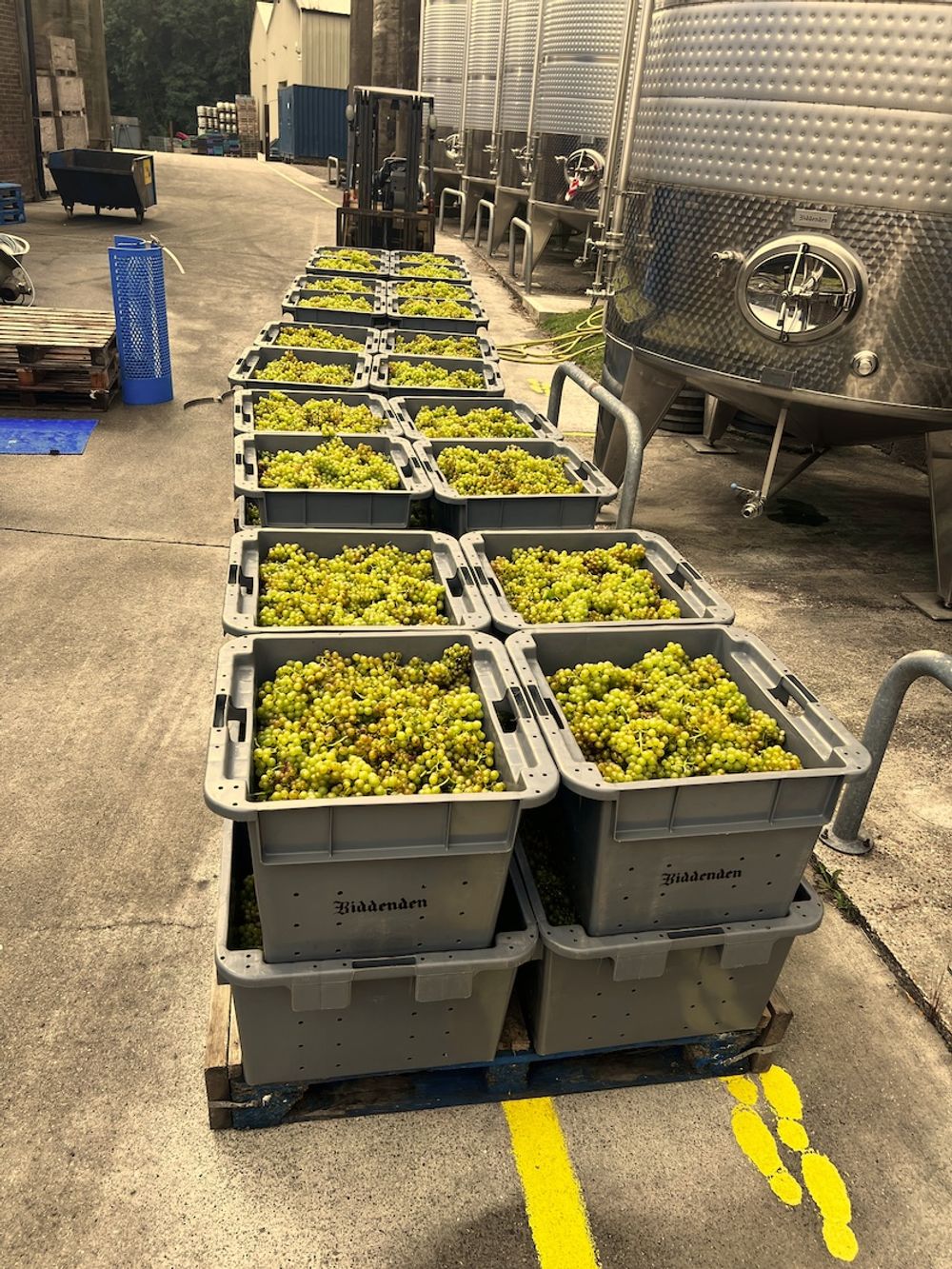
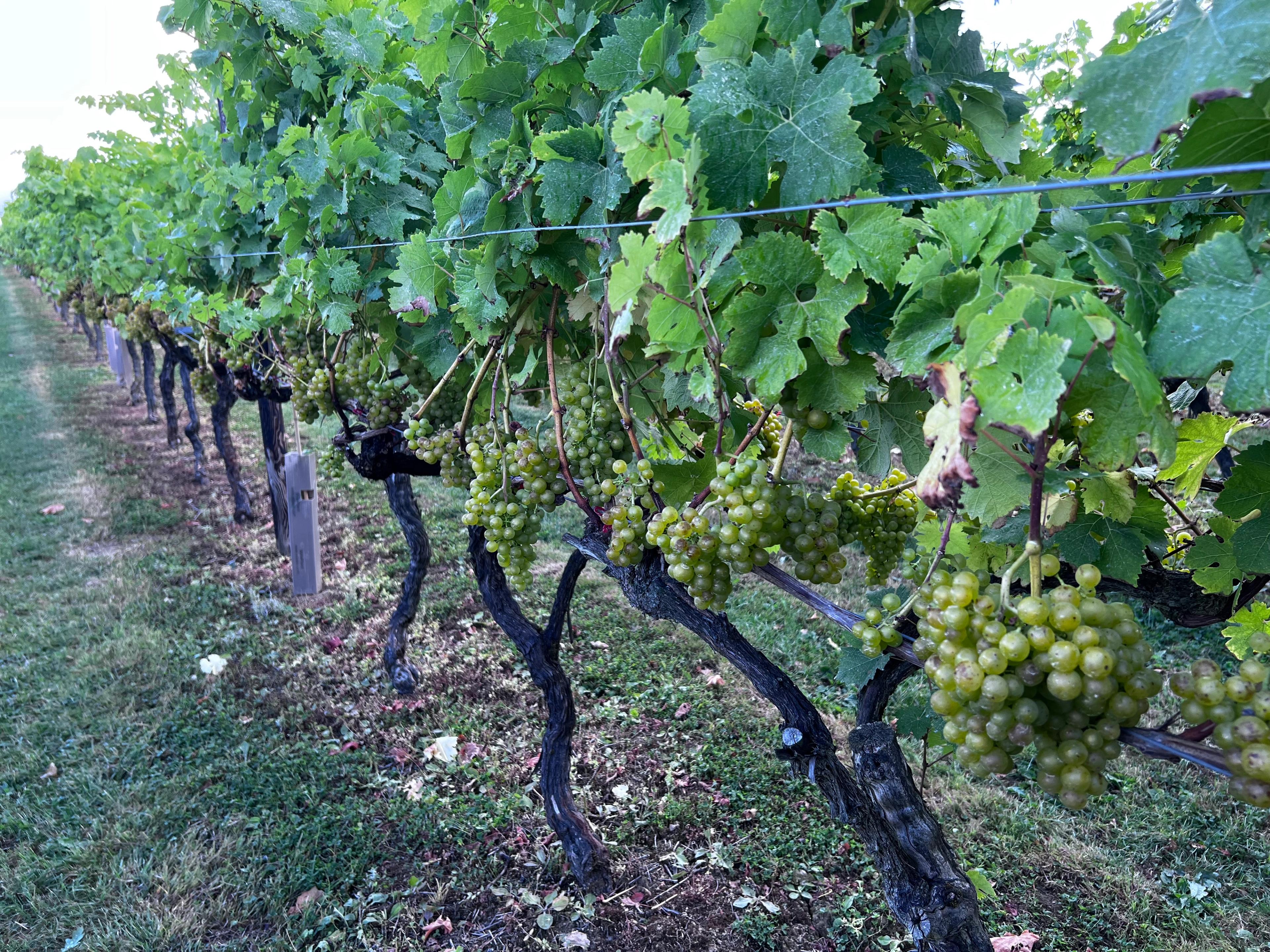
The first harvest of 2025 Biddenden Ortega grapes
This 30°C* is particularly important for growing the classical varietals such as Chardonnay, Pinot Noir and even the late ripening Riesling for making still wines; an increasingly important growing category and player in both domestic consumption, but perhaps more importantly for the export market
The cold spring and summer of 2024 lowered potential yields in some vineyards for 2025 which, in combination with the lowest rainfall in recent memory, kept grape clusters light and berries small – the universal characteristics for exceptional grape quality.
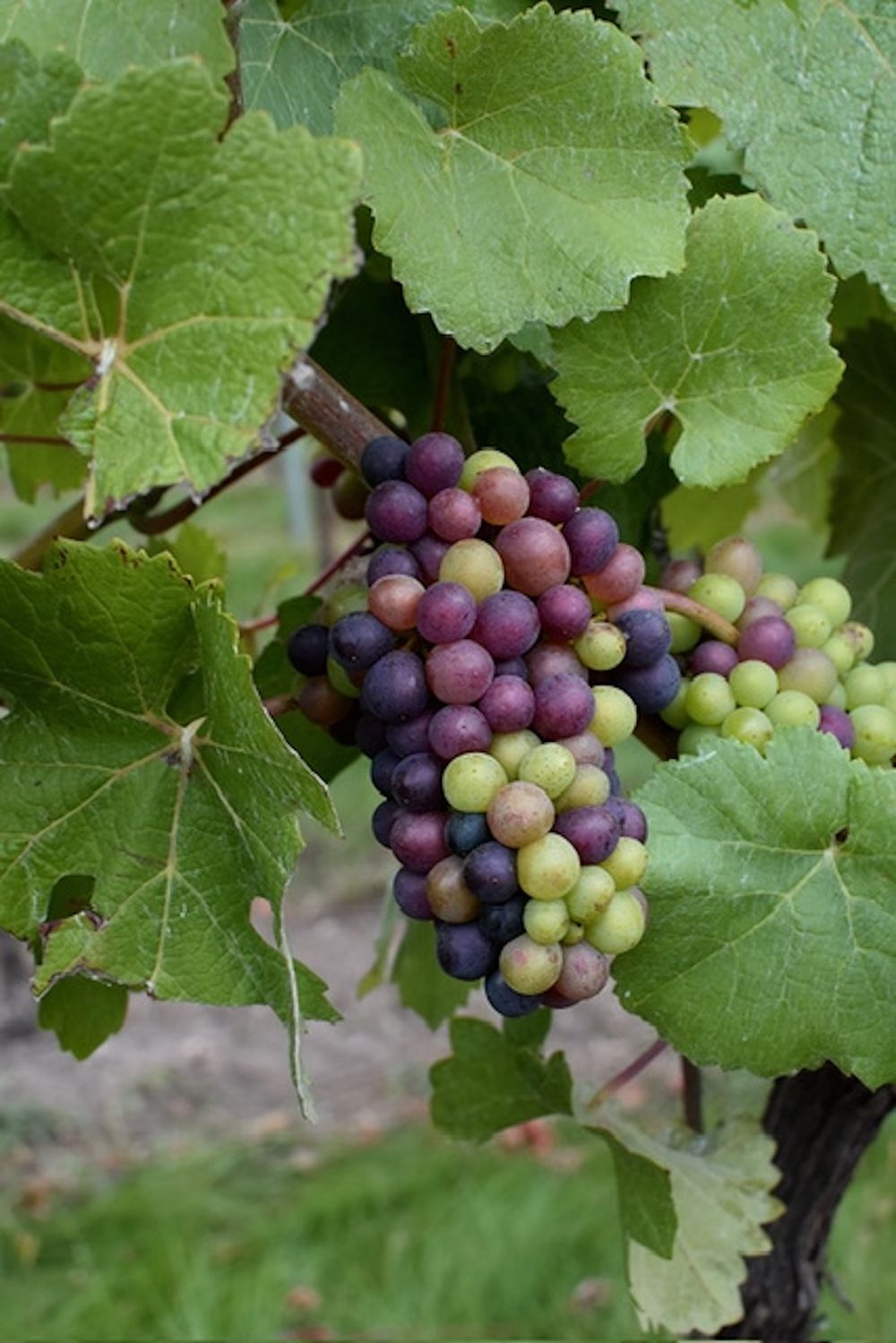
Veraison on Westwell's Pinot Meunier
All of the above has meant that Britain’s favourite homegrown, earlier-ripening, hybrid grape varieties, such as Ortega and Bacchus, have absolutely thrived and should create some stunning wines in 2025, that will be sought out by wine lovers everywhere.
A word about Ortega – classic aromatic white
Outside of England and Germany, Ortega is little known. It is a German hybrid bred for early ripening in cool climates, which is exactly where we usually are. In Kent, when made in a dry, clean style without malolactic fermentation or oak, it creates a delicious fruit-driven wine, often with the added bonus of being in the 'affordable category'.
Expect aromas of apple, pear and peach, with touches of floral spice. The palate is fresh and medium-bodied, with balanced acidity, plenty of stone fruit character and there are some savoury components too.
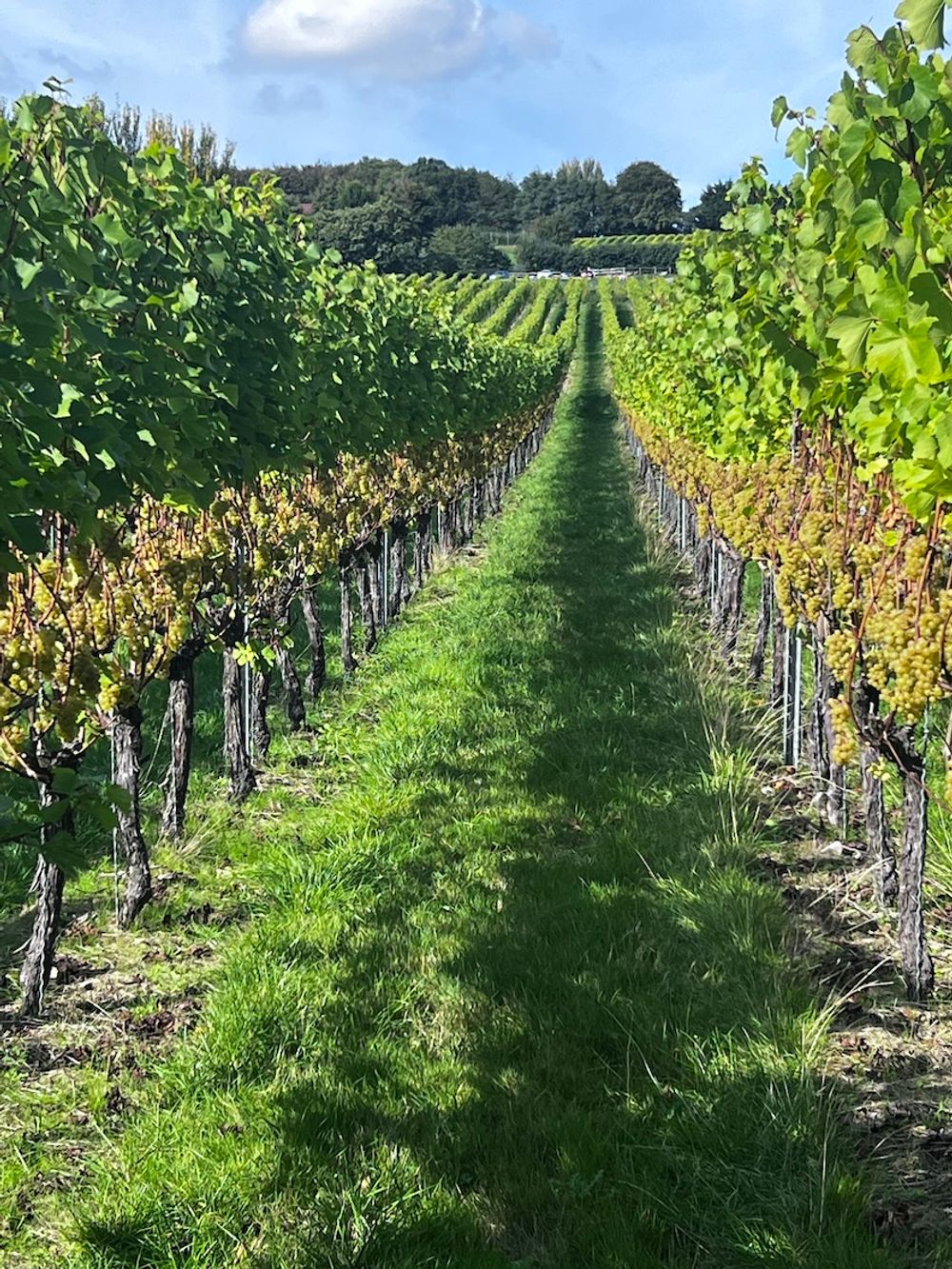
Healthy Yotes Court Chardonnay
Nicely chilled, and at just 10–11% alcohol, this is an absolute anyday drinker. I think of it as perfect for that uninterrupted conversation with lunch, or simply just an afternoon refresher.
Also rather good are Ortega wines made with skin contact, which increases complexity, particularly on the floral notes and texture and depth on the palate.
Kentish wineries to search for are Westwell Wine Estates, Biddenden Vineyards and Balfour Winery - all showcasing the versatility of this now traditional grape thriving here in The Wine Garden of England
Early September
Back to the growing season and flavours and physiological ripeness levels throughout the county were weeks ahead of a typical season – the first grapes for sparkling began to be harvested in absolute pristine condition with near perfect chemistry, closely followed by those early ripening clones and then a steady stream of still wine grapes.
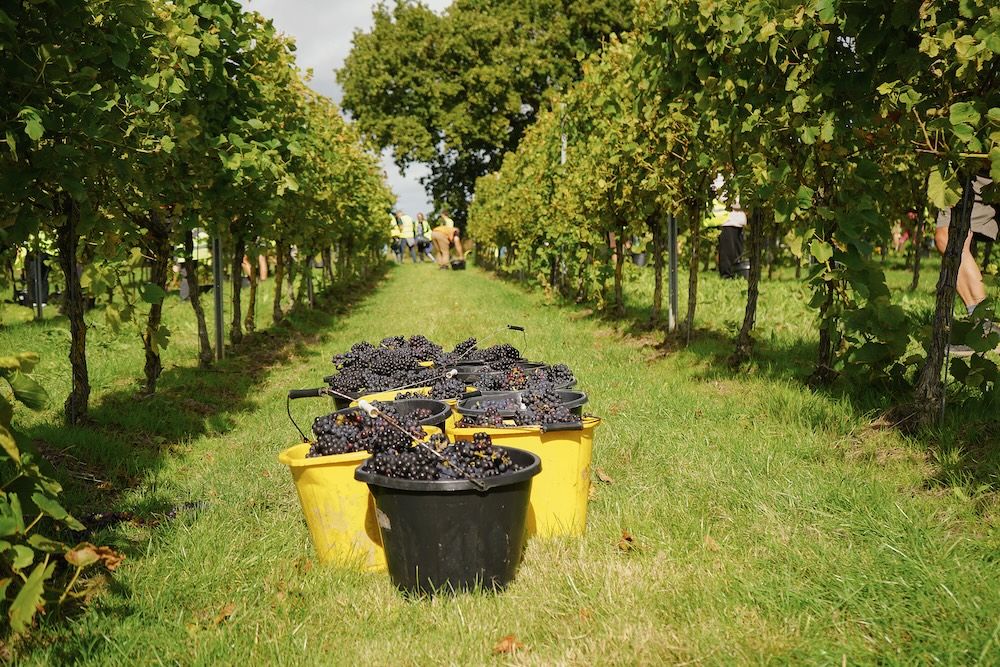
Pinot Meunier at Gusbourne's Boothill Vineyard ©Georgina Longhurst
Mary Bridges head winemaker at Gusbourne said: “We're pursuing quality, and we're delighted to see fruit with fantastic depth at this stage, showing a lovely balance between sugar and acidity. It's bursting with flavour, vibrancy and brightness, so we feel confident that this year's harvest has the potential to deliver a mix of bold, powerful still and sparkling wines for the 2025 vintage."
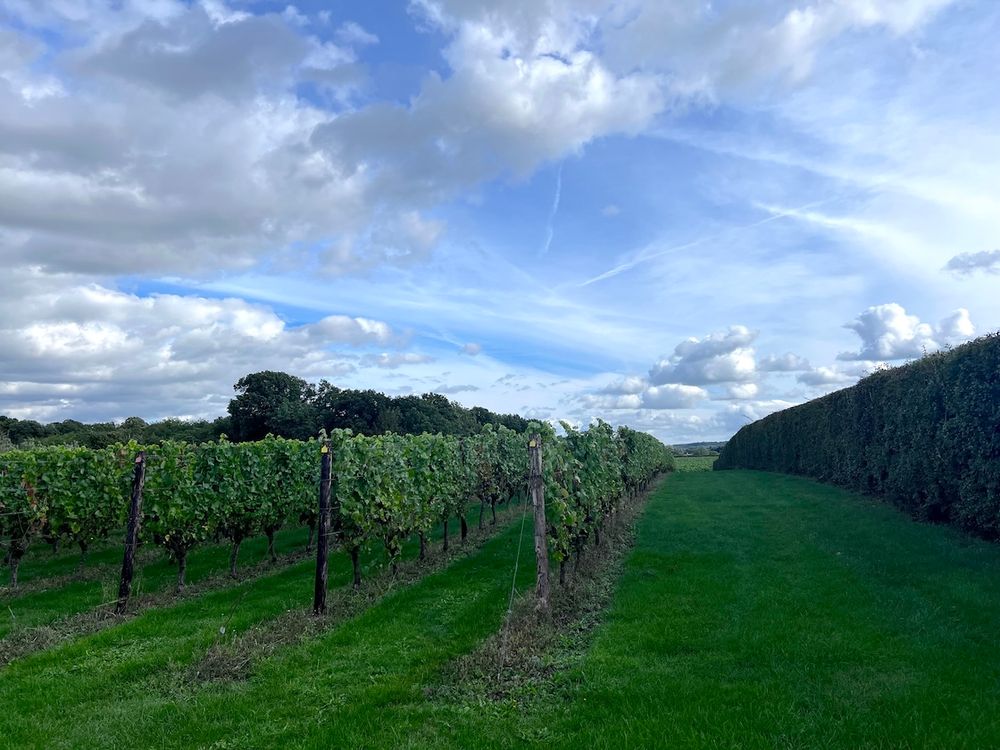
Balfour’s Hush Heath Estate Vineyard sheltered from the wind by hedgerows
A week into September
Fergus Elias, the inspirational winemaker at Balfour, believed that they might well be finished with harvesting before they had begun picking fruit at the same stage in 2024.
And then almost as the calendar month changed seamlessly so did the weather, with the first signs of a typical British summer appearing with a series of fronts sweeping across the North Atlantic bringing moisture, cloud cover and changes in temperatures for several days.
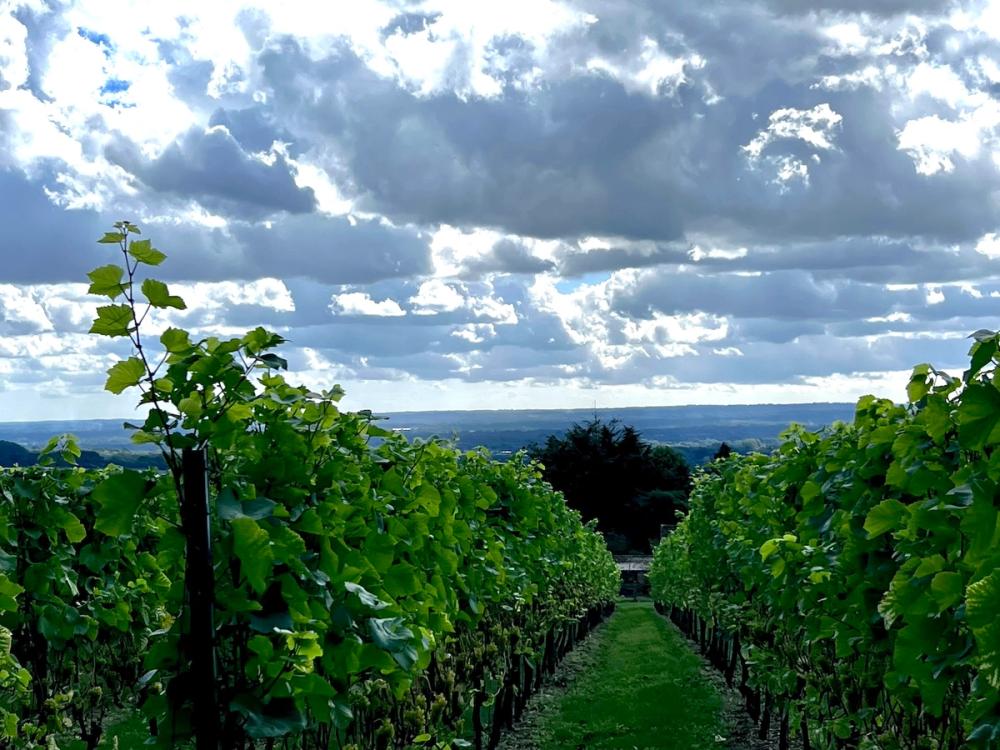
Yotes Court - the grey skies start developing
The East coast took the brunt of the rain and had broken up by the time it reached us, delivering a crazy mosaic of showers, sunbursts and squalls affecting every micro-climate across the Kentish landscape in varying patterns.
Our cool Maritime Climate’s onshore breezes seemingly drying everything out in a matter of hours keeping the vines and grape clusters free from issues.
Walking miles of vineyard rows throughout the following days revealed nothing but clean healthy fruit, bathed in sunshine kissing the fruit to full ripeness.
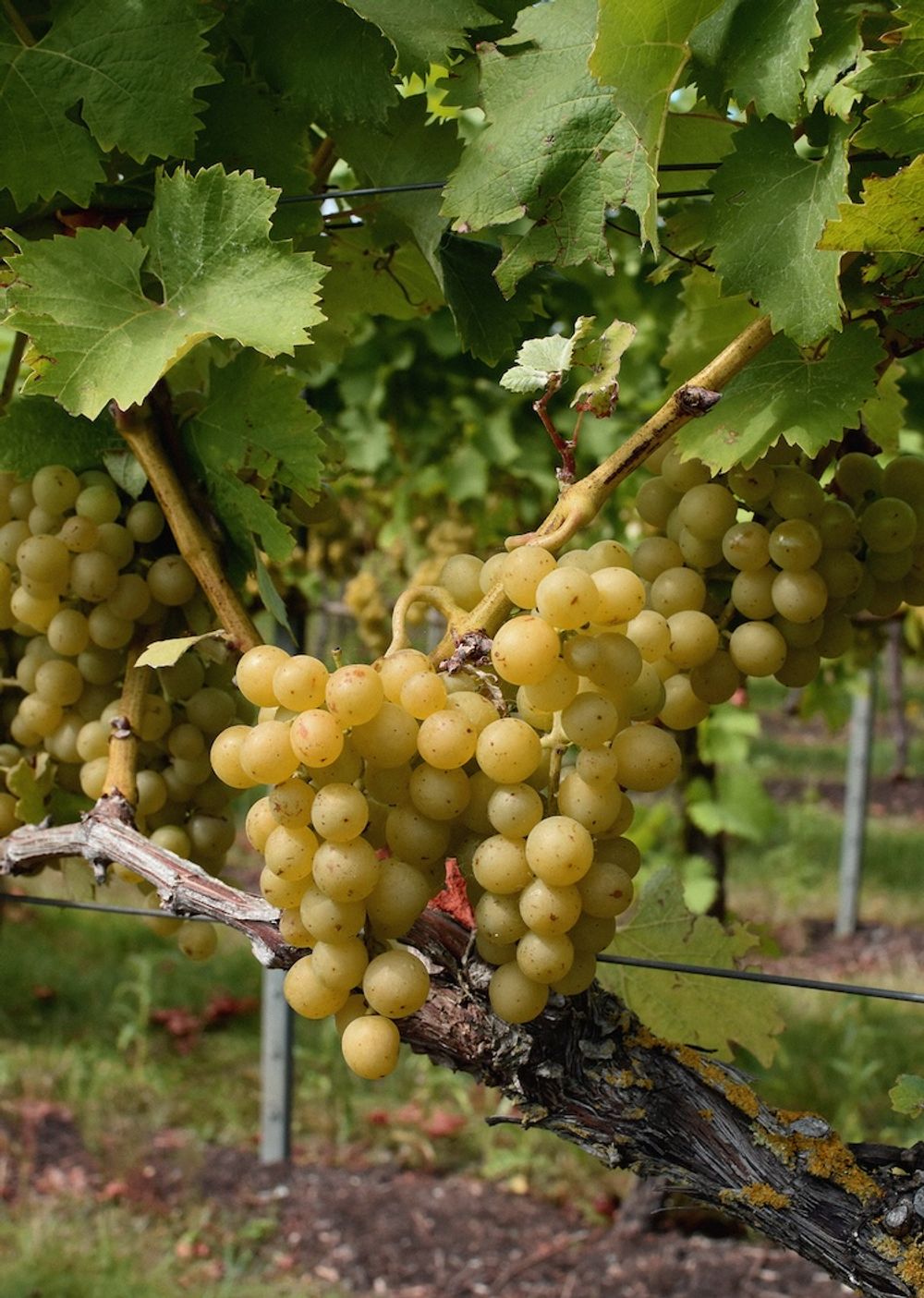
Westwell Ortega - pristine fruit after the September rains
September 11th
Josh Donaghay-Spire, Chapel Down’s veteran, dynamic winemaker said: “We have wonderfully healthy-looking vines and beautiful grapes almost ready to be picked - the cool maritime climate we have in Kent is now allowing the grapes to ripen with near perfect levels of sugar and acidity. The flavours are intense yet delicate and it’s these flavours which combine with our natural acidity to make the crisp and fresh wines we are known for.”
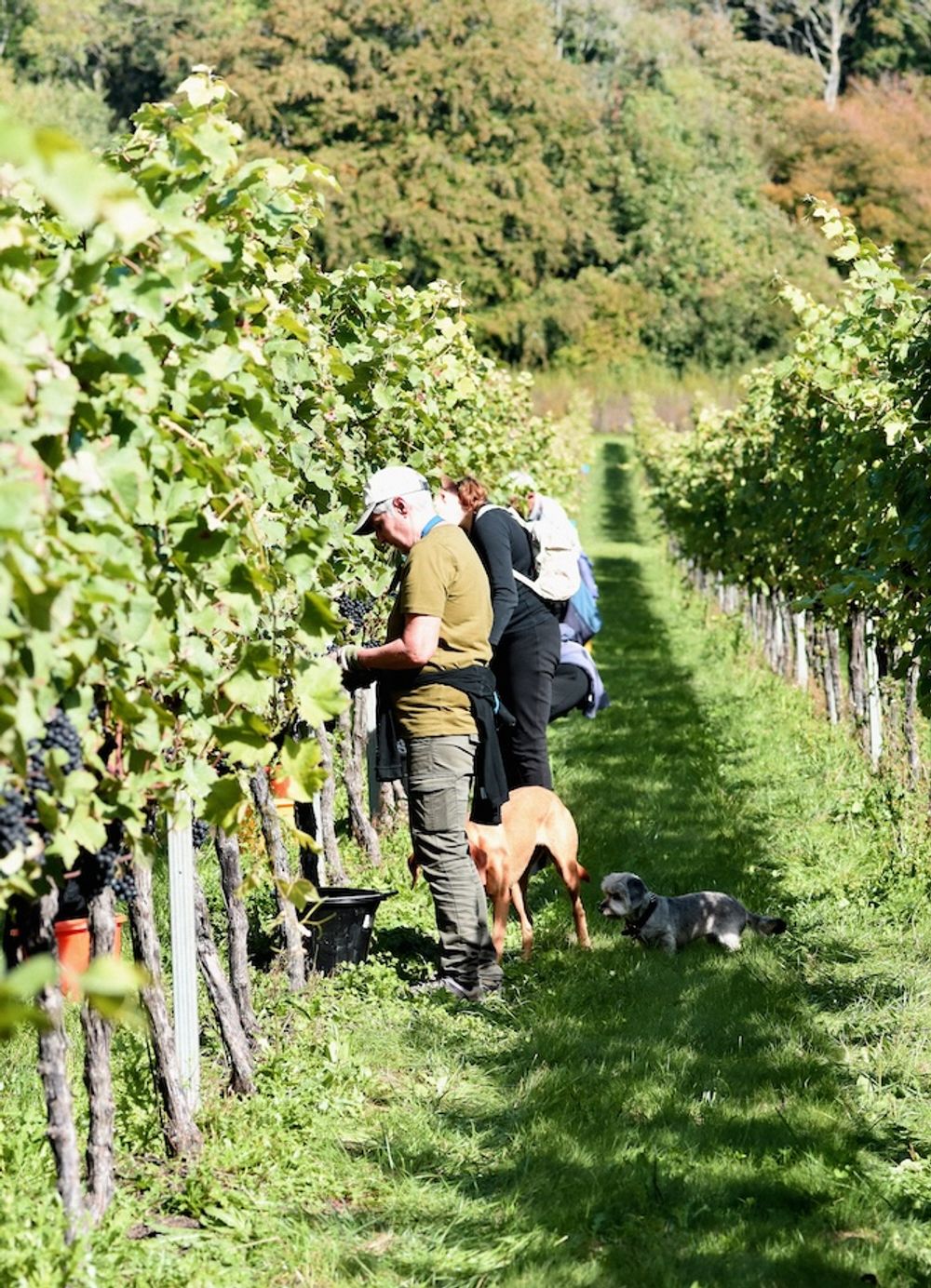
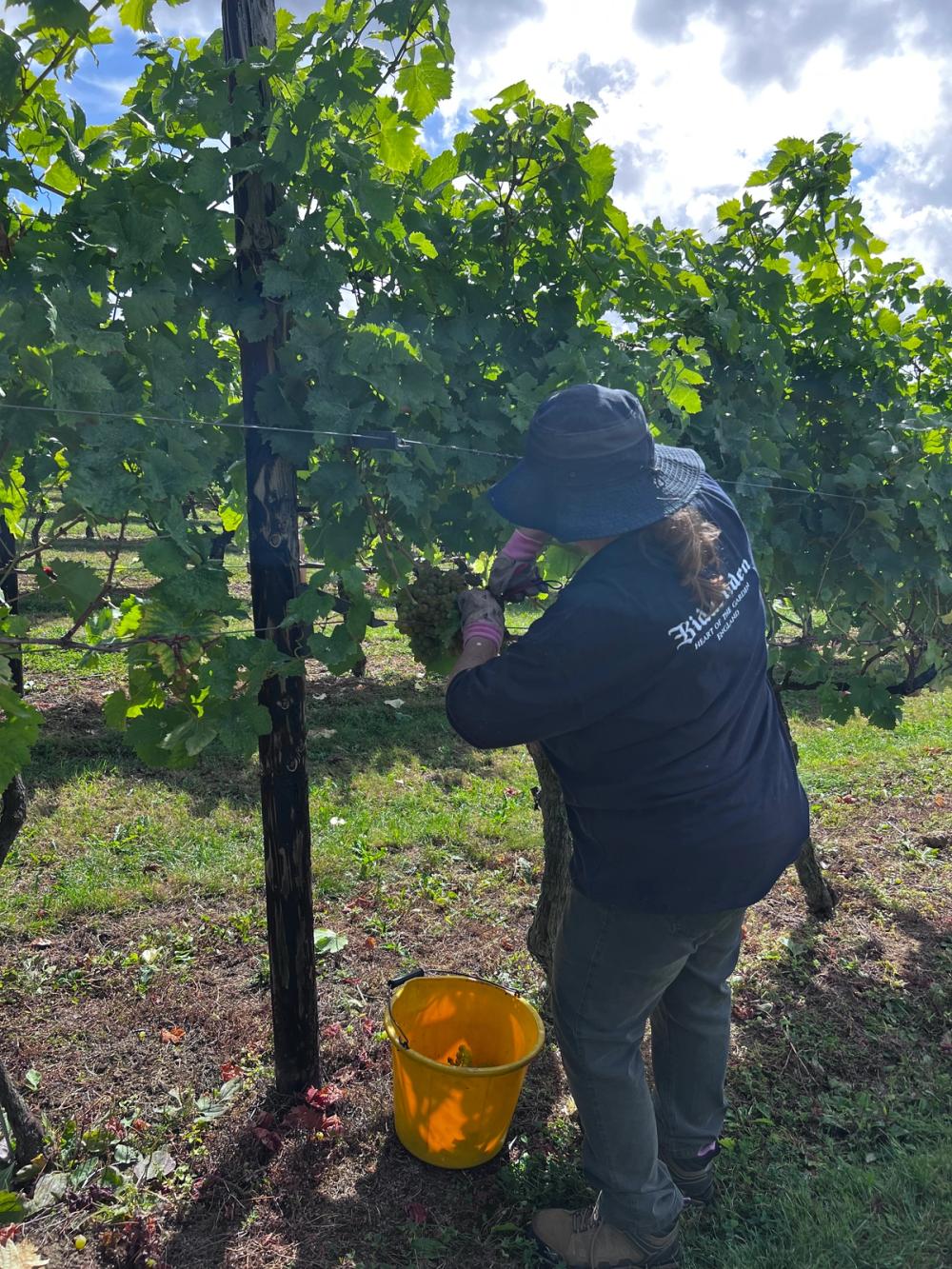
Harvestng at Westwell is a family affair
The next weeks brought on the core of this year’s grape harvesting and by the first week of October much of the fruit had been picked. Wine tanks were full, and the air was saturated with the heady perfumes and aromas of fermentation.
Within the next 10 days the majority of Kent fruit had been safely picked and the sense of satisfaction, pride and relief that only can only be breathed by farmers whose lives depend on a successful harvest was felt.
Mid-October
Temperatures dropped considerably and now the decision to capture every one of those crucial hours of sunshine before the weather turned would make the difference. Seasoned winemakers and viticulturists are so incredibly important and know when to pull the trigger on harvesting and truly make the difference in their wines.
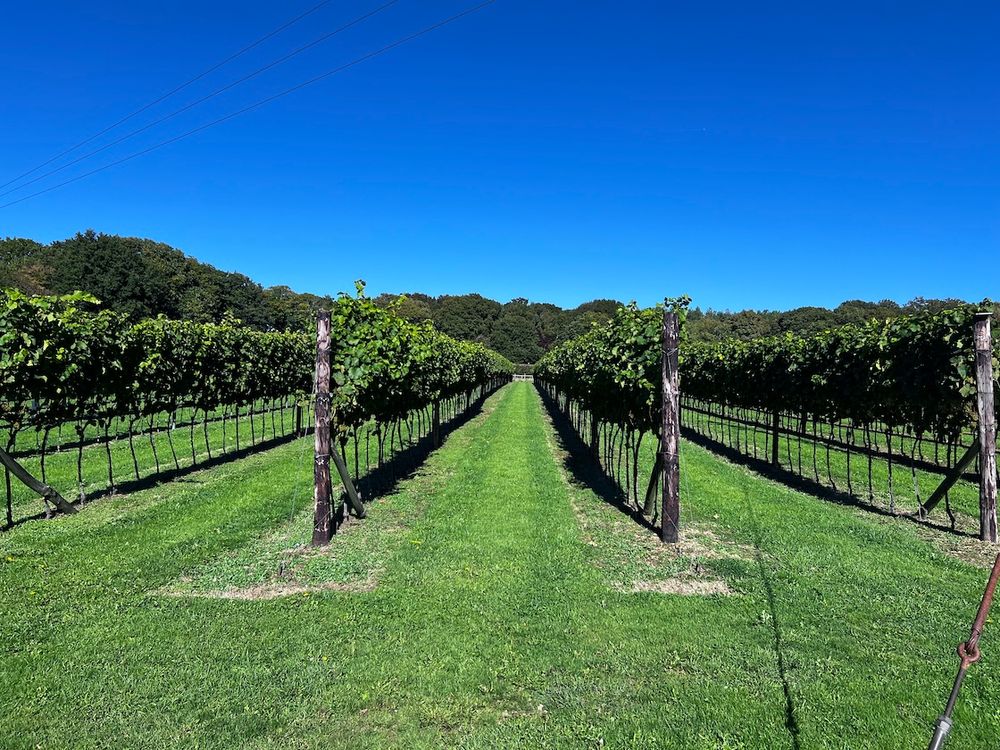
Riesling - wider rows at Biddenden help harness the late afternoon sun
Monday October 20th - the stretch
Any remaining fruit out there is under the astute guidance, knowledge and individual understanding of the limits one can expect from each vineyard and winemaking team who will make the best wines.
It’s probably no longer about flavours and physiological ripeness, but rather about managing those high acid profiles these climes are famous for, which will mean waiting it out.
Winemakers’ knowhow and experience will be on full alert through the coming days, not to mention their kahunas! Summer is officially over, and colder, wetter weather is on the way, with systems moving in from the northeast. Some canopies are still in fairly good shape.
For biodynamic growers, the phases of the moon will now play an important role, a factor that should never be underestimated.
In the winery, primary fermentations will be nurtured through November, and individual decisions about malolactic fermentation will be made to create wines that are in balance. Chemistry will be important, as these numbers can, and will make or break a wine.
Dan Barwick is a consultant winemaker - contact him on winesbydan@gmail.com
(*Reference 'Viticulture’ and confirmed with personal communication with Stephen Skelton)