You come from a third-generation orchard in west Dorset that historically supplied apples to large cider producers. What made you decide to start making your own cider instead?
As well assupplying apples to large cider producers I had been making small batches of cider for a number of years, mainly for friends and around our village, Beaminster, using fruit from our own orchard. It was fairly informal, but it gave me a solid grounding in how our apples behaved through pressing and fermentation.
The real turning point came in 2020 during Covid, when our supply contracts with the larger producers were suddenly pulled. Up until then our 40 acres of orchard had been geared entirely towards that system, with the potential to produce up to 500 tonnes of apples in a good year.
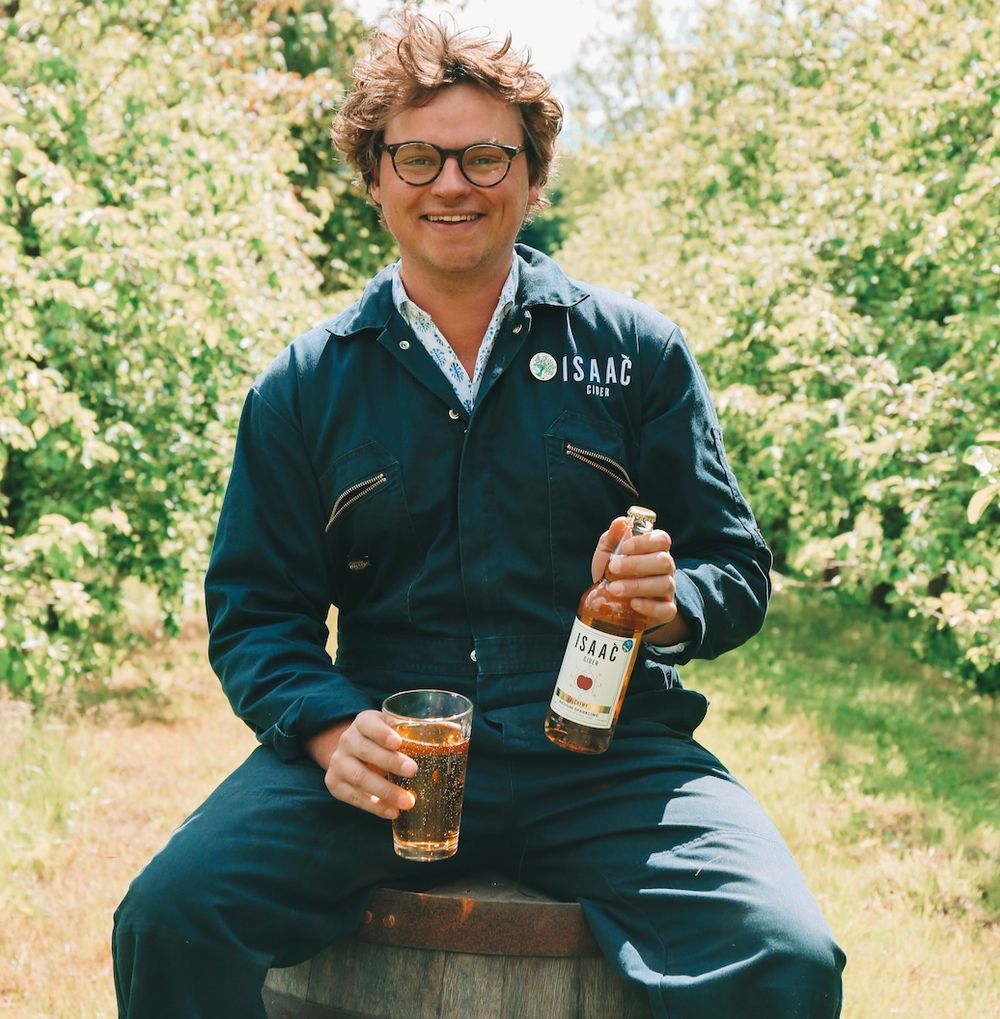
Rollo Wood comes from a family directly descended from Sir Isaac Newton - hence the name for the business - Isaac Cider
Losing those contracts meant we had to quickly reassess the future of the farm and what to do with the orchards. There was a serious conversation about grubbing them up. But given the age of the trees and the fact I had grown up with them that wasn’t something I wanted to pursue.
Instead, the focus shifted to how we could retain the fruit and add value ourselves, which ultimately led me to leave my job in TV production and scale up our own cider production full-time.
Isaac Cider takes its name from your family’s ancestry connection to Sir Isaac Newton. How are you using that link to build the brand?
It was a pivotal moment for us and a connection that immediately gave the brand a clear narrative framework to build around. The association with Sir Isaac Newton and the story of the falling apple is well known, but what really appealed to us was the breadth of his work across science and discovery.
That gave us a coherent naming architecture for the range. Each cider is linked to a scientific principle that reflects its style and structure for example, Refractionas a lighter, more delicate sparkling cider, or Alchemy as a richer, higher-strength vintage expression. It creates a language that communicates something about the liquid in the glass, not just the label.
From a brand perspective, we’ve taken that idea of precision and clarity and applied it to the visual identity as well, a clean structured design that mirrors the balance, tannin profile and overall composition of the ciders themselves.
We’ve also leaned into the provenance of the story. Visiting Woolsthorpe Manor and securing a sapling from the original tree through a charity auction was a meaningful way of connecting the brand back to its roots quite literally and reinforcing that link between orchard, history and product.
Tell us about the orchard itself - what makes the fruit you grow in west Dorset distinctive for cider making?
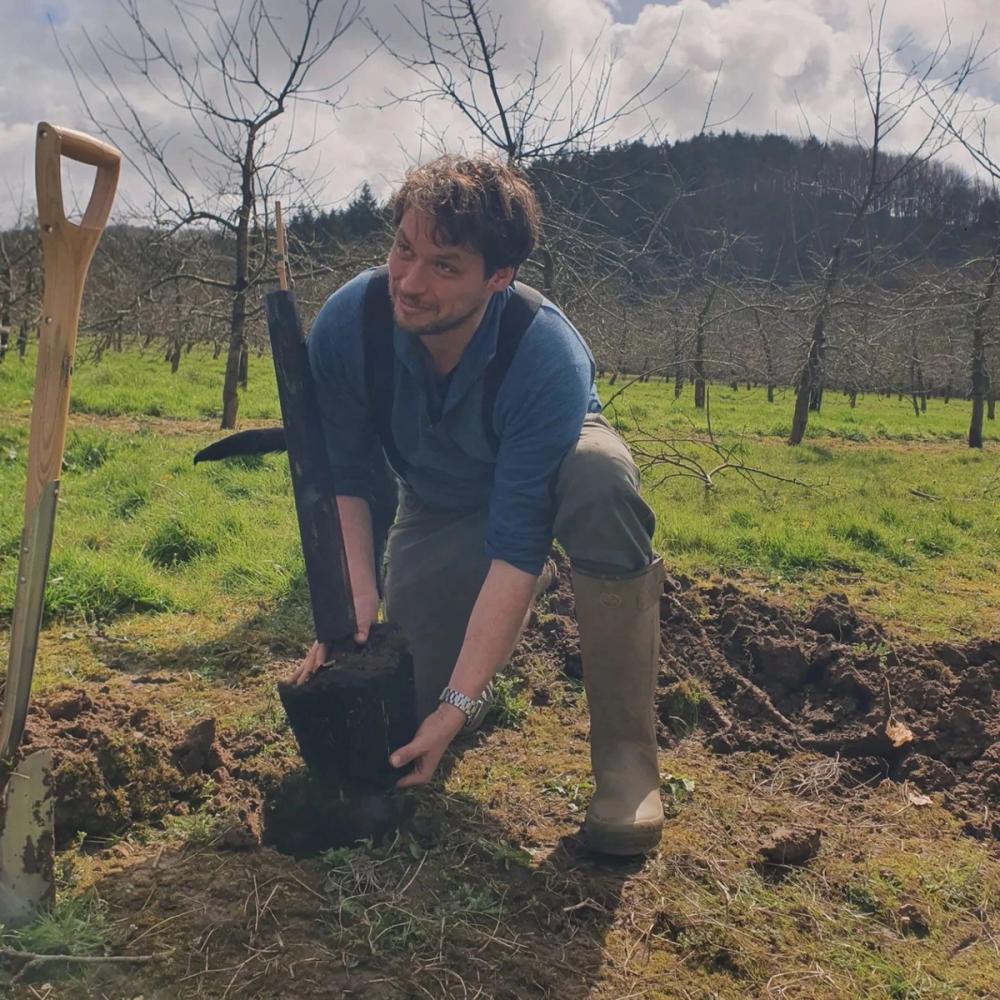
Isaac Cider is embedded in the provenance of west Dorset where its family 40 acre orchard is
West Dorset is an excellent site for cider apple production. We’re working with grade one agricultural soils, which gives us consistently healthy, well-balanced fruit year-on-year. Being just outside Somerset, there’s a strong cider-making heritage in the area, but we like to think our specific site conditions give us a distinct edge in terms of fruit quality.
Climatically, the south of England works well for us. Warmer springs support good blossom and fruit set, followed by relatively long, warm summers that help drive sugar accumulation. We then typically see rainfall in early autumn, which allows the fruit – particularly Dabinett – to fully size and reach optimal ripeness ahead of harvest. That balance between sugar, acidity and phenolic development is key to the style of cider we’re aiming to produce.
We work primarily with Dabinett, a classic West Country bittersweet variety, which gives us reliable tannin structure, depth and mouthfeel. By focusing on a single variety, we’re able to really explore its range of expression across different styles within our portfolio.
All of our cider is produced on the farm using fruit from our own orchards, which gives us full control from orchard through to fermentation. That proximity allows us to make more precise picking decisions and handle the fruit exactly as we want, which ultimately translates into greater consistency and definition in the final product.
What do Dabinett apples bring in terms of tannin, structure and flavour?
We do love our Dabinett. It’s a traditional West Country bittersweet variety and, for us, it produces a very complete, well-balanced cider. From a technical perspective, Dabinett offers relatively high tannin levels compared to dessert or sharp varieties, which gives structure, weight, and a more pronounced mouthfeel.
At the same time, it tends to have moderate acidity, so you don’t get that sharper, more angular profile, instead it leans towards something softer and more rounded on the palate.
We also see consistently good sugar accumulation at harvest, which allows for a fuller fermentation and helps retain body in the finished cider. The result is a cider with depth and texture.
That combination of tannin, sugar and relatively low acidity is what makes it such a reliable backbone for the styles we produce.
Your range includes still ,sparkling and vintage expressions. How do you approach creating different styles while maintaining a clear house identity?
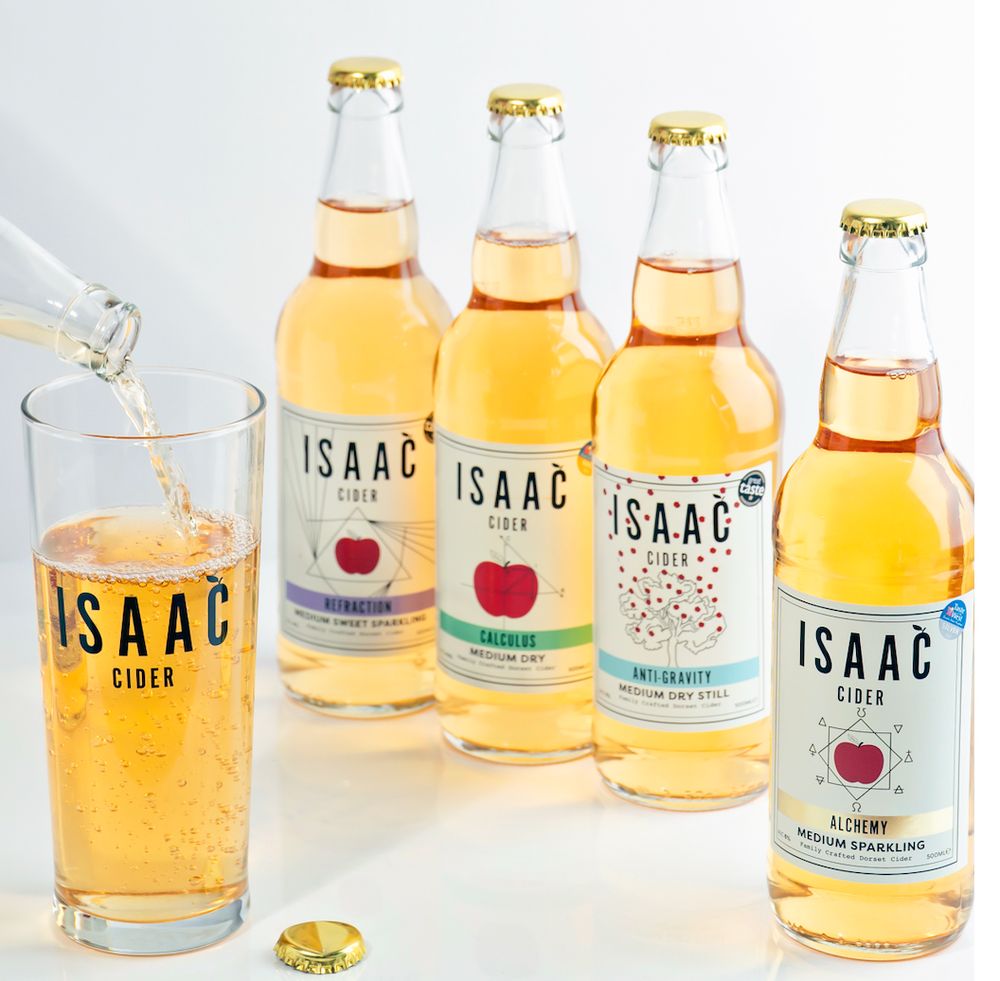
The range of Isaac ciders - with each brand name influenced by Sir Isaac Newton
Dabinett is the backbone of all our ciders, really holding all the different styles to our house identity. But it’s such a well rounded fruit that you can take it in many different ways during the blend to produce interestingly varied ciders. We also find that the introduction of fizz adds a whole other element to the profile of a cider but if you’re not careful it can hide the best bits!
Can you talk us through your production process from harvest and pressing through to fermentation and maturation?
We harvest Dabinett in October through into early November. The fruit is mechanically shaken from the trees, and we aim to collect it from the ground and process it within 24 hours. Speed is important at that stage, the last thing we want is damaged or compromised fruit introducing faults into the tank. The apples are then taken just over the hill to a neighbouring press, where we use a belt press.
It’s a significant step up in efficiency and consistency compared to the small-scale screw presses we originally used, particularly in terms of juice yield and clarity.
The juice is then brought back to the farm and stored in stainless steel 10,000-litre tanks. That upgrade has been important for us, as it allows for much better temperature control during fermentation and helps maintain a steady, controlled environment. We inoculate with a selected white wine or rosé yeast strain, we’ve moved away from relying on wild ferment to ensure consistency across batches and styles.
Fermentation is typically complete by late winter, after which we rack in February, separating the clean cider from the lees. Following racking, there is a short secondary phase which helps stabilise the cider, prepare it for maturation, and naturally displace oxygen in the tank through CO₂ production.
From there, maturation varies by product. For example, our Alchemy brandis held for around six months longer than the rest of the range to build additional depth, structure and integration before release
The UK cider category has long been dominated by large brands. Where do you see the opportunity for smaller, provenance-led producers in today's market?
It’s been a really interesting few years for the category, and we’ve arguably entered the market at a good time for craft cider. In many ways it feels like a continuation of what happened with craft beer, consumers are increasingly aware that there are alternatives to the large, mass-produced styles they may have defaulted to in the past.
What we often find is that once people try our ciders, they’re surprised by how far removed they are from the overly sweet, fizzy perception of cider. At that point, it becomes about context and being able to talk through the orchard, the varieties, and the production methods really helps shift perception and elevate the drink. That story is a big part of the value proposition.
The strongest area of growth for us tends to be with inquisitive drinkers people who want to understand what they are drinking and why it tastes the way it does. That curiosity translates into willingness to trade up, particularly in the current climate where £6–£7 for a pint is becoming standard in many markets.
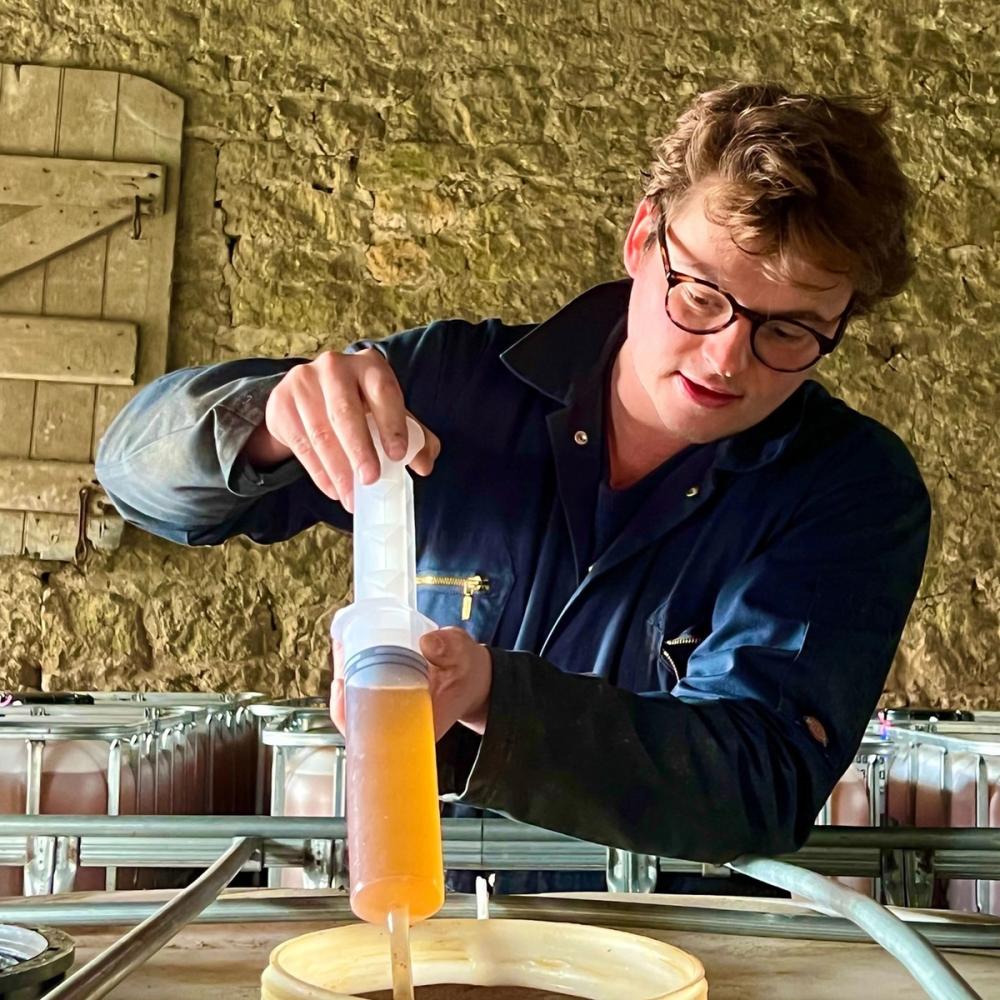
Rollo Wood says it likes to work mainly with Dabinett apples for the structure, tannin and provenance it brings to the final ciders
In that context, provenance and quality become key differentiators. We’re also seeing clear geographic differences in demand. Rural and West Country pubs tend to favour more traditional still cider styles, while urban centres such as Bristol are showing stronger demand for cleaner, more refined sparkling expressions.
That split is something we’re actively building into how we think about range and distribution.
For restaurants and bars looking to take cider more seriously, where do you think it fits best on a drinks list - and what are some food pairings that really bring it to life?
We’ve found a brilliant niche in restaurants across the South West that offer our ciders alongside specialist foods - cheeses, pork, chicken and creamy dishes where the dryness and acidity of our cider, notably Calculus, cuts through. But then our ciders have also found a place in more mainstream pizzerias as well.
For bars we have had our largest success on the pump, either with our sparkling draught cider Refraction, as a full bodied alternative to sugary draught ciders.
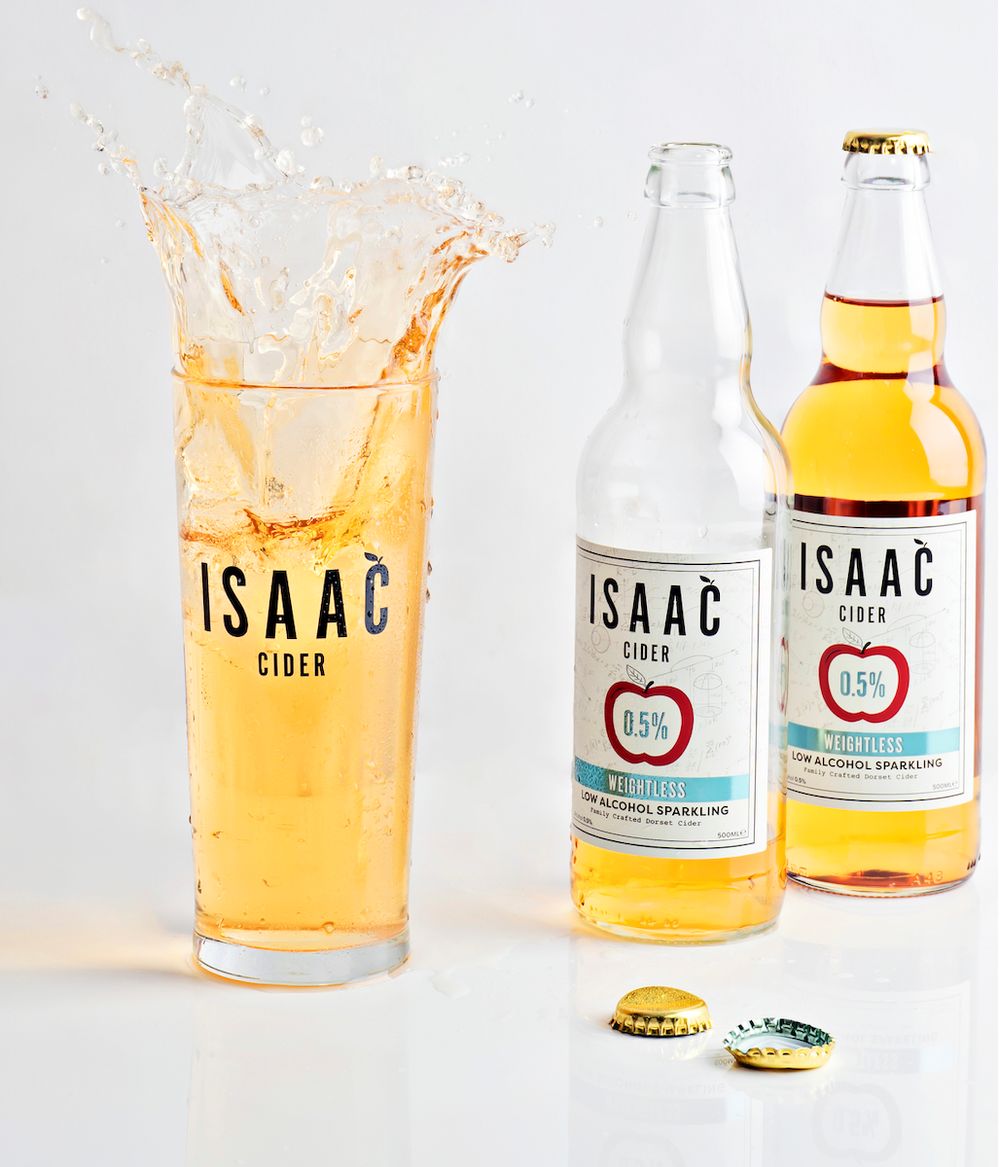
Isaac's low-alcohol cider - Weightless
Our low-alcohol cider bottles, Weightless, sit nicely in the fridge and attract a lot of attention especially in rural areas where pubs may only be reached in the car.
What's been the biggest challenge in getting independent cider onto pub and restaurant lists?
I think the biggest challenge early on is trust particularly from buyers who are managing limited list space and need confidence that any new addition will perform commercially against established mainstream brands. With cider, there’s often a tendency to default to known names because they’re seen as “safe” volume drivers.
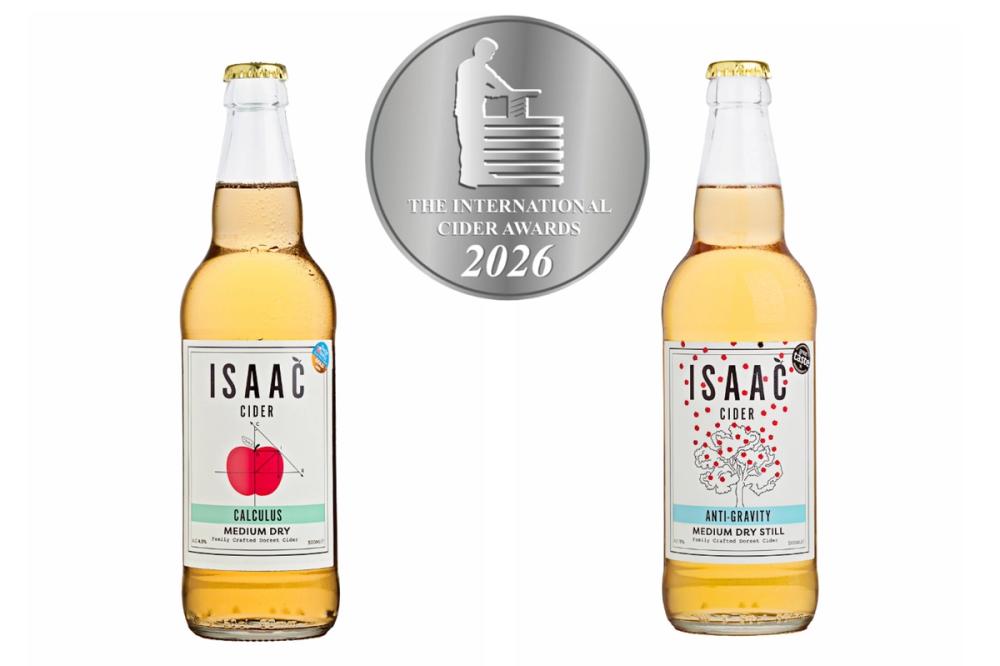
Award-winning ciders...
For an independent producer, the product really must do the talking. For us, that’s meant focusing heavily on quality validation and external recognition. Awards have played a role in opening doors, including Great Taste accreditation and more recently two of our ciders, Anti-Gravity and Calculus, taking second place in their categories at the International Cider Awards. Those kinds of benchmarks help give buyers confidence in the liquid itself.
Equally important has been building the right route to market through aligned wholesale partners. Working with specialist and quality-led distributors such as Inn Express, regional partners like Palmers across the Southwest coast, and Craft Drink with its focus on premium British producers, has been key in getting the brand in front of the right trade accounts and supporting long-term list building.
And where do you think venues are missing an opportunity with cider - whether that's in how it's listed, served or positioned to customers?
One of the biggest missed opportunities is visibility. A lot of independent craft ciders are still presented in bottles, often stored out of sight in fridges behind the bar or listed in a small section of a drinks menu. That immediately limits discovery particularly in busy on-trade environments where customers are making quick decisions.
There’s a real opportunity to bring cider more into the customer’s line of sight and make it feel more active in the category. Seasonal promotions are a good example especially in warmer weather where cider can be physically brought out of the fridge, merchandised more prominently, and positioned as a fresh, premium alternative to other drinks.
We’ve also seen strong results where venues dedicate a tap or pump to a craft cider during the summer months. It not only improves visibility and sales, but it also gives front-of-house teams something engaging to talk about particularly when there’s a clear provenance story behind the product. Those touchpoints at the bar really help convert curiosity into trial, and ultimately repeat orders.
You grow the apples yourselves on the family farm. How important is that orchard-to-glass approach in terms of quality, sustainability and storytelling?
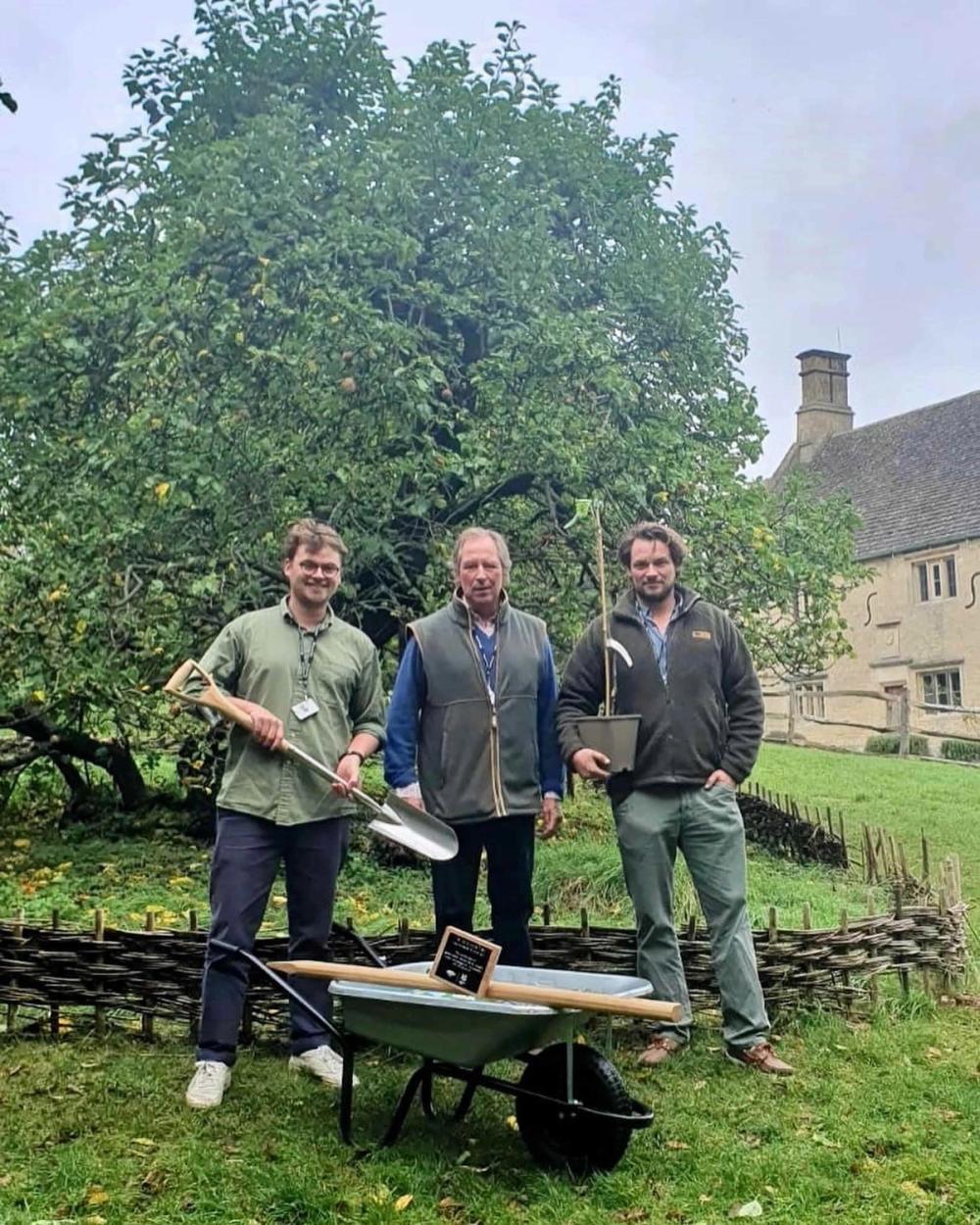
Talk about luck but Isaac Cider has been able to secure one of 10 samplings propagated from the apple tree that inspired Sir Isaac Newton’s theory of gravity which has now been planted in the family's Dorset orchard
For us, it’s fundamental. Everything we produce comes from apples grown on our own farm, which gives us complete control over quality from orchard to glass. It also means we know exactly how each batch of cider will behave, because we’re not blending fruit from multiple, geographically dispersed sources the character is consistent and rooted in a single site.From a sustainability perspective, the footprint is naturally very low.
The fruit never leaves the farm until it’s ready for pressing, so transport is minimal throughout the process. On top of that, apples are effectively carbon negative as they grow, absorbing CO₂ through the season, and we’re working within a system that supports biodiversity, particularly evident during blossom, when the orchards are full of pollinators and natural activity. A healthy orchard really does translate into healthy fruit.
Just as importantly, it gives us a strong and authentic story to tell. That sense of continuity from the connection to Sir Isaac Newton, through to my grandfather planting the orchards in 1972, and now into the current generation producing award-winning ciders resonates strongly with both trade and consumers.
It’s a provenance-led narrative that people genuinely engage with, and it helps give the brand real depth beyond just what’s in the glass. People really are interested and are getting behind us as an up and coming brand - it really does help!
Looking ahead, what are your ambitions for Isaac Cider over the next few years - and where would you most like to see it appearing on drinks lists?
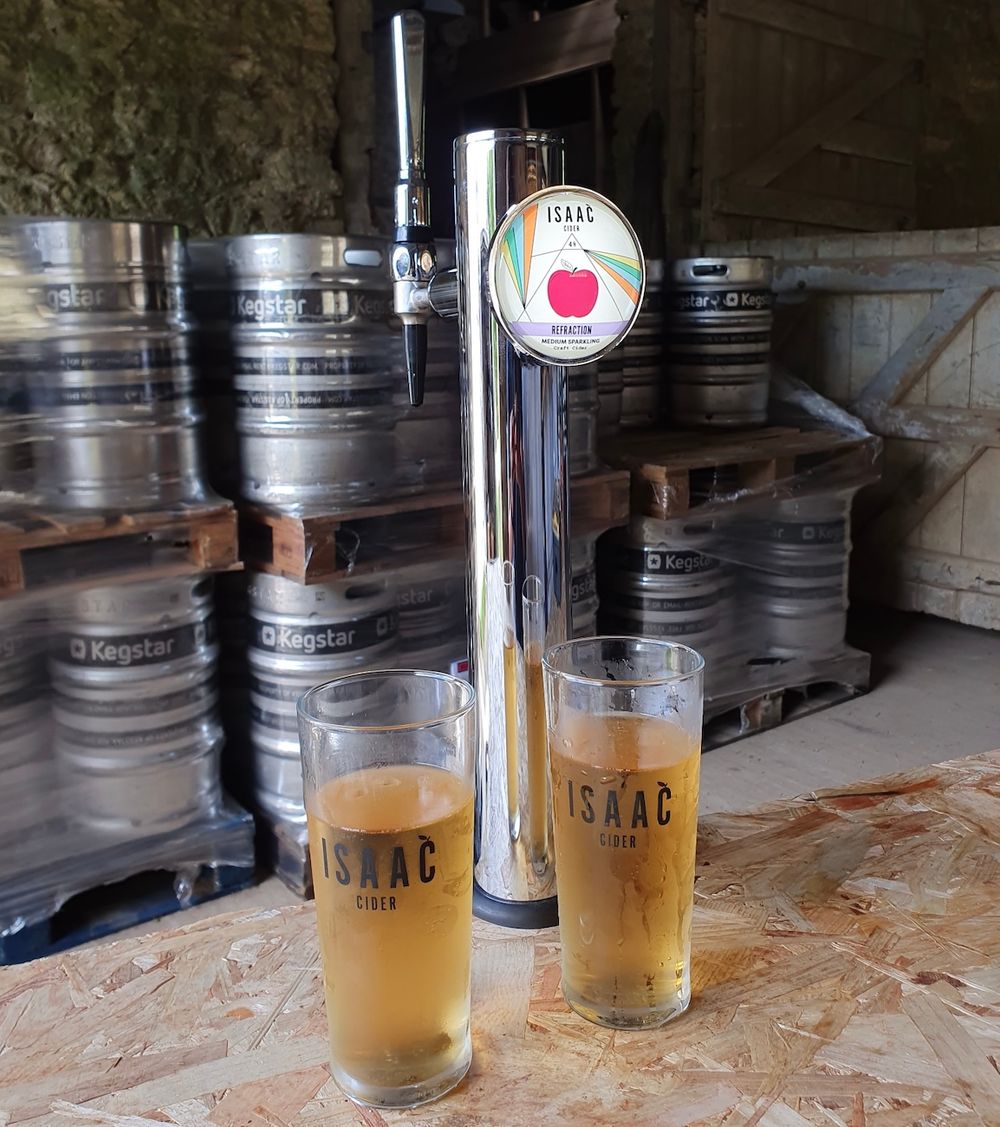
Isaac Cider hopes to build its distribution for its craft ciders in the premium on and off-trade
Over the next few years, our ambition is to continue scaling distribution across the UK in a controlled and sustainable way. That means working closely with strong, values-aligned wholesalers and building relationships with teams who genuinely understand the brand, can tell the story well, and place the cider in the right accounts.
For us, it’s about depth as much as breadth. In terms of geography, it would be incredibly rewarding to see Isaac Cider poured more widely across the country, but particularly in places that connect back to the story around Sir Isaac Newton’s home in Lincolnshire and into Cambridge. There’s something satisfying about bringing the narrative full circle in that way.
Longer term, there’s also real interest from export markets, particularly those that have an affinity for British provenance and heritage-led brands. We’re open to exploring that carefully, where it makes sense and where we can maintain quality and brand integrity.
Alongside that, developing the farm itself as a destination is a key focus. We want to build out a more immersive experience, whether that’s a farm shop or café where people can come and see the orchards in person, particularly during blossom in May, which is a really special time on the farm.
That connection between landscape, product and people is something we want to continue to strengthen.
* You can find out more about Isaac Cider here.