History is everywhere in Burgundy. It lives in the patchwork of vineyards, the stone villages and the centuries-old cellars where generations of families have quietly shaped some of the world's most sought-after wines.
Few names, however, carry quite the same historical weight as Edouard Delaunay.
Founded in 1893, the family maison became one of Burgundy's most respected négociants, exporting wines across the world and playing an important role in the region's international reputation throughout much of the twentieth century. Yet after the business was sold in 1993, the Delaunay name slowly faded from Burgundy's landscape.
It would have been easy for the story to end there.
Instead, it entered a remarkable second chapter.
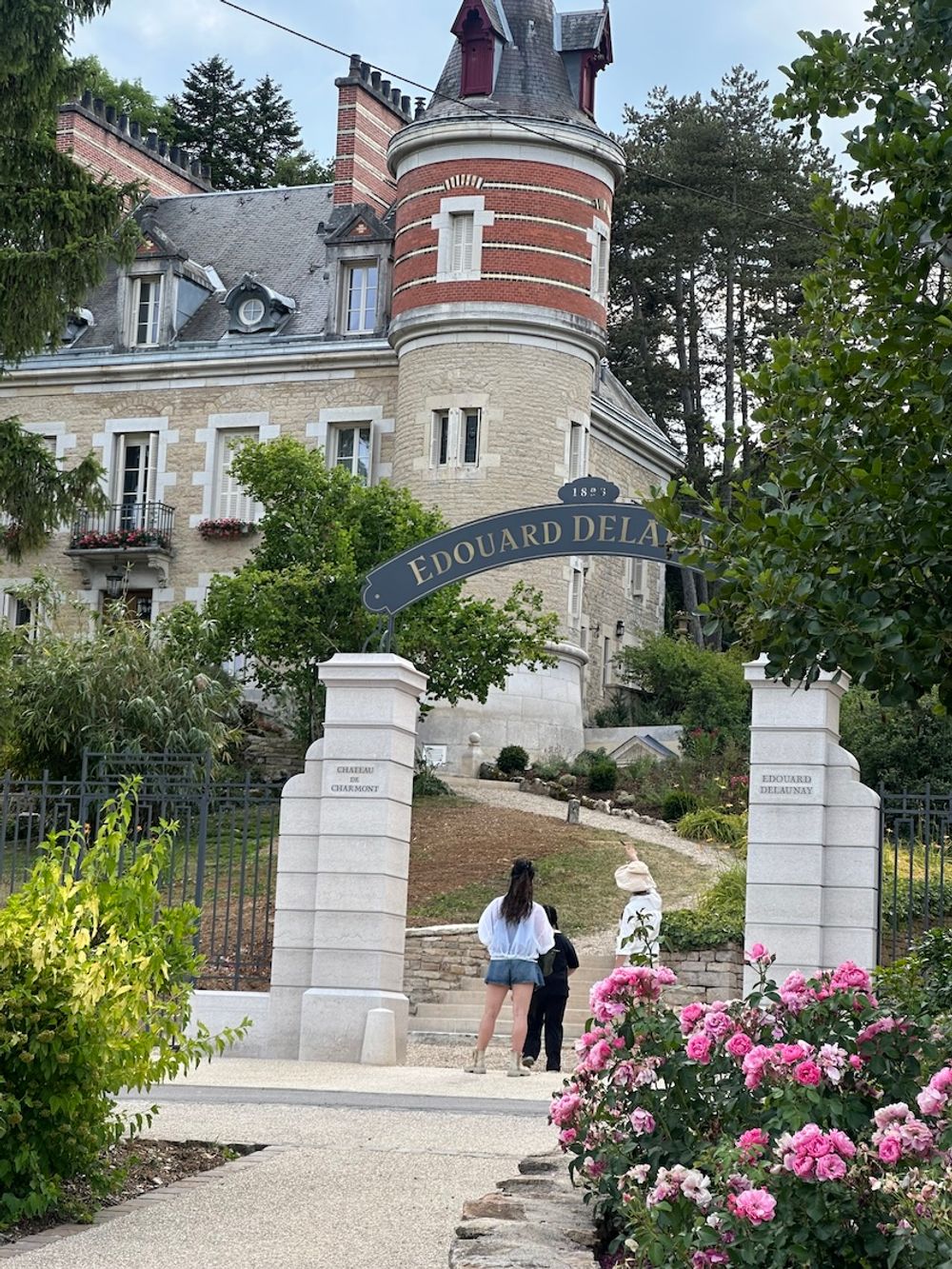
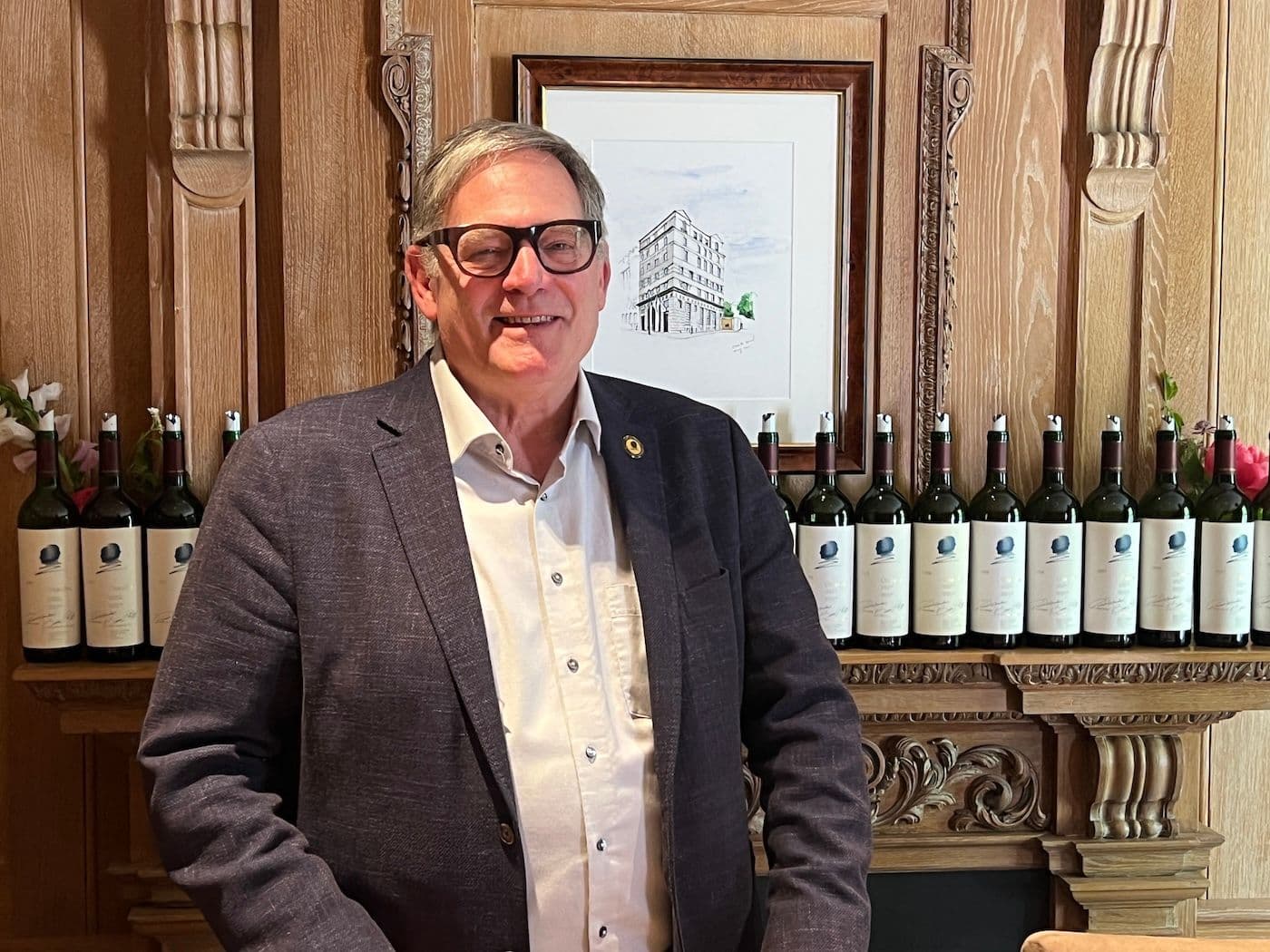
Visiting the historic home of Delaunay Vins & Domaines
In 2017, Laurent Delaunay, great-grandson of founder Edouard Delaunay and the family's fifth-generation winemaker, bought back the family business with a vision that was both deeply personal and commercially ambitious.
Today, Edouard Delaunay produces around 50 cuvées, spanning Bourgogne regional appellations through to Premier Cru and Grand Cru vineyards across the Côte de Nuits and Côte de Beaune, while becoming one of the leading specialists in the Hautes-Côtes de Nuits. International critics have quickly taken notice, but for Delaunay, restoring the family name has always been about something more meaningful than accolades.
"I brought back the empty box," he tells me with a smile. "The difficult part was finding the grapes."
Those early years relied heavily on the goodwill of Burgundy's close-knit wine community.
"Friends and colleagues knew what we'd been through and they helped us rebuild."
That sense of collaboration remains woven into the philosophy of the business today.
Burgundy through a wider lens
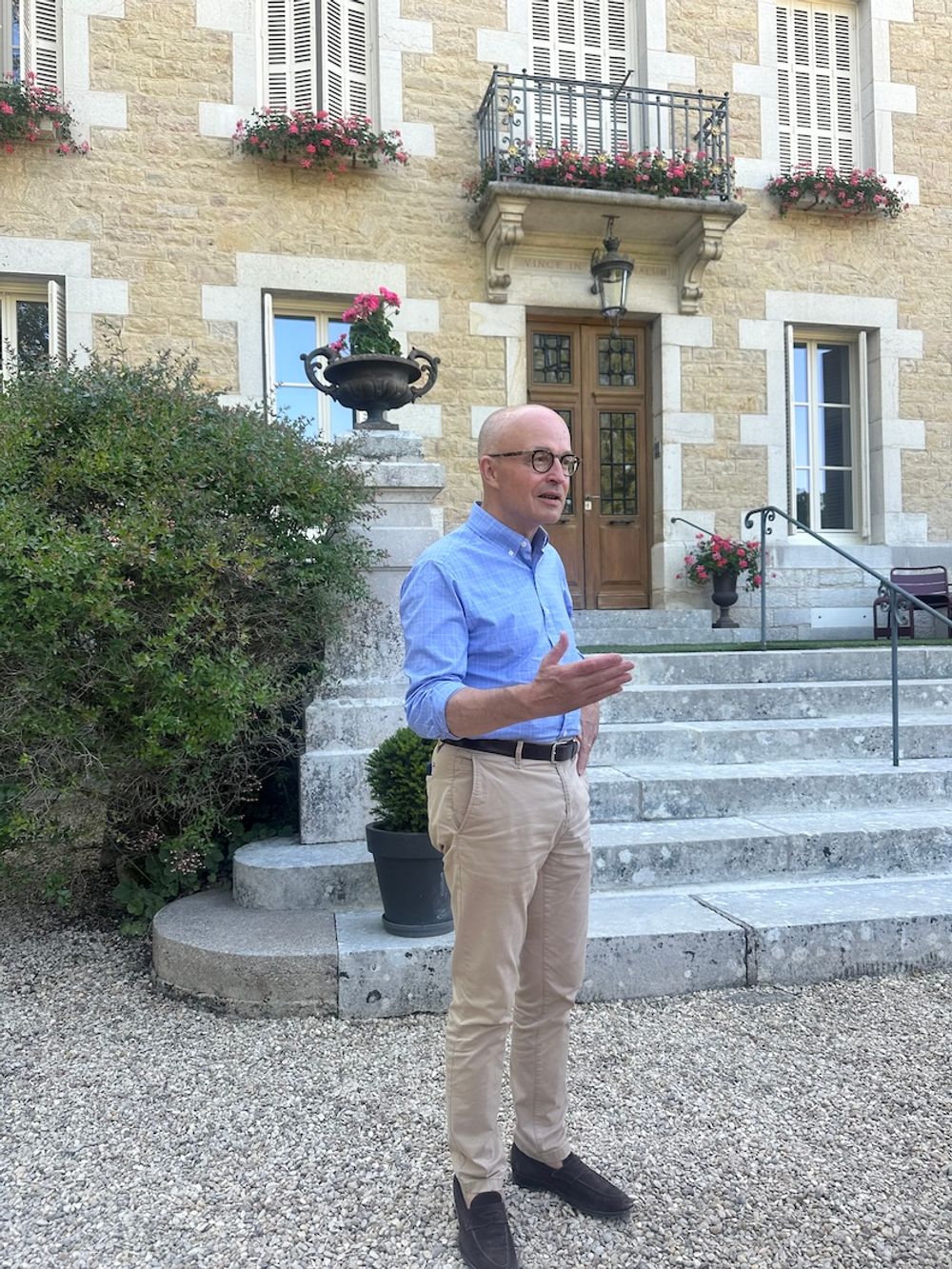
Forward looking: Laurent Delaunay
Visiting Delaunay Vins & Domaines quickly reveals that Laurent Delaunay spends as much time thinking about Burgundy's future as he does his own wines.
Alongside running the family business, he has served as co-president of the Bureau Interprofessionnel des Vins de Bourgogne (BIVB) since 2022. It is a role he says consumes almost a third of his working life.
"Maybe it's too much," he laughs. "But I take the responsibility seriously because wine is facing challenges and I want to help everyone."
Those challenges are no longer confined to one region or one country.
"For the first time in 35 years we're facing a truly global issue. Before, problems tended to be regional. Now they're worldwide."
The conversation inevitably turns towards declining wine consumption, changing drinking habits and shifting attitudes towards alcohol.
France has seen domestic wine consumption fall by around five to seven percent in recent years, something Delaunay describes as deeply concerning.
"The answer isn't only making better wine," he says. "We need better marketing. We have to make wine more accessible to younger generations and stop frightening people with technical language."
It's a refreshingly pragmatic view from someone whose roots are firmly planted in one of the world's most traditional wine regions.
Rather than looking inward, Burgundy increasingly studies other fine wine regions including Bordeaux and Napa Valley, analysing how consumer behaviour has evolved and what lessons can be learned before history repeats itself.
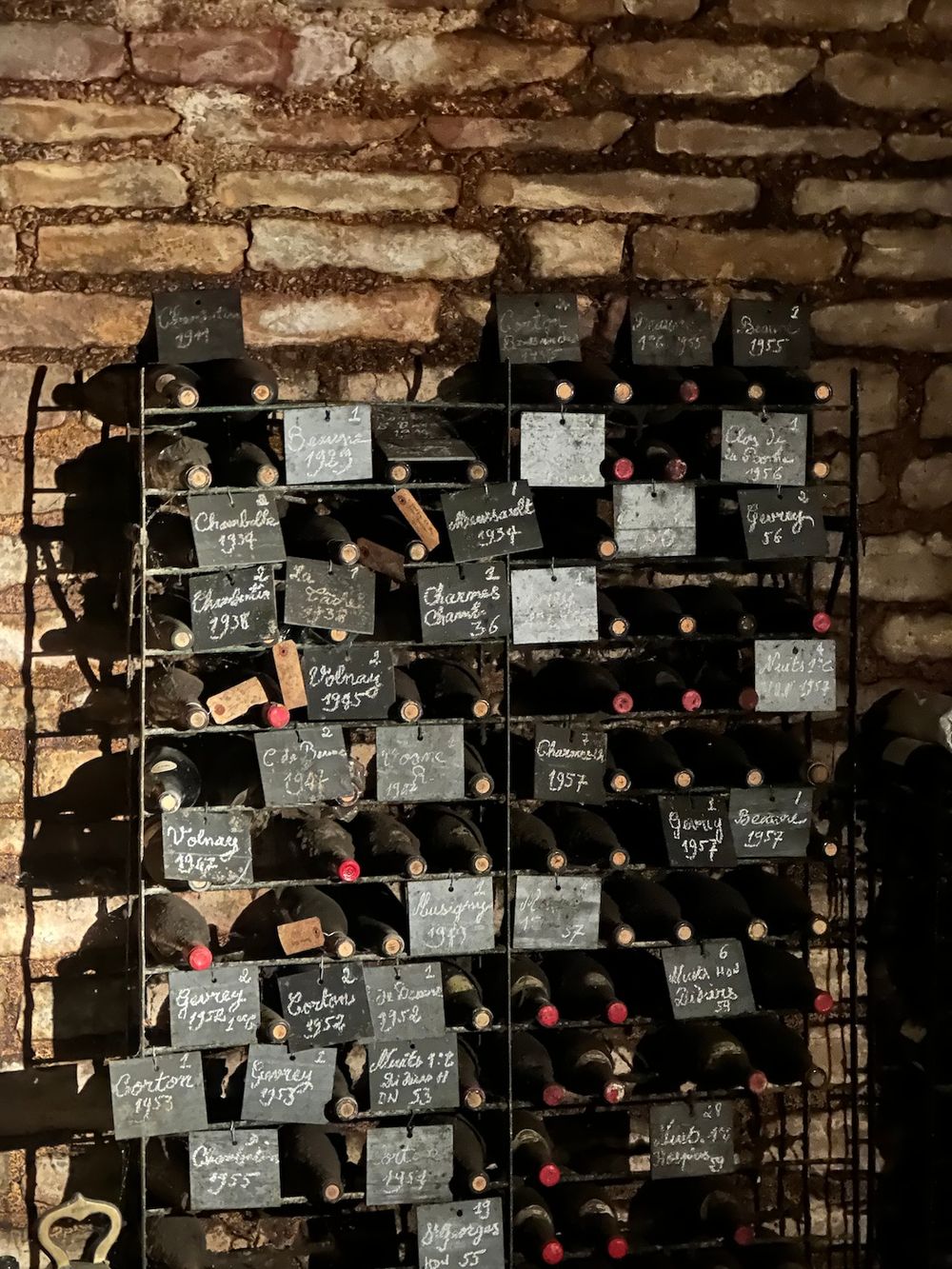
Some blasts from the past in the cellar
Challenging accepted wisdom
Perhaps Delaunay's most interesting observations concern vineyard management.
For decades, Burgundy has celebrated low yields as an almost automatic marker of quality.
Delaunay believes reality is more nuanced.
"We need to change people's mindset," he says. "Lower yields don't always mean higher quality. In some Grand Cru vineyards that's true, but there are vineyards where increasing yields actually produces better balance."
It's a perspective that reflects his wider approach to winemaking.
"My philosophy is terroir. Every vineyard deserves its own interpretation."
Precision, rather than formula, drives the cellar.
Edouard Delaunay works with eight different coopers, carefully matching oak to vineyard rather than relying on one house style.
"Many producers use one or two coopers. We use eight because the barrel also forms part of expressing the terroir."
It is meticulous, detailed work that underpins wines ranging from accessible Bourgogne bottlings to some of the Côte d'Or's most prestigious crus.
The Hautes-Côtes renaissance
While much of Burgundy's attention naturally falls on the Côte d'Or, Delaunay has become one of the leading advocates for the Hautes-Côtes de Nuits.
Long regarded as a source of dependable value rather than prestige, the area is benefiting from climate change in ways few predicted two decades ago.
"Nuits-Saint-Georges has always been our focus because that's where my family comes from," Delaunay explains.
"My grandfather was a négociant there and these wines have their own identity."
Warmer growing seasons are helping vineyards that historically struggled to achieve full ripeness.
"Global warming has changed things because these sites used to be cooler than much of the Côte de Nuits."
The result is a range that increasingly demonstrates freshness alongside greater consistency and ripeness than previous generations could expect.
Building for the next generation
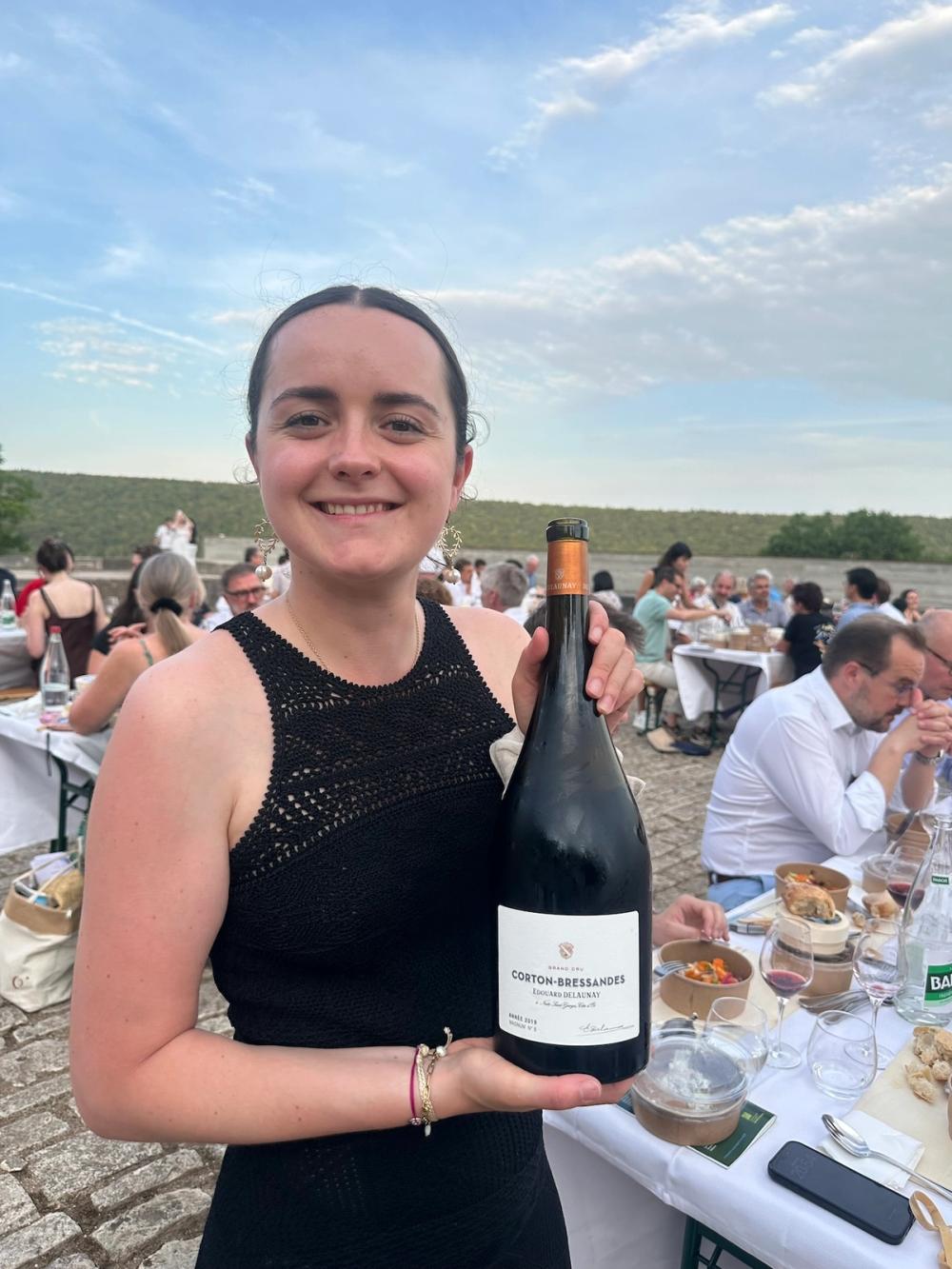
Delaunay the next generation: Jeanne Delaunay
The Delaunay story extends beyond Burgundy.
Laurent and his wife Catherine, both qualified oenologists, spent a decade in the Languedoc between 1995 and 2005 building successful estates and brands before returning north.
Today those projects are led by their daughter Jeanne Delaunay.
Having interviewed Jeanne previously, it is easy to see how naturally the next generation has embraced both sustainability and exploration of lesser-known terroirs.
Her work in Limoux is already producing exciting wines that reflect the same thoughtful approach seen in Burgundy, combining precision with a willingness to challenge convention.
The transition feels organic rather than forced – a genuine continuation of family values rather than simply succession planning.
Wine, culture and community
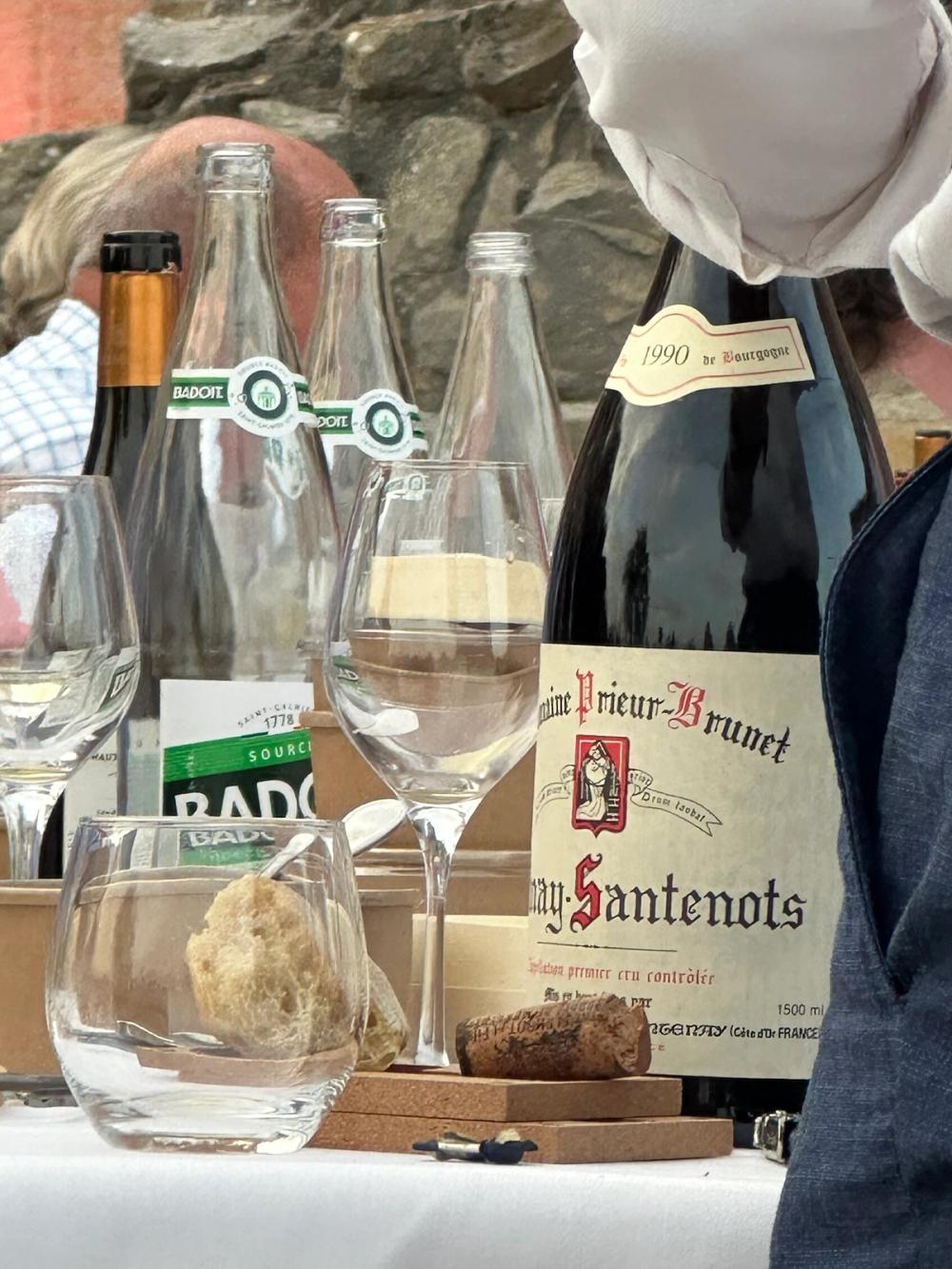
My visit coincided with the 18th edition of Musique & Vin au Clos Vougeot, one of Burgundy's most distinctive annual events.
Founded by Aubert de Villaine and Bernard Hervet, the festival brings together internationally renowned musicians alongside emerging young talent while celebrating Burgundy's rich cultural heritage.
One particularly memorable evening began at the Abbaye de Saint-Vivant before continuing with a garden party at Château de Charmont.
The guest list reflected Burgundy's remarkable sense of community, with wines shared by estates including Domaine Faiveley, Domaine Leflaive and Domaine de la Romanée-Conti alongside those of the Delaunay family.
Some bottles will likely never be opened again.
Others simply reminded everyone present why Burgundy continues to inspire such passion.
For Laurent, the abbey also carries deeply personal memories.
"It was my playground," he recalls. "I know every stone."
Seeing it restored has been an emotional experience.
The wider festival now attracts around 3,000 visitors over eight days, making it one of Burgundy's most significant cultural events after the Hospices de Beaune wine auction.
Looking beyond the vineyard
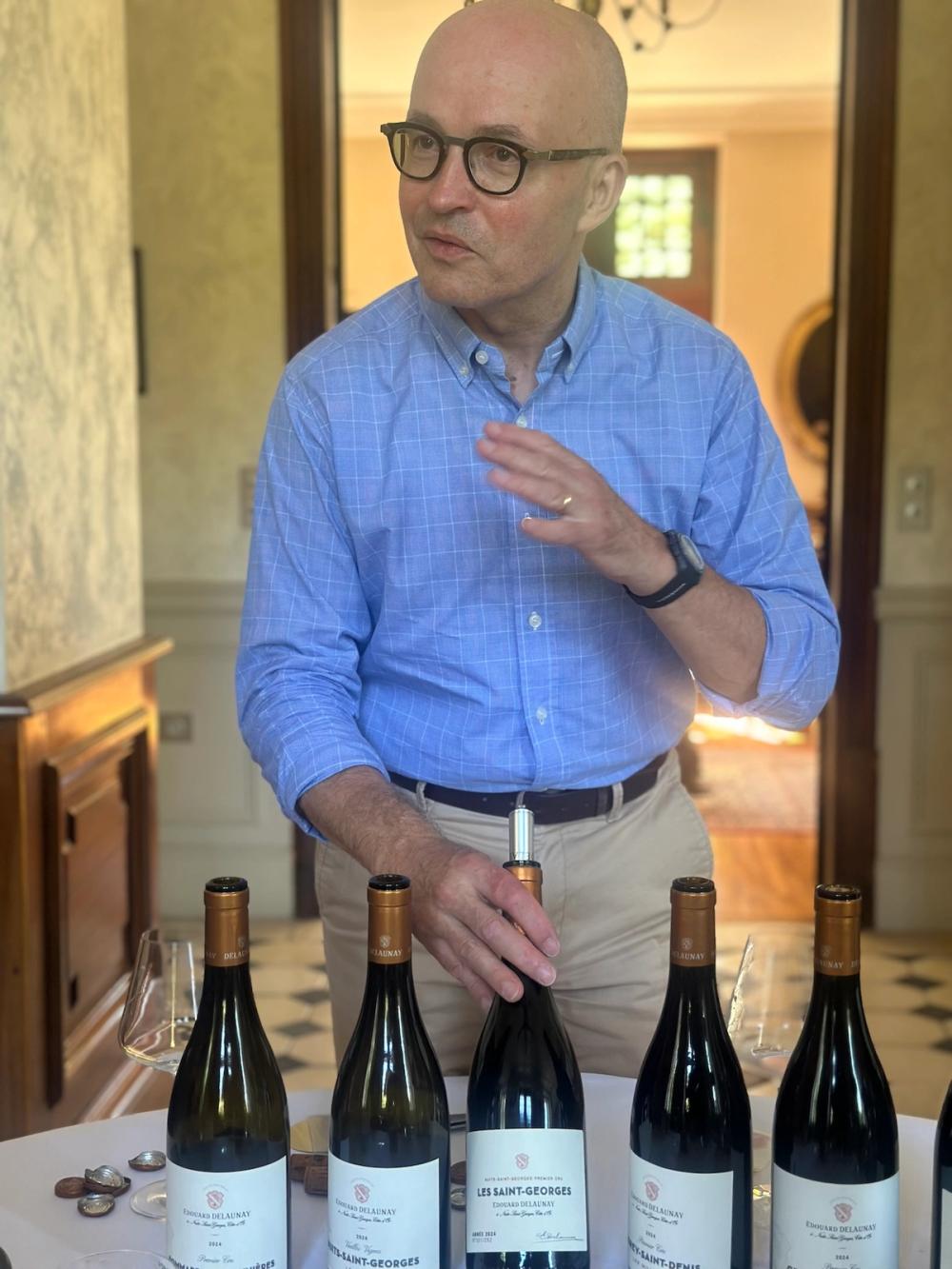
"Nuits-Saint-Georges has always been our focus because that's where my family comes from," Delaunay says.
During my visit, another initiative stood out.
Opened three years ago in Beaune, Delaunay's Septembre concept showcases wines from Chablis, Mâcon and across Burgundy in a more contemporary, welcoming environment. Rather than intimidating consumers with hierarchy and classification, it encourages exploration and discovery – an approach that mirrors Laurent Delaunay's wider thinking about attracting new drinkers.
It feels symbolic of where Burgundy increasingly finds itself.
Respect for history remains absolute, but communicating that history differently has become essential.
A maison reborn
Tasting across the portfolio reinforces that philosophy.
The Septembre Bourgogne range offers freshness, accessibility and immediate appeal without sacrificing identity. At the other end of the spectrum, wines such as Charmes-Chambertin display remarkable finesse, precision and site expression.
Neither feels disconnected from the other.
Instead, they represent different entry points into the same philosophy.
Leaving Burgundy, one thought lingers.
For all its remarkable history, this is a region that cannot afford to rely solely on reputation. The greatest challenge facing Burgundy is no longer producing extraordinary wines – that has rarely been in doubt – but ensuring those wines remain relevant to future generations of consumers.
Laurent Delaunay understands this perhaps better than most.
Reviving an historic maison was only the beginning.
Helping Burgundy evolve while remaining true to itself may prove an even greater achievement.