It's only late spring when we arrive in Tain-l’Hermitage on the left bank of the Rhône but already we discover the vines’ growth is almost two weeks ahead of what’s usual. Climate change feels very real here, say winegrowers. But after an excellent 2025 growing season (on a par with the impressive 2020), they are encouraged so far about the prospects for 2026 helped by the cooling influence of the Mistral winds.
A benefit too is clearly how much of the landscape is protected and ecologically diverse. Whilst there are now 2,073 hectares of land are under vine with over 170 wineries and wine companies, 50% of the area is still forested or planted with orchards of cherries and apricots. The biggest producer here is the Cave de Tain cooperative which accounts for nearly 50% of all output and renowned large Rhône producers M.Chapoutier and Paul Jaboulet Aîné are based in Tain-l’Hermitage too.
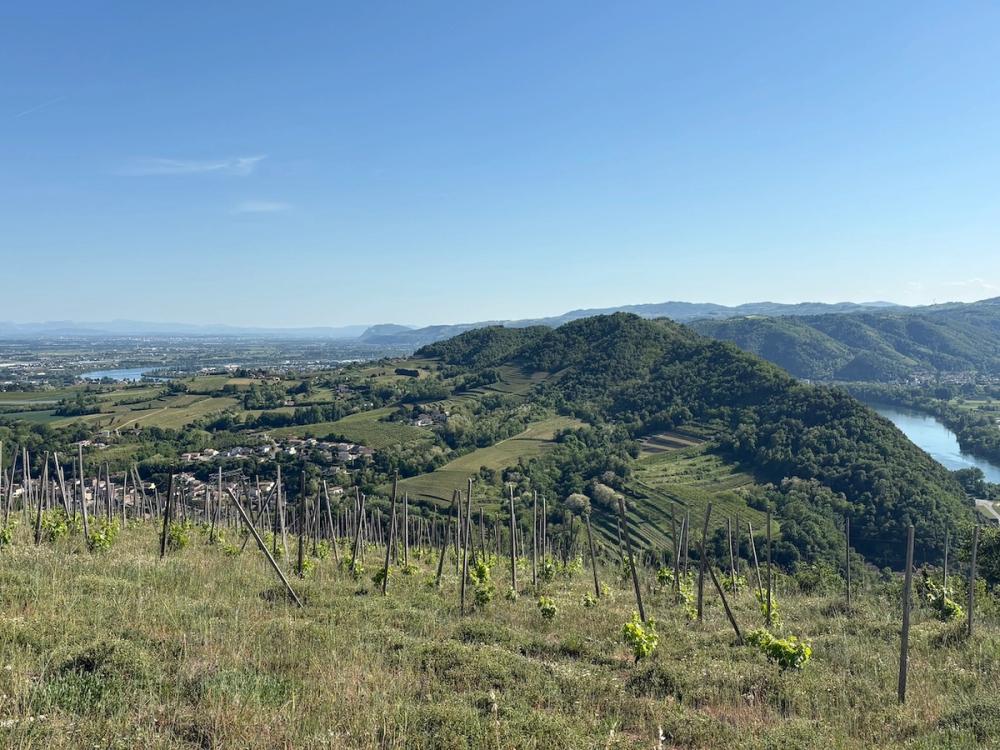
Belvédère des Méjeans scenic viewpoint in Crozes-Hermitage looking across to the far side of the Hermitage Hill, Rhône Valley, Tain-l'Hermitage, and the Ardèche foothills.
Terroir
Crozes Hermitage, wrapping around the celebrated Hermitage Hill (with the landmark hermit's chapelle at the top), has wide variations in terroir. Broadly, kaolin clay and light granite dominate in the north, then there are pebbles (rolled river stones) and clay in the central Châssis region and soils with red clay and sandy soils in the south. The terroirs have been shaped by glacier deposits and river silts descending from the Alps.
Beautiful vistas abound with the twisting curves of the mighty Rhône across the valley plain, and the foothills of the Alps still snow-covered framing the background. It’s not yet apricot or cherry season, sadly, but spring has arrived and fragrant acacia flowers perfume the air.
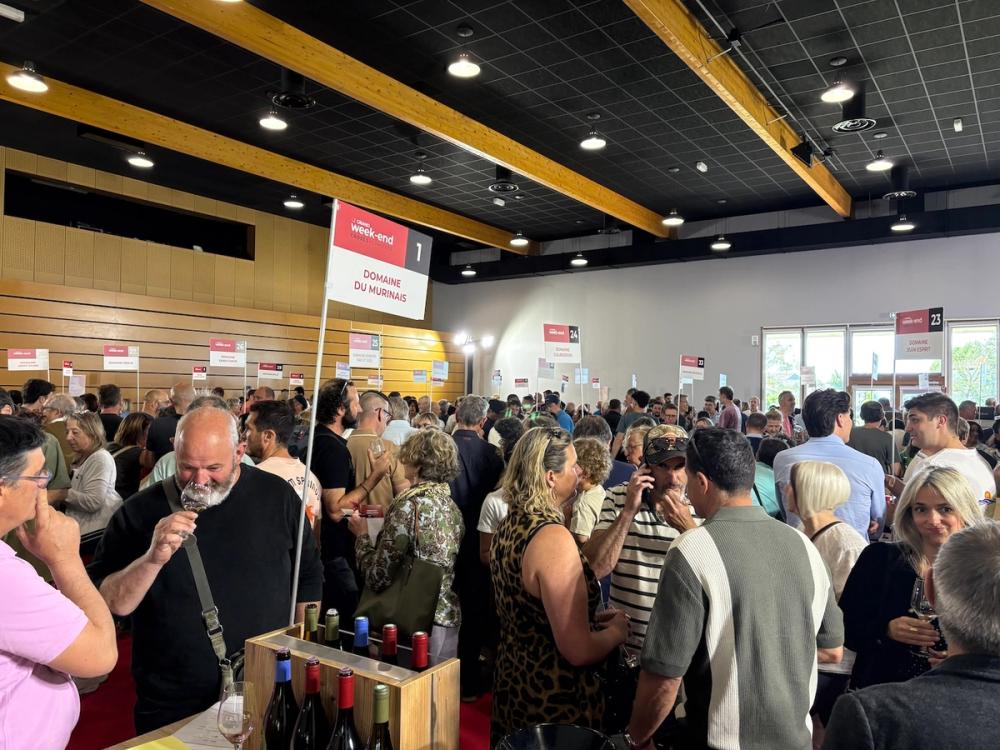
Wine fair in Mercurol
Trends
The appellation proudly reports both that it is now 50% organic and that the proportion of white wine production is 11-12%, having grown steadily year after year. Syrah, of course, is the grape variety of the reds and whites are Marsanne and Roussanne, usually as a blend but occasionally as a 100% single variety.
We are here in Crozes-Hermitage during ‘Le Grand Week-end des Crozes-Hermitage’ – the appellation’s annual winemakers’ festival with all expressions of the region’s wine on show under one roof. It’s the fifth year of the event and there are gatherings of winegrowers with vineyard parties aplenty.
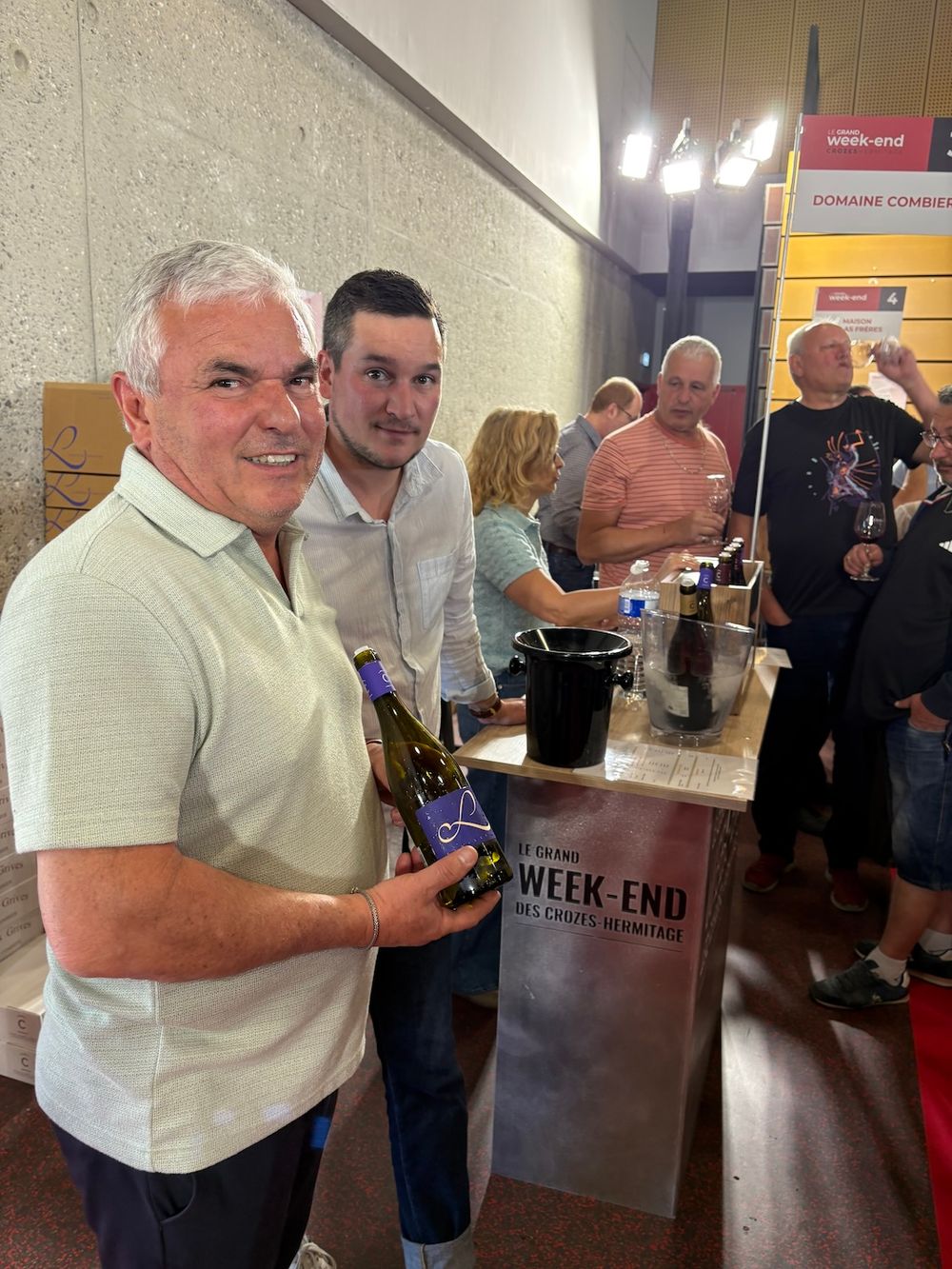
President of the AOC, Laurent Combier of Domaine Combier at the wine fair
President of the AOC, Laurent Combier of Domaine Combier, hosts us for lunch at his winery, and says over 3,000 visitors are expected to Le Grand Week-end event. Later in the afternoon we’re shown a newly restored vineyard, Domaine Clos Madeleine, owned by another well-known figure, the AOC co-president, Yann Chave of Domaine Yann Chave. From the conversation, you sense the potential for Crozes-Hermitage to continue to grow and the scope for more agro-tourism too.
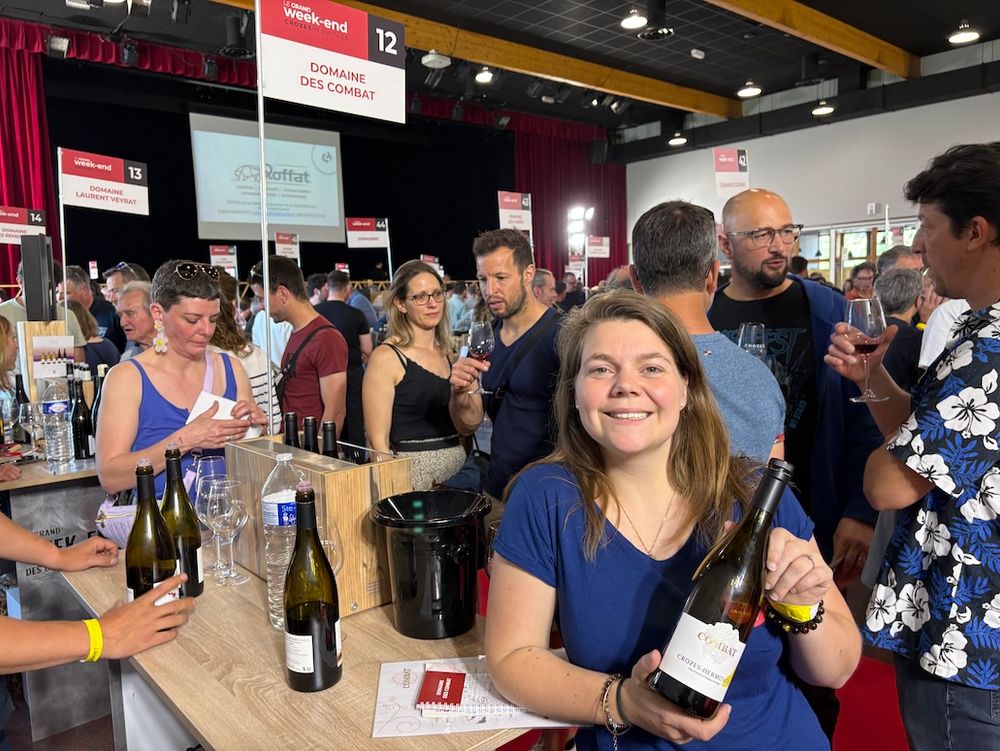
New generation: Sandra Combat of Domaine des Combat
Youthful
It is striking at the Grand Marché event of winegrowers in Mercurol to find many young vignerons and young people coming back to family domaines: Youthful-looking Raphael Faugier who returned to the estate Domaine des Hauts Châssis is a case in point – he is the sixth generation to cultivate vines on the Châssis plateau; and Laurent Fayolle who now farms organically after the family domaine was split some years ago. We visit his scenic hillside plots overlooking the Rhône River and the far side of that iconic Hermitage Hill.
You spot many young women too. Sandra Combat of Domaine des Combat is part of the Nouvelle Garde - the association of bold young winegrowers in the region set up in 2022. It now has 55 members including independents, cooperatives and negociants.
Some other standout wines from the new youthful generation include from Domaine Vendome which Celine Roudier founded with her husband, Romain, in 2020, Domaine Melody run by another husband-and-wife partnership Marc and Marlene, and Domaine Jean Esprit with Lydia who married Jean. Many sisters are working together too and I catch up with Louise and Gaelle, twin daughters of Francois Tardy, who are now part of his Domaine des Entrefaux and sisters Lucie Fourel and Nancy Cellier who now run Domaine Les 4 Vents farming biodynamically.
We are spoilt for choice there are many other families and wines that could be mentioned and not forgetting many successful father and son duos.
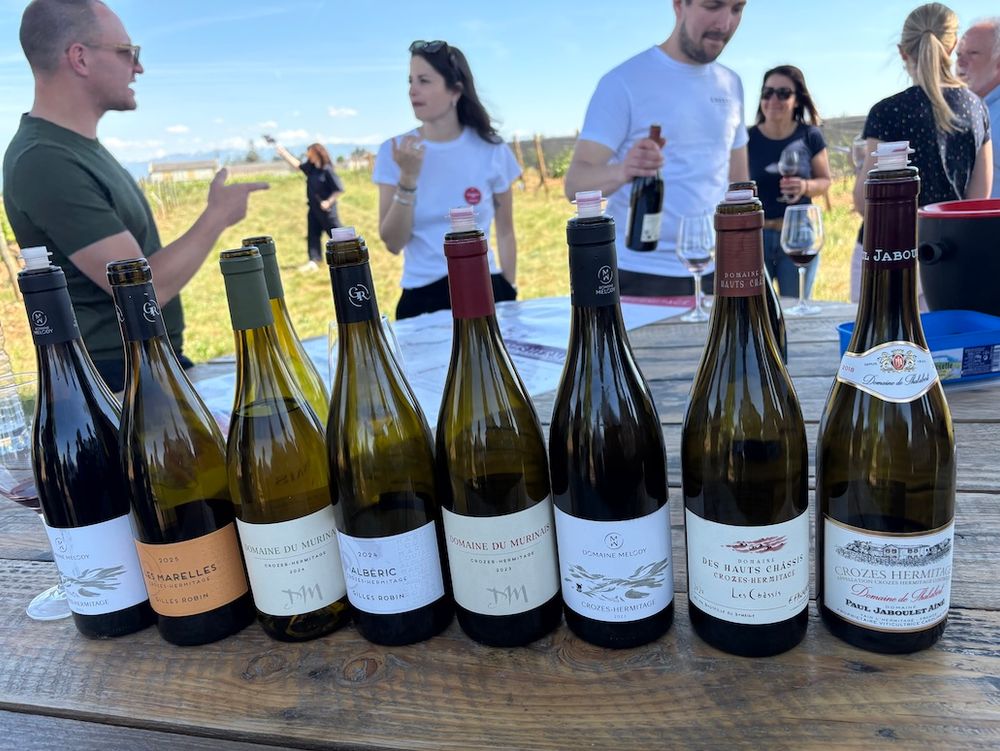
Masterclass selection of wines illustrating the diversity of the Crozes-Hermitage AOP
New vibrant generation
At each of the tastings, what you sense is that there is a new generation with a vibrant energy that is leading the production of red wines that are more fresh, fruity and accessible alongside high quality, crisp whites. This generation has captured a youthful zeitgeist creating wines with a wide appeal. At a masterclass led by Baptiste Gauthier, former head sommelier of Michelin-starred chef Anne-Sophie Pic, we taste a range of reds and whites from throughout the region illustrating the diversity of styles and terroir.
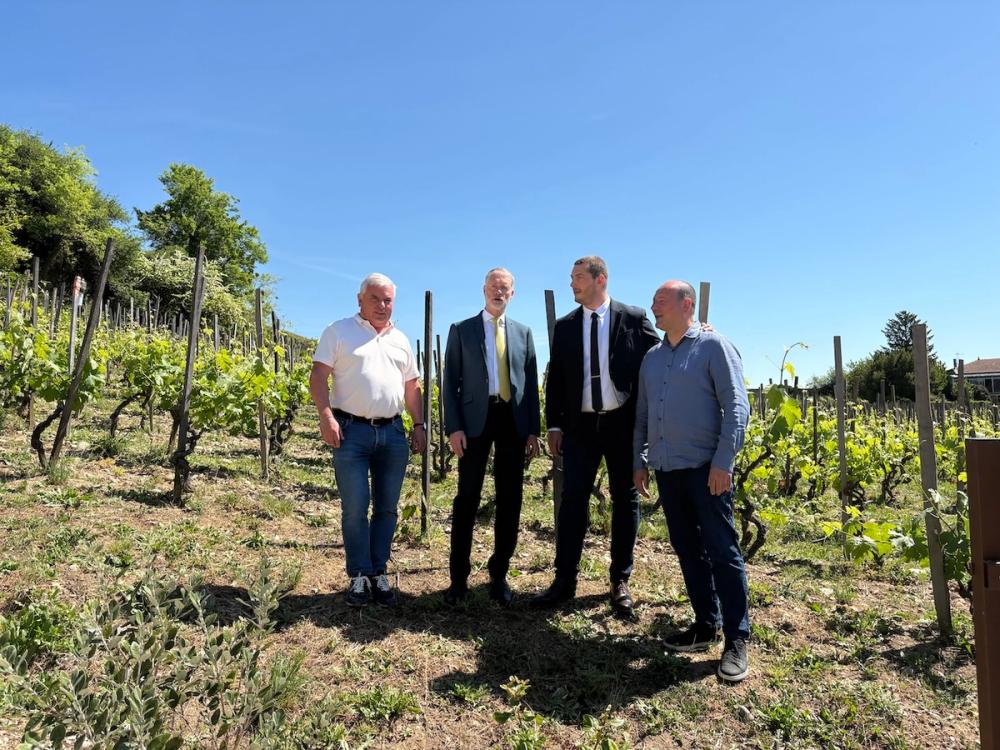
In the vineyards, masterclass presenters Marc-André Selosse (centre left) Baptiste Gauthier (centre right) with Laurent Combier (left) and Yann Chave (right)
Myth busting
Biologist Marc-André Selosse from the National History Museum in Paris gives a fascinating masterclass about Syrah – its DNA roots and the science behind the signature phenolic bitterness in the finish of many reds.
He shatters many common myths.
Syrah did not originate in Shiraz in Persia (Iran), nor the Greek island of Syra (Syros) or Syracus (Sicily). It originates, his research identifies, from the Allobroges region in the Alps in the Roman province Gallia Narbonensis. The population living here in the Iron Age and Roman period made wine with barrels and pitch tar. The grapes grown were the forebears of Syrah – the variety is the coming together of Dureza from the Ardèche and Mondeuse Blanche from the Savoie.
Bright future
The quality of wines we savoured is impressive and the domaine names quoted above are just some of the many standouts. At the wine fair lots of cases of wine are bought and deals done – confirmation of just how good value for money the wines are. ,Indeed many wine experts claim that the top €30 a bottle Crozes reds and whites are better than some weaker €40 a bottle Hermitage or Côte Rôtie wines. Many importers have long supported the region but there are also many quality domaines looking for new overseas distributors. We discover that not only is the Rhône turning more towards white wines, it is also turning more organic, more youthful and more gender diverse amongst the vignerons. Vive la difference!