The snow lay deep across the vineyards when I visited Cramele Recaș Winery in western Romania. The landscape hushed beneath a winter blanket, rows of vines stretching across frozen ground in quiet symmetry. With the growing season paused, it offered an unexpected moment of reflection, not only on the seasonal rhythms of viticulture, but on a winery that is anything but dormant.
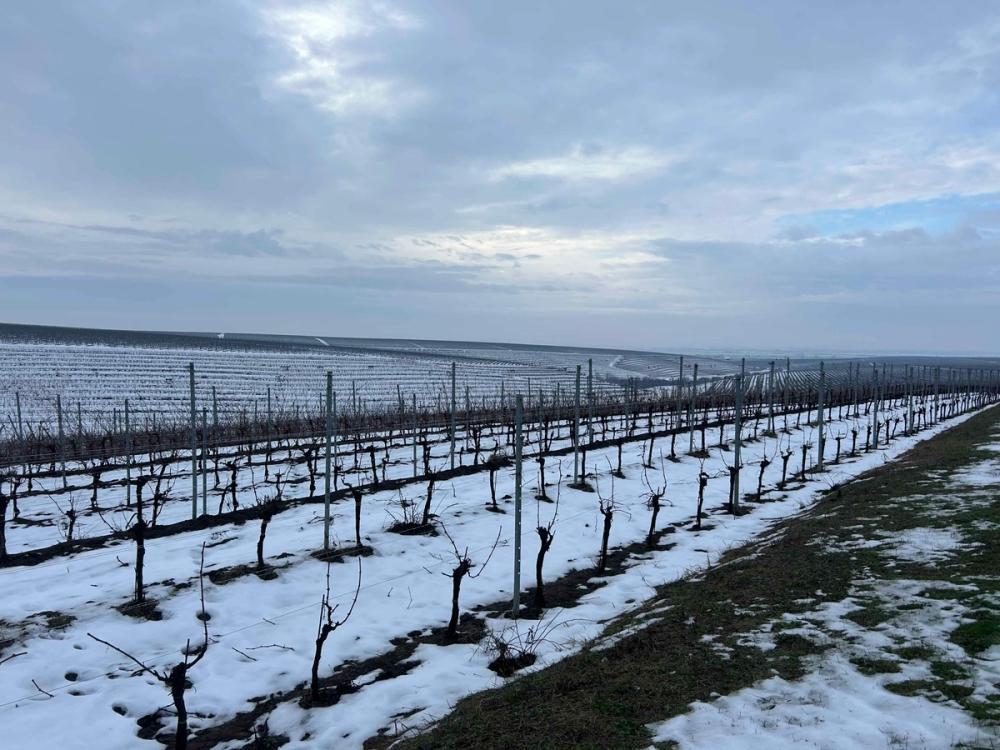
Cramele Recaș vineyards have to deal with Romania's tough winters
Cramele Recaș has emerged as one of Romania’s most influential wine exporters, combining significant scale with increasingly focused ambitions around sustainability, indigenous grape varieties and long-term resilience in a rapidly changing economic and geopolitical landscape.
The business recorded a turnover of €72 million in 2024, and reached around 30.5 million bottles in total sales during 2025. Production is now almost evenly split between domestic and export markets, with 51% of wines shipped to 28 international destinations and 49% sold within Romania.
Alongside its home market, the Netherlands and Germany currently represent the company’s largest export markets.
A region shaped by uncertainty
During my visit, co-owner Elvira Cox, spoke candidly about the wider pressures facing the Romanian wine sector, highlighting geopolitical tensions and domestic economic challenges.
“First of all, there is the political and economic climate,” she explains. “We don’t know what’s going to happen with the war, which is next door. We are quite close. Between us and Russia is just Ukraine and the Republic of Moldova.”
The proximity of conflict continues to influence investment confidence across the region.
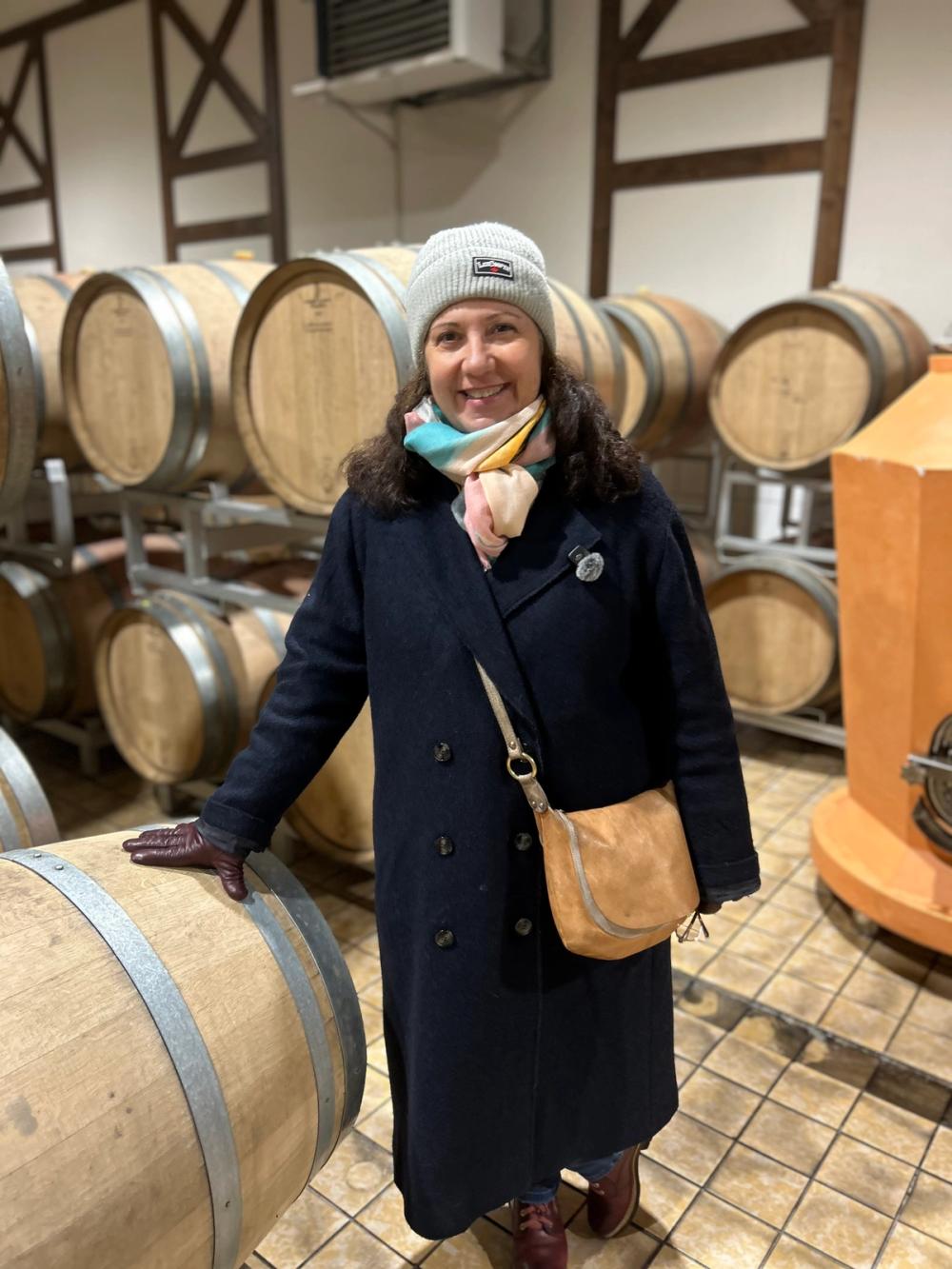
Elvira Cox says Cramele Recaș is having to deal far more with the fall out from polticial and economic uncertainty
“It depends what happens there,” she continues. “Romania has become a country that is seen as being very close to the war, a country with risk. If the war stops, it would be perfectly fine — more investment would come, more foreign investors. Right now, everybody is afraid.”
She also highlights internal pressures affecting producers.
“Our politicians have really increased our taxes,” she says, pointing to ongoing cost challenges facing the industry.
UK remains strategically important
Despite broader uncertainties, the UK continues to represent a key export focus for Recaș, although market dynamics have shifted in recent years.
“The UK is important to us – it’s our fourth biggest market overall,” says co-owner Philip Cox. “It has declined somewhat since before Brexit when it was our most important market, but that’s more due to other markets growing faster, and, of course, the huge increases in UK taxation which slows things down.”
Recaș maintains a balanced UK distribution model across both retail and on-trade channels. Off-trade partnerships include Majestic, Marks & Spencer, Waitrose and Asda, while regional merchants such as Corney & Barrow, Tanners, Adnams, St Austell, LWC, Inverarity Morton, Alliance Wine and Merchant Vintners support its on-trade presence.
Sustainability driving packaging innovation
Environmental sustainability now sits at the centre of Recaș’ UK growth strategy, with the winery undertaking a major transition towards ultra-lightweight glass bottles.
“We have two key objectives in the UK this year,” explains Cox. “Growing sales of Romanian local grape varieties and reducing our CO₂ impact by introducing a range of ultra lightweight bottles. We aim to have 85% of our UK sales in ultra lightweight bottles by the end of 2026, up from 5% in 2025.”
Glass production currently represents more than 50% of the winery’s overall CO₂ emissions prompting significant investment in packaging redesign. Recaș has already introduced 300g Bordeaux-style bottles with UK partners including LWC and St Austell, with 300g Burgundy-style bottles scheduled to roll out across additional ranges during 2026.
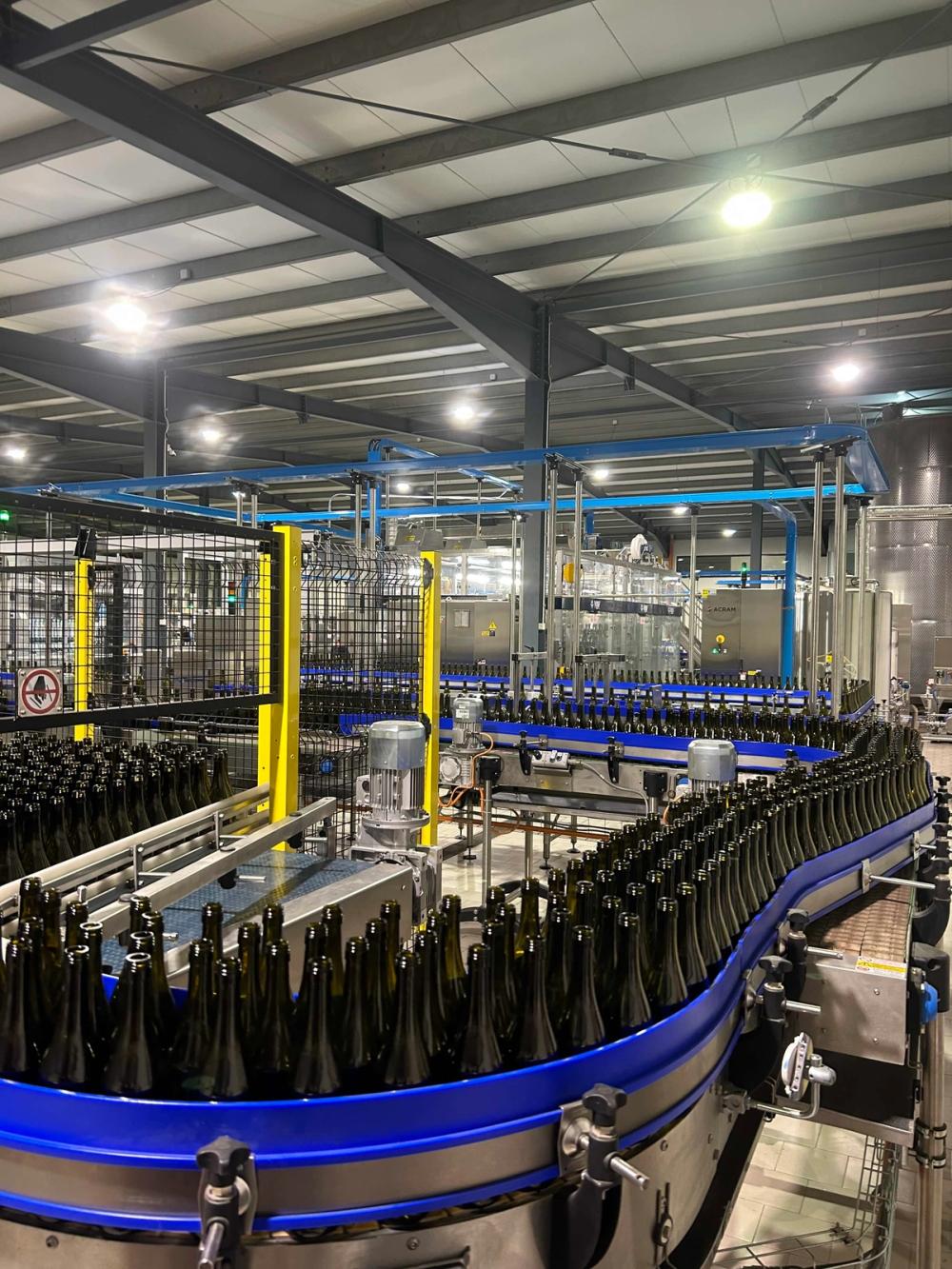
Cramele Recaș is investing in lighter bottles at 300gm to cut back on its C02 and ensure its wines are even more relevant for international wine customers - particularly in the UK
“The new bottles have around 28% less CO₂ emissions during production, and between 10% and 15% further reductions during transport,” Cox says. “Most trucks carrying wine bottles travel around 25% empty due to weight limits. With the new bottles, they can carry two to three extra pallets, meaning around 15% more wine is transported using the same fuel and emissions.”
The focus reflects increasing climate pressures on Romanian vineyards, where volatile weather and prolonged drought conditions have impacted yields over recent vintages.
Championing Romanian indigenous varieties
Alongside sustainability initiatives, Cramele Recaș is intensifying efforts to promote Romania’s native grape varieties within the UK market, which Cox identifies as a major growth opportunity.
“We have greatly expanded our range of local varieties,” he says.
A new Fetească Albă is launched in Marks & Spencer in late 2025, while Fetească Regală continues to perform strongly across retail and on-trade channels including Majestic, M&S, Waitrose and Asda. In December 2025, M&S introduced a permanent new listing simply titled M&S Fetească Regală, further strengthening consumer awareness of Romanian varietals.
Responding to UK duty pressures
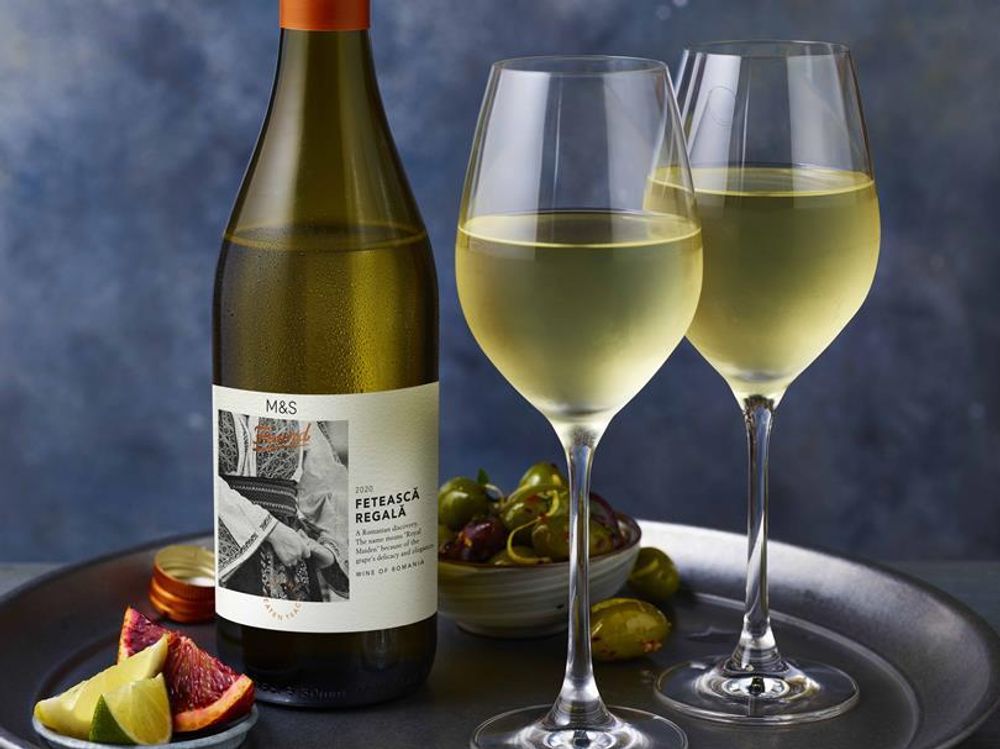
Cramele Recaș has worked with Marks & Spencer to introduce Romanian indigenous varietites to its Found range
Changes to UK duty structures are also influencing production styles, with buyers increasingly seeking lower-alcohol wines to offset tax increases. Recaș has responded by developing UK-specific wines while maintaining a strong emphasis on quality.
“UK buyers have been pushing for lower alcohol styles to offset the enormous tax increases,” Cox explains. “We always insist that reducing alcohol too much is bad for quality, and now buyers seem to be coming round to the same view.”
The winery is now producing white and rosé wines at approximately 11% ABV through earlier harvesting techniques, while maintaining red wines between 12% and 12.5% ABV to preserve structure and balance.
Expanding regional collaboration
Looking ahead, Recaș is also developing partnerships with growers across neighbouring countries to protect production stability in response to climate challenges.
“Due to recurrent extreme weather in Romania, large vineyard areas are becoming economically unviable because of prolonged drought,” says Cox. “We started in 2025, and will expand in 2026, a plan to become a regional player by collaborating with local growers in Hungary, North Macedonia and Moldova."
Under this collaborative model, Recaș’ winemaking team works closely with partner growers to ensure wines meet stylistic and quality standards before being incorporated into existing ranges. Some of these wines are expected to enter the UK market in the near future.
Preparing for the next growth phase
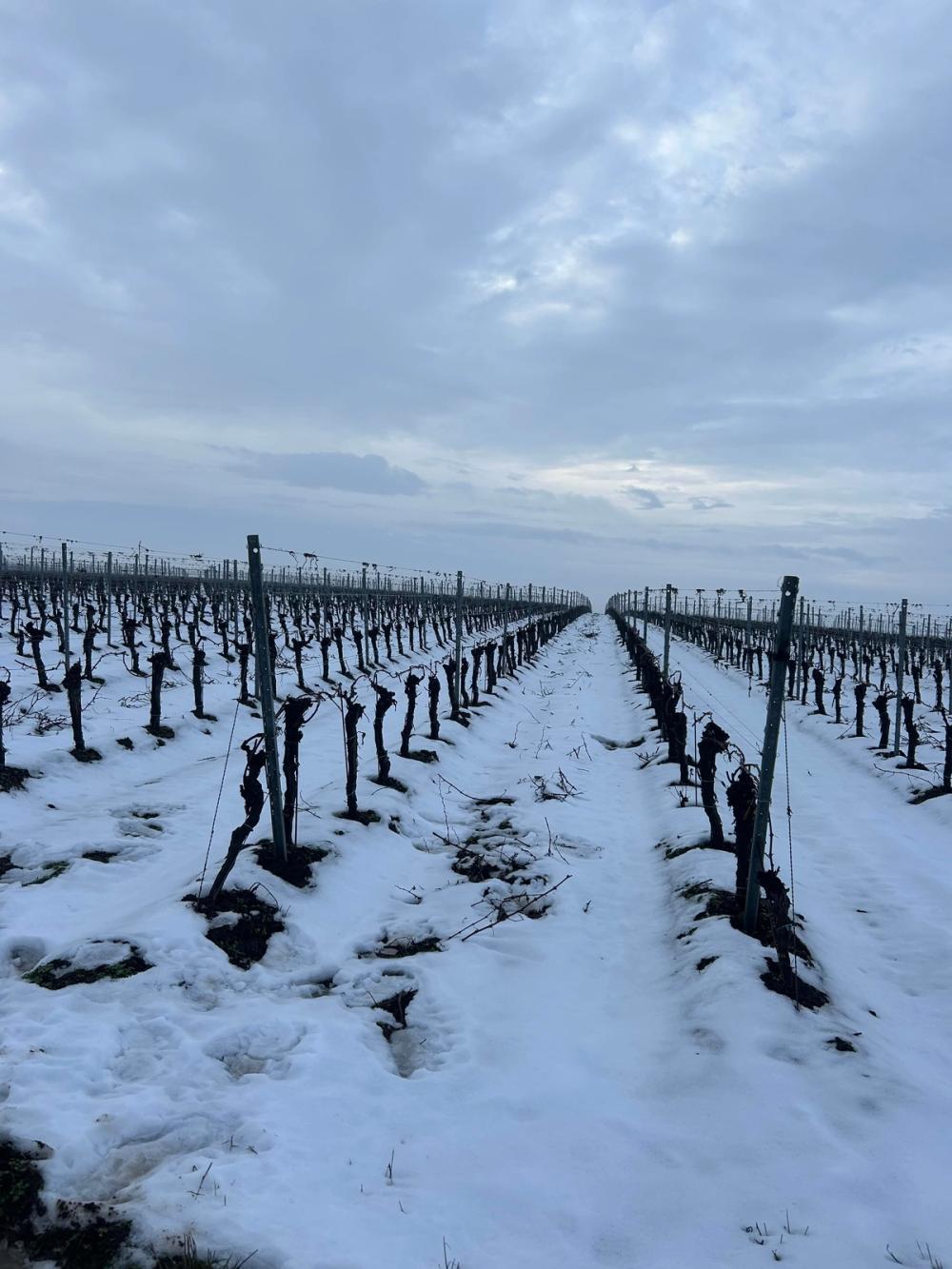
It might seem quiet out in the Cramele Recas vineyards but there is much to admire about how it is constantly changing to meet industry demand
Standing amongst those snowy vineyards the sense of dormancy felt temporary rather than still. Beneath the winter surface, Recaș is clearly positioning itself for long-term growth through sustainability initiatives, regional collaboration and increasing confidence in Romania’s indigenous grape heritage.
As the vines prepare to awaken with the coming growing season, Recaș appears equally ready to enter its next chapter, balancing environmental responsibility with ambitious export expansion.
* You can find out more about Cramele Recaș at its website here.