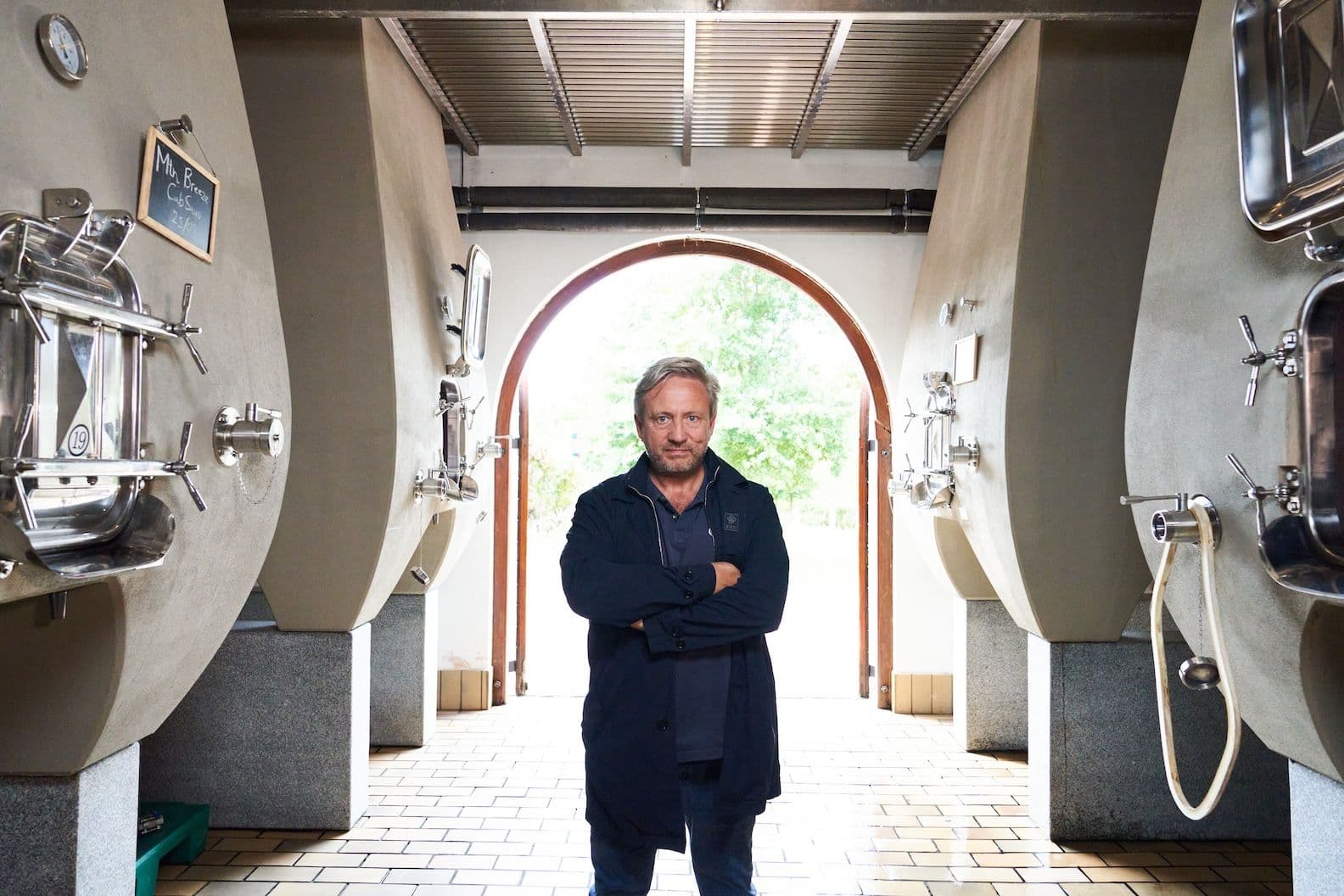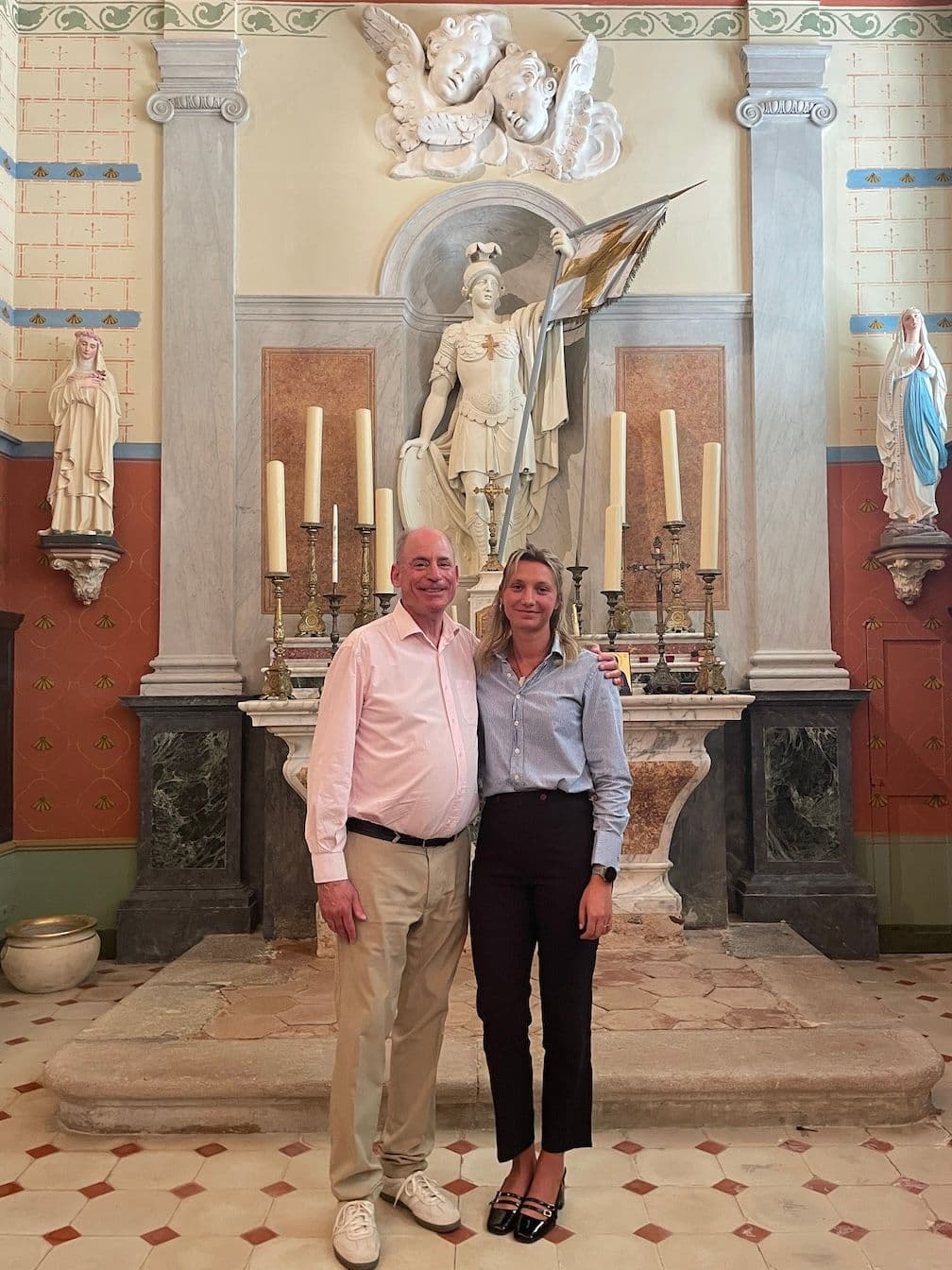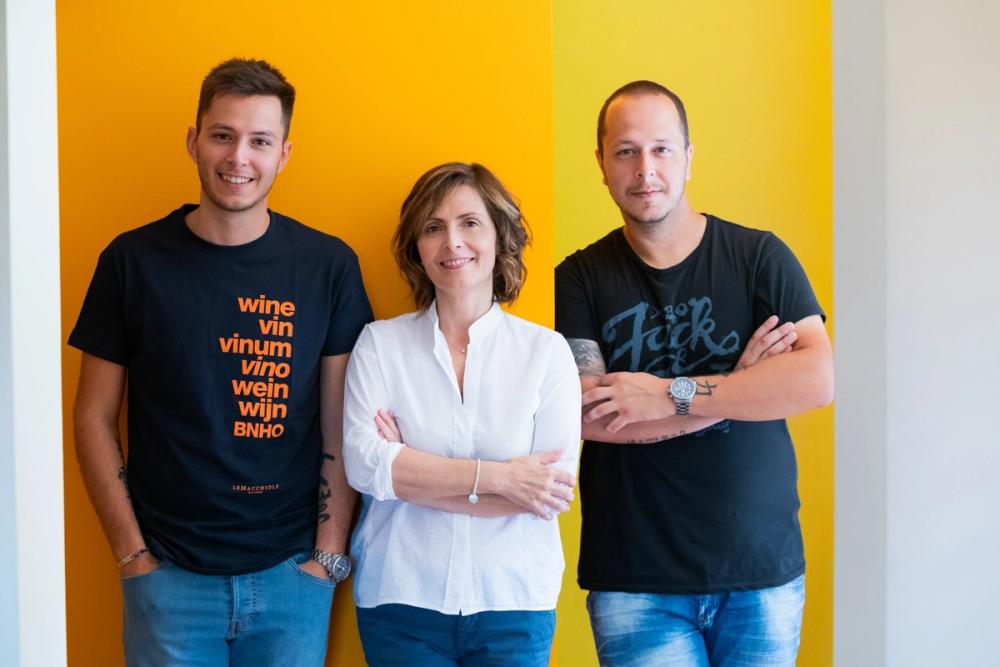
Le Macchiole's Cinzia Merli (pictured with her two sons) was elected president of the The Bolgheri DOC and Bolgheri Sassicaia Protection Consortium in December 2025.
Peter Dean: For those unfamiliar with the wines of Bolgheri could you provide an overview of the region and its main characteristics?
Cinzia Merli: Unlike the classic inland Tuscan regions such as Chianti Classico, Bolgheri is situated along the Etruscan Coast. This location is vital for two reasons. First, the sea acts as a natural thermoregulator, mitigating summer heat and ensuring mild winters, while coastal breezes keep the grapes dry and healthy.
Second, the light: beyond direct sunshine, the vineyards benefit from light reflecting off the sea’s surface, which promotes the perfect, deep ripening of polyphenols.
Bolgheri’s soils are remarkably diverse despite the area's small size. They range from alluvial deposits (pebbles and gravel) perfect for drainage, to volcanic soils from the inland hills, and finally sands and clays that provide varying nuances of structure and aroma depending on their proximity to the coast or the hills.
Bolgheri is the true Italian home for international varieties; here, Cabernet Sauvignon, Cabernet Franc, and Merlot have found a second home, expressing themselves with elegance and a typically Mediterranean, sun-drenched character.
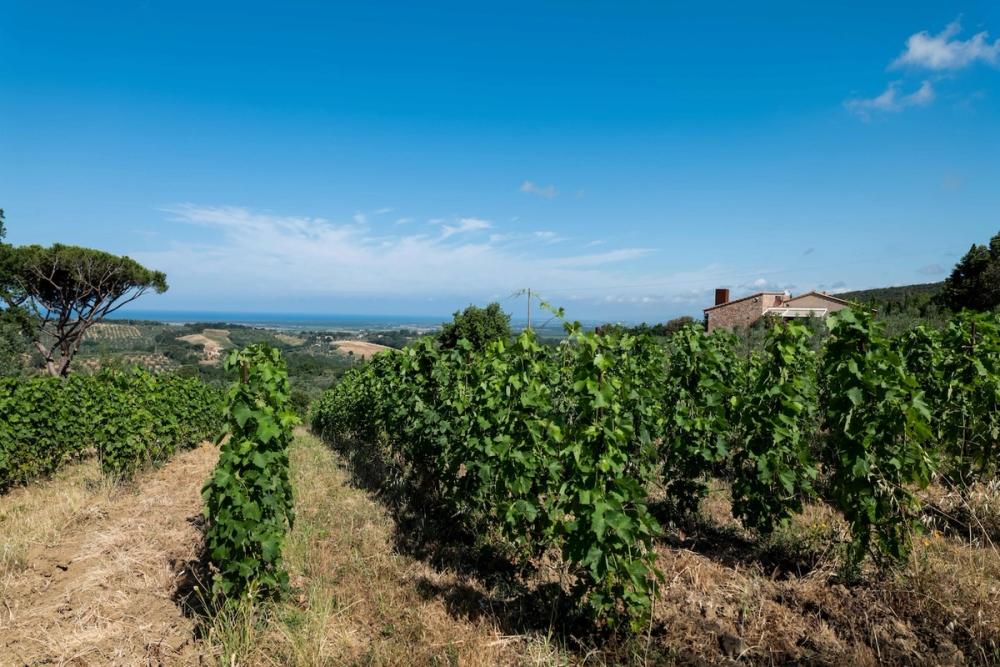
Le Macchiole's 30 hectares of vineyards are situated just 5 kilometres from the sea
What style of Bolgheri wines do you make?
Bolgheri wines are defined by their structure and elegance. They are powerful yet possess a silky tannin profile that makes them approachable even in their youth. Their aromatic profile is characterised by intense notes of black fruits, such as blackberry and cassis, often accompanied by balsamic and mineral undertones. Above all, they are built for longevity; these wines are born to defy time, capable of evolving gracefully in the bottle for decades.
What have been the major developments in the region in recent years?
In recent years, Bolgheri has undergone a phase of consolidation and refinement, positioning it among Italy’s most prestigious and high-performing regions according to international critics. The overall quality has risen impressively: it is no longer just about the iconic labels, but a solid base of small and medium producers consistently earning top scores.
As the DOC’s vineyard surface area has stabilised, any new planting or acquisition has become a strategic milestone. A significant stylistic shift is also occurring within the blends: while Merlot and Cabernet Sauvignon historically dominated, Cabernet Franc is now seeing substantial growth. Increasingly, producers are choosing to vinify it as a monovarietal or feature it more prominently in their Bordeaux blends.
How was the 2025 harvest in terms of volume, yield and quality compared to previous years?
From a qualitative standpoint, 2025 promises to be a vintage of great freshness and aromatic precision. The season followed a regular climate pattern, with a warm but balanced summer and, crucially, significant diurnal temperature shifts in August. This allowed us to achieve perfect phenolic maturity without reaching excessively high alcohol levels.
The Cabernet Franc, in particular, displays a vibrancy and a balsamic quality reminiscent of the most classic and elegant vintages in our history. Yields were also satisfactory, aligning with the previous harvest.
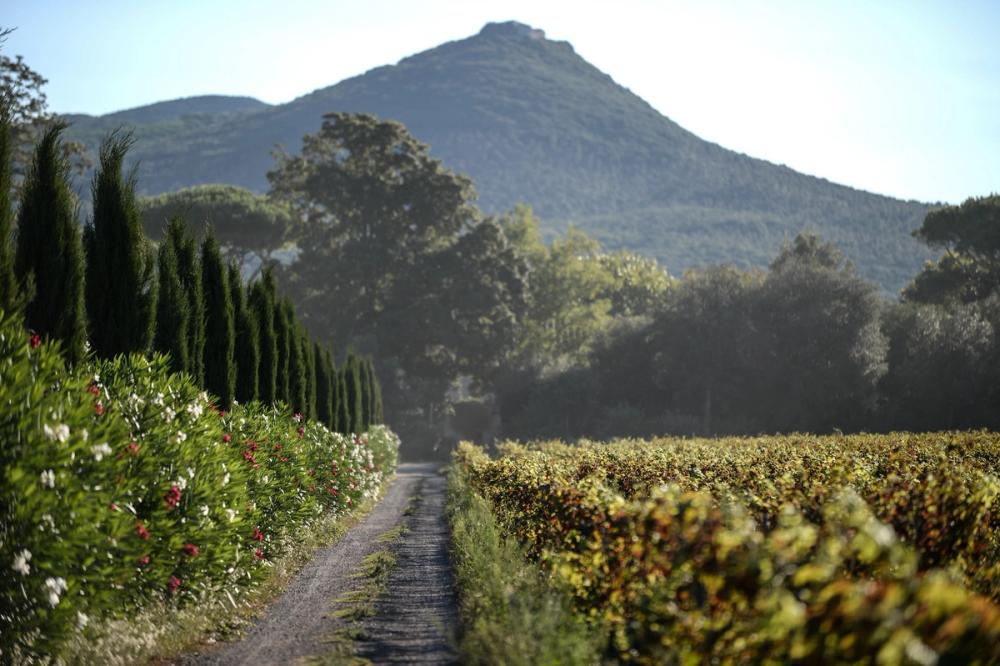
Many of Le Macchiole's vineyards are planted to a high density of 5,000-10,000 vines per hectare, although this is now being re-evaluated in the light of climate change
You have always planted very high-density vineyards – why is this? And is it not a disadvantage to have high density with climate change?
This is a crucial question that touches the technical heart of our philosophy.
When we began planting at high densities – reaching 10,000 vines per hectare – our goal was absolute quality through competition. Forcing vines to share a limited space compels them to ‘struggle’ for nutrients and water, resulting in deeper root systems, lower yields per plant, and nobler tannins.
This was the rationale behind our choice. However, we are now re-evaluating this approach in light of the changing climate. While established high-density vineyards require entirely different management than in the past, our most recent plantings have been designed with lower densities to ease management, particularly during periods of water stress.
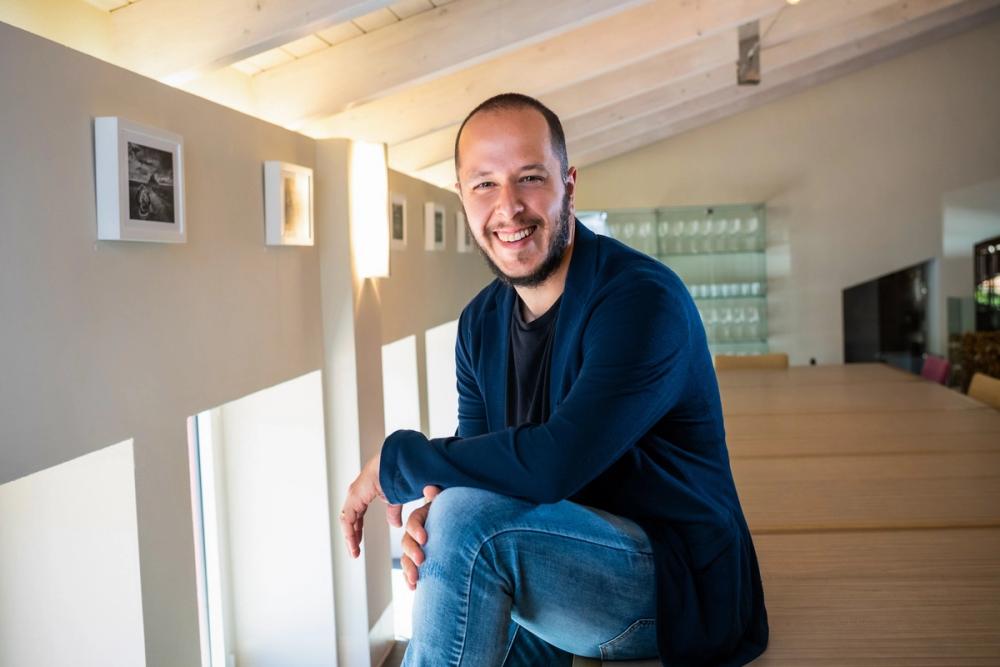
The vineyards are managed by Cinzia's son, Elia Campolmi
What do you think have been the main ‘secrets of your success’?
Reflecting on our journey, our success isn't the result of a magic formula, but a blend of vision, courage, and a visceral bond with the land. While Bolgheri became famous for its blends, we made the radical choice to focus on varietal purity. We decided that the best way to honor this territory was not through ‘assembling’, but by letting a single variety express the soil in which it is rooted.
Le Macchiole has remained remarkably consistent. Following the loss of my husband Eugenio – our great visionary – we could have taken easier, more commercial paths. Instead, we chose to raise the bar, maintaining a ‘boutique’ approach where craftsmanship and professionalism grow side-by-side. We prioritise elegance and drinkability over ‘muscular’ wines that tire the palate; we seek depth, complexity, and vibration.
The real secret has been our humility in listening to the vineyard: in Bolgheri, the terroir is generous, but you must follow its lead rather than trying to dominate it.
Why do you believe so much in producing monovarietal wines? And what advantages do you think that style of winemaking has?
Choosing to produce monovarietal wines was not a marketing tactic, but a philosophical evolution that redefined our identity. In a region historically defined by the Bordeaux blend, the monovarietal is a true challenge.
A single variety, in its ideal pedoclimatic conditions, becomes a pure expression of terroir, offering a vertical structure, an acidic backbone, and an aromatic precision that favors finesse over sheer power. Naturally, this is more difficult: you cannot use the virtues of one variety to mask the weaknesses of another in a difficult year. This demands obsessive attention in the vineyard; every cluster must be flawless, as it is the sole protagonist of the bottle.
"By limiting Cabernet Sauvignon's role, we allow Merlot, Cabernet Franc, and Syrah to interpret our land with a personality we feel is more uniquely ‘ours’."
Why no Sangiovese and very little Cabernet Sauvignon?
Here in Bolgheri, just metres above sea level in a luminous Mediterranean climate, Sangiovese ripens differently than in Chianti Classico or Montalcino, sometimes losing the freshness and ‘nervine’ acidity that make it great. Consequently, we have focused elsewhere, though we haven't abandoned it entirely; starting with the 2024 harvest, our Bolgheri Rosso will include a small percentage of Sangiovese in the blend.
Regarding Cabernet Sauvignon – the symbol of our DOC – our choice to de-emphasise it often surprises people. At Le Macchiole, our hierarchy is different. While we respect its ability to provide structure and robust tannins, we have always pursued a more nuanced, vibrant elegance. Furthermore, in our specific soils, Cabernet Sauvignon is exceptionally vigorous; by limiting its role, we allow Merlot, Cabernet Franc, and Syrah to interpret our land with a personality we feel is more uniquely ‘ours’.
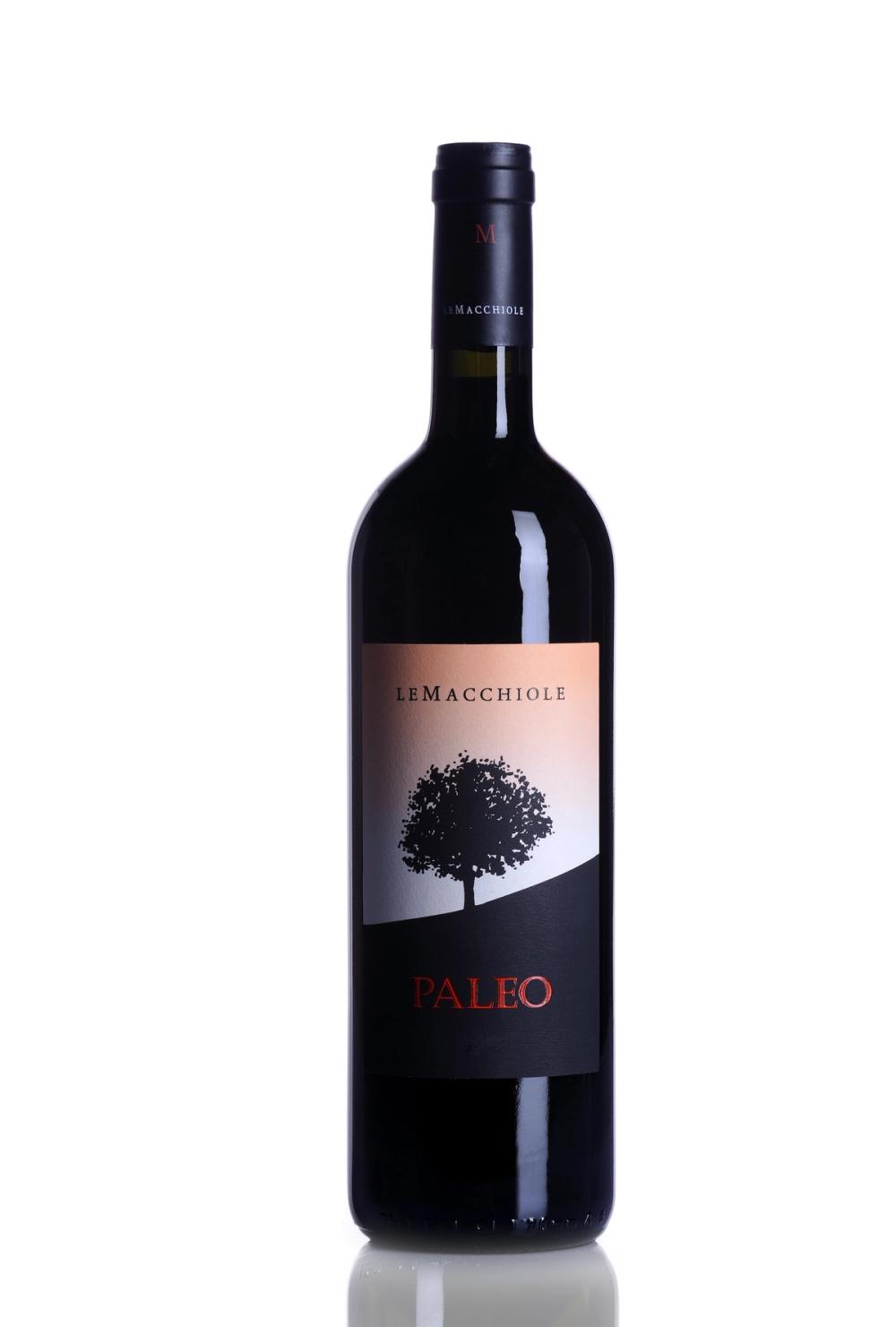
In 2001 your most celebrated wine Paleo Rosso changed from a blend to a monovarietal – explain how this came about?
The transition of Paleo Rosso to 100% Cabernet Franc in 2001 was a bold, revolutionary moment for the entire region. It wasn't a commercial calculation, but an ‘epiphany’ born in the vineyard. Until the late 90s, Paleo was a classic blend. However, Eugenio was obsessed with finding the purest expression of our land. He noticed that Cabernet Franc didn't just ripen perfectly; it showed a complexity, luminosity, and finesse that Cabernet Sauvignon couldn't match in those same parcels.
In 2001, we took the leap of faith. At the time, it was considered madness – Cabernet Franc was seen as a ‘supporting’ grape, used for herbaceous notes but rarely capable of standing alone. We saw something else: in Bolgheri, Franc sheds its aggressive vegetal traits to gain notes of black fruit, sweet spices, and incredible Mediterranean balsamicity. This choice turned Paleo into a benchmark, shifting the focus from power to aromatic depth and fine-grained tannins.
How has the wine won over its critics?
The success of Paleo Rosso with international critics and distributors was a gradual victory based on consistency. We broke a paradigm. For decades, Cabernet Franc was associated with ‘green’ wines. When Le Macchiole presented a version with perfect phenolic maturity – free of unpleasant herbaceous notes and rich in spicy complexity – it shattered those prejudices and set a new global standard for the variety.
What can you tell me about the fan club of Paleo Rosso?
Those who love Paleo aren't usually seeking a ‘status symbol’ wine. They are a curious, informed audience who discovered Cabernet Franc before it was trendy. They appreciate an elegance that is subtle and vibrant. There is also a strong human connection; many of our long-time supporters have followed our family's journey. They see Paleo as the symbol of Eugenio’s challenge and the determination with which we have moved forward.
There is deep respect for the integrity of the project and they know that bottle contains a piece of our history. This human warmth is what drives us every year to never betray expectations and to produce a wine that is, above all, an emotion.
How do you see the future of Cabernet Franc in Bolgheri?
In an era of global warming, Cabernet Franc is proving more resilient than other varieties. In Bolgheri, it maintains a natural freshness and an enviable acidic backbone, handling heat without losing elegance. Years ago, we were among the few believers in its potential as a monovarietal.
Today, almost every major estate in the area is increasing its percentage of Cabernet Franc or launching their own 100% versions. This doesn't worry us; it confirms that the path we blazed with Paleo was the right one.
In your press kit you mention what percentage of your employees are female. Why have you done this?
We didn't include data regarding our female workforce to follow a trend or meet ‘quotas’; it reflects our deep identity. The female presence is the beating heart of our production. We’ve found that women bring immense value in terms of attention to detail, patience, and sensory sensitivity – crucial in an estate that relies on extreme manual selection.
We believe a modern winery should mirror society. Highlighting gender equality is our way of communicating transparency and a merit-based work ethic. We want to prove that high-level agriculture is not just a ‘man's world’, but a field where diversity of vision creates a more harmonious product. Including this in our press kit also serves as a signal to young female professionals: talent is valued here regardless of gender.
75% of your production is exported – which are your main export markets and which are the fastest-growing?
Exporting 75% of our production to over 50 countries is a source of pride and responsibility. Our historical markets – Switzerland, the USA, Japan, and Germany – remain our core. Recently, we’ve seen interesting growth in Southeast Asia and Northern Europe. Our goal is not volume – our production is strictly limited by our land – but growth in value and positioning. We prefer to enter markets through fine dining and specialised wine merchants where the wine’s story can be properly told.
Where does the UK stand in all this? Is it an important market for you and how do sell and distribute in the UK?
The UK holds a place of honor in our strategy. It is not just a market, but historically the arbiter of world taste regarding quality wine. For Le Macchiole, being esteemed in London is a prerequisite for being a global brand. The British market is essential for our presence in Michelin-starred and high-end restaurants.
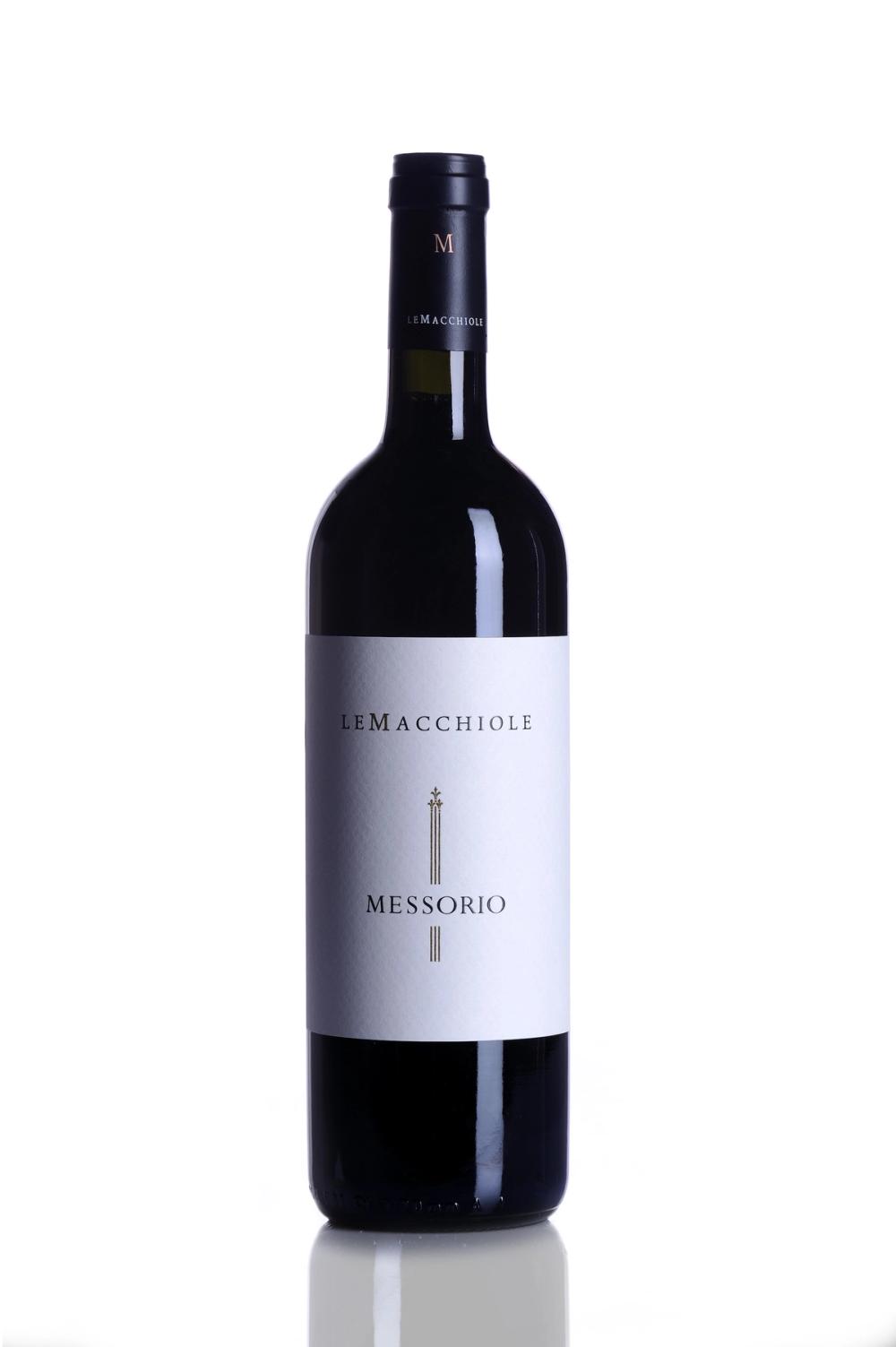
Much of our visibility comes through these wine lists, where Paleo Rosso or Messorio are served to a highly discerning international clientele. We have worked with the same partner since the mid-90s; while not our largest market by volume, it remains a vital reference point.
How much of your production is sold to the on-trade? Is this growing? If not – why not?
The on-trade (restaurant) segment is growing for us in terms of quality. Although our bottle count is capped by our acreage and therefore cannot grow infinitely, the demand from the global restaurant industry has surged over the last five years. Today, the on-trade represents 70% of our market.
The wines of Le Macchiole are imported and sold in the UK through Lea & Sandeman