
The hold that the brand has on the British drinker is such that offering an affordable Gavi by the glass can kill a restaurant’s wine list. Even well-heeled customers will venture no further than this fresh, light, quaffable Italian white.
Solid, strong, straight, simple, safe – these are the virtues of the wines from Gavi DOCG (Denominazone dI Origine Controllata e GaRantita) appellation. They rarely disappoint. And it is an enduring hit in the UK whose drinkers consume half of what’s produced. A mere 8 per cent is drunk domestically, despite the Italians’ avowed drink-local focus.
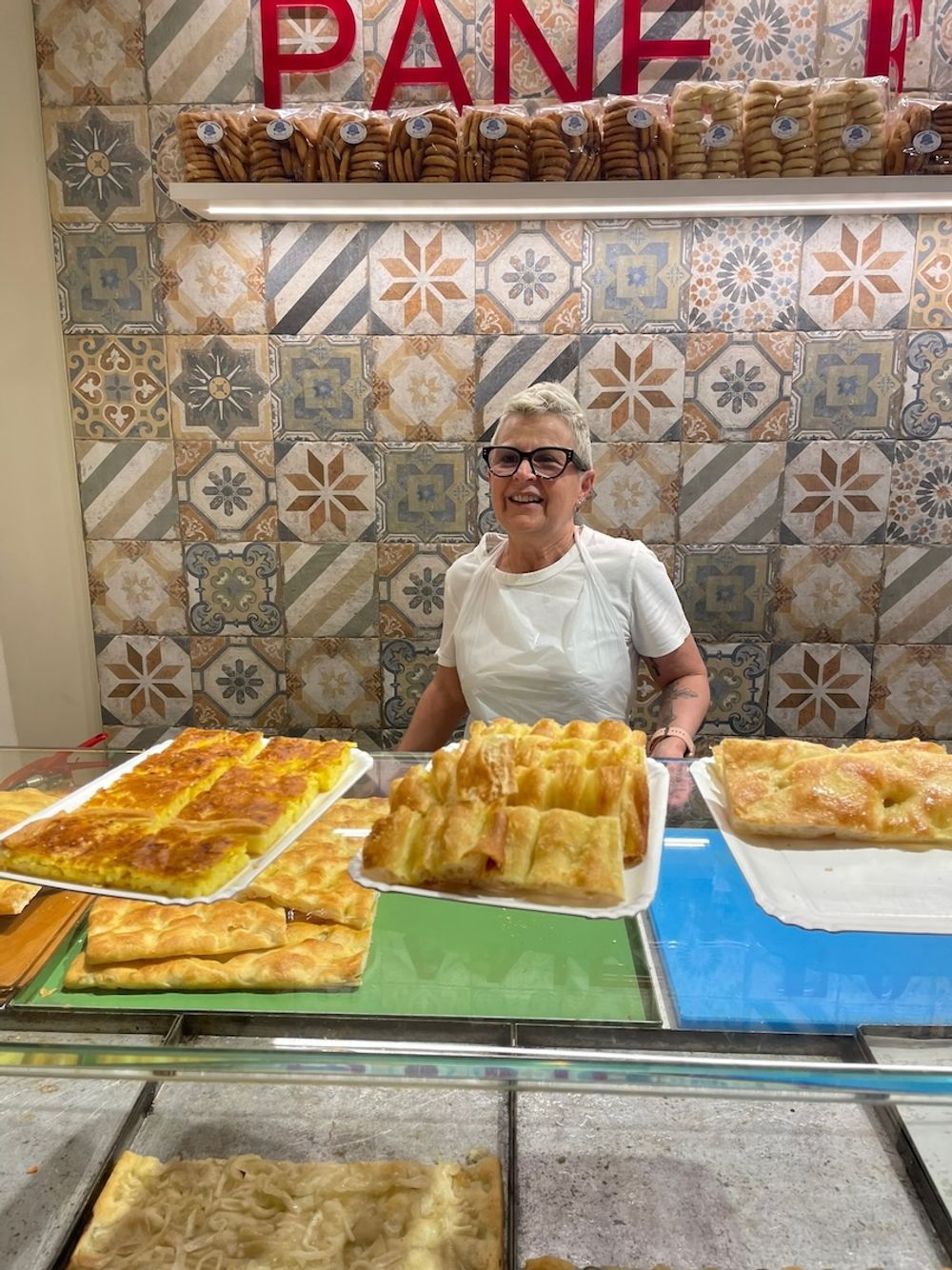
Specialist focaccia is a big thing in Gavi
So, what do Brits see in Gavi?
Well, the appellation has got a lot going for it. First, it’s on-trend as a white-only appellation (with a tiny proportion of sparklers). Its alcohol is typically moderate. It has provenance, the first mention dating back to 972 CE. It’s fresh and elegant and easy to drink and very pleasant when drunk young. It’s middling in price typically between £12 and £18 retail. And, of course, for Brits it’s a doddle to pronounce.
But is this enough? Shouldn’t Gavi be heading further up the premium scale? Couldn’t more of the wines be gastronomic? What about ageing the wines? And what about a more experimental approach to the winemaking?
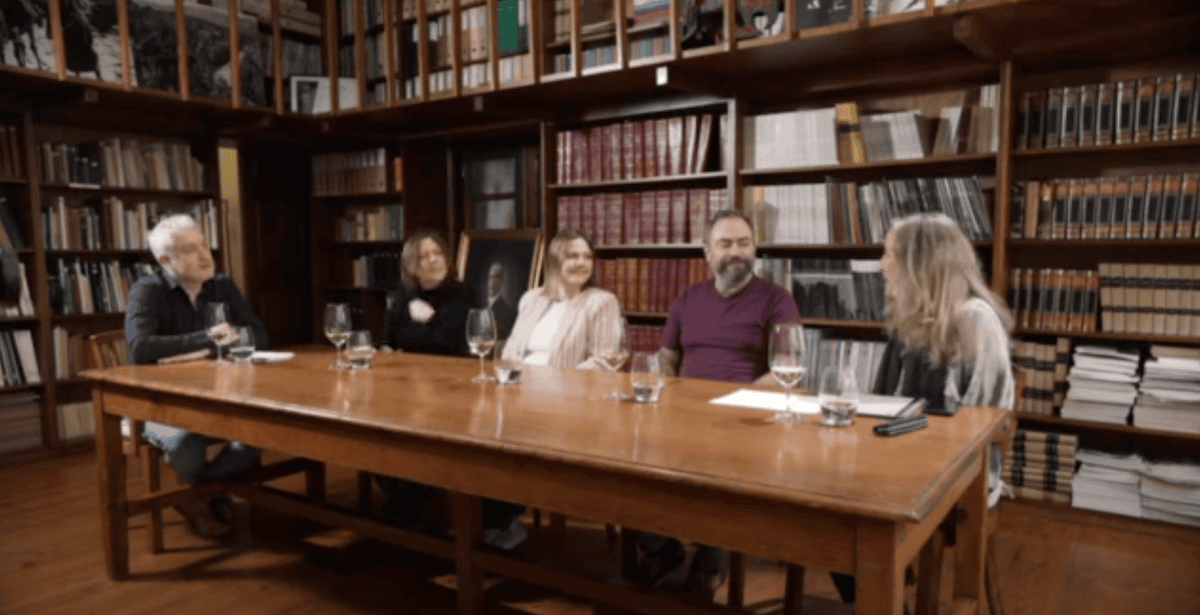
The Buyer and somms from several top London restaurants are among those invited by the local consorzio of Gavi producers to learn answers to these questions.
Welcome to Gavi-shire
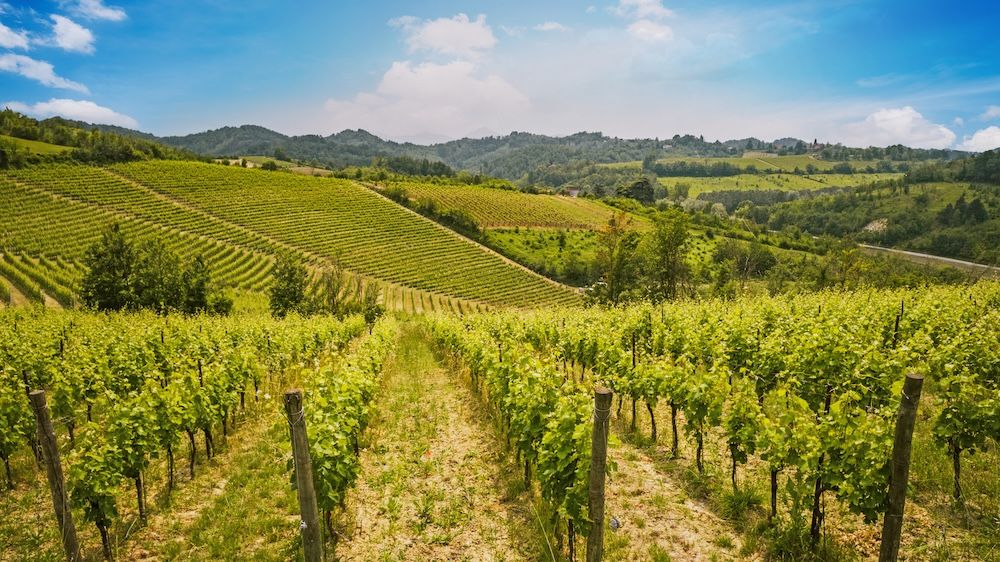
Mainly hilly, the areas under vine are between 200 m and 400 m above sea level. The soil types in the north and those in the south are quite distinct.
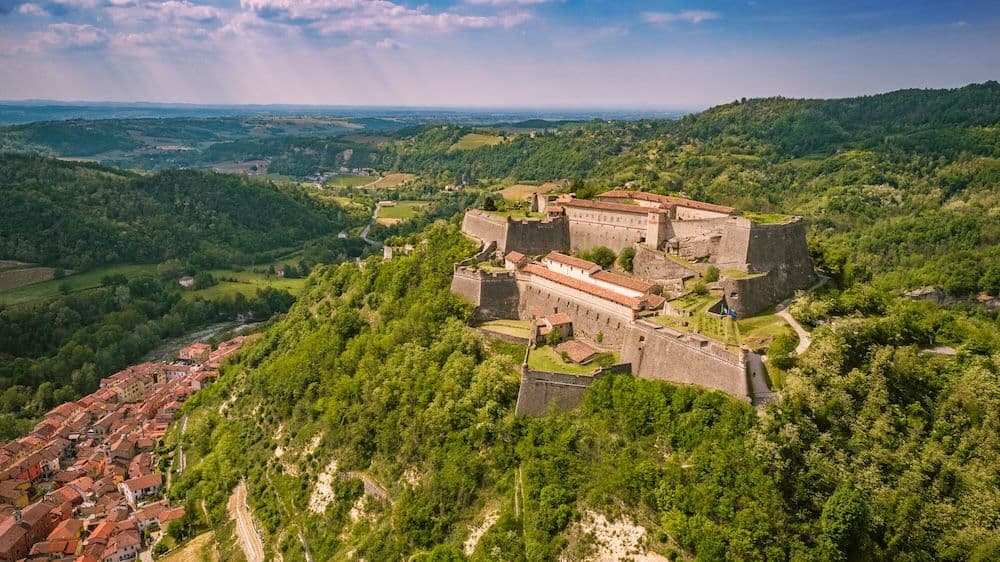
Gavi-shire in the south-eastern corner of Piedmont is a rustic region despite its proximity to fashionable Milan. The re-introduction of wolves means the faint-hearted should not roam vineyards alone. Food is taken very seriously with an obsession with the styles of focaccia served up alongside the wine.
Under the DOCG appellation rules wines come from one of eleven villages. One of these is the village of Gavi itself - hence the famed Gavi di Gavi, known more properly as Gavi del Comune di Gavi which commands a modest price premium. There’s a riserva but this does not seem to carry much, if any, cachet.
Mainly hilly, the areas under vine are between 200 m and 400 m above sea level. The soil types in the north and those in the south are quite distinct. The red soils in the north from weathered rocks are clayey. The white soils in the central area with a marine origin are largely calcareous marl.
But, in terms of grapes, it’s all very simple. The sole fruit is the indigenous Cortese variety which, sometimes seen as rather bland, shows its best varietal face in Gavi.
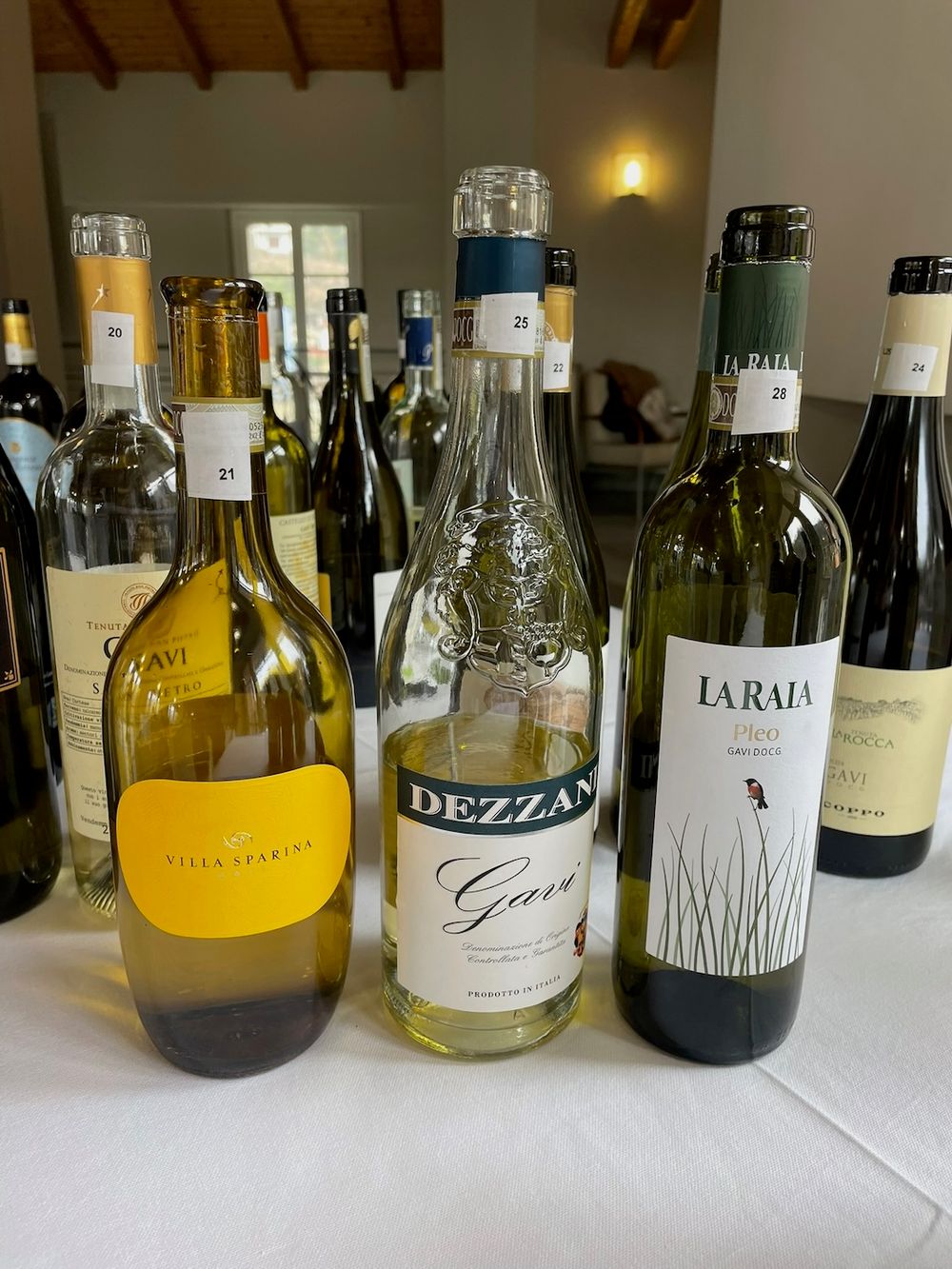
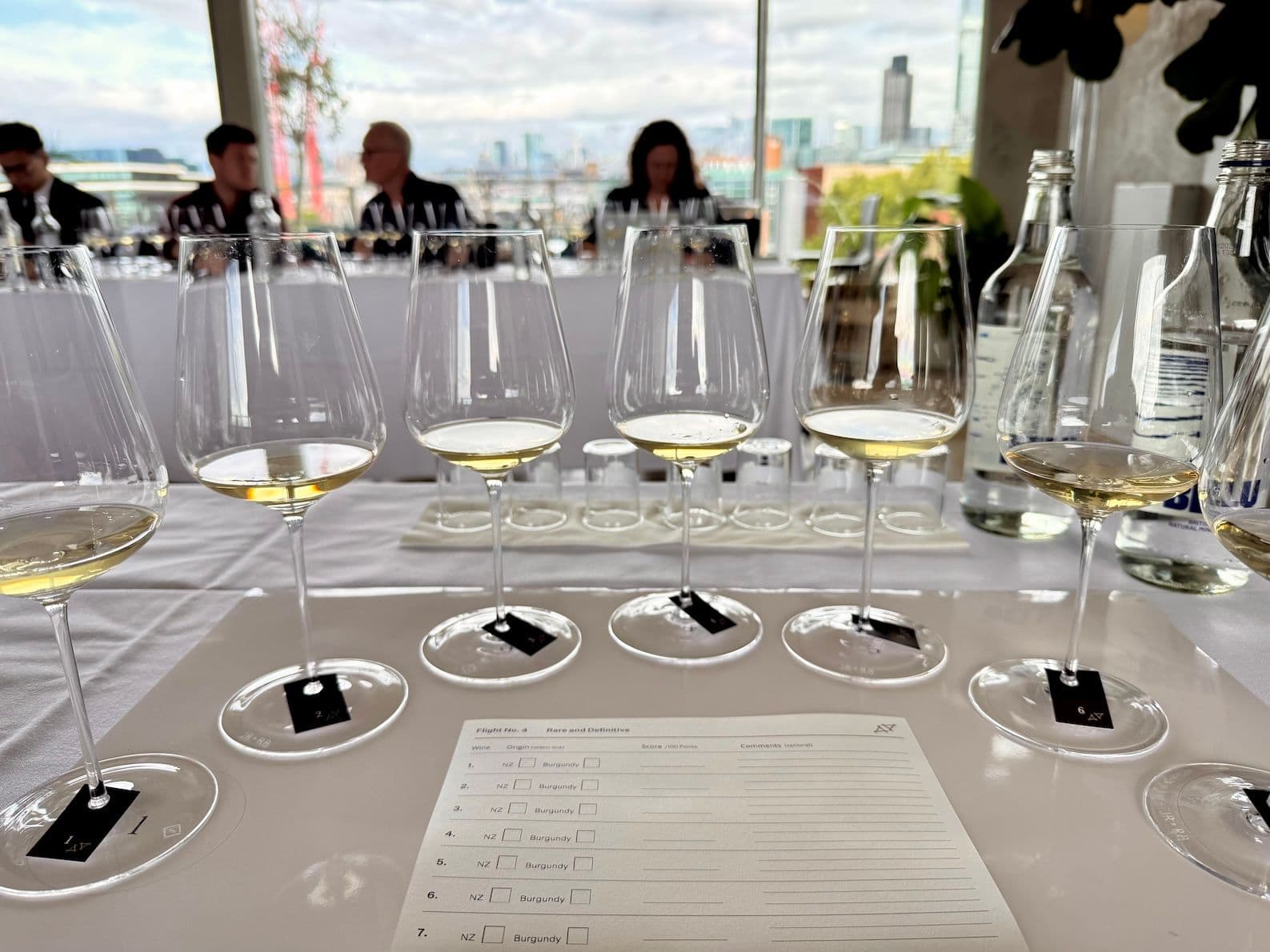
Our first stop is a tasting of 37 wines. As our host explains, though diverse, this bunch mainly tells the same story: fresh, crisp, savoury and refreshing. Among the stills, there’s the Dezzani SRL Gavi 2024 (ABV 12.5%, retail £16.77 a bottle) which has an attractive Chablis-like style and the La Bollina Gavi DOCG 2024 (ABV 12.5%) with white stony fruit and a richer, warmer touch of jaminess.
The wine that draws most attention is the Villa Sparina Gavi del Comune di Gavi 2024 (ABV 12.5%).With a retail price of £30.65, this is live, fresh and also boasts complexity and depth of flavour with floral notes. A competitor for pricey white Burgundy, maybe?
Making Gavi thrive in an age of discovery
Given its remarkable positioning in the UK market, it’s tempting for Gavi producers to keep plugging on with the same winning formula. To have a product which is the go-to for many affluent drinkers is an enviable position. But one suspects that they know it would be unwise to rely too heavily on one market – or to blithely assume that the current tastes attuned to Gavi will continue with a newer generation of drinkers bent on ‘discovery’, exploring orange wines, pet nats – even exotics like premium retsinas.
So, the push is to get people talking about ageing Gavi wines and to foster some experimentation.
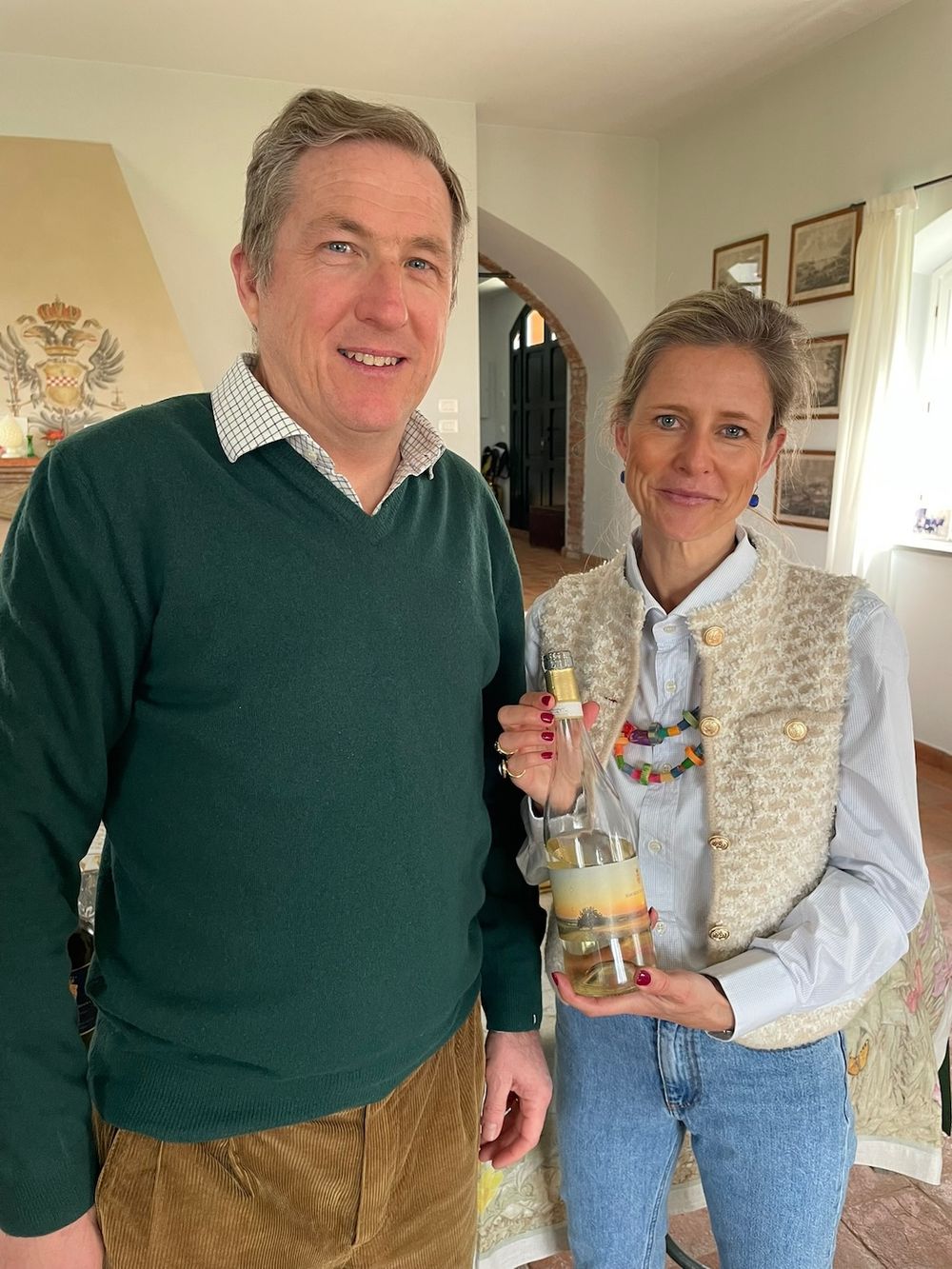
Andrea and Nora Spinola
At Marchese Luca Spinola, the restless Andrea Spinola is something of a disrupter. Twenty years ago, Andrea left his corporate career in Milan and moved back to Rovereto in the district of Gavi. Both owner and winemaker, this is a man with an aristocratic lineage who has a vision very much of his own.
Take the Marchese Luca Spinola Massimiliano Gavi 2017 Limited Edition (ABV 14.5%, £44 a bottle retail). Now nearly a decade old, this is far more of a gastronomic wine.
The winery has found a ready home for these more up-market and somewhat less straightforward Gavi wines in Annabel’s and other private clubs in Mayfair.
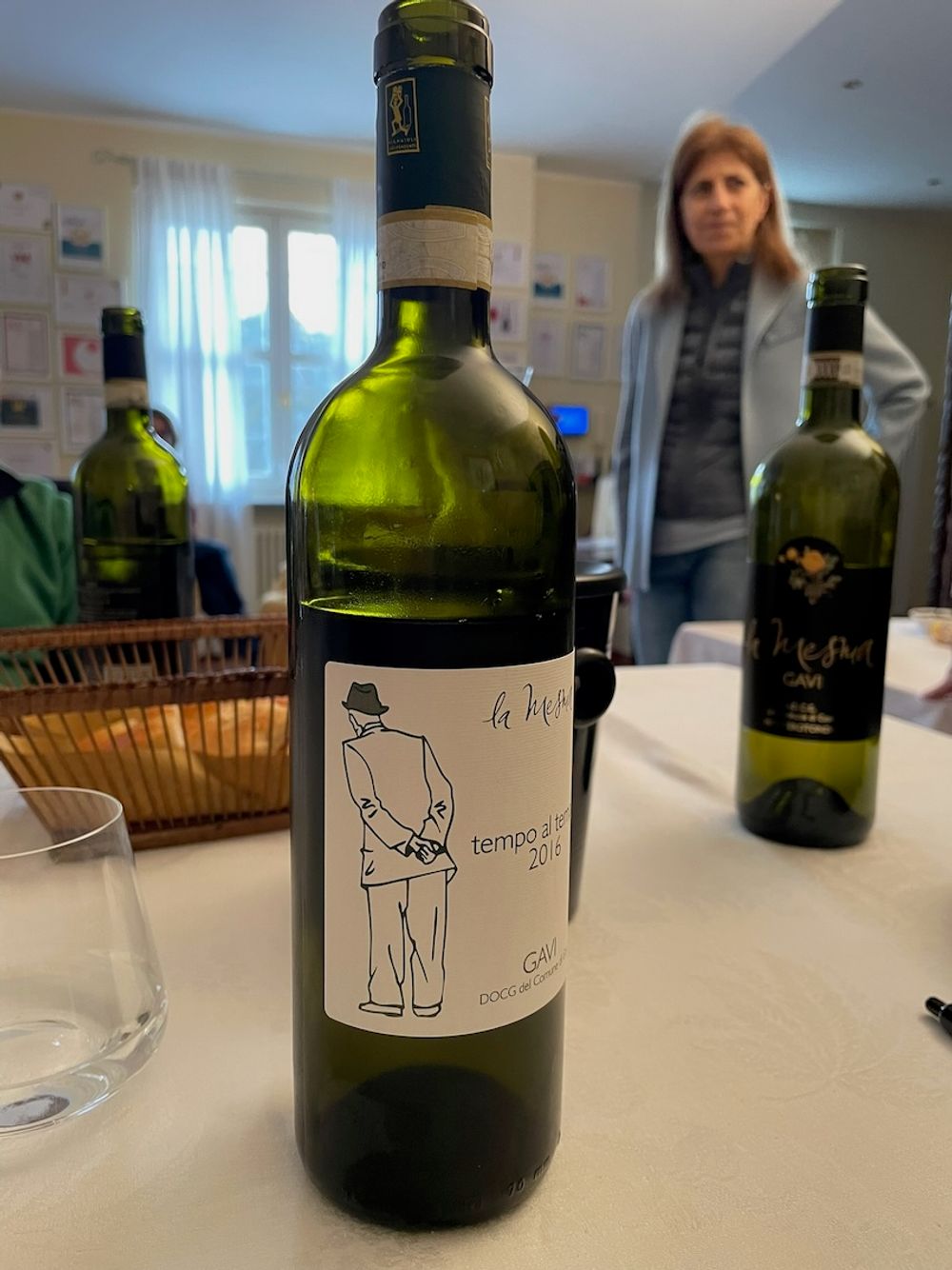
Not far away, La Mesma is a winery run by the Paola Rosina and her two sisters. There’s a range of wines on offer but, if you want to answer questions about Gavi’s ageing potential, look at the winery’s Tempo al Tempo Gavi del Comune di Gavi 2016. Roughly translated, “tempo at tempo” means “all in good time” which is self-explanatory. Here’s proof that in the right hands Gavi can be successfully aged.
Further away in the region of white soils is a winery with a more familiar brand.
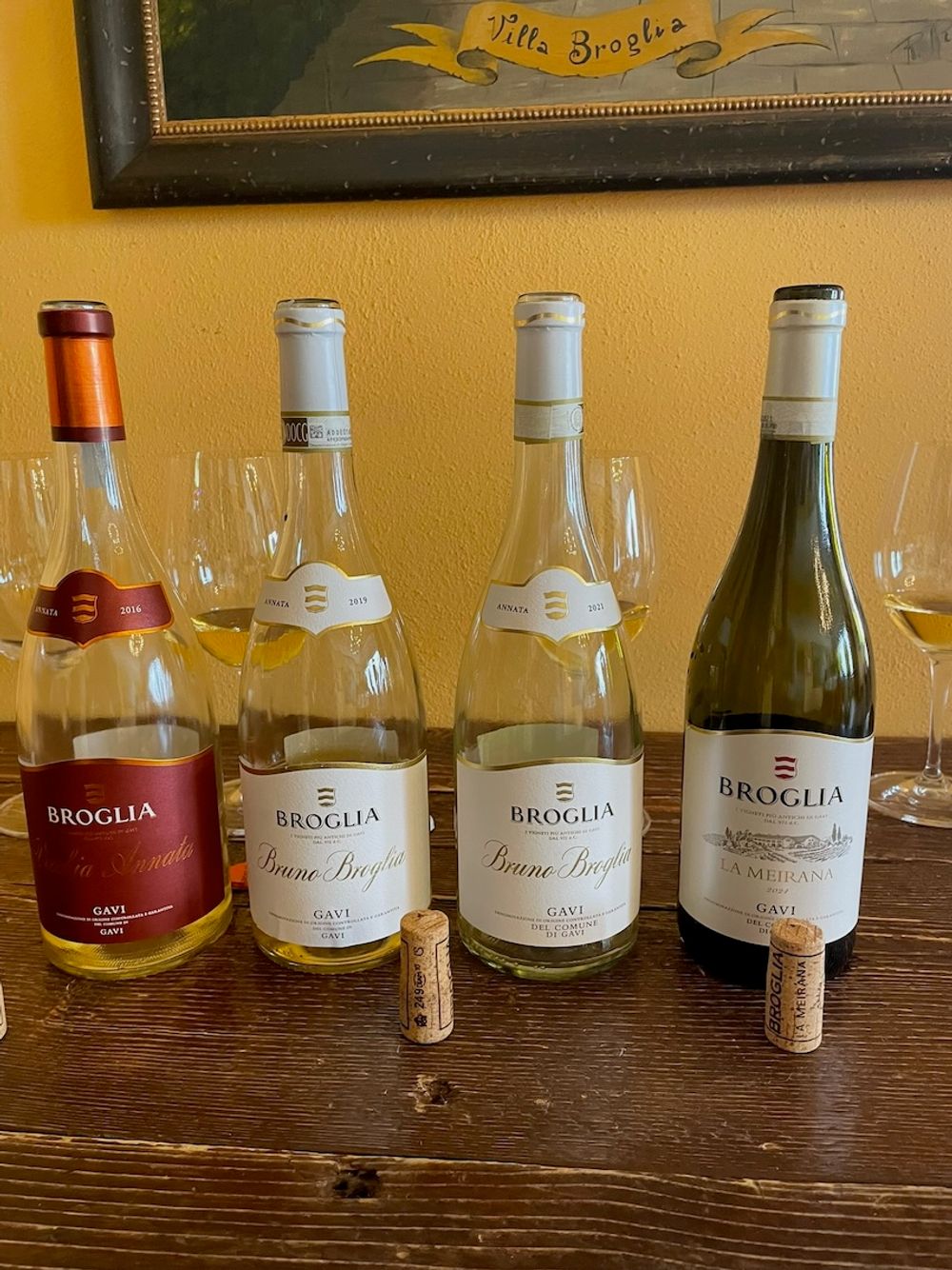
Broglia has 70 hectares under vine, all Cortese. At the lower end of its range are the typical Gavis from its La Meirana area. Sensible and straightforward, there’s nothing here to frighten anyone.
But for those wanting something more surprising, try the Broglia Vecchia Annata 2016 (ABV 14%, £54).This spends no less than 88 months on the lees creating a winewith a great structure, remarkable sapidity and intense aromas of flint and almonds.

Roberto Broglia
This is the sort of direction that Gavi needs to take. Roberto Broglia says, “People are drinking less but looking to buy better wines. We now need to compete with the likes of Chablis Grand Cru. We are coming!”
Top picks from this trip
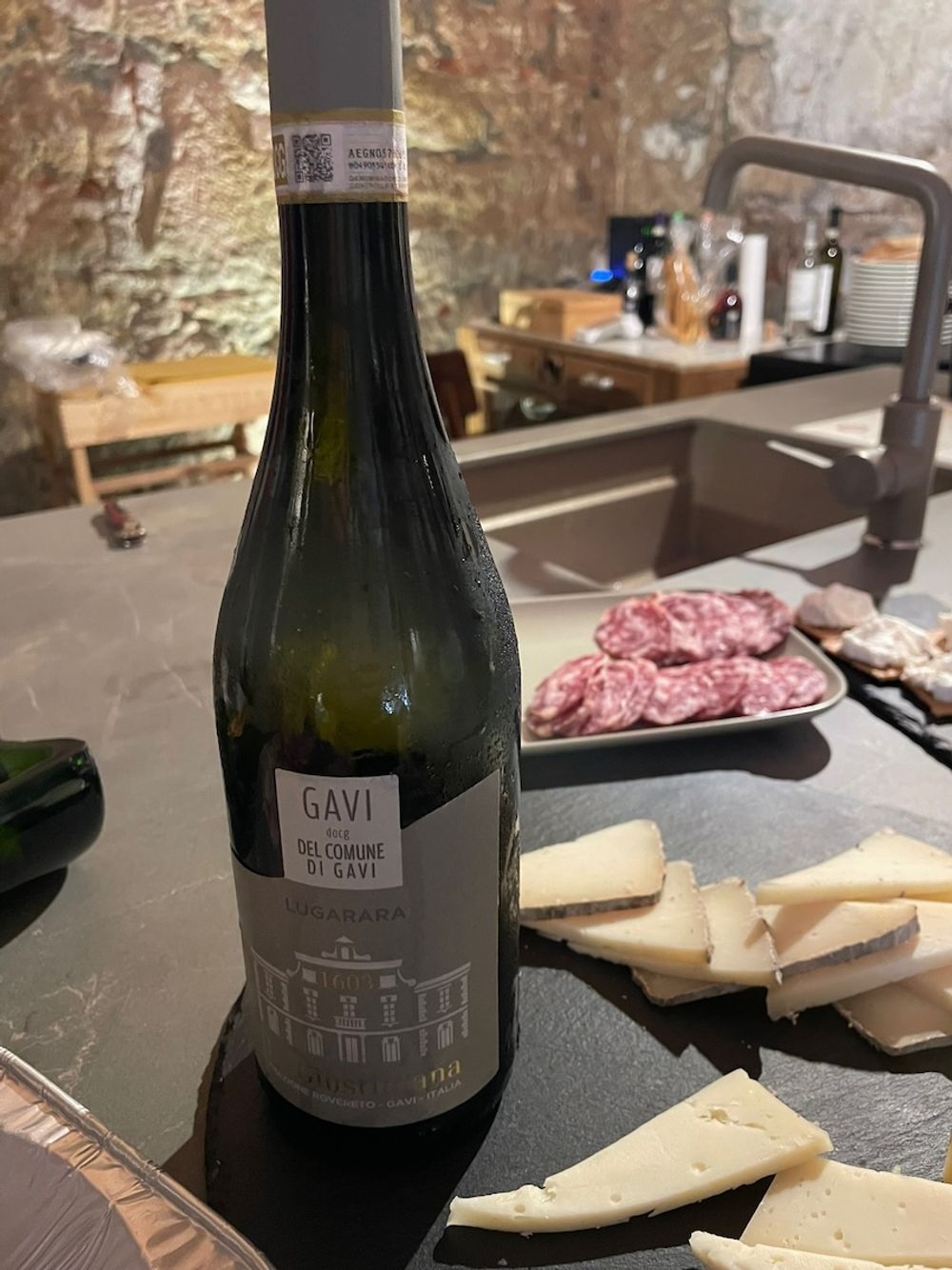
La Giustiniana Lugarara Gavi di Gavi DOCG 2024 (ABV 12.5%, £18). A crowd pleaser with ripe stone fruit and a flinty mid-palate and refreshing minerality.
Broglia Vecchia Annata 2016 (ABV 14%, £54). A characteristic crispness and minerality, with subtle hints of apple, peach, and citrus. The palate is soft and well balanced and there the finish is notably persistent. A serious wine.
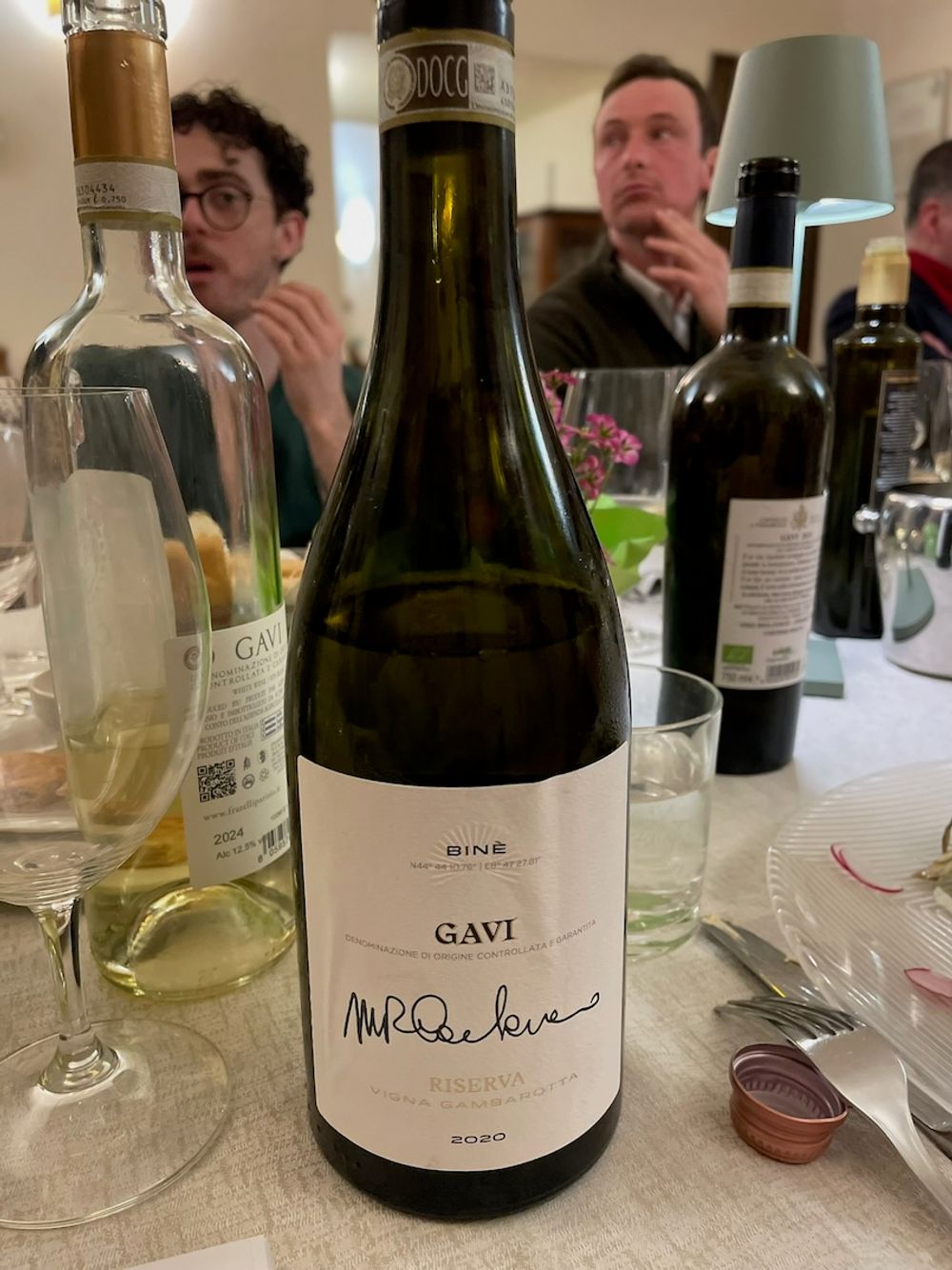
Binè Riserva Vigna Gambarotta 2020 (ABV 14%) A nose of ripe white fruit and peach. Layered white fruit on the palate and a lemony acidity. Viscous with long lemon on the finish. High alcohol does not show too much in tasting. A personal favourite.
La Mesma Tempo al Tempo Gavi del Comune di Gavi. (ABV 12.5%, €35) A library release. Features on the label an “umarell”, an old man whose pastimes is staring into roadworks. The natural acidity of Cortese balances the structure of the palate with freshness, where intense notes of flint combine with white fruit – a long finish.
La Bollina Gavi GOCG 2024 (ABV 12.5%, £25). Bit of a Marmite wine this. It has a richer, warmer more oxidised flavour profile with some yellow fruit jaminess and is a hit with some, not with others.
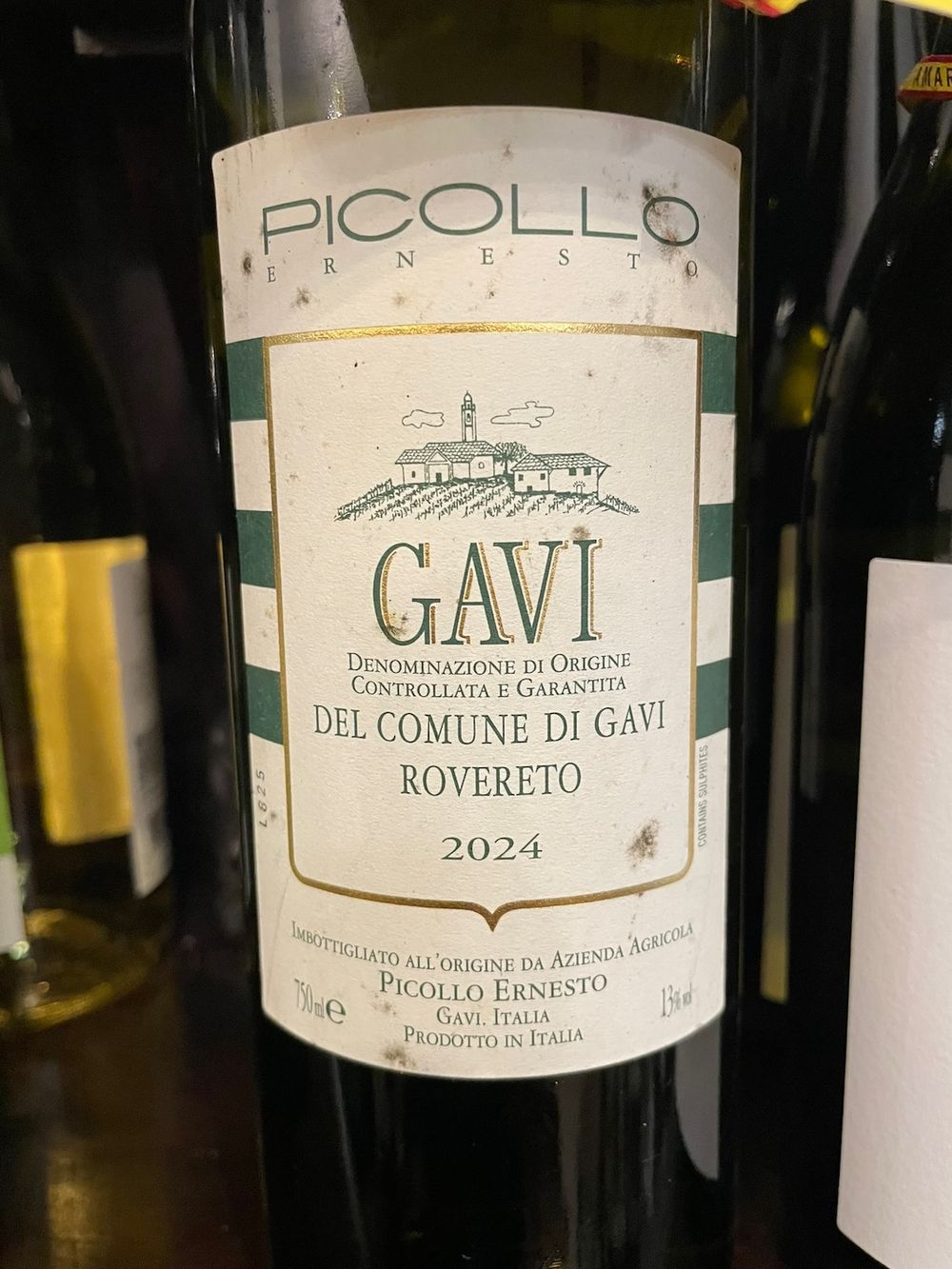
Picollo Rovereto Gavi di Gavi DOCG 2024 (AVB 13%, £21). From the heart of Gavi with an aromatic expression of citrus, this has notes of lemon green apple. Good minerality and refreshing attack.
Marchese Luca Spinola Massimiliano Gavi 2017 Limited Edition (ABV 14.5%, £44 a bottle retail). Intense straw-yellow, it has a delicate floral scent, and a complex flavour with woody notes.