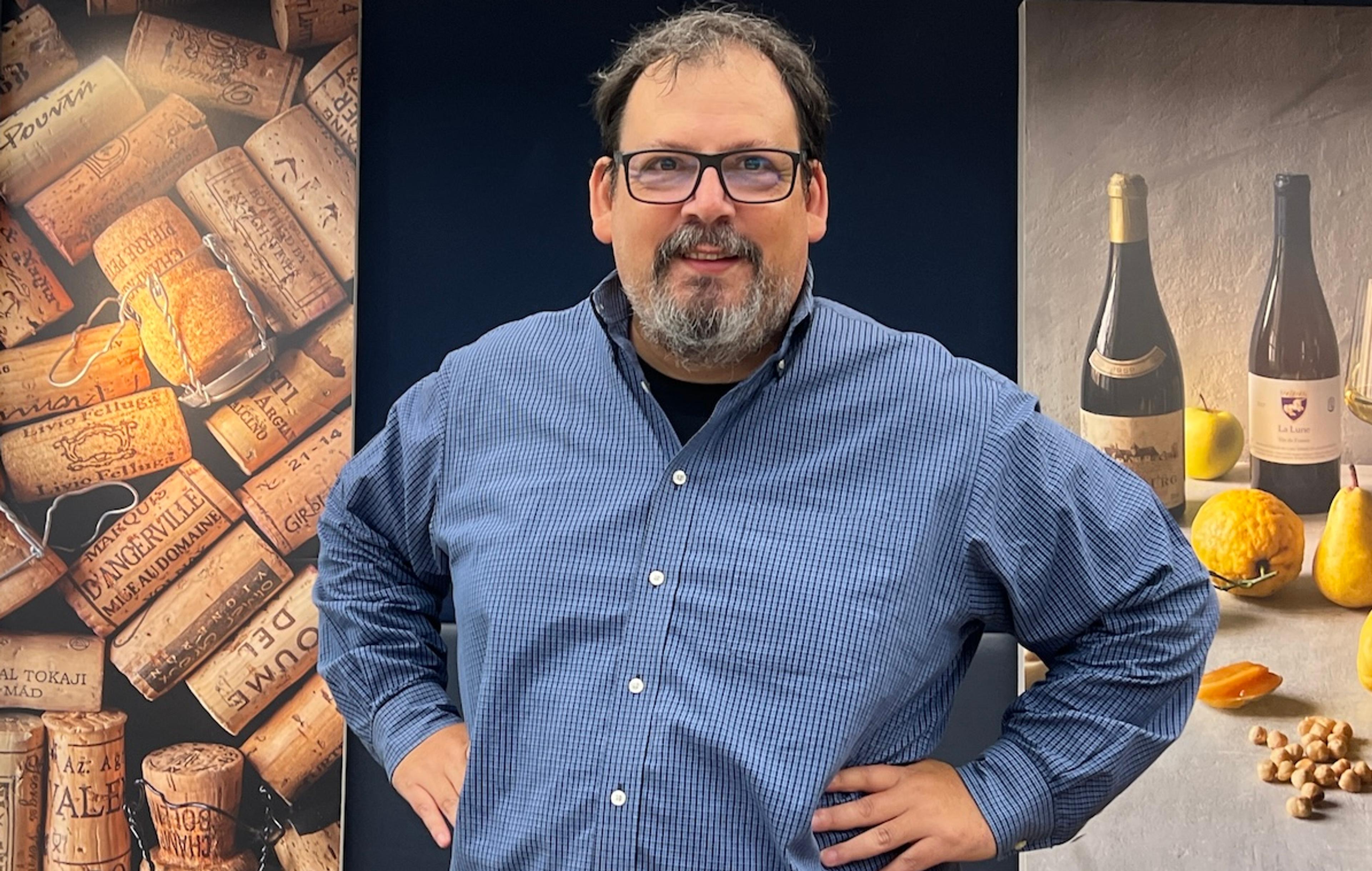

Pedro Parra concludes his seminar on terroir by confessing that he no longer opens his bottles of prime Burgundy Pinot Noir because they are the last of a kind – a dying breed never to be replicated on Bourgogne soil.
“Old Burgundy is like a museum, don’t open them because “Chow chow bye bye”… The system as we know it is finished – we need to replant Burgundy because the root system is not working.”
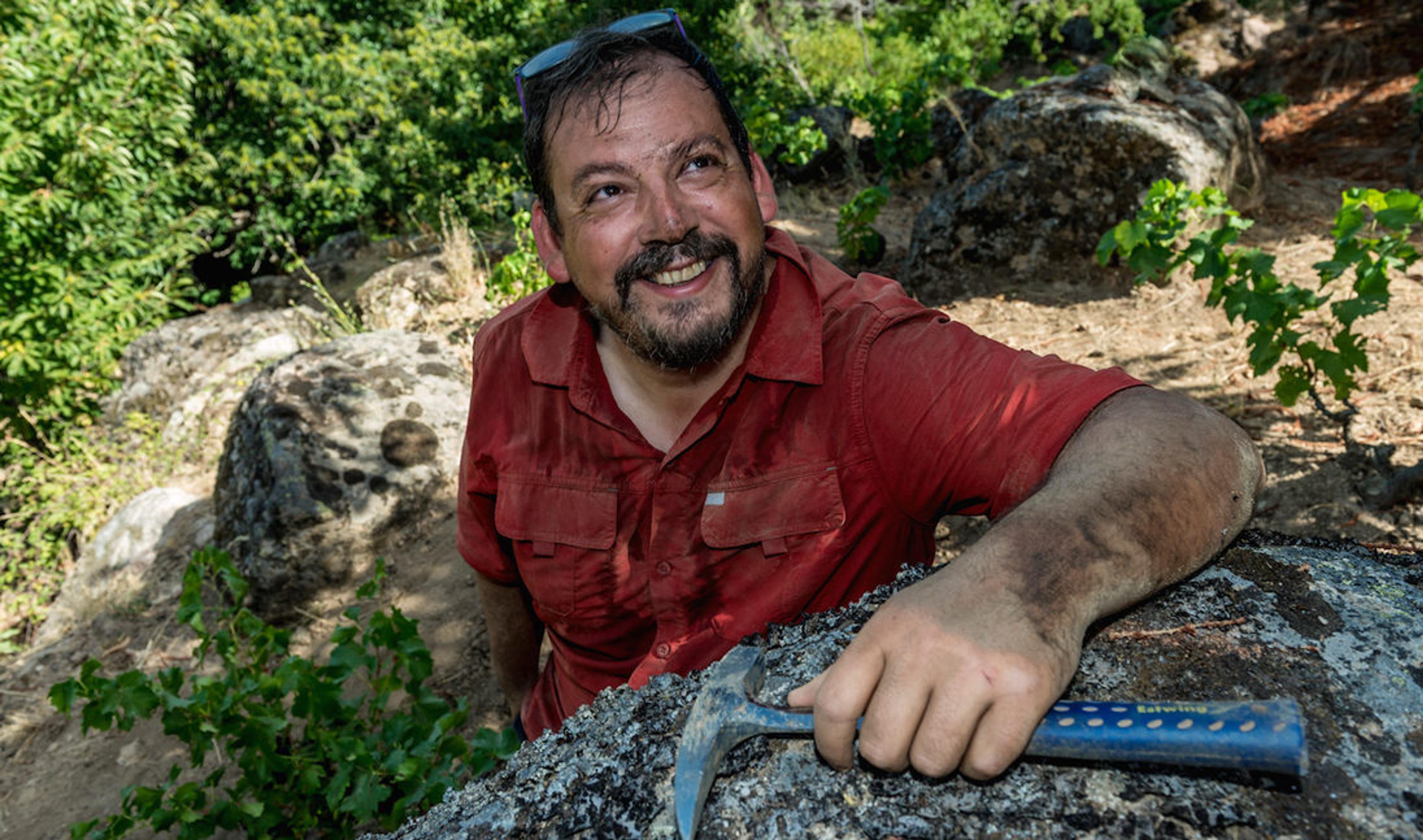
And this the advice from a ‘human mole’ of a man who has spent the best part of two and a half decades digging 50,000+ two-metre-deep soil pits in vineyards across the globe, in order to help winemakers get a better understanding of the soil and rock systems that underpin their vineyards and the relationship that exists between soils, rocks, vines and wines.
Holistic system
"Welcome Burgundy to the New World. They are going to face stuck fermentations this year because Pinot Noir with 15% is not Pinot Noir with 12%." Pedro Parra, London, October 5, 2026
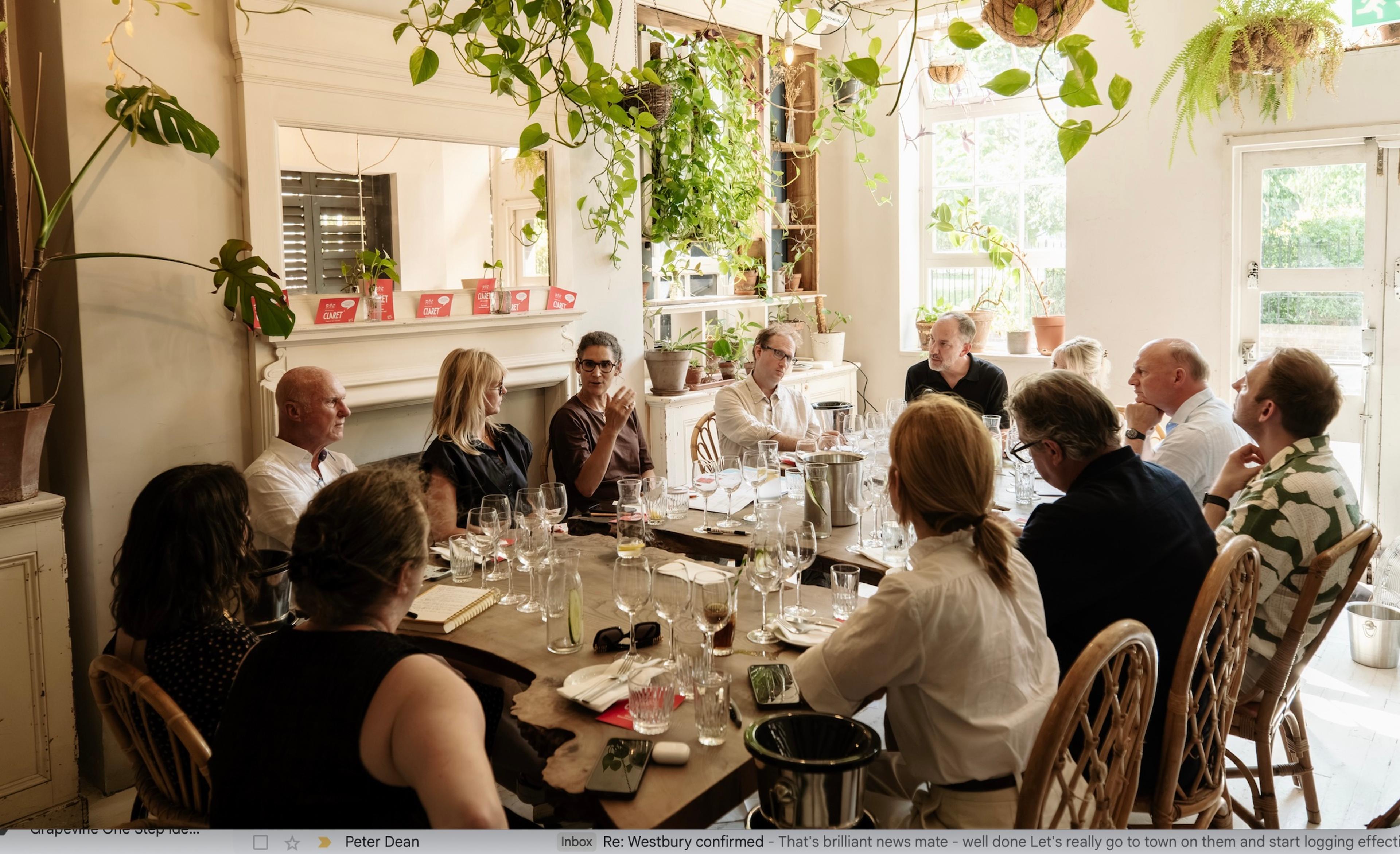
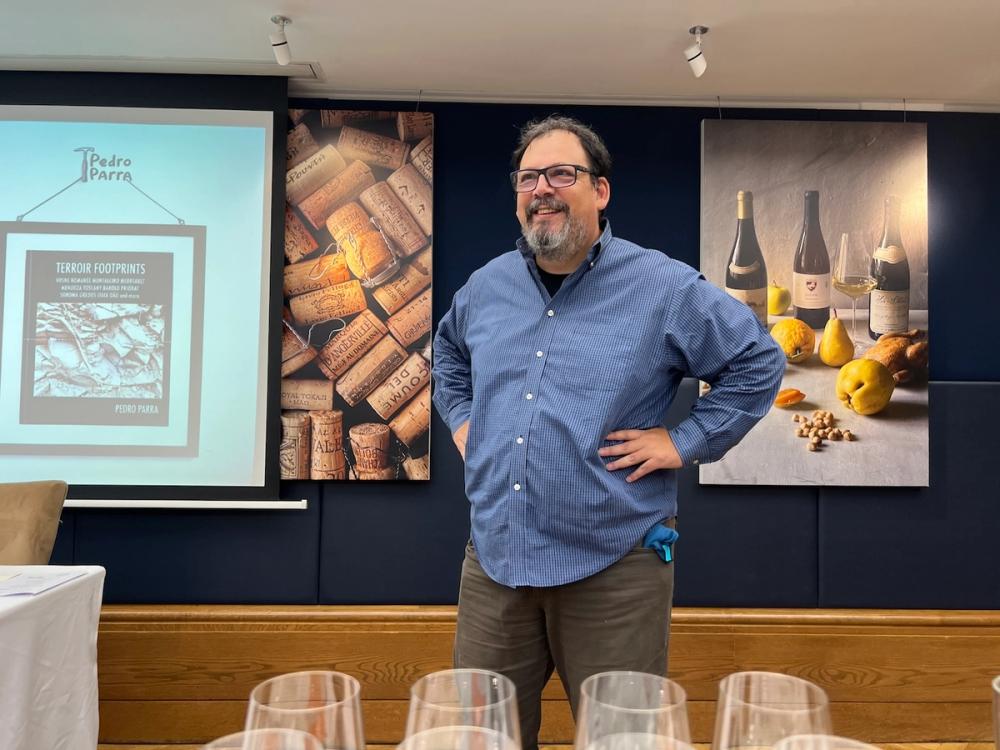
Parra is addressing some 30 of us wine professionals at London’s 67 Pall Mall wine club in a loosely structured seminar that is in part promoting the second edition of his Terroir Footprints book and also showing the Pedro Parra Y Familia wines he is making in Itata Chile, and co-host Amelia Jukes is promoting from Barossa’s Alkina Wine Estate.
Parra explores the holistic nature of terroir, emphasising that it is a complex system involving soil, weather patterns, and vine management rather than just geology. He argues that understanding specific soil components – such as the presence of iron, silt, or the size of quartz pebbles – is essential for predicting wine quality and behaviour.
If you don’t have a map of what’s under your vineyard, he argues, then how do you know if the rootstock is right, the farming methods effective and the winemaking techniques appropriate? … especially when the climate is changing exponentially.
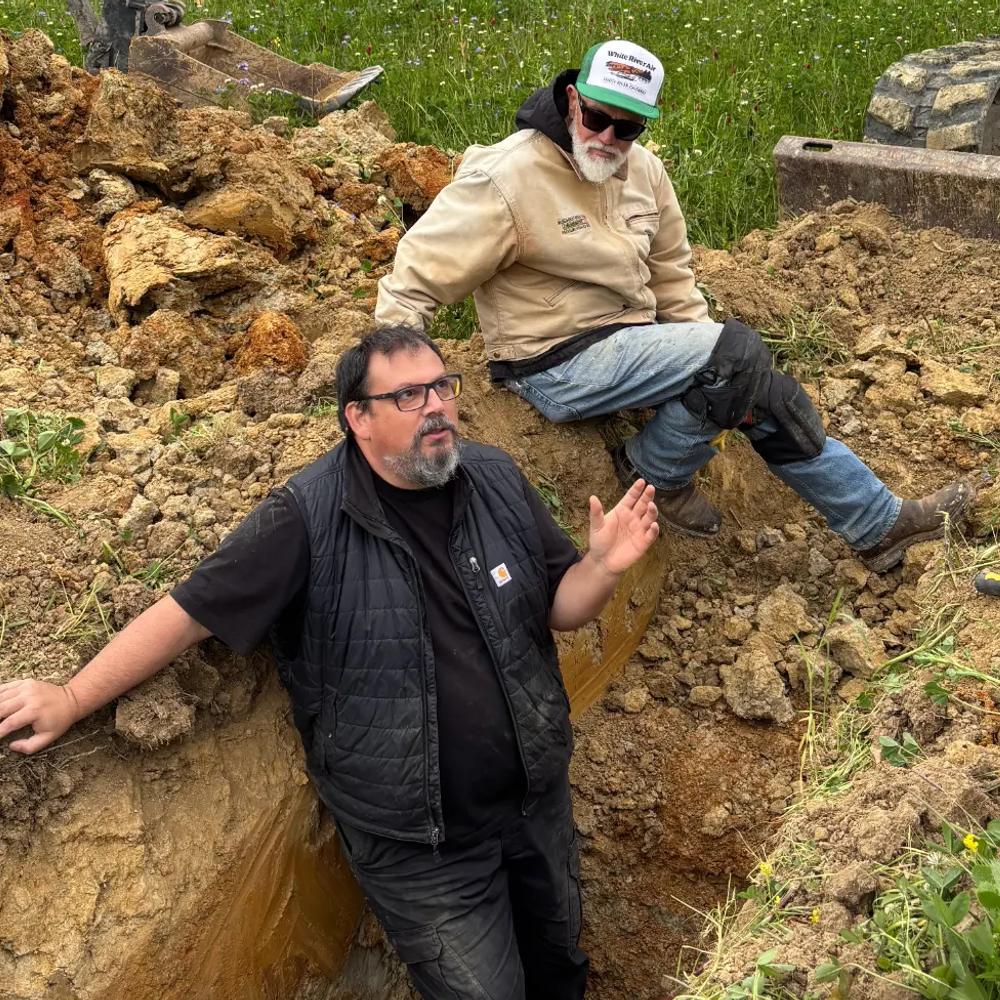
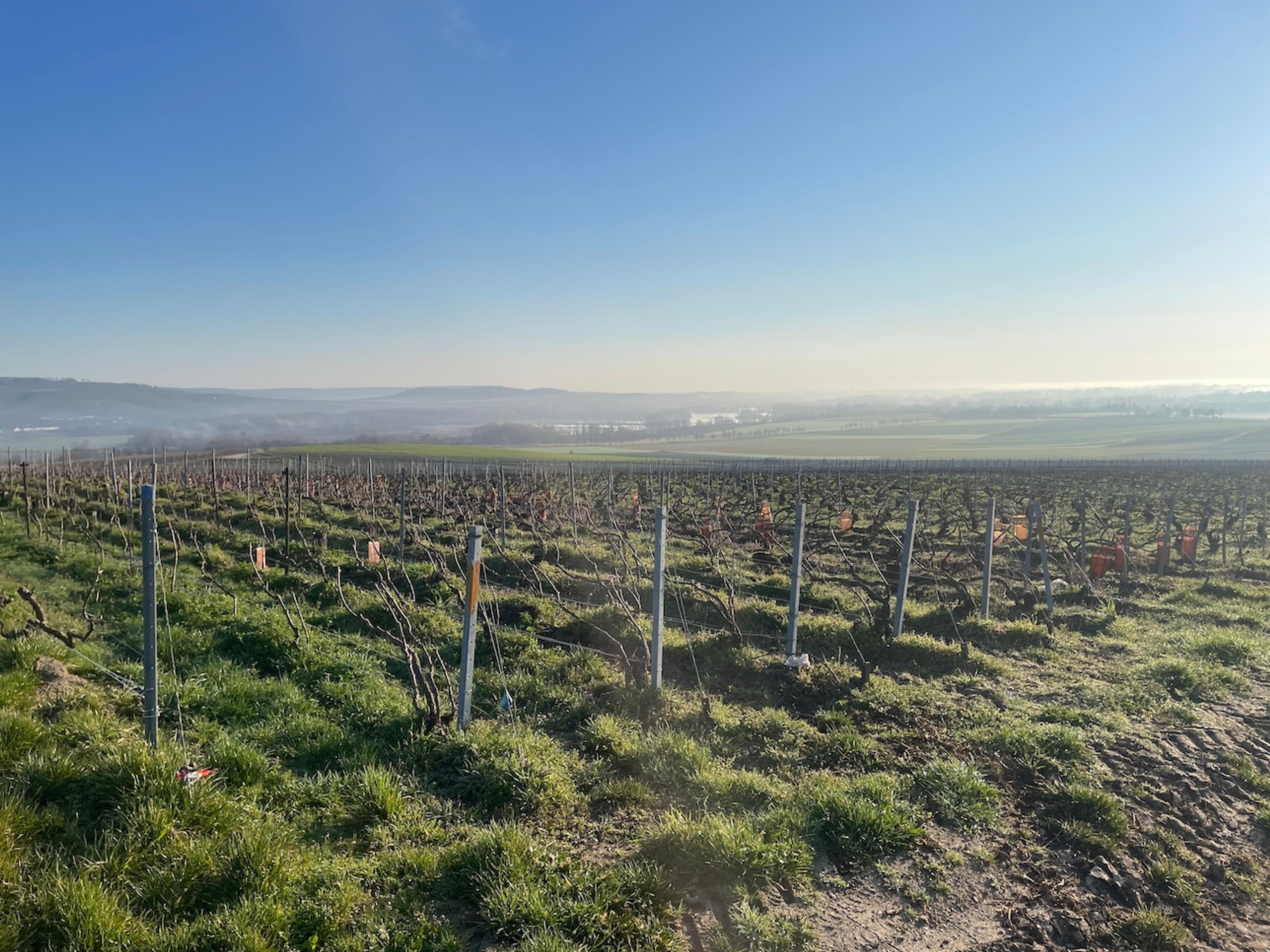
For the first time in his career Pedro Parra is working on British soil, helping establish a winery in Sussex
One of the deliverables of Parra’s consultancy work is producing precise maps to identify micro-spaces within the vineyard from which the ‘crème de la crème’ of wines can be produced. This work over the past 25 years has helped transform approaches to vineyard management and winemaking all across the globe – from the largest household names to the smallest boutique wineries.
“I do maps. I do maps for my clients with precision like “here yes!” “here no!” “here different!” “here maybe!”
But Parra now believes in ripping up the traditional existing maps of many historic wine regions due to the fast-changing climate crisis. Excessively hot European growing seasons such as 2026 will effectively make classic Old World regions New World in character – irretrievably changing the typicty of the region.
“So global warming is a super problem. I was in May in Sicily. I was in July in Barolo, Montalcino, and Bulgaria, and I came back home scared… (a collaborator) was also scared what he saw in Burgundy – yellow leaves in July. That is horrible. It's not only horrible because of the viticultural problem but what is going to happen with the typicty?”
Old World becoming more New World
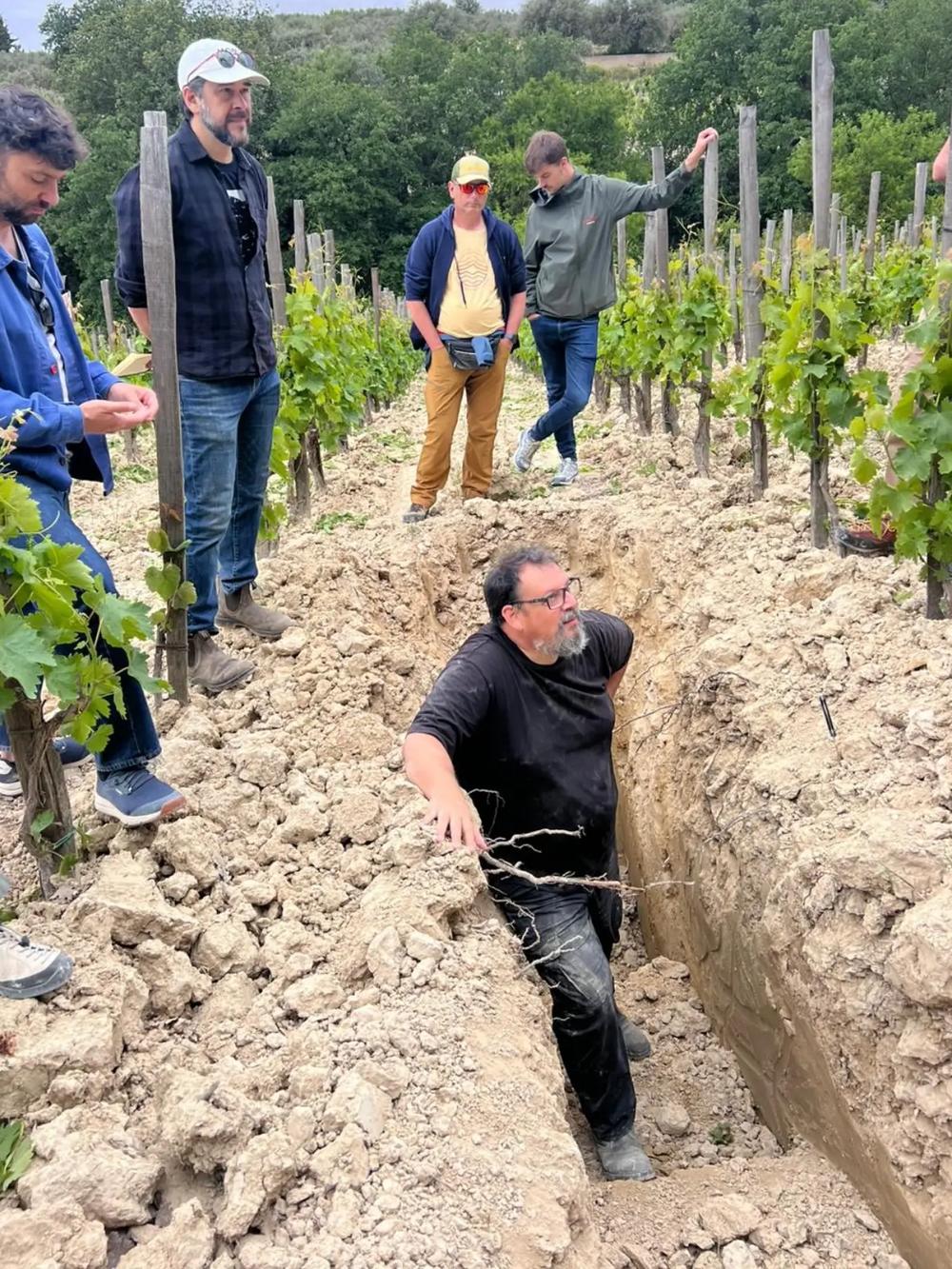
Up to his neck in Sicilian limestone and finding no water in May
Parra effectively believes that climate change is flipping the wine world off its New World/ Old World axis.
“I grew up drinking beautiful Pinot Noir from Burgundy, with friends in Burgundy that make jokes about Sonoma Pinot Noir being too alcoholic. Today a Pinot Noir from Burgundy is like another Syrah, but super expensive. No pleasure for me anymore. I mean the last 20 bottles of Burgundy I had, you know, travelling, I didn't enjoy the wines like I used to enjoy, so something is happening. We're not talking hail. We're not talking forest fires. We're talking typicity of wine.”
“There is a change…. so welcome Burgundy to the New World. They are going to face stuck fermentations this year because Pinot Noir with 15% is not Pinot Noir with 12%. And do they know how to deal with stuck fermentations? They have never. So good luck! It's not only Burgundy. It's (also) Montalcino, which is some way more prepared.”
Using images of dried out soil pits in Montalcino, Parra continues:
“Incredible terroir, incredible wine. Not in 2026 though. There is no water. It's dry. There is no food. It's dry. Problem.... I have no idea what is going to happen in the future. I am very concerned. Nobody is talking about that within the community of winemakers, it’s kind of taboo because it's a problem that people don't know how to deal with.”
Parra’s concern is what comes after 2026 and how that will affect vineyard health long term.
“The stress that the vines had in 2026 coming after years of stress already. How many vines are going from healthy to not healthy up to 2026? You don't count those vines as dead but they are going down like old persons in the hospital, and there is no way to go back, you know, because it's a traumatic stress.”
“And what happens if you have after 2026 a 2028 like 2026? I would love to go and count dead vines in Burgundy or whatever, Chile or Argentina, whatever. Nobody's doing that. I ask all my clients, get paint – yellow orange and red. Let's walk the vineyard and know how healthy or not every vine is. So you can count every year. This vine was yellow in 2026 but is now orange. So this is something that is super important to me. Follow the vineyard.”
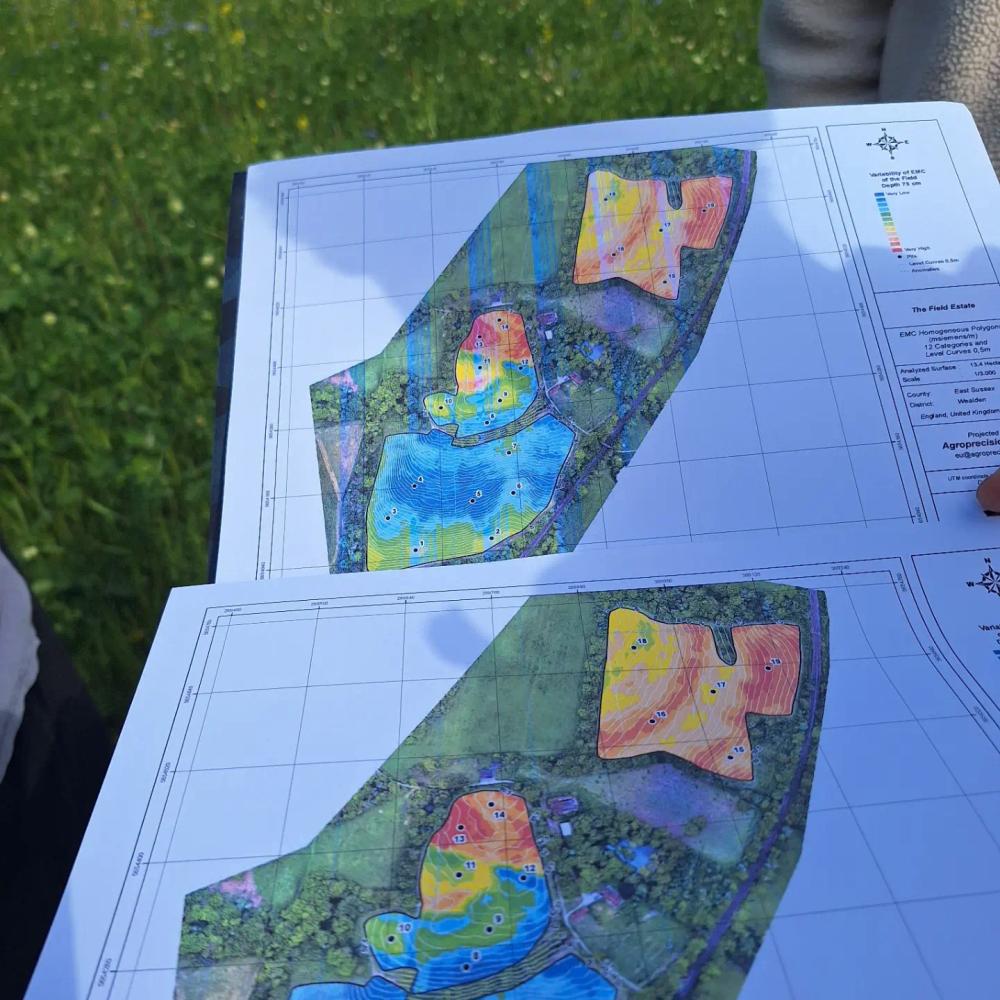
One of the terroir maps produced by Parra for the Sussex startup
Understanding the vineyard
Parra believes that we are entering an age of rootstock crisis where current rootstocks may fail in changing climates, necessitating large-scale replanting efforts; the ‘canary in the coalmine’ being this percentage of vines that are no longer productive due to heat stress. It is what is driving replanting projects he is currently undertaking with Jean-Marc Roulot of Meursault’s Domaine Roulot.
“The number one (problem is) the rootstock. If you don't have a good rootstock you will need to replant today or in five years. The question that you should ask, and people don't ask this question, is what percentage of the vineyard is not producing grapes? Super simple question. I mean, how many vines are dead? Any vineyard in Burgundy…. how many vines are dead? How many vines are not dead but not producing grapes? How many vines are not dead producing grapes but producing 100 grams or 200 grams?”
“When you start counting these numbers, that in general people don't do, it's scary. And then you get a vineyard that should be producing six tons and is producing two tons. So, how much time and money are you spending every year to produce two tons, where you should be producing six? How much money you are losing because you are making, you know, 200 cases when you should be making 800 cases?”
Parra believes that better farming and regenerative agriculture can only go so far in addressing these issues especially when most winemakers don’t have firsthand scientific evidence of what is going on under the surface of their vineyards – many have relied on secondhand information that is invariably incorrect.
“Again, we go to the simple question: How do you farm if you don't know if you have silt, clay, or sand? Why do you do that?... How you connect with your terroir, with your decisions, the rootstock, the farming, the winemaking, is so important. That is a super complex holistic system, and we are not even starting to talk things that are difficult to talk about, like ‘whether minerals exist’ or ‘how the minerals move in the roots?’ that is the difficult question that is impossible to prove.”
“So I hate it when people think that terroir is (just) the soil, … If you don't understand that terroir is everything, I mean you're making a mistake. How the weather connects with your soil, your rocks is so important, especially today with what's happening with the weather.”
Parra then drills down into different styles of rain, how it affects the vineyard depending upon the duration and intensity of the rain and the angle of the slope, the soil type, its water-holding capacity and so on.
“I think we are facing a super difficult time for the future. You know, in terms of global warming, and people are not prepared. I mean, you need to farm better, but when when your client doesn't know what is clay, how do you know how to farm? That's the entry level of the entry level of the entry level of the question. “How is your terroir?” “Ah, my terroir Pedro is a lot of clay” But somebody will me it's clay but no it’s not clay it’s silt. So we have a problem in day one that is an important problem.”
Winemaking techniques
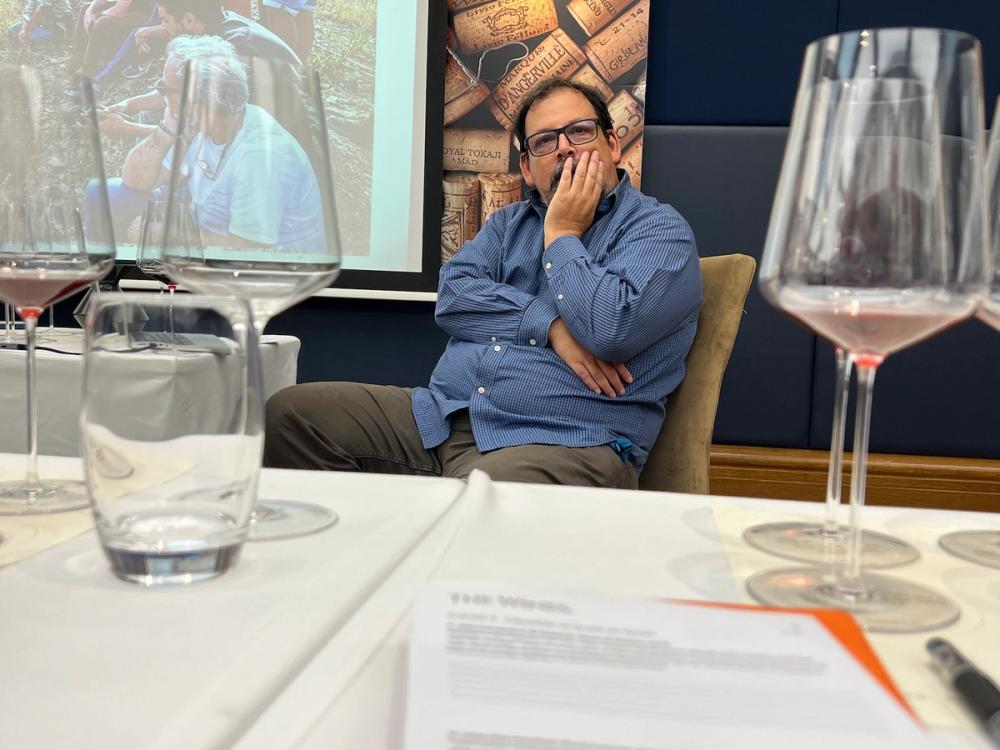
"Vines are going down like old persons in the hospital."
Aside from having rootstocks that may not be fit for purpose, Parra asks the question of winemakers – how can they effectively manage the transition from concentration-based winemaking techniques to dilution-based ones without losing elegance in the wines and also regional identity?
“So, when you think in Burgundy again, which I love deeply, the winemaking approach was done basically by some people in the 1980s and 1990s, and if you have the chance to drink those wines, remember no colour, 11.5%, chapitalise. That's Burgundy, the Burgundy that I like very much. So when you're a winemaker and you have these conditions, what do you do for your winemaking? You learn how to concentrate. How do you concentrate to have 12%, more colour and some more body? So all the techniques in Burgundy were created to concentrate something that was diluted.”
“But the techniques haven't changed – if you go today to Burgundy, you have the opposite problem. Today you need dilution, not concentration. But they still use barrel. They are still fermenting at super high temperature. I mean, in Burgundy we still do 31, 32, 33°C fermentations, pumping overs, délestage, that's ultra concentration. If I were a Burgundian winemaker, I would be going to Spain for two years to learn how to deal with sunshine – where people are using less barrel, going from no whole cluster to to 10% whole cluster.”
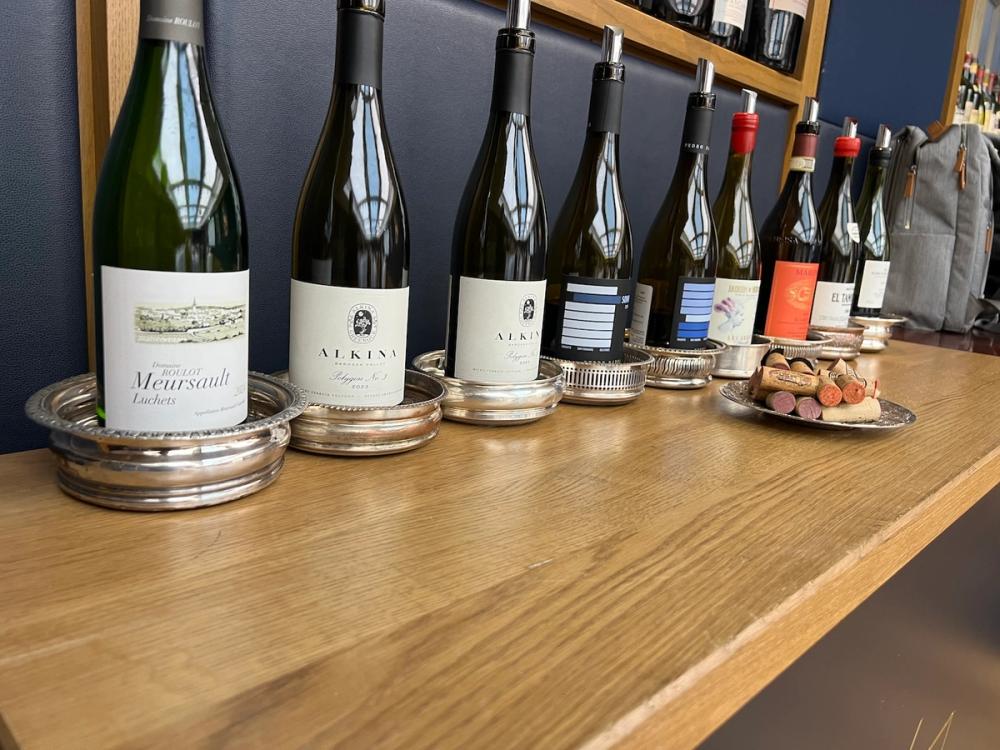
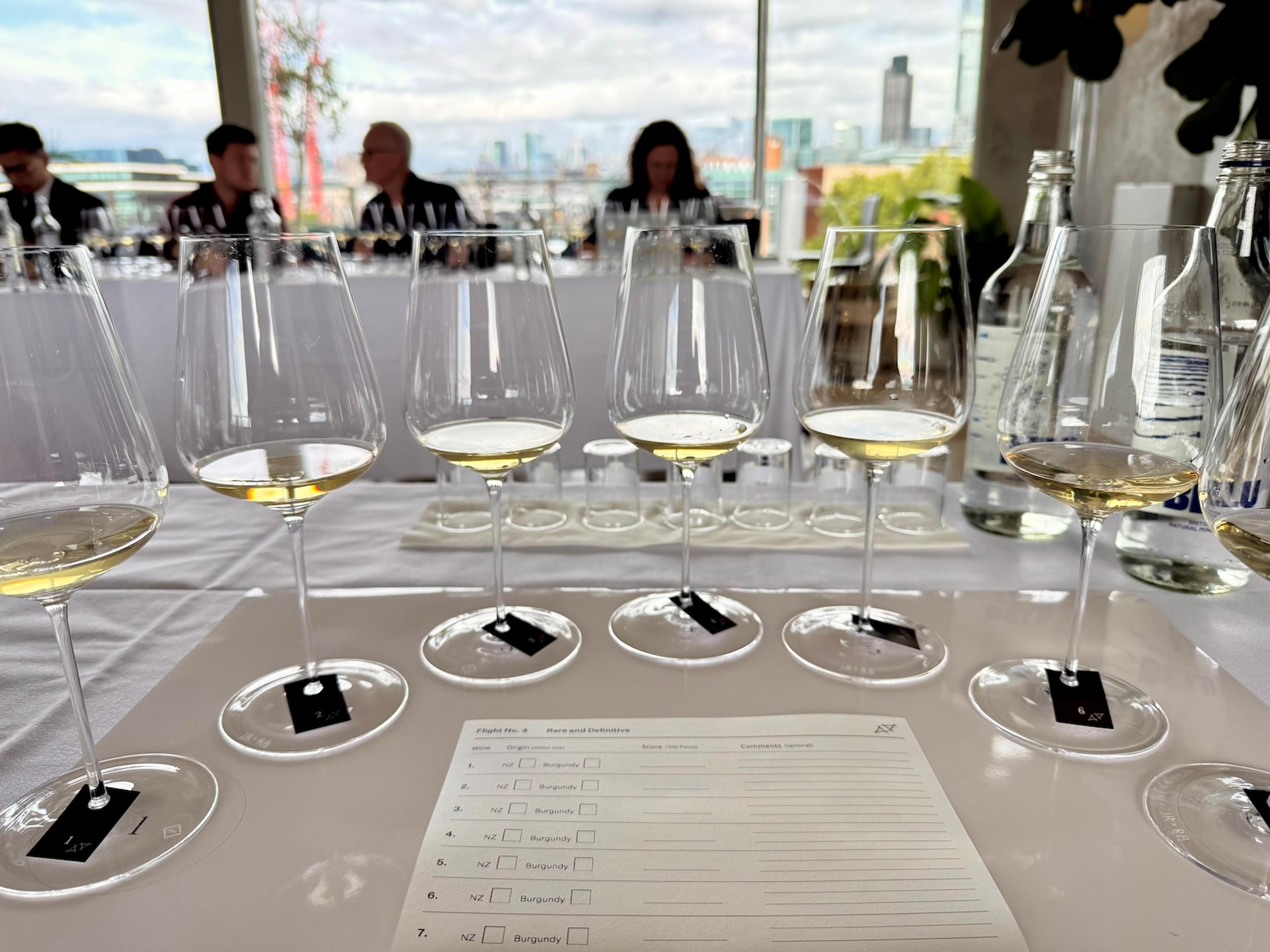
The line-up of wines used to compare the effect of different teroirs
That’s not all folks
In this long and information-packed seminar Parra traced his personal journey from being ‘that Chileaan guy’ with a PHD in terroir to an artisanal winemaker in Itata, Chile, focusing on finding a unique "sound" for his wines. His winery focuses on old vines and native grapes like País, utilising organic farming and low intervention. To combat heat, he employs cold fermentations (14–20°C), long macerations, and tools like concrete or ceramic vessels instead of oak to avoid amplifying sun-driven flavors.
Along the way Parra referenced, in a highly entertaining and informative discussion, Frank Zappa, architecture, preparing scrambled eggs, cinema and the ‘sound’ of wines amongst many other subjects.
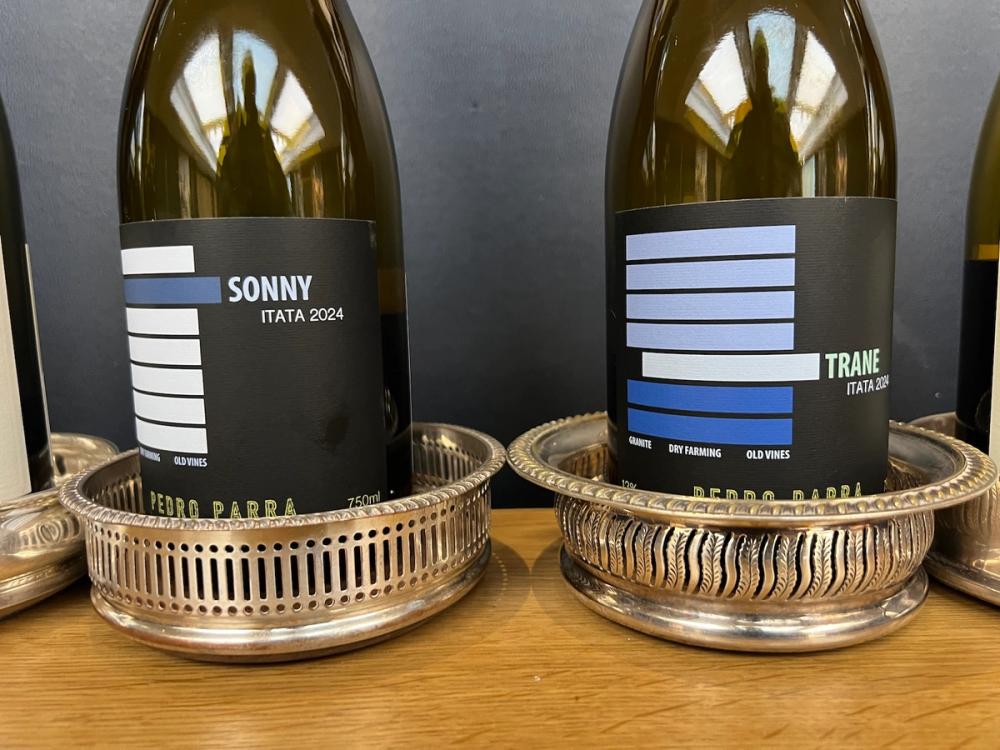
Parra's wines are named after his jazz idols, in this case Sonny Rollins and John Coltrane
The final part of the session was to taste pairs of wines from different terroirs. The wines were chosen to reflect differences and commonalities between different systems, and also seemed to reflect Parra’s drive towards expressive wines of purity, tension and elegance. Attendees could have been forgiven for believing, however, that a trick was missed in putting theory into practice.
When Parra was asked by Richard Bampfield MW to illustrate how he evaluates the provenance of wine in an actual tasting, obfuscation ensued and the question wasn’t answered. The world’s leading vineyard specialist proving through tasting narrative ‘the missing link’ between terroir and taste was a missed opportunity and the only blip in an otherwise engrossing three hours of discussion.
“The problem is that we're facing a new time with a crisis in the market and a crisis in the weather. The most funny, challenging time ever. I'm very happy to be alive in that time. It's a new game for me, totally a new game.”