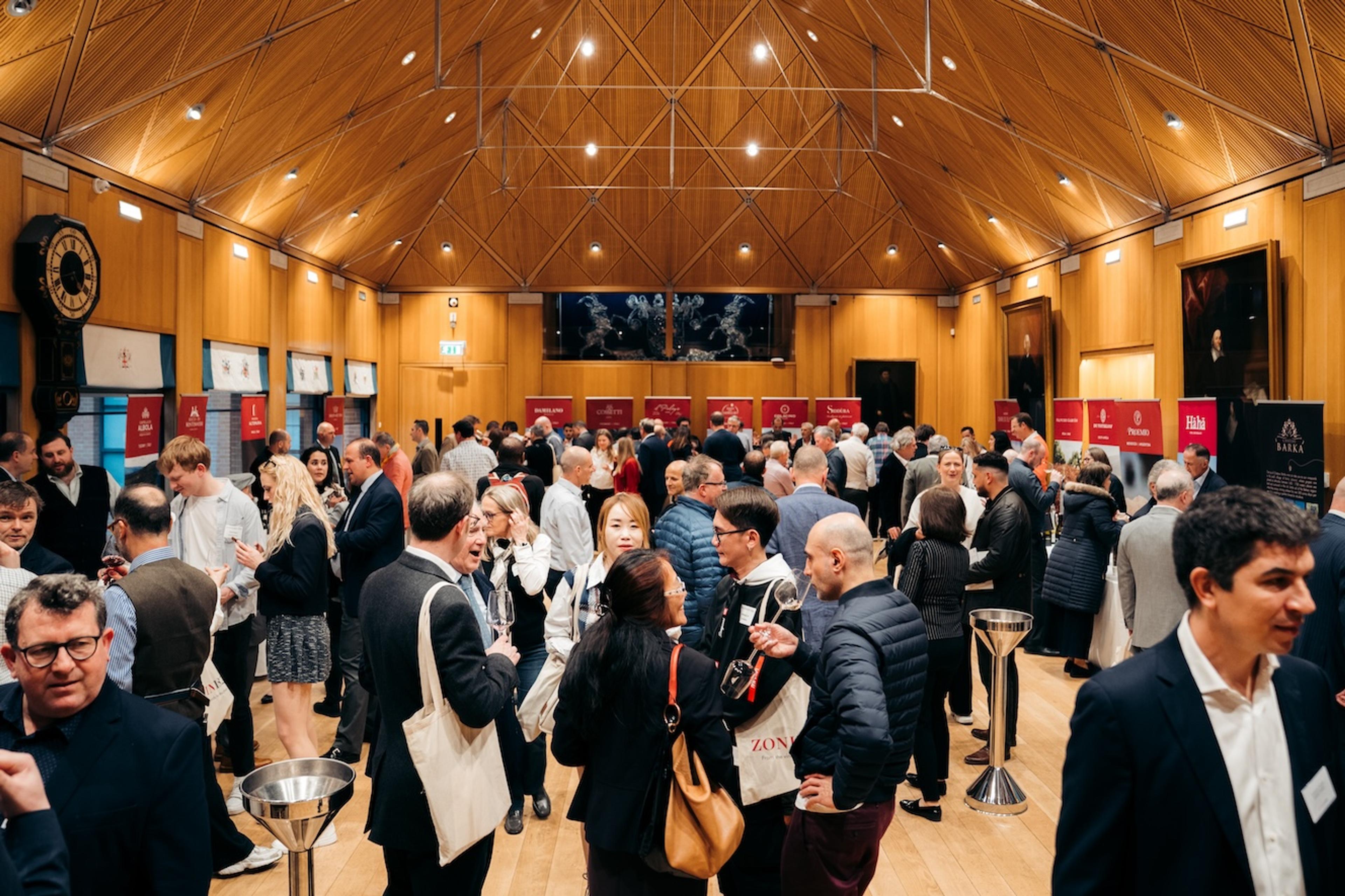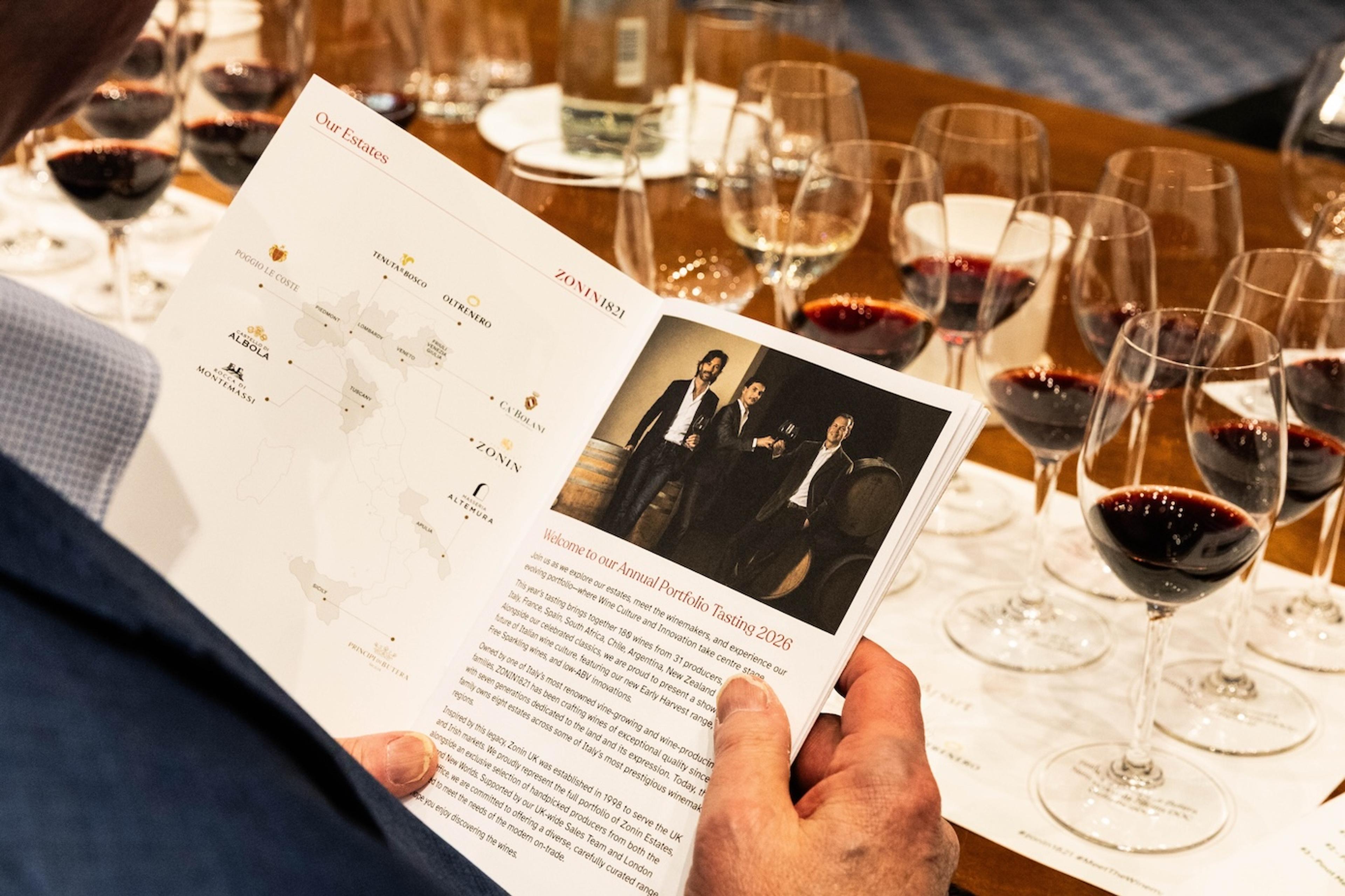

Attendees leaving the ZONIN1821 portfolio tasting in late January were handed a goody bag containing symbols of the company’s past and its future.
A small bottle of Prosecco was a reminder of the huge role that ZONIN1821 has played in putting what was once a local sparkling aperitif onto the global map: its Prosecco Millesimato, launched 20 years ago (as Cuvee) became a leading benchmark for the drink. ZONIN1821 remains a big player, producing around 25 million bottles out of Prosecco’s estimated 500 million, the group's revenue standing at a eye-watering €210m a year.
The other small bottle, of ZONIN1821 ZERO Alcohol Free might, to some degree at least, represent the future. Although these are early days the company is looking closely at Zero and lower alcohol wines, recognising that the industry is in the midst of a sea change in consumption habits.
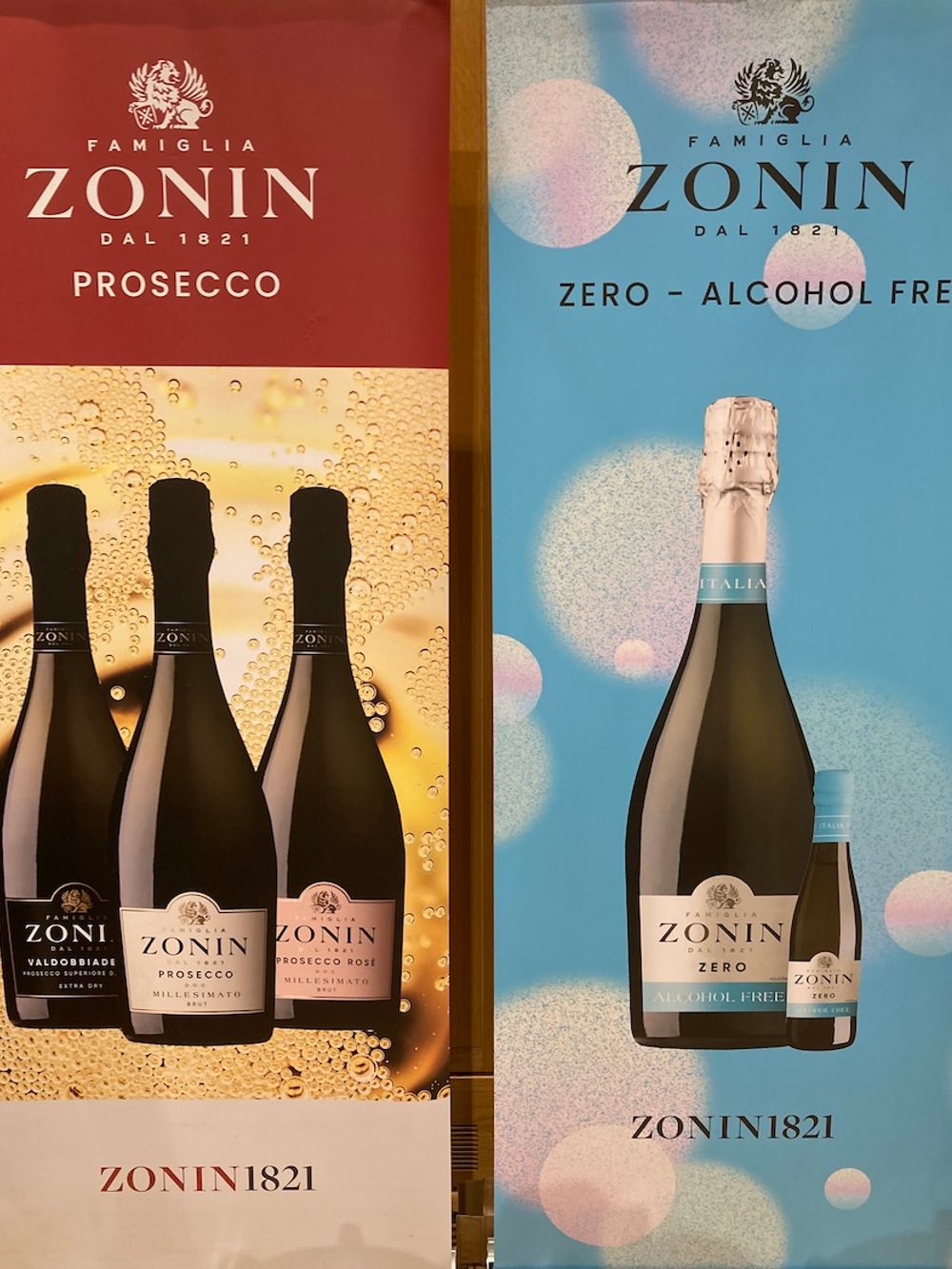
“We’ve been trialling some wines and the wines are getting better, but there’s still some work to do,” says Michele Zonin, one of the three brothers who run ZONIN1821.
“We have also developed naturally lighter styles, making targeted viticultural and harvest choices. Our Early Harvest Pinot Grigio and Pinot Nero, for example – which are showing here for the first time – are harvested early to obtain a fresher flavour profile and a naturally lower alcohol content, around 9%, whilst maintaining the varietal character and structure of wine.”
We are sitting in the ZONIN1821 Atelier, a room in the Haberdashers Hall laid out to highlight the company’s services. As well as providing wines – and there were some 180 being shown at this event – the company provides a full range of other support services to its on-trade customers, who remain the anchor of the business. These include marketing and brand storytelling to menu design.
The UK market, which is supported by the UK HQ based near Battersea Power Station, is tricky right now, admits Zonin.
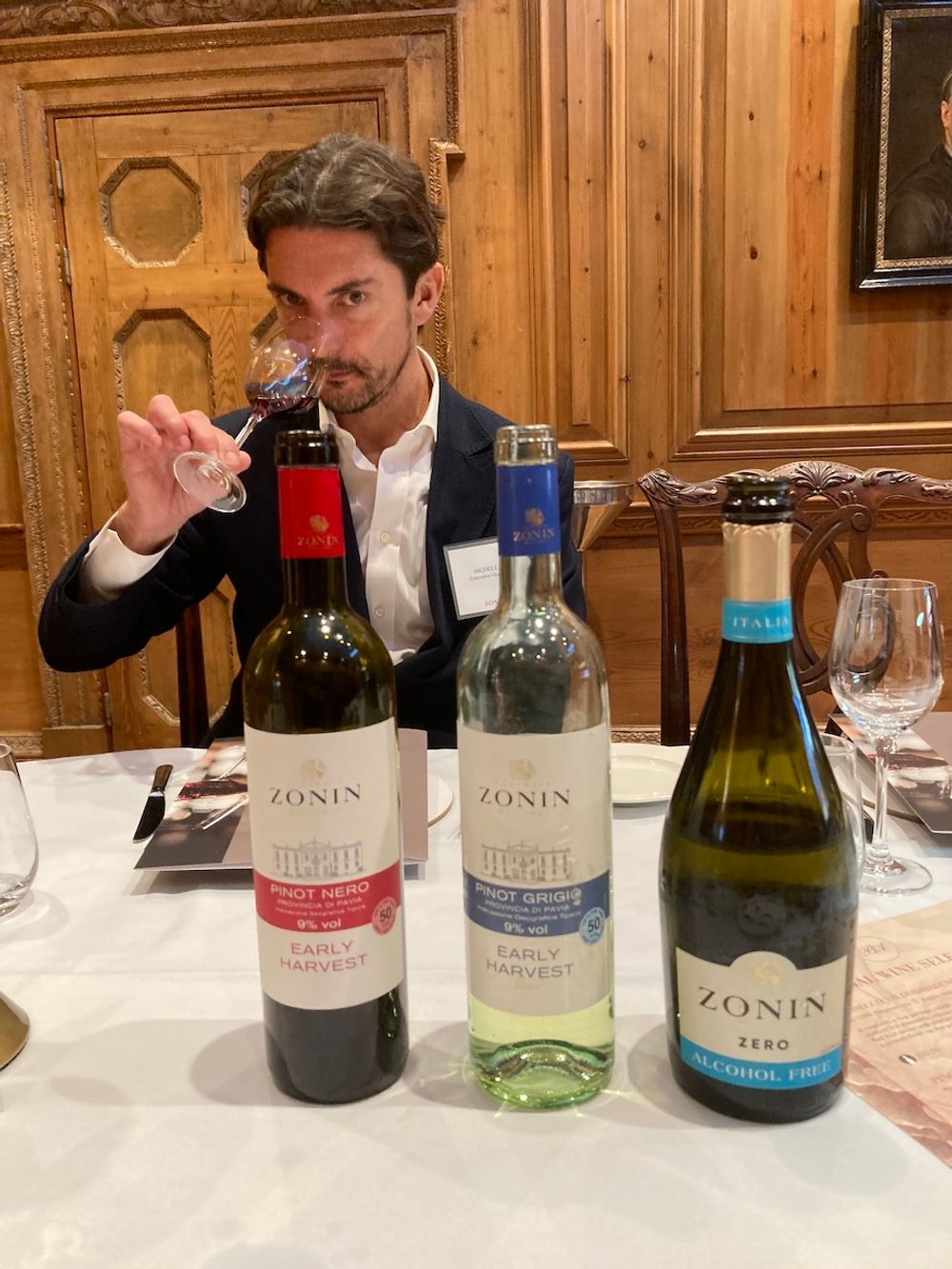
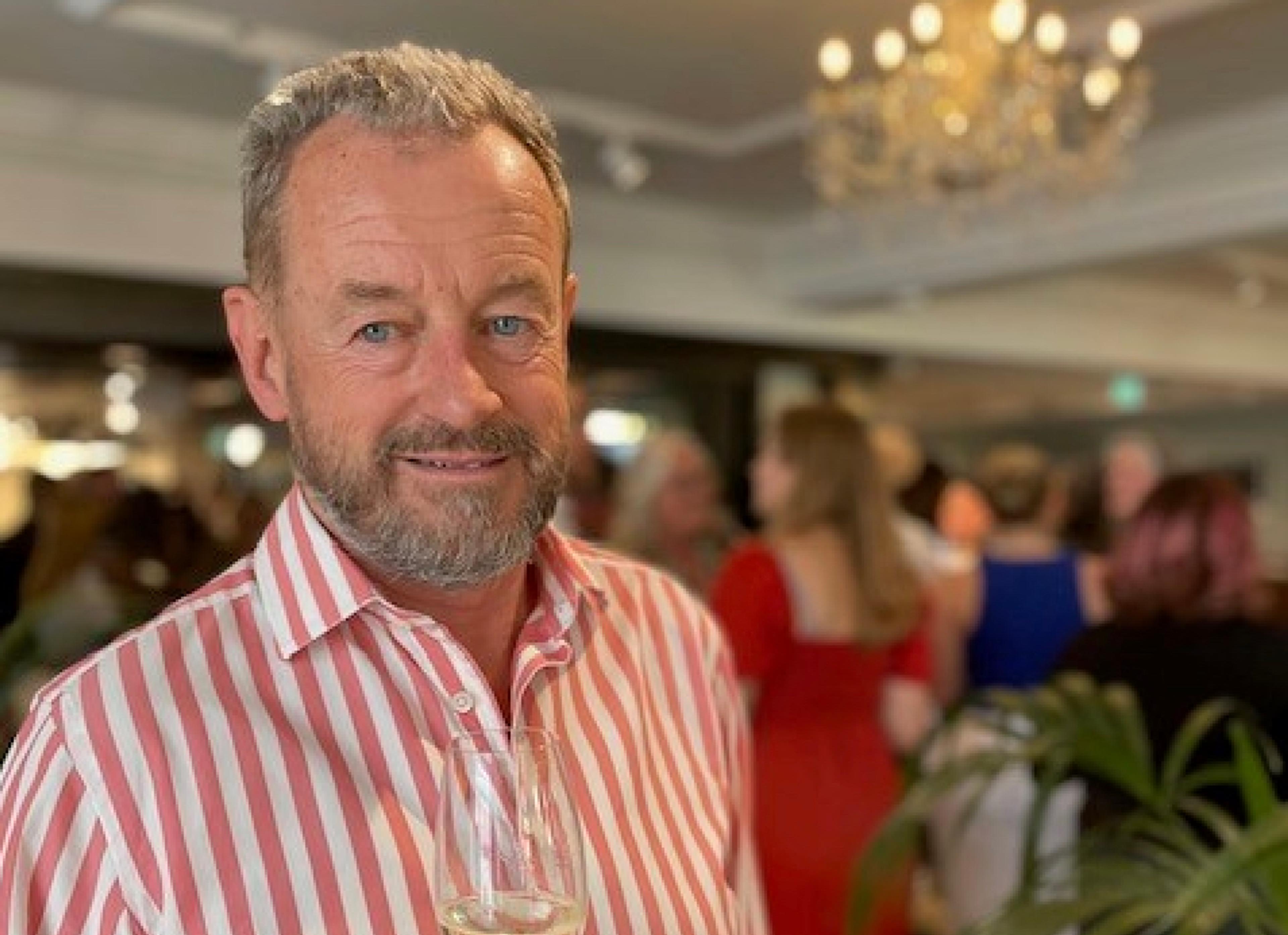
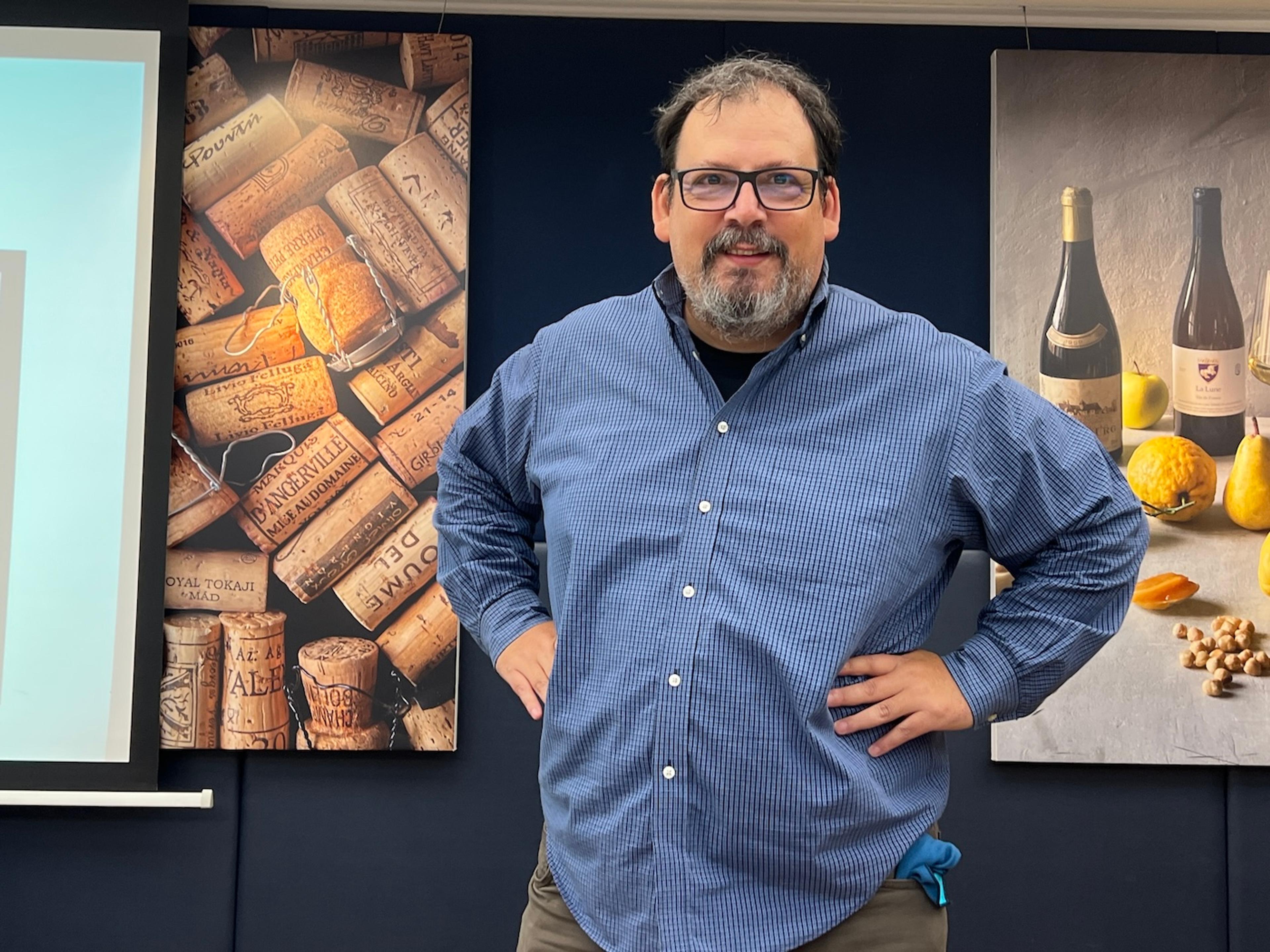
Michele Zonin – seeking to premiumise further
“The high spenders seem to have moved on. Restaurants are suffering with too many costs and also face hiring problems,” he says, adding that he is more positive about other key markets including the US, China and Germany, which he reckons is finally out of recession.
Zonin says one of the key decades for the business was the 1960s when viticulture started to get serious but land and other prices were still low.
“That was when we started to purchase the seven estates which still lie at the heart of our business: we wanted to control everything, from the vineyard through to distribution and sales,” he says.
Whilst some of the ZONIN1821's brands are aimed at off-trade, these estates all work with the premium on-trade.
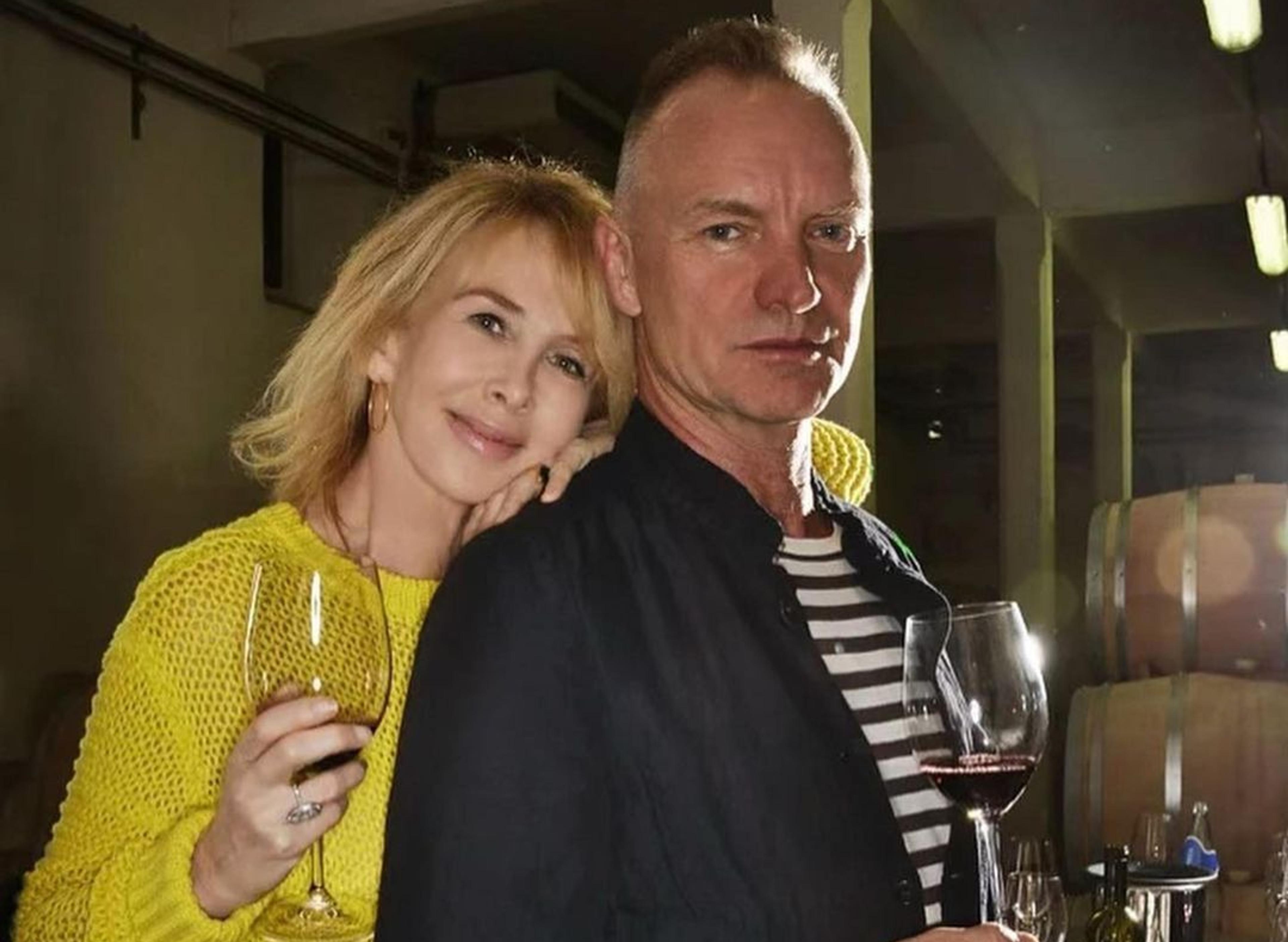
Equally high end are ZONIN1821’s partner estates – ten across Italy (including Sting’s Il Palagio) – seven in France, three in Spain, five more in the ‘new world’ and one in Lebanon.
Tasting each estate 10 years apart
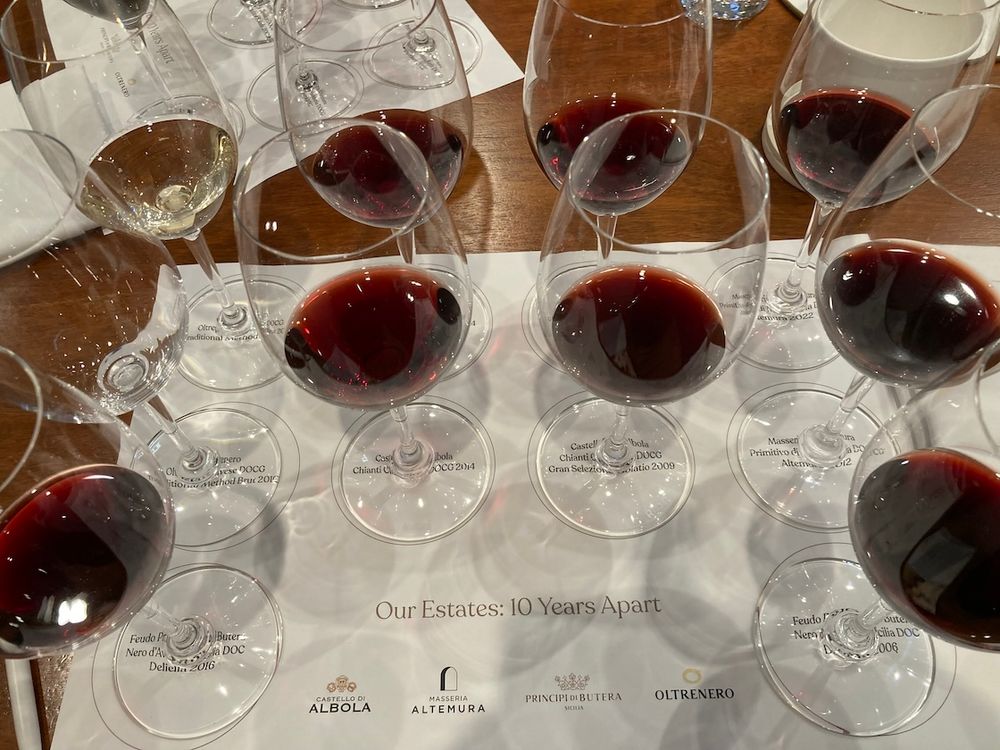
I got a very good impression of the quality here at the fascinating masterclass entitled “Our Estates - 10 years apart,” looking at wines from Tuscany’s Castello di Albola, Apulia’s Masseria Altemura, Sicily’s Principi di Butera and Lombardy’s Oltrenero, overseen by Liberation Tardive’s Christopher Burr MW.
“Great wines need time to find the balance between fruit and acidity. One of the great things about these estates is that they realise this and don’t release their wines too early,” Burr says.
A lot can change in ten years including winemaking techniques – less oak used for one – but the most obvious thing aside from the bottle ageing itself is climate. The Oltrenero metodo classico wines from 2020 and 2010 were very different, with the latter benefiting from 150 months on the lees and an excellent vintage of high quality, according to Paolo Taldi; but the 2020 was also incredibly rich and smooth, reflecting the warm summer which produced an almost similarly impressive wine.
“At Oltrenero, we are now seeing warmer seasons and more frequent heat spikes, which push Pinot Nero to ripen earlier. We now harvest about two weeks earlier and use much tighter canopy management to protect bunches. We also rely on Vintel to monitor soil–vine–atmosphere in real time so we can react quickly to water stress or disease risk; this also allows us to be extremely targeted. In the cellar we have transitioned to gentle anaerobic pressing to preserve the delicacy and freshness that are essential for Metodo Classico base wines.”
Warmth was also a topic for Castello Di Albola which showed a Chianti Classico 2024 against a 2014 and a Chianti Classico Gran Selezione 2009 vs 2019. The 2014, a poor, rainy vintage felt quite austere against the richer, fuller 2024 whilst the 2009 GS was tasting superbly balanced with the 2019 clearly still very young.
“We’re now 100% organic and this has made us understand the land better and gives the wine more personality and connection with the terroir,” says winemaker Alessandro Gallo, adding that rising temperatures has meant significant changes in the cellar and particularly the vineyard.
“We used to remove the leaves from the vine but now we leave them to protect the grapes from what are much warmer temperatures.”
Further south in Apulia, home to Primitivo amongst other varieties, the story at Masseria Altemura, is similar, with the 2012 really quite delicious and evolved, whilst ten years on the 2022 tasted almost like Ribena, overly jammy – through no fault of the winemaker but the increasingly warm climate. Even if as Altemura describes, you are located between two seas.
“In Salento the issue is more extreme heat and less water availability. Here we reduced herbicides and put much more attention on soil management to limit water loss. In the cellar, we have moved towards gentler, more physical filtration and greater use of large casks, looking for balance rather than power,” says winemaker Antonio Cavallo.
Which wines?
So what wines to choose from ZONIN1821’s estates? Here’s my Magnificent Seven from the seven on show.
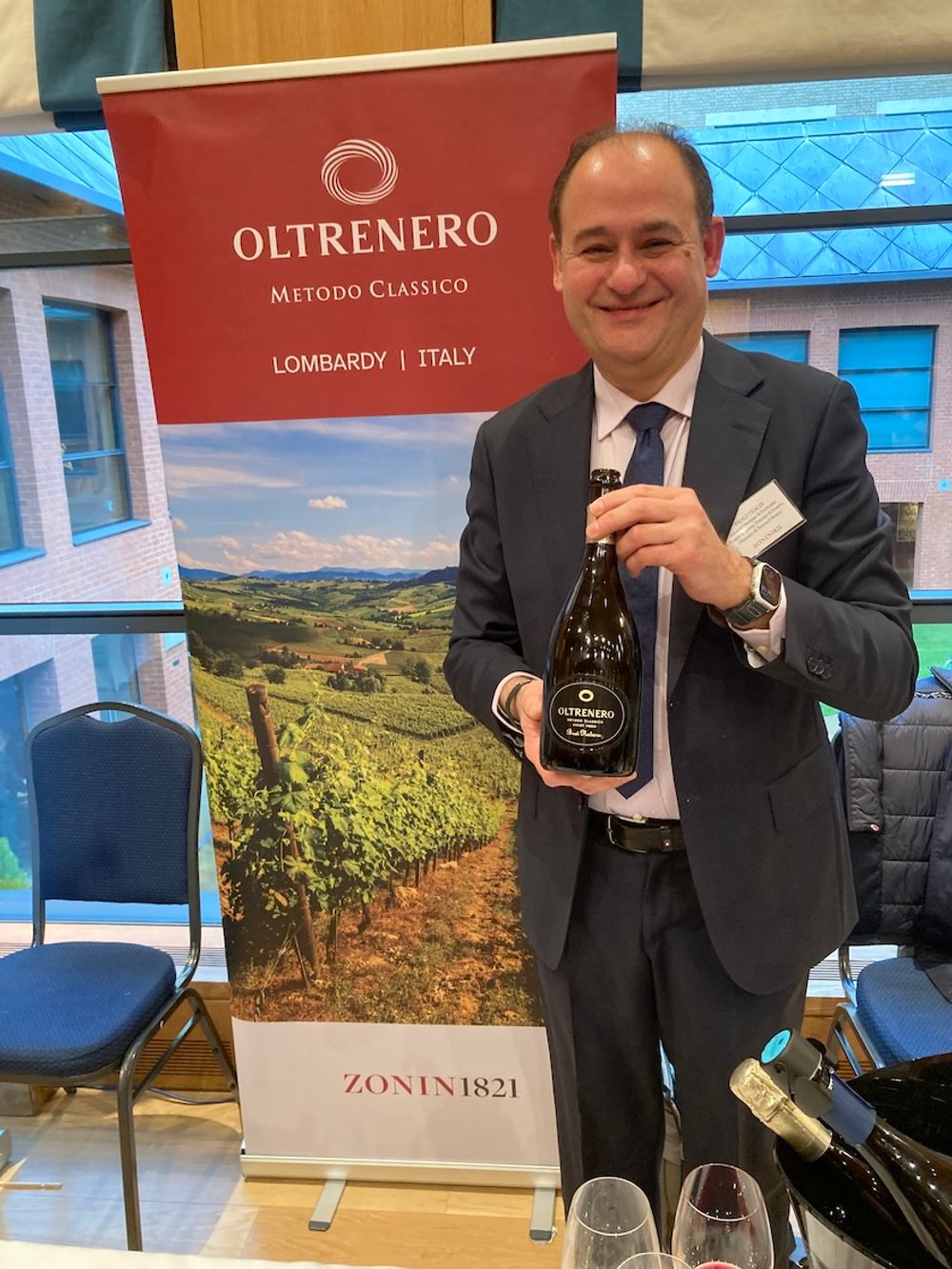
Oltrenero means ‘beyond the dark’ in Italian, referring to this Oltrepo Pavese producer’s focus on high quality Pinot Nero, which it grows here on 84 ha at elevations up to 150m. The Brut Nature Oltrepo Pavese DOCG Oltrenero 2019 is quite deliciously complex, zero dosage and aged on the lees for four years. Produced only in the best years and this, from 2019, is one of them, showing great length on the finish and a steely acidity supporting the fruit.
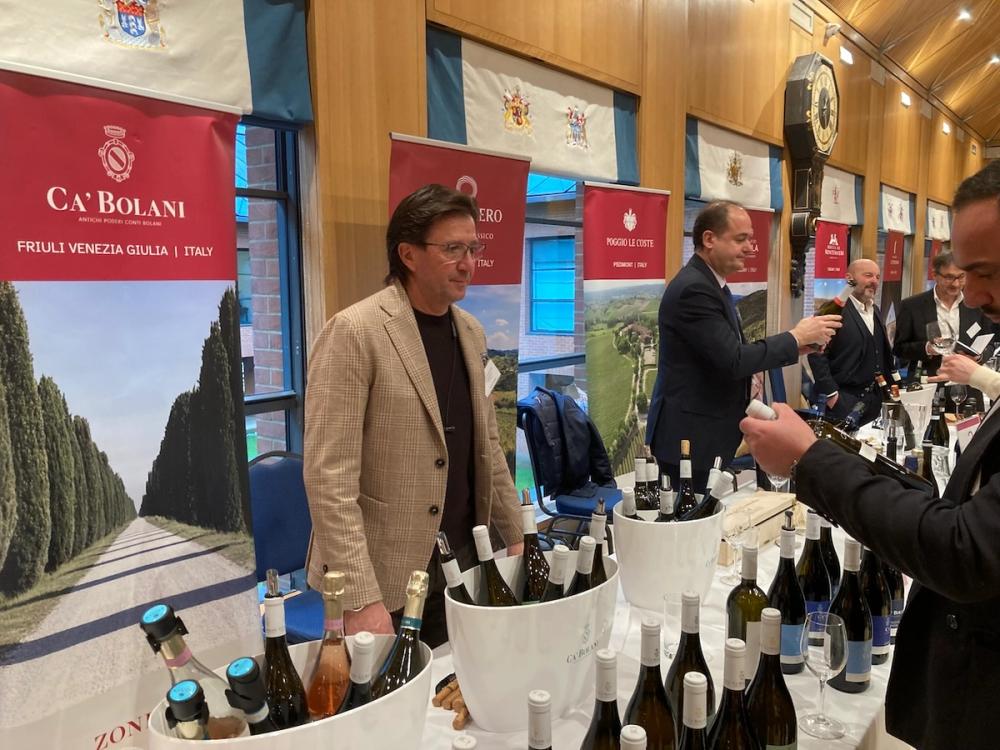
Located in the heart of the Aquileia DOC in the south of Friuli Venezia Giulia, where wine making can be traced back to Roman times, Ca’ Bolani produces a range of wines. These include high quality estate Prosecco and Prosecco Rosato, along with a range of whites including Friulano and Traminer, also reds – Refosco and Cabernet Franc. Which makes their outstanding Icon wine, Acquilis Sauvignon Friuli Aquileia DOC 2018 a bit of an outlier. Produced from the five best crus, only in the best vintages, 13% of the wine is fermented in wooden barrels. Already eight years older and with the capacity to age further, this is surprisingly full bodied, very herbaceous with a smoky finish. Sauvignon Blanc but not as we know it, Jim.
Castello di Albola in Radda in Chianti, is one of the truly historic estates in the Chianti Classico region, dating back to the 12th century. Its Chianti Classico 2024 is a standard bearer for the now 100% organic estate, 100% Sangiovese, and showing cherry, violet and herbs on the palate. This is a young wine but surprisingly precocious. The estate’s Vin Santo is made from Malvasia del Chianti and Trebbiano Toscano grapes which blended and matured in chestnut barrels for eight years before release. Made in tiny volumes (around 2000 bottles each year) this is the very definition of moreish with vanilla, orange zest, almonds and honey on a very rich palate.
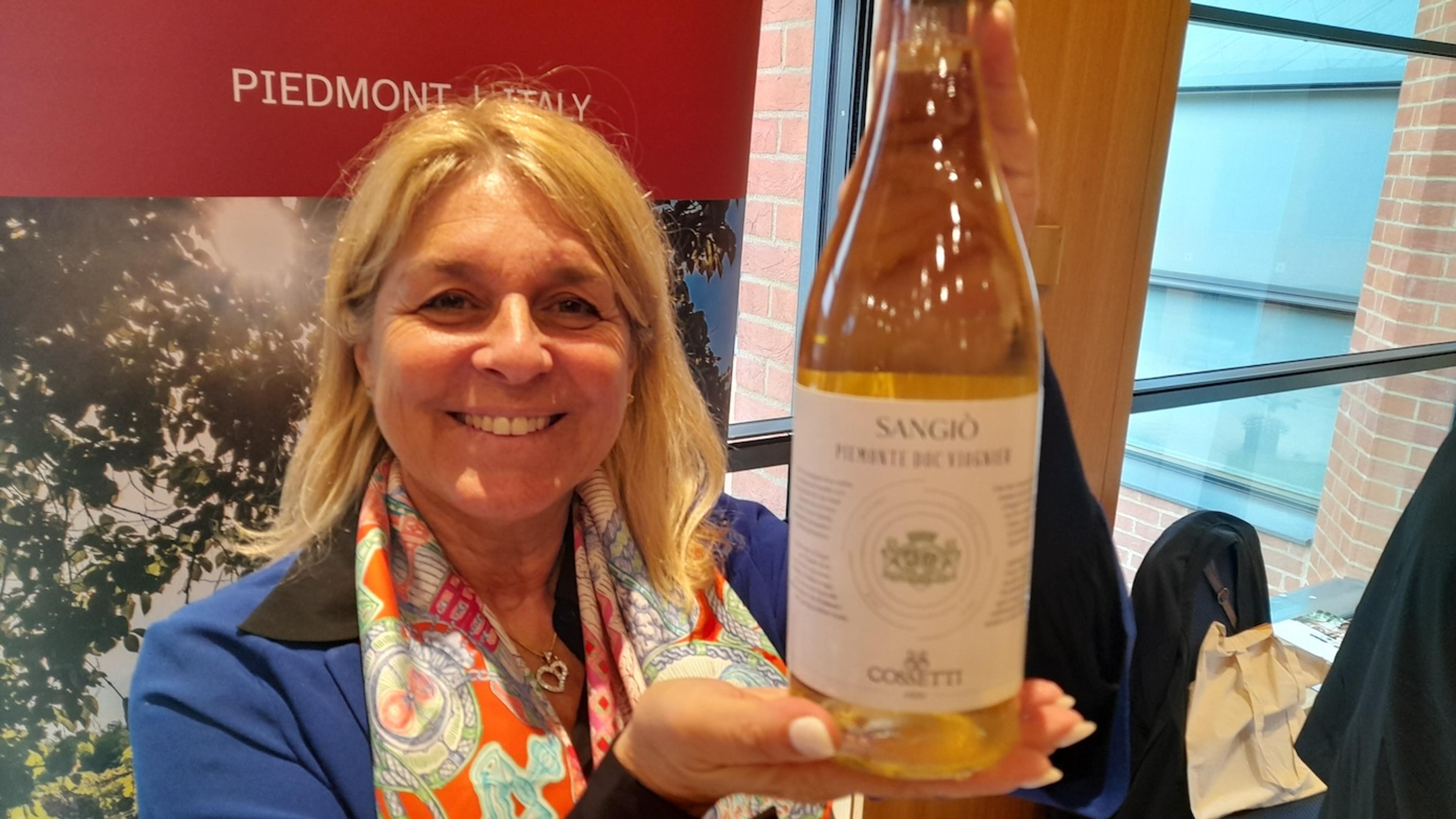
Rocca di Montemassi is one of Maremma’s historic estates with 180 ha of sun-kissed vines located up to 70m above the not-so-distant sea. Being a Viognier fan, I loved the Viognier Maremma Toscana Doc 2024, very full on and floral with a nice oily finish, but the prize for me here must go to the deliciously rounded Calasole Vermentino Maremma Toscana Doc 2024, a rich, fruit-charged take on the variety.
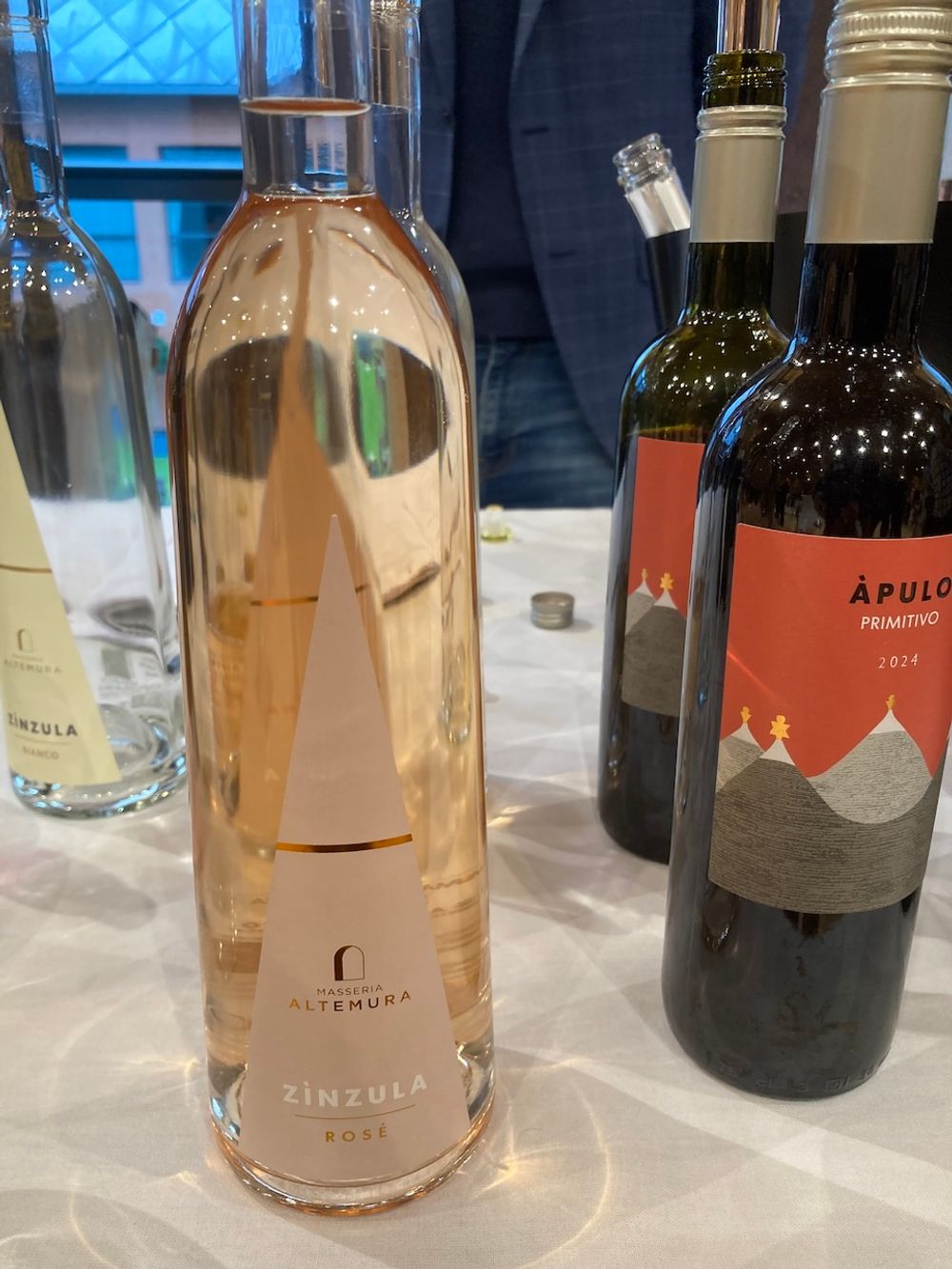
Masseria Altemura, in Apulia (Puglia for Brits) is best known for its hefty, beefy Primitivos, tasted in the masterclass. But they’ve done wonders with one of that southern region’s other red grapes to produce an attractive, moreish rosato that imitates Provence but carries more complexity and depth than many of those wines. Zinzula Rosato Salento IGT 2024 is a pretty wine, with a suggestion of sweetness and red berry fruit on the palate.
Feudo Principi Di Butera’s winemaker Paolo Tealdi, the winemaker at this estate in Sicily must do a fair bit of travelling – he is also the winemaker at another Zonin estate, Poggio Le Coste in Piedmont. But this has done nothing to impact on the high quality of both estates, particularly the Sicilian one which he tells me is just 45 minutes from the sea, with a long aristocratic history and now apparently fully restored. I really enjoyed his slightly left field traditional method sparkler Pas dose Nero d’Avola 2019, really complex with toasty notes and a firm mouthfeel. But Tealdi is also very proud of his prizewinning Diamanti Grillo Doc 2024. Straw coloured and aged for six months on the lees, this has suggestions of Mediterranean herbs, pineapple and citrus on a long palate.
Epilogue
The last word goes to Michele Zonin who admits he is confident the group is on the right track.
“Going forward we see these estates as the core of our growth, and are seeking to premiumise further. All of our estates are focused on sustainability and this is something we will deepen and develop.”