While La Grande Dame has been Veuve Clicquot’s flagship since the 1962 vintage was launched in 1972 to celebrate the house’s 200th anniversary, La Grande Dame Rosé was first made in 1988. It has only been made eleven times since then: in 1988, 1989, 1990, 1995, 1998, 2004, 2006, 2008, 2012, 2015 and now 2018 – years in which the red wine from Clos Colin made it possible. Only the red Pinot Noir from Clos Colin in Bouzy is used to make La Grande Dame Rosé: the quality of the wine from this tiny plot determines whether a pink version of the prestige cuvée can be made – naturally, it is much more limited in quantity and rarer than the white version.
A treasured plot
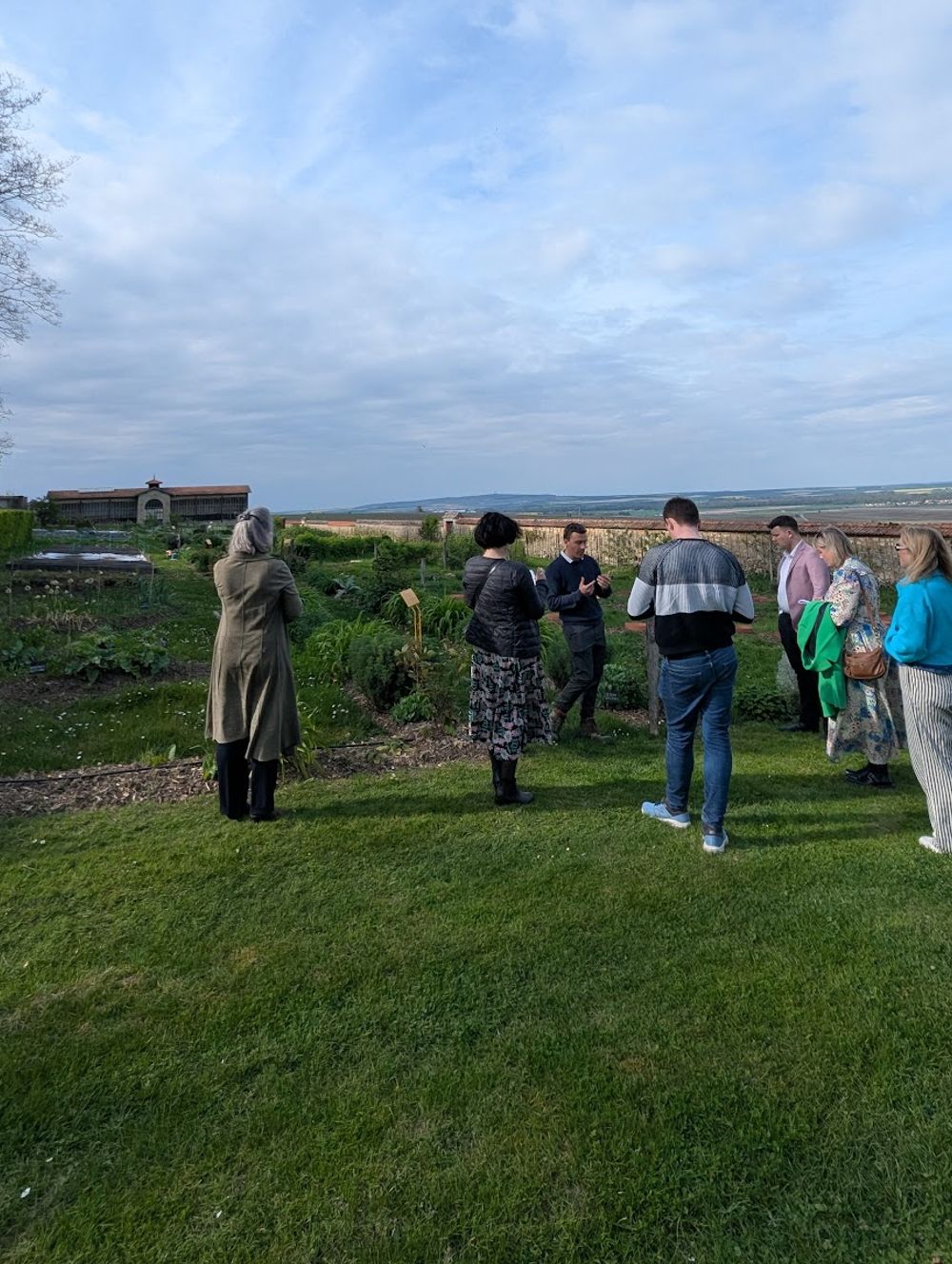
Getting to understand the composition of soils in this special plot
Clos Colin, a 1.3-hectare plot in Bouzy, a village long renowned for its Pinot Noir, is part of Veuve Clicquot’s DNA. The vineyard has been part of the Clicquot property since 1741 and thus pre-dates the founding of the house in 1772 by Philippe Clicquot and the lifetime of the famous widow Clicquot, namely Barbe-Nicole Posardin (1777-1866). She had married Philippe’s son François Clicquot in 1798 and became his widow – Veuve Clicquot Ponsardin – in 1805 when she was just 27 years old. Her resilience, determination and pioneering spirit are well documented.
Harking back to the first blend
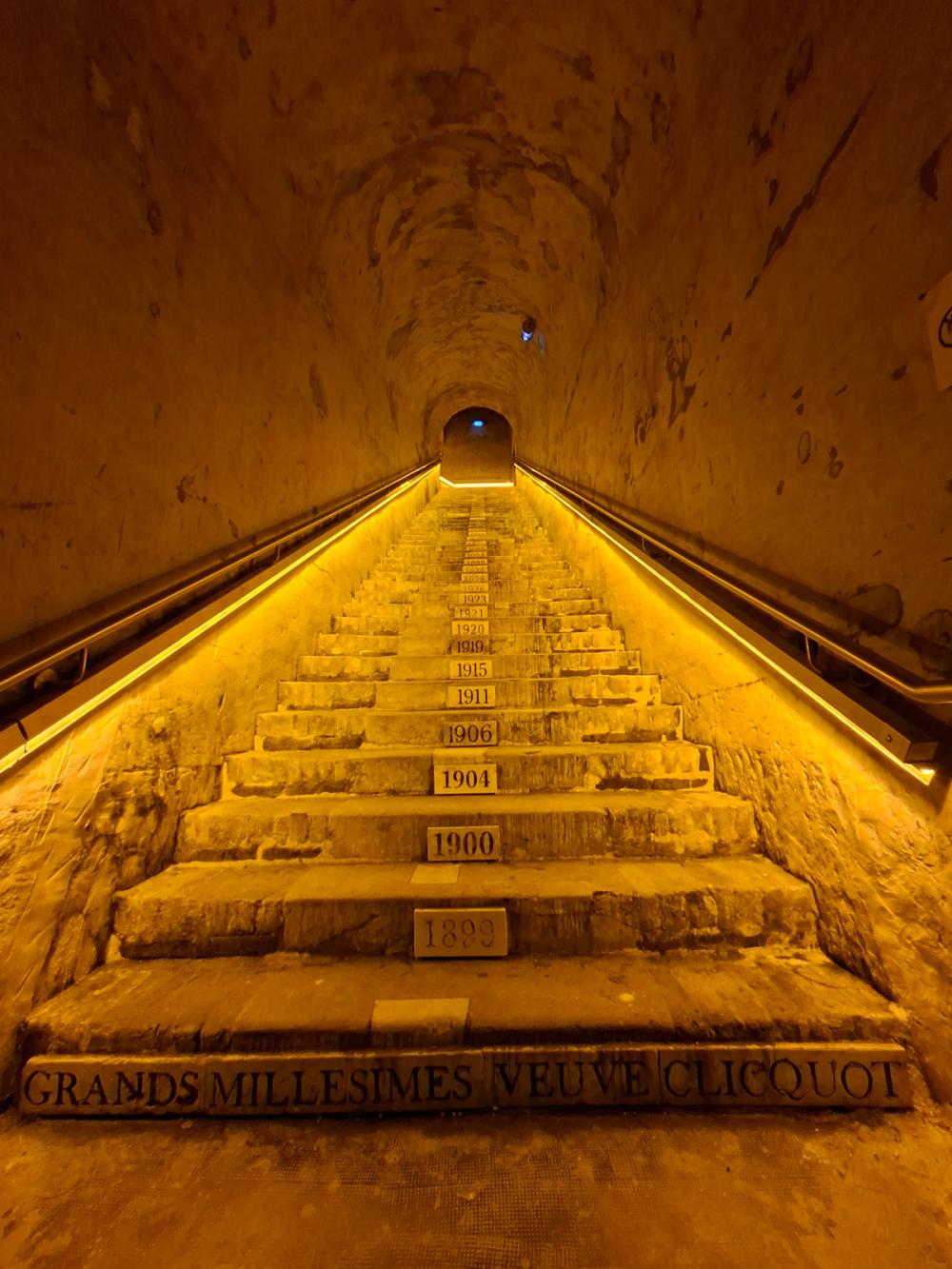
A step back in time - the vintages of La Grande Dame
Adding red wine from the village of Bouzy to the white base of La Grande Dame to make a rosé, of course, harks back to the famous widow Clicquot herself. She loved the red wines from Bouzy, which even then were vinified as reds. In 1818, she created the first ever blended rosé, or Champagne d’assemblage, by adding red wine from Bouzy to her white Champagne. La Grande Dame Rosé continues this tradition.
Exceptional reds
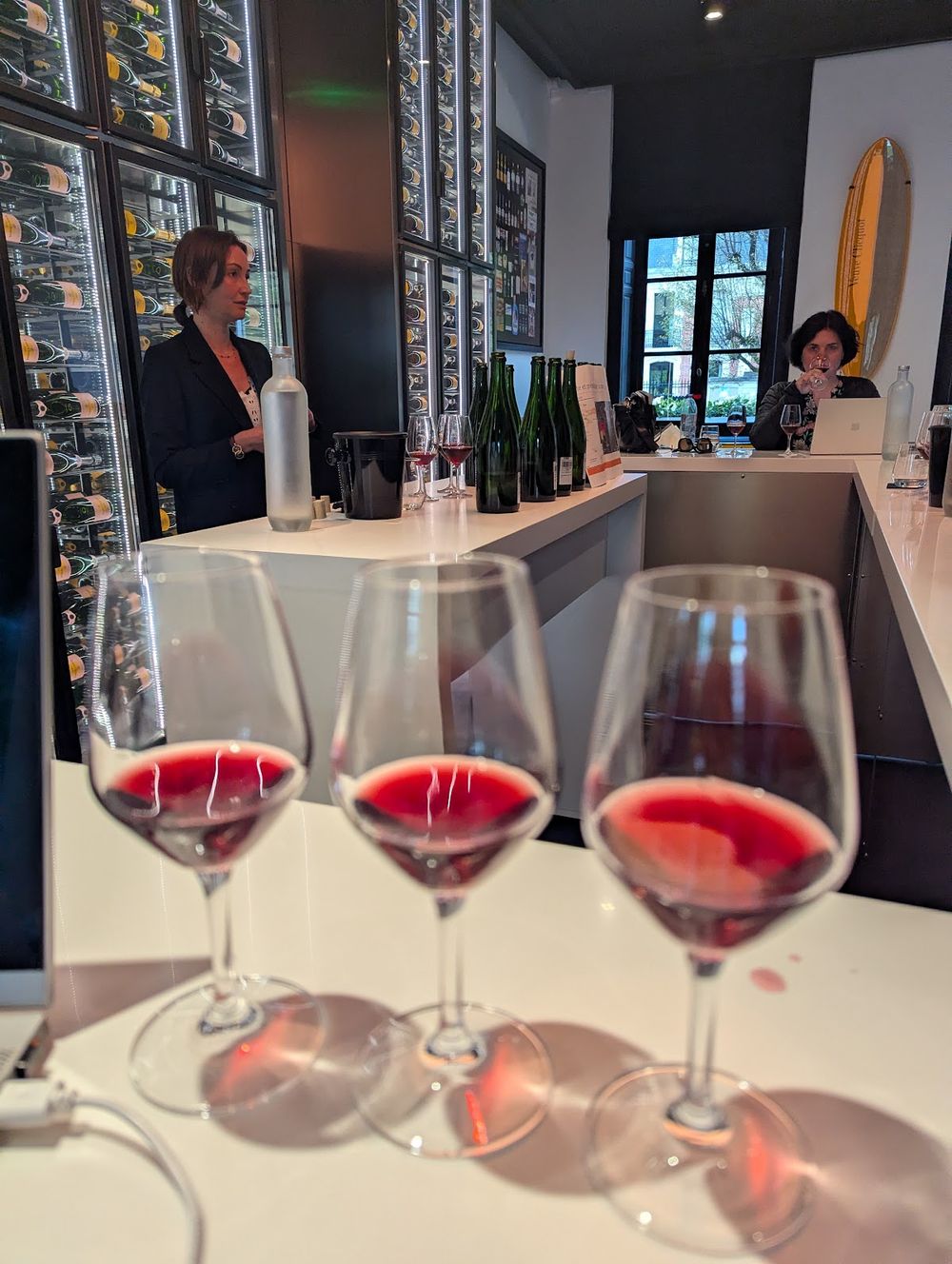
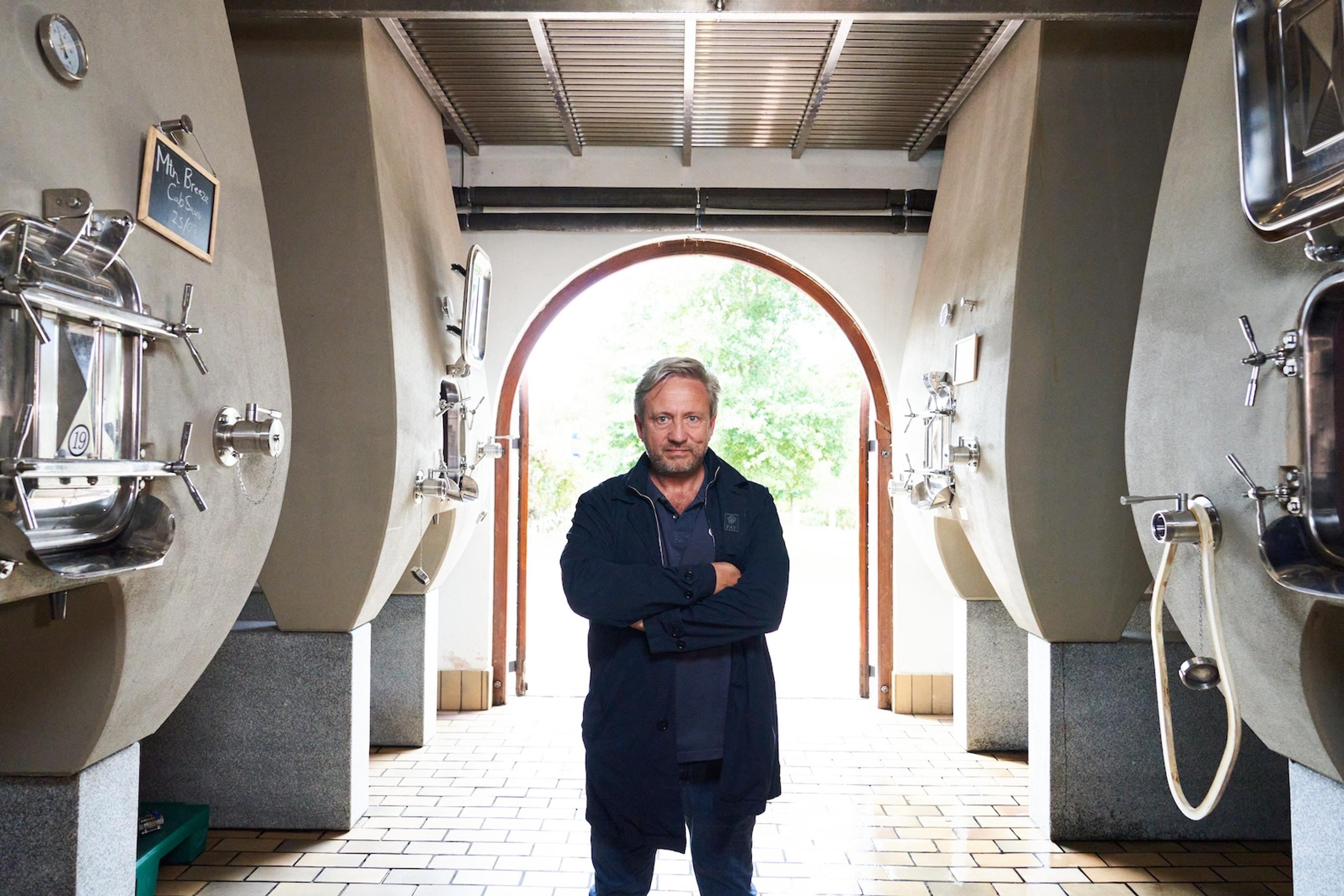
Gaëlle Goossens, senior winemaker at Veuve Clicquot, showed three red Pinot Noir base wines from the low-yielding but very ripe 2025 vintage
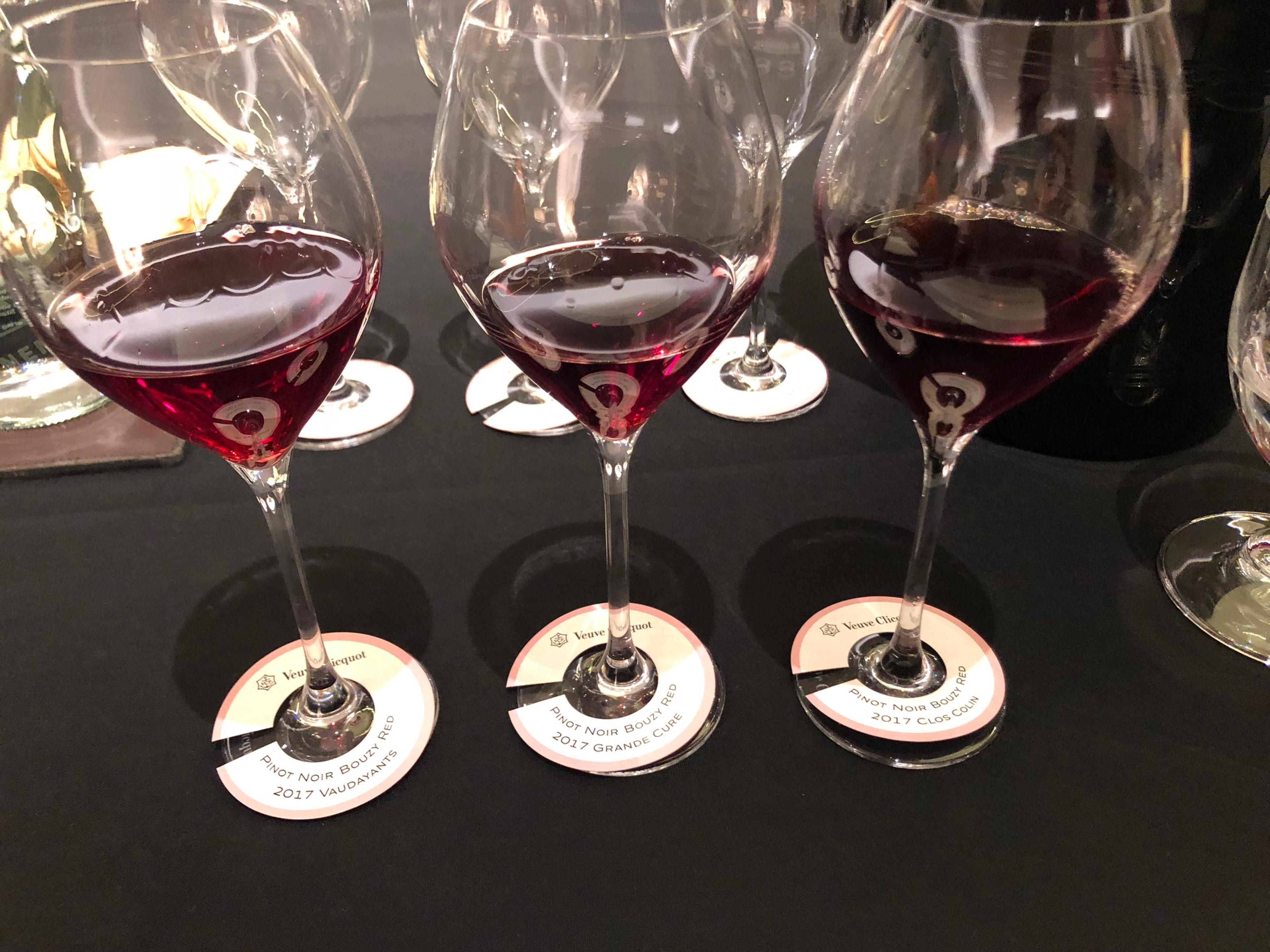
Tasting the Pinot Noir from Clos Colin as a red base wine was a particular privilege during our visit. Gaëlle Goossens, senior winemaker at Veuve Clicquot, showed three red Pinot Noir base wines from the low-yielding but very ripe 2025 vintage to illustrate the three types of rosé Champagne made by Veuve Clicquot: the NV Brut Rosé, the Vintage Rosé and La Grande Dame Rosé.
The red Pinot Noir used for the non-vintage pink is an intensely berry-flavoured, fresh-faced, juicy wine; just the sort of glou-glou bright red that disappears all too quickly. The second red, from the single Vaudayant plot, also in Bouzy, is used for Veuve Clicquot’s vintage rosés: it is clearly more serious and structured, with both elegance and enduring, enticing spice. The third red is from Clos Colin: more restrained and less obvious than Vaudayant, even slightly floral, a wine of silky tautness, deep flavour and a slender body. It tells us a lot about Grande Dame Rosé and the elegant style that Goossens and the winemaking team around cellar master Didier Mariotti aim for.
Understanding reds
Goossens presented precise soil and climate studies of Bouzy: the team wanted to understand scientifically what even Madame Clicquot already understood intuitively: why some reds from Bouzy were so good. This is down to measurable hotbeds in between corridors of cooler airstreams and much deeper, richer topsoils.
Understanding better what makes great red wines has helped Veuve Clicquot to identify further parcels that fit these criteria and to partner with growers who have mature Pinot Noir vines in such spots. In 2025, they even opened a new winery dedicated to red winemaking on the outskirts of Reims to facilitate much better extraction of colour via extended cold maceration and gentle extraction.
The La Grande Dame style
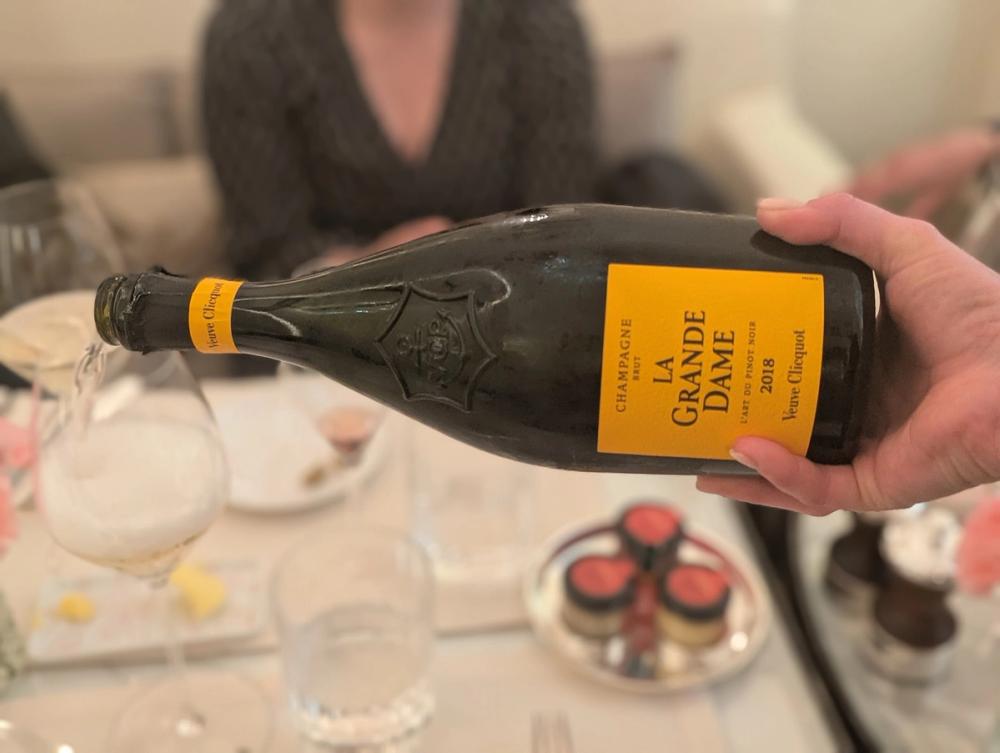
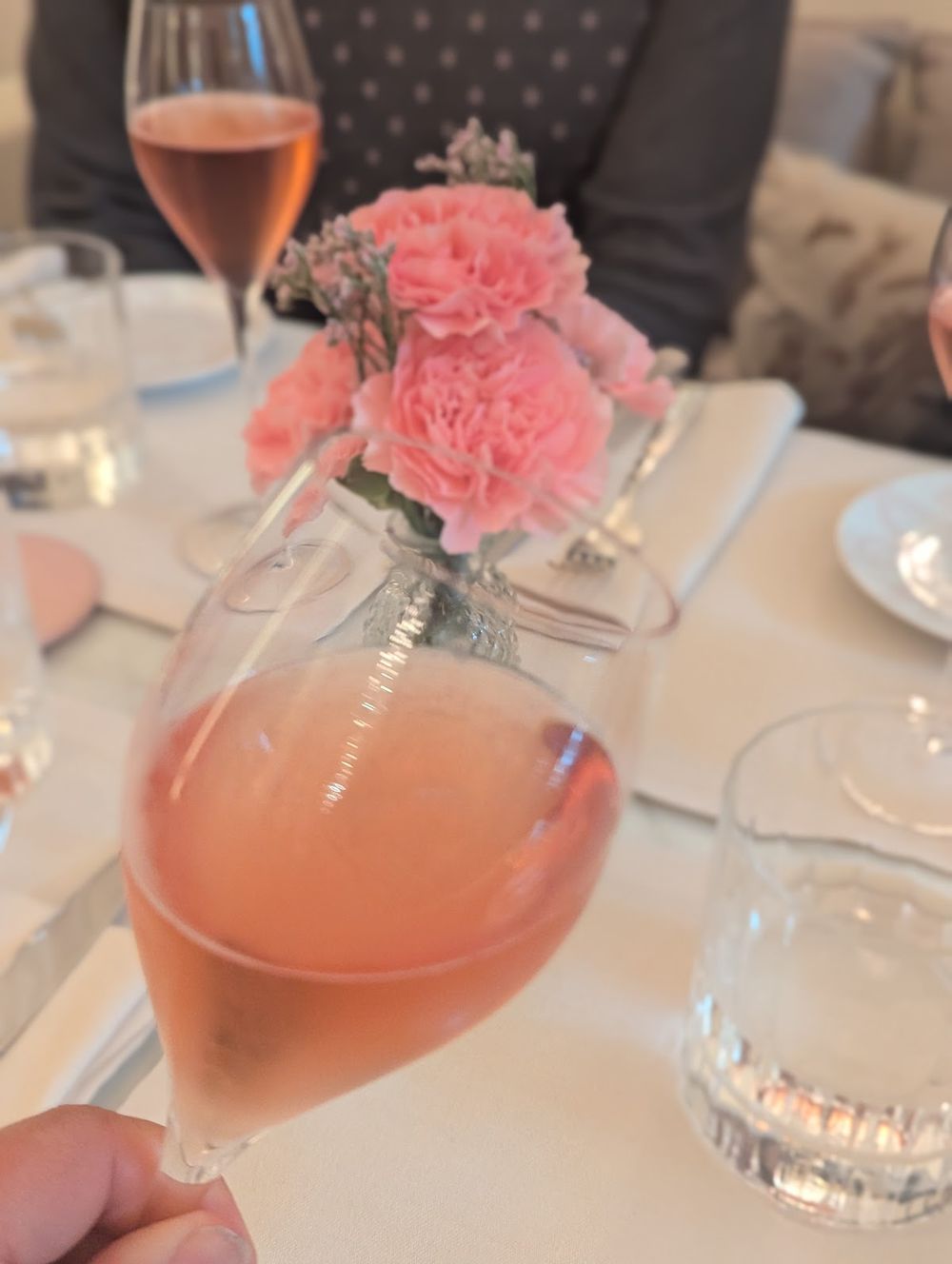
Tasting the final Veuve Clicquot La Grande Dame Rosé 2018
Speaking about the white base for La Grande Dame, “we completely changed the style,” Goossens said, noting that the transition started with the 2008 vintage, due to climate change. The aim is “precision based on Pinot Noir, elegant, straight to the point, with high energy and a lot of tension – that is the Pinot Noir we want.” Increasingly, the team gets this style of Pinot Noir from Verzy and Verzenay rather than Ambonnay and Bouzy which dominated in the past.
Returning to rosé, Goossens noted how the style of red is key to the style of the rosé and to longevity. The wines could not have illustrated her point better – with the 2018 later contrasted with the first La Grande Dame Rosé ever made: 1988. It is a marvel and bodes well for the future of the 2018.
La Grande Dame Rosé 2018
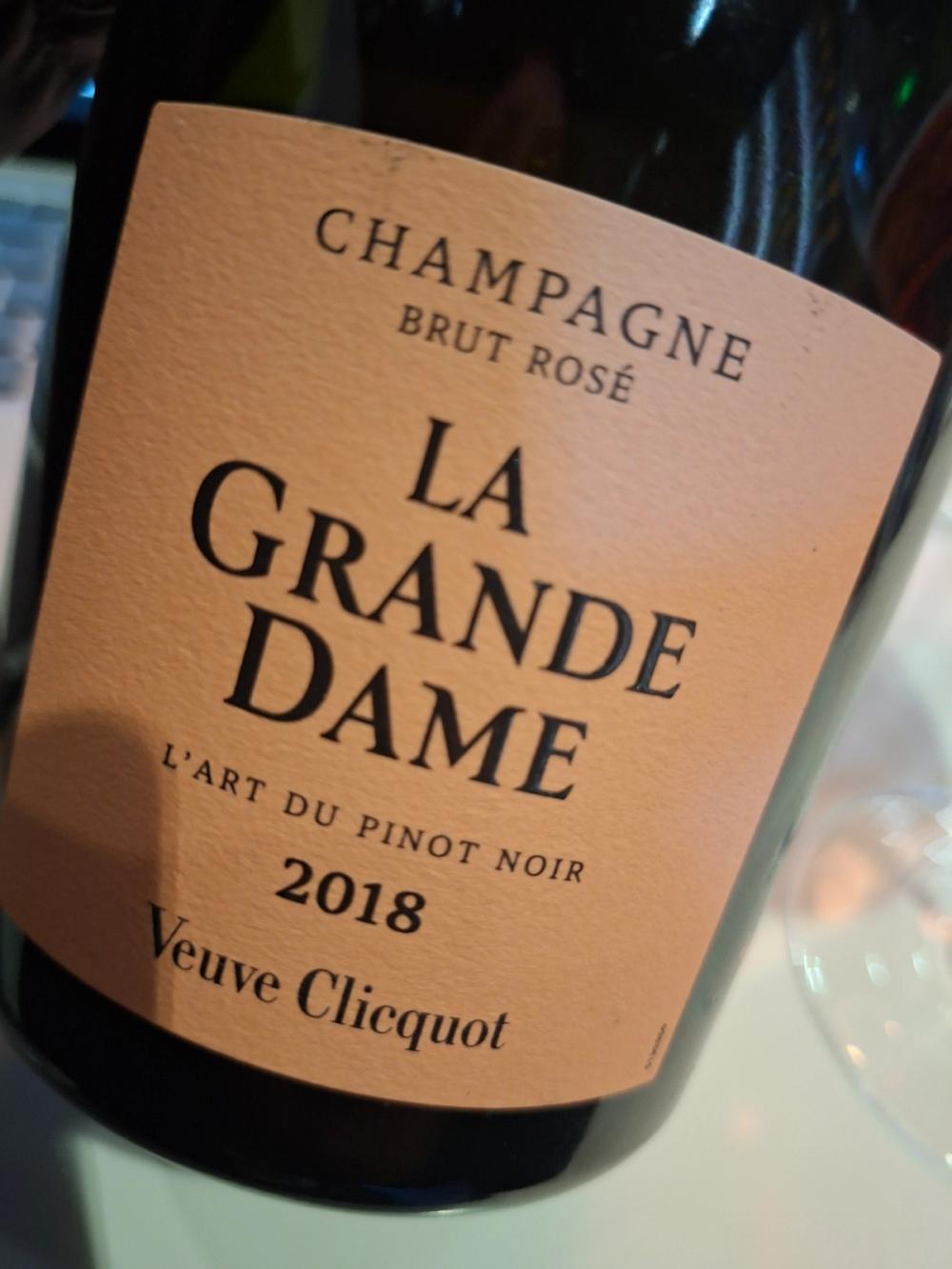
Based on 90% Pinot Noir and 10% Chardonnay with 13% of red wine from Clos Colin, disgorged after six years on lees with a dosage of 6 g/l.
The wine comes with a deep hue of pink bordering on light red. The nose is all berry fruit that comes across as almost luscious, enticing with vivid aromas of fresh raspberry, strawberry and cherry coulis somehow wrapped in a tender, yeasty toastiness. The body is bright, light, fresh, energetic, lively even, but always comes back to its core of juicy, deep-fruited ripeness, represented by the fresh berry coulis flavours. There is a contrast between that full-on nose and that bright, vivid, almost taut palate. The nose lastingly shines with raspberry – what a hedonistic yet elegant Grande Dame! The finish could be longer, but this is undoubtedly seductive and delicious.
La Grande Dame Rosé 1988
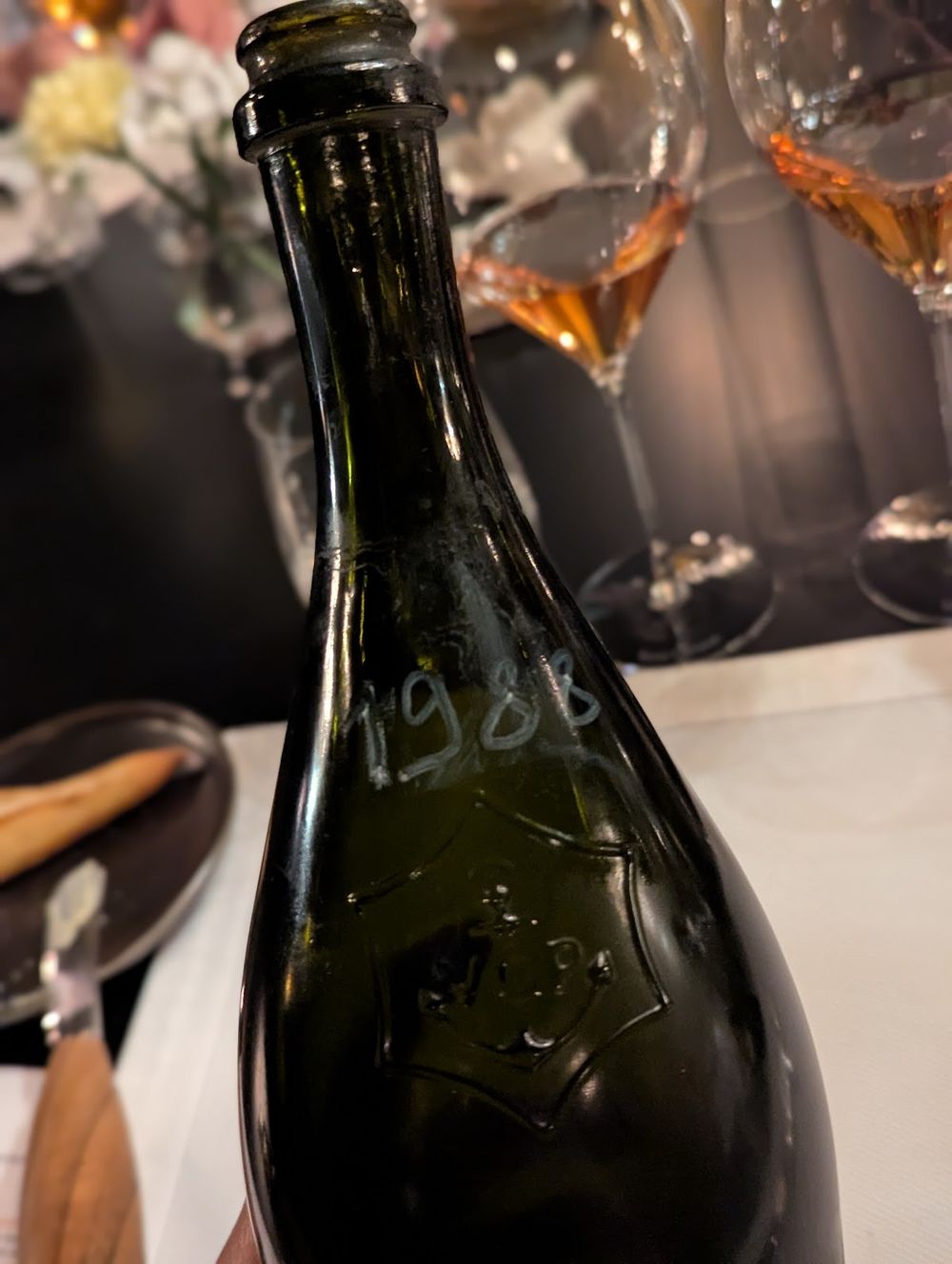
Based on 60% Pinot Noir and 40% Chardonnay with 12% of red wine from Clos Colin, disgorged in 2009 with 6 g/l of dosage.
Notes of white Alba truffle and smooth duxelles harmonise alongside grapefruit marmalade, toasted hazelnut and a hint of conifer. The aroma is just gorgeous. The palate still has sparkle, comes with rounded sinuousness and cut, with beautiful concentration that comes through alongside a honeyed edge of pleasant bitterness. The finish, however, is still totally defined by fresh zest. This is amazingly alive and not tired in the least, its resonance of flavours is astonishing and arresting. Wow. Definitely the wine of the night!