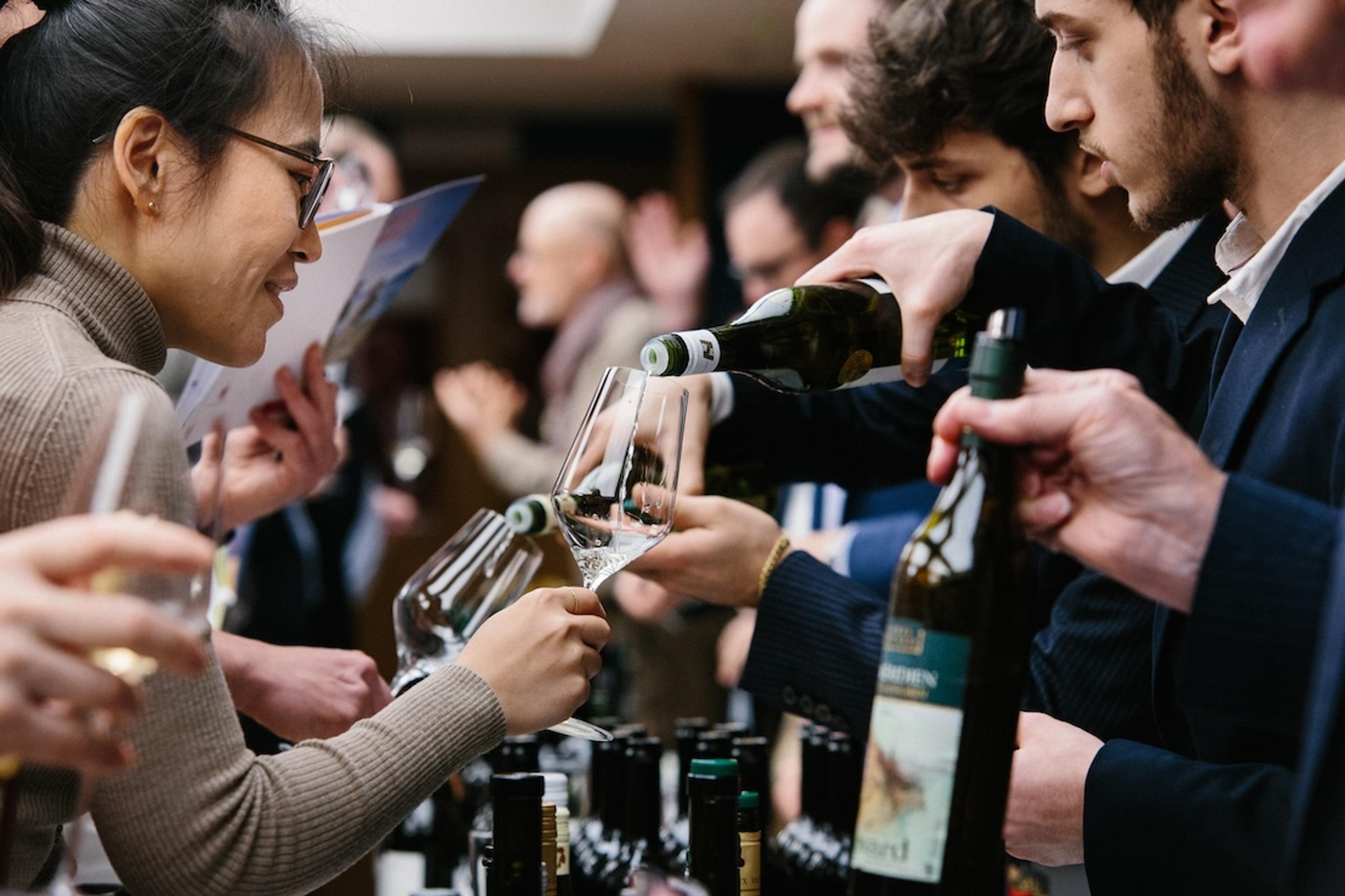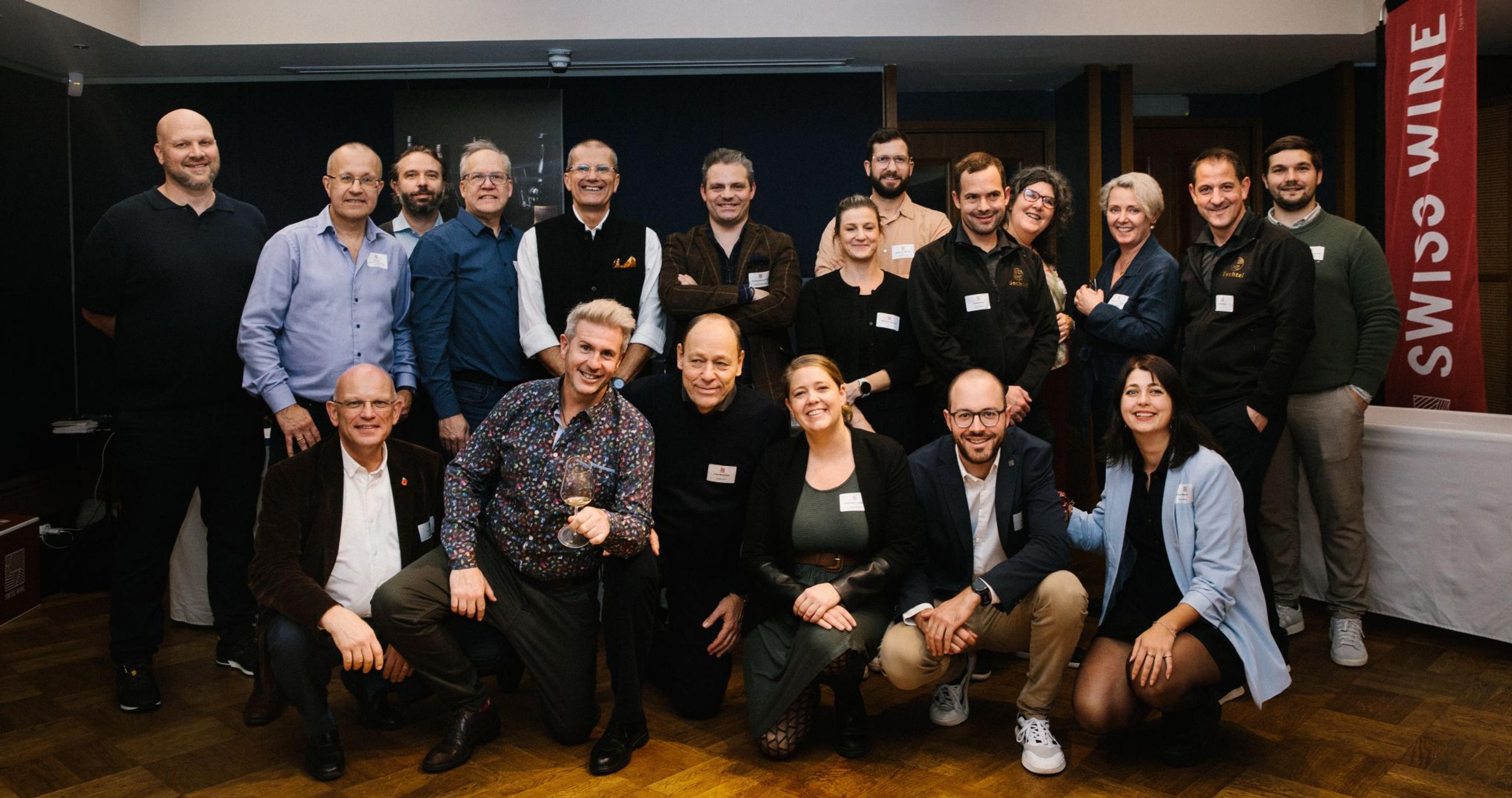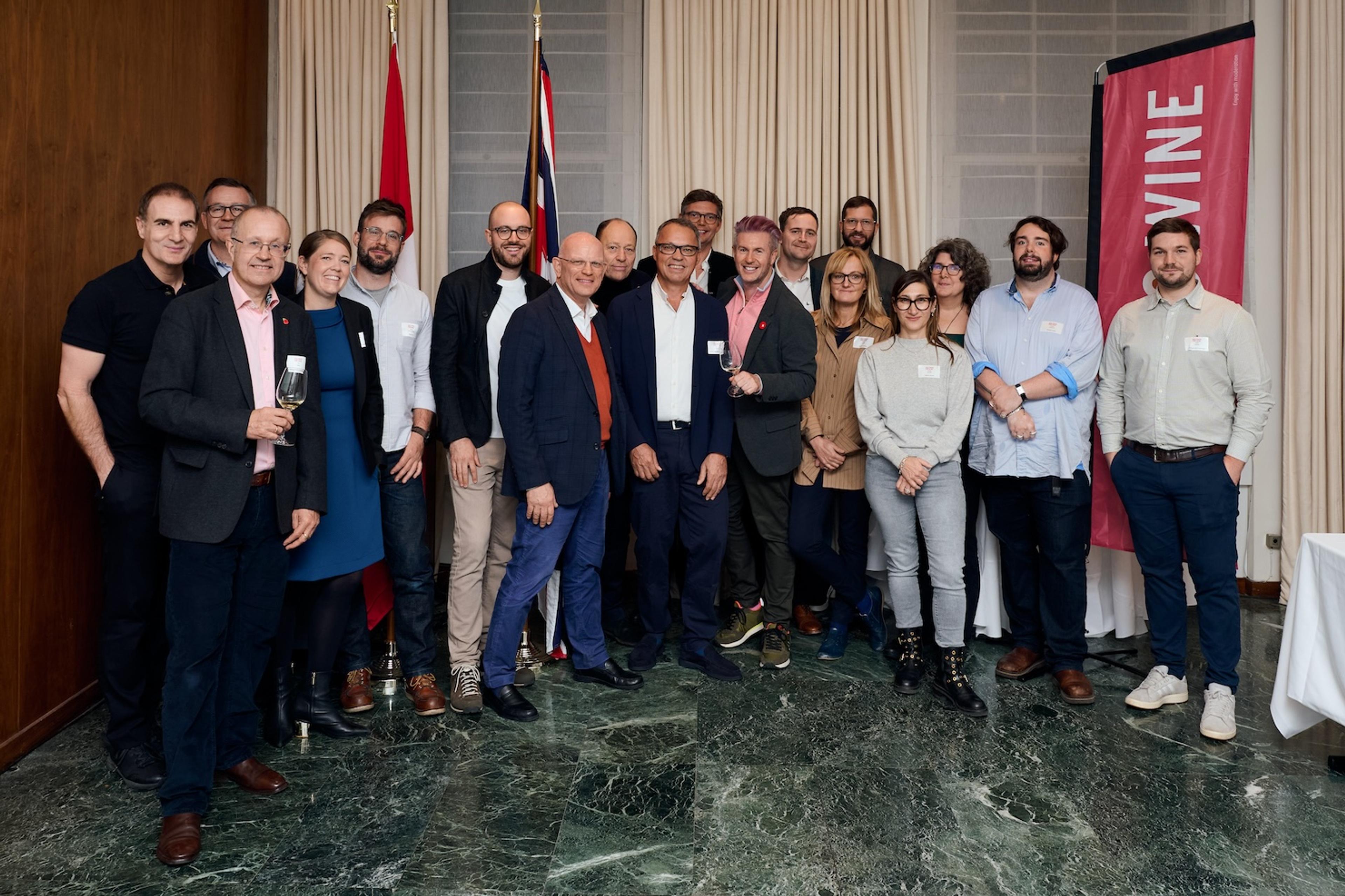

Jasmin Schmid, export project manager for Swiss Wine Promotion (SWP), announced bold plans to increase exports of Swiss wines to the UK at a trade tasting at the Swiss Embassy in early November. The day was part of the third running of Swiss Wine Week, the now annual series of daily promotional events in London that were staged this time at 67 Pall Mall, Decanter Fine Wine, the Institute of Masters of Wine, Mosimanns and WSET.
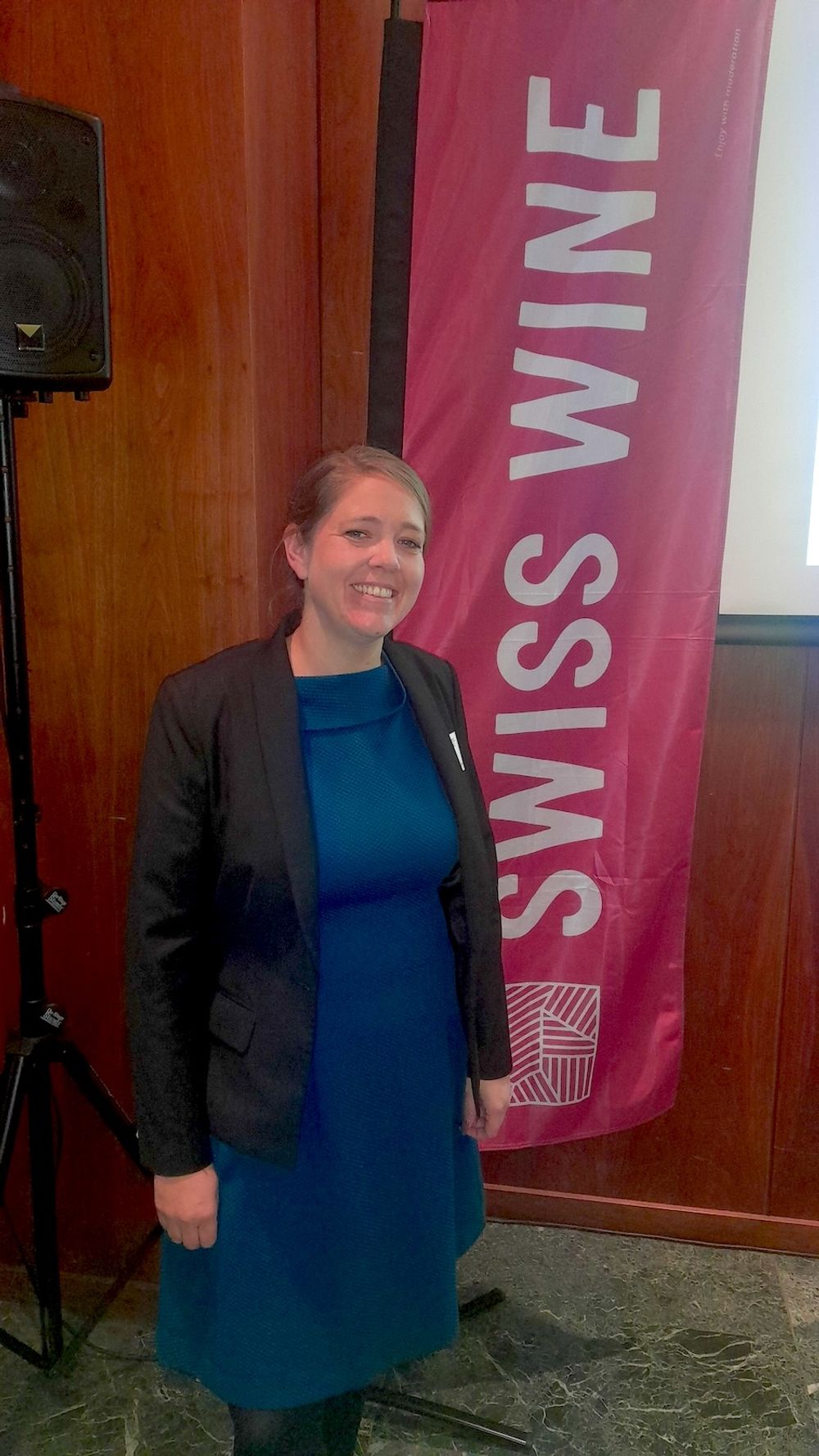
"We believe that if we put more effort in here throughout the year – not just once a year – we can create demand for Swiss wines,” says Jasmin Schmid.
The plan is to increase exports to the UK by 400% by 2029, although admittedly from a low starting base. “At the moment, only half a per cent of Swiss wine production is sold to foreign markets, with exports to the UK being about 50,000 litres per annum,” Schmid told The Buyer. “We have a quite high aim in the next three years to go up to 200,000 litres. A lot of producers are looking into exporting, so the interest is there and the wines are there, so we just need to find the right importers who will support this.”
“It’s ambitious but we definitely have the possibilities, the product that is very rare and exclusive, and people are looking for it as well. We believe there is a big potential in the UK market - there are a lot of wine drinkers and people who are interested in wine. It’s one of the biggest import markets in the world, and one of our three priority ones. So we really believe that if we put more effort in here throughout the year – not just once a year – we can create demand for Swiss wines.”
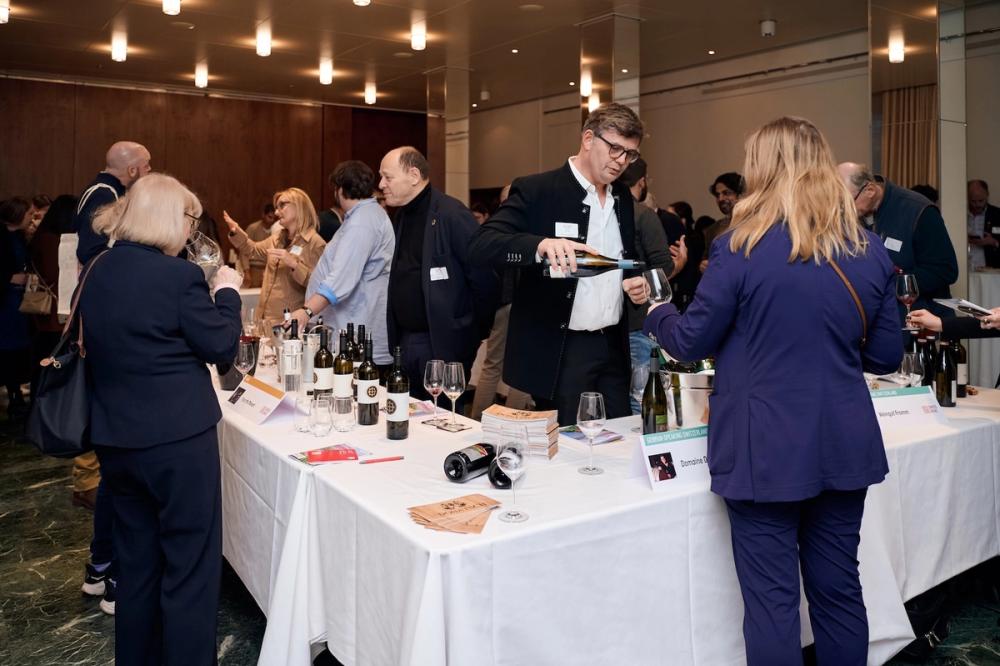
Swiss Wine Week tasting, London
Swiss wine expert, Simon Hardy, who organises Swiss Wine Week every year, concurred about the need for extra investment from SWP, as well as adding some interesting insight.
“Part of what SWP have got to do is put their money where their mouth is,” he said. “It’s not enough just to say we’ve got great wine. The importers want to know how committed you are to this market, and what you are prepared to invest in this market. No disrespect to what we organise in Swiss Wine Week but it’s one week in the year. Is that serious?”
“I think it’s good – don’t get me wrong – but there needs to be a change of mindset when it comes to export, and I think it’s possible as you don't need thousands of producers suddenly to want it. If you’re putting a portfolio of Switzerland in front of any half-decent importer, and if you’ve got even just ten producers, with three to four wines each, that’s 30-40 wines that you’re trying to find a home for. So I think it’s going to take a bit more coordination, more orchestration, more investment.”
Hardy revealed how changes in Switzerland have conspired to give momentum to the new export drive.
“There’s a new director of SWP, who took office in March, named Pierre-Alain Bapst,” he continued. “It’s clear the brief he’s been given is to sharpen the commercial edge and performance. So they’ve rewritten their export strategy, with the UK a key part of it. The objective will set Swiss sales alight if we get it right, but for that to happen we need the distribution.”
“Quality is not the issue; the premium wines command a price; the entry level may be a bit tougher but I don't think that’s an issue depending on the channels you target. So fine dining is one of the right channels to go for, but if I’m a sommelier I would say that the more I can bring to my customers that is new, different and good, then that is what is going to keep bringing them back, and I think Switzerland can play a part in that. As much as anything because of the style of the wines - they’re fresh, moderate in alcohol with this minerality about them, and very food-friendly. So I think they tick a lot of the boxes.”
“But the frustration of so many sommeliers is where they can get them. Or they’re not available from the people they normally source wines from. So it’s breadth and depth of distribution that needs to improve.”
Highlights of the Swiss Wine Week tasting
There were 14 producers’ wines at the tasting, with many having made the journey over from Switzerland. Only four were seeking an importer, with another happy to sell B2C direct to consumer. Valais had the highest representation with six producers, while German-speaking Switzerland had five, Vaud two and Ticino one. Geneva and Three Lakes were the only two of the six wine regions not to be represented.
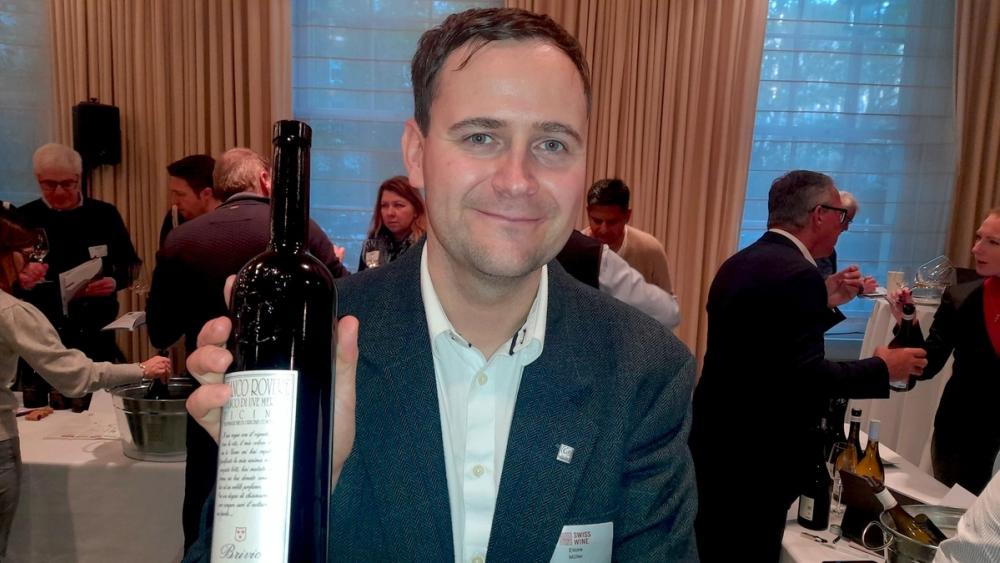
Ettore Müller
While Switzerland’s most planted red varietal, Pinot Noir, was unsurprisingly the predominant red grape on show, Ticino’s biggest producer Gialdi Vini (which produces one million bottles a year) showed off the quality of the region’s Merlot. Alpine Wines brings in the range to the UK, which includes a white Merlot Baiocco 2023 Ticino DOC that impressed. Spending eight months in used oak with regular bâtonnage, it had both a spicy edge and some creaminess.
“We are on gneiss, giving sandy, acidic soils and great concentration with more complexity and character,” sales manager Ettore Müller said. “We were one of the first in the region to make white Merlot back in 1986 as we had no white varietals. We make 120,000 bottles a year of it and sell out.” He revealed it sells for £50-60 retail in the UK. Also catching the eye was a Gamaret/Merlot 60:40 blend named Dogaia 2022 Rosso del Ticino 2022, with the former giving structure and added fruitiness (seeing 60% new oak).
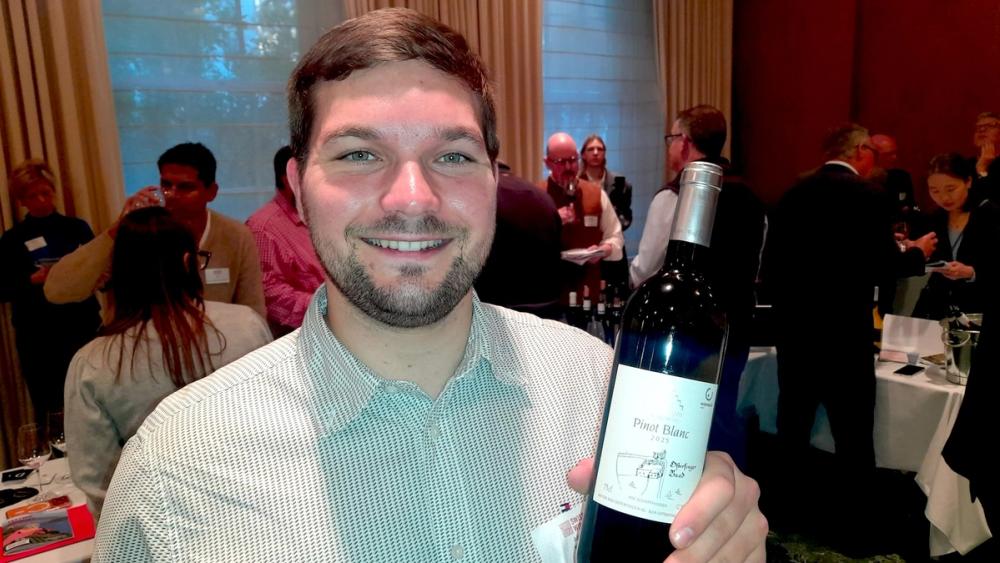
Julian Hauser
The four wineries from German-speaking Switzerland (aka Osterfingen) all had interesting wines. Julian Hauser, winemaker at boutique estate Gasthaus & Weingut Bad Osterfingen, who is seeking an importer, produces 25,000 bottles per annum, with Pinot Noir the main focus. However, his Pinot Blanc 2025 Schaffhausen AOC caught the eye with its unusually generous fruit. Aged for eight months in very old oak, and receiving ‘a bit’ of bâtonnage, it went through two-thirds malolactic fermentation. Meanwhile, his Badreben Abt Pinot Noir 2023 Schaffhausen AOC, from low yielding 30 to 60-year old vines represented fine value at 27 Swiss Francs retail.
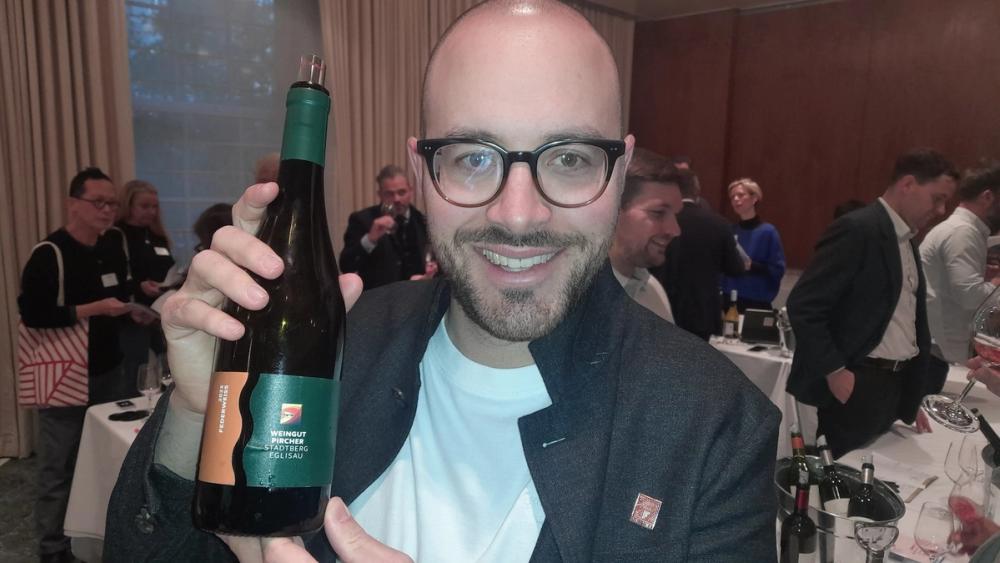
Gianmarco Ofner
Gianmarco Ofner, winemaker at Weingut Pircher, who says his vines are on a 80% gradient overlooking the Rhine, makes a white Pinot Noir Federweiss 2025 Zürich AOC. “It’s a good summer wine or aperitif or every-occasion wine,” he mused, adding he was looking for an UK importer. Apart from his excellent Pinot Noirs, he also produces both Riesling and Rauschling. He planted the former after climate change forced him to pull up his Müller-Thurgau, which is still the main white varietal in Osterfingen.
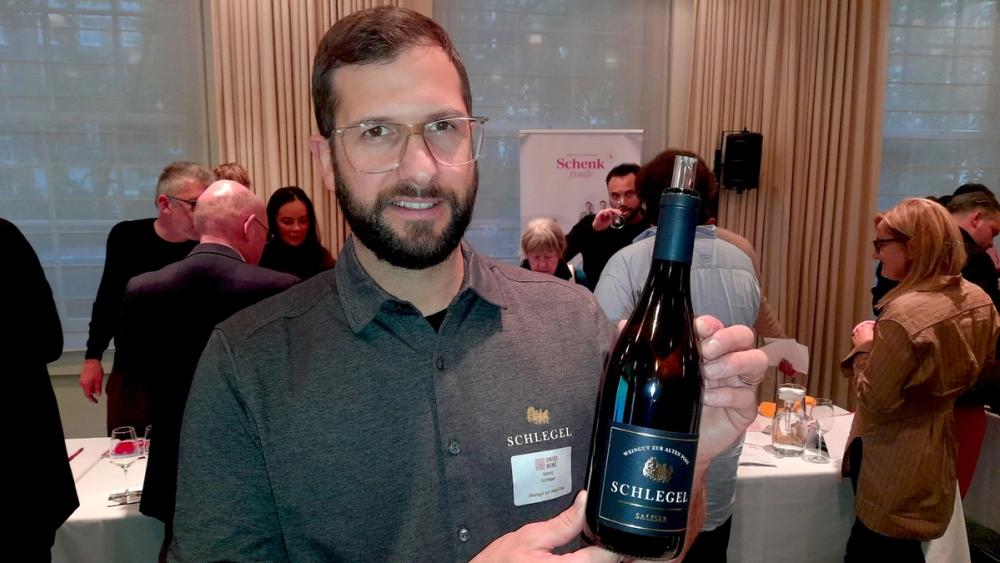
Georg Schlegel
Heading into Graubünden, home to some of Switzerland’s finest Pinot Noir and Chardonnay, Georg Schlegel crafts superb examples of both. His Riesling 2024 Graubünden AOC, from vines planted in 2013, was aged in 250 litre clay amphora for a year, and was quite full-bodied with generous fruit. His Pinot Noir Saliser Grande Selection 2022 Graubünden AOC saw 80% new oak for 12 months, and was then aged in bottle for two years before release. Fine chalky tannins and seductive fruit were hallmarks. Schlegel is also looking for an UK importer.
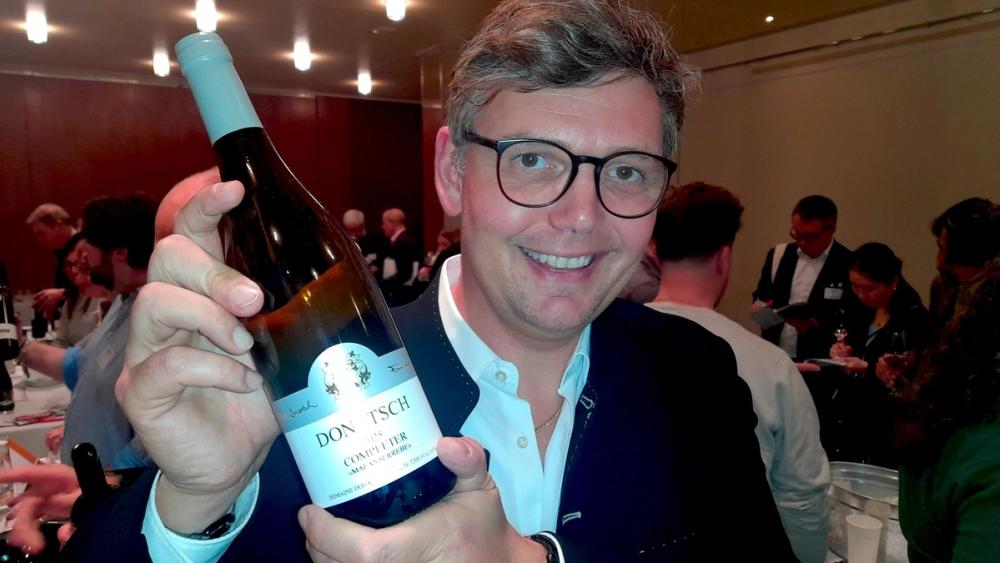
Martin Donatsch
Two other nearby producers of note, Weingut Fromm and Domaine Donatsch, are imported into the UK by Alpine Wines and Fine + Rare/Ripley Wines respectively. The former’s Pinot Noir Küng 2024 Graubünden AOC, made from 1980 vines, showed very well, while winemaker Martin Donatsch’s Pinot Noir “Unique” 2023 Graubünden AOC stole the show. justifying a Swiss retail price of SF100. Curiously, every label of it has subtle design differences.
From Valais, Domaine Jean-René Germanier unfurled part of its superb range, which is imported into the UK by Alpine Wines. Gilles Besse has switched from master professional saxophonist to master winemaker, as his Clos deal Couta Pinot Noir de Vex 2022 Valais AOC and Cayas Syrah du Valais Réserve 2023 Valais AOC illustrated.
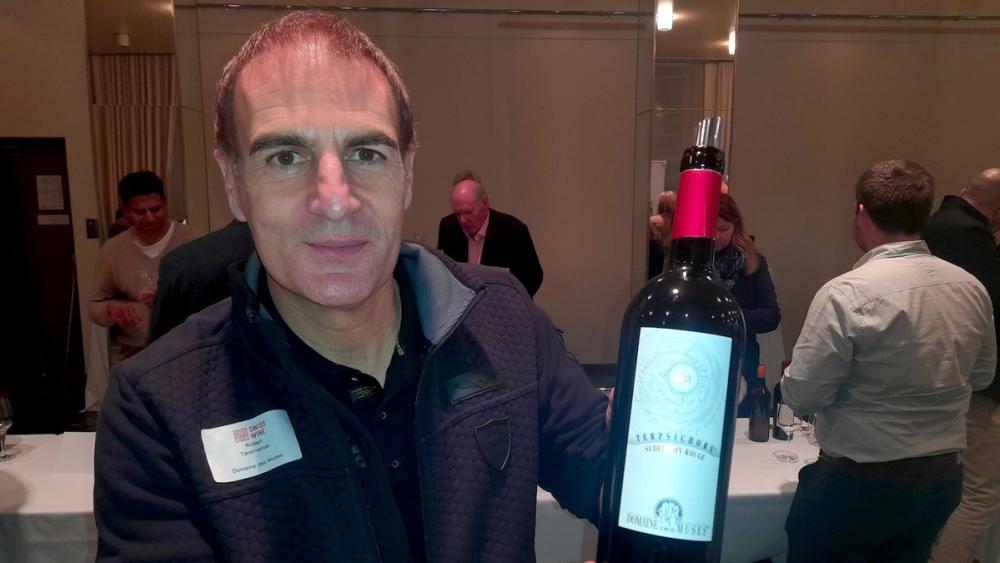
Robert Taramarcaz
And the ‘king’ of Chasselas, Robert Taramarcaz, was also on hand to show his award-winning Domaine des Muses Fendant Tradition 2025 Valais AOC (imported by Alpine Wines and Gauntleys of Nottingham). This very aromatic version of Switzerland’s most planted white variety was complex and long with ample freshness. A high quality wine to sign off with at another very successful Swiss trade tasting.