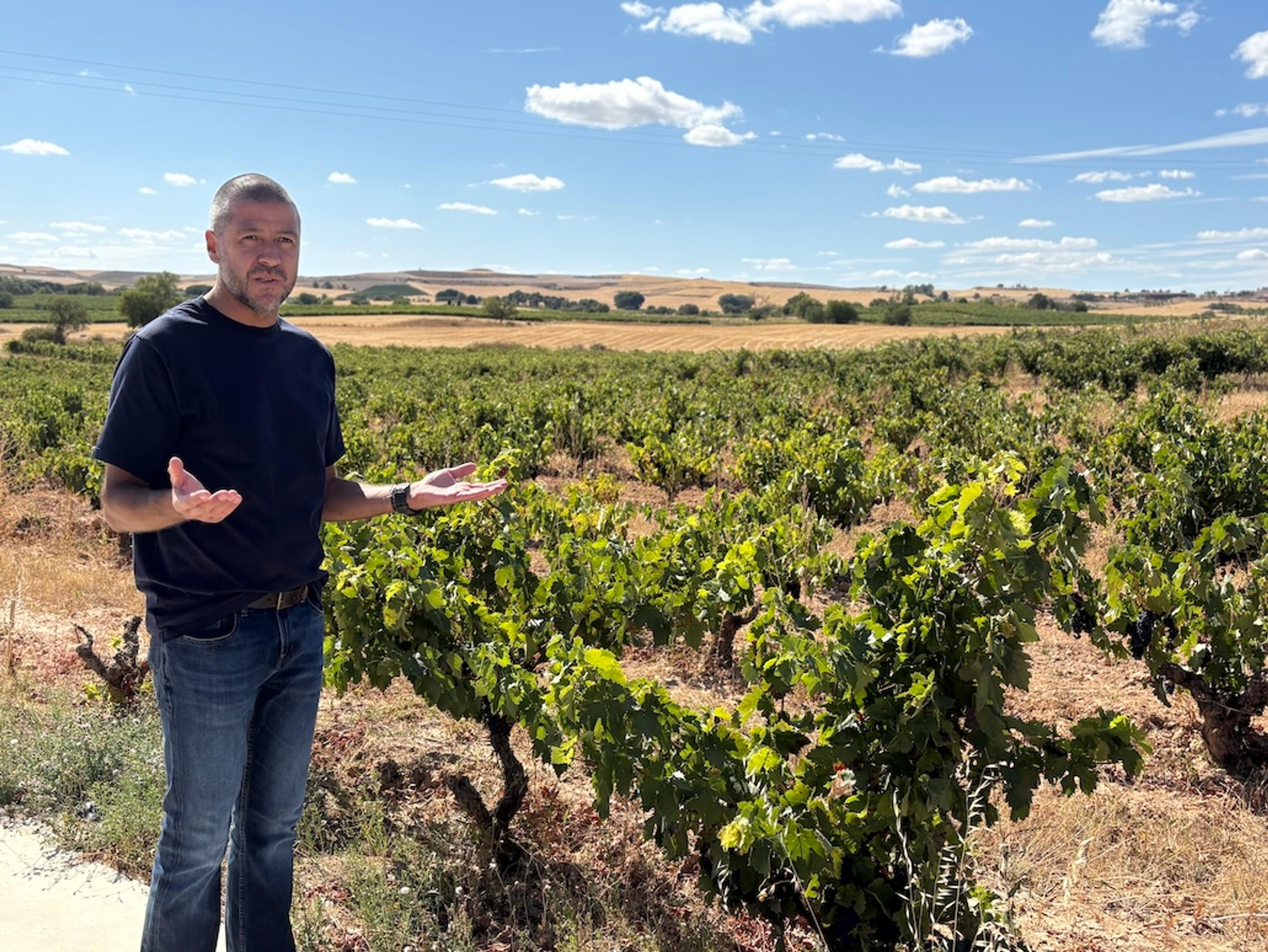

My first stop visiting wineries in Spain is Haro, the so-called Rioja wine-making capital. Bodegas Martínez Lacuesta, founded in 1895, is the beating heart of Rioja’s classical tradition and rooted in Rioja practices – ageing in American oak, long cellar maturation, and elegant blending. But it is also a classic example of how wineries can bridge the old and new.
Rioja tradition with a vermouth twist
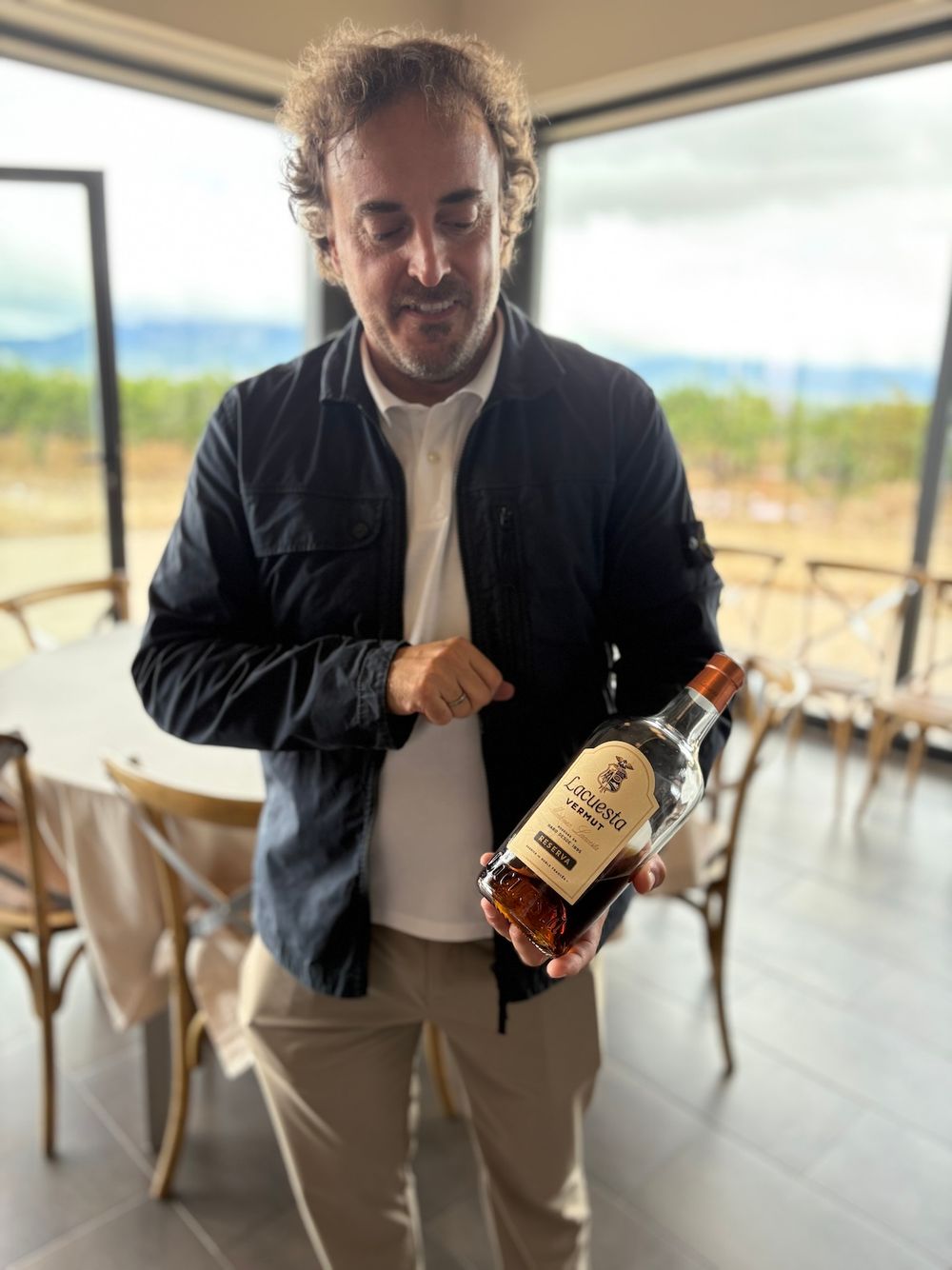
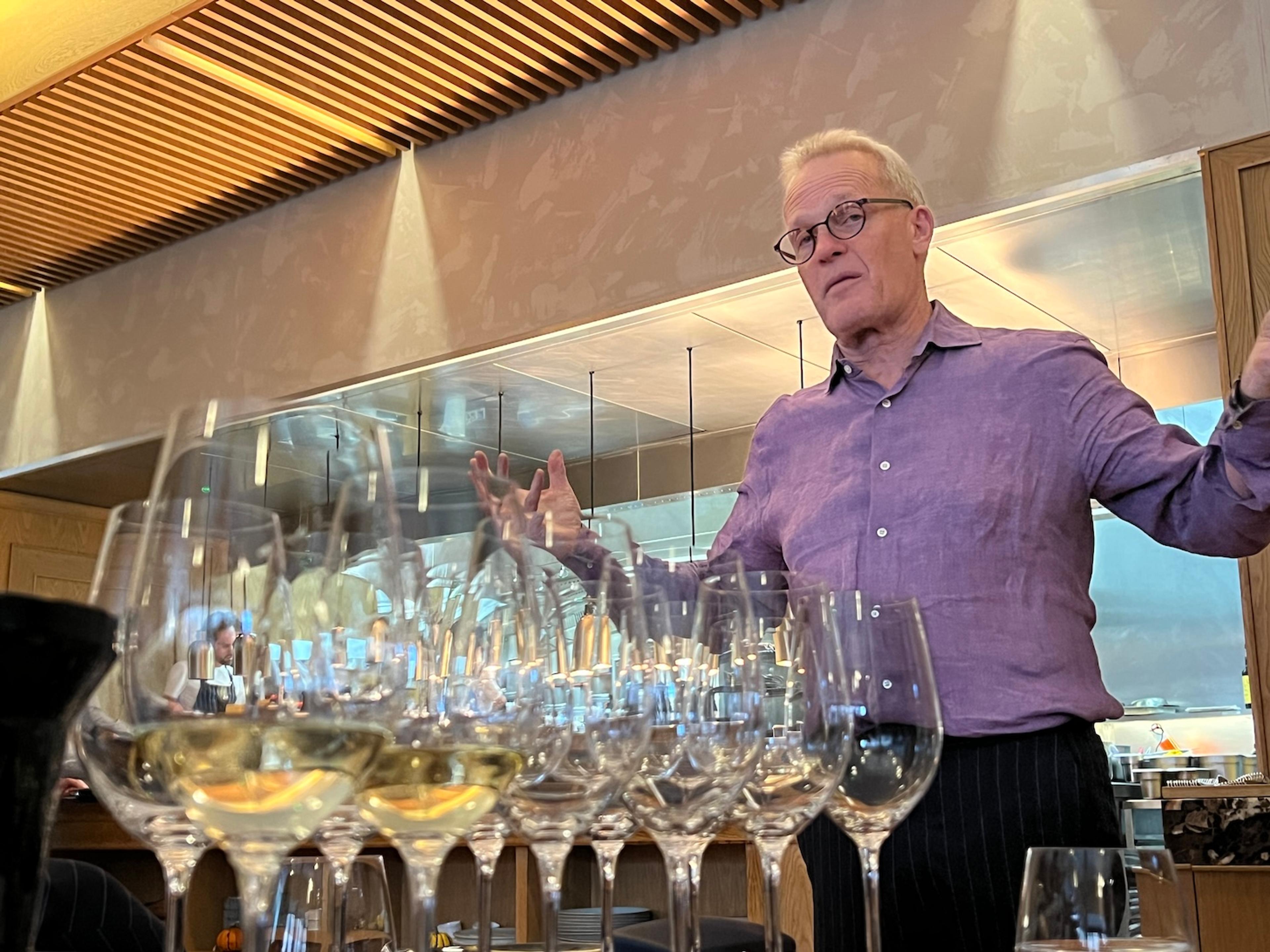
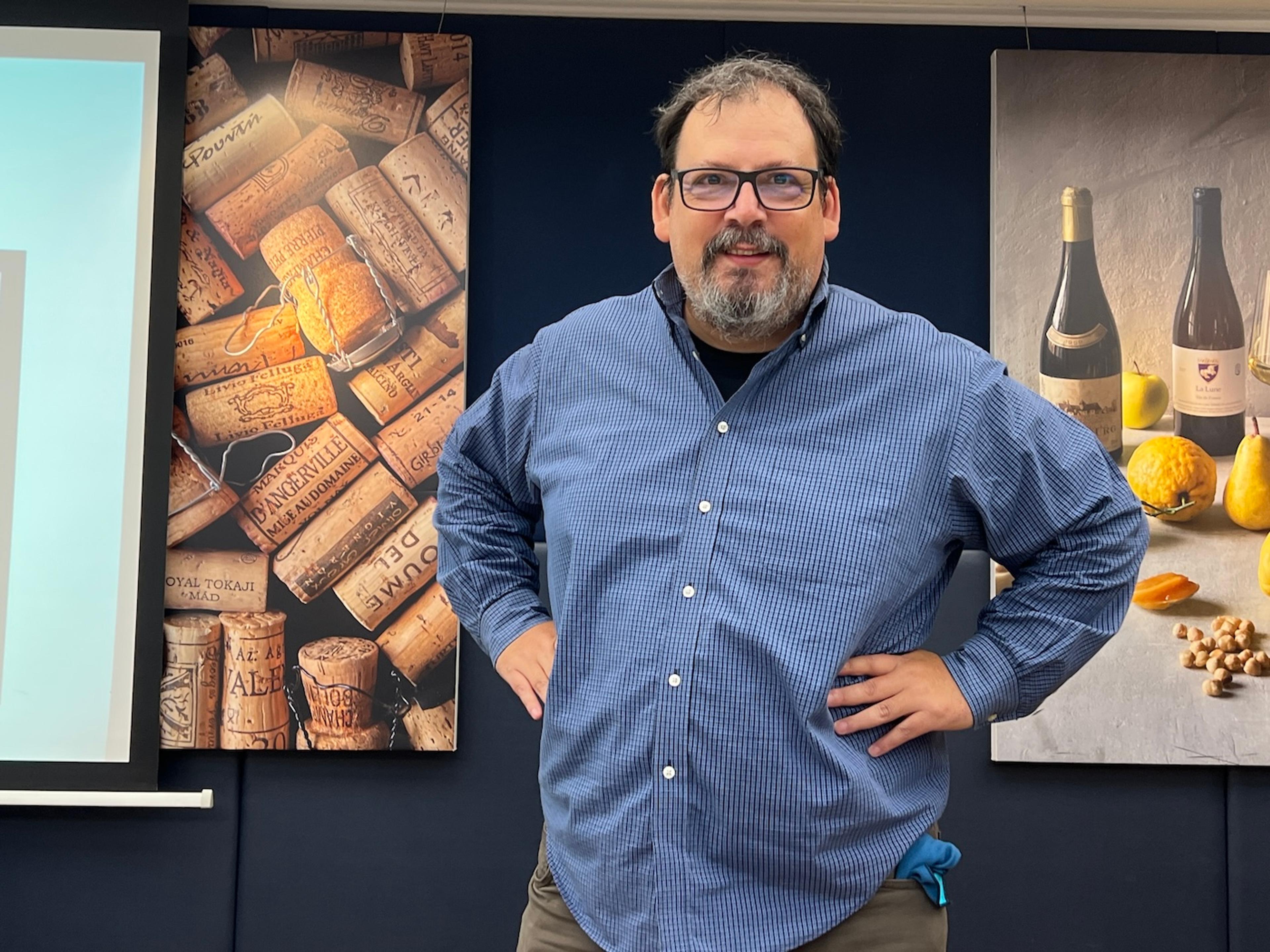
Point of difference - Javier Bañales with his unique Vermut
Martínez Lacuesta wines have Rioja’s signature elegant balance of red and dried-fruit notes, silky tannins and subtle spice from nuanced oak ageing.
We taste the comfort of classic Rioja and good emerging Rioja whites too. Stand-out are Lacuesta’s Reservas and Gran Reservas. (The 2005 vintage is particularly appealing). The wide portfolio includes approachable quality and affordability with wines that can both age well but also be drunk now.
Hinia is a classic Rioja with a blend of Tempranillo, Graciano and Mazuelo (aka Carignan) varieties, 30 months in oak barrels followed by bottle ageing, selling for €22 a bottle. Hinia Blanco Viura is delicious too – we taste the Blanco Reserva 2021 in magnum (€120).
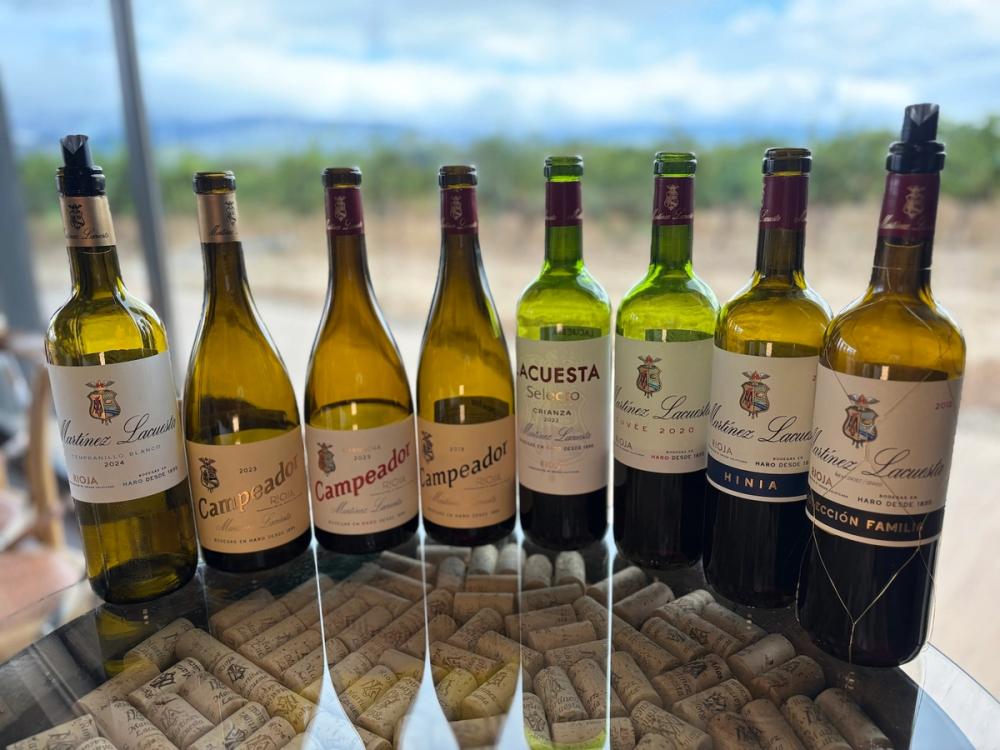
The Campeador Rioja Reserva 2019 (50% Tempranillo, 50% Garnacha) is a powerful, silky wine that is intense and yet delicate. (€21.50.) The longer-aged 2012 Colección Familia has just been released. It has structure, freshness and a vibrant tension and has future ageing potential too. (€39)
Interestingly, CEO Javier Bañales reveals the company is also capitalising on cocktail culture, attracting younger drinkers and mixologists worldwide by spearheading a vermouth revival in Rioja. “Martínez Lacuesta has a long history of producing vermouths which few Rioja wineries can claim,” Bañales explains.
Precision Rioja re-interpretating tradition
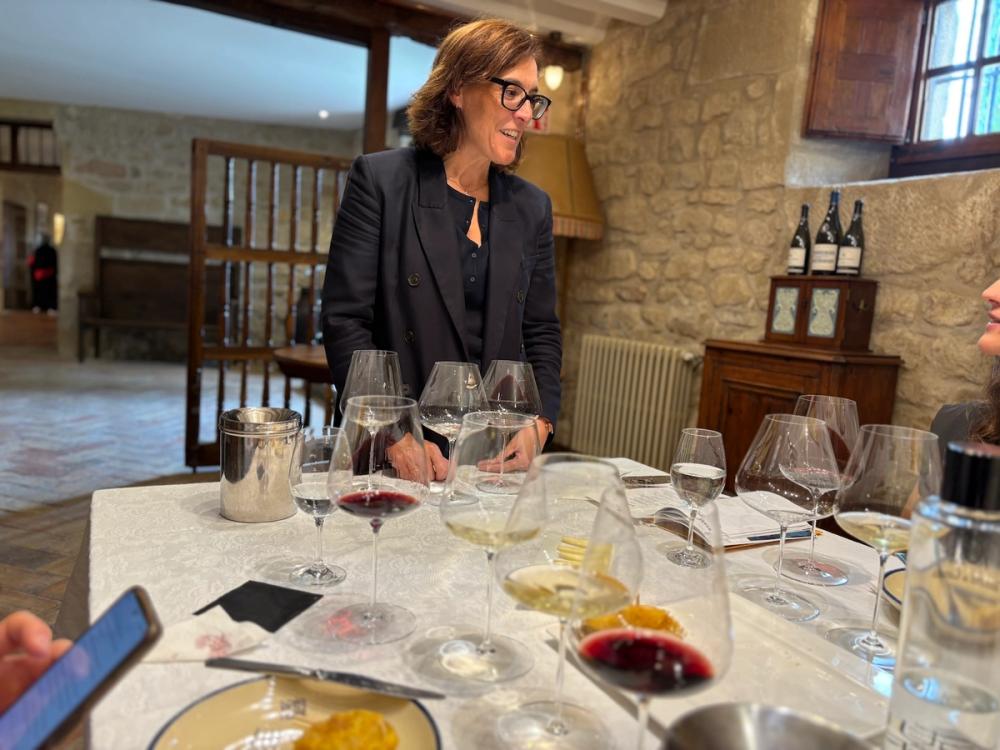
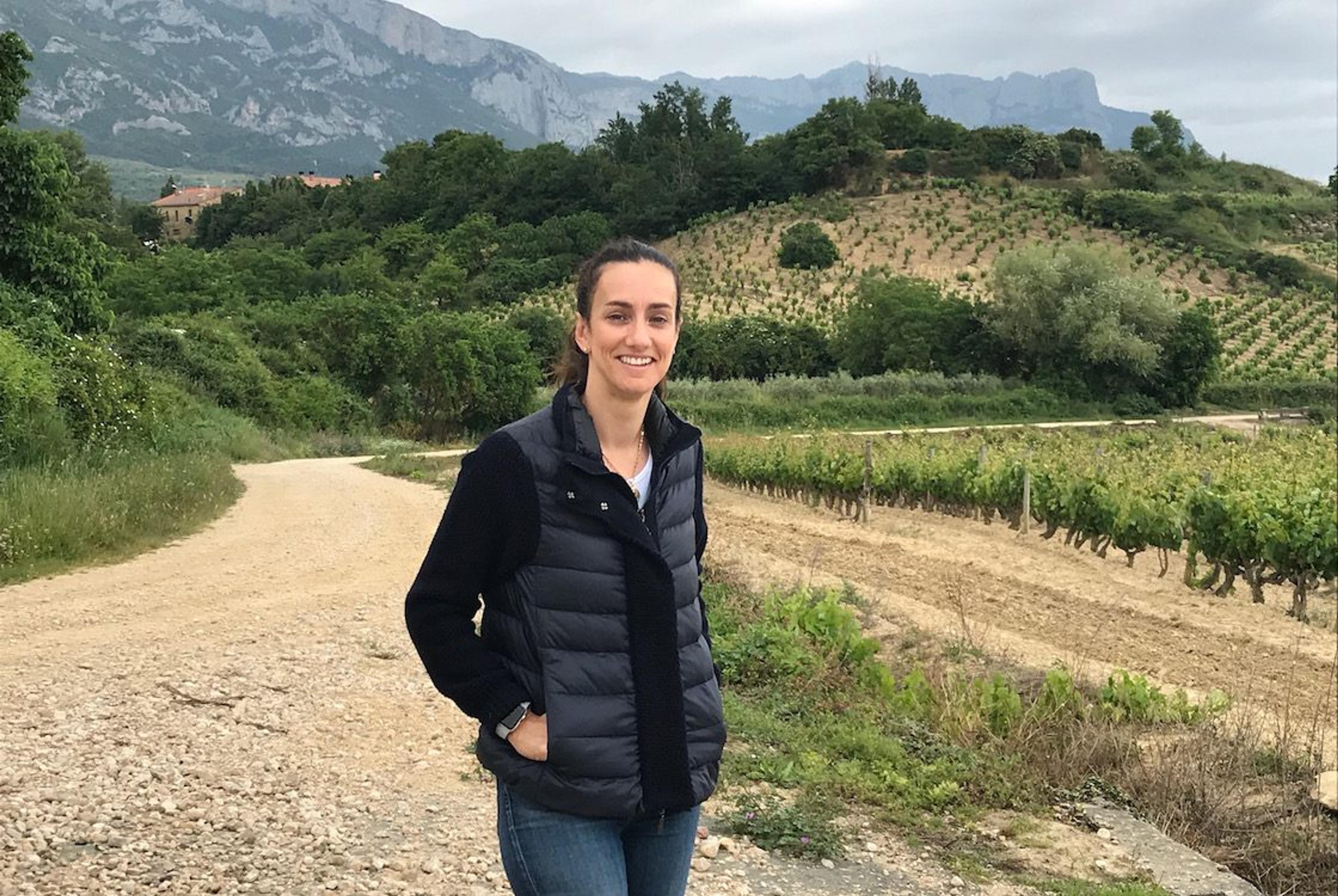
Victoria Fernandez Salinas, administrative director of Remírez de Ganuza
At the winery Remírez de Ganuza, the founding ethos is one of innovation and characterful reinterpretation of tradition. Founded in 1989, the estate is now regarded as one of the most exacting and innovative in Rioja Alavesa. Set in a tiny historic hilltop village, it is built out of beautiful Cotswold-colour stone with the delightful feel of a modern arty boutique hotel. Its obsessive vineyard management – old vines, meticulous grape selection, modern winery architecture and tailored barrel ageing – has produced some of the most critically acclaimed modern, yet terroir-driven wines in Spain.
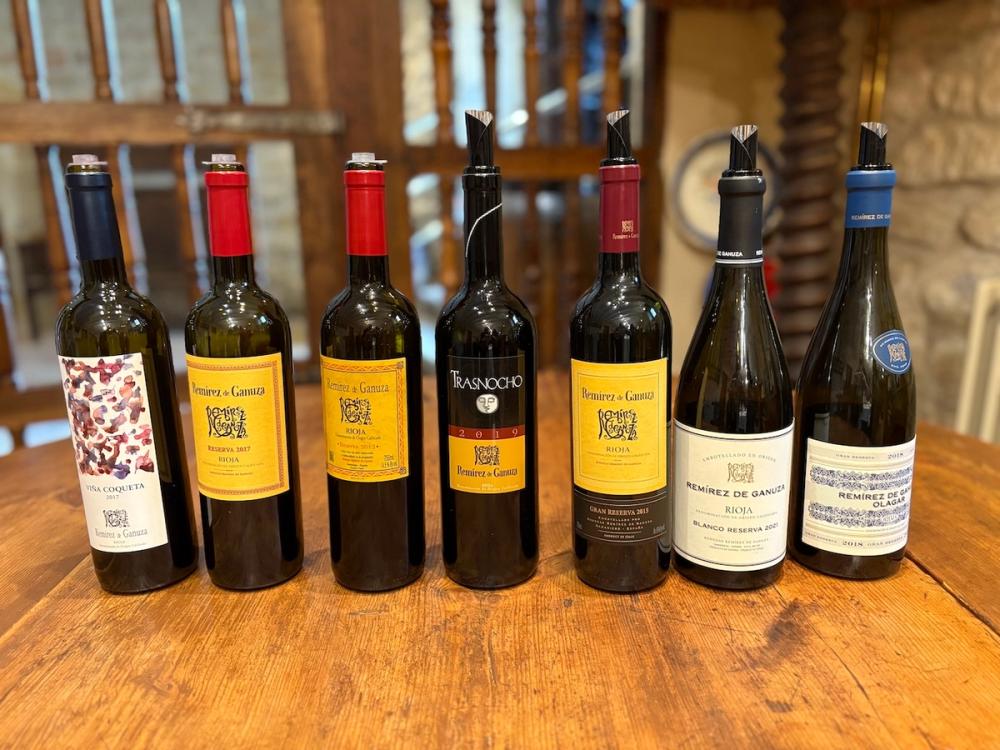
In recent years, several Remírez de Ganuza Gran Reservas have received scores of 98 to 100 points from major wine critics, catapulting the winery into the global spotlight.
We taste a number of just-released wines. Coqueta is a special wine from a single vineyard parcel, a blend of Tempranillo and Graciano planted in 1975. It has complex flavours of fruit and spices with a long, elegant finish and is priced at €35. The Grand Reserva 2015 (Tempranillo 88%, Graciano 10%, and a small amount of white grapes for additional freshness) has spent 38 months in barrel and seven years in the bottle. Full-bodied with aromas of black cherry, it has velvety tannins and notes of dark plum and vanilla with a subtle balsamic hints. (€100).
The Remírez de Ganuza Reserva 2017 is a flagship and most representative of the winery, made only from the shoulders of the grape bunches and free-run juice. The fruit is intense and pure with notes of cocoa, tobacco and coffee that create an earthy backdrop. The tannins are firm but silk-lined. A wine that will benefit from some years in the cellar. (€58).
The Transnocho 2019 uses the same exceptional grapes but with an innovative technique the winery says it has patented where the grapes are gently pressed using the weight of a water ballon which avoids any oxygen contact. (€85).
To discover more about the innovative techniques invented at the winery click here.
Ribera del Duero’s stylish artisan
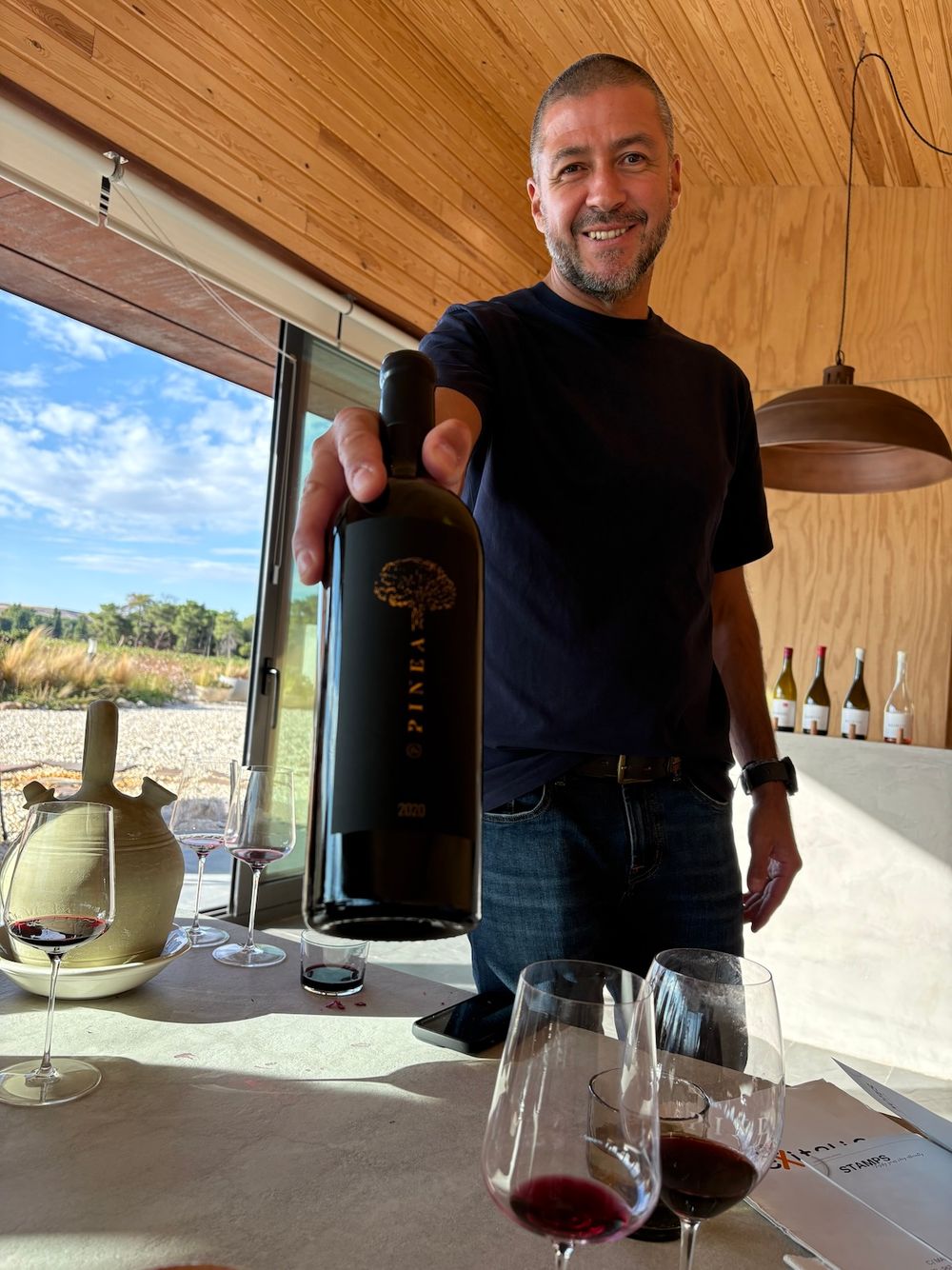
Vicente Pliego co-founder of Bodegas Pinea del Duero
Ribera del Duero is often associated with muscular, oak-heavy wines. But my trip moving on to the remote, youthful Pinea winery in the northern reaches of Ribera shows a quite different artisanal expression with fresh and stylish energy. Just two decades ago, Pinea was only a vision: a project to create wines of depth and emotion in Ribera del Duero. Today there’s a boutique modern winery and its Tempranillo-driven wines, combining elegance with the raw power of the terroir, are sold out en primeur well before release.
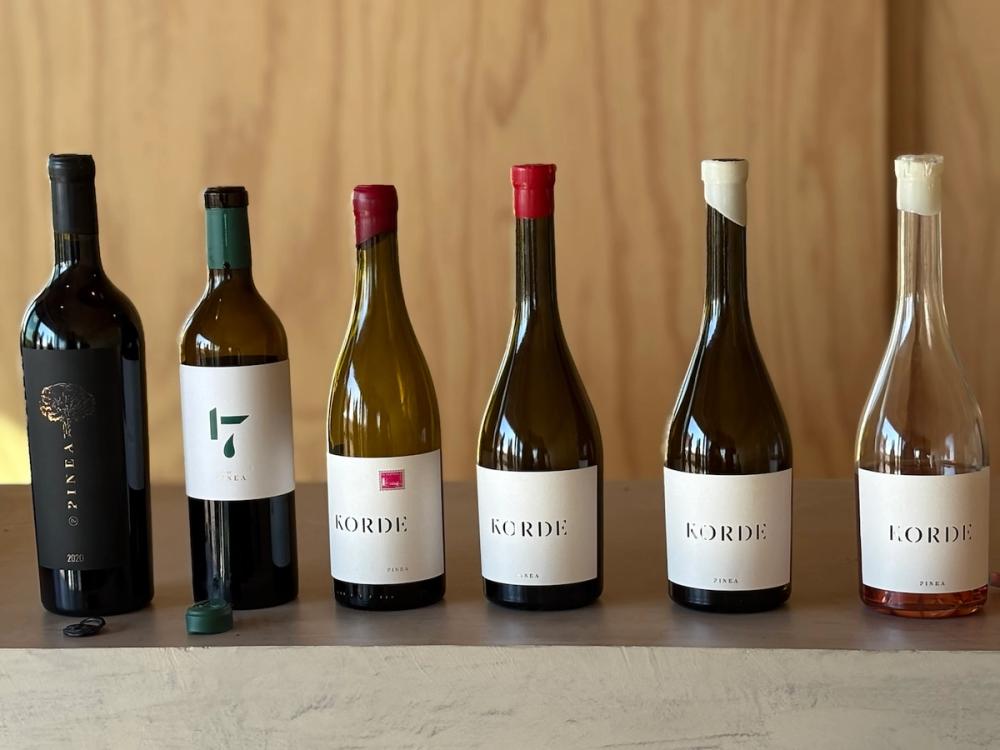
We taste its full range of wines, but the Pinea 2020 made from the highest vineyards at 1000m is the stand-out. There are rich notes of cherry and raspberry integrating thick tannins with a creamy spiced finish (€150). Pinea, the winery’s flagship, shows Ribera’s power while the wine ‘17’ celebrates the ‘perfect harvest’. Even more interesting, the winery has launched “Soul” and the “Korde” collection of whites, reds and rosé, signalling a willingness to experiment beyond convention.
Cult Ribera to wine tourism powerhouse
Innovating to capitalise on Spain’s booming food and wine culture is beautifully demonstrated by Alma Carraovejas in Peñafiel. Once known simply as Bodegas Pago de Carraovejas, it is now a fully-fledged wine and gastronomy group. With a modern-styled winery and estate planted at 850m, it boasts a Michelin-starred restaurant and a wine cellar with over 7,500 wines curated from around the world. It produces Tempranillo-led wines with both concentration and freshness. Gravity-fed winemaking and a meticulous triple selection process emphasise precision.
Nearest to the winery is the special 3.19ha Cuesta de las Liebres, a steep single Tempranillo vineyard plot planted in 1994. This stand-out authentic wine is only made in outstanding vintages. Fermentation is carried out spontaneously and wine is aged in barrel for 24 months. (€169).
La Cendra: reviving Gredos garnacha at altitude
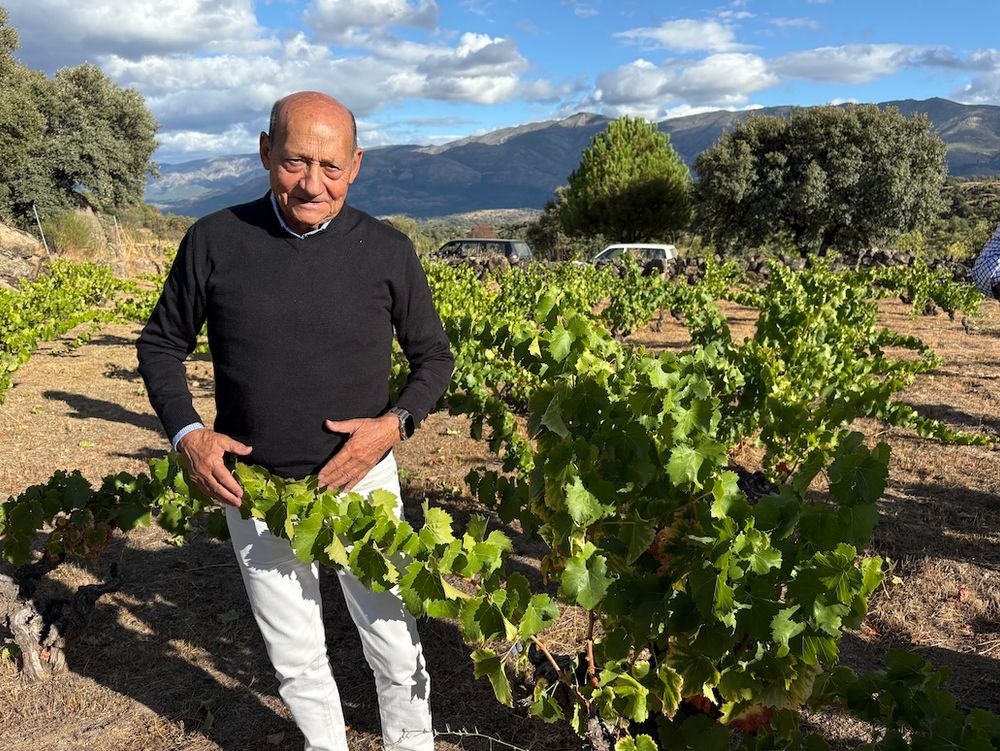
Félix Bellido, president Bodegas Familabellido
Our trip moves into the mountains to the remote Cebreros Sierra de Gredos, west of Madrid. Clambering up the steepest of vineyard slopes surrounded by enormous granite massifs, I discover a quieter revolution is taking place. La Cendra, a family-run artisanal project, focuses on Garnacha grown at extreme altitudes (around 1,100 meters) on granite soils. The wines are fresh, aromatic, and mineral – very different from the heavy Garnachas of old. This is high-altitude Garnacha with surprising freshness and finesse.
La Cendra is playing a key role in the renaissance of Gredos. Once considered a marginal zone, Gredos has become a darling of sommeliers thanks to its terroir-driven, Burgundy-like expressions of Garnacha. The winery’s commitment to manual viticulture – using horse-drawn ploughs and small-batch vinification – adds authenticity. With high critic scores of 92+ points, La Cendra Garnacha 2022 is proof of the excitement small artisanal producers are generating. (€22).
Also a hidden gem is the white Albillo Real La Cendra. The 2023 vintage has an intense aroma of white fruits, pear and apple and a characteristic dry minerality. (€16).
Extremadura sleek avant-garde
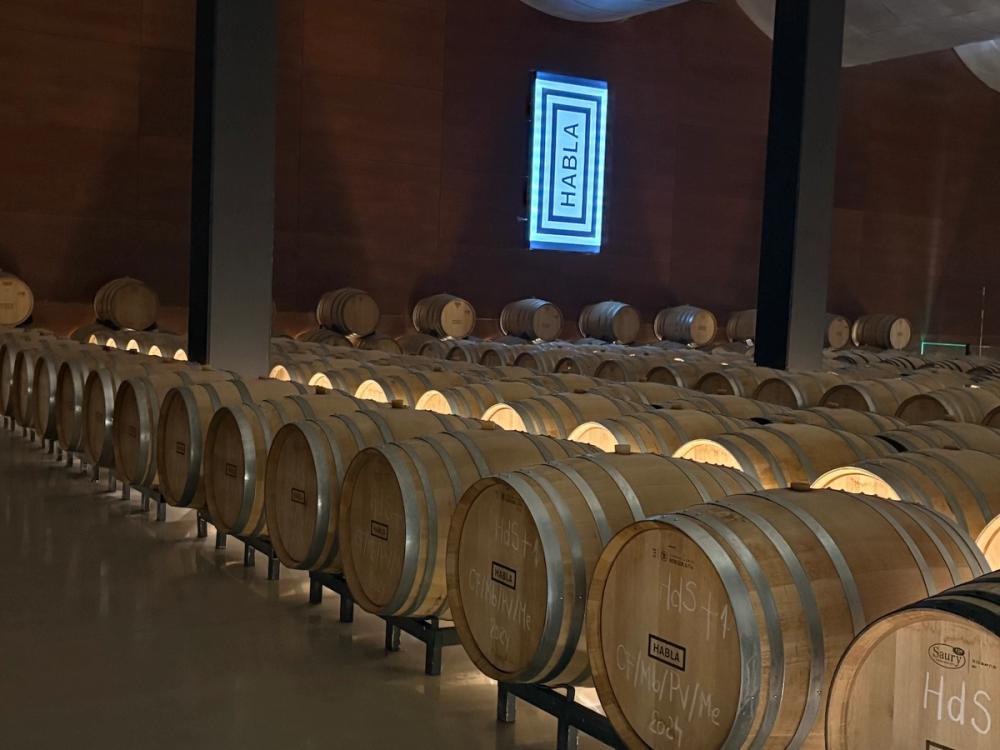
My last stop is Trujillo in the region of Extremadura. Bodegas HABLA has transformed an overlooked part of the region into an icon of modern Spanish winemaking. Founded in 1999, HABLA is as much a design project as it is a winery. Its architecture, packaging, and branding are sleek and cutting-edge, while its wines – crafted from both international varieties like Cabernet Sauvignon and Syrah and native Tempranillo – show surprising sophistication from a region not famed for its wines.
The winery demonstrates that Spanish wine can be bold, stylish, and globally competitive even outside Rioja and Ribera. Every year, new, limited editions are released and given a number instead of a name. A modern touch too is to use inviting language on labels to describe the wine and emotions rather than dry, technical information.
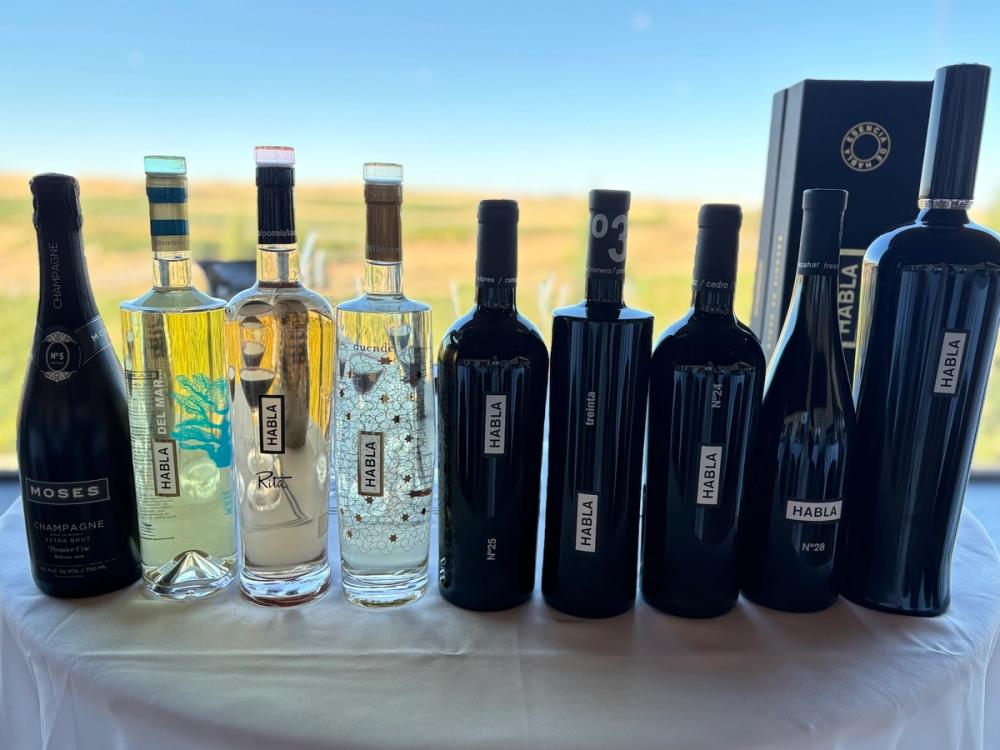
The HABLA No. 32 is made from 100% Syrah, and exemplifies the structure and elegance that can be coaxed from Extremadura’s terroir. Rich in black fruit, violets, and smoky spice, it reflects the depth and ageing potential of Bodegas HABLA’s numbers series.
Ever entrepreneurial, its portfolio is expanding even more widely to capitalise on lighter consumer drinking trends. They now market a Champagne (Moses Extra Brut €70), a natty Provençal-style rosé ‘Rita’ (named after Hollywood legend Rita Haywood) and even an aged ‘under the sea’ sparkling wine.
Spain’s breadth of wine identity
My trip travelling across Spain on a so called ‘Uncorking Spain’ itinerary certainly demonstrates the breadth of Spain’s wine identity today. Wineries are preserving traditions in fresh ways while others are breaking the mould with design, innovation or terroir rediscoveries. Spain is both a land of wine heritage and also reinvention.
All prices are Spanish cellar door.
Miranda Long visited Spain and the wineries as a guest of Exitalia Consulting.