There's been a slew of new Super Tuscan releases this month including Sassicaia and Ornellaia from the tricky 2023 growing season, but there has also been a number of opportunities to re-evaluate other vintages from the region.
Top of the pile was a private client dinner invite from Vinum Fine Wines to taste Solaia 2021, alongside six other vintages, in the company of Antinori’s export director Francesco Visani. Unlike 2023, 2021 was one of the best vintages ever in central Tuscany and tasting the 2021 Solaia hammered home that point.
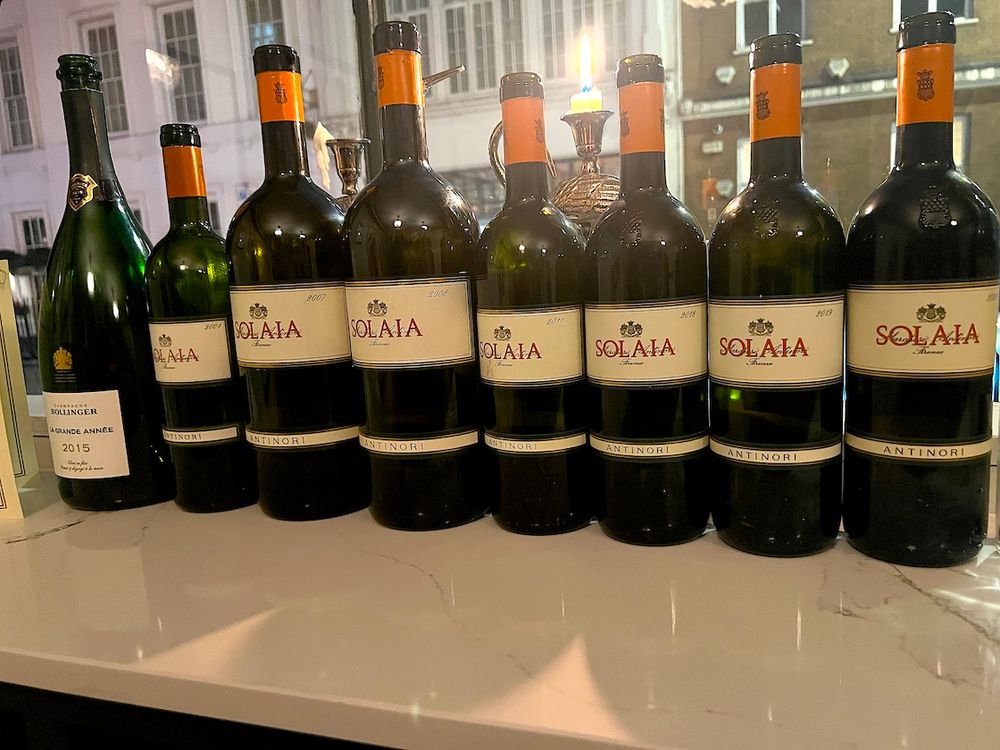
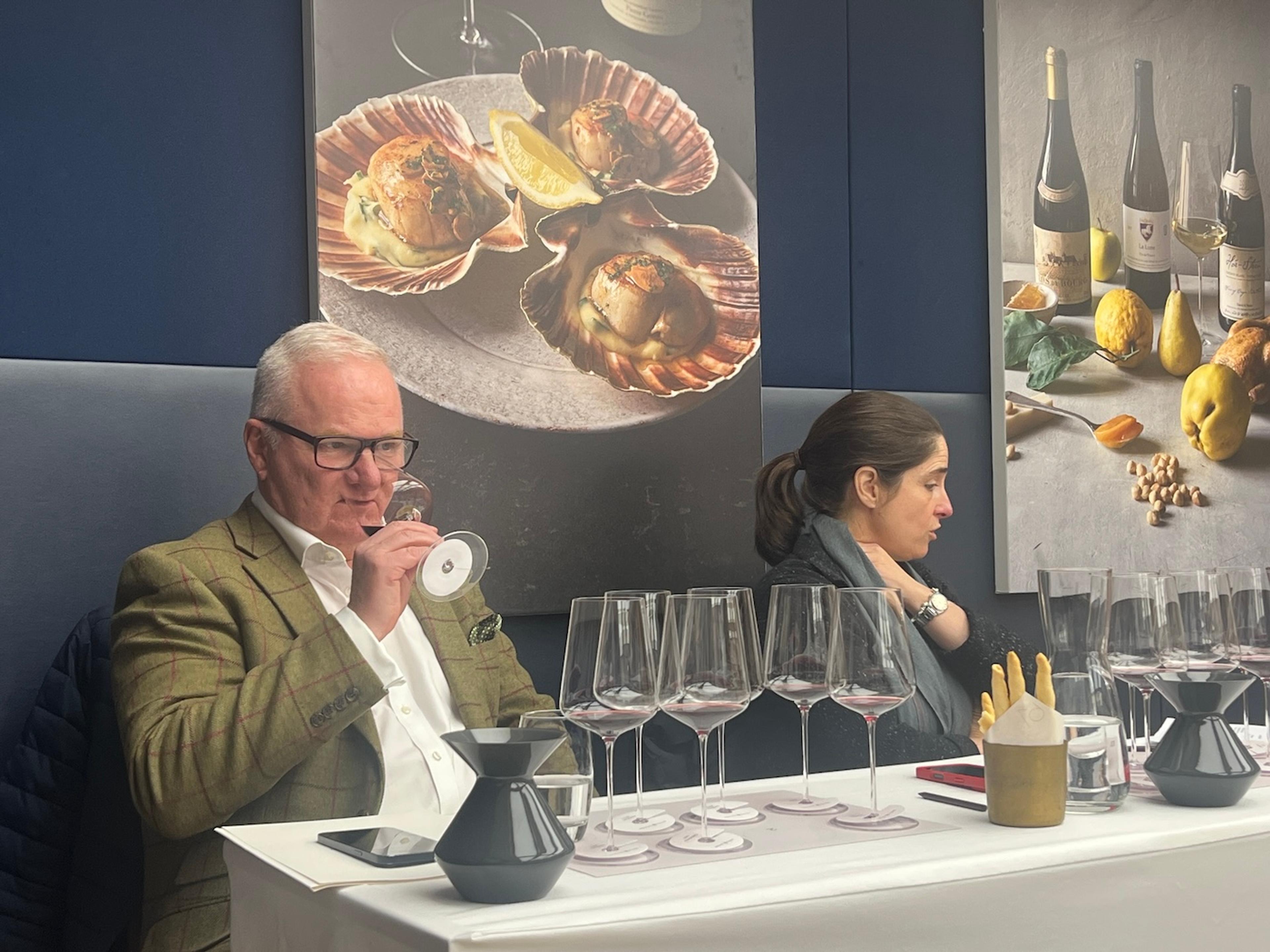
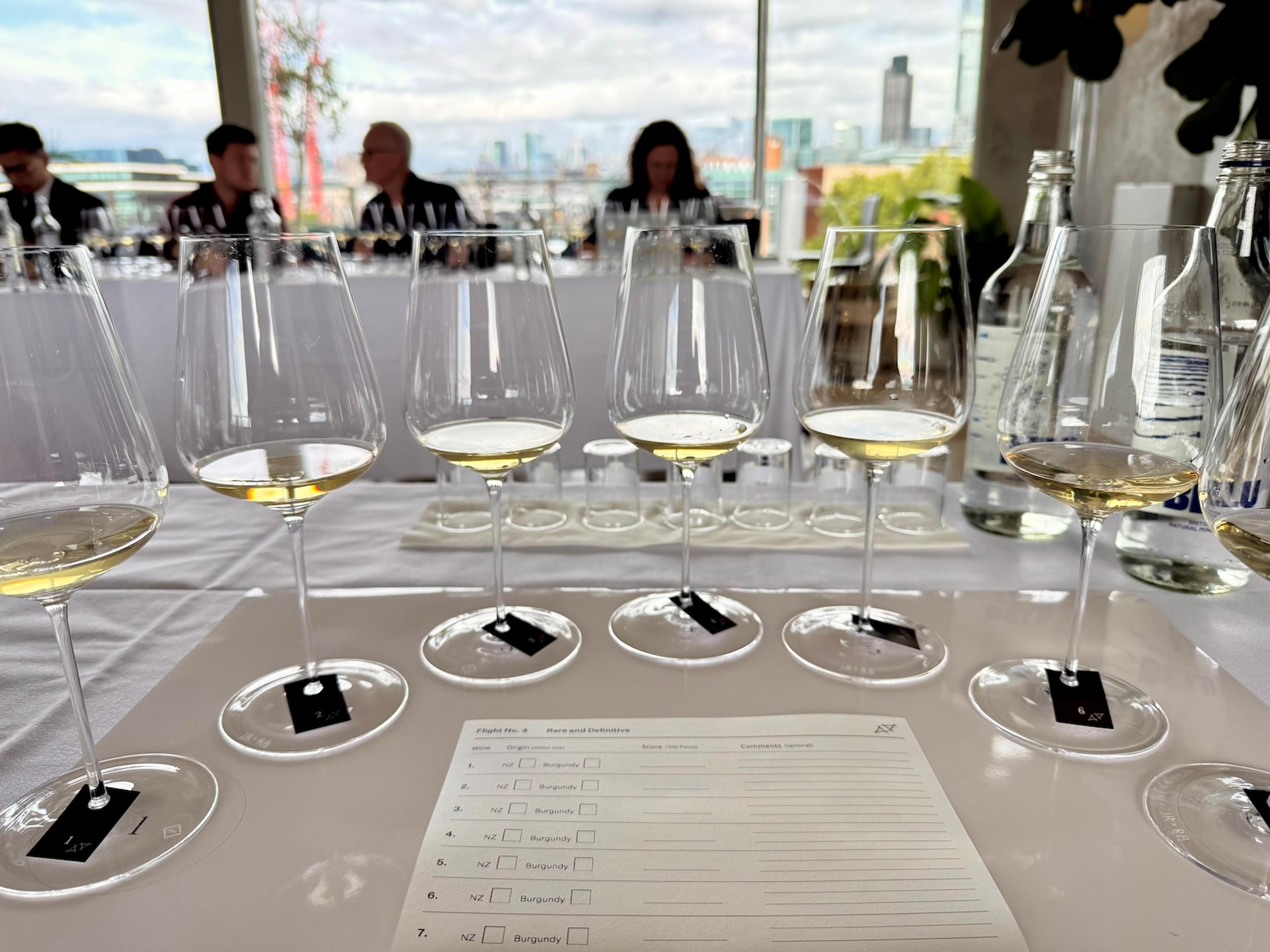
That line-up in full, Doppo restaurant, Soho, London
Solaia in a nutshell
Before looking at the wines in detail, a quick word about Solaia if you’re not already familiar.
The wine is a super-premium Cabernet-led blend made (along with Tignanello and Marchese Antinori Chianti Classico Riserva) by Marchesi Antinori at Tenuta Tignanello, one of the 22 wineries owned by this 26-generation Italian winemaking family.
Both Tignanello and Solaia are some of the most infuential wines in Italy’s rich history, of course, and owe a huge debt to Bordeaux which is very much part of the core of these two wines, for it is here that the original Cabernet clones came from to make the two wines.
The fruit for Solaia comes from a 10-hectare parcel within the same 20-hectare vineyard that Tignanello comes from, although this south-west facing side of the hill has a sunnier exposure, hence the name. The vineyard is sited at an altitude of 350-400 metres above sea level and with a stony soil of “alberese” (hard limestone) and “galestro” (flaky calcareous clay) rock.
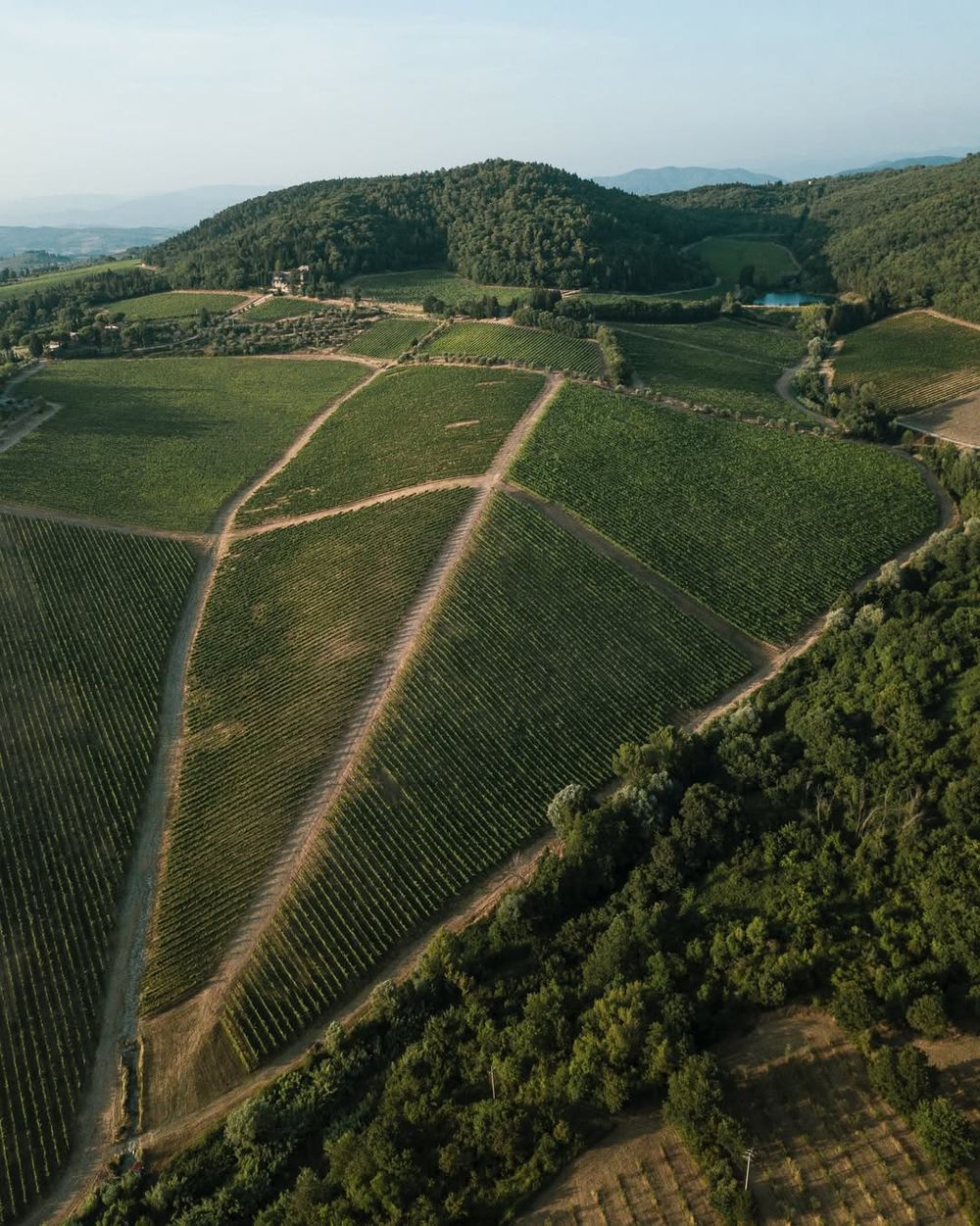
The Solaia vineyard faces towards the sun on the Tignanello hill
The wine was produced for the first time in a moment of inspiration, when the estate had too much Cabernet Sauvignon from the 1978 vintage or, as Francesco explains over dinner, it was “a mix of luck and intuition.”
Solaia's initial blend was 80/20% Cabernet Sauvignon/ Franc which was repeated in 1979 but, when it re-appeared after a five-year hiatus (it is only made in the best vintages), 20% Sangiovese was added and the proportions of the Cabernets adjusted to accommodate. The varietal split these days is usually 75% on average for the Cabernet Sauvignon, then 20% Sangiovese and 5% Cabernet Franc – a flipside, if you will, of Tignanello which is roughly 80/20% Sangiovese to Cabernets.
Solaia is top of the Antinori tree and really a wine that is testament to perfect winemaking – mixing power with precision, opulence with finesse, with layered, perfectly ripe fruit, framed by soft, velvety tannins, integrated and underscored by Toscana minerality – distinct here even from that found in Montalcino and Bolgheri. The best vintages are generally regarded as 2010, 2016 and 2021.
Changes afoot
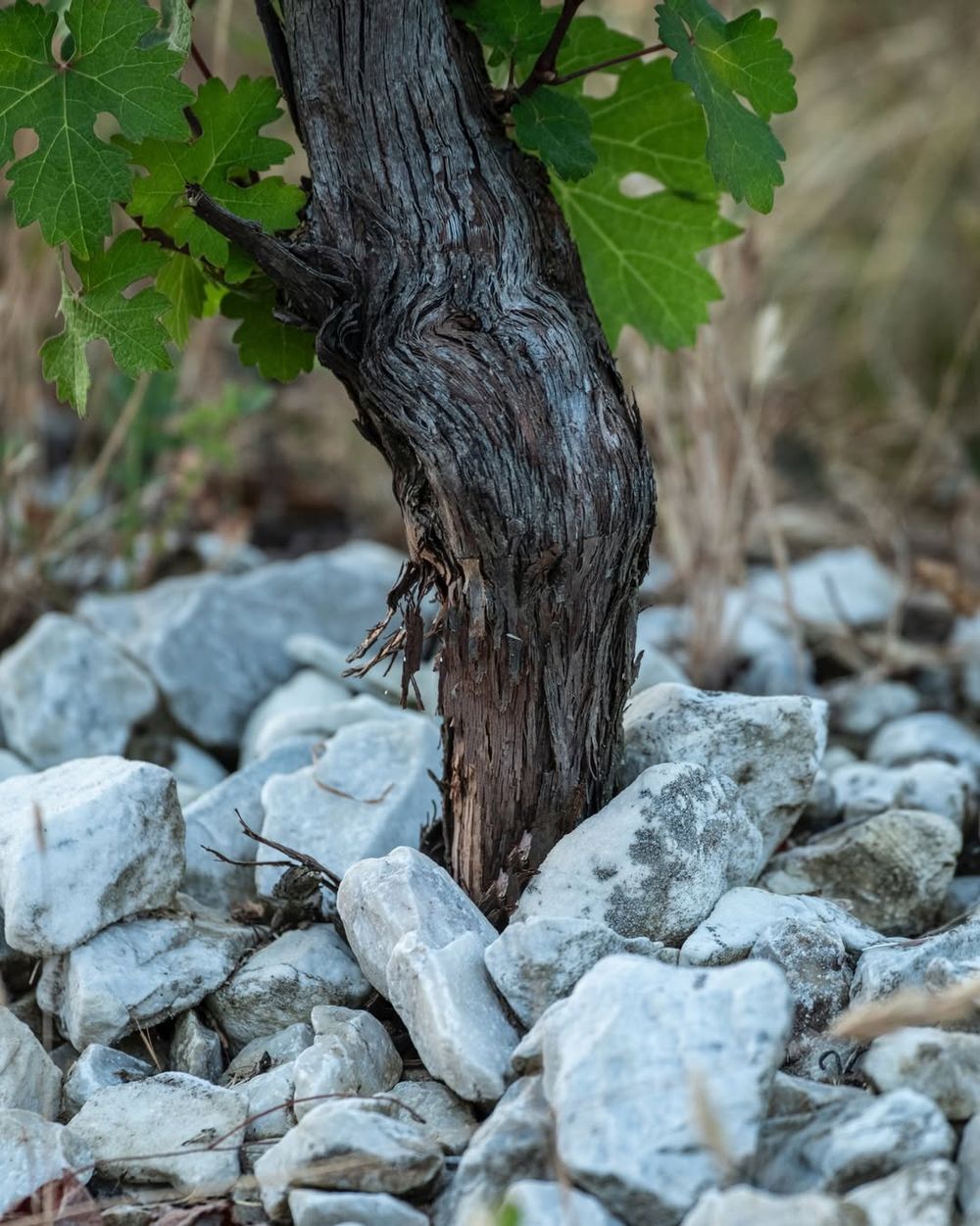
Each vine is surrounded by white stones as an indirect way of coping with climate change
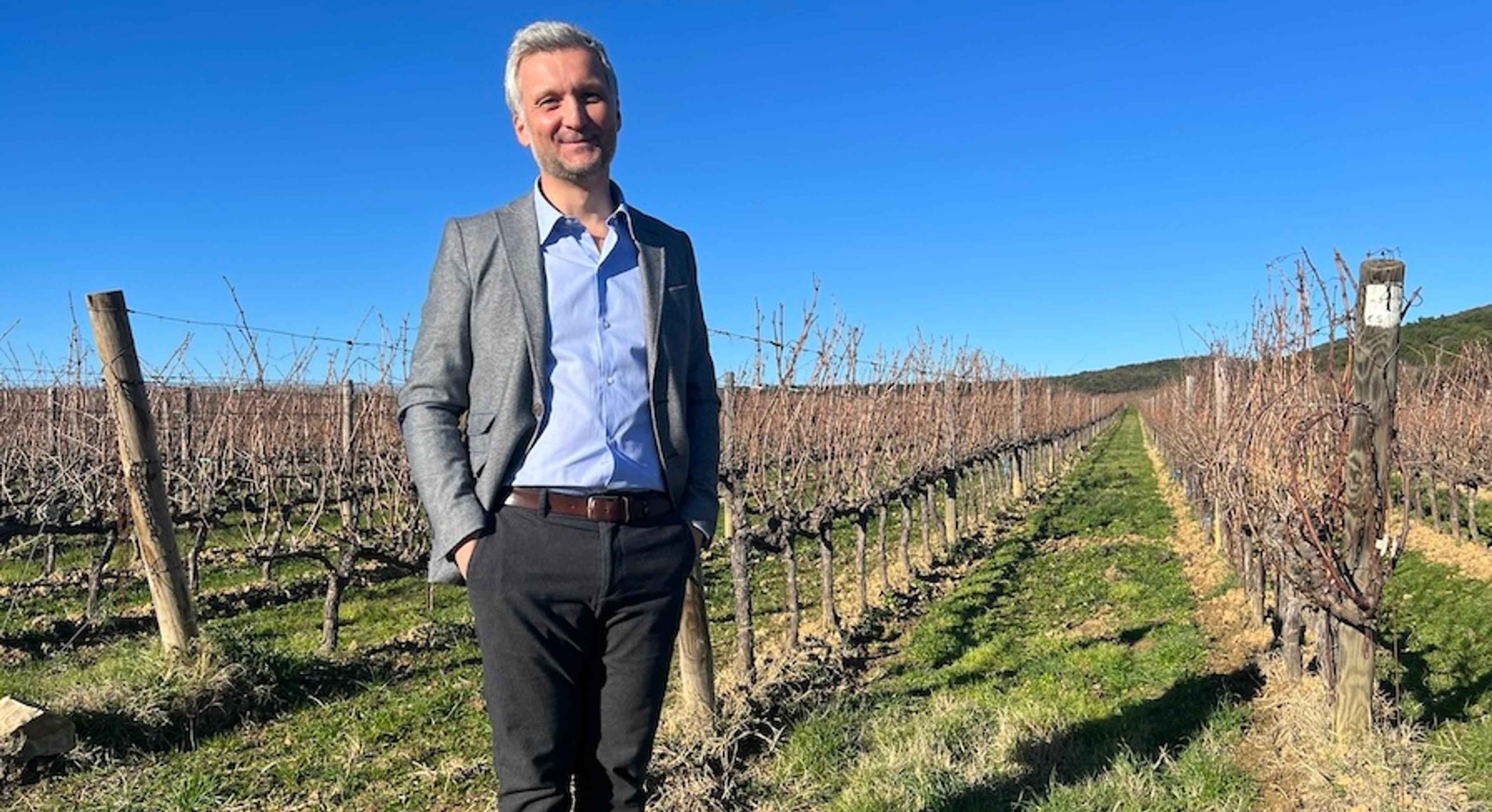
Given the vineyard’s sunny exposition and the desire to dial the wine back more to a more contemporary style – finesse over opulence – the Antinori team has been innovating in characteristic fashion:
Increasing the amount of Cabernet Franc in the blend.
This is happening more and more, particularly as the vines get older and the fruit more complex, but also to add freshness and balance to the wine.
Surrounding each vine with crushed white stones.
These reflect sunlight up into the lower parts of the vines, ensuring total ripeness of the fruit whilst keeping the canopy intact (which shields the fruit from scorching).
Replanting newly-acquired vineyards on terraces.
New vines are also planted with a greatly reduced density with a re-aligned aspect that ‘looks away from the sun’ rather than looks towards it.
Waiting before blending.
Since 2007 the winemaking team waits several months after malolactic fermentation has finished before blending the various components of Solaia.
Working the tannins.
The team – which is obsessed with tannin structure – also no longer uses new oak for malolactic but uses 2nd and 3rd fill barrels so that the tannins are “more approachable, less compact, less powerful but still there.”
Fine-tuning barrel selection.
Where the estate used to pre-order barrels from two coopers, it now also waits to order the majority of used barrels after the vintage has finished so that it can determine which type of wood, porosity and level of toast will best suit the new wine.
These many viticultural and winemaking innovations are part of the Antinori DNA and a quest to look for certain traits within their premium wines: red fruit rather than black, minerality and drinkability.
“We don’t want to have wines that are too fat, too powerful, we want to produce wines that are tasty without being heavy,” Francesco explains.
“We are obsessed with tannins,” he adds, “they have to be there, vibrant, but not too big, strong or powerful. The agricultural processes, and also work in the cellar is to manage the right extraction and get the finest tannins possible.”
Putting the changes to the test: Tasting Solaia 2021 in a seven-vintage vertical
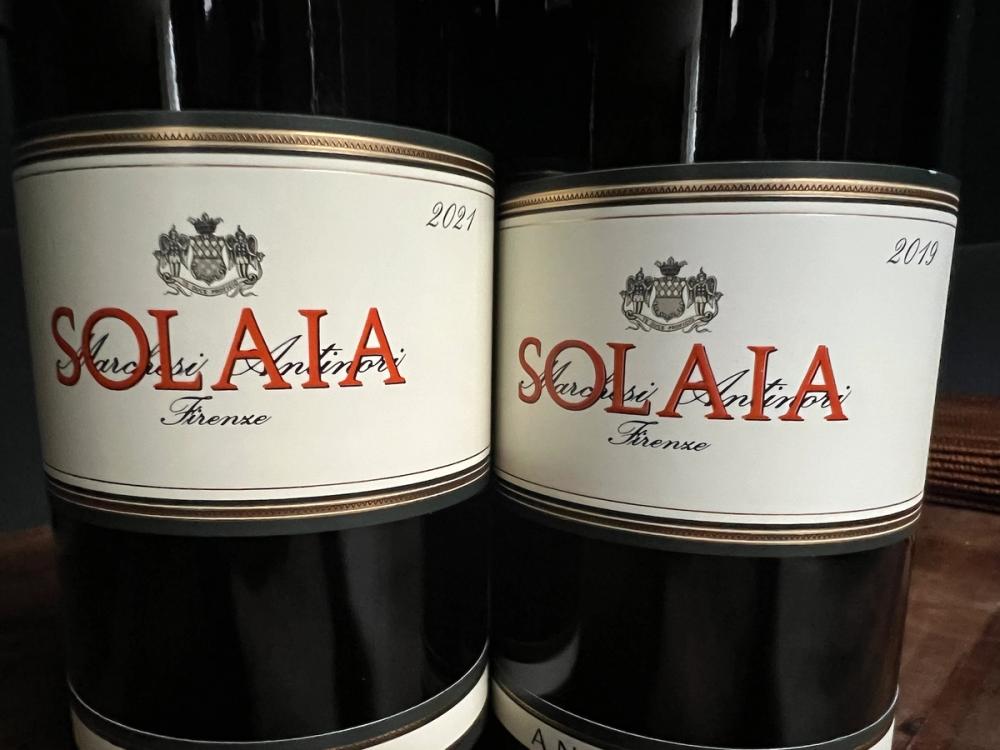
Solaia 2021
2021 is considered to be one of the best vintages ever in central Tuscany where the picture perfect September/ October harvests capped an ideal slow-paced growing season. The wine (a blend of 77% Cabernet Sauvignon/ 14% Sangiovese/ 9% Cabernet Franc) spent 18 months in wood, three months in once-used barriques during malo and then 16 months in 100% new barrels.
My tasting notes begin ‘Wow!’ – this is certainly the most complete Solaia I have tasted and reflects the ideal ripeness achieved and perfect winemaking. The nose is a vibrant, complex mix of dark berries and purple plums with hints of mocha, liquorice, mint and white pepper. In the mouth the wine is silky smooth with a pixilated, mineral structure to the well-integrated tannins. Great balance – rich and vibrant at the same time – lovely length with dark chocolate finish. Simply stunning.
Solaia 2019
Despite a cold and rainy start to the growing season,2019 is considered to be a normal vintage with a hot summer with few heat spikes allowing the fruit to reach perfect ripeness – here the blend being 75% Cabernet Sauvignon/ 15% Sangiovese/ 10% Cabernet Franc.
Deep ruby red; the fresh aromatics show dark red wild cherries, raspberries, dried herbs and tobacco; the palate is medium bodied, fresh, bright with svelte, velvet tannins, layers, great depth and lots of promise. Smart winemaking, beautiful elegance here and a masterpiece in the making.
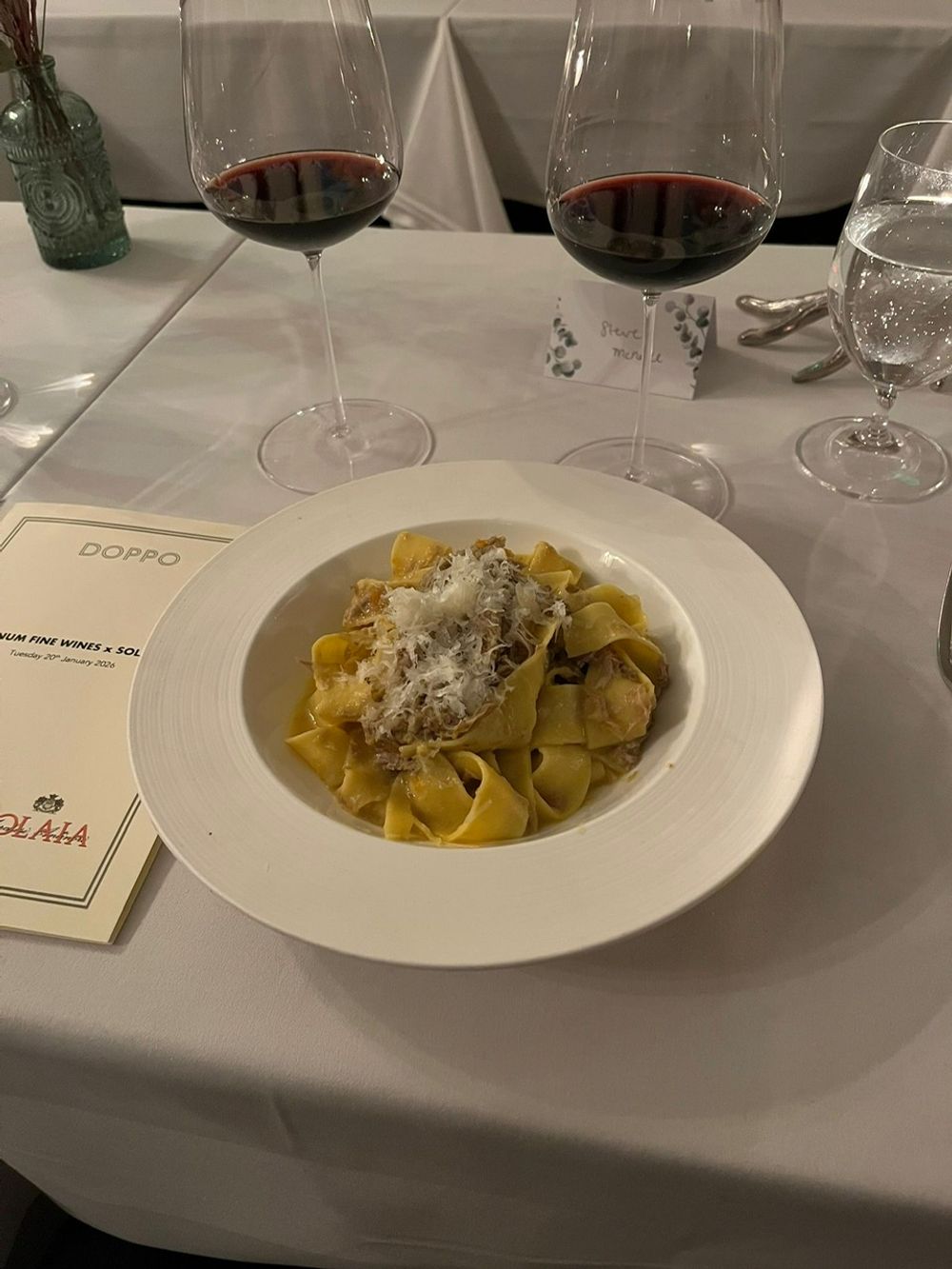
Pappardelle with duck ragu - just one of the many courses that the Solaia was paired with
Solaia 2018
After two outstanding vintages two which were irregular in the region. 2018 started with a cold, wet spring and scattered rainfall in August. The weather did pick up in September/ October with fruit reaching good maturity. Cabernet Franc was increased from previous vintages up to 7% of the blend.
Deep ruby red, the nose was more concentrated and ‘wilder’ with blackcurrants and blackberries to the fore and hints of cassis, pepper, toasted almond, a touch of cheesecloth; in the mouth the wine has perfectly integrated tannins, a sweet balsamic note, chalky – less detail than other years – but still a very good wine!
Solaia 2011
A tricky vintage with a mild, early Spring which was followed by a very hot August and September which slowed ripening of the fruit. A blend of 75% Cabernet Sauvignon/ 20% Sangiovese/ 5% Cabernet Franc – the Sangiovese is detectable more than the three more recent vintages (above).
Intense ruby colour; the nose and palate are more evolved than the 2001 with tertiary notes coming through – earth, smoky tobacco – along with mulberries, blue plums, coffee bean, cinnamon and dark chocolate. Notable that in a so-so vintage, terroir and winery knowhow can still turn in an impressive wine. I would drink this up.
Solaia 2008 (en magnum)
A growing season characterised by extended rainfall until the end of May. June and July were dry but more rain in August followed thankfully by drier weather in the run-up to harvest. A blend of 75% Cabernet Sauvignon/ 20% Sangiovese/ 5% Cabernet Franc I would have this at about peak maturity.
More opulent in style, broader and riper with hints of sun-dried tomato and balsamic added to the black cherries, plums, liquorice and used leather. The tannins are grippier here (kept fresher by the magnum?), and although they were well integrated I found this wine a bit disjointed. I would keep this in the cellar.
Solaia 2007 (en magnum)
An early growing season set off by a mild, dry winter. Although the run-up to harvest was hot there was good diurnal range so the acidity was maintained at night.
Blackberry, chocolate truffles, black tea, clove and graphite; the wine is still surprisingly fresh although the tannins were some of the most overt on the night, a touch of toasted oak – the raisiny fruit reminds one of Tertre Rôteboeuf. A powerful wine with great concentration and intensity and will last many more years.
Solaia 2001
Good choice of vintages – 2021 and 2001 – that bookended this extraordinary tasting. Both top rated vintages in Tuscany and my tasting note for the 2001 similarly opened with ‘Wow!’. To look at, the wine shows a good level of bricking; the nose is so complex and giving – dark fruits, graphite, cigar wrapper, liquorice – that recalls prime Bordeaux, the Sangiovese adds a touch of sun-dried tomato; the palate is so much fresher than you anticipate after the secondary/ tertiary notes, with a lovely cool, pure core to the wine.
Francesco explained that this was a vintage where vinification was done in wooden cask before they changed to steel. This vintage was closed for 10 years, having been made in a concentrated style. Optimal drinking now!
Vinum Fine Wines
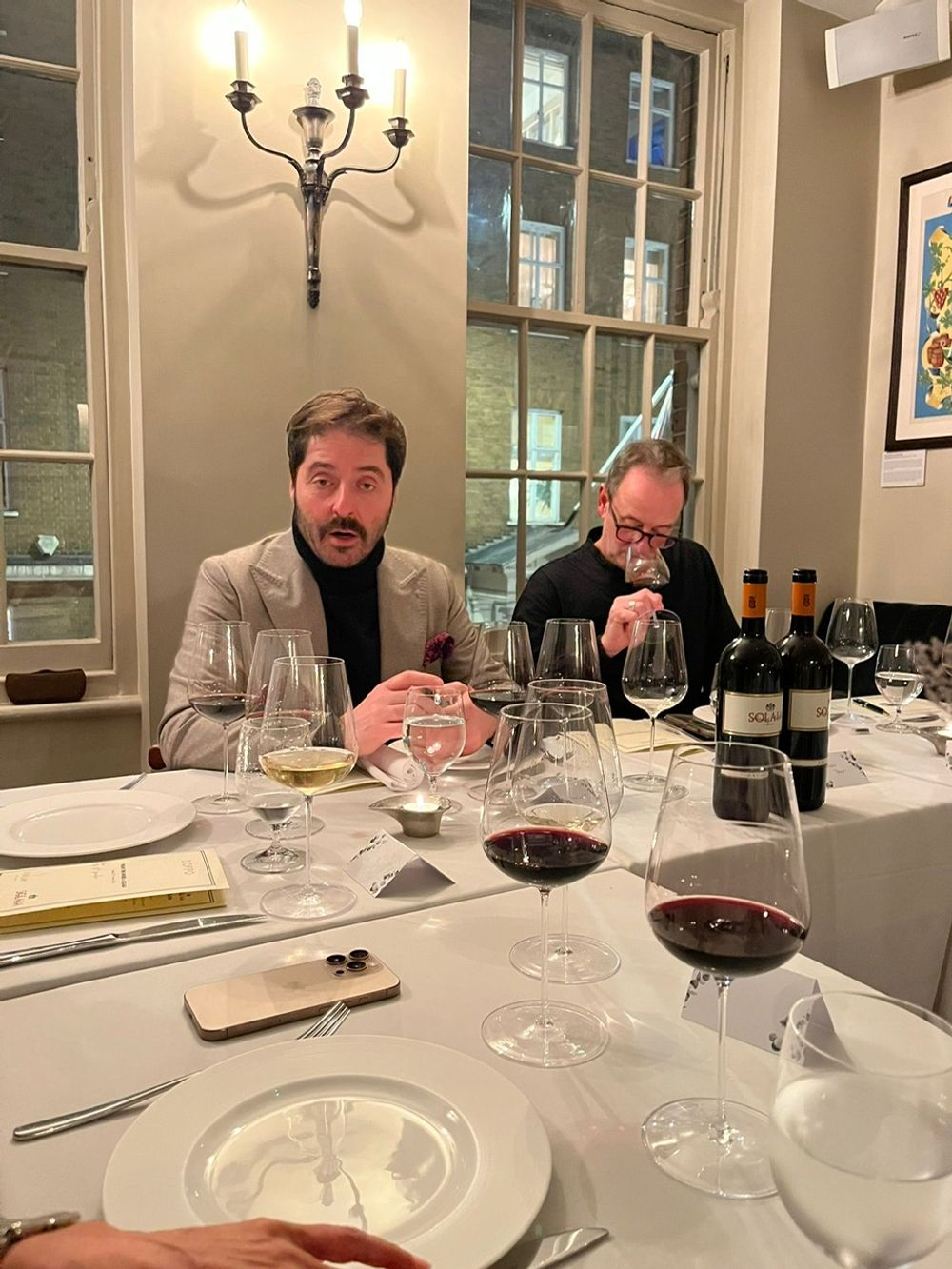
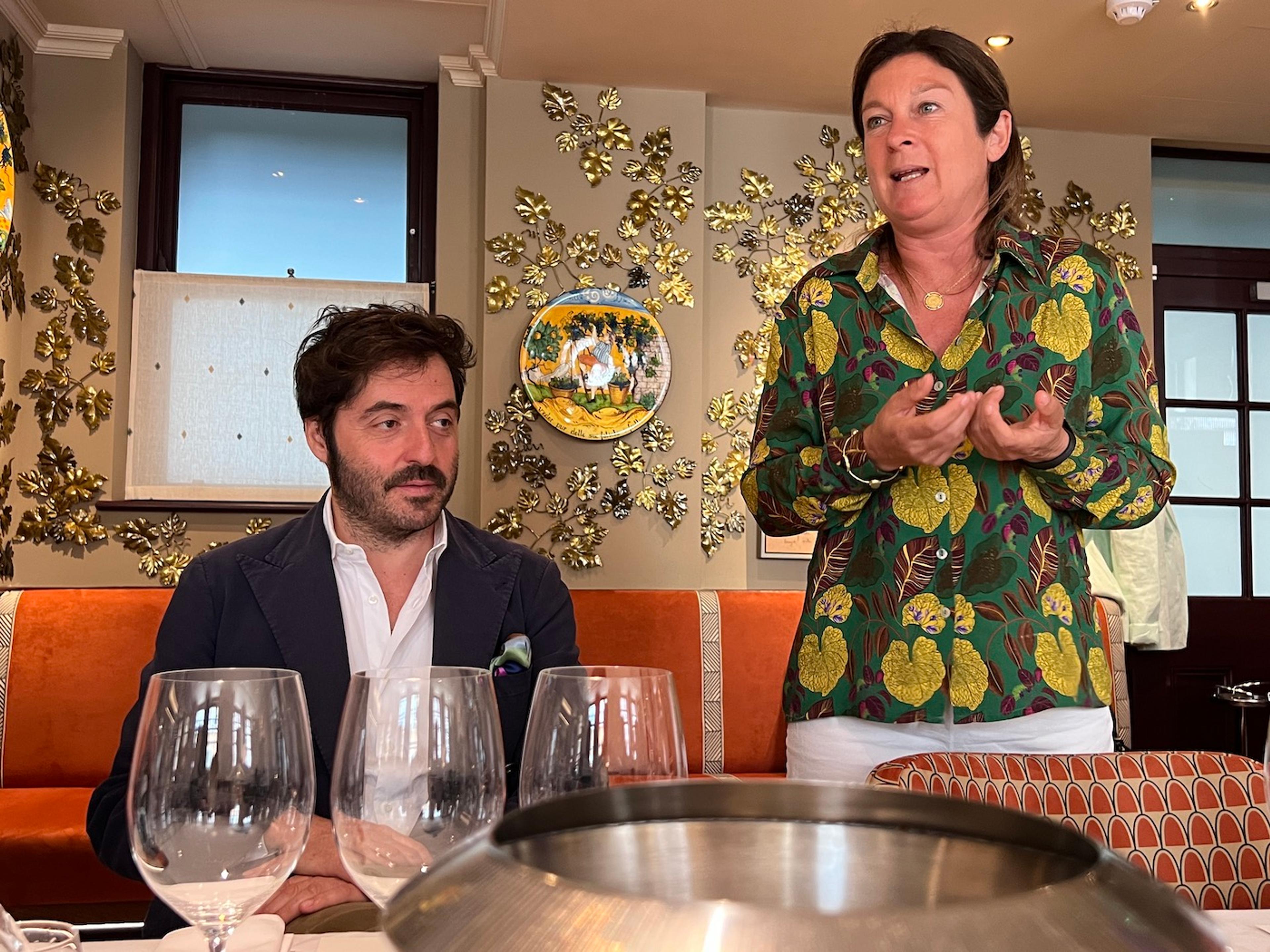
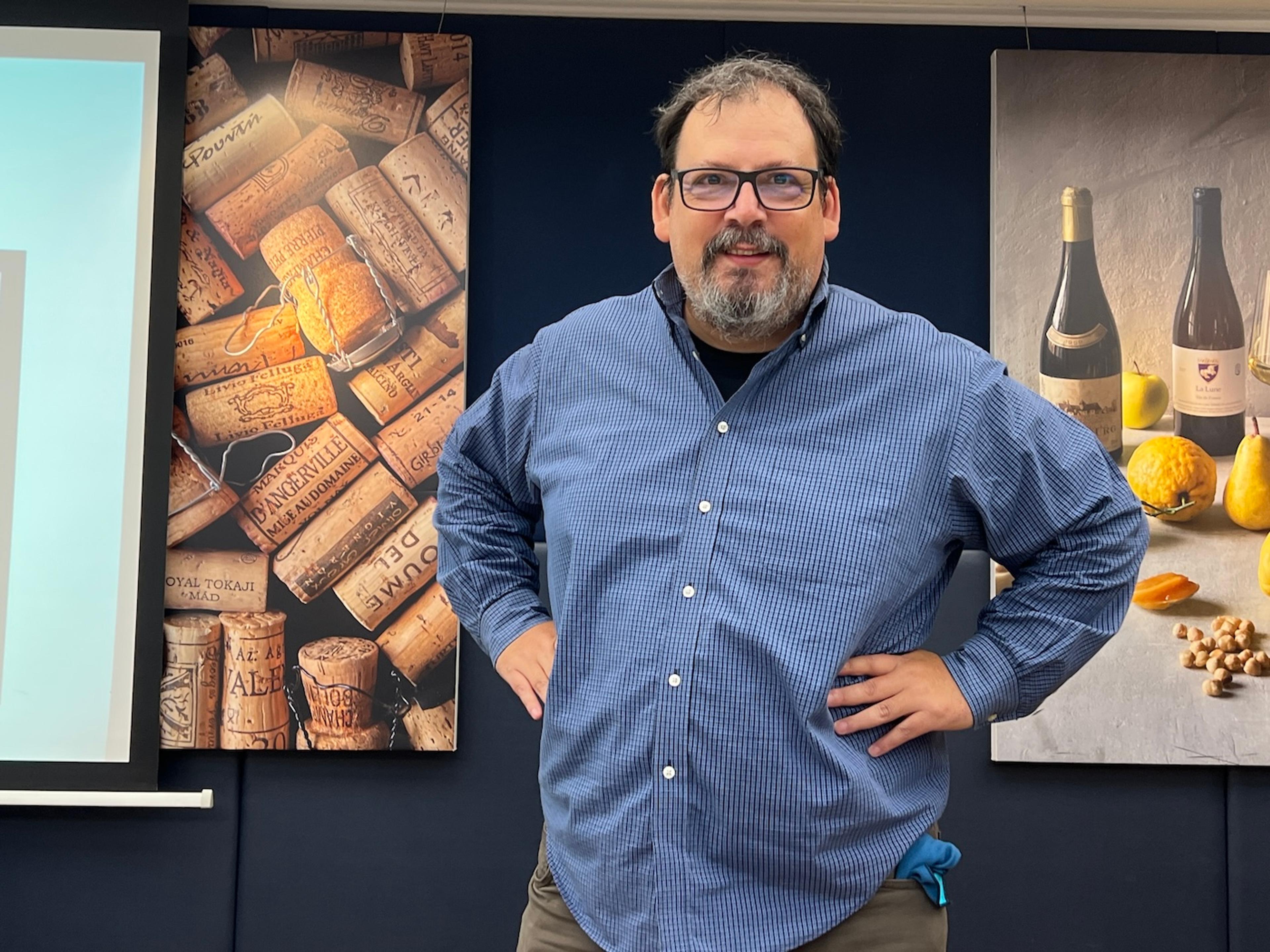
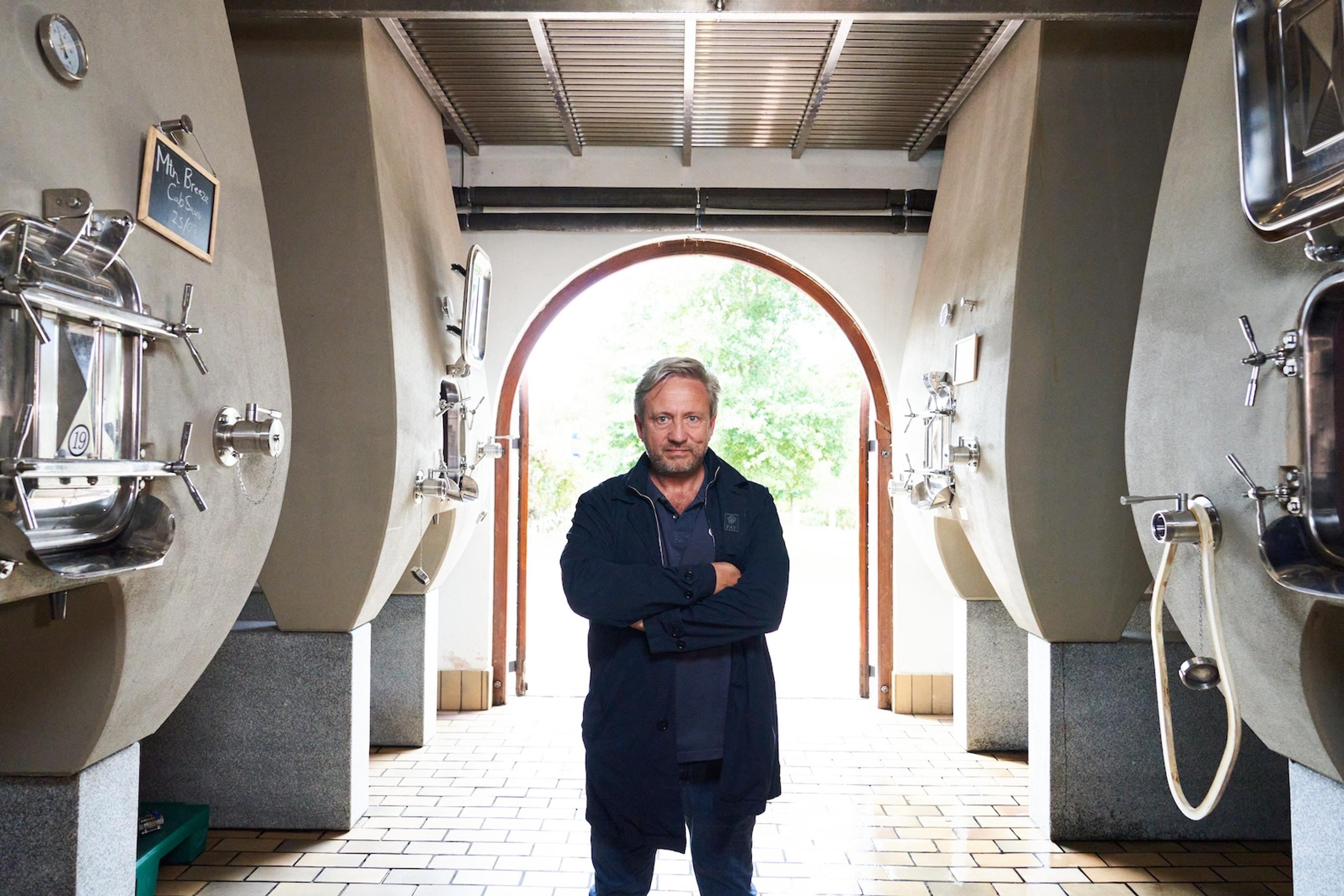
Francesco Visani and Peter Dean (l-r) at the Vinum private clients dinner
Host for the evening was Vinum Fine Wines and the venue was Doppo, an Italian restaurant based in London’s Soho district, increasingly used by Italian estates to show off their wines with excellent and classic Italian cuisine.
My fellow diners were roughly a dozen of Vinum’s private clients, pretty clued up and obviously into serious wine.
Fine wine consultant for Vinum, Miles Davis, explained that this fine wine merchant concentrates at the “very top end of the market,” with provenance and quality of stock central to its business model. Historically, Vinum had a B2B focus but that has now migrated to private client sales with an increasing number of events like the Solaia dinner part of the service.
“Also, we are keen to support wineries that we believe in and that deliver wines of outstanding quality,” says Davis, “Solaia, for example, is a winery with a huge reputation and an interesting story. They were also happy to show seven different vintages going back 25 years.”
I certainly had a fine evening and tottered back on the last train home but, given that Solaia is about £300 a pop for a single bottle, how is success measured at an event like this?
“Success for us is that our clients really enjoy themselves,” continued Davis, “to have some delicious food and wine in a relaxed atmosphere and want to come again. We generally measure the success only in terms of feedback and if we sell a case or two on the back of an event, that’s a bonus!”