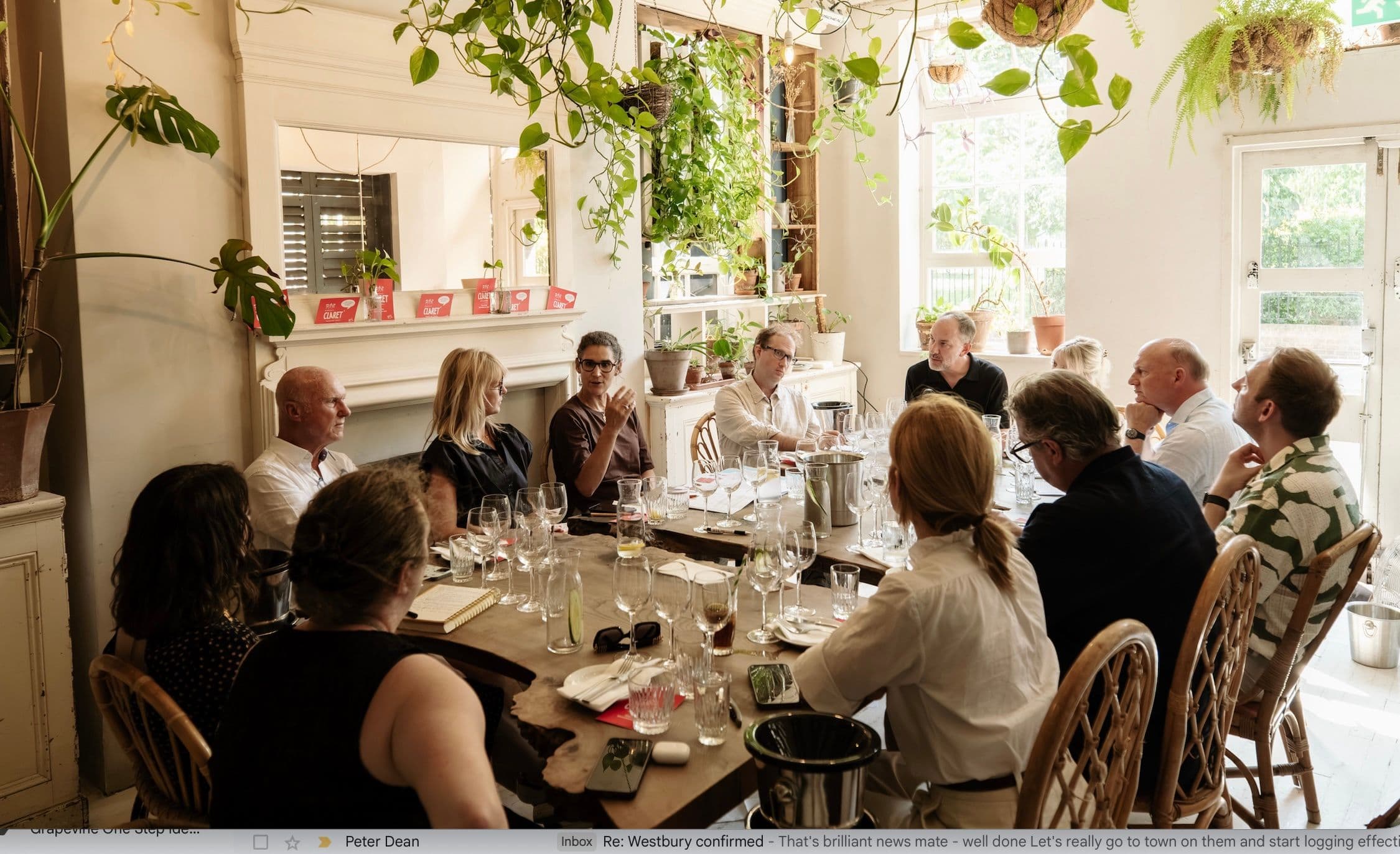

We’re at Nomad Hotel’s newly restyled restaurant Twenty8 in Covent Garden in London for lunch with Rosemary Cakebread and it’s clear we are here not just to taste Cabernet Sauvignon, the Napa flagship variety. Indeed, we start with an Albariño, which is definitely not the first wine you would associate with Napa.
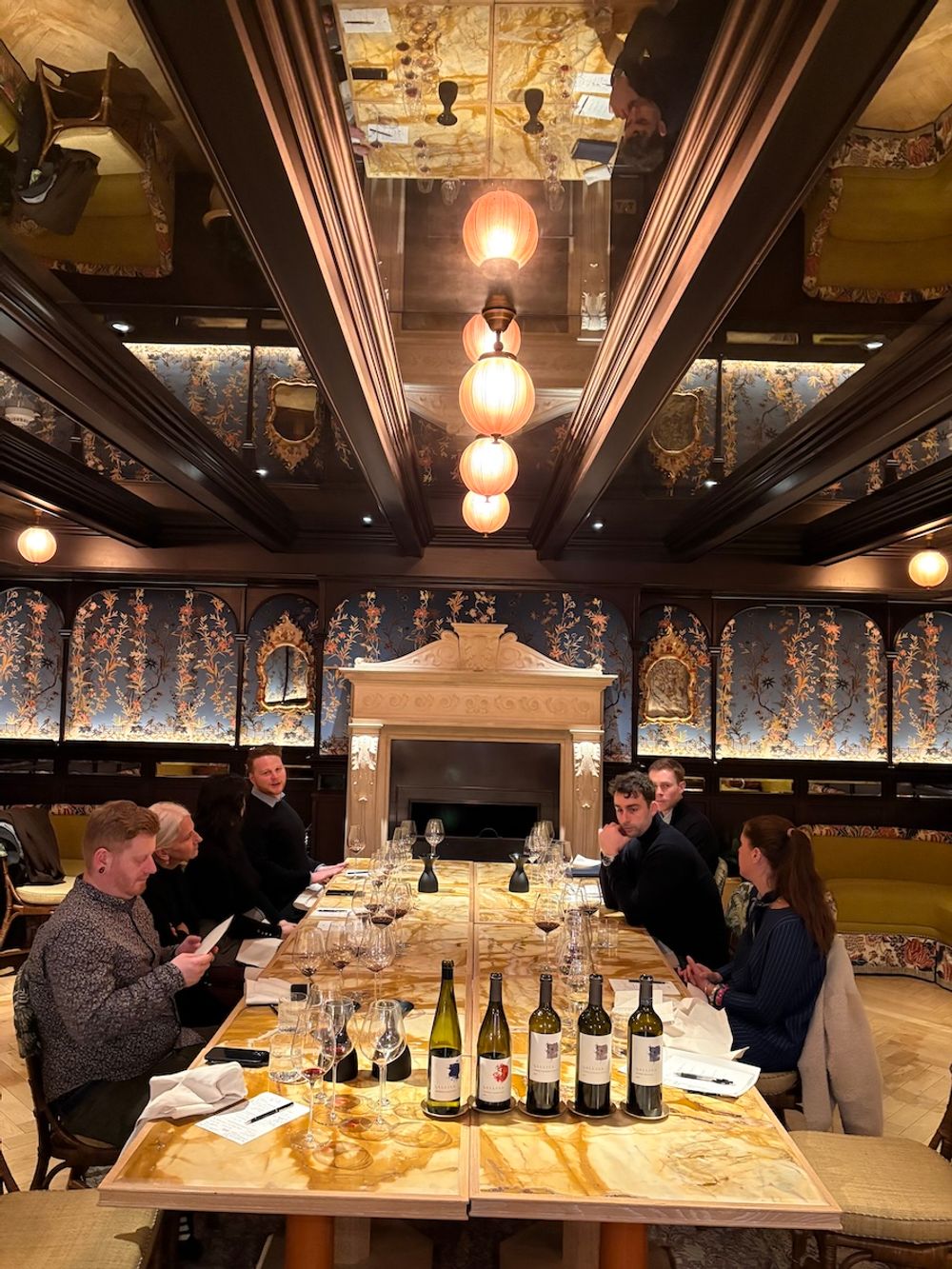
Lunch with Rosemary Cakebread of Gallica Wine, Twenty8, London
After a career that began in Bordeaux, then making sparkling wine in Napa Valley with Mumm and a decade in charge of wine at Spottswoode, Cakebread set up Gallica Wine with her first vintage in 2007 – a wine that scored 99-points from Parker on its release in 2010. Making wines ‘from the heart’, she quickly achieved cult status as a sought-after Cabernet producer, respected for her small production, single-vineyard focused wines that are farmed organically. But, more recently, she has used that stage to shed light on different varieties too, thereby breaking with Napa Valley tradition – and, as she says, have “lots of fun”.
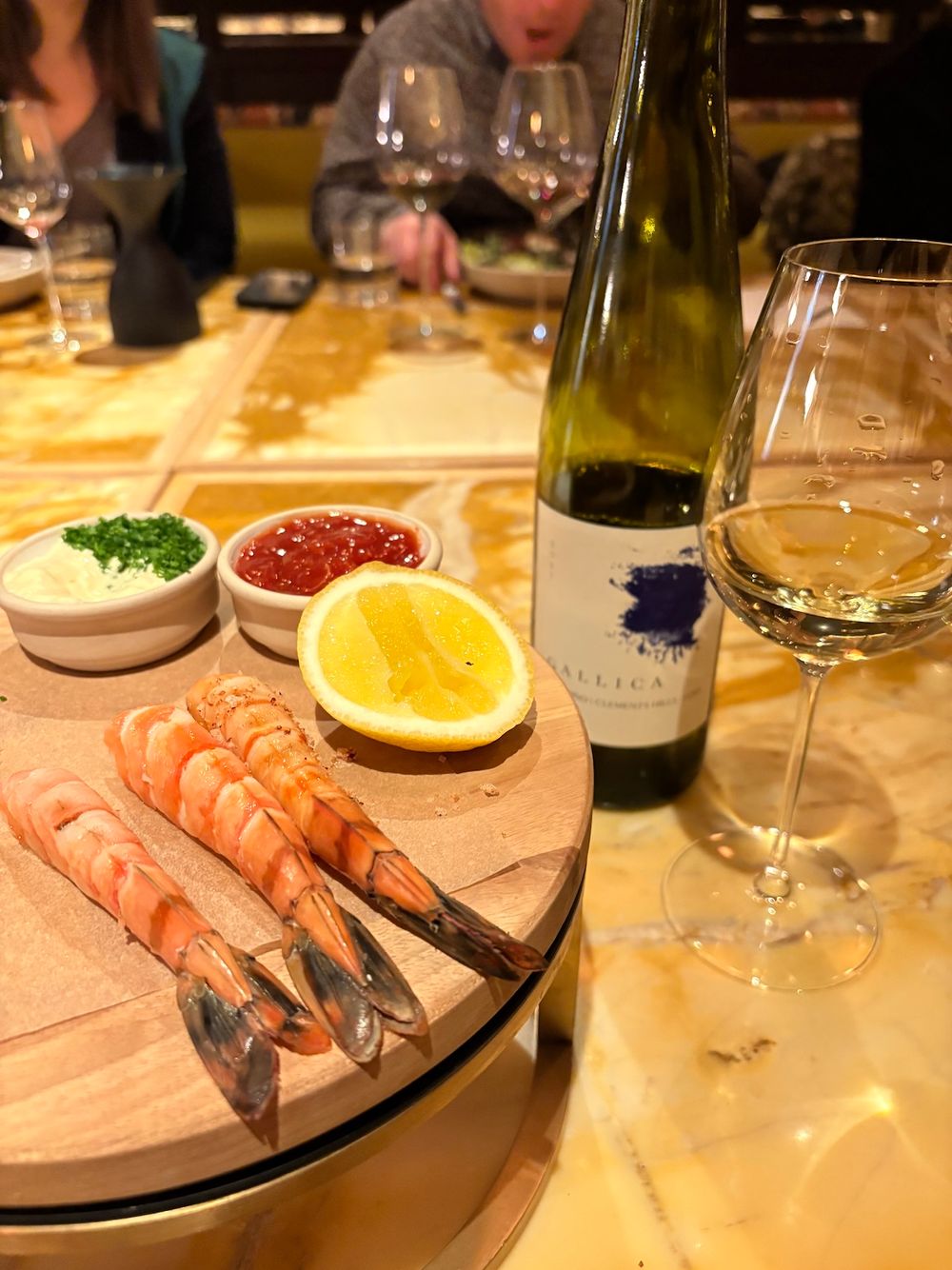
For example, for a decade now, she has been making Albariño. “I just love the variety – and my goal is always to have the vineyards speak and purity speak.” It is very simply made: whole cluster press, a little bit of skin contact, fermented in 300 litre stainless steel barrels with a complement of neutral oak – and no malolactic fermentation and no racking. It just sits on the lees until bottling. The 2023 vintage from the Rorick Heritage Vineyard (£23 a bottle) has lots of balance, great freshness and acidity.
“My love affair is with acidity and I love wines which have this tension between some mineral, salt and acidity. Albariño is so floral. There’s so many white flowers, green apple and melon that makes it a great complement to seafood and small smokey bites, scallops, or prawns,” she adds.
Cakebread has a wise, gentle manner and declares she is about to make her forty-sixth vintage of wine (hard to believe as she’s youthful-looking with a fine complexion – I’m jealous!).
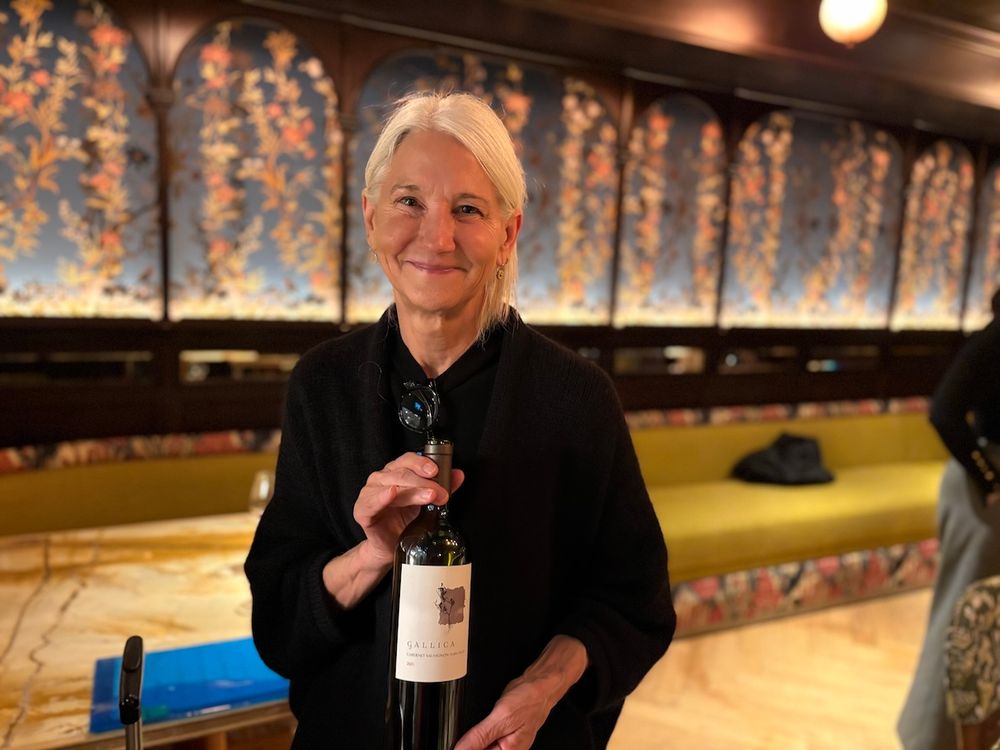
“I love wines that are big and bold when young, but they are really designed to be for a long-life, ideally 7-10 years.” Rosemary Cakebread.
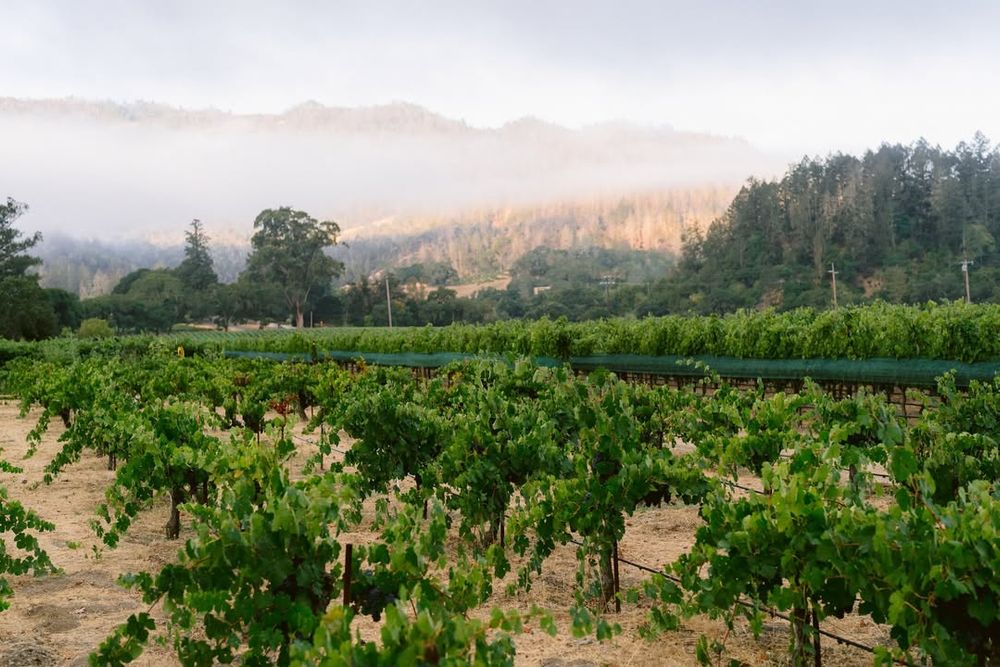
Next, we taste the Grenache 2021 (£38.50 a bottle) which is from the historic – and stunningly beautiful – Rossi Rank Vineyard in Sonoma valley, originally planted by an Italian in the late 1800s.
“It’s rare to have a vineyard with such a continuity of wine growing in California,” says Cakebread.
She was drawn to the vineyard, farmed by the renowned viticulturist Phil Coturri, thanks to his early commitment to organic farming. Her first vintage here was in 2010. The vineyard is entirely devoted to Rhône varieties. The wine is from old-vine Grenache planted in the 1950s and newer plantings 20 years ago – all head-trained.
The Grenache has a pure, delicate expression – a contrast which she particularly enjoys to the powerful Cabernet Sauvignon that she is more known for. The Grenache is grown in maritime soils. The Cabernet Sauvignon, grown in the Oakville Ranch in the centre of Napa Valley, comes from soils that are volcanic in origin, bright red with iron and the vines planted on a western-facing little bench with an elevation of 400-700 metres.
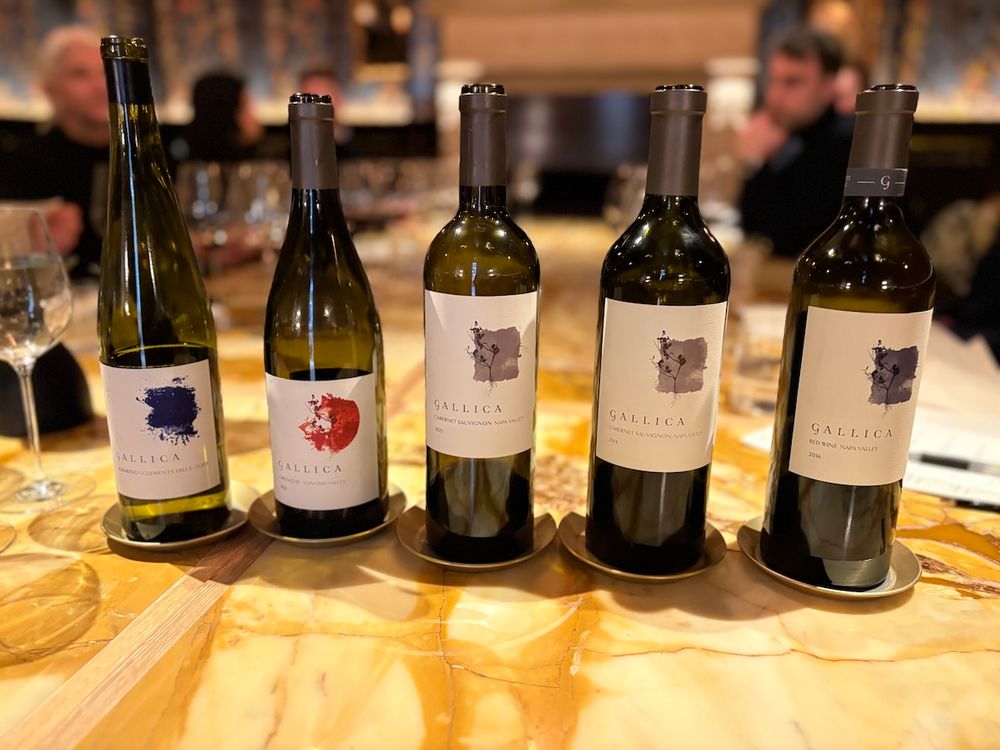
Cakebread has worked with the Oakville Ranch site since 2009 (also worked by Phil Coturri), first drawn to it by the quality of Cabernet Franc grown there. We taste two Cabernet Sauvignon vintages, 2021 and 2014 (both £105.50 a bottle) “They are from the same vineyard, made the same way but people are often surprised we have vintage differentiation, wrongly thinking California to be hot and sunny every day, every year,” she comments. In 2021 the climate was almost textbook perfect compared to 2014 which was more challenging with a smaller crop due to several heat events. “I love wines that are big and bold when young, but they are really designed to be for a long-life, ideally 7-10 years.”
The 2014 is rarely shown but it is delightful, very aromatic and expressive with light tannins. The 2021 is the more perfect wine, so well-balanced and absolutely ‘à point’, as one lunch guest described it. Collectively, it is our favourite vintage. Cakebread loves the confluence of Cabernet Sauvignon and Cabernet Franc and the blend in each vintage varies from 16% in 2021 to 20% in 2014.
Cakebread and her husband, Bruce, recently travelled to Australia, a region particularly prone to ferocious bush fires, to learn how best vineyards and properties can be managed.
She praises the introduction of the US climate predictor system, National Oceanic and Atmospheric Administration (NOAA) which she says is a confidence-builder helping her to make good choices. Mindful of climate change, she has always wanted to shrink her carbon footprint, installing solar panels and has changed to lighter weight bottles. In time she will move to dry farming. Recent wildfires in California have had a great impact on the area and Cakebread and her husband, Bruce, recently travelled to Australia, a region particularly prone to ferocious bush fires, to learn how best vineyards and properties can be managed.
The last wine is a Cabernet Franc, often regarded as an outsider in Napa, or “the green pepper in the pack” as Cakebread describes it. But it is a varietal she loves; “It has rose petal, straw, a feeling of autumn and apple peel.” Most people still associate Napa Valley with Cabernet Sauvignon, but in this tasting the Cabernet Franc 2016 (also £105.50) shows wonderful floral characteristics. It’s surprising not more is planted there and so many of the best sites are still planted with Cabernet Sauvignon.
“There’s a lot of fancy when people think of Napa wines, but it is really rugged country, salt-of-the-earth type farming,” says Cakebread.
As well as the words ‘quality and innovation’, Cakebread’s approach can be summed up in the two words, ‘pure and simple’. “I don’t want to play around with fancy techniques – I want the best fruit and our beautiful terroir to shine through.” You can see her fondness for authenticity. Indeed, her next trip across the pond is to Scotland – she is excited to visit one garden with an old Gallica rose, after which her company is named.
Gallica Wine is now with Flint Wines which showcases the winery’s full range of wines. All prices are duty paid, ex VAT.