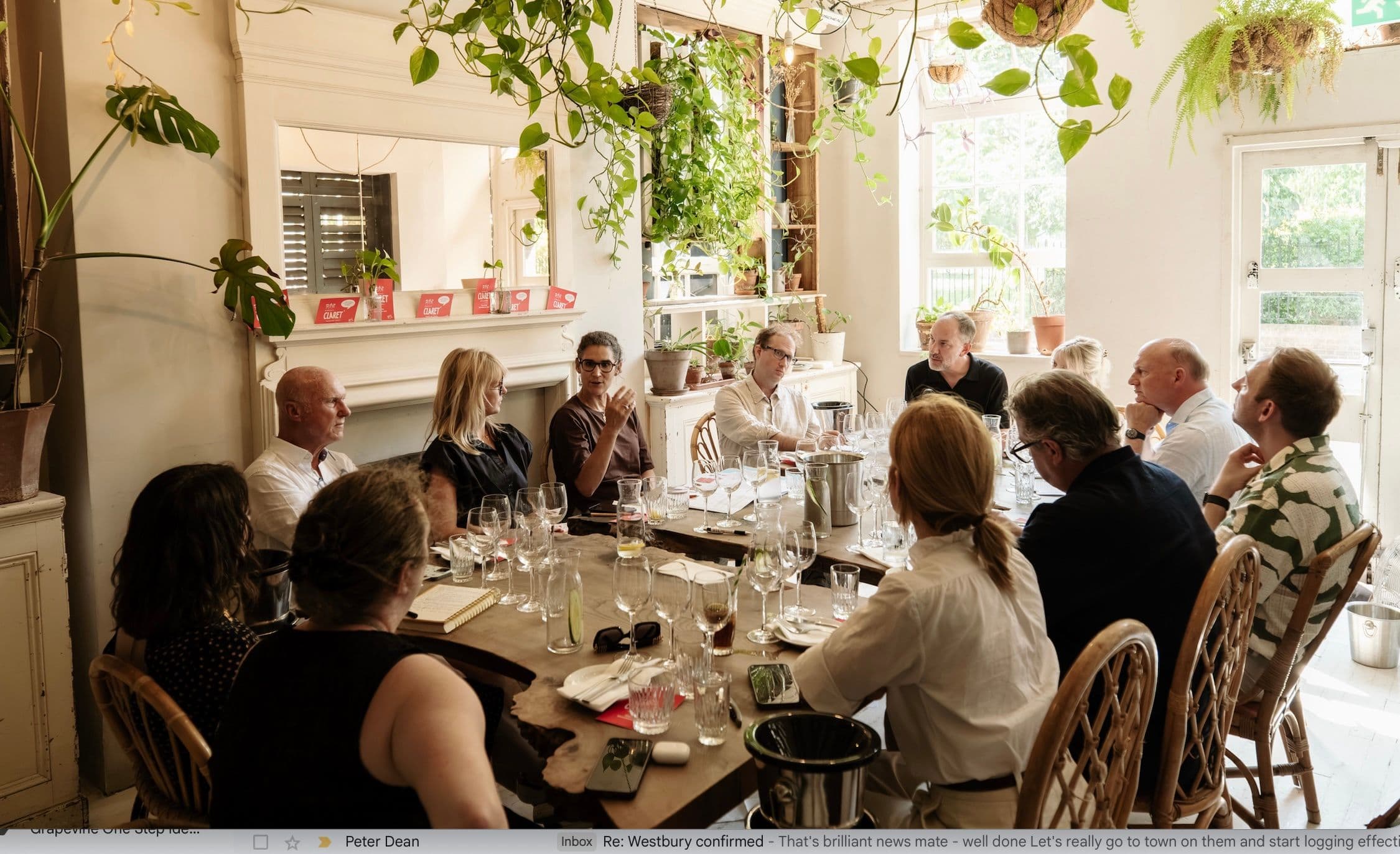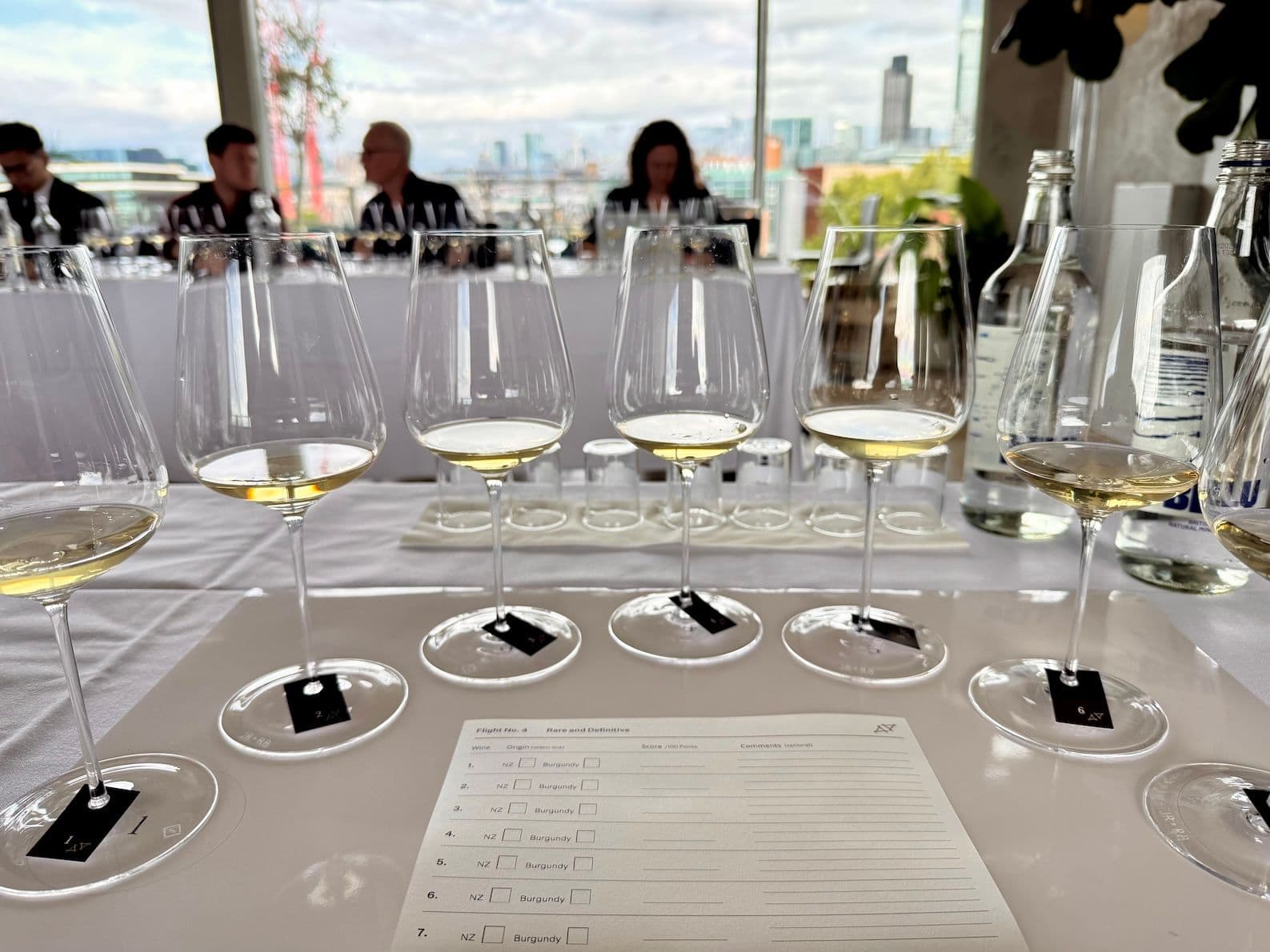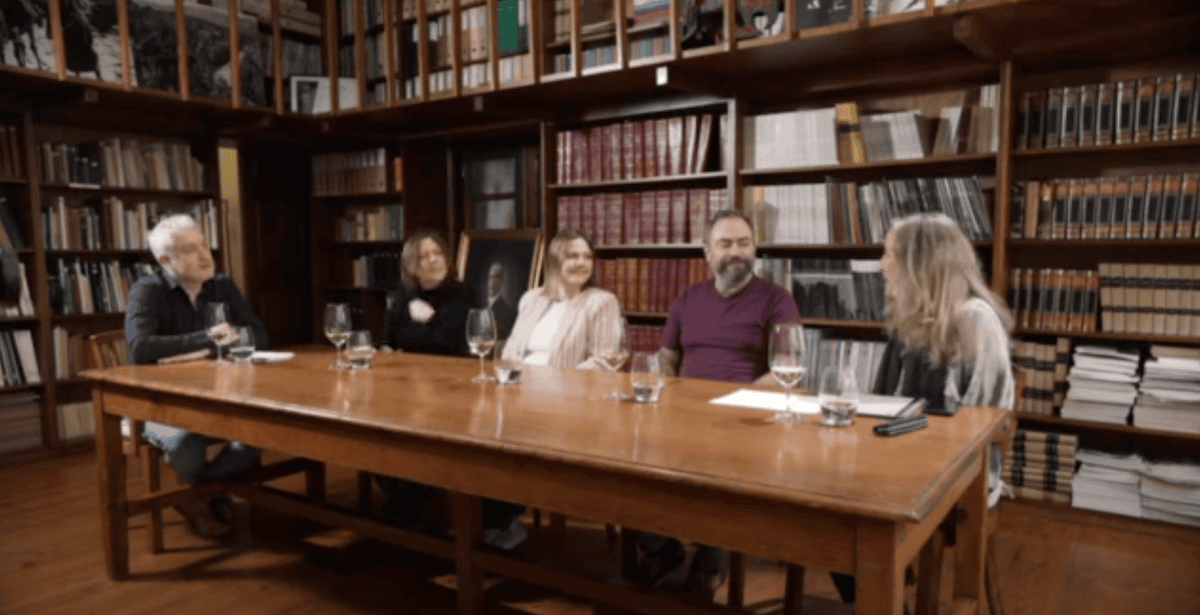

It was 2025’s last London tasting event in the capital; the sun shone in a clear blue sky, the air crisp with the chill of a Northerly wind. In the upstairs dining suite at two-Michelin star Story, 10 vintages of Kellerei Terlan’s truly iconic Rarity Piano Bianco shone like platinum from the glass. Extraordinary wines in every sense of the word – aged on their fine lees for up to 30 years in steel tanks, bottled unfined and unfiltered – these wines have a glacial pace of evolution and defy all preconceptions of what Pinot Bianco is and what greatness it can achieve.
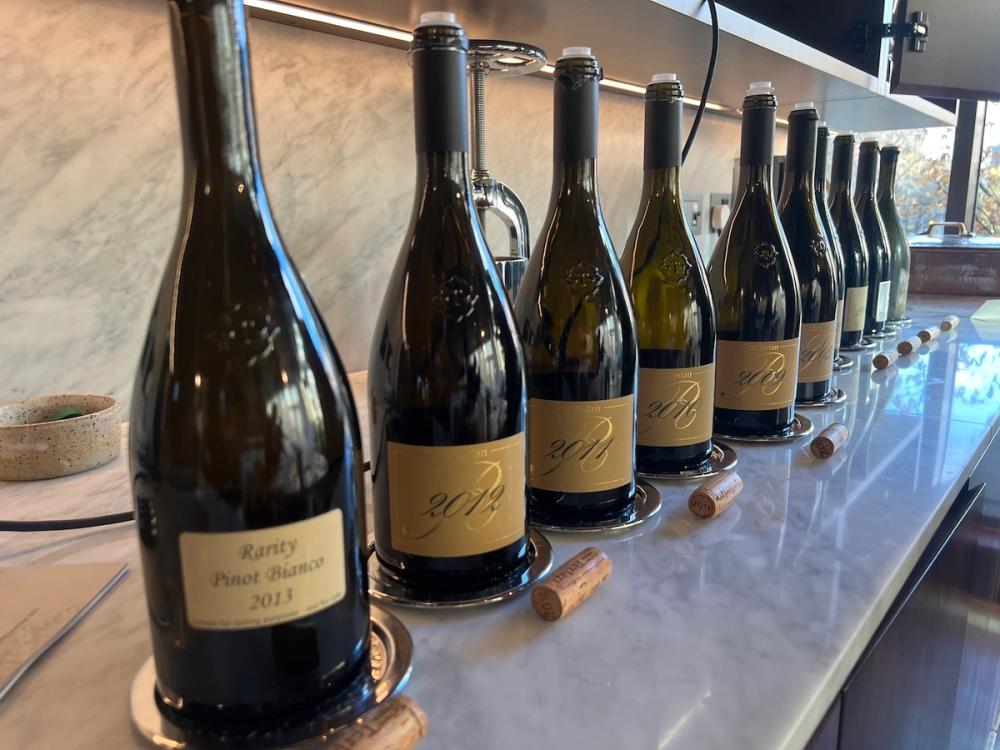
Rarity Piano Bianco - elevating a high-yielding variety to its greatest manifestation
Like Merlot, Pinot Bianco, is a high-yielding grape variety that in profiteering hands makes unexciting bulk wine. Given the right growing conditions and viticultural direction it can be thrilling. This was certainly the conclusion of tasting a 10-vintage vertical of Rarity Pinot Bianco.
To get the very best out of Pinot Bianco it ideally needs: to be grown in areas with volcanic or silica-rich soils, preferably well-drained soils of poor quality; to have a climate that is sunny but not too warm or wet with high diurnal range in the growing season; vine-training techniques such as pergolas which help preserve the grape’s naturally high acidity and structure in the wines; to be fermented and aged in steel rather than wood which aids longevity; and be sourced from older vines that add better balance and complexity.
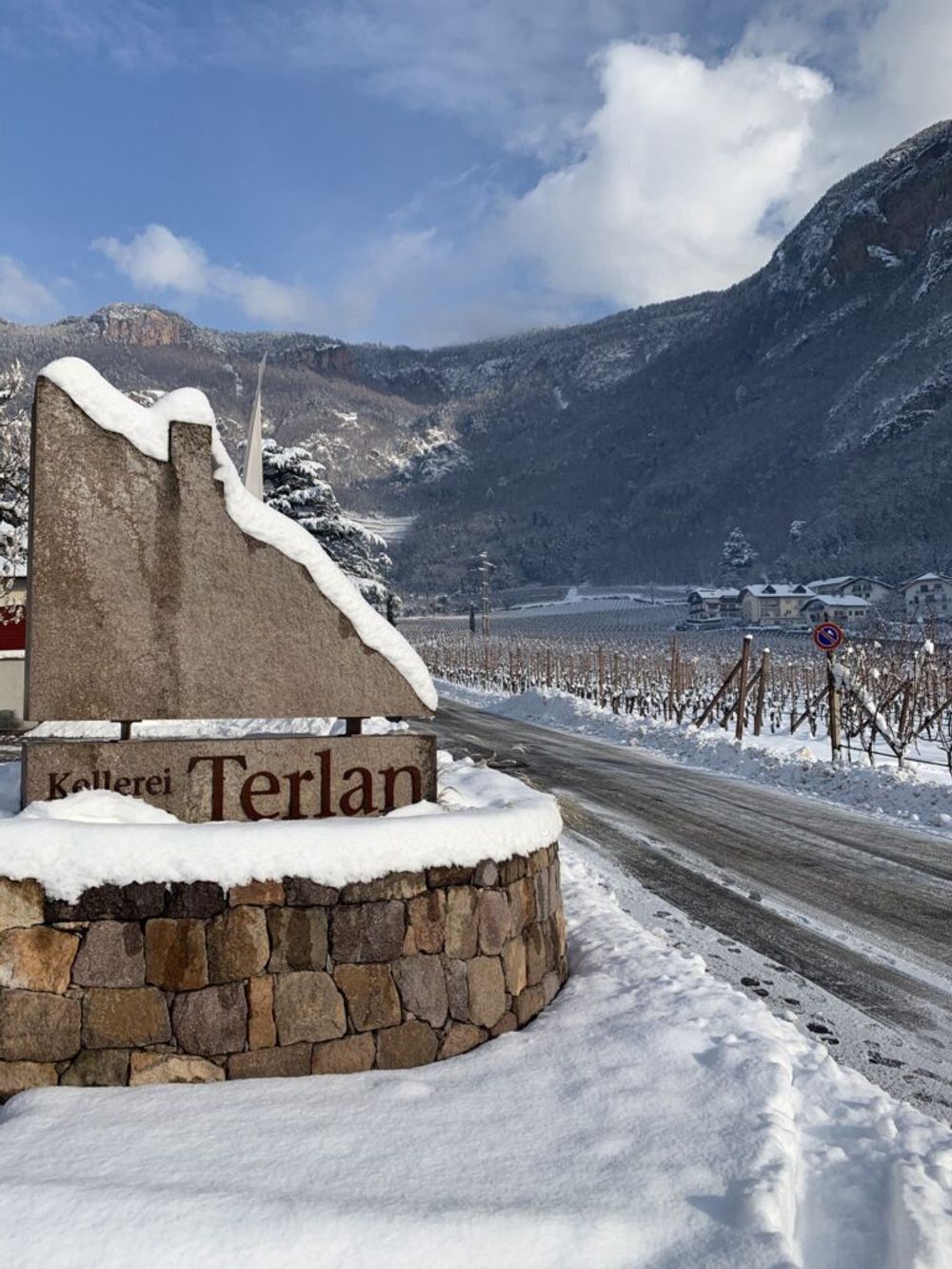
In Alto Adige, Italy’s most Northern wine growing region, all of those boxes are ticked. Which brings us to Kellerei Terlan/Cantina Terlano a co-operative that represents 143 growers collectively farming 190 ha of grapes, which started making the classic Terlaner cuvée in 1893, always with Pinot Bianco as the backbone, then single varietal wines from 1927.
Predominantly white wine focused, Terlan’s Vorberg Pinot Bianco, Sauvignon Quarz and flagship Terlaner I Grande Cuvee are beautifully-balanced, aromatic white wines that are at the top of their class, and compete with Burgundy's finest.

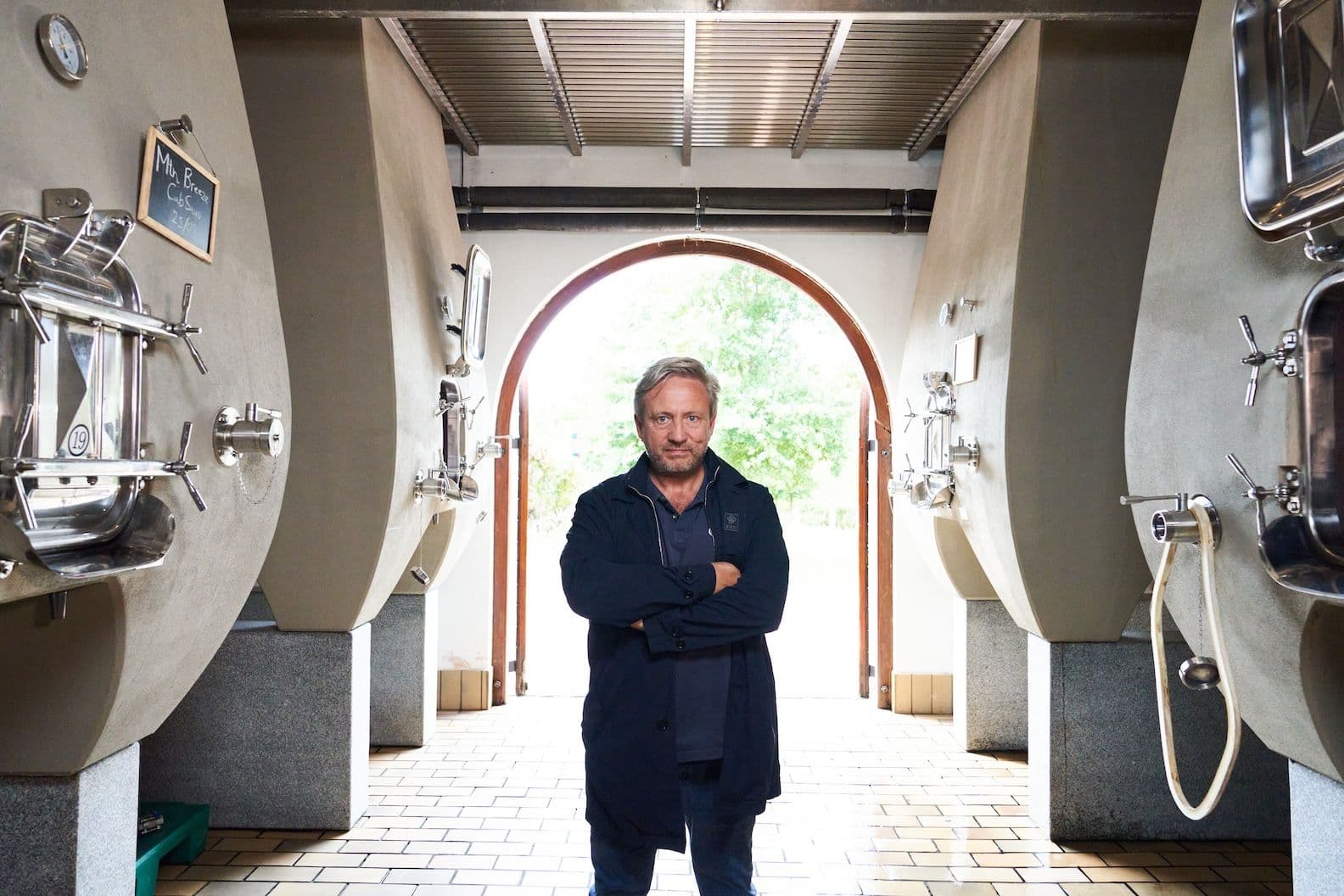
Terlan winemaker Rudi Kofler and commercial director Klaus Gasser (l-r)
Speaking before the Rarity vertical in London Terlan winemaker Rudi Kofler and commercial director Klaus Gasser explained how this extraordinary wine came about in the 1950s through the realisation (of the then winemaker Sebastian Stocker) that Pinot Bianco found a special balance in the wines after 10-20 years of lees contact.
Stocker discovered this when he used to serve guests old bottles of Pinot Bianco that he had squirrelled away in the cellars (holes where bottles were hidden by him can still be found today), with their freshness not having faded but had actually been amplified.
The oldest vintage of Rarity we tasted was 1979, the faded label on the bottle we sampled reading Weissburgunder (the German name for Pinot Bianco), with the wine being named Rarity from 2005. Stocker’s last vintage was in 1993 although the winery has 18 vintages still in tank dating back to 1979, and bottles dating back to 1955.
Although the wine is a blend and not 100% Pinot Bianco, it is PB-driven with 10% Chardonnay and Sauvignon Blanc 5% being the usual proportions – two of the many other white grapes which shine in the region.
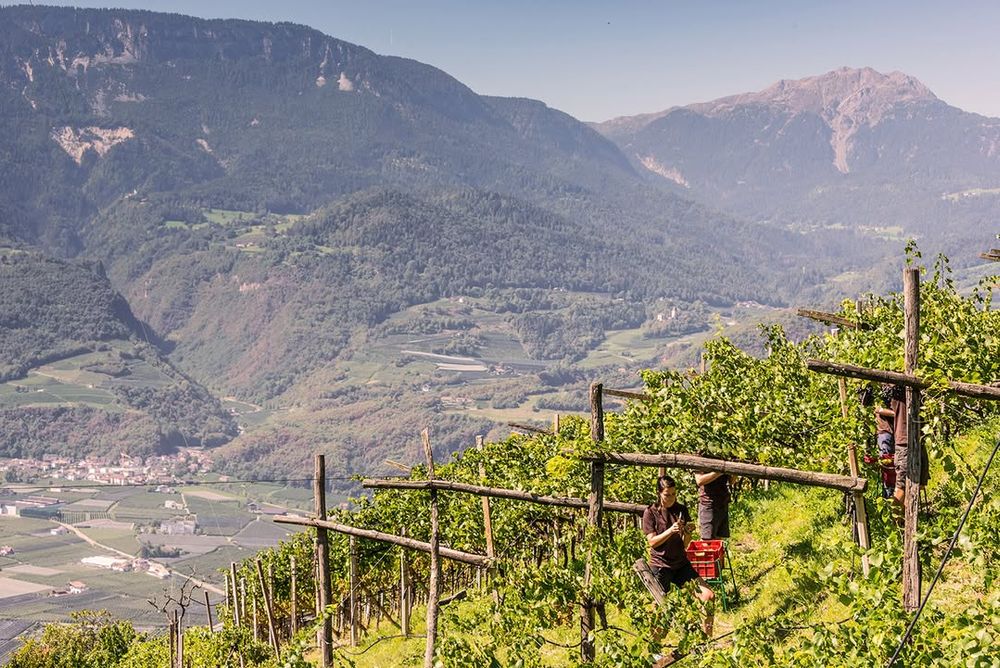
Rarity Piano Bianco is sourced from a tiny vineyard on perilously steep slopes
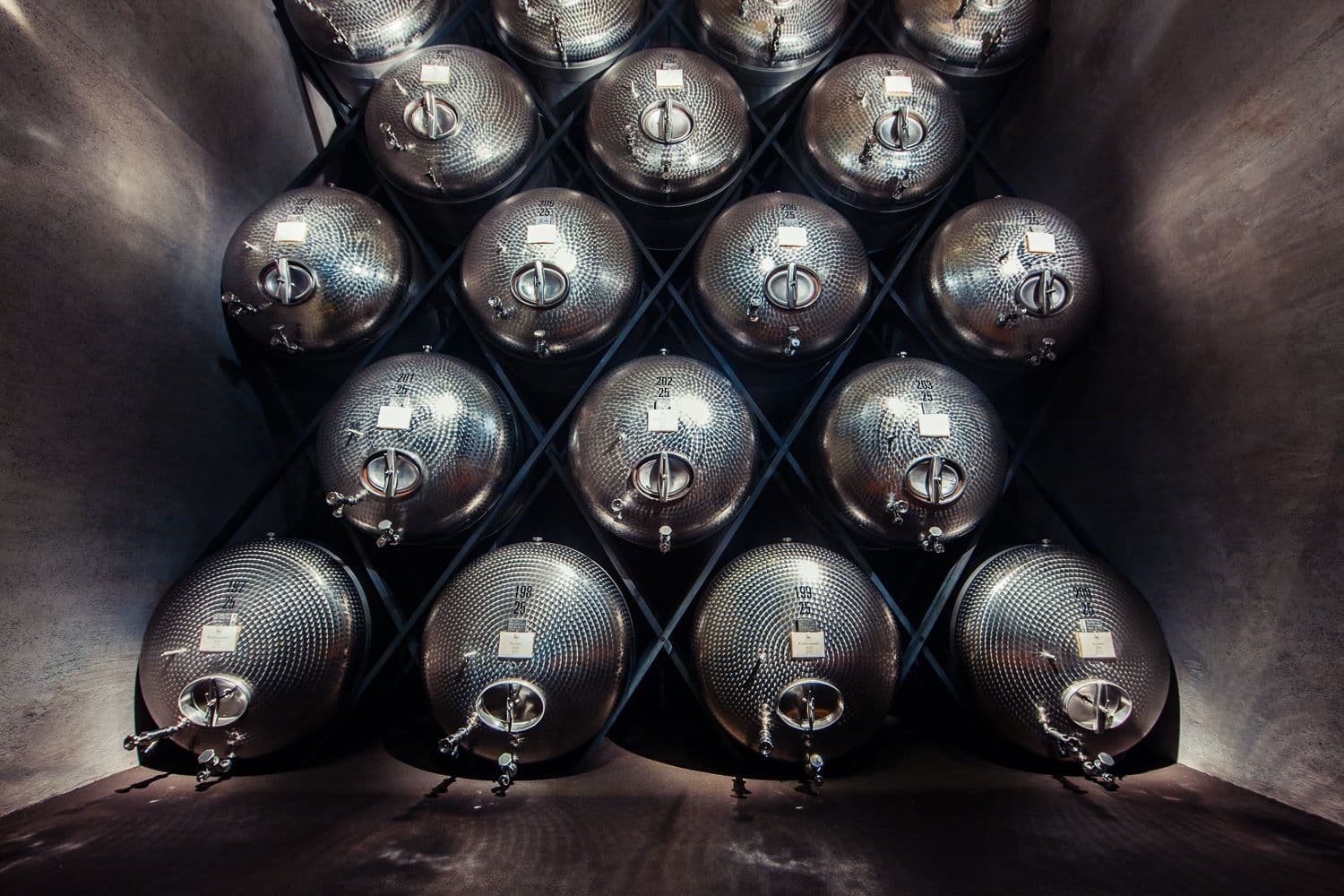
The perilously steep slopes mean all fruit is hand-harvested from five parcels, totalling 1.5 ha, with the best used for Rarity. Gentle whole cluster pressing is followed by slow fermentation in steel with malo and ageing in big wooden barrels for 12 months. The wine is then aged for a further 11 years on the fine lees in one 25hl steel tank with so little sulphur added that this process is on the edge of oxygenation. The tanks are filled, sealed and then simply left.
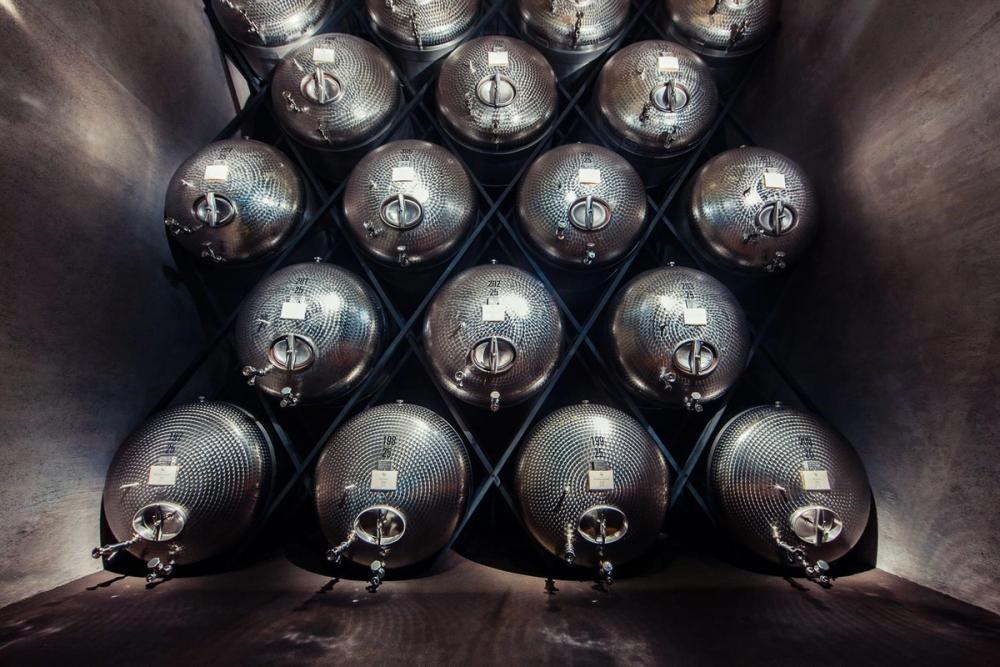
18 vintages of Rarity Piano Bianco are stored in these larvae-like steel tanks
Each tank produces around 3,000-3,500 bottles every year, half of which is sold in Italy, the rest globally and 80% of total production sold to on-trade. Cantina Terlan and its agents are keen that Rarity is accessible to allcomers through on-trade rather than be snaffled up by collectors.
Tasting Kellerei Terlan Rarity back to 1979
All of the 10 vintages we tasted were outstanding in their own way with more marked vintage variation as we tasted older vintages, starting with the youngest. In the wines we tried the residual sugar was usually below 2g/l although a couple were up around 3g/l; total acidity ranged between 5.5 and 6.8 g/l; alcohol in the recent vintages is 14% abv (feeling fresher than that) with the older wines clocking in around 13-13.5% abv.
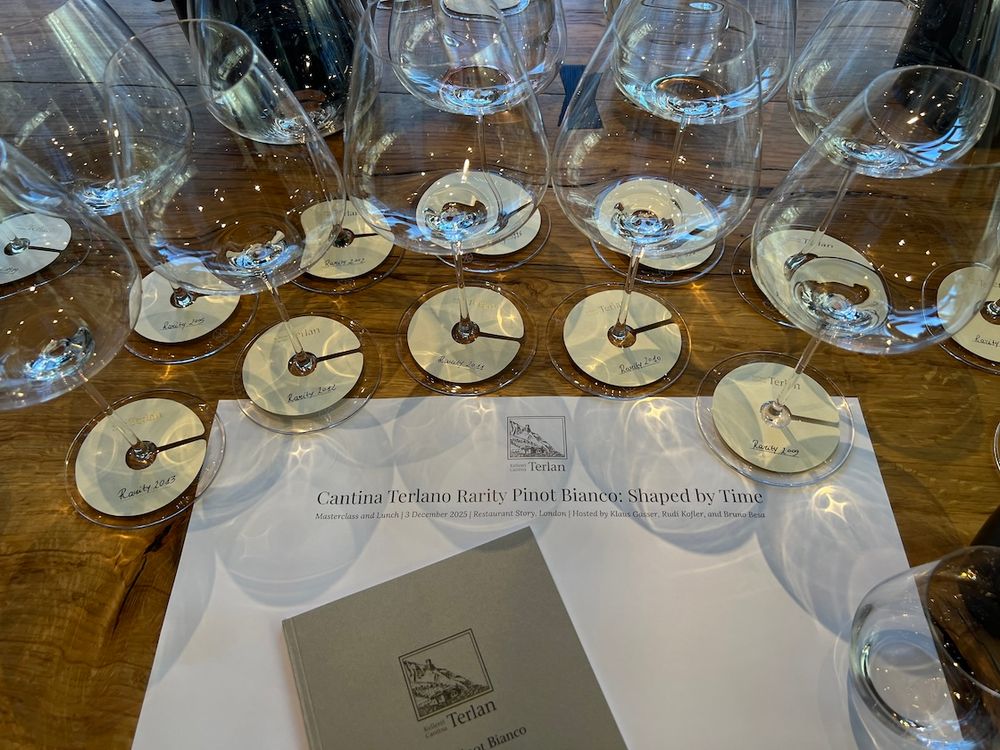
Rarity Piano Bianco tasting, London, December 3, 2025
Rarity Pinot Bianco 2013
We started with the latest vintage to be released in March 2026. Described as “a baby” by the Terlan team, the fruit was more primary (after 13 years!) with bright orchard pear and white flower aromas. Creamy in the mouth, lovely ripeness, terrific acidity and balance with powerful mineral-charged tension. We were told it needs three to four more years of bottle ageing but I’d be very happy drinking this now.
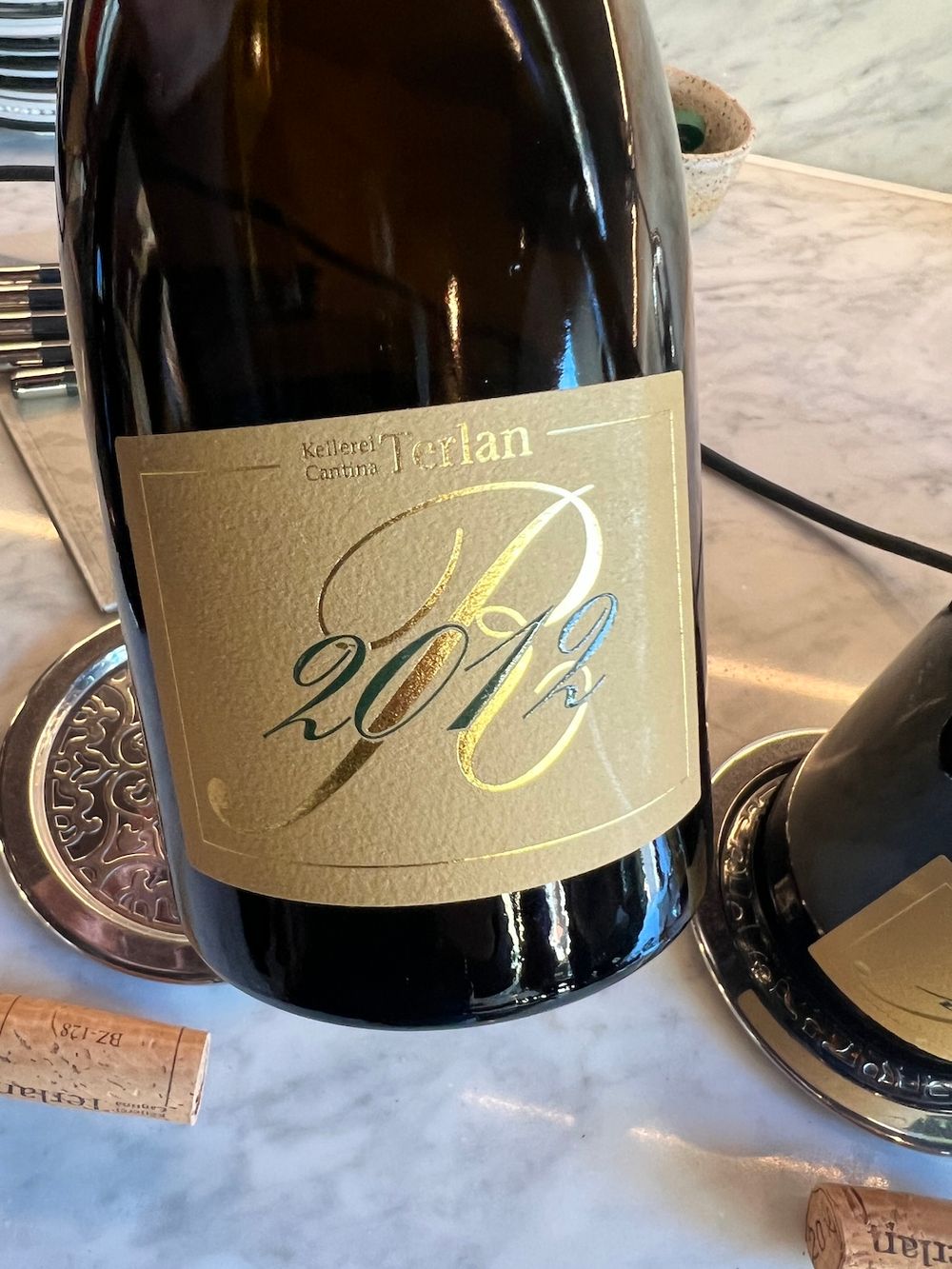
Rarity Pinot Bianco 2012
A difficult, warm vintage with a dry winter and wet summer resulting in smaller berries and overall yield. Dried apricots, stone fruit, and a tropical note. Fresh, exquisite, so fresh and tasty, less mineral but Wow what quality.
Rarity Pinot Bianco 2011
A hot spring saw bud break a week early and the season generally ahead of schedule – picking at the right time in harvest was the challenge. Interesting how much nuttier this vintage is compared to the 2013 – honey, melon, quince – much riper on the nose but still fresh and juicy in the mouth – more vinous.
Rarity Pinot Bianco 2010
Variable weather saw the lowest yields in two decades but the fruit and resulting wines are exceptional. Bright shiny gold to look at, much more honeyed and nutty on the nose. In the mouth the wine is stunning, a tiny bit more oleaginous with broader shoulders, but fresh and tense in the core, energetic, fabulous saline finish and length. Wait another 3-4 years, apparently.
Rarity Pinot Bianco 2009
A by-the-book vintage with everything happening at the right time, hotter than 2010. A bit reductive at first (I bought a bottle of this and decanted for two hours where it blew off). Opens out with yellow stone fruit, a lactic note, less intense than 2010, but more complex, richer and with startling purity and balance.
Rarity Pinot Bianco 2005
A warm vintage but cooler than 2003/6/9. It started a bit reductive. Dried yellow stone fruit, honeydew, grilled nut; on the palate the mouthfeel was more oleaginous, creamy, rich, ripe, more density, but still that acidity delivers balance and a wine with understated but endeniable power.
Rarity Pinot Bianco 2002
Rudi Kofler’s first vintage (“you never sleep”) could not have had worse conditions with bad, rainy weather moving up from Veneto and Piedmont. 15-20% of weight was lost which brought more concentration to the wines which was noticeable in greater intensity, nutty and lactic notes, and an appealing complexity. Again, that same underlying tension, the wine so fresh, clean and pure.
Rarity Pinot Bianco 1996
An interesting vintage in Alto Adige and not just in Champagne, with cool nights from August to September resulting in a slower and longer ripening period creating a challenge for when to harvest. Bright golden yellow, toasted nuts and quince on the nose, touch of spice; in the mouth the wine is startlingly fresh (even at almost 30 years old), juicy fruit, beeswax, intense minerality and structure. Opulent and quite delicious.
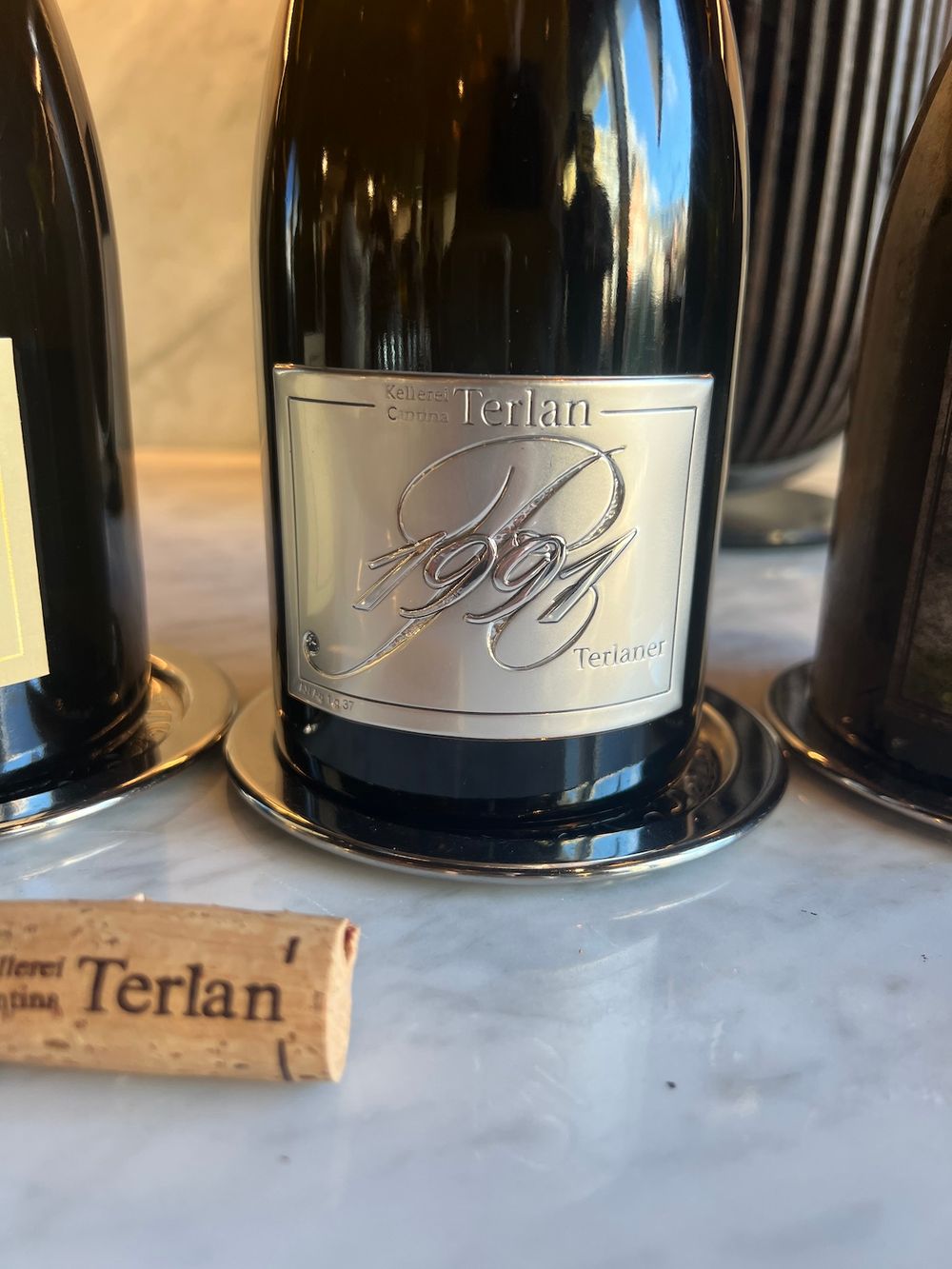
Rarity Pinot Bianco 1991
The Terlan team didn’t know what to do with this wine and, after (an almost ridiculous) 25 years on lees, bottled and released it. The vintage was bad – cool, rainy and inconsistent – and yet here the altitude of the vineyard helps in bad vintages. An unusually low percentage of Pinot Bianco (Pinot Bianco 60%, Chardonnay 30%, Sauvignon Blanc 10%), not super powerful but still youthful with a lovely sophisticated elegance.
A medium-bodied wine, the bouquet is understandably complex showing more secondary characters than tertiary with ripe lemon, apricot, hazelnut and crushed flint. In the mouth the wine has a zingy freshness, mineral-charged, clean fruit, complex to the extreme with hints of dried fruit and vanilla on the persistent finish.
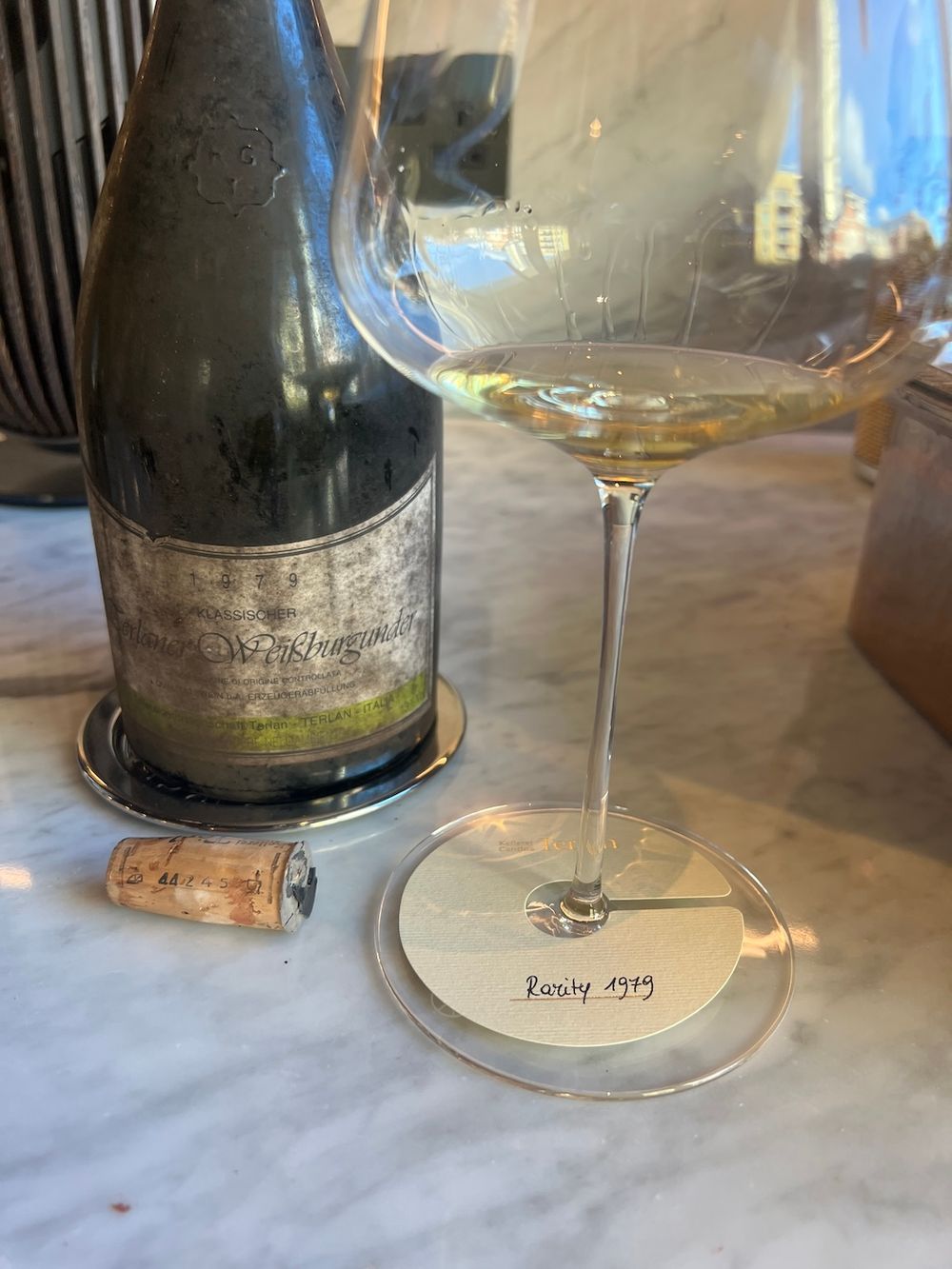
Rarity Pinot Bianco 1979
A variable growing season was saved at the death by fine weather leading up to harvest. This is the oldest Rarity available. Deep, dark gold to look at; the aromas are tertiary and inviting – super concentrated, with grilled nuts, pot pouri, chamomile tea, honey and flint. The palate was rich, oleaginous, dried fuits, apple tart, caramel perhaps, lactic certainly – yet still with this vibrant core of minerality which comes entirely from this unique terroir.
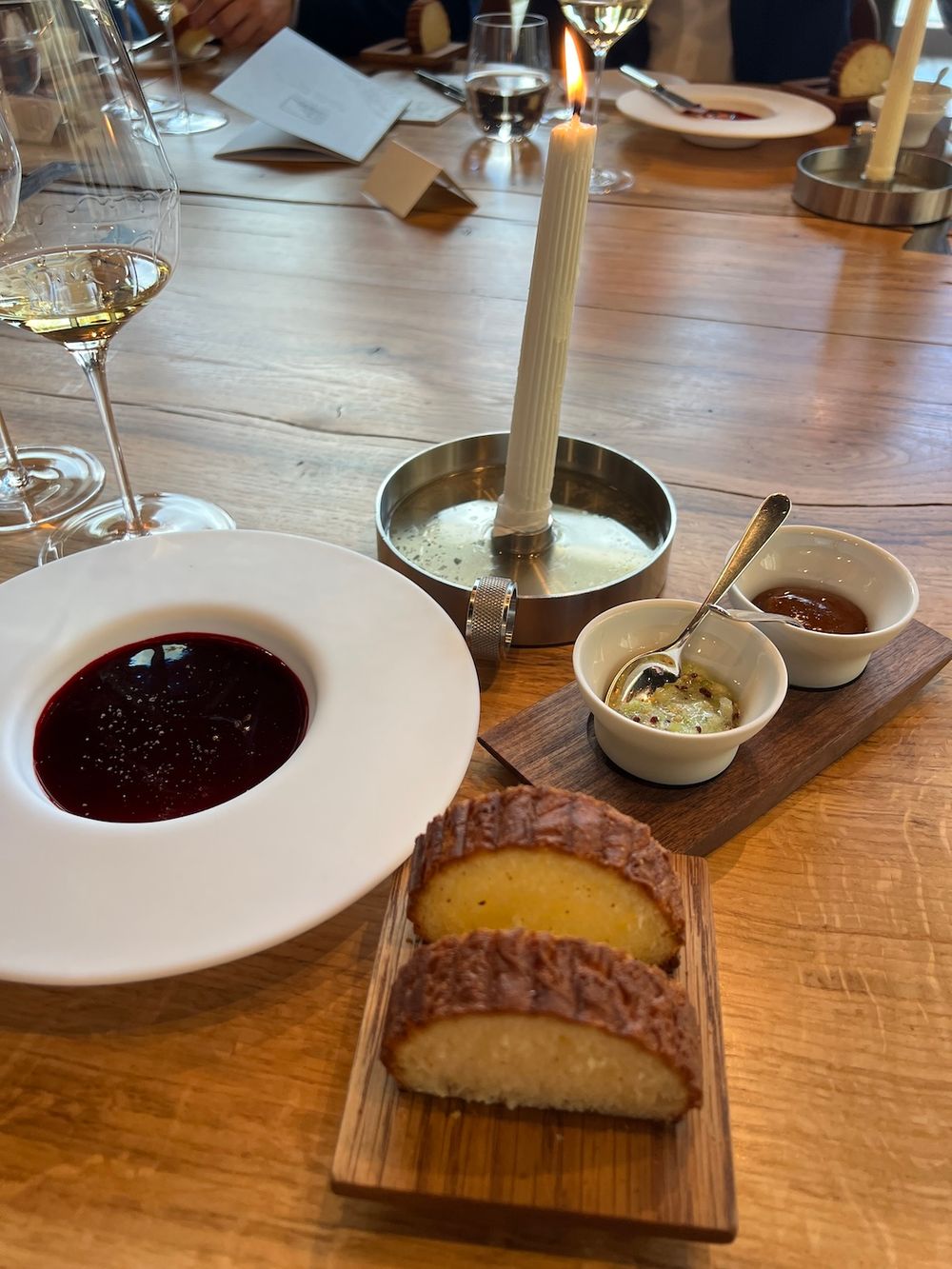
An extraordinary dish at Story – Beef dripping candle, foie gras with bitter cherry jelly and grilled brioche
Rarity and the other wines of Kellerei Terlan are imported and sold in the UK through Astrum Wine Cellars.