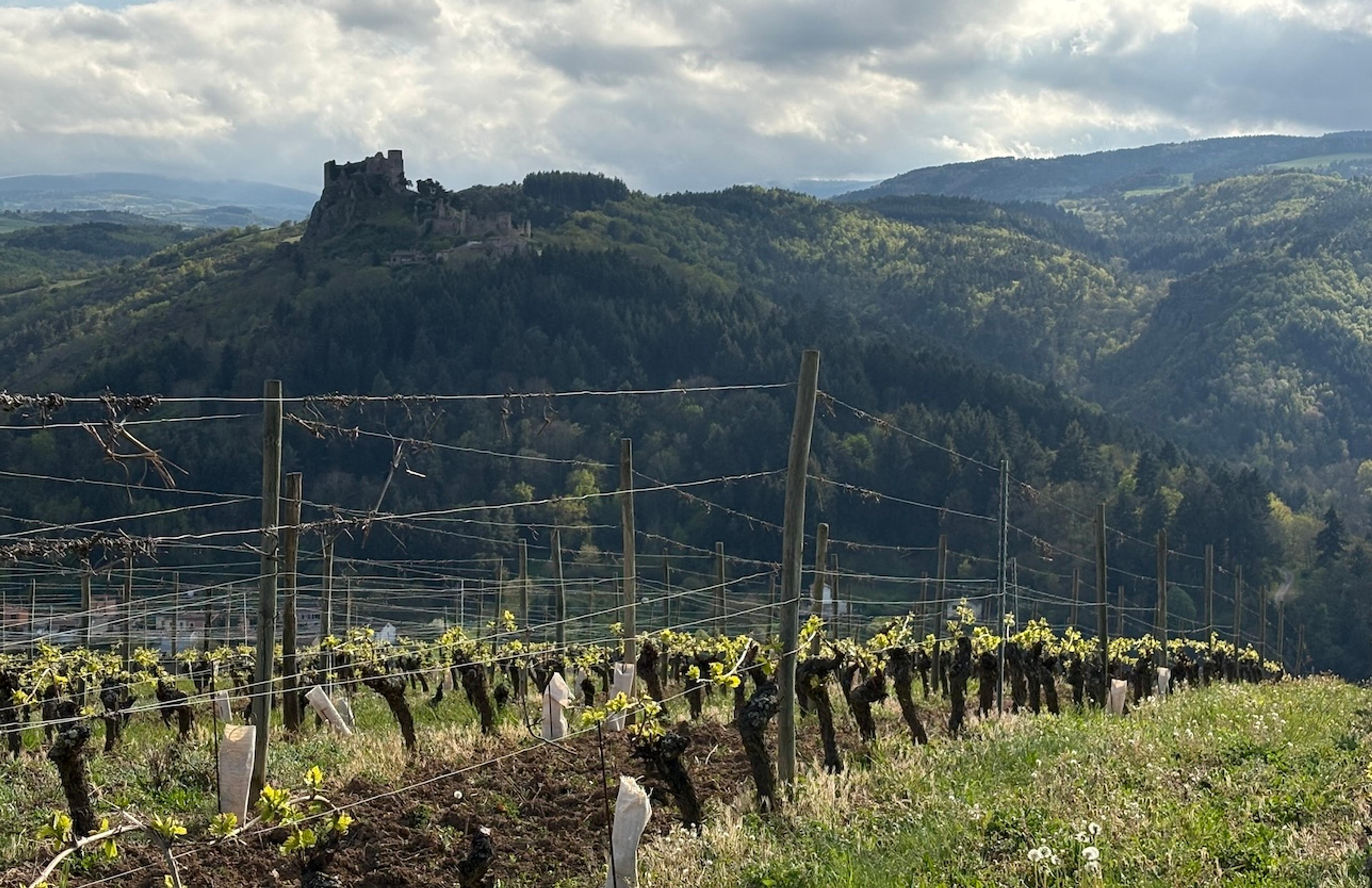

My first stop after arriving at Lyon Saint-Exupéry airport is to travel west for an hour and half by car past St Étienne to a small village, Marcilly-le-Châtel, to meet Côtes du Forez winemakers over lunch.
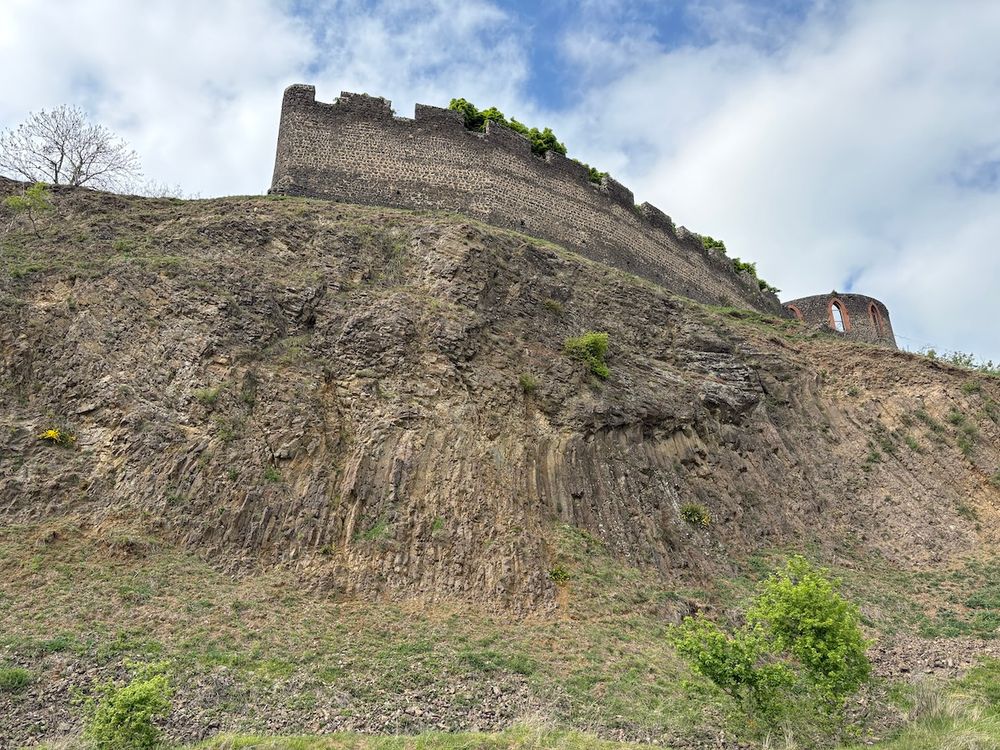
Exposed columns of basalt ‘pipes’, structures that once were inside the volcano cone
Côtes du Forez is the smallest appellation (150 ha) in the Loire Volcanique. The beautiful countryside is made up of forested hills and a wide valley with vineyards and pastoral land. I’m on the hunt to see evidence of volcanoes – but quickly learn there are not any visible craters to see. Instead, an imposing old medieval château stands above the village – exposed are the columns of basalt ‘pipes’, structures that once were inside the volcano cone on which the castle sits. These geomorphic features are the most prominent evidence of earlier volcanic activity many millennia ago.
Basalt and granite soils
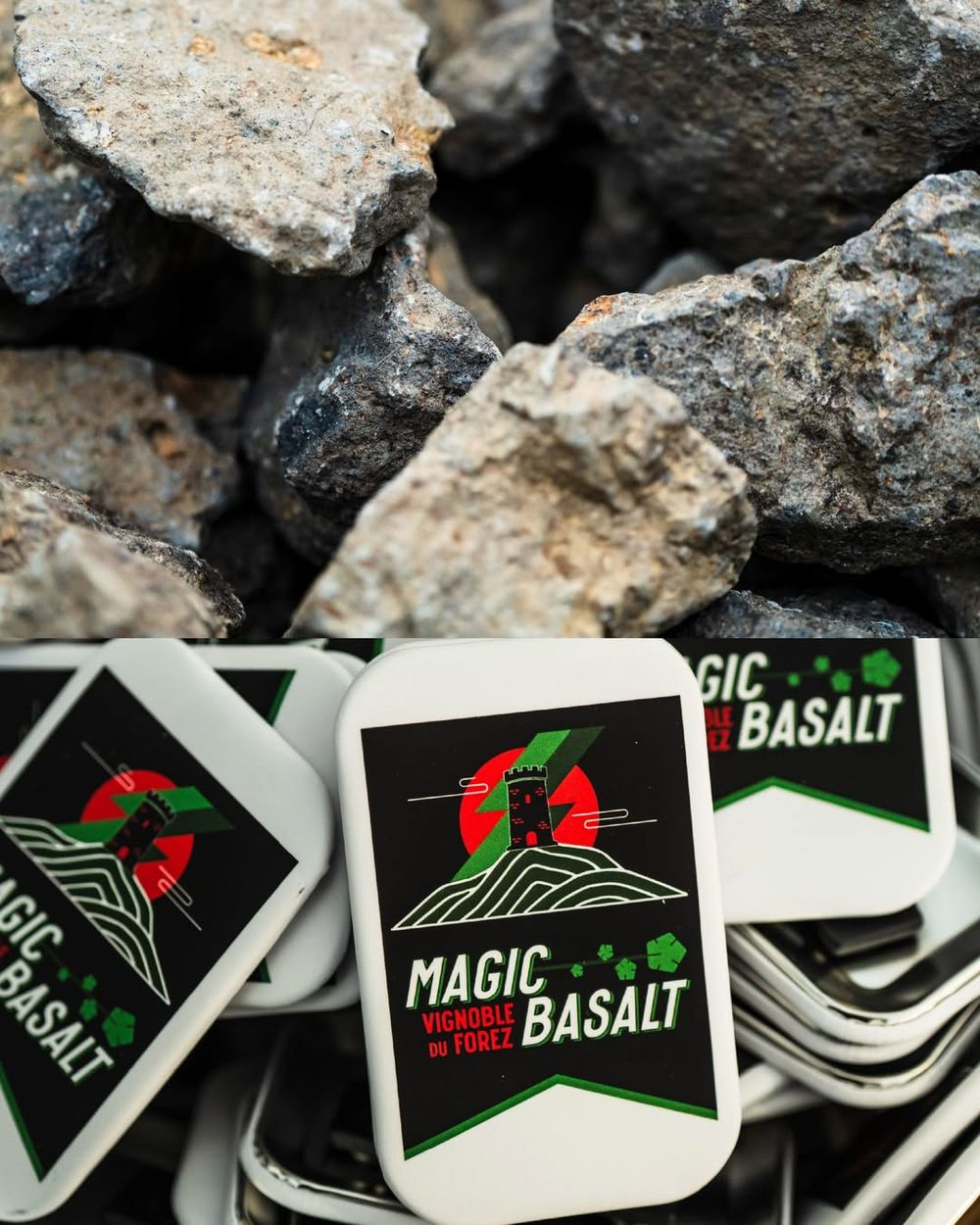
The distinctive nature of the Côtes du Forez terroir is the volcanic-influenced basalt and granite soils which create a light Beaujolais-style wine. Indeed, Beaujolais is less than 100km away towards the north of the Rhône. Gamay is the key variety here (though not exclusively, as I come on to later) and each of the different qualities of the soil bring different flavour profiles to the wine.
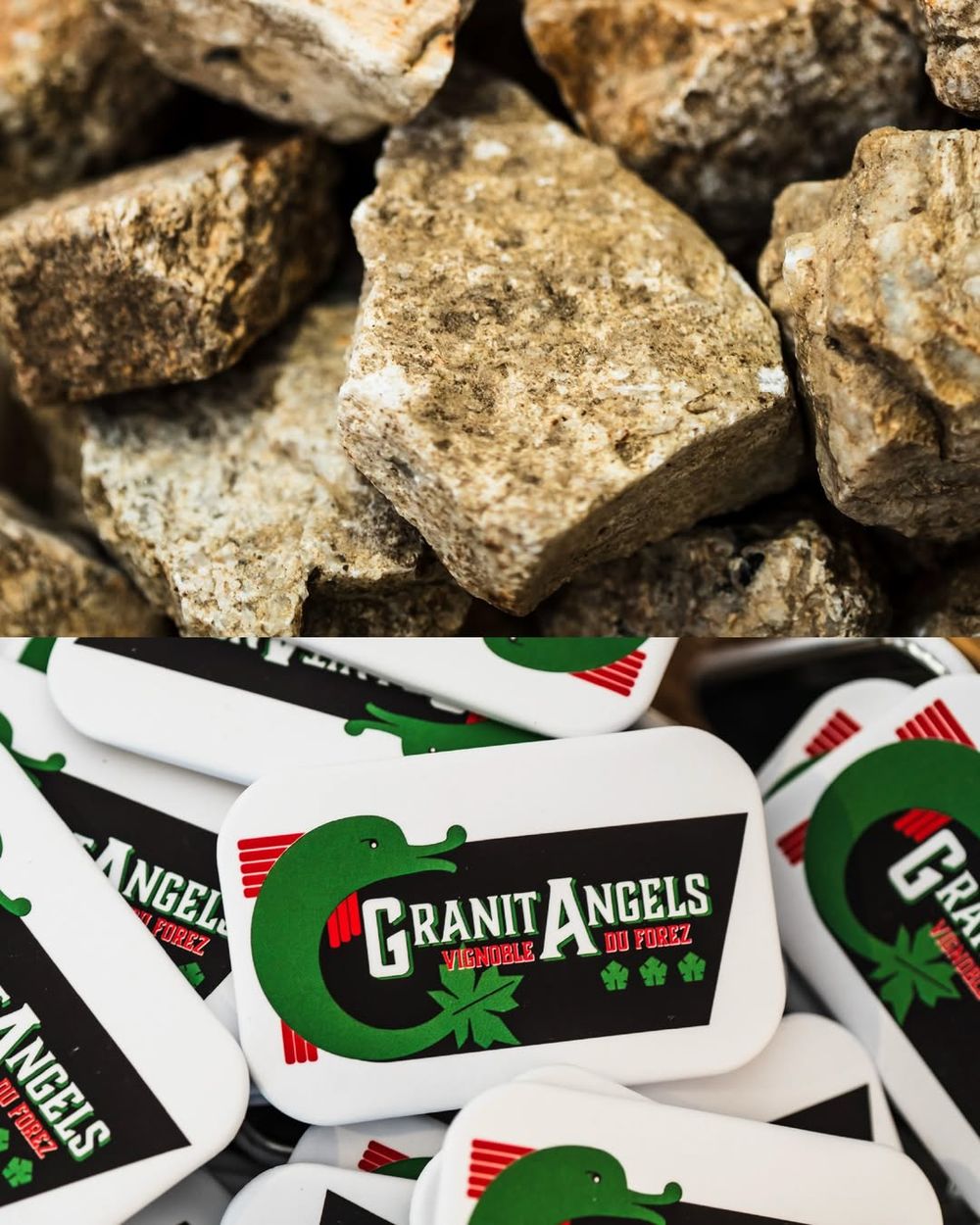
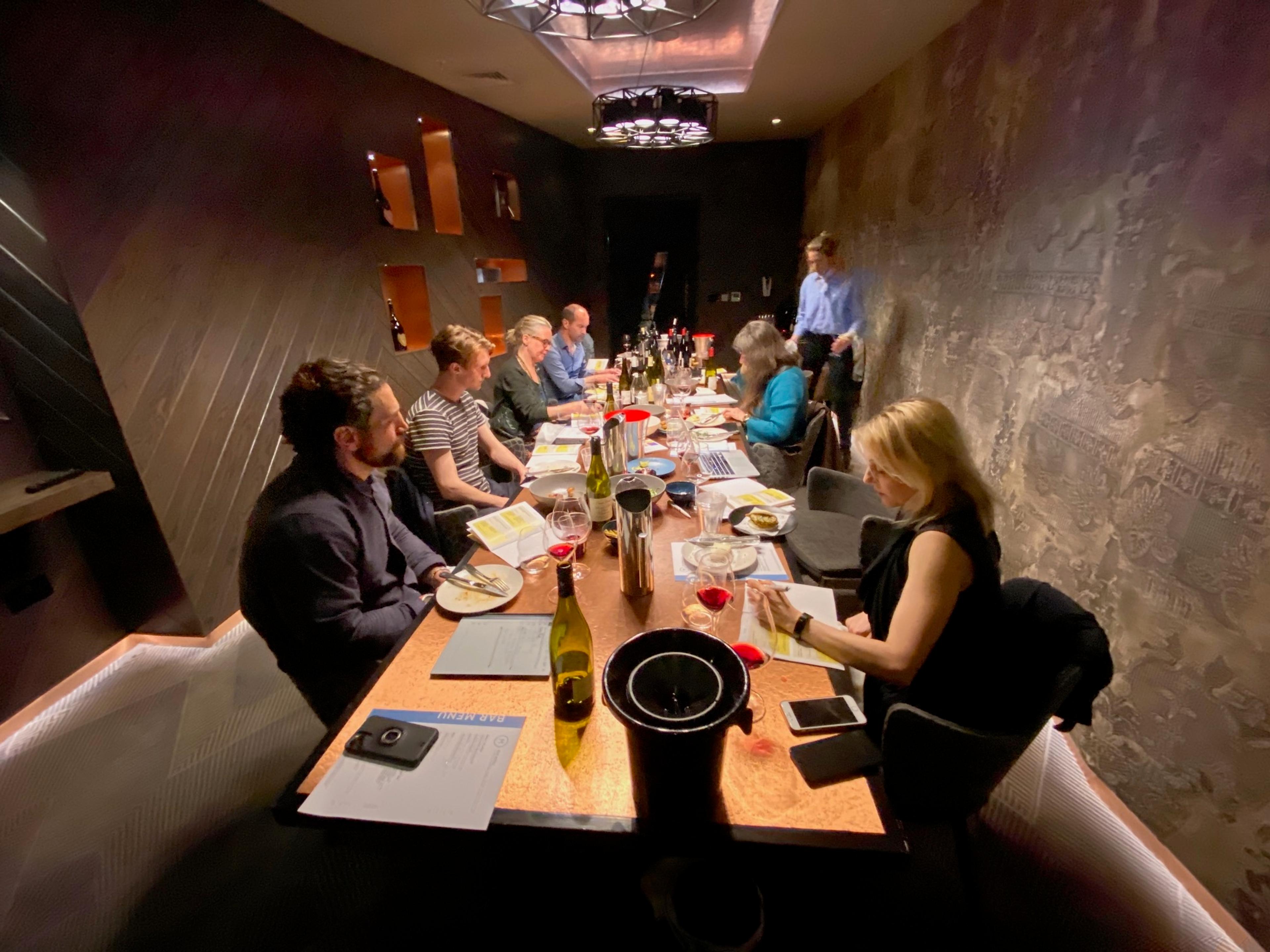
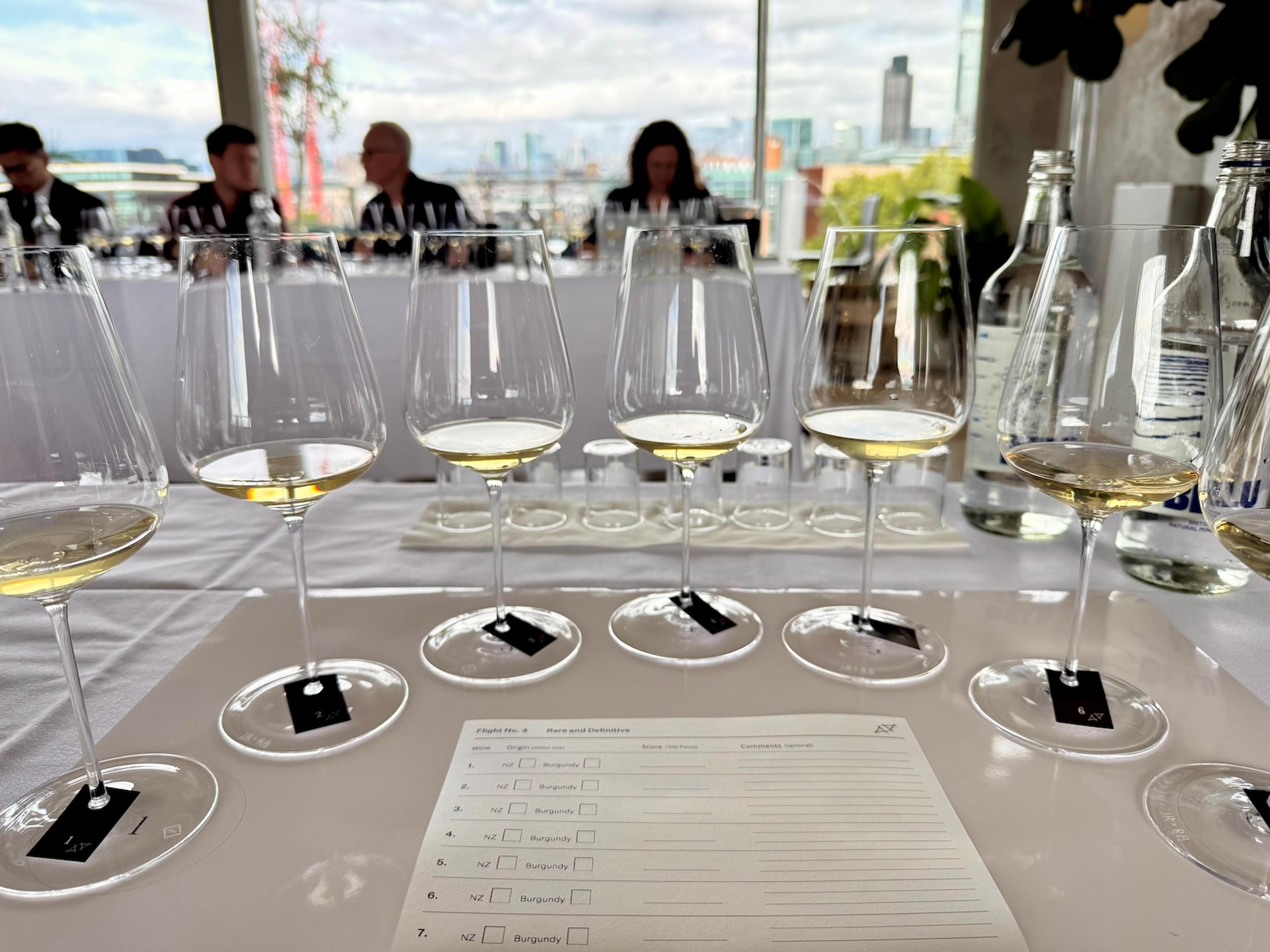
We are invited to judge the wines in a none-to-serious tasting ‘battle’ between the two different soils. As a generalisation, Gamay from basalt soils give rise to more spicy and even peppery notes while the granite terroir produces fresh light, fruity easy-to-drink wines. Some say a shorthand for Loire Volcanique is “Gamay on granite” which is the dominant rock. Many producers make wines from both terroirs. Votes are taken. In the judging, votes for wines from the two different soils are equally cast.
Côtes du Forez producers
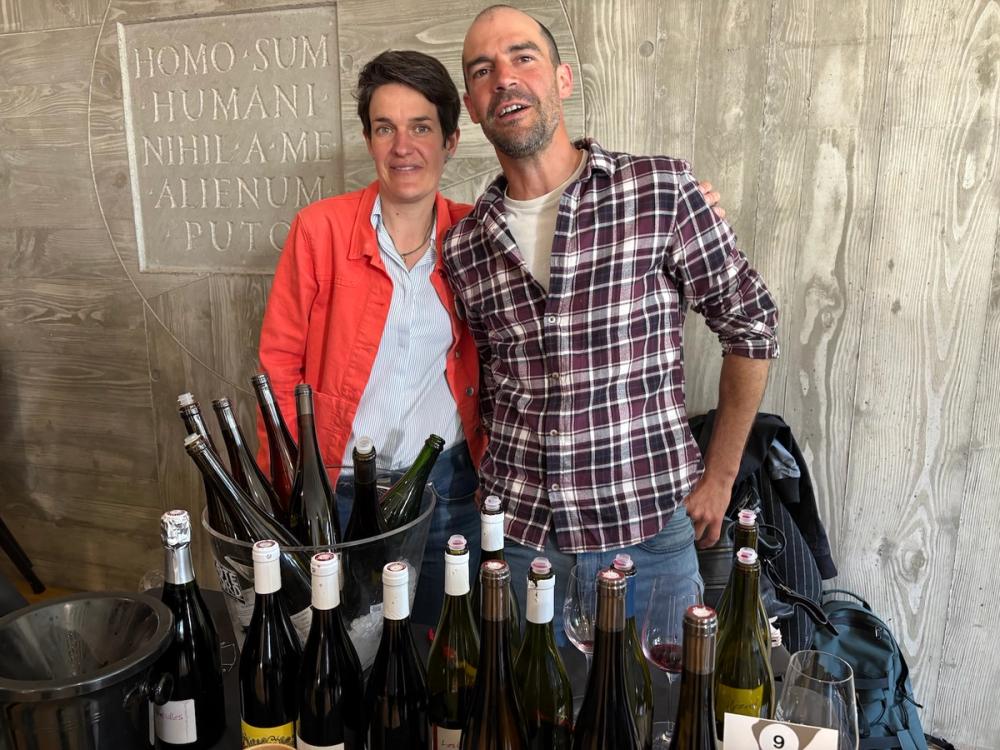
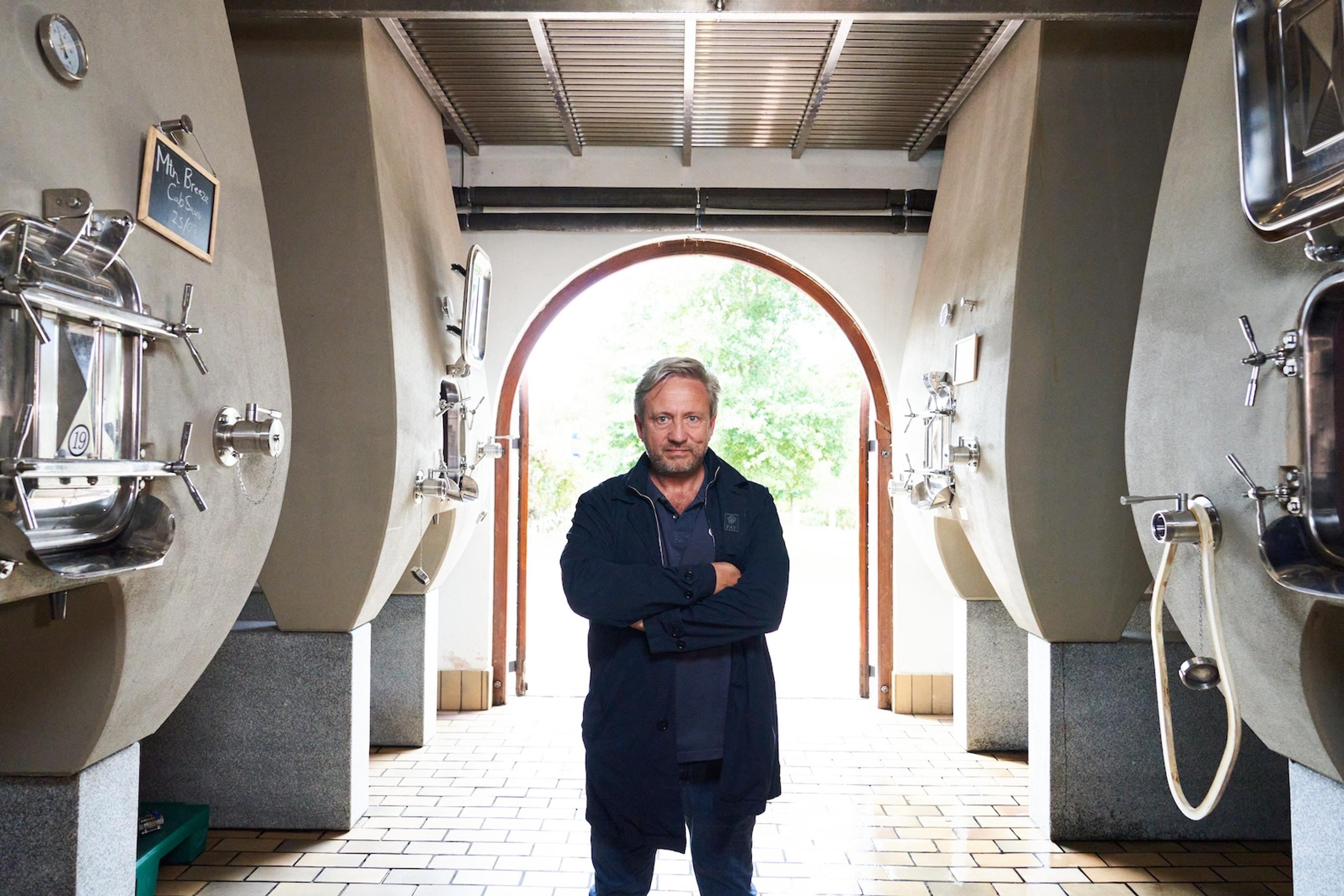
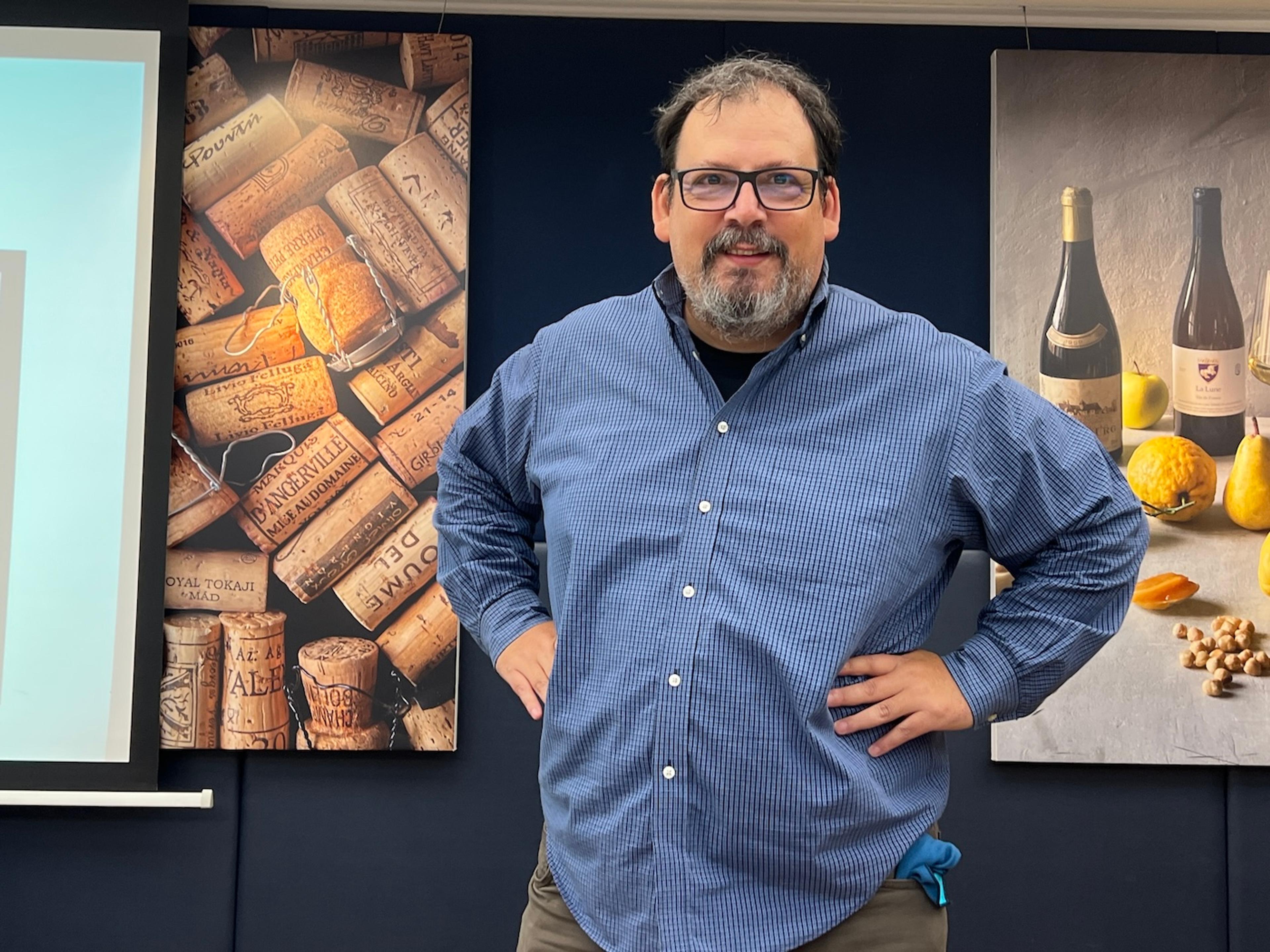
Julie Logel and cousin Maxime Gillier owners of Cave Verdier-Logel, Côtes du Forez AOP
A key figure in the region is Julie Logel from Cave Verdier-Logel, a benchmark domaine which makes separate cuvées from volcanic and granite parcels. ‘La Volcanique’ is a reference point for basalt expression with a distinct pepperiness, silky tannins and bright vibrant acidity. There are ten producers in the Côtes du Forez and the cooperative Agamy.
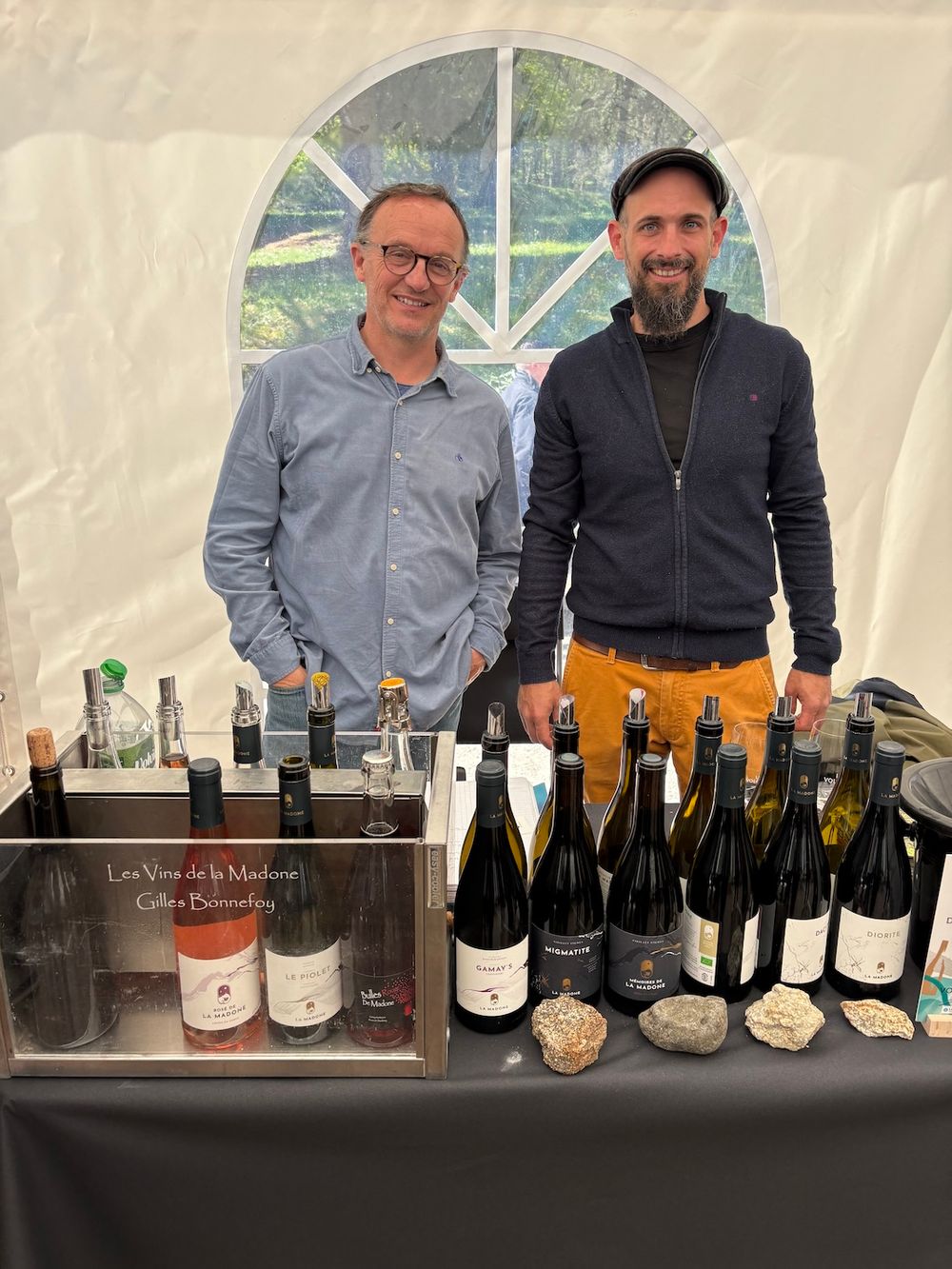
Gilles Bonnefoy (left) and Damien Faure Les Vins de la Madone, Côtes du Forez AOP
Les Vins de la Madone with Gilles Bonnefoy is another stand-out domaine with biodynamic farming on the slopes of the extinct ‘volcan de la Madone’. Among the many impressive producers are also women winemakers such as Stéphanie Guillot and Charlotte Conraud of Domaine des Terrasses. Domaine du Poyet is in the Marcilly village and has a wide portfolio of notable Côtes du Forez wines. Jean-François Arnaud proudly shows off his 30th anniversary cuvee!
We stay the night in the enchanting, restored Château de Goutelas nearby in Marcoux. We’re told that jazz legend Duke Ellington once gave a charity concert here to help fund the tumbledown château’s restoration. Accommodation is modest but we are treated to an exceptional wine pairing dinner by three-star Michelin chef Jacques Marcon and Julien Magne.
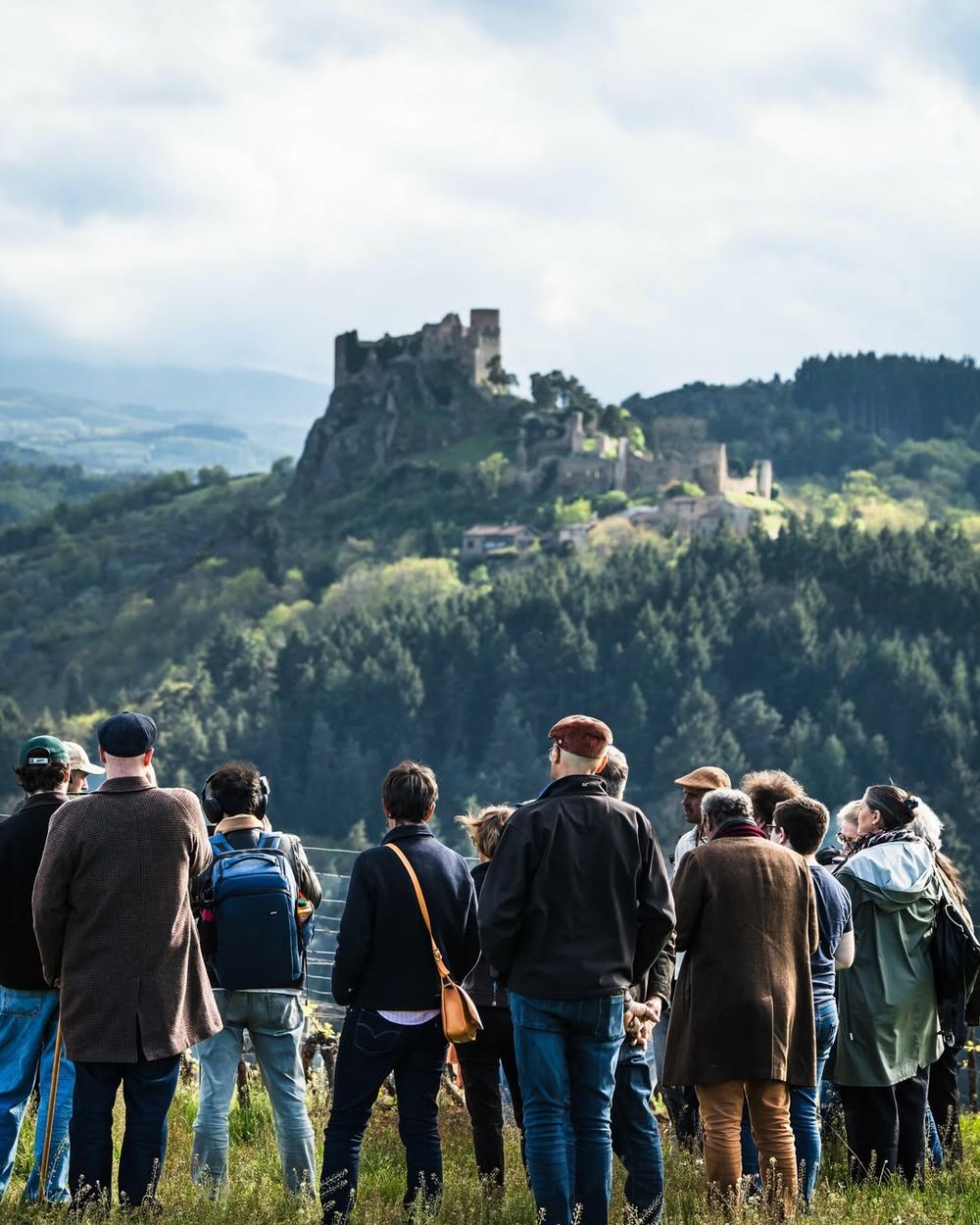
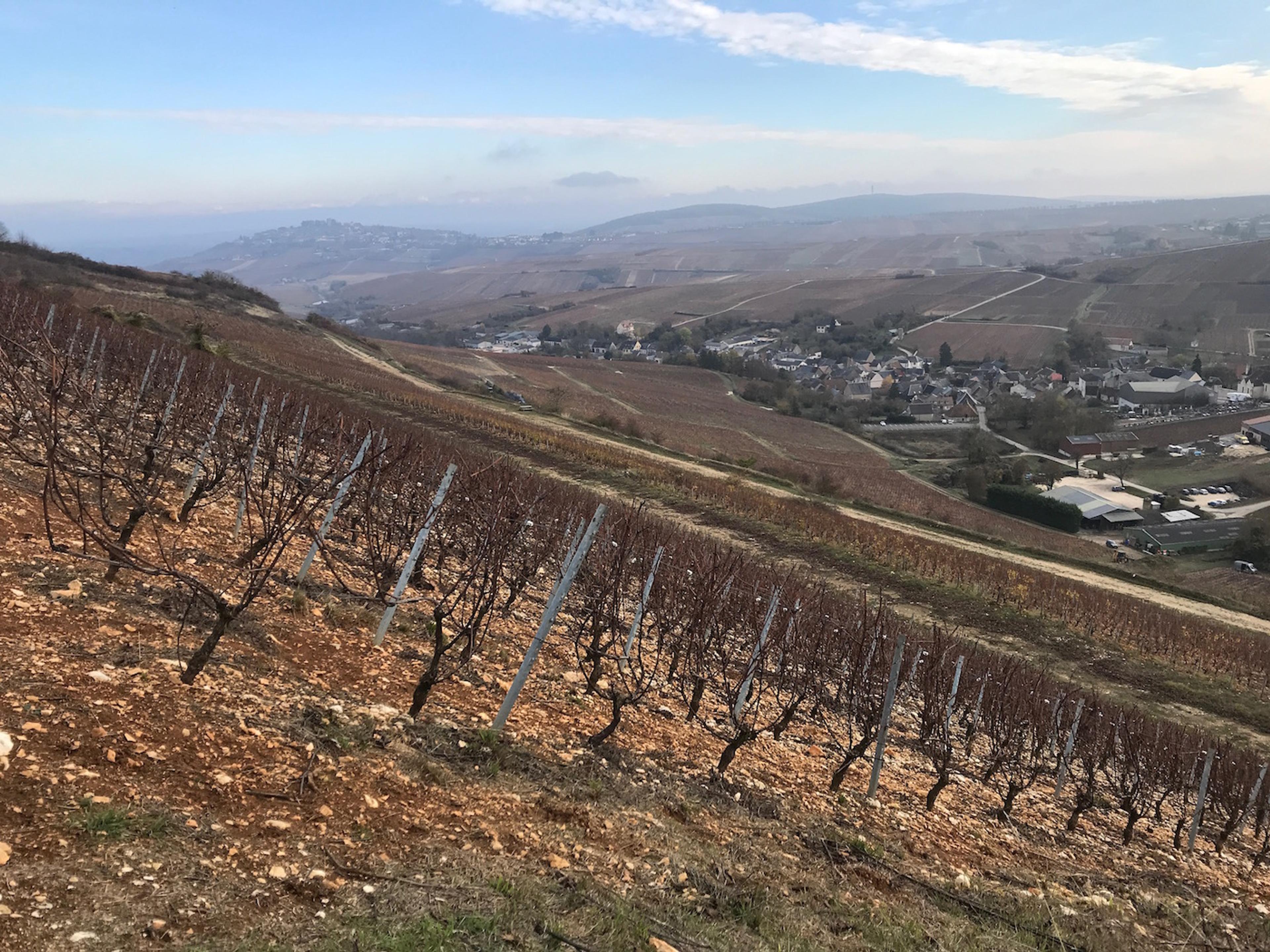
Spectacular views from the steep vineyard at Le Clos de Chozieux with ruined castle in the distance.
Not just Gamay
Apart from my wrong-headed assumption that I would see smoking volcanoes on my visit, my second misconception was that I would mostly taste Gamay wines on this visit. This was also wrong. Here you will also find Chardonnay, Sauvignon Blanc, Viognier, Riesling, Pinot Gris, Pinot Noir and even a few sparkling wines.
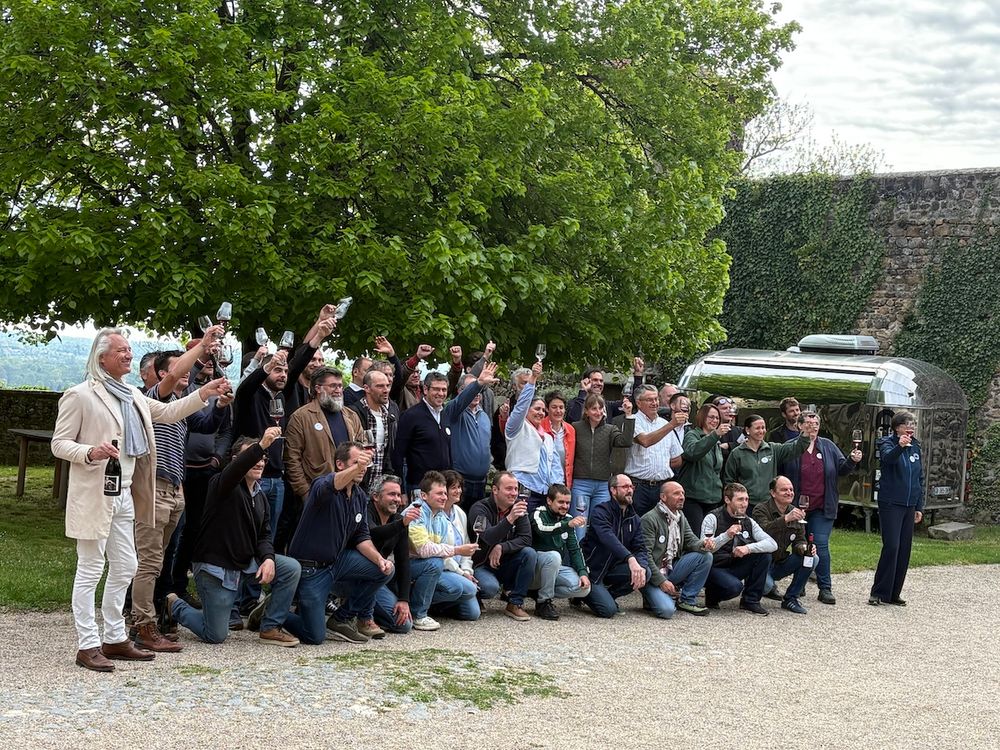
Loire Volcanique producers pose at the tasting
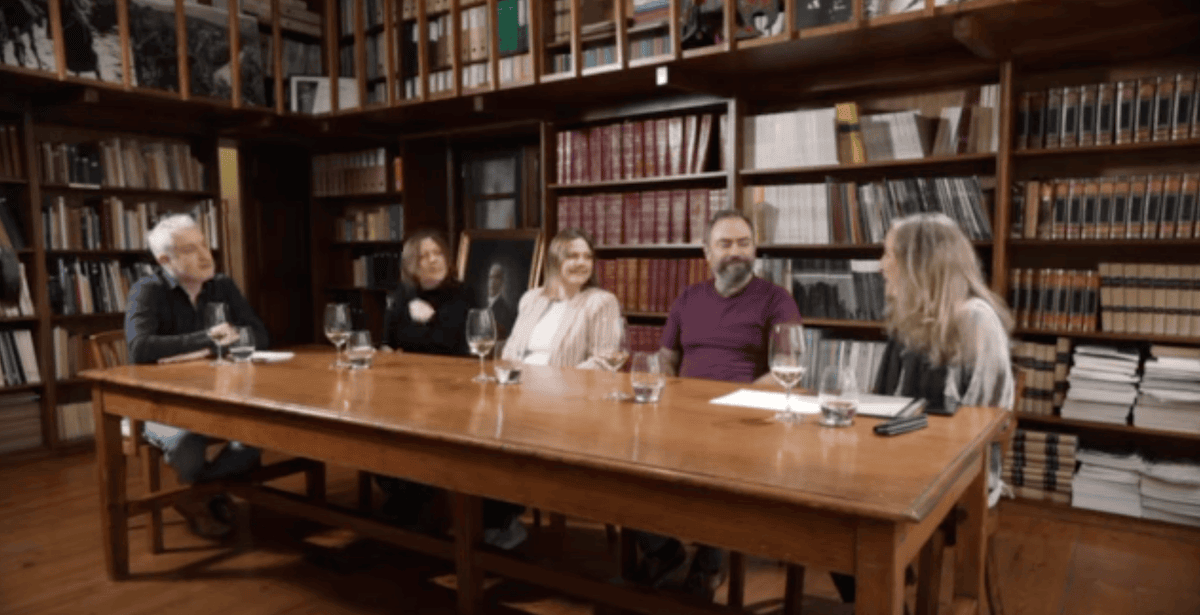
At the château there is a festival-style tasting celebrating wines from the whole Loire Volcanique area, including the Côtes du Forez. The association and marketing umbrella ‘Loire Volcanique‘ was founded in 2019, bringing together four little-known appellations to draw attention to this relatively under-appreciated area. A total of 46 winegrowers united to promote the exceptional terroirs of the Massif Central, including the appellations of Côtes d’Auvergne, Côtes du Forez, Côte Roannais, and Saint-Pourçain.
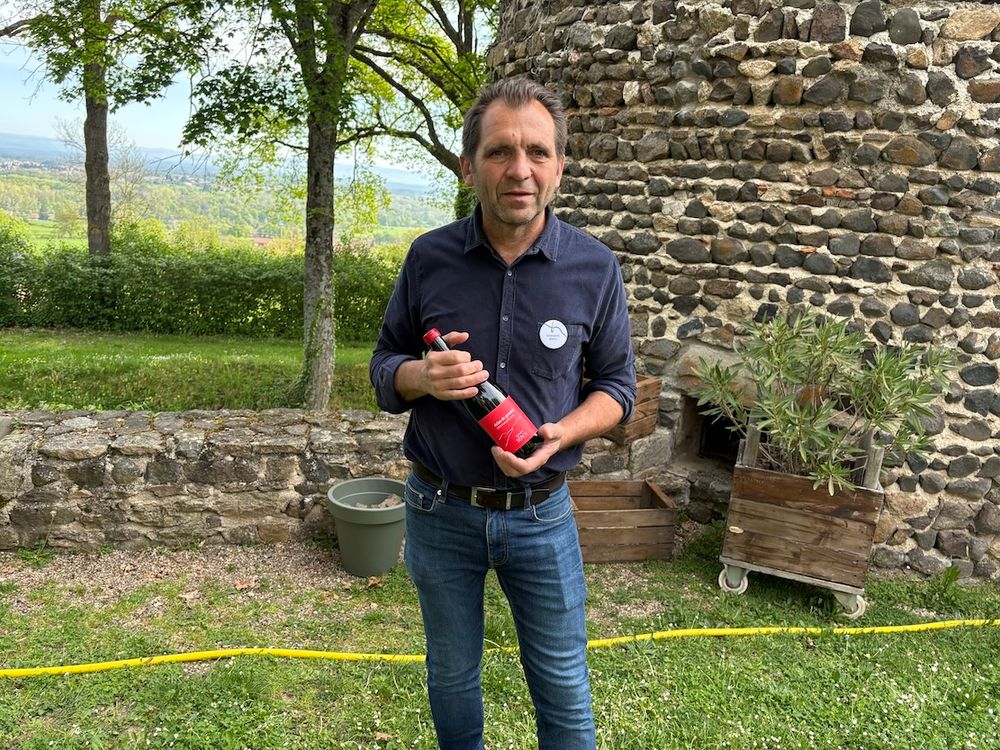
President of Loire Volcanique: Stéphane Serol of Domaine Serol, Côte Roannais AOP
President of Loire Volcanique is Stéphane of Domaine Sérol who makes food-friendly wines with his wife Carine. They are in the Côte Roannais in Renaison in the Loire valley near the river’s source. They grow Gamay St. Romain a special Gamay from this region. Here is the climate is much cooler than in Beaujolais with granite soils. They also own a special vineyard with Trois Gros called “Les Blondins”. Among the growers in the Côte Roannais is also David Michelis who changed careers from the performing arts to became a winemaker later in life creating the Domaine Reniteo with youthful appeal and label design. Young producer Lorent Thinon (showing just three wines) also attracts much interest.
Whist the Loire Volcanique is named for its geology it is entirely non specific: the Massif Central is mostly composed of igneous and metamorphic rocks, especially granite, however, there are alluvial sediments in Saint-Pourçain, and limestone in Saint-Pourçain and the Côtes d’Auvergne.
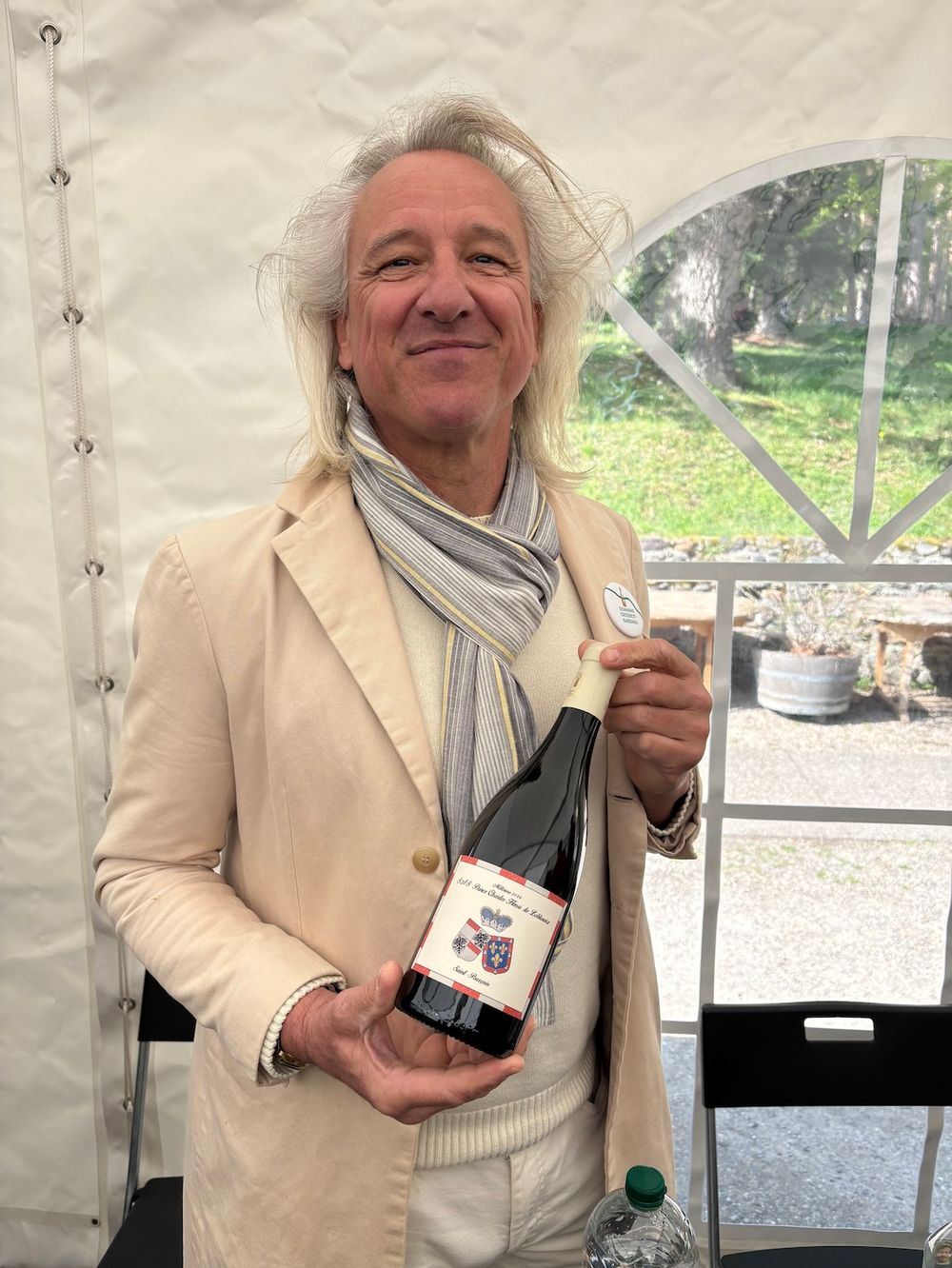
Denis Barbara Domaine Grosbot-Barbara, Saint-Pourçain AOP
Saint-Pourçain is the biggest AOC of the four and is in the middle of the Auvergne-Rhône-Alpes region: the mixture of grape varieties includes the local pride Tressallier (a biotype of Burgundy’s Sacy) which is distinguished by its liveliness, tension and minerality. For red and rosé wines the grape varieties are based on Gamay and often associated with Pinot Noir, creating blends with a finer structure and complexity. Interestingly, this area produced some of the most expensive wines in France in the Middle Ages. Among the wine represented at the tasting are those from the colourful character Denis Barbara from Domaine Grosbot-Barbara. Clos de Breuilly wines also show well
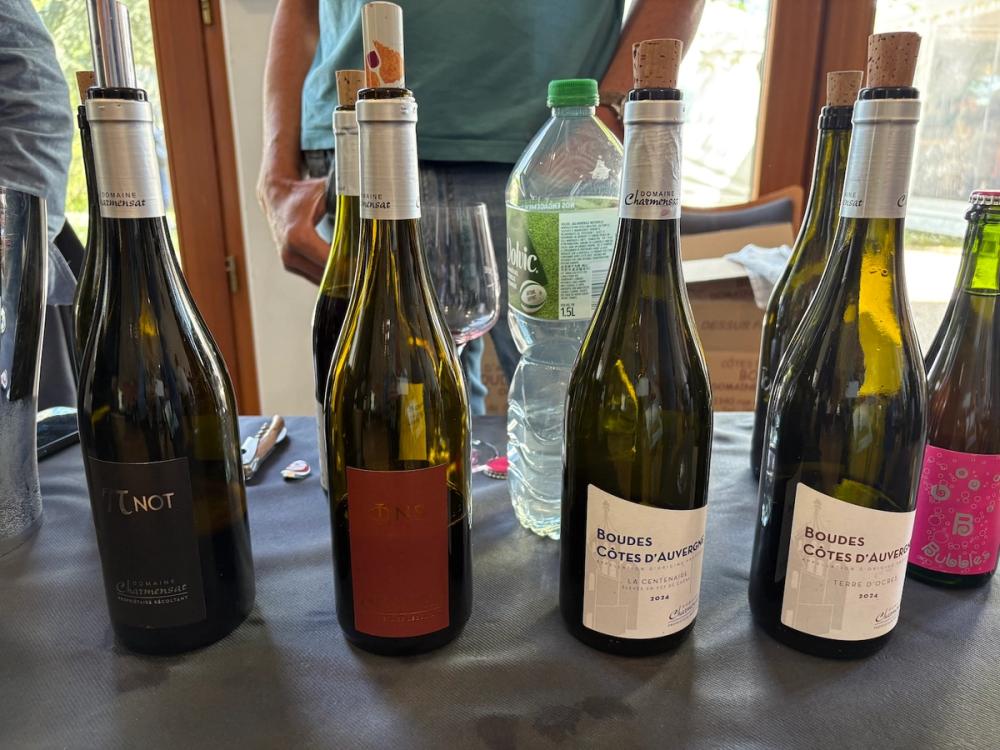
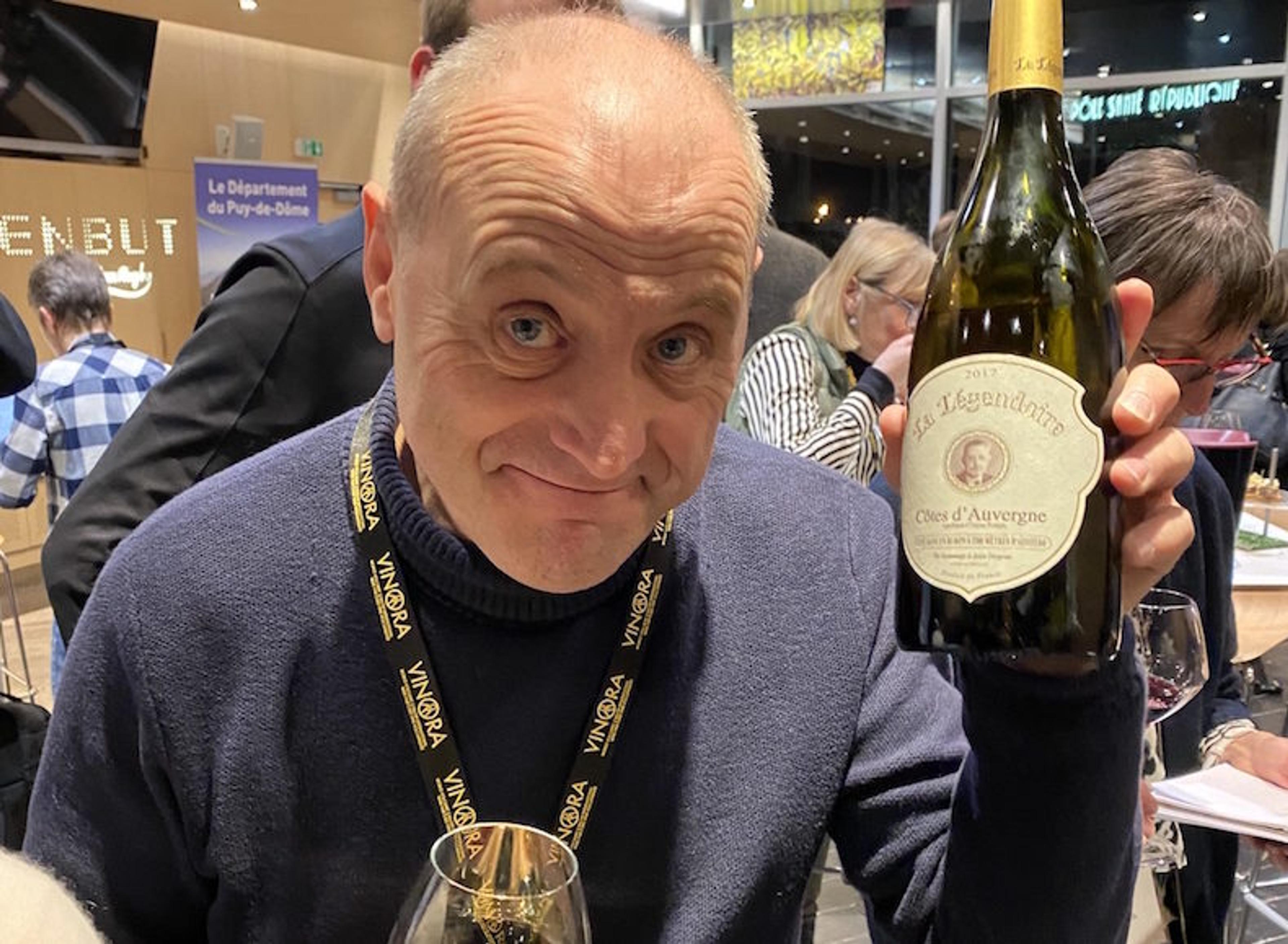
The Côtes d’Auvergne stretches over 60 km, located on both sides of Clermont-Ferrand. Les Chemins de L’Arkose produces Le Clos Rouge Cuvée Parcellaire from a plot of old Gamay and Pinot Noir planted on calcareous soil with basaltic debris. Wines from Domaine Charmensat also show well with a wide range of terroir-driven wines from Gamay and Pinot Noir which embody classic cool-climate qualities. The AOC permits white, red and rosé wines with Gamay, Pinot Noir and Chardonnay.
Serious organic and biodynamic approaches
The quality of the wines we tasted from all four regions is outstanding and it’s a delight to see organic and biodynamic farming taken seriously rather than just being a marketing ploy.
You get the feeling this area won’t be overlooked for much longer and many producers warrant closer attention from overseas importers. Loire Volcanique may not be recognised as an AOC in its own right - still it is a very clever tag line to help give wines from this region more of the recognition they deserve.