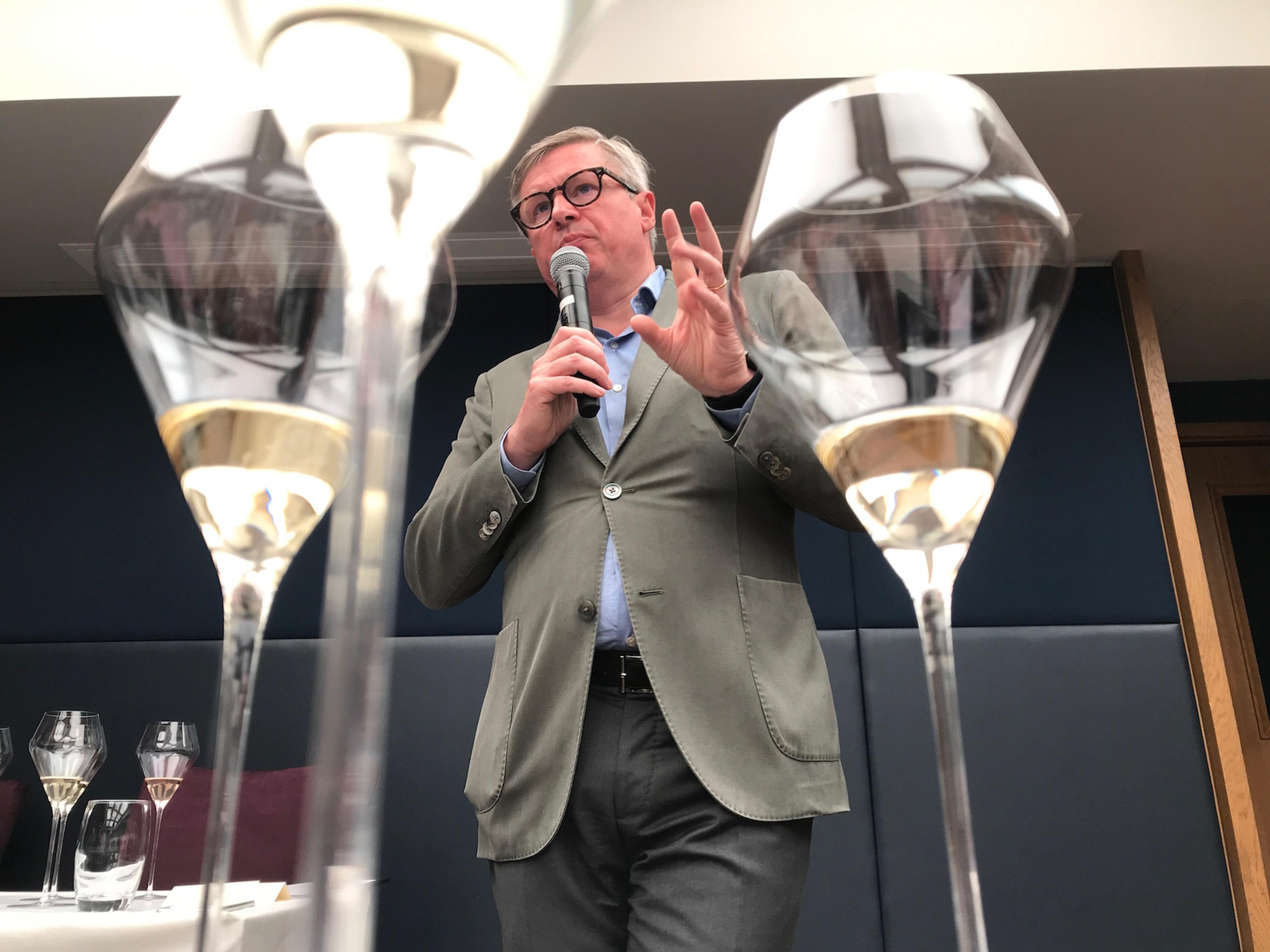
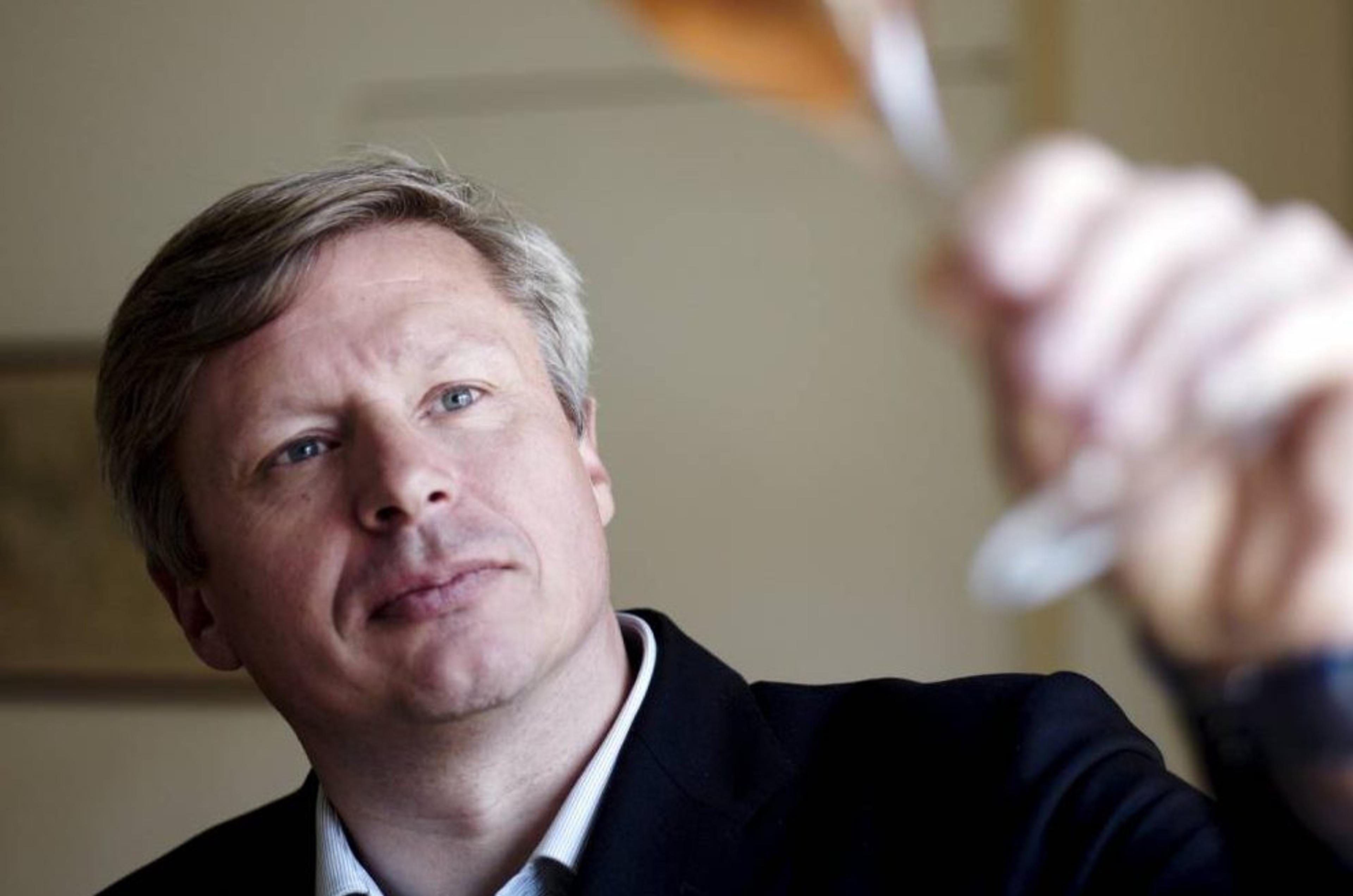
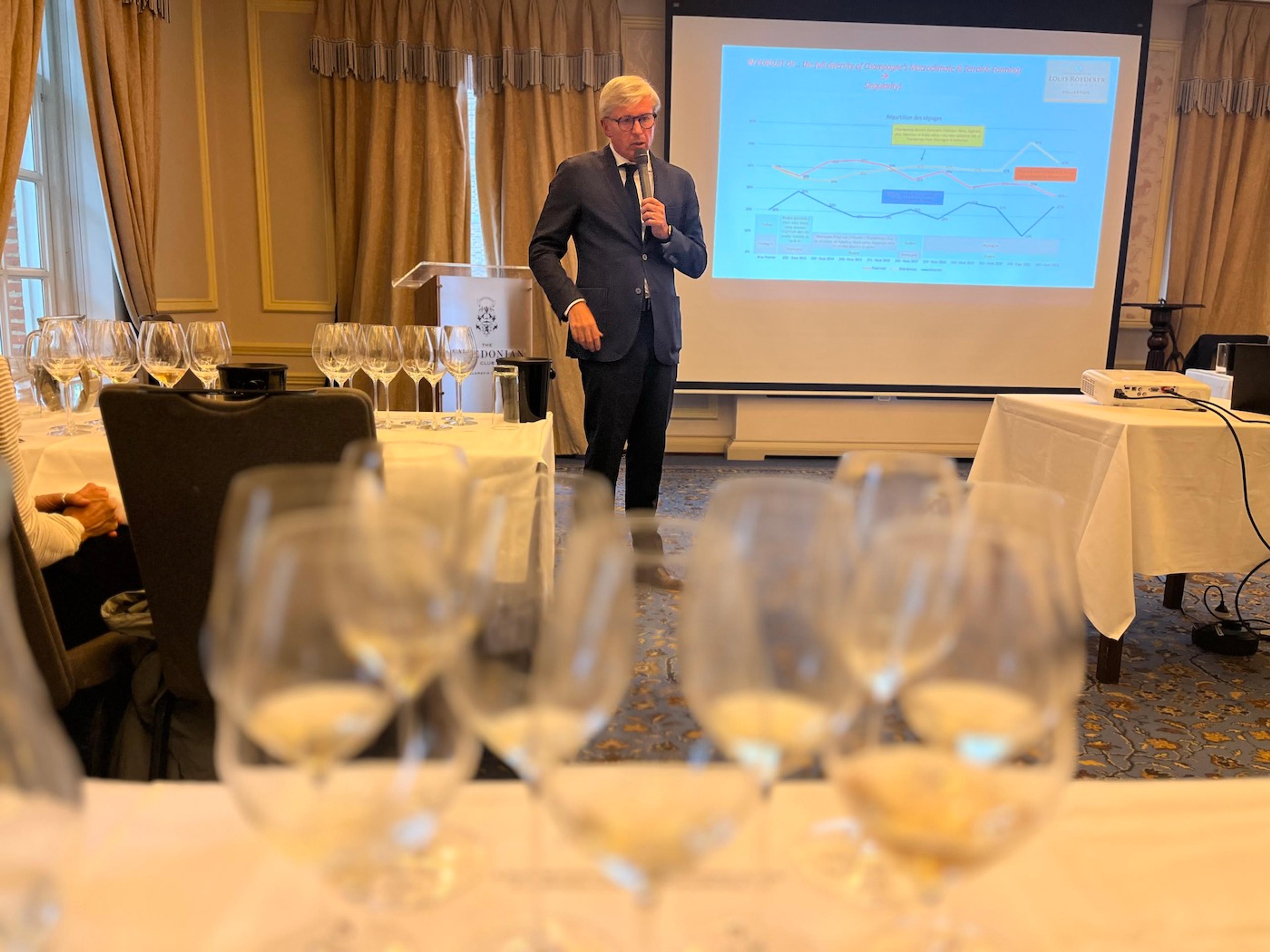
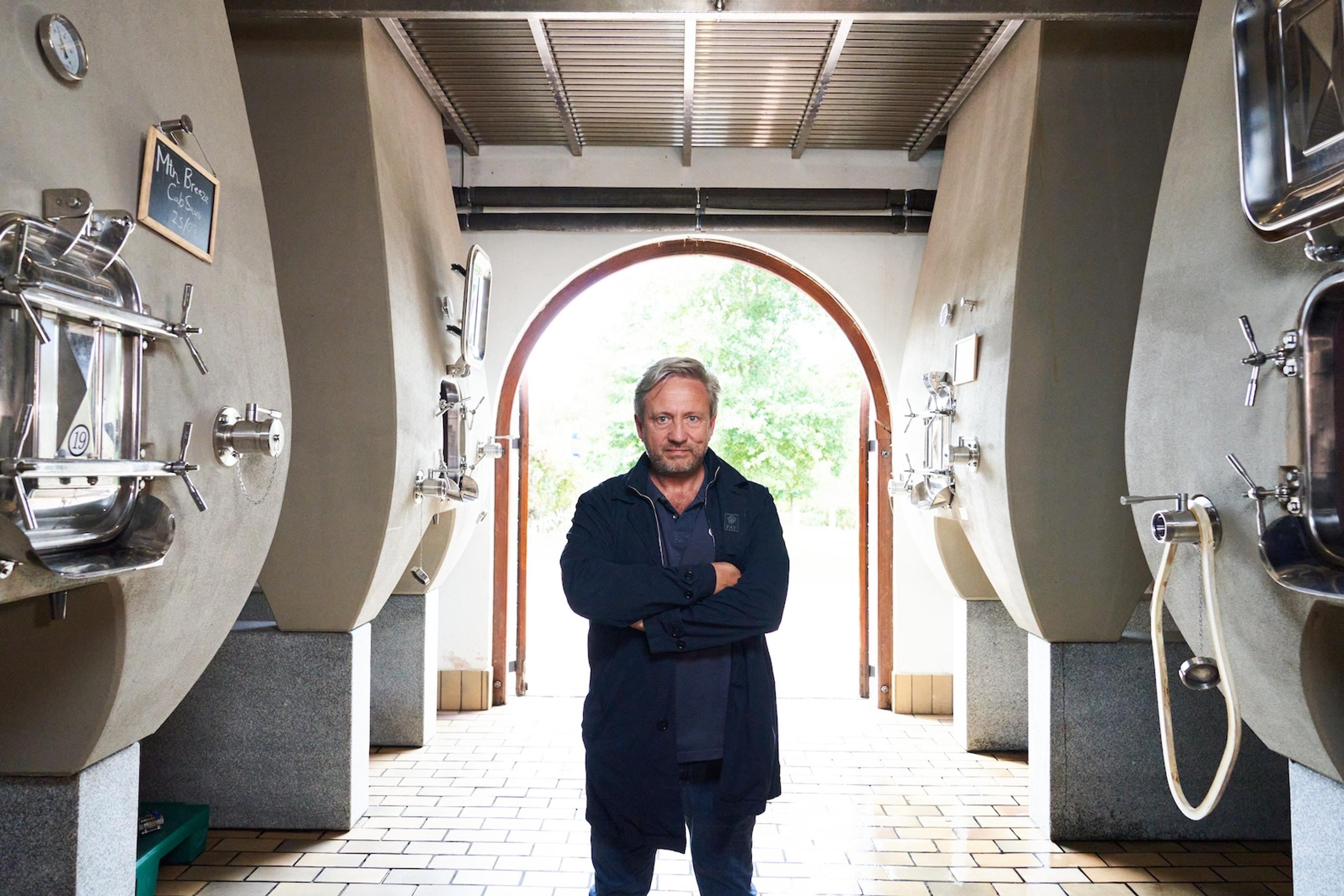
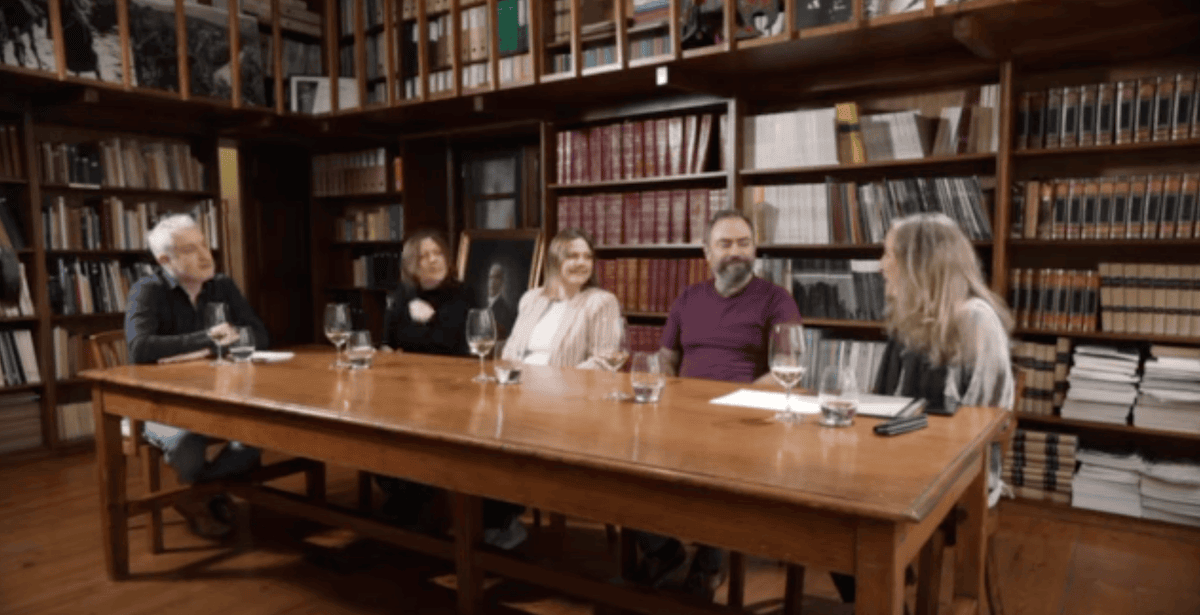
Lécaillon turned 60 this year but does not look it. Trained in agronomy and oenology, he joined Louis Roederer in 1989 and was posted to California and Tasmania before becoming cellar master in 1999. Since 2000, he has also had overall responsibility for winemaking across the Roederer Group
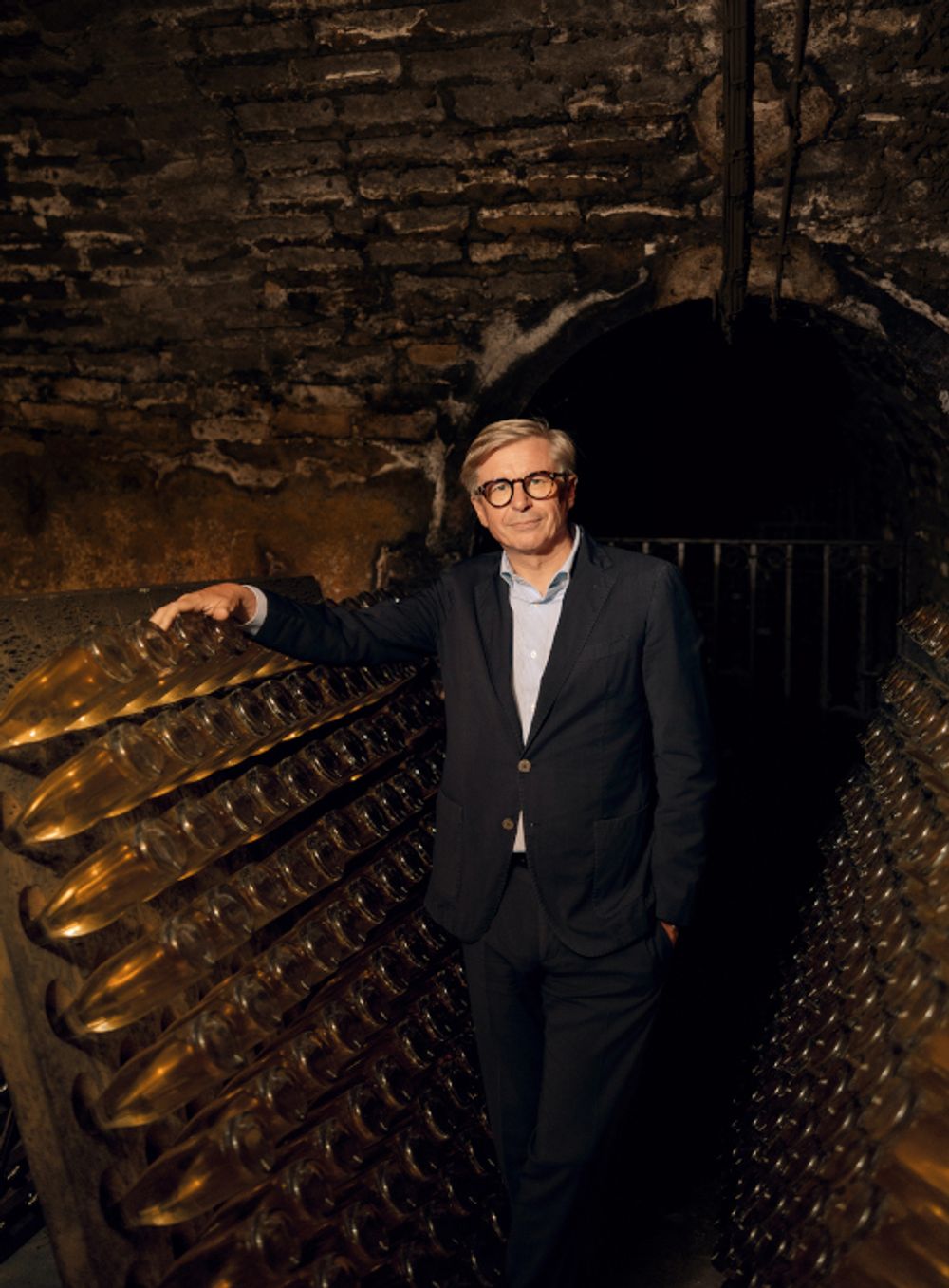
“I think maybe I went the hard way when there was an easier way and I didn’t see it.” Jean-Baptiste ©Louis Roederer
A revolution in the mind
Lécaillon can remember the key person and key moment that inspired him, way back when he worked for Roederer in Tasmania: “It was when I first met Bill Mollison,” he says. Mollison (1928-2016) was an Australian scholar and the father of permaculture.
“It was kind of a shock for me because I was trained and educated by the French school of winemaking and farming, very scientific, very focused on elements, the precise nitrogen, potassium, phosphorus, all the story of fertilisers and so on,” Lécaillon says.
“Bill Mollison explained a total picture. I remember my meeting exactly, the revolution it made in my mind. I was 25, and it was exactly the same as the revolution I had when I discovered umami. I was only trained in [the tastes of] salty, bitter, acid and sweet. Then I came out of school and discovered umami. Delicious. This is a full picture. It is not an element, it is not analytical, it is a feeling.
“The same happened with Bill Mollison. Farming is a philosophy: what you want to get from earth, what you want to give back to earth. That's the key to farming. For me that was a shock and I had to digest it.”
Those who have had the pleasure of meeting or listening to Lécaillon will know what makes him stand out: his thinking is formed by first understanding then questioning hard science to really understand it. Received wisdom and accepted habit are compared to historical sources and current thinking to see if they still stand up. This is then put into practice, trialled, tested again, adapted again, until a full, holistic picture emerges that translates into real, rewarding, long-term action. What is perhaps even more surprising but equally key to the success is that Lécaillon can explain and articulate his findings with such clarity and accuracy. There is no encounter with him in which you do not learn something new and worth knowing.
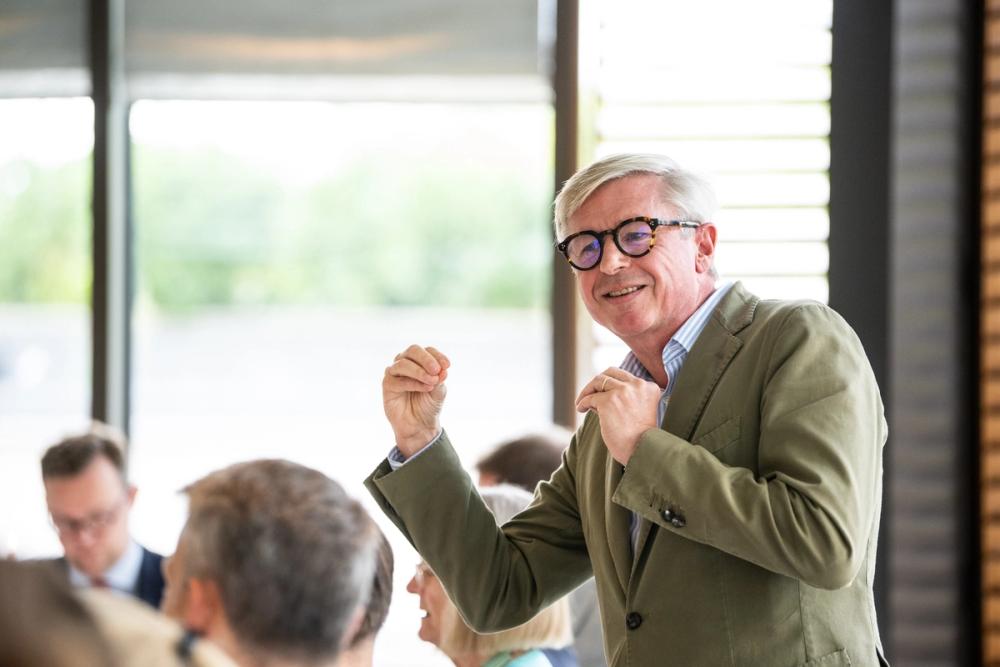
Jean-Baptiste Lécaillon at the London launch of Cristal 2018 ©David Pearce/ Louis Roederer
A challenge
Lécaillon returned to Champagne with abundant international experience under his belt and a head full of ideas. Five years later, the then president of Louis Roederer, Jean-Claude Rouzaud, father of current CEO Frédéric Rouzaud, announced he would make Lécaillon cellar master.
The offer, however, came with a challenge.
Lécaillon recalls Rozaud saying: “’Before I officialise it, think what the next step is for Cristal. What is the next step for Roederer? The next 25 years?’” Lécaillon says. “He pushed me. I said the next thing is to get out of the cellar and go in the vineyard. Yes, keep crafting in the cellar, but start to craft in the vineyards, too.” This meant Lécaillon also had to be given viticultural responsibility, an unusual combination in 1999. Rouzaud senior agreed.
"The vision became clear when Jean-Claude forced me to propose the next 25 years of Roederer. At that moment, I decided to move towards Mollison,” says Lécaillon. “To something more integrated, something more rewarding, also more human for my team, more engaging.”
"I went pruning in the winter. I did everything. I had to show my team I needed them and they respected me for it." ©Louis Roederer
A team and 360 degrees
A vision is one thing, implementing it quite another. So where did he start?
“I began by going in the vineyard with the team,” Lécaillon says. “I did all the jobs with the guys, just like in the cellar. Even if I was officially in charge, I went pruning in the winter. I did everything. I had to show my team I needed them and they respected me for it. I needed to get the respect of my vineyard and my cellar team, because without them I could not do it.”
“Once I got that, the machine was rolling itself because they were proposing new things themselves, pushing. You need to engage and empower people. Then you get the beautiful result of human beings. They do their best and you go to the next level.”
In practice, this not only meant trialling organic and biodynamic principles at Louis Roederer when this was not yet fashionable in corporate Champagne, but also observing vines, taking cuttings, testing them, propagating selections in vineyards solely created for that purpose – just imagine the cost and effort of that.
It meant pushing genetic research and staying on the cutting edge of science – via pruning methods from Simonit & Sirch but also by continuously collaborating with numerous research institutes and universities via applied science projects for doctoral researchers.
It meant creating a perpetual reserve of wines over years and years to replace the house’s bread and butter, its non-vintage brut called Brut Premier with Collection, an audacious but visionary move. It meant grubbing up vineyards and replanting at higher densities and waiting for them to yield.
It now means converting most vineyards into a different pruning system that shades fruit more and uses less water. More recently, this 360-degree approach has also meant engaging landscape sketching artist to “look at the forces of nature, the wind, the slope, the water, the beauty of the place” before planting.
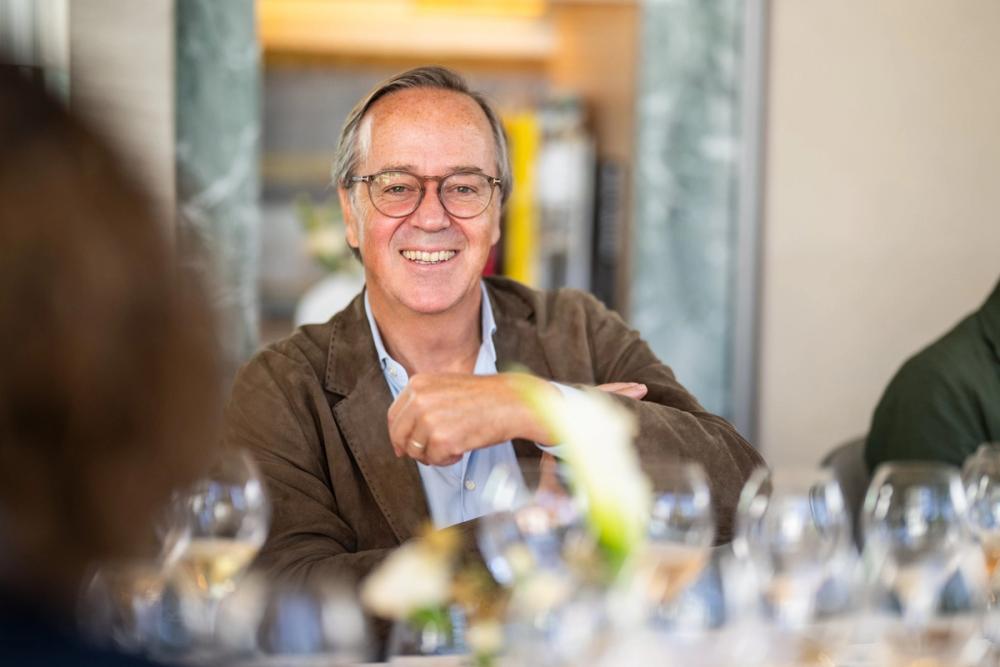
Frédéric Rouzaud continues to back innovation and progress. ©David Pearce/ Louis Roederer
Money, courage and a double-headed eagle
In the early years, everything Lécaillon did was a risk. He crucially notes that he “had the money,” meaning his boss Rouzaud Senior was happy for him to take risks and foot the bill. Changing a system and doing it properly takes time and considerable money, patience for the investments to pay off and even more courage – especially when you go against the mainstream.
Lécaillon says: “When I told Jean-Claude [Rouzaud] about biodynamics for the first time, he said he had met Anne-Claude Leflaive and Jean-Michel Deiss [biodynamic pioneers in Burgundy and Alsace, respectively]. He said he had dreamed about it but never had the courage to do it. He told me ‘you have the courage to do it, and you are young’”, Lécaillon recalls and admits: “I don't know if I would have the same courage today, by the way.”
It is this financial backing and this trust that made everything possible. Lécaillon today counsels younger winemakers who want to implement change: “Be sure the owner is on board, has your back. If not, don't waste your time.”
Speaking now, decades later, Lécaillon also sees himself in a different light.
“I was young and when you are young, you have the full power of youth. I had no limit. I didn't see that with some people there was resistance. And I was lucky. Jean-Claude Rouzaud handed me the keys, so everybody aligned.”
Notably, Jean-Claude Rouzaud had not just directed his business from above, he had also worked in vineyards and cellar. Today, his son Frédéric continues to back innovation and progress. Lécaillon remembers being told by Jean-Claude when he appointed Frédéric as his successor and CEO in 2006 that the two men, just a year apart in age, “should work as a duo. You are my eagle of double face,” the outgoing boss said.
A different ingredient
New ways also bring the unexpected.
“I had two surprises,” Lécaillon says. “The first one is the speed of reaction of the land, which made me very optimistic. You do three, four years and you see nature coming on your side. This is very rewarding. I didn't expect it to be that fast. So, we can be very optimistic about the future. If we have the will to do it, it will happen.”
But something else also struck him: “I was fully in the vineyards, trying to get more flavours in my fruit, more density, more of everything and I discovered that I also had to reconsider all my winemaking processes, and I didn't expect that. Because the ingredient was changing, the reaction to sulphur, to racking, to all the basics of winemaking. That was my big surprise,” he says.
“It's a complete journey. I went from the cellar to the vineyards. Then I came back to the cellar for this, to relearn. Then I went back to the vineyard again and fine-tuned that. Now I'm coming back to the cellar again.”
He now feels that all of the “options of creativity” are aligned. But more of that later.
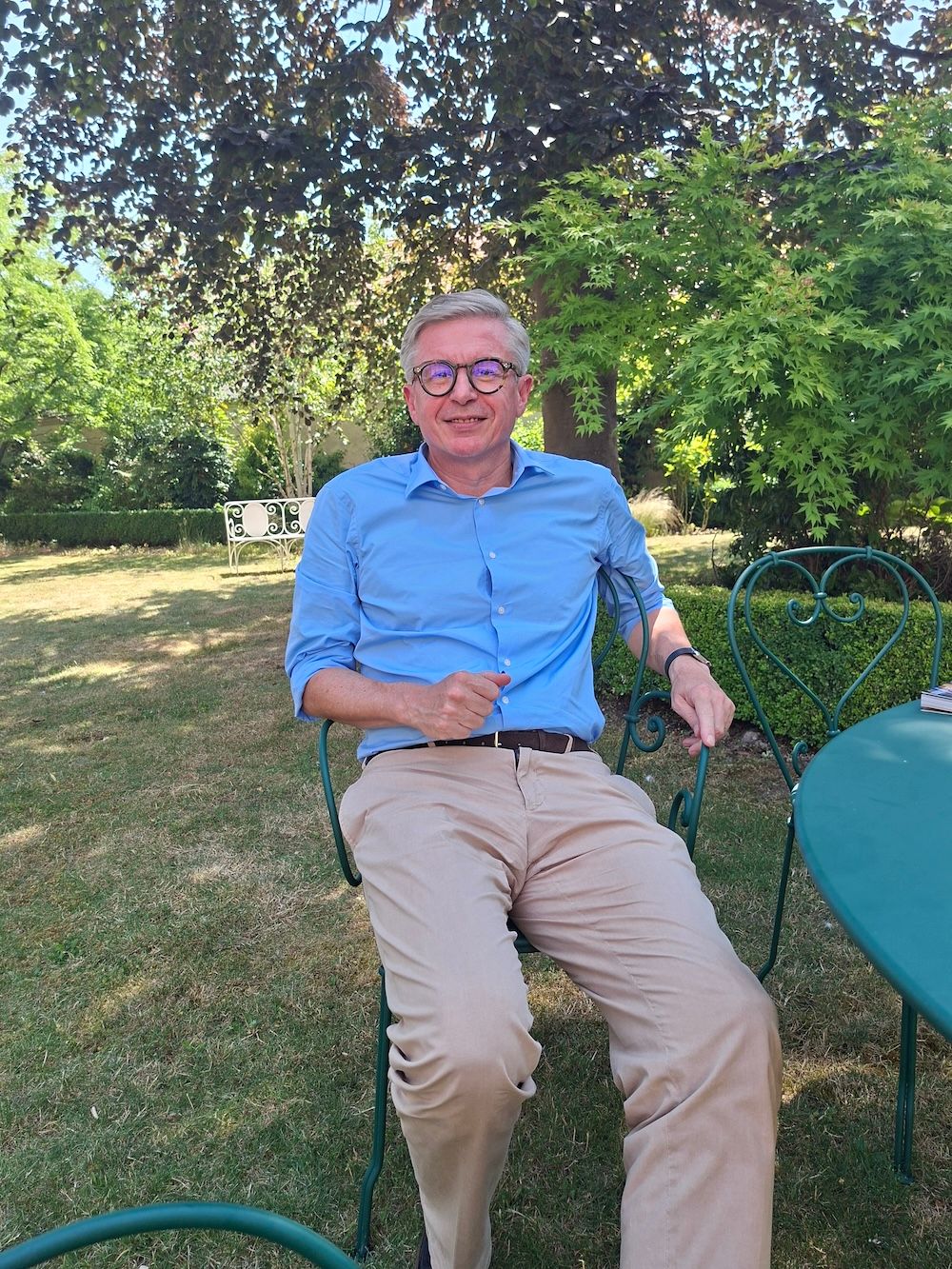
Regretting the lack of networking: Jean-Baptiste Lécaillon in the garden of Louis Roederer's Hôtel Particulier in Reims
Regrets, reflection, storms and beauty
Clearly, Lécaillon dedicated all his energy to this big responsibility he had been given. Is there something he would have done differently? His answer is telling.
“With all of this energy of youth I deployed, maybe I was a little bit too impassioned to see things happen. What I regret is that I didn't take enough time to network.”
He says that he just joined the Académie Internationale du Vin, a wine-focused forum, where he can exchange ideas with other great minds of the wine world.
“Listen, I’m 60. I’m an academician of wine. Great. Fantastic. But you know what I would have loved? To have been an academician at 40. I could have created such a network. It would have been easier for me.” This is his way of saying his ideas often were ahead of their time. “I think maybe I went the hard way when there was an easier way and I didn’t see it.”
Another challenge was to keep his team on board in the face of doubters.
“My behaviour all along this journey has been that of a captain on a deck in a storm,” Lécaillon says. “The captain must know the direction. He enters the storm, trims the sails and gives confidence to the team that they will get out of the storm. I had to prove to them that it was the right direction. If you have doubts, you keep them to yourself,” he says and explains: “When I was 20, after meeting Mollison, Anne-Claude Leflaive and Dominique Lafon, I had little doubt that there was a journey to great wines, to the greatest wines. They were even more pioneering, and they may have made mistakes, but there was a direction. The beauty of their wine was showing. I knew there was more, something beyond.”
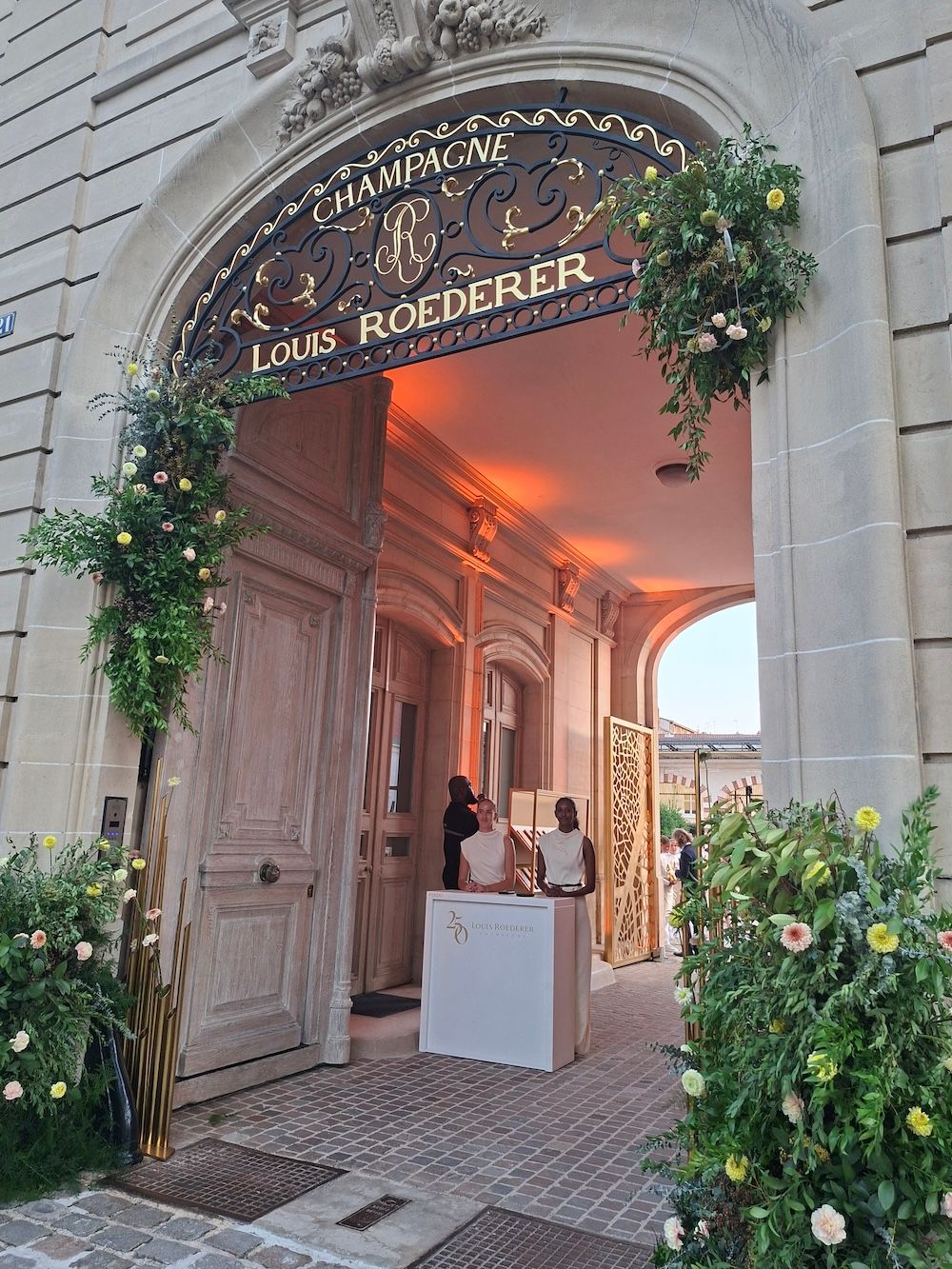
Let the festivities begin - Louis Roederer's 250th anniversary party Reims
Looking ahead and reinventing
Of course, having such a 360-degree approach also means looking to the future and nurturing talent. Johann Merle, for instance, has been Lécaillon‘s “right-hand-man” since 2001 and now oversees all viticulture.
“The project grows with the people, only with the people.” But this is also where Lécaillon sees the biggest challenge for Champagne: “When people ask me, I always say there is only one big challenge, the biggest: workforce. Yes of course, climate change; if we don't have the people to do the right thing at the right time in a good way, we are finished. So, we need people.”
And indeed, farming and viticulture are not viewed as prestigious or even mainstream career paths. About climate change itself, Lécaillon is also clear, especially following the unprecedented summer of heatwaves of 2026.
“I think this is my lesson of 2026: we cannot mitigate anymore. Mitigation is not enough. For 40 years, we said let's mitigate, let's change a little bit of this, a little bit of that, that will do the job. Mitigating is not a strong enough action anymore. We need to reinvent.”
That’s exactly what Lécaillon has been doing, in cellar and vineyard. So, it is not surprising that he sounds optimistic for the future.
Robustness, creativity and having fun
“Maybe the final, the most important word in all that is robustness,” Lécaillon says. “We built a resilient ecosystem with farming, massal selection, we built robustness and it is still growing,” he says about his years of observing and selecting vines, trialling rootstocks, adapting farming practices and overhauling what he does in the cellar.
“I think there are phases: creativity in the vineyard, change in the cellar to adapt, go back in the vineyard to create even further with the massal selection, and then finally come back to the cellar to have the full options of creativity.”
He also drops a heavy hint of new wines to emerge from the Roederer cellar.
“In the next five years, you will see a new wine with a new story. I am in full creativity mode. Someone asked me do you think about retirement? No, I have too much fun now,” he says, with a smile that means he has untold treasure in the Roederer cellars.