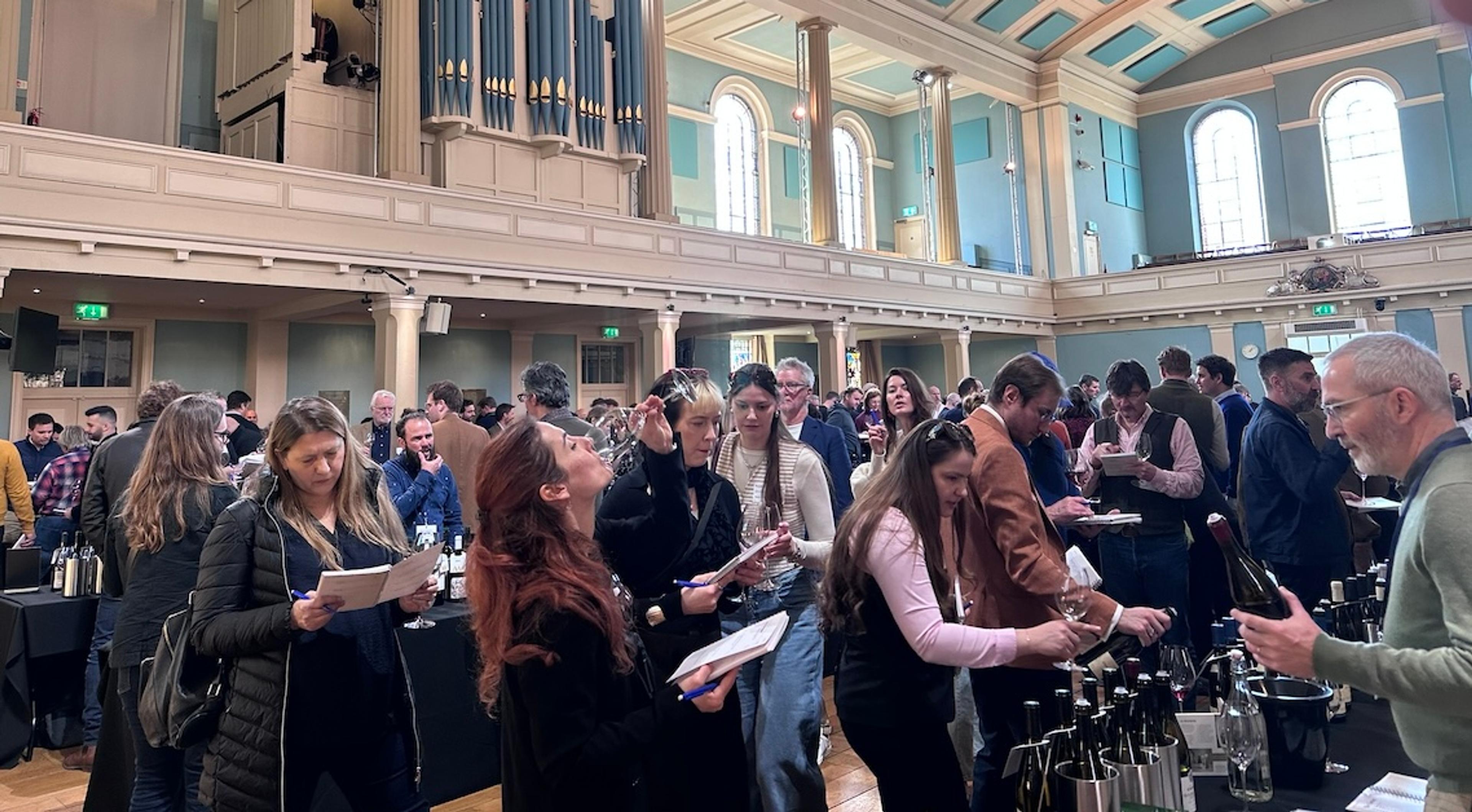
When I arrived at Glaziers Hall for the Alliance Wine/H2 Vin tasting called “A Taste of Inspiration” it had me wondering, again, about how much thought goes into conceptualising trade tastings. Importers these days are increasingly searching for a theme to support and justify events – typically around sustainability or with a tagline like “Looking to the Future” or “The Search for Freshness” or something similarly compelling.
Alliance went the whole hog by wrapping its Spring event around “four themed story spaces, each bringing together five producers connected by a shared narrative.” So that was:
- Stories Written in the Land
- Stories Inspired by Innovation
- Stories Shared by Heritage
- Stories Nurtured by One Grape.
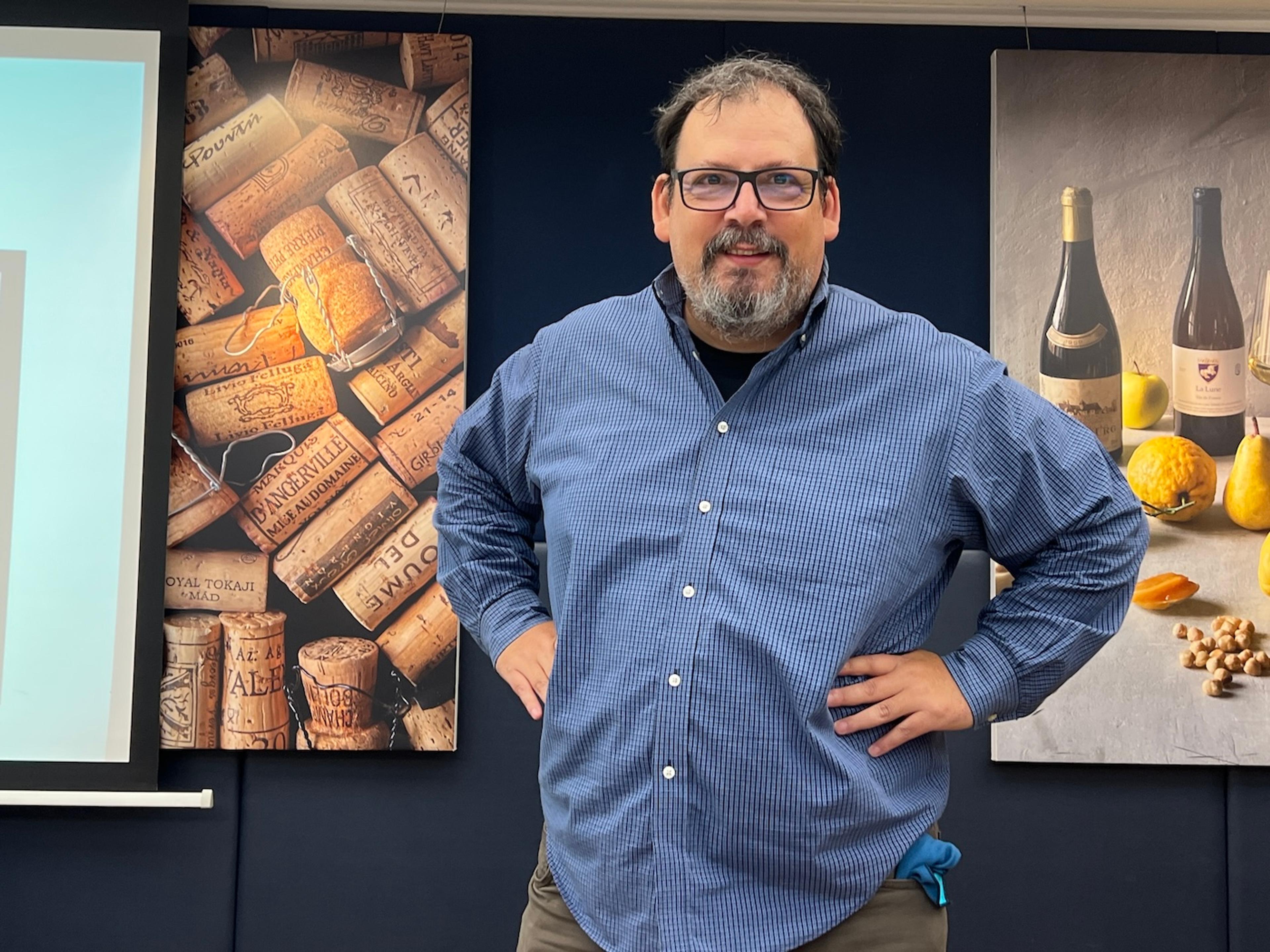
“Of course, none of these are mutually exclusive but we felt it was a good idea to guide visitors by theme rather than just having a traditional walk around tasting,” says Kiki Evans, Alliance’s press, content and design manager, who adds that Alliance and H2Vin are now fully integrated after their merger.
“Our blended portfolio enhances the strength and depth of the service we provide to our customers, allowing us to work with a broader spectrum of clients. The knowledge and skills of a Master Sommelier, combined with four Masters of Wine already within the company, underpin our expertise credentials.”
“With this event, we really wanted to pinpoint what it is that makes these producers great, so we chose just 20 producers on 20 tables and limited them to six wines at most.”
My response was to adopt my own selective strategy – visit every table and ask the producer to select two wines that best exemplify what it is they are trying to achieve, and of which they are most proud.
Here’s my top 10 producers and wines.
Stories Written in the Land (Terroir driven)
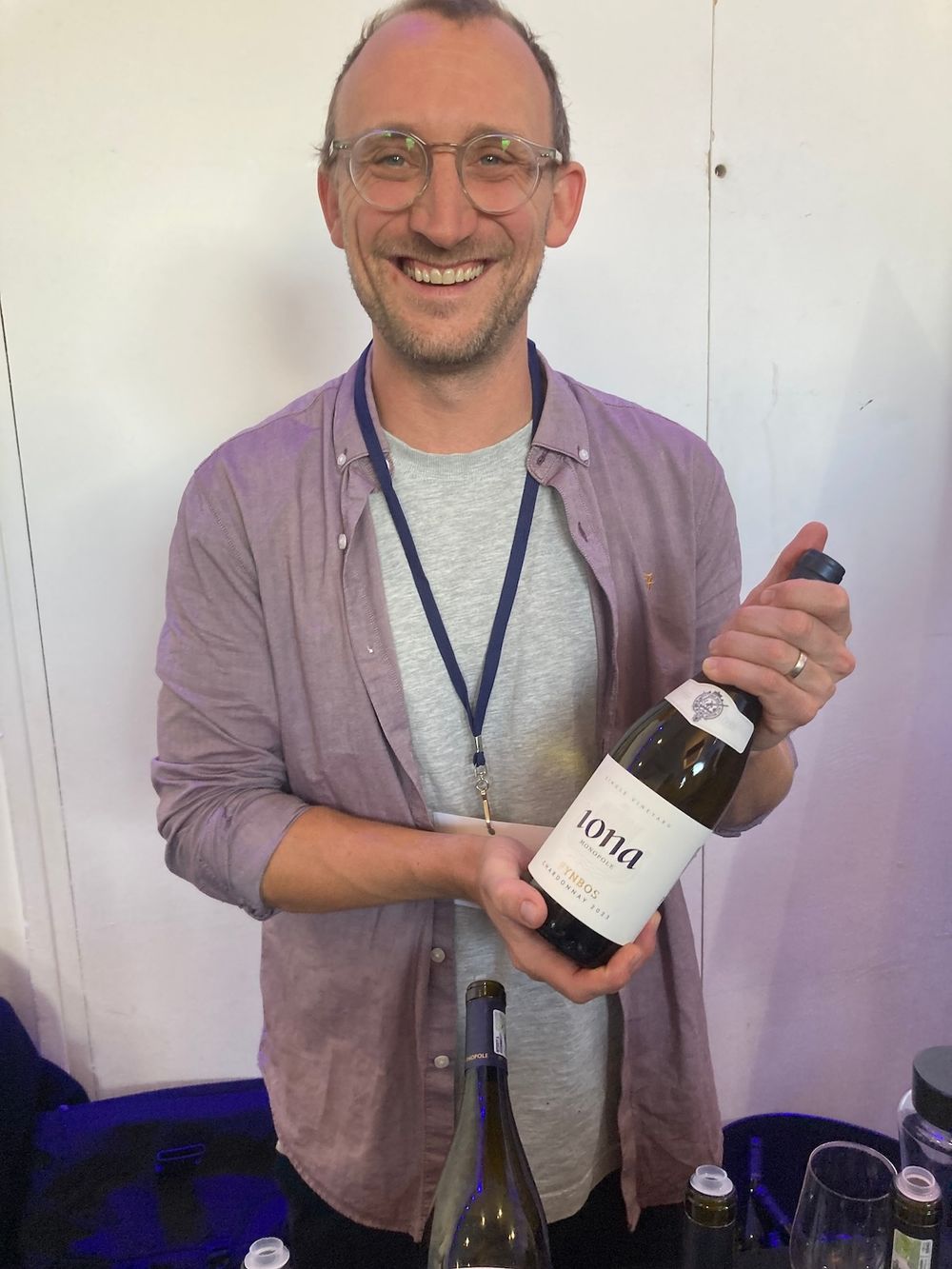
Iona (South Africa)
Based in the Elgin Valley, this smallish organic producer (typically making around 270,000 bottles) is focused on Sauvignon Blanc, Chardonnay and Pinot Noir, and very elegant and well-made they are too. It was fascinating to compare the lean 2023s with the much richer 2024s, a product of the very different vintages South Africa had. My top wine, the Fynbos Single Vineyard Chardonnay 2023 is very elegant, just 12.5% ABV, with suggestions of peach and apricot on the palate.
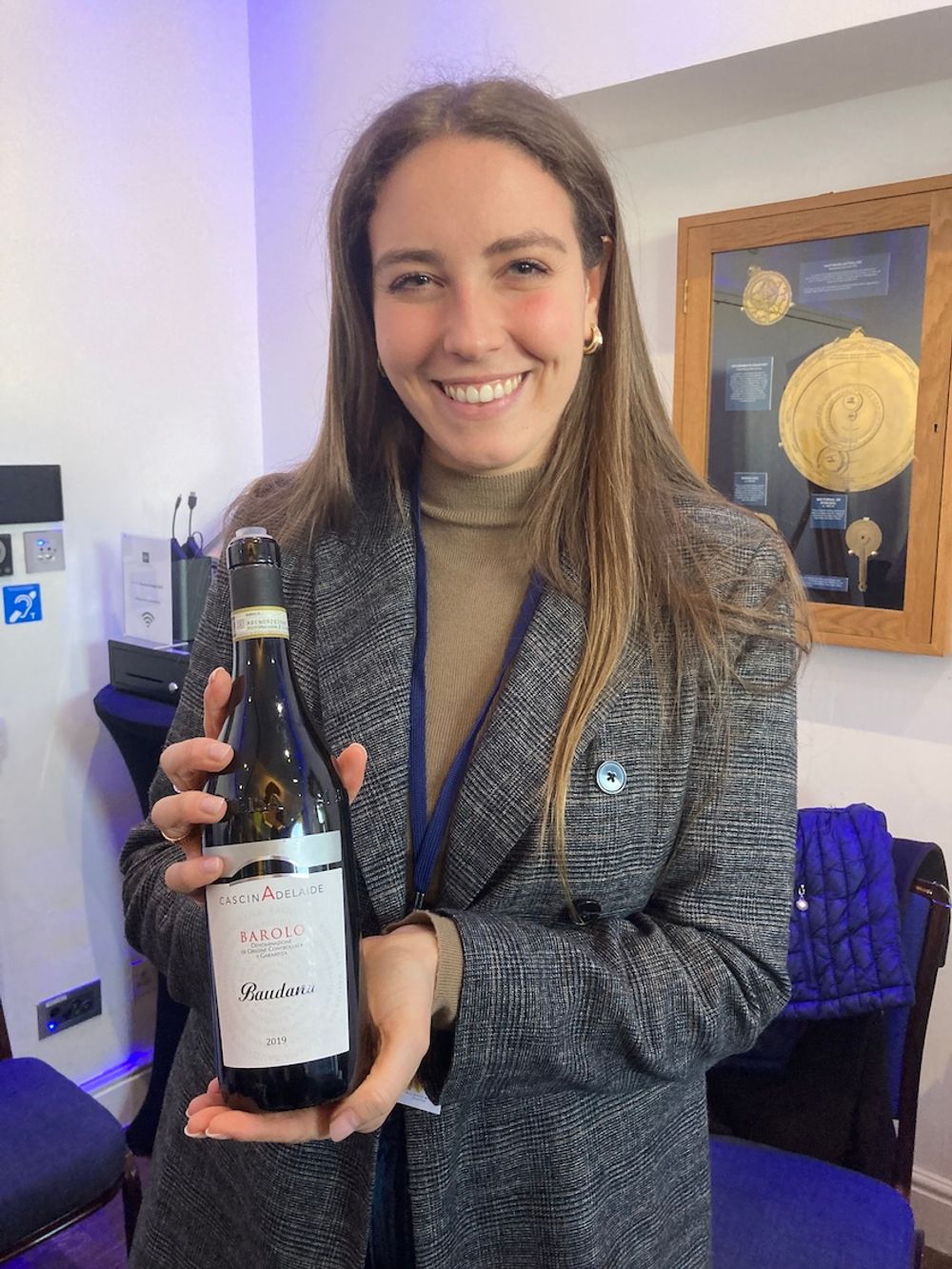
Cascina Adelaide (Italy)
Chiara Droco – part of the family that owns and runs the Piedmont-based estate founded by her grandfather – says the most important thing in making wine is “that the vines must be happy.” Hers certainly seem to be, now producing just 35,000 bottle a year against the 80,000 when the family had its first vintage back in 2000. And the quality is certainly here as I found with my wine of choice, the Baudana Barolo DOCG 2019. Made from vines planted in clay and stone soils, this is a big-structured wine but very fresh. “Crocante” as Chiara puts it, or “crunchy.” Very nice.
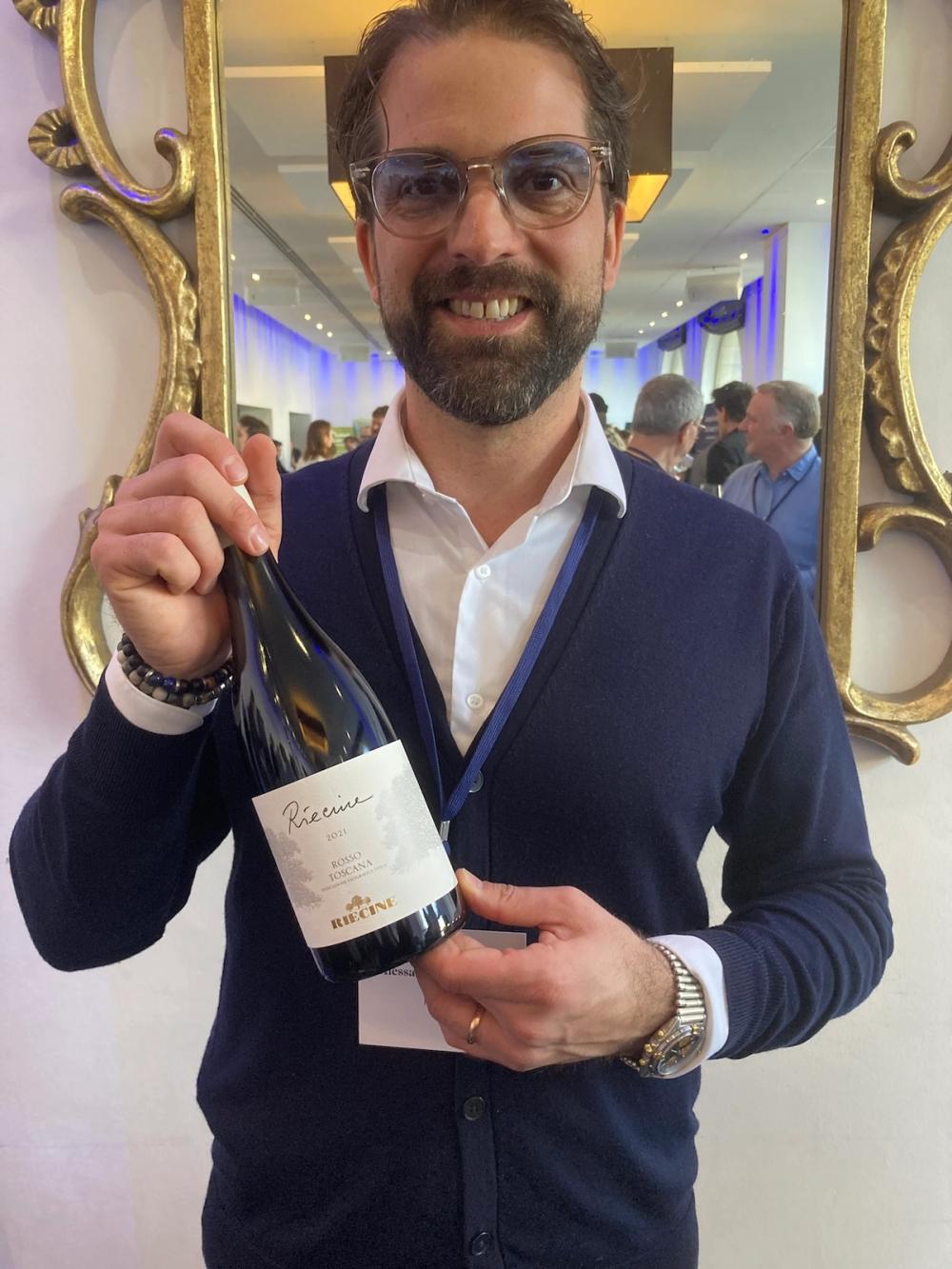
Riecine (Italy)
Chianti Classico isn’t always my wine of choice which may be why I really liked the Riecine di Riecine 2021, an IGT wine produced in the oldest vineyard on the estate. Riecine, founded by Englishman John Dunkley, is organic and biodynamic and this wine – now 100% Sangiovese – is lighter and stylistically slightly removed from what was your ‘typical’ Chianti Classico – which is why Riecine took it out of the DOCG and not intending to resubmit it. “We’re not ready to submit it to a tasting by the Consorzio panel,” admitted Alessandro Campatelli.
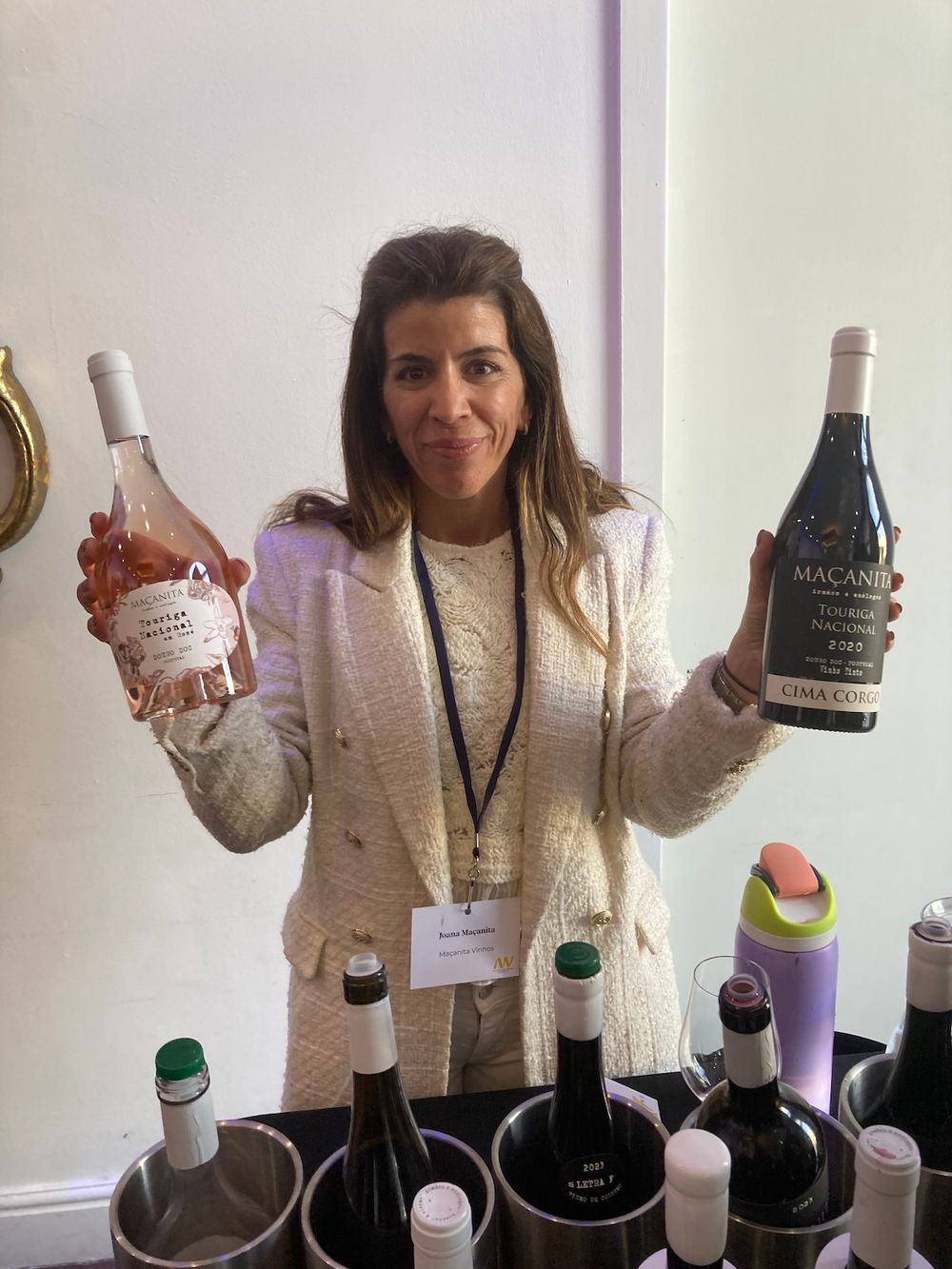
Maçanita Vinhos (Portugal)
On his latest album Live God, Nick Cave sings: “we’ve all had too much sorrow, now is the time for joy.” I recalled those words as I tasted Maçanita Vinhos Touriga Nacional Rosé 2024, a delicious pink ‘take’ on the Douro variety produced by siblings Joana and Antonio Maçanita at their Douro estate, established in 2011 where they now make no fewer than 23 wines.
I’ve been a huge fan of the Maçanitas since visiting their ambitious project in the Azores a few years ago where they have revived several ancient varieties, most notably Terrantez do Pico. These Douro wines are just as impressive. “We’re on a quest to show the terroir of the Douro without any boundaries,” says Joana.
I loved the rich red, moreish Touriga Nacional 2020 and also the white field blend Os Caniveis Branco Vinhas Velhas 2023 made from 17 varieties in vineyards, some of which are over 90 years old. So how to describe this delicious, rich, slightly spicy and lightly perfumed Touriga Nacional Rosé? Joy, in a bottle. And now is the time for it, as Mr Cave might say.
Stories Inspired by Innovation (Doing stuff differently)
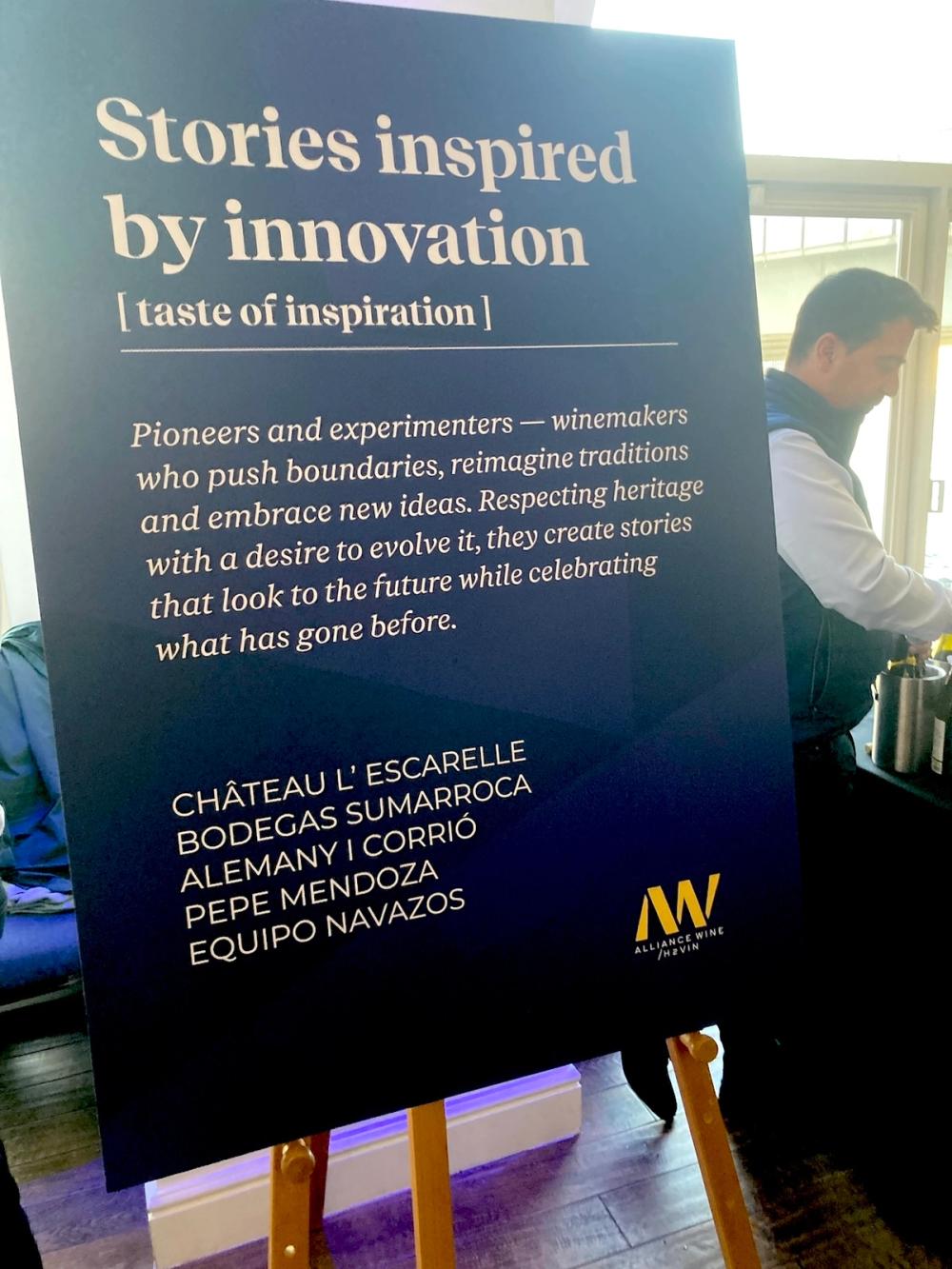
Pepe Mendoza (Spain)
South-east Spain is hardly renowned for its wine but Pepe Mendoza is seeking to change that with his eponymous organic winery north of Alicante, which gets coastal breezes in 100+ year old vineyards. As Alliance puts it “his approach blends heritage with innovation; ancient terraces are cultivated with modern ecological insight and traditional varieties are reimagined through thoughtful craftsmanship.” The two main red varieties here are Giró – a local Grenache clone – and Monastrell, but my favourite wine here was the white Pureza Ánfora 2023, made with 100% Moscatel de Alejandría; a rounded but balanced slightly off dry palate, given backbone with six months in amphora before bottling. Very decent.
Stories Shaped by Heritage (Family traditions)
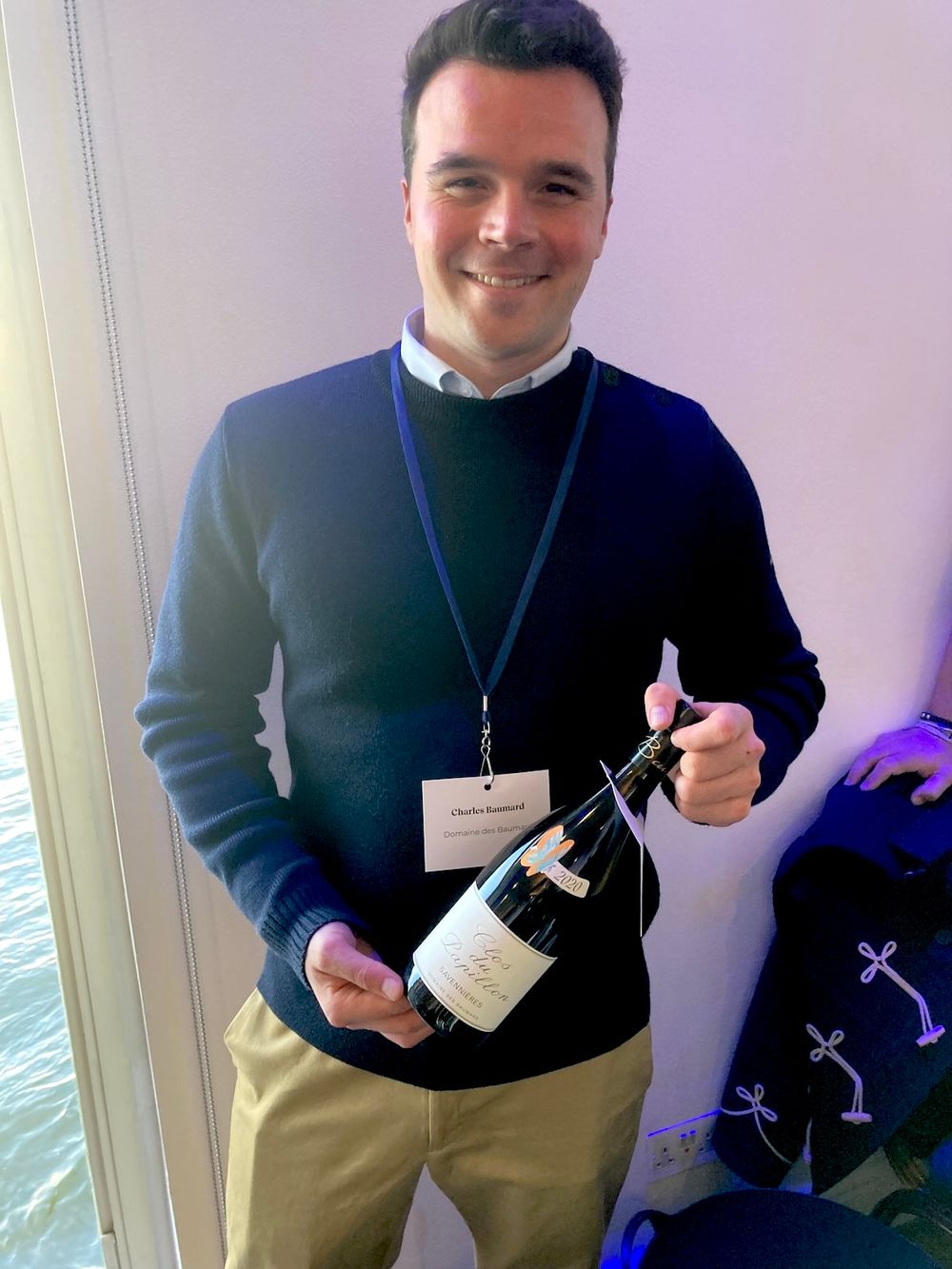
Domaine des Baumard (France)
A highly respected producer in Savennières in the Loire, Charles Baumard prides himself on working closely with nature, never forcing anything and committed to traditional ways of working coupled with such innovations as alternative trellising and the use of screwcaps (unusual for quality wine, especially from the Loire). Chenin Blanc is the thing here and the Clos du Papillon 2020 is a stunner, nicely showing the schist soil and a much-appreciated rich style.
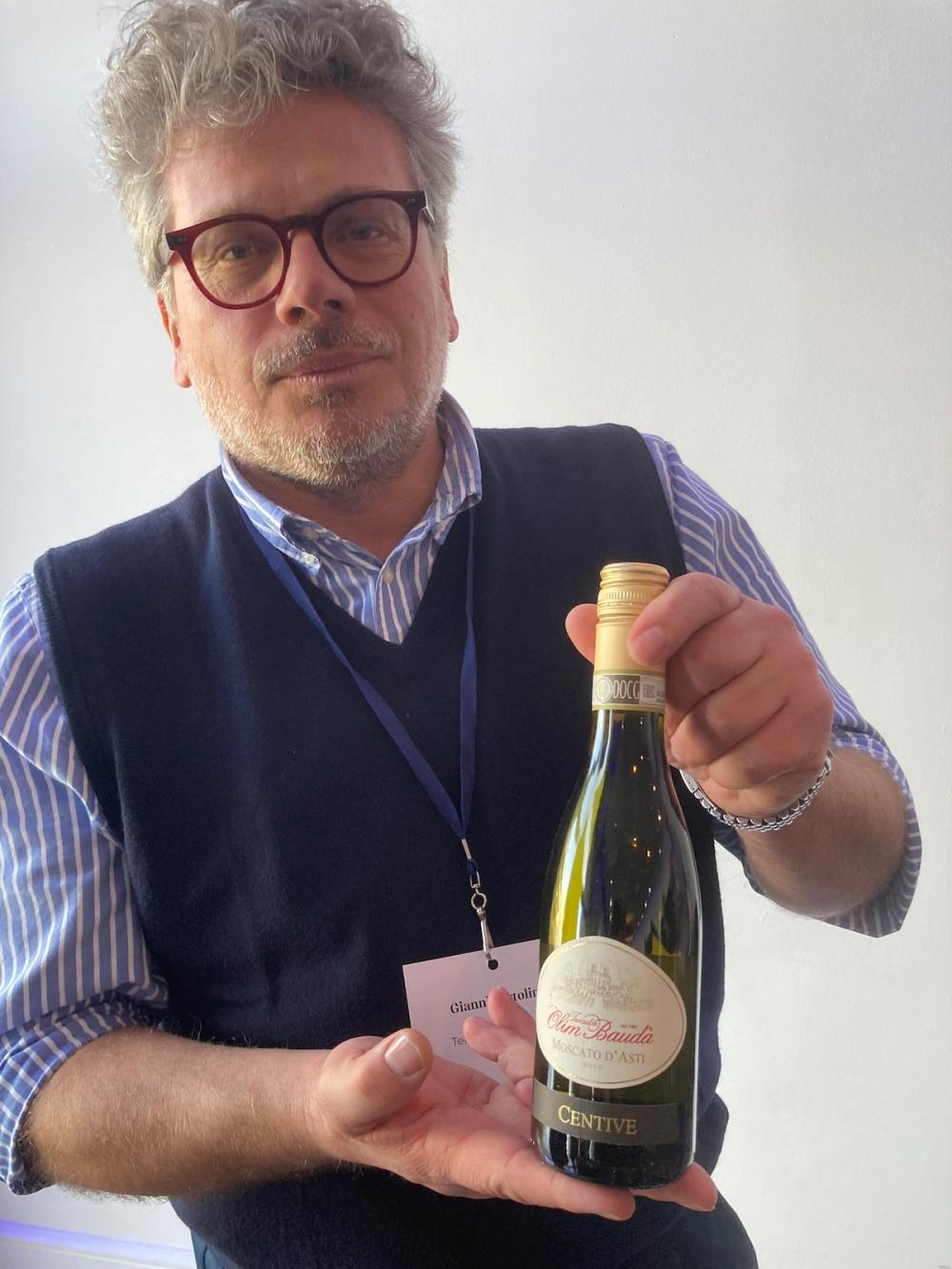
Tenuta Olim Bauda (Italy)
I think Gianni Bertolino, one of the three siblings who now run this highly regarded 1961-established estate, whose special focus is Barbera, was slightly surprised when I asked him to pose with the Tenuta Olim Bauda Centive Moscato d’Asti DOCG 2024. The Barberas were all pretty solid and full on, as you expect Barbera to be (especially the meaty, complex Nizza Riserva 2020, clocking in at 15.5% ABV). But this Moscato achieves something quite rare for me – OK, some joy, again, but perhaps just as importantly great balance and complexity that is rarely achieved from this grape variety. This is nicely frizzante, shows its terroir, not too sweet and just 5% ABV – so no troubling Catholic guilt to contend with after drinking a few glasses.
Stories nurtured from one grape (Single varietal folk)
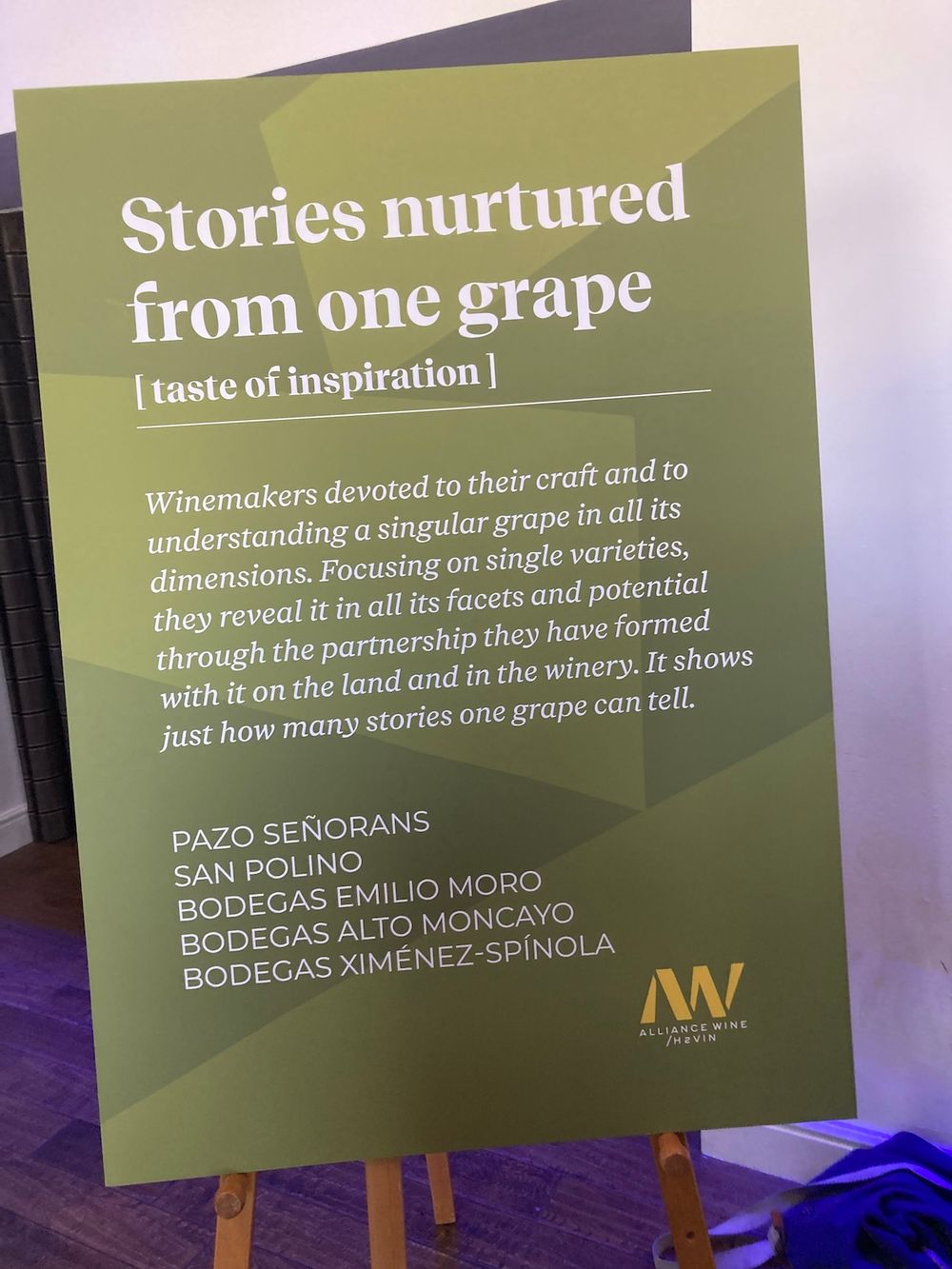
Pazo Señorans (Spain)
Albariño is having its moment right now with producers experimenting with ageing and more complex styles and this producer – which first started making wine on this estate in 1979, when no-one had heard of Rías Baixas and played a key role in getting the DO established – has been one of the drivers of the grape’s fortunes. The Pazo Señorans Albariño Tras Los Muros 2019 has had enough time to age – including spending some six months in barrique. A classy Albariño.
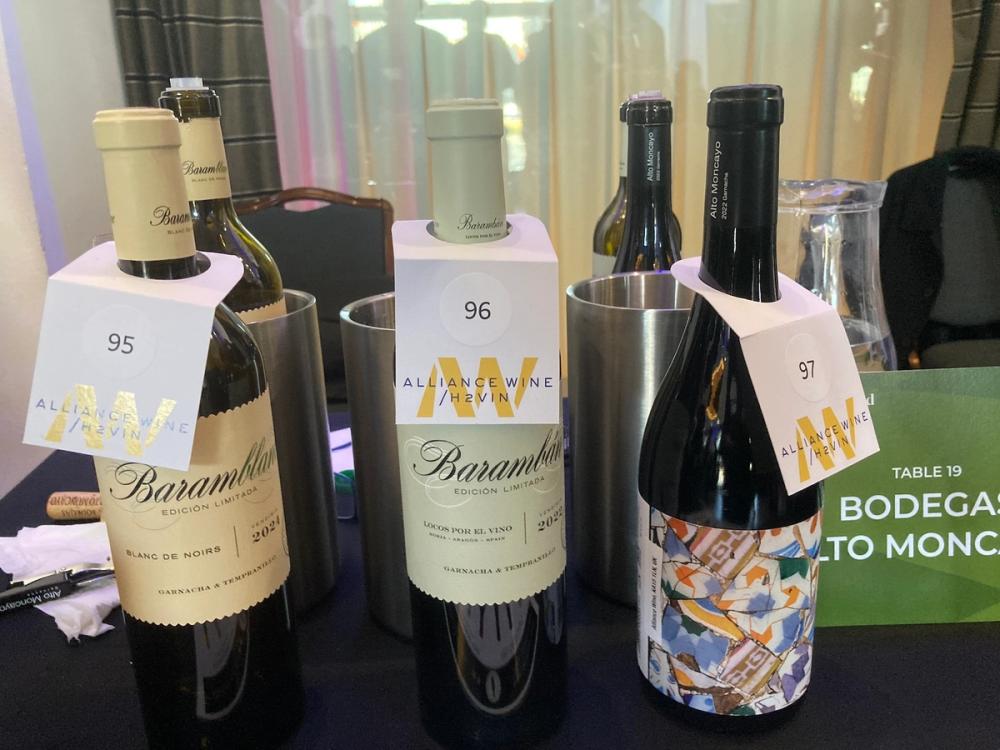
Bodegas Alto Moncayo (Spain)
If it’s value you are after, and authenticity, look no further than Campo de Borja DO, which has made a well-earned name for itself through its focus on old vines and classy Garnacha. And Bodegas Alti Moncayo, founded 25 years ago, is one of the forerunners of this, producing, typically, 240,000 bottles a year of high quality yet inexpensive Garnacha. Íñigo Alberto was showing three wines including an unusual and rather moreish Blanc de Noirs Baramblanc 2024, made from Garnacha and Tempranillo in equal amount. But my money goes to the Bodegas Alto Moncayo Veratón 2022, 100% Garnacha, very rich, cassis and dark cherry driven, (16% ABV, so yes Catholic guilt, but for wine this good, probably worth bearing with).
“Those who know Garnacha respect its natural acidity, brightness and alcohol – everything is big but balanced,” says Alberto. Quite so.
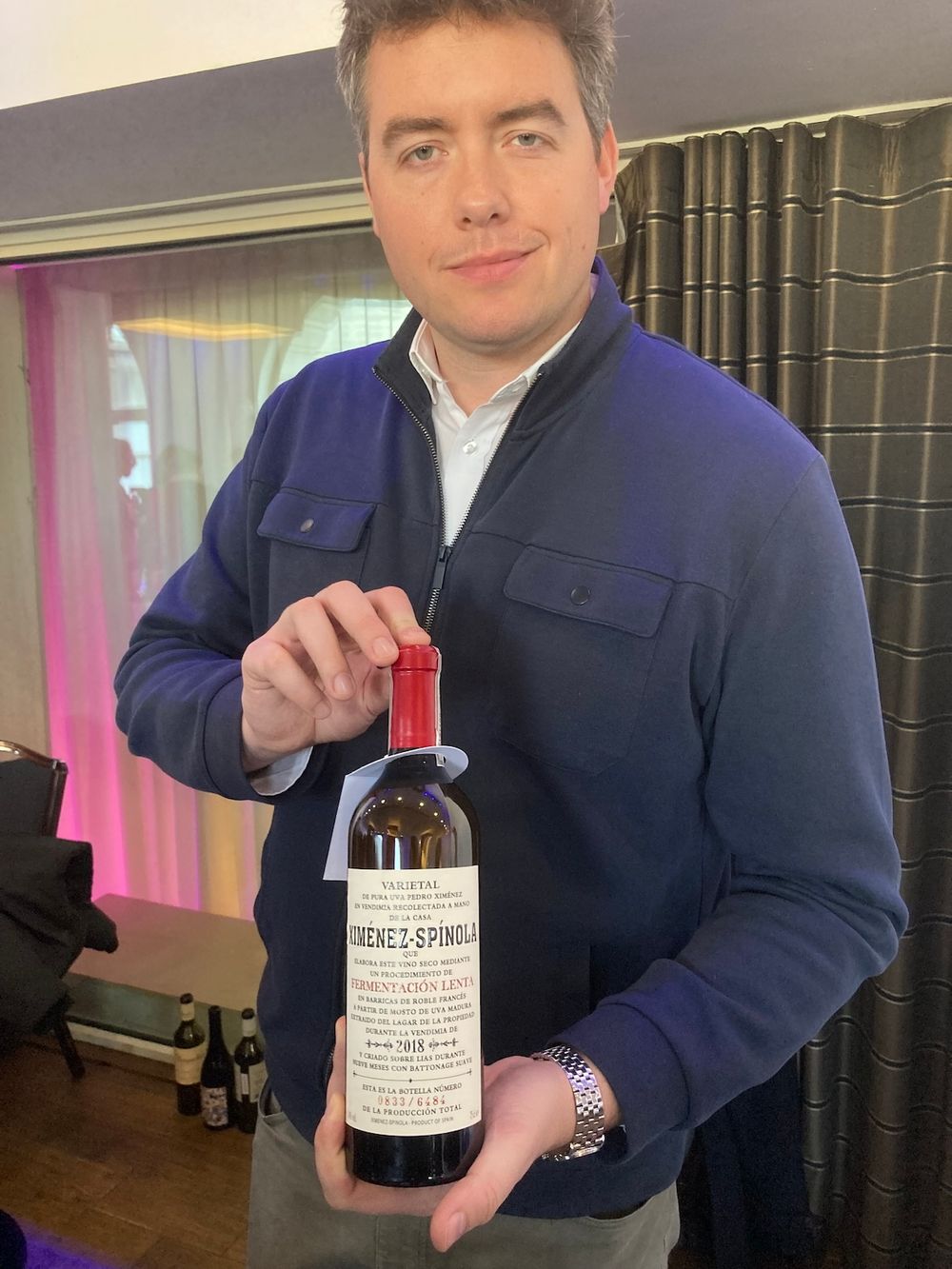
Bodegas Ximénez-Spínola (Spain)
If your main associations with PX are those small dark bottles of ultra sweet sherry at the end of a meal, you are in for a shock. This producer has been working with Pedro Ximénez since 1729, dedicated to exploring the variety in a dazzling array of styles, from dry through semi-sweet to very sweet, and makes just 100,000 bottles of these unique wines each year.
Outstanding wines here include: the Bodegas Ximénez-Spínola Fermentación Lenta 2018, an unusual slightly off-dry, fruit-driven wine with suggestions of apricot, orange peel and wood on the palate; the mega sweet (400g r/s) Bodegas Ximénez-Spínola PX Solera 1918 aged in the family solera from a blend of must, dark mahogany colour, with suggestions of cardamom, dark fig, chocolate and molasses on the palate. My favourite here though was the Bodegas Ximénez-Spínola PX Delicado 2024, less than half the price (amazing value, at under £16 plus vat off trade) and almost half the sugar levels (180 gr/s). What did it taste of? Luis Martínez Cuesta wasn’t much help – though perhaps he was.
“I’d say there’s suggestions of mango, papaya, apricot, pineapple – well, pretty much everything nice you can think of,” he says.
PX as a journey through the ages. And a great way to end a well organised, thought-provoking tasting.
Fergal Tynan MW and chief executive agreed.
"What a brilliant day. The energy in the room was fantastic, with producers engaging customers in deep dives into their philosophies and the wines they make. It was inspiring to see so many people reconnect with well‑loved names while also uncovering new stories to bring to their wine lists and shelves."
Alliance Wines is a commercial partner of The Buyer. To discover more about them click here.