Think of Austrian white wine and you could be forgiven for thinking of a nicely chilled bottle of Grüner Veltliner or Riesling (made in number of different styles and with varying residual sugar levels). It’s understandable – Grüner does account for a third of all grapes under vine in Austria, Riesling almost 5%. But the picture is way more complex and interesting.
There are actually 28 different white grape varieties permitted in Austrian winemaking – a mix of international grapes such as Chardonnay, Riesling and Pinot Blanc and indigenous grapes with Grüner topping a list that includes a wealth of fascinating, often niche, varieties some of which can only be found in Austria such as Zierfandler and Rotgipfler.
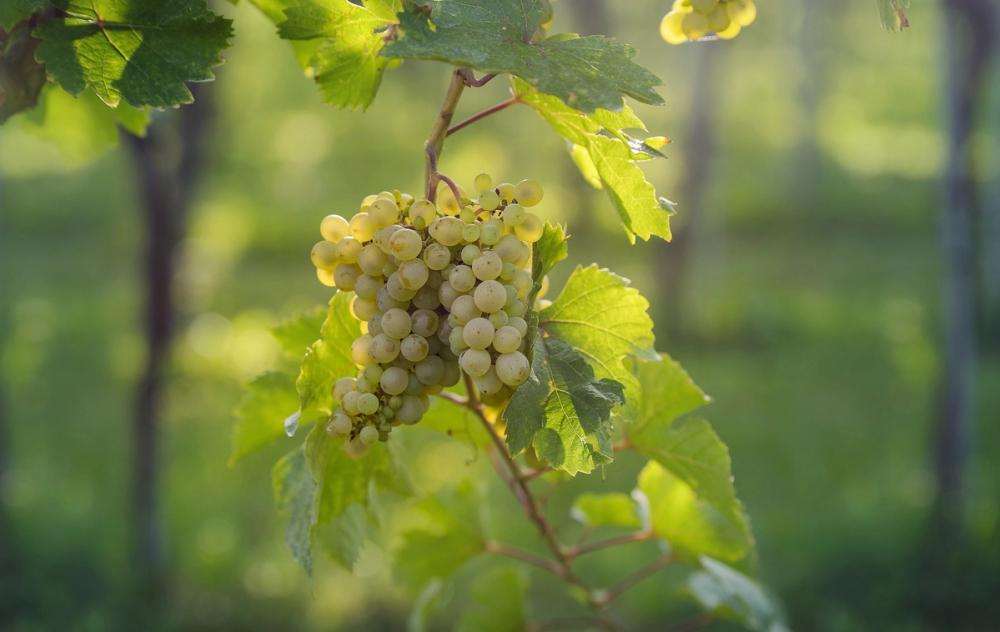
With just 100 ha planted worldwide, and the ability to age gracefully, Rotgipfler is a grape just waiting to be discovered by sommeliers. © Austrian Wine/ WSNA
The purpose of this article is by looking at a mix of the two we can discover the rising stars of Austrian white wine – those making quality wines from international varieties that one doesn’t immediately associate with Austria – Sauvignon Blanc, say – and varieties such as Neuburger where little or nothing is known about them outside of Austria.
With the increasing emphasis on provenance and authenticity in the wine trade then, what we have with Austrian white wine is a wide assortment of wines which have an almost infinitesimal range of possibilities for sommeliers and wine buyers everywhere. The geology is most apparent in all these wines, they all have refreshing acidity and all have excellent age-worthiness.
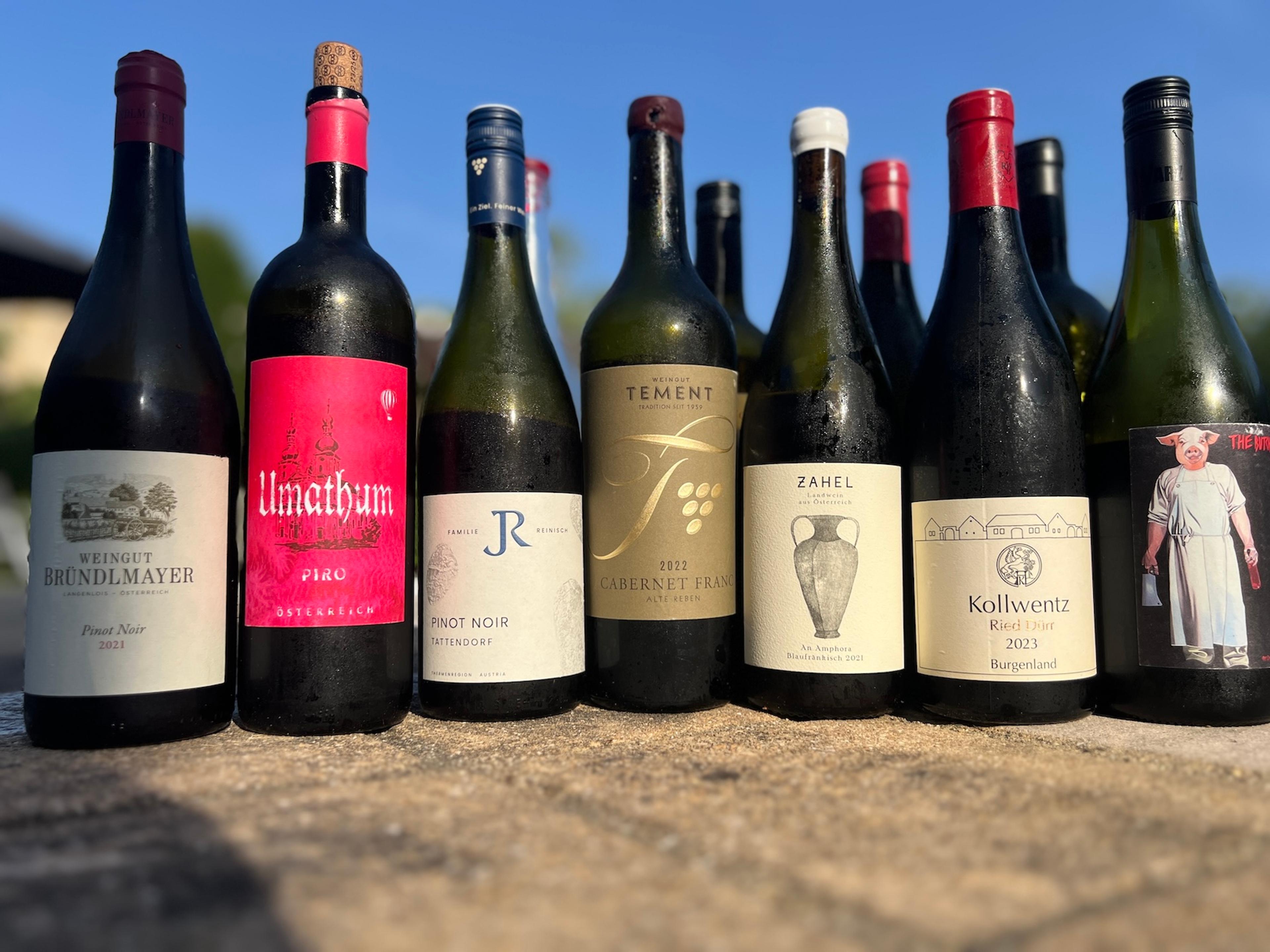
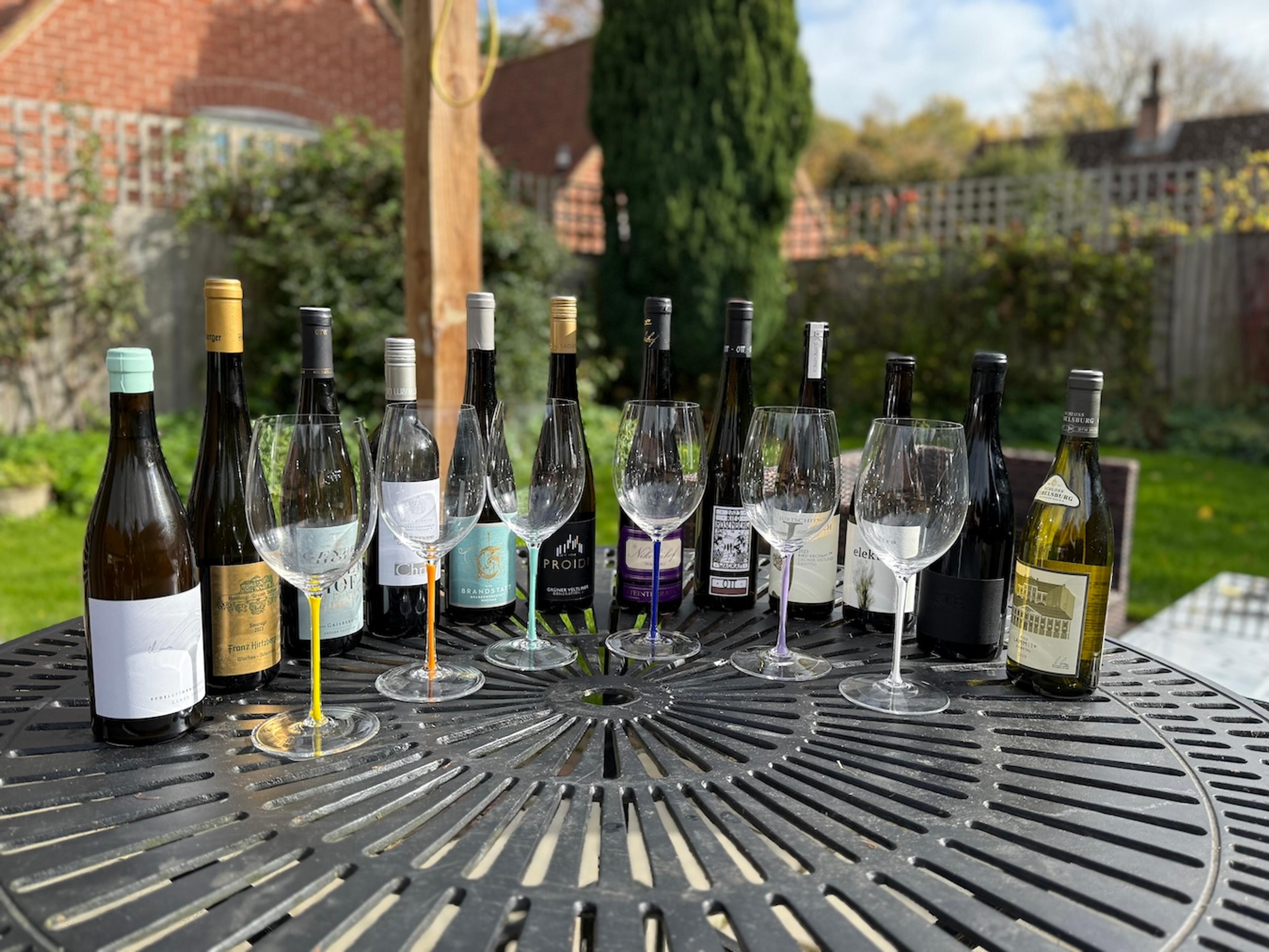
I was sent a selection of 14 wines to try.
Tasting the wines
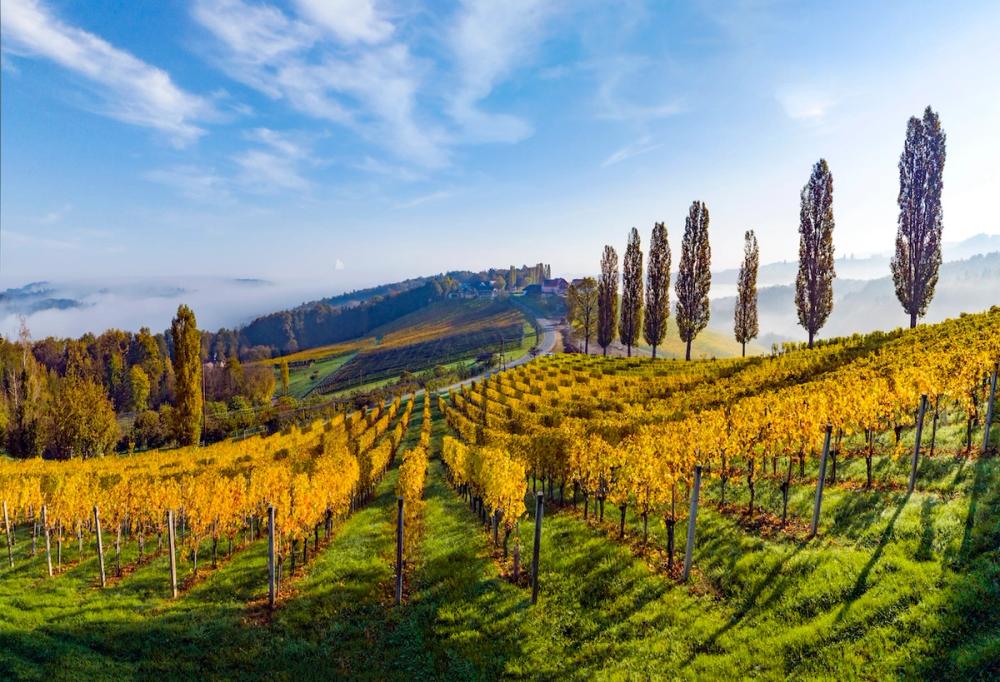
Sharing a border with Slovenia, Steiermark produces half of Austria's Sauvignon Blanc. © Austrian Wine/ WSNA
Sauvignon Blanc
I confess this was a new one on me… I’m a massive fan of Sauvignon Blanc from the Loire but had very little experience of the wine made in Austria. There’s a substantial amount of it too – 3.9% of the country’s vines – with over half coming from Steiermark, the southern region that butts up to Slovenia.
All five of the examples I tasted were from this region and all had firm acidity, controlled aromas, elegance and a mineral-charged energy. The main differences came from the style of winemaking, particularly if the wines were aged in wood or not.
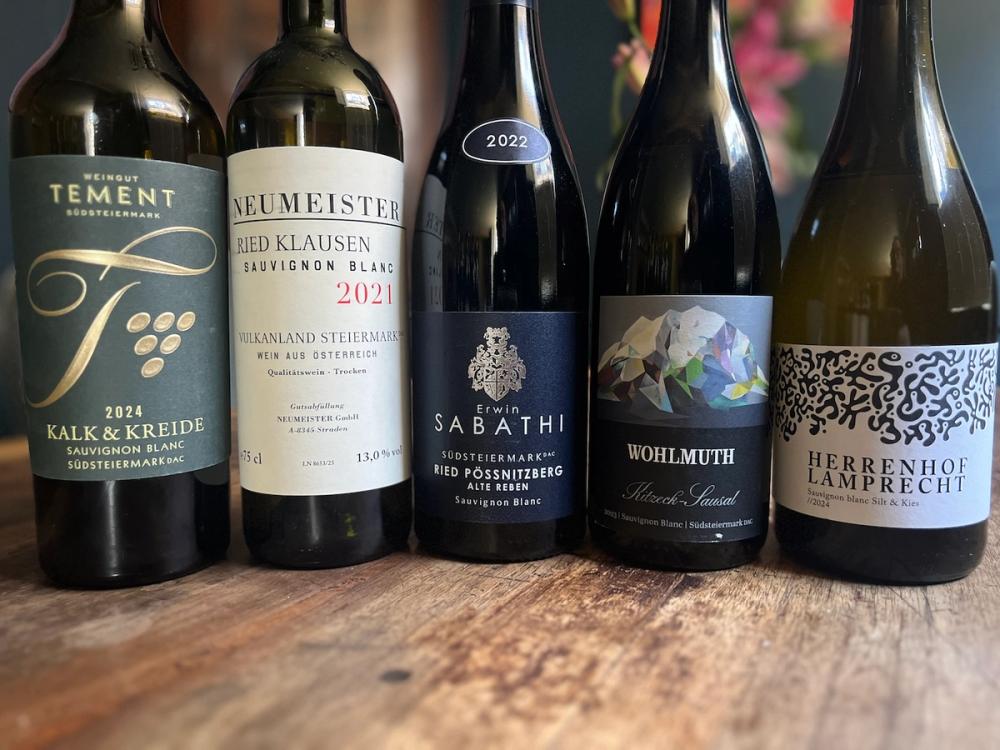
2024 Südsteiermark DAC Sauvignon Blanc Kalk und Kreide, Tement
Tement’s signature wine is this crisp, dry, organic Sauvignon Blanc packed with real energy. Gooseberries and delicate tropical notes, herbaceous with hints of elderflower. In the mouth the wine is fresh, taut and clean on the palate, a medley of just-ripe fruit, mineral with salted lemon on the finish. Mid-weight thanks to some work on the lees. Glass stopper, 12.5% abv.
2021 Vulkanland Steiermark DAC Sauvignon Blanc Ried Klausen 1STK, Neumeister
Medium-weight, organic, dry Sauvignon Blanc fermented and aged for 12 months in old barrels, with resulting depth and complexity. Grassy, bell pepper nose, hints of tropical fruit and gooseberries with attractive savoury (fresh nut), smoky nuances. With a few years in bottle this has a relaxed mouthfeel, great balance, the oak perfectly integrated leaving fine-grained texture with a ripe orange zest finish. Cork, 13% abv.
2022 Südsteiermark DAC Sauvignon Blanc Ried Pössnitzberg Alte Reben, Sabathi Erwin
Medium weight dry Sauvignon Blanc from an old vine Grand Cru single vineyard and aged for 30 months in traditional old oak casks. The nose is cool and complex - pretty, lifted, – green pineapple, white orchard fruit, hints of fresh herbs, quince. The mouthfeel has some weight, more rounded, beautiful poise and elegance. Delicious fruit flavours on the long finish. Cork, 13.5% abv.
2023 Südsteiermark DAC Sauvignon Blanc Kitzeck-Sausal, Wohlmuth
Crisp, dry Sauvignon Blanc from some of Europe’s steepest slopes (up to 80% incline). The grapes are picked late and then spend seven motjs on the lees in large old, wooden barrels. Pretty, lifted aromas of grapefruit and gooseberry, hints of mint and tropical fruit. In the mouth the wine is fresh, clean with orange, sweet grapefruit and apple skin; mineral with a salty lime finish. Not overly complex but decent structure – for an aperitif or pairing with fresh asparagus. Cork, 12.5% abv.
2024 Sauvignon Blanc Silt & Kies BIO, Herrenhof Lamprecht
Dry, cloudy, full-bodied organic Sauvignon Blanc from gravel soils with SO2 only added at bottling. Complex, rich and ripe fruit nose, a result of the hands-off winemaking as much as the varietal character. There are tropical notes (passion fruit, banana) but these are subtle and part of a wide range of aromas that include grilled yellow peppers, acacia honey, gooseberries, dried herbs. The palate is also rich with bruised apple and charred pineapple. The wine goes on a journey starting as mineral-charged and then more oleaginous with forest and acacia honey. Wonderfully different. Screw cap. 13%
Rotgipfler
Once discovered it’s not easy to forget this tremendous autochtonous variety that (along with Zierfandler) excels in the Traiskirchen and Gumpoldskirchen regions of Austria’s Thermenregion. Apart from here it’s a rarity with only 100 hectares planted worldwide. Rotgipfler is a natural crossing of Traminer and Roter Veltliner, and it gets the name from its reddish, bronze shoot tips. Like most Austrian white wines it ages beautifully.
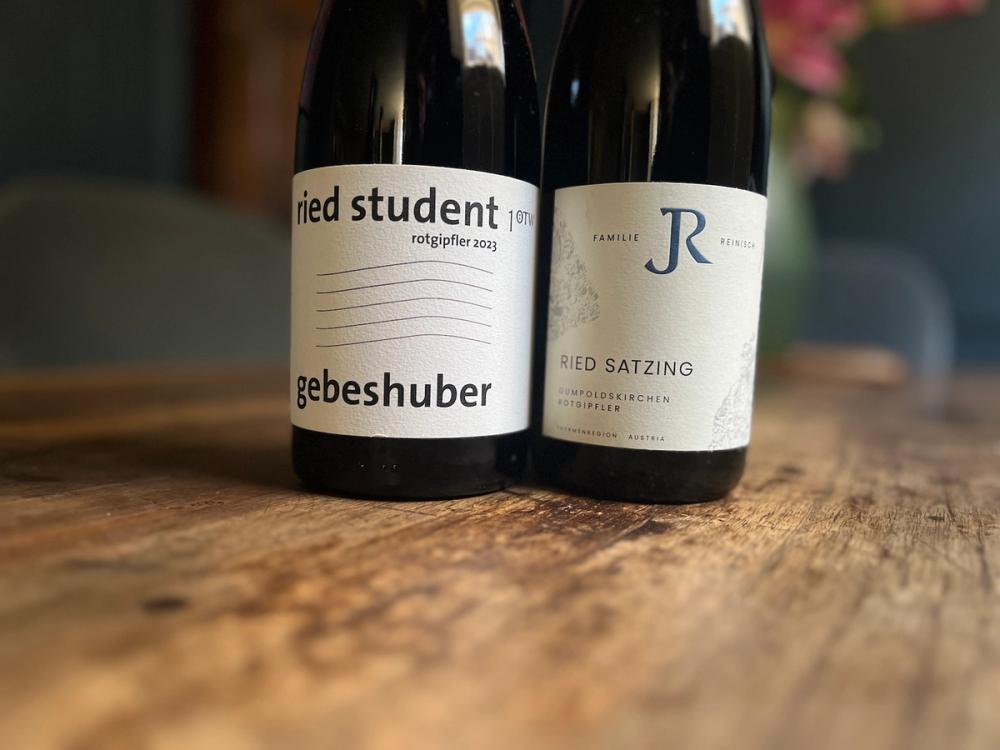
2023 Thermenregion DAC Rotgipfler Ried Student 1ÖTW, Johannes Gebeshuber
Matured for 18 months in 500l cask, this energetic complex dry white has 50 years cellaring potential according to the producer. It has a most distinctive nose, palate and incredible length. Pale straw to look at, aroma-wise you find pineapple chunks, fresh pear, pollen, incense and a leesy, almost savoury, component. In the mouth the wine is clean, fresh, delicate with an underlying, mineral-charged presence, subtle hints of mango and melon persist. There is a sense of sweetness on the finish which is characteristic of the grape variety. Screw cap. 13.5% abv.
2021 Thermenregion Rotgipfler Gumpoldskirchen Ried Satzing, Johanneshof Reinisch
Rotgipfler benefits from about four years ageing where it takes on more colour and toasted notes and this full-bodied dry wine is in a sweet spot right now. Medium yellow to look at, the complex nose has baked apple, toasted nuts, forest honey and a flinty note. In the mouth the wine is full-bodied, oleaginouse with great balance between rich intensity, a lively streak of acidity and crushed rocks. The finish is quite extraordinary. Stunning. Cork, 14% abv.
Neuburger
A natural crossing of Roter Veltliner and Sylvaner, the areas under Neuburger vine have decreased partly because of the competition with Grüner Veltliner and also because of the grape’s susceptibility to disease.
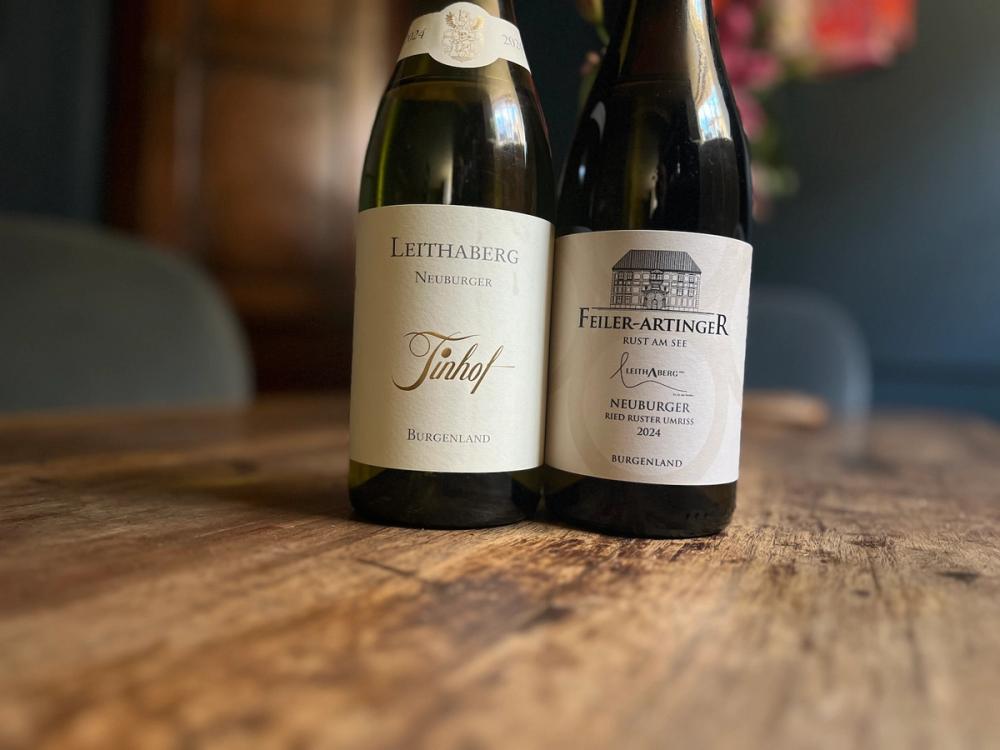
2024 Leithaberg DAC Neuburger, Tinhof
This bone dry Neuburger rests in foudre after a natural ferment; Almost no colour; it takes time to open up in the glass and then is delicately floral, with wet rocks and pomelo flesh; in the mouth the wine is as lean as you like, finely textured, fresh with good concentration and balance – grapefruit on the long finish. A real gastronomic wine. Screwcap, 12% abv.
2024 Leithaberg DAC Neuburger Rust Ried Umriss BIO, Feiler-Artinger
Golden yellow to look at; the nose is ripe and rich with nougat and quince, fresh rose petals, a touch of Gewürtztraminer here; in the mouth the wine is oleaginous, creamy with nice intensity, flavours of honeydew melon and stone fruit abound, there’s also a prickle of savoury spice on the sweet finish. Screwcap, 14% abv.
Furmint
No surprise that the two Furmints I tried are from Burgenland, the South-East region of the country that shares a border with Hungary. Furmints here are rich in extract and full-bodied. The relatively high acidity and alcohol content results in good longevity.
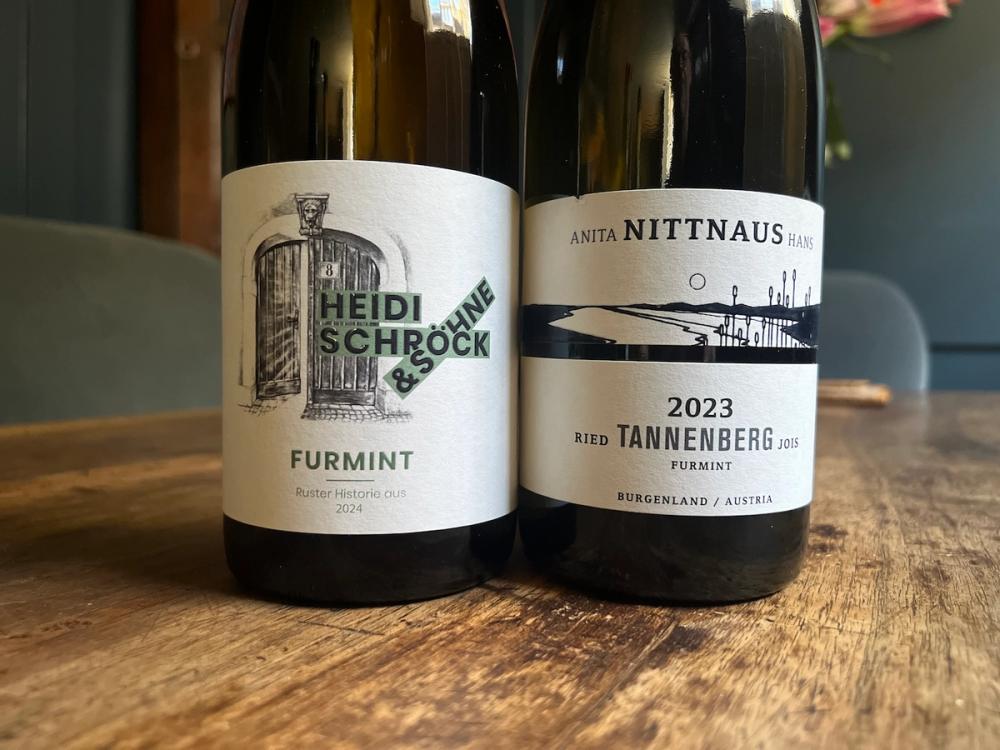
2024 Burgenland Furmint Ruster Historie, Heidi Schröck & Söhne
Fermented in large acacia casks and steel then matured on fine lees for six months. Very light yellow, almost see-through. Ripe nose with good intensity, high-toned aromas of sweet apples, honey, quince and chamomile. The palate is fresh, textured with waves of bright fruit and mineral-charged acidity, crisp, dry a point finish. Screw cap, 13% abv.
2023 Burgenland Furmint Ried Tannenberg, Nittnaus Anita & Hans
Biodynamic, bone-dry Furmint. Light green-yellow; Complex and inviting bouquet of guava, nut skins, hints of resin, dried white flowers; in the mouth the wine is fresh, juicy, textured, with lemon flesh, apples and pineapple. Cork with wax seal, 13.5% abv.
Lindenblättriger
With its origins also in Hungary, Lindenblättriger (or Hárslevelű) is a late-ripening grape that is susceptible to botrytis and therefore can make either a bone dry, linden blossom-perfumed wine like the Umathum wine below or full-bodied sweet wines. Unlike most of the other wines in this feature the Lindenblättriger is not a DAC wine but a Landwein – the intermediate wine quality level found between Table Wine and Quality Wine. These wines are reasonably rare and come with a broad Protected Geographical Indicator (PGI) rather than the more specific Protected Designation of Origin (PDO).
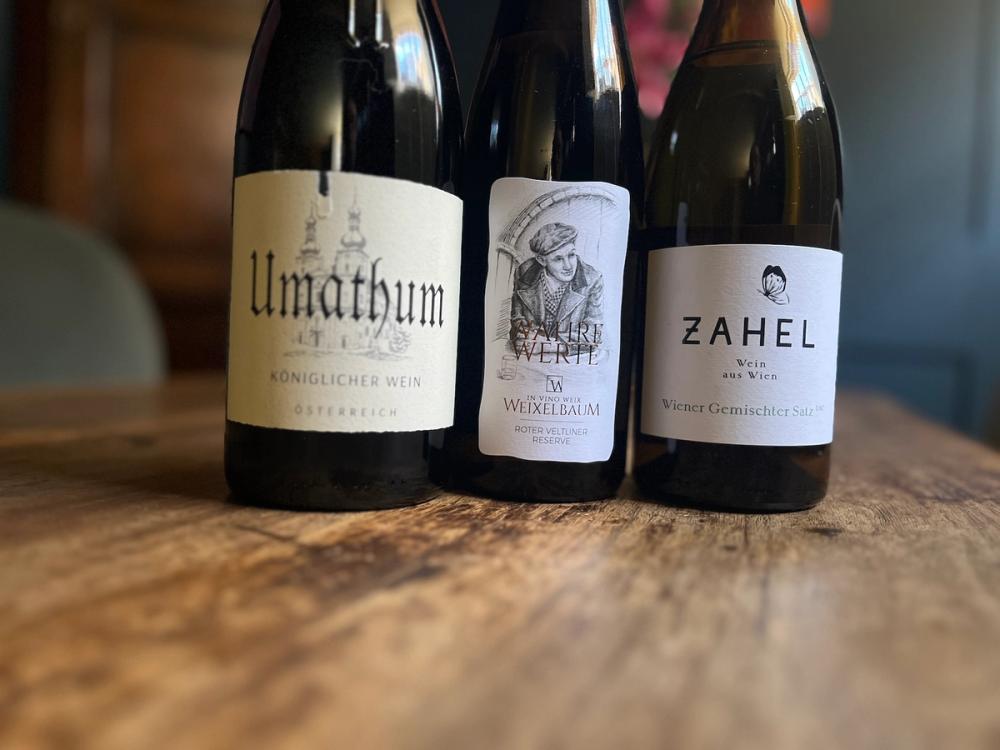
2021 Lindenblättriger Königlicher Wein, Umathum
Light-bodied dry Hárslevelű which tastes like a cross between Furmint and a young field blend. To look at, the wine is light-medium gold; linden blossom on the nose with quince, spicy pear and stone fruit. In the mouth the wine is light and fresh, bright with an energetic salty finish. Gastronomic wine. Glass stopper, 11.5% abv.
Roter Veltliner
As an autochthonous variety, Roter Veltliner holds a special position within the Veltliner family as a natural crossing partner for Neuburger, Zierfandler and Rotgipfler. The grape makes
wines, elegant, extract-rich wines with fine, spicy aromas and great ageing potential.
2023 Niederösterreich Roter Veltliner Reserve Wahre Werte, Weixelbaum
Light yellow-green to look at; Ripe aromas of pear, apple blossom, orange zest and acacia honey; in the mouth the wine starts off medium-bodied, broad with ripe stone fruit and white orchard fruit, hints of spice. The acidity, juicy and thirst-quenching, with a mineral undertow then takes over before a persistent, textured, but well balanced finish. Screwcap, 13% abv.
Gemischter Satz
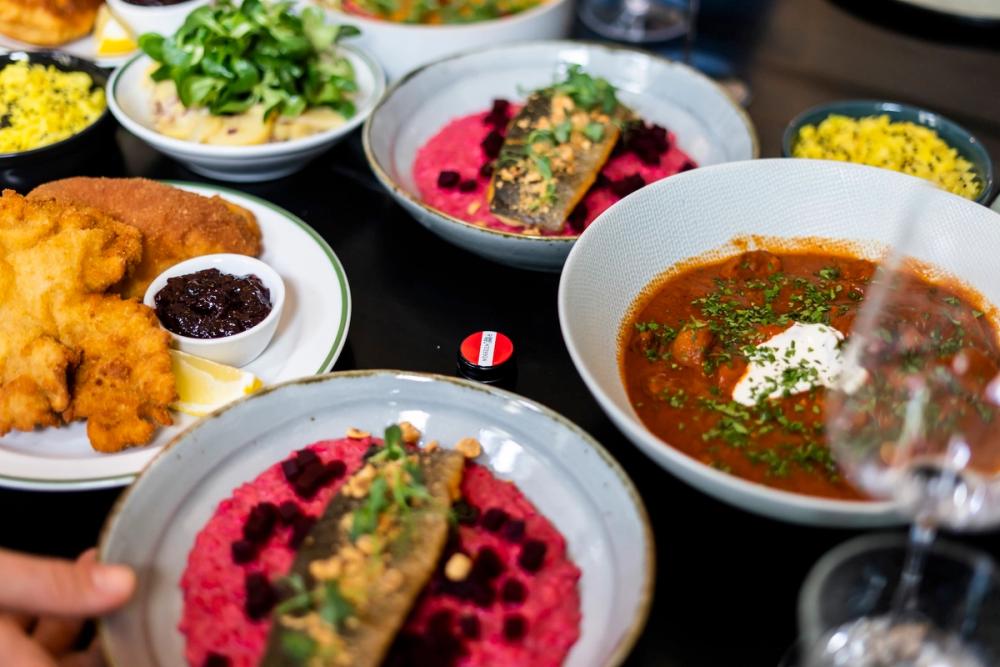
Gemischter Satz is made to accompany spreads like this. © Austrian Wine/ Robert Herbst
41% of Vienna’s wine production is Gemischter Satz (field blend), found in bottle or in the city’s many wine taverns. The grapes must come from a Viennese vineyard planted with at least three white Qualitätswein varieties that are then harvested and vinified together; the greatest proportion of a grape variety must not be higher than 50%, the third largest proportion must be at least 10%.
2024 Wiener Gemischter Satz "Demeter", Zahel
A wine that’s just made to go with Wiener Schnitzel or fried chicken. This is an unpretentious quaffing wine (6-variety field blend, 12 hours in the press, 3-6 months in steel on fine lees). Almost water-like to look at; the nose is a bit dumb but opens out in the glass with apricot, peach and pineapple notes. In the mouth the young, lively acidity has an almost Aspirin spritz to it, minerally-texture that rounds out in the mouth, cleaning the palate. Screw cap, 12.5% abv.
All in all a fascinating and eye-opening tasting that introduced me to many new wine styles. The quality was high throughout and all the wines bar none represented great value for money.
Austrian Wine is a commercial partner of The Buyer. To discover more about them click here.