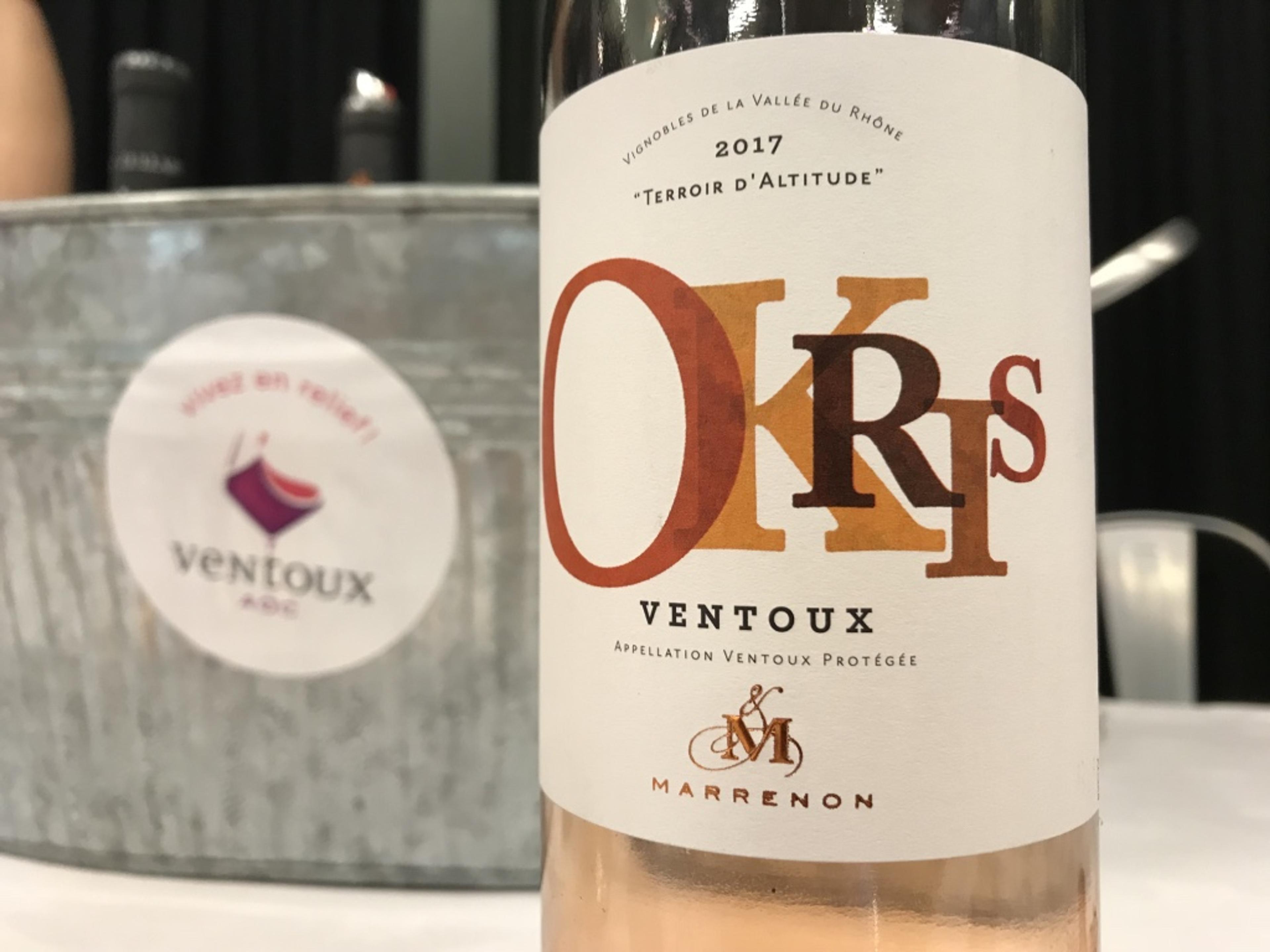
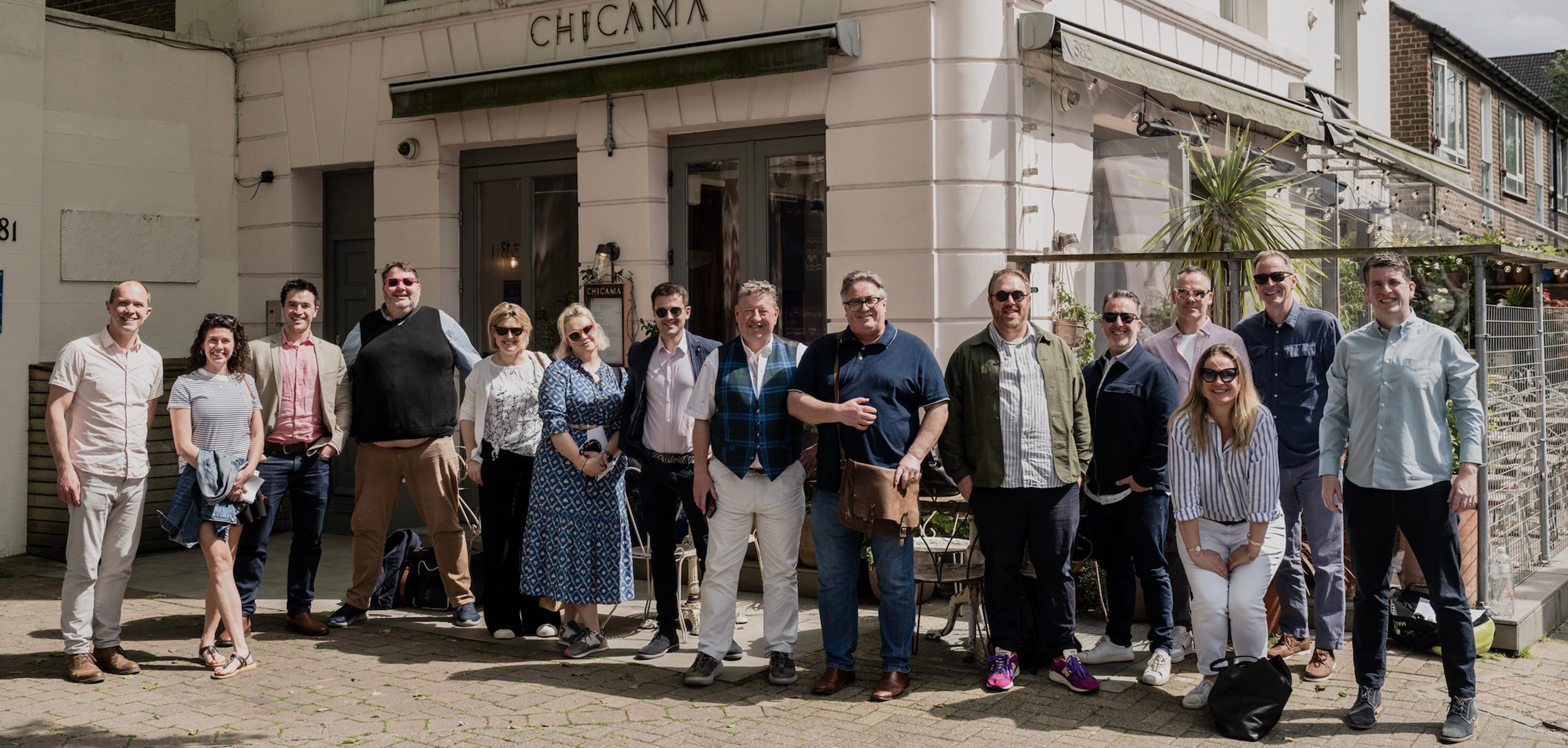
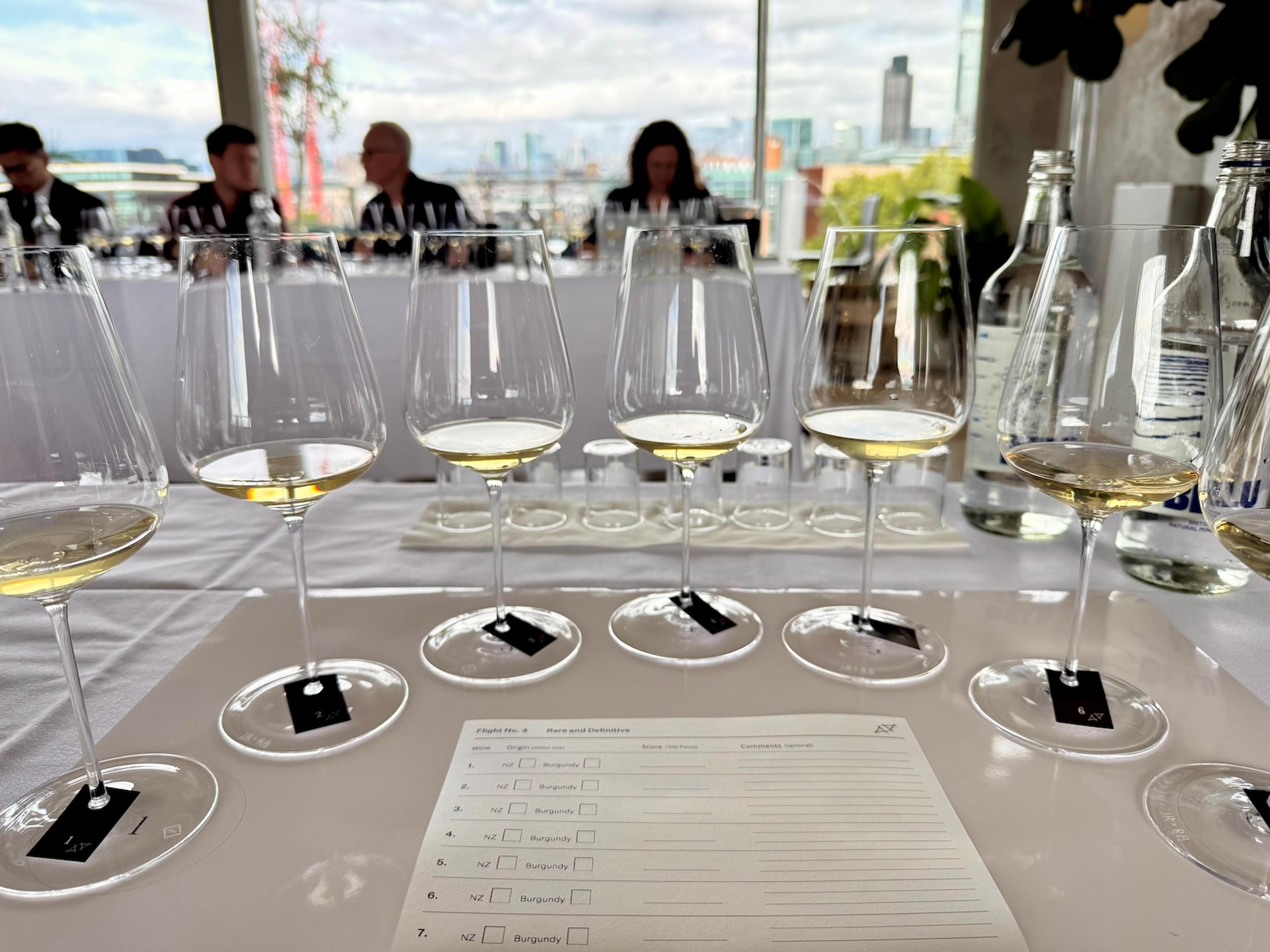
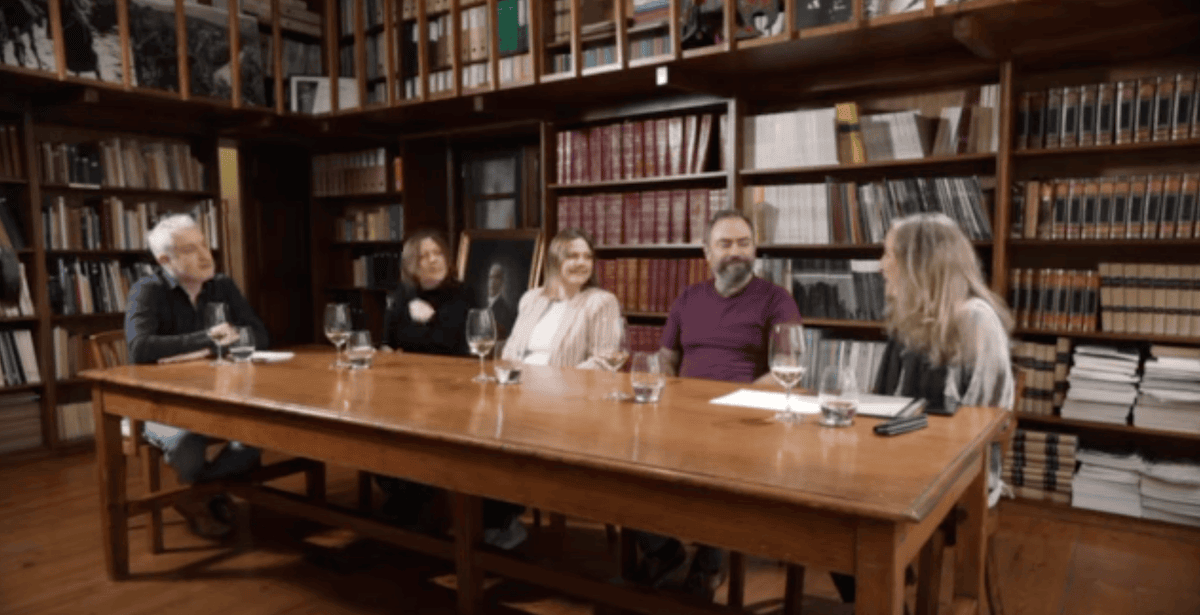
Not many producers can lay on a vertical tasting of their rosés dating back to 2006, but Chêne Bleu did just that in London in July to celebrate its 20th anniversary. There were only four vintages - 2006 (their very first one), 2011, 2013 and 2023 - but what a revelation they were. No oxidation to speak of, apart from a little on the 2013 that did not detract, and fruit that was expressive, delicate, complex and long. If any proof was needed that rosé can age well, this was it.
No ordinary producer
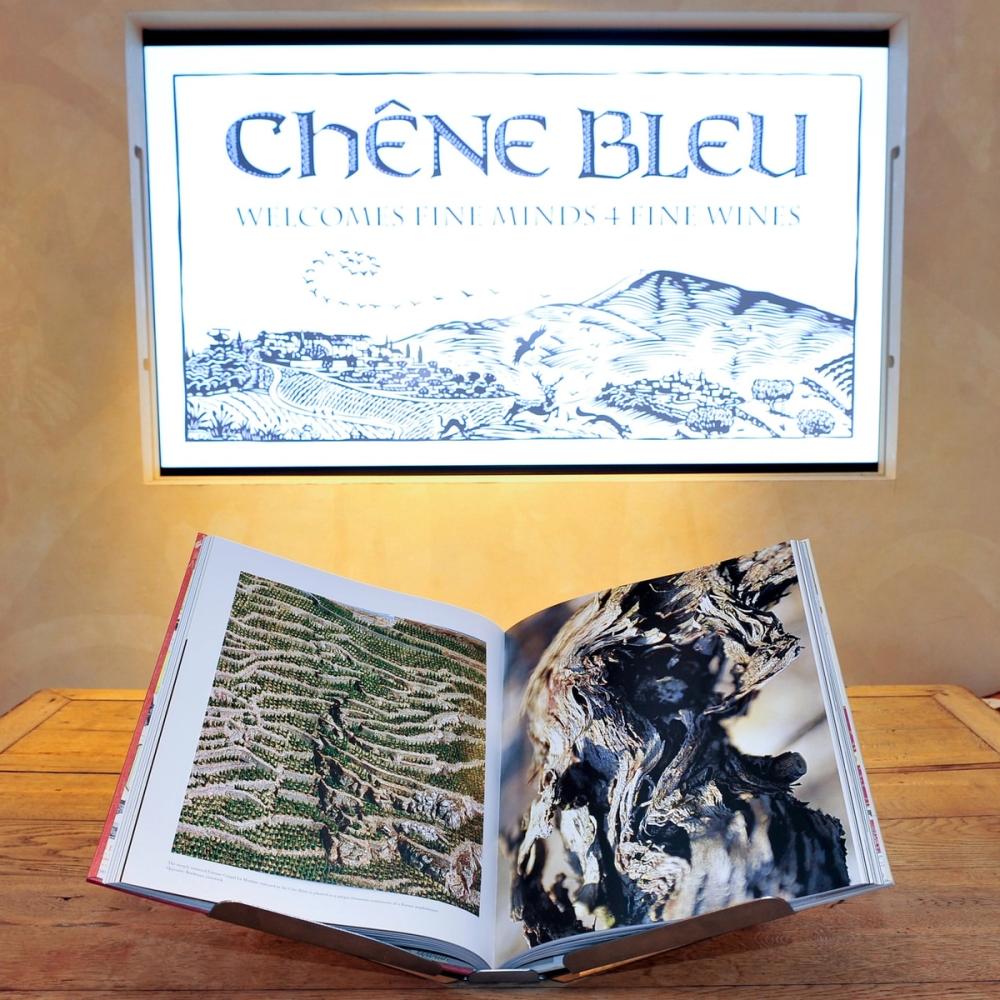
Chêne Bleu, in Ventoux, is no ordinary producer, of course, deservedly attracting the moniker of being a ‘Super Rhône’ for its super-premium reds and whites that did not always conform to appellation requirements. And its rosé has always been Champions League quality, a cut above the rest.
Richard Bampfield MW professed himself to be ‘astonished’ by the Chêne Bleu quartet of rosés, adding: “They can capture people who think they don’t like rosé, but finally find something that ticks a lot of boxes for their finer palates.”
Andrew Johnson, managing director of WoodWinters, who took on the UK distribution of Chêne Bleu last autumn, likewise spoke tellingly at the tasting.
“I knew the wines by reputation a year ago when we were talking about doing business together,” he said. “The Chêne Bleu rosé stood out in a sea of indifferent, bland, charcoal-filtered rosé. This is one of those wines that, once you get inside it, actually has so much to offer, and that is quite rare for a rosé. If I think of rosés that really stand out in my mind, I can come up with five or six, but whereas if you ask me to talk about red or white wines, I can probably think of a thousand. Sadly, we don’t have truckloads of old Chêne Bleu rosé to sell but their rosé gets you to rethink how serious rosé can be - not just an afterthought. The 2023 has a lot to offer, for example, you can drink it with simple or exotic food.”
A passion for quality
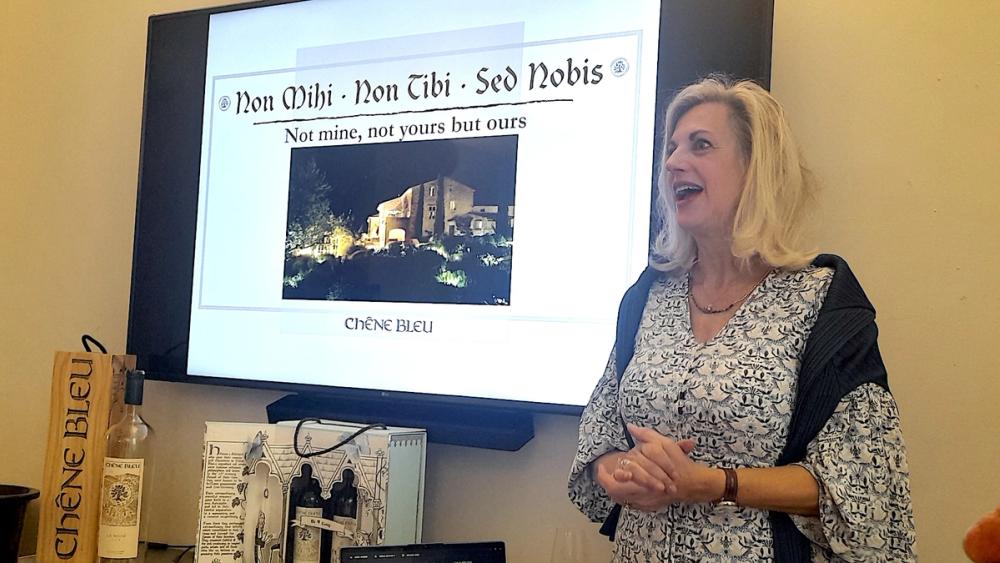
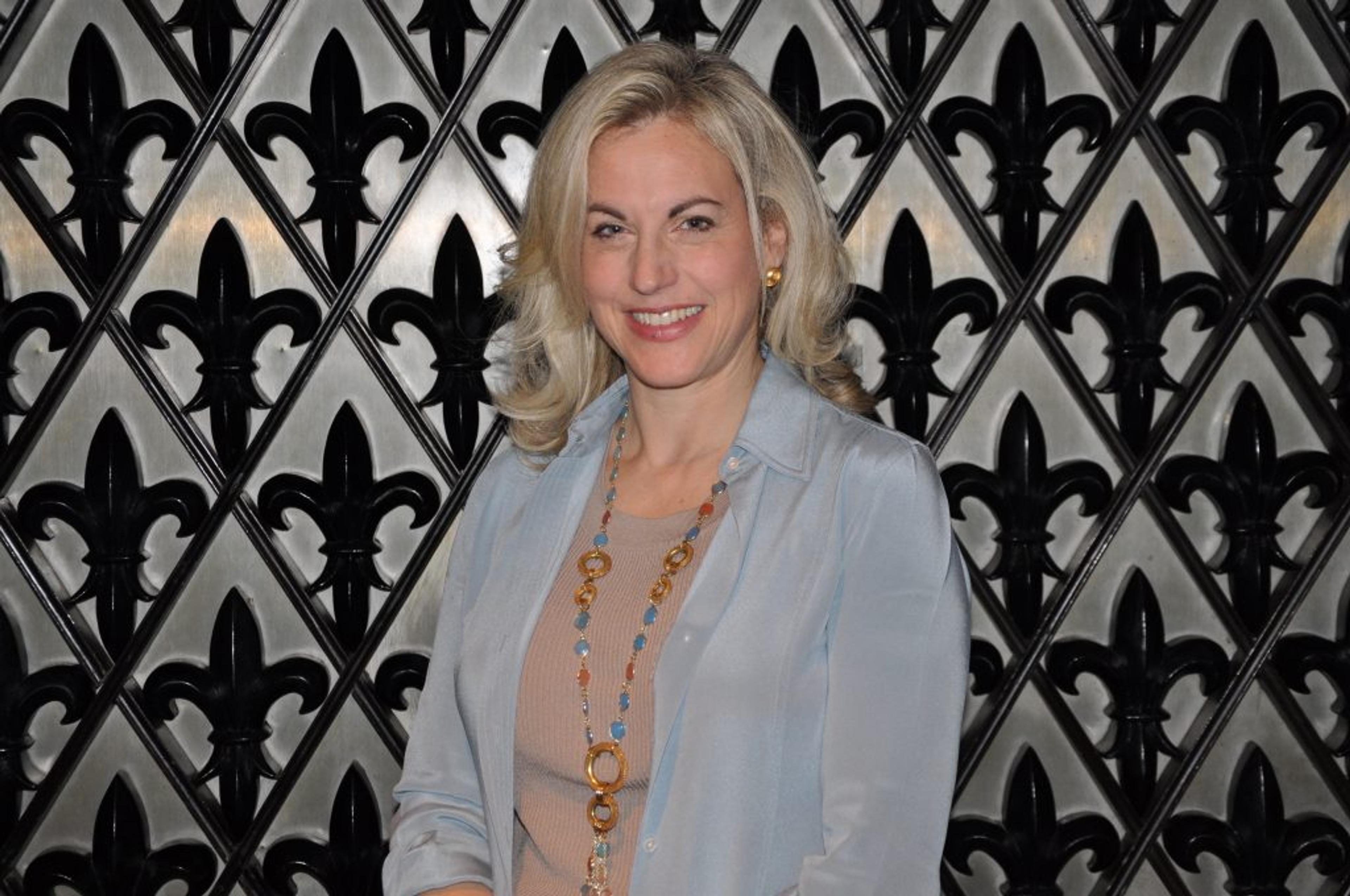
Nicole Rolet, 20th anniversary tasting, London, July 2026
Hosting the tasting was Nicole Rolet who, with her husband Xavier, bought the La Verrière estate some 30 years ago, a restored medieval priory above the historic old town of Vaison-la-Romaine in the Vaucluse department. It sits majestically on the edge of the Dentelles de Montmirail mountain range.
A passionate disciple of biodiversity and organic farming, Nicole undertook an 18-month fellowship at Harvard two years ago to study regenerative viticulture. She sought to explain the advantages of the location of Chêne Bleu, which is certified organic, ‘Bee Friendly' and HVE 3 (the highest environmental level) as well as following biodynamic principles. Sheep wander in the vineyard, providing weed control as well as natural fertiliser.
“We don't have top soil – we’re right on the edge of the tectonic plate where the bottom of Europe has smashed into Africa and pushed the edge of the plate on its side,” she said. “We have access to a very unusual mix of minerals that you would not normally have in your root system if down in Châteauneuf on the river stones. Geologically, it’s a very exciting place. We’re working with Georges Truc, the famous geologist who would be the first to say our geology doesn't correspond with the typicity of a lot of the local terroirs.”
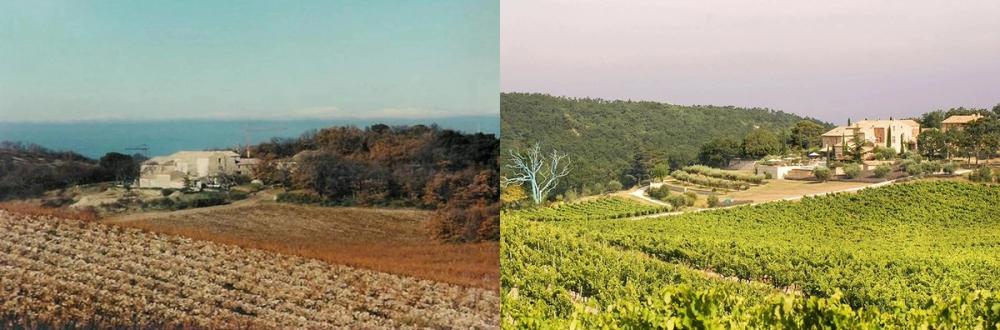
Before and after: how the estate has changed over the past 20 years.
Truc wrote the celebrated work, Châteauneuf-du-Pape: Geological History & Birth of the Terroirs, which provides an in-depth analysis of the soils in the Rhône Valley.
“In terms of our isolation, we have 450 acres of forest with a vineyard in the middle,” Rolet continued. “That has a huge bearing on the style of our wines and all the work we do with biodiversity. In our backyard, you can see the edge of the tectonic plate and the most ancient soils exposed – Jurassic, Cretaceous and Triassic that are all right on the surface. You’ll find these river stones that are the size of dinner plates. We have them in the tasting-room that feels a bit like a natural history museum.”
“The sea bed has been thrust up into the vineyard as well as the famous clay that is very good for some of our wines.The vegetation also changes at altitude. You’ll get a lot of evergreens such as conifers that are associated with leaner, cleaner smells, whereas we also have the aromatic plants you’d typically associate with these more southern garrigue-type terroirs. The most important aspect is being in a very sunny place on the same latitude as Châteauneuf but way up in the mountains, giving wines that tension.”
“All of that made us deconstruct the vineyard and rebuild the logic around what we found in our backyard and take ourselves out of the appellation in a number of cases. We’re appellation agnostic – why some people call these ‘Super Rhônes.’ We spent 10 years restructuring the vineyard, trying to get every single old vine to ‘sing from the same hymn book’. It was a great privilege to inherit as they’re 80 years old in some cases. Every aspect of the vineyard has been studied to figure out how we can be working within the context of nature, not using any chemicals, to protect and preserve the natural environment around the vineyard.”
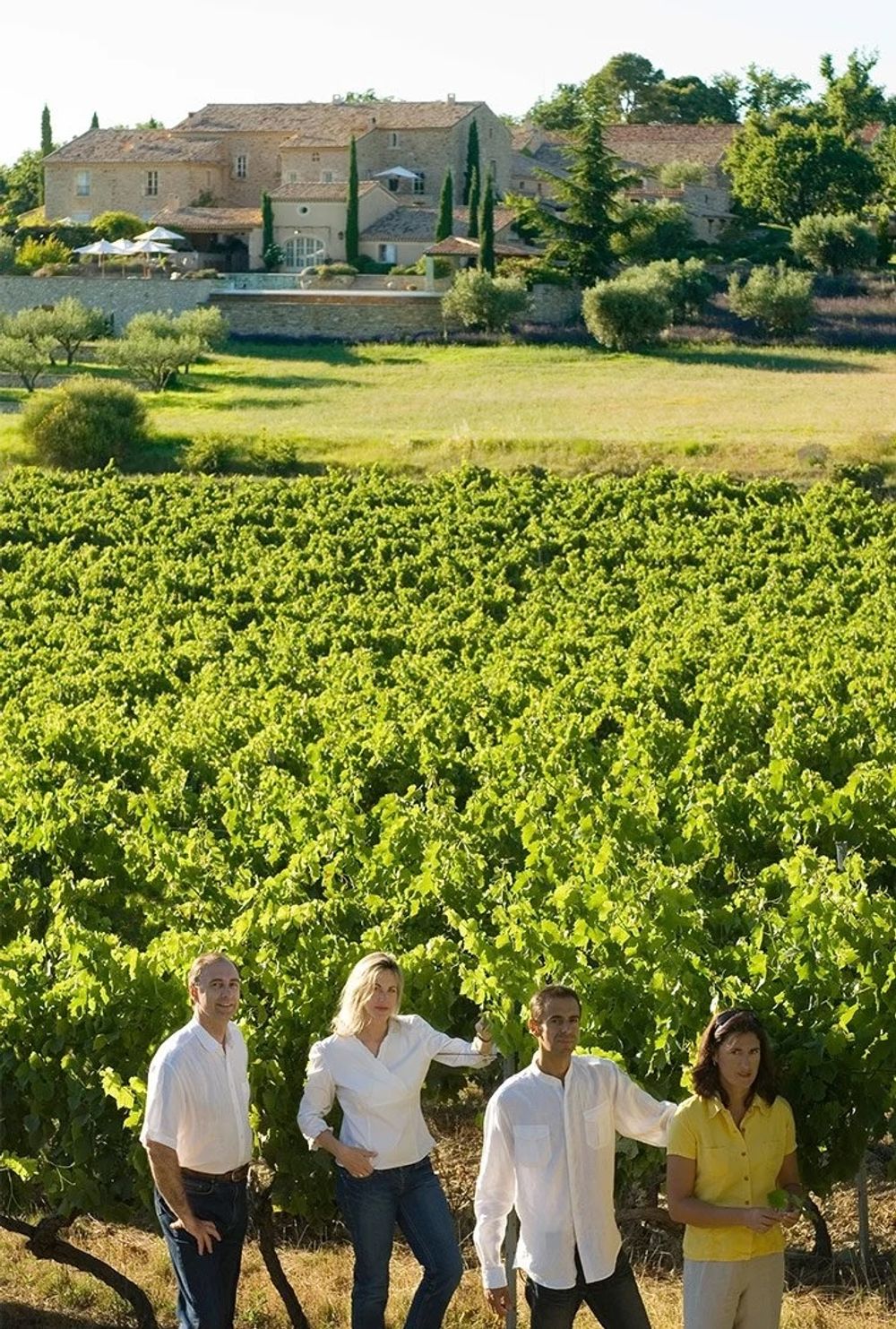
The Chêne Bleu team
Replanting strategy
The very age of some of Chêne Bleu’s vines has required the viticultural team to pull some out.
“It’s heartbreaking to see these 70 to 80-year old vines come out,” Rolet admitted, “but if you don’t replant them in tranches, you’re stuck with your whole vineyard going under at the same time. That’s a huge opportunity of course to rethink even the direction of the slope that they were planted in, which was done at a time when people were using tractors, which we’re not. So it’s a very scientific and systematic approach that we’ve taken for the new phase in our history.”
Replanting this year at La Verrière has proved to be unfortunate timing, given the extreme heat and drought conditions in France this growing season.
“Everyone is suffering because of the heatwave,” Rolet declared. “We have some symptoms of drought but the combination of being higher up and using these regenerative farming methods has certainly protected us although we have some ‘coulure’ and some other frustrating things. I’m hoping this latest wake-up call will help make more and more wineries re-think their practices and try to manage water and the environment better at a very difficult time. We have a lot of new plantings, so we’re very vulnerable to drought at the moment and are requiring incredible precision and pro-activeness, but we hope we're staying on top of it. We learnt our lesson in 2003 when we had a similar situation and lost a lot of new plantings.”
As the founder of the Green Wine Initiative, with a website of the same name, Rolet has become the de facto leader of the campaign for wine produced without chemicals: that is to say from organic, sustainable, biodynamic, regenerative, natural, bee-friendly viticultural techniques.
“Wait! What? Green wine?” teases you at the top of the website. “Yes, that’s right - wine that’s produced in ways that are most likely to be respectful of your health and planet,” it continues, with a compelling quote from the irrepressible Nicole Rolet: “Love the land, and it will pour its heart into every grape.”
Tasting those Chêne Bleu Rosés
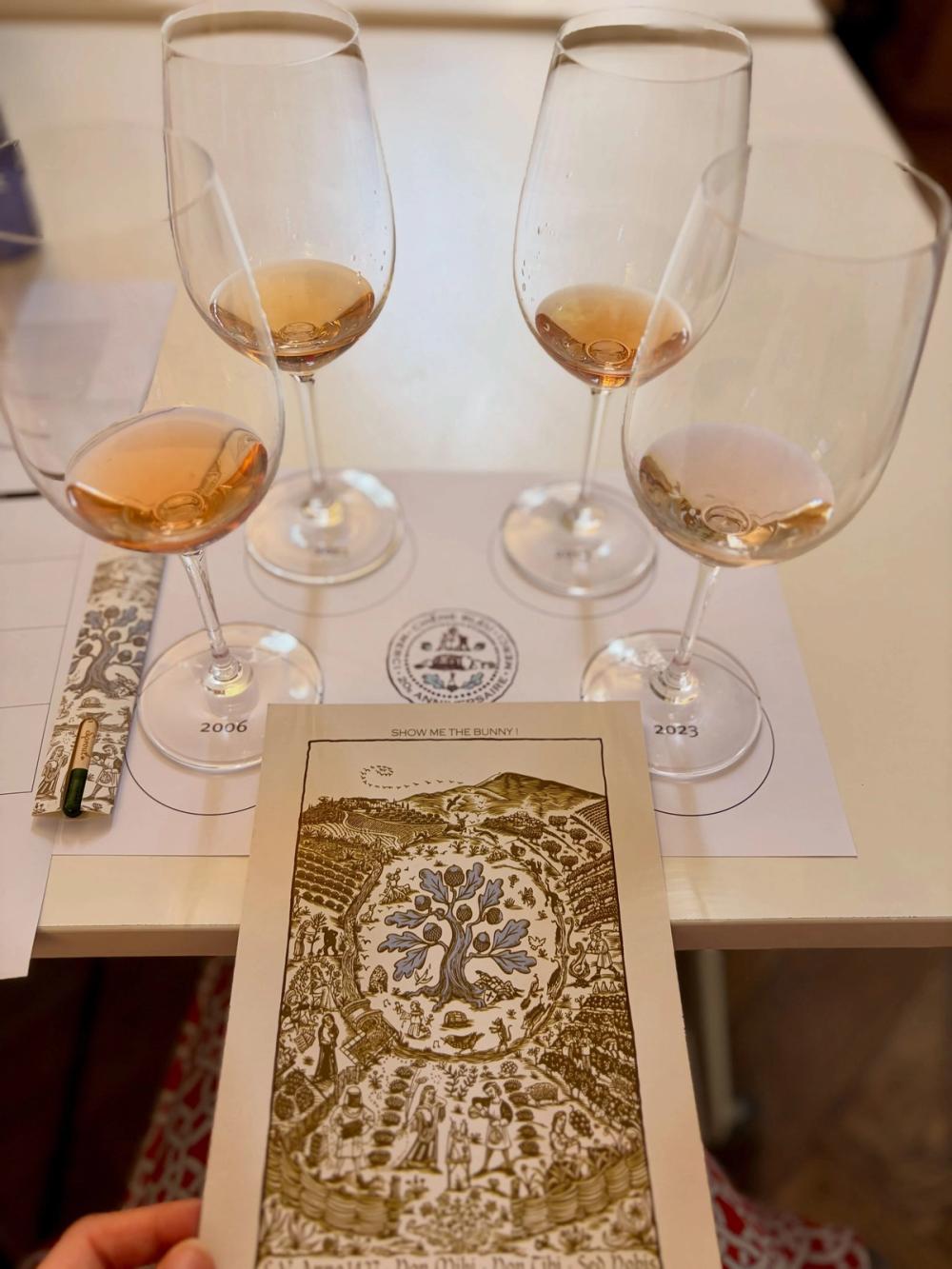
Chêne Bleu Rosé 2006
60% Syrah, 40% Grenache; pH3.6, TA 5.73g/l, RS 4.9g/l, 14.5% abv
No sign of any oxidation - no doubt thanks to having been under screw cap. The purity of the fruit was remarkable, while the 14.5% alcohol was perfectly in balance.
“We said at the time to drink it before 2008, so we never expected these nuances of complexity,” Rolet confessed. “The acidity and minerality makes all the rosés appear a degree less than they are.”
Chêne Bleu Rosé 2011
60% Grenache, 35% Syrah, 5% Cinsault; pH3.6, TA5.1g/l, RS 3g/l, 13.5% abv
Sweet spice and almond on the nose with pure strawberry and redcurrant fruit (again closed with screw cap). Brief elevage in used French oak adds some structure.
Chêne Bleu Rosé 2013
65% Grenache, 30% Syrah, 5% Cinsault; pH3.3, RS 0.7g/l, 13% abv
The darkest of the quartet due to slight oxidation (cork closure for the bottle tasted although screw cap was used for others). The fruit was nevertheless complex with grapefruit and citrus notes, the nose still floral and the length impressive. “It was a dream vintage,” Rolet sighed. Vibrant acidity as evidenced by highest TA of the flight (6.7g/l).
Chêne Bleu Rosé 2023
84% Grenache, 12% Mourvèdre, 4% Syrah; pH3.33, RS 0.5g/l, 13% abv
Salmon pink with white fruit aromas and floral hints. Really complex with chalky, garrigue notes as well as pomegranate, quince and white blossom. Rich texture with delicate minerality on a lengthy finish. Either a classy aperitif or an ideal food wine.