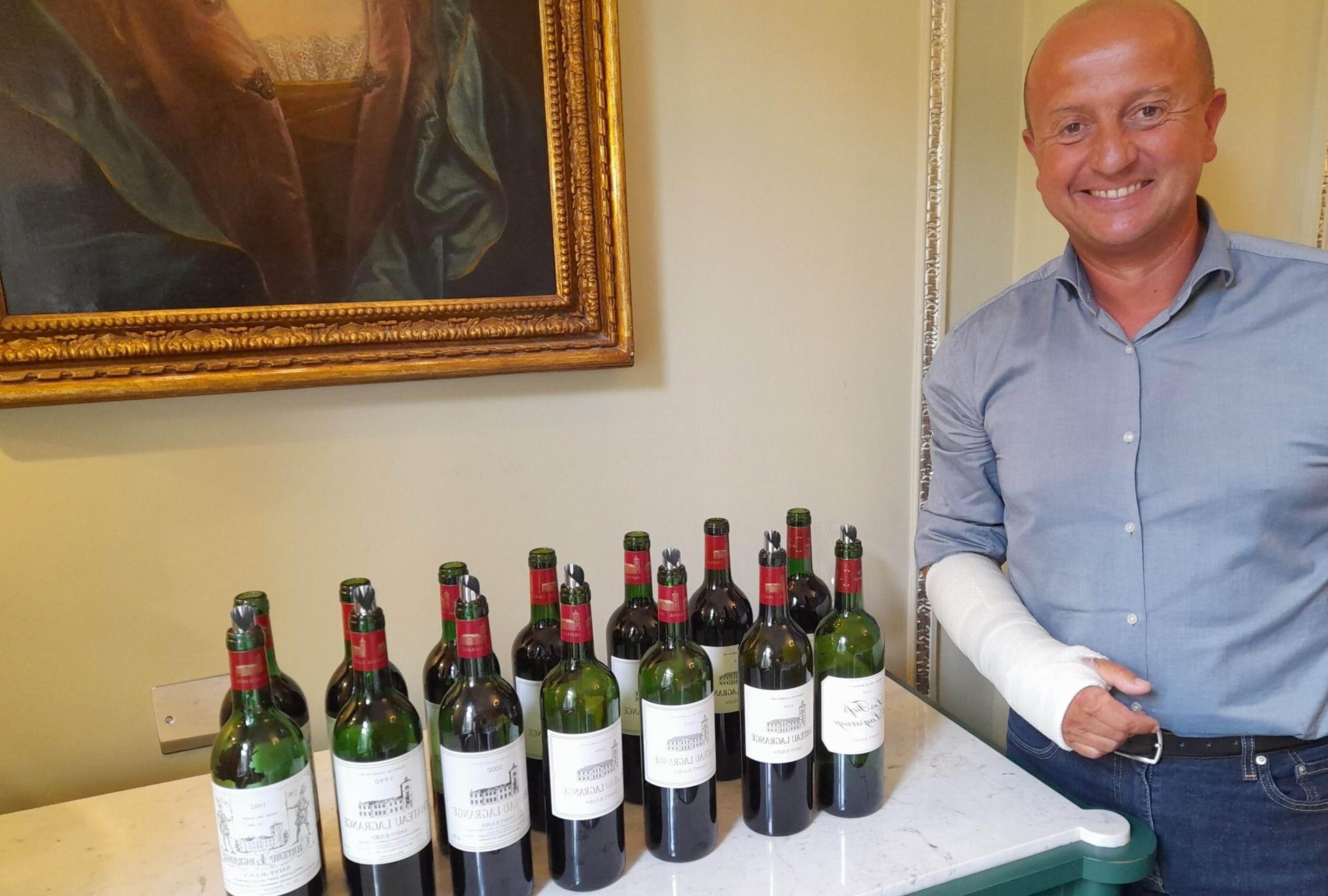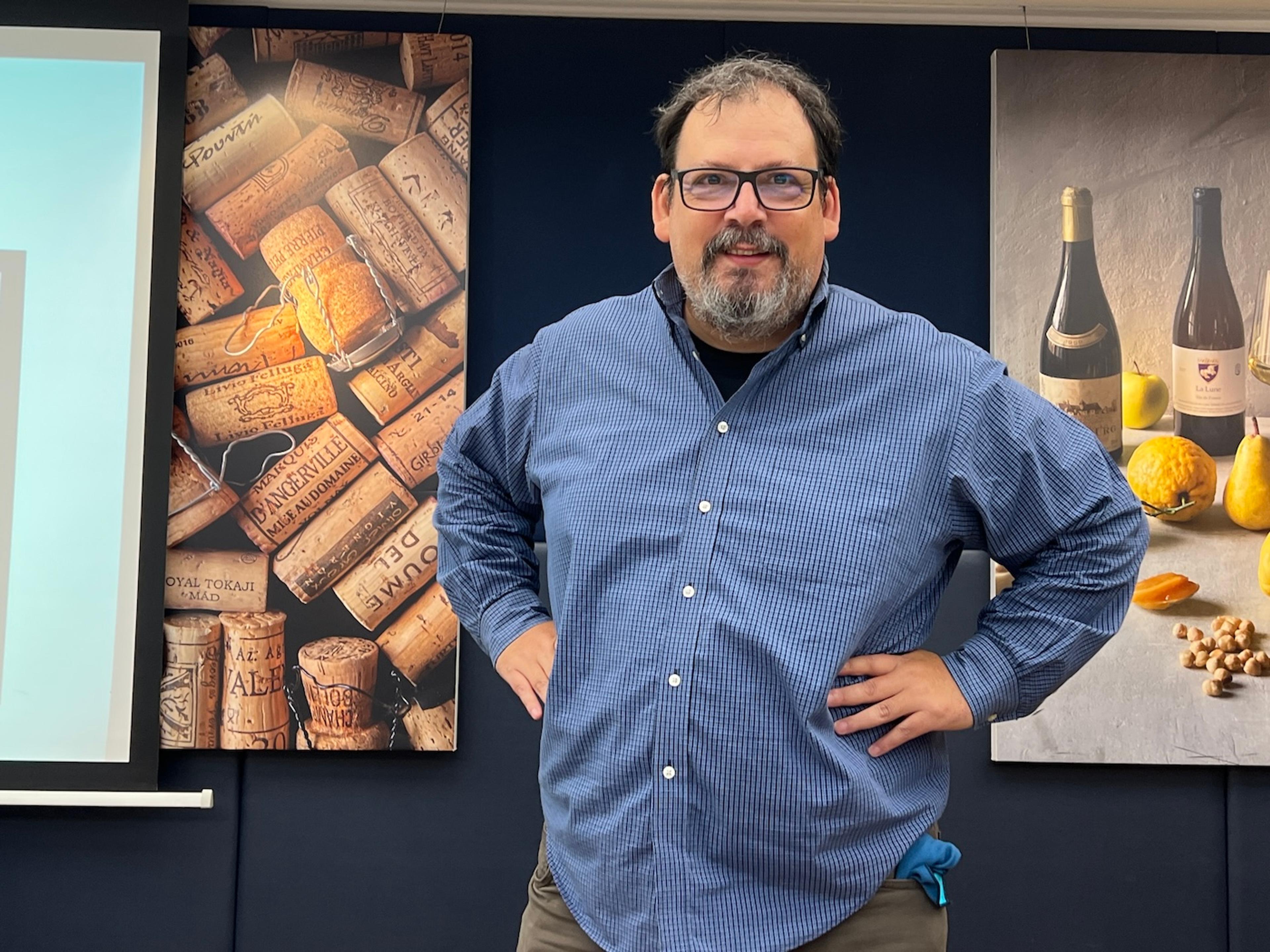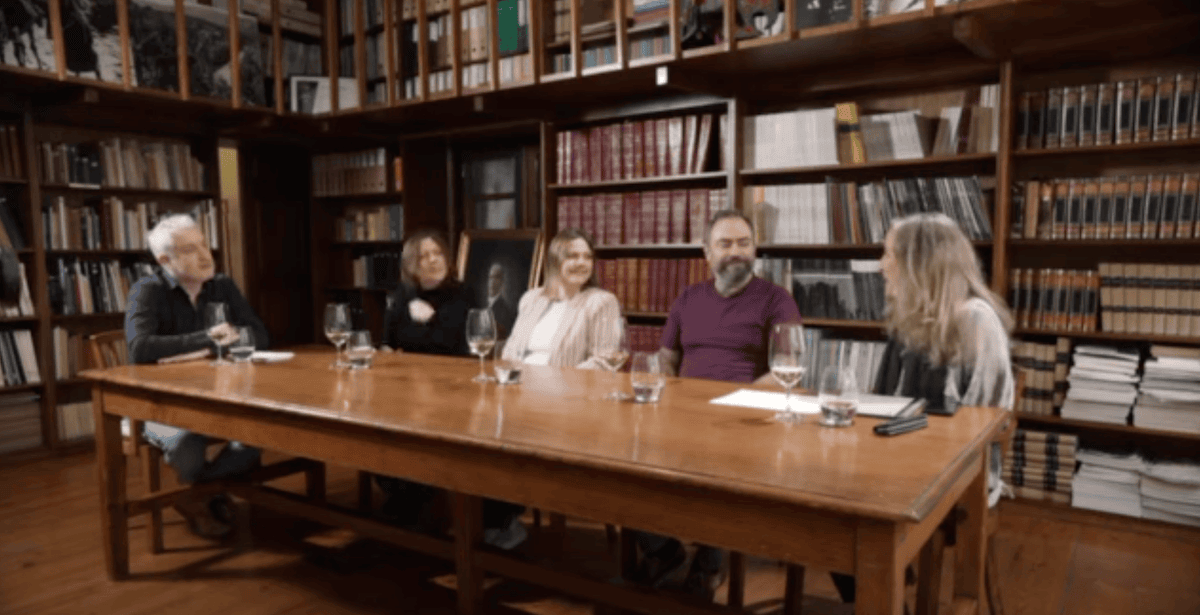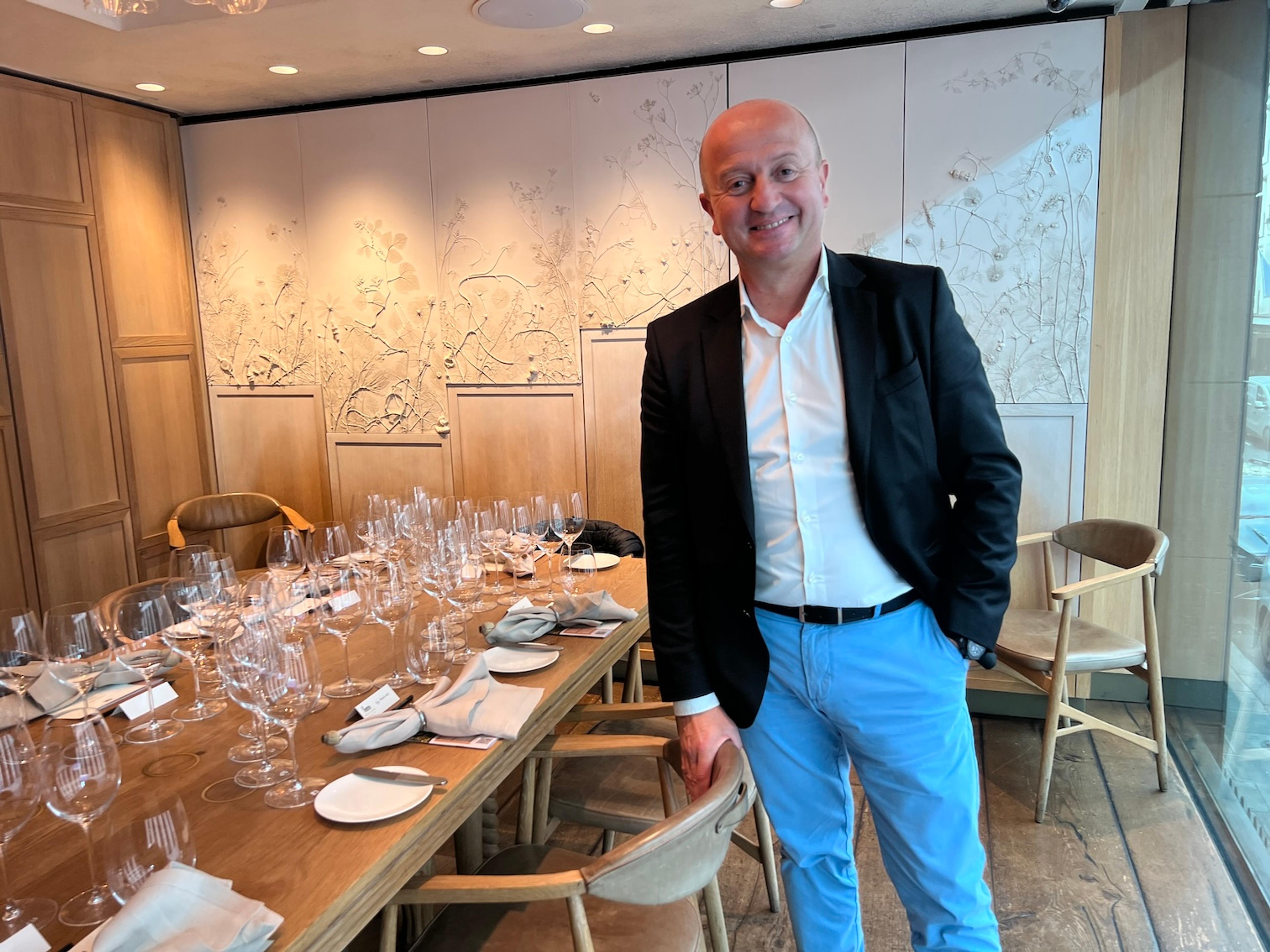

Matthieu Bordes is every wine writer’s dream. He’s been the winemaker and managing director of Château Lagrange for the past 13 years, so he can answer any question; he’s honest and candid, so he does answer any question; and the chateau’s Japanese owners, Suntory, just want him to make great Bordeaux and let him get on with it, so he’s allowed to answer any question.
“You can ask me almost what you want. There is no taboo question….,” Bordes beams in the private dining room of Mayfair’s Michelin-starred Hide restaurant.
Wine writer Jamie Goode remarks that it’s a rare occurrence for a classed growth Bordeaux château to hold a lunch like this in London, adding that it’s either a sign that things are going well or a sign that things are not so good. In the case of the region’s fortunes we all know that the latter is the case – all the indices are pointing the wrong way for all the reasons that are hindering the wine market globally but Bordeaux also has the added issues of fashionability and price.
But for Lagrange, its size, a smart annual policy of retaining 20% of production for library stock and owners who think longterm means that, even in vintages where sales have declined substantially, Bordes has managed to ‘balance the books’ through back vintage sales.
Investment and value for money
"So even for Château Lagrange, which is one of the top 30 châteaux of Bordeaux, it's a tough period.” Château Lagrange winemaker and managing director, Matthieu Bordes.
Unlike some Asian owners who invested in Bordeaux for prestige purposes and pushed up the price of their grand vin, Suntory took the opposite tack, investing heavily in the estate and, unusually for a classed growth Bordeaux château, followed a brand-building exercise by focusing on value for money.
Although the estate had over 400 years of history behind it, when Suntory bought Lagrange its reputation was low and its vineyards in bad shape. One of the first decisions by the Japanese group was to create a second wine, Les Fiefs de Lagrange, when there wasn’t one before.
Of the current 118 hectares of vineyard at Lagrange 60% of the fruit now goes into Les Fiefs to ensure high quality of the grand vin through strict selection, but with the added benefit that it has created a second wine that has always punched well above its weight and has always been one of those insiders’ smart buys.
The production of Les Fiefs did not take a chunk of volume out of the grand vin but rather came about through replanting the swathes of defunct vineyards that Suntory inherited when they bought the estate in 1983 – just 57 hectares were planted to vine at the time.
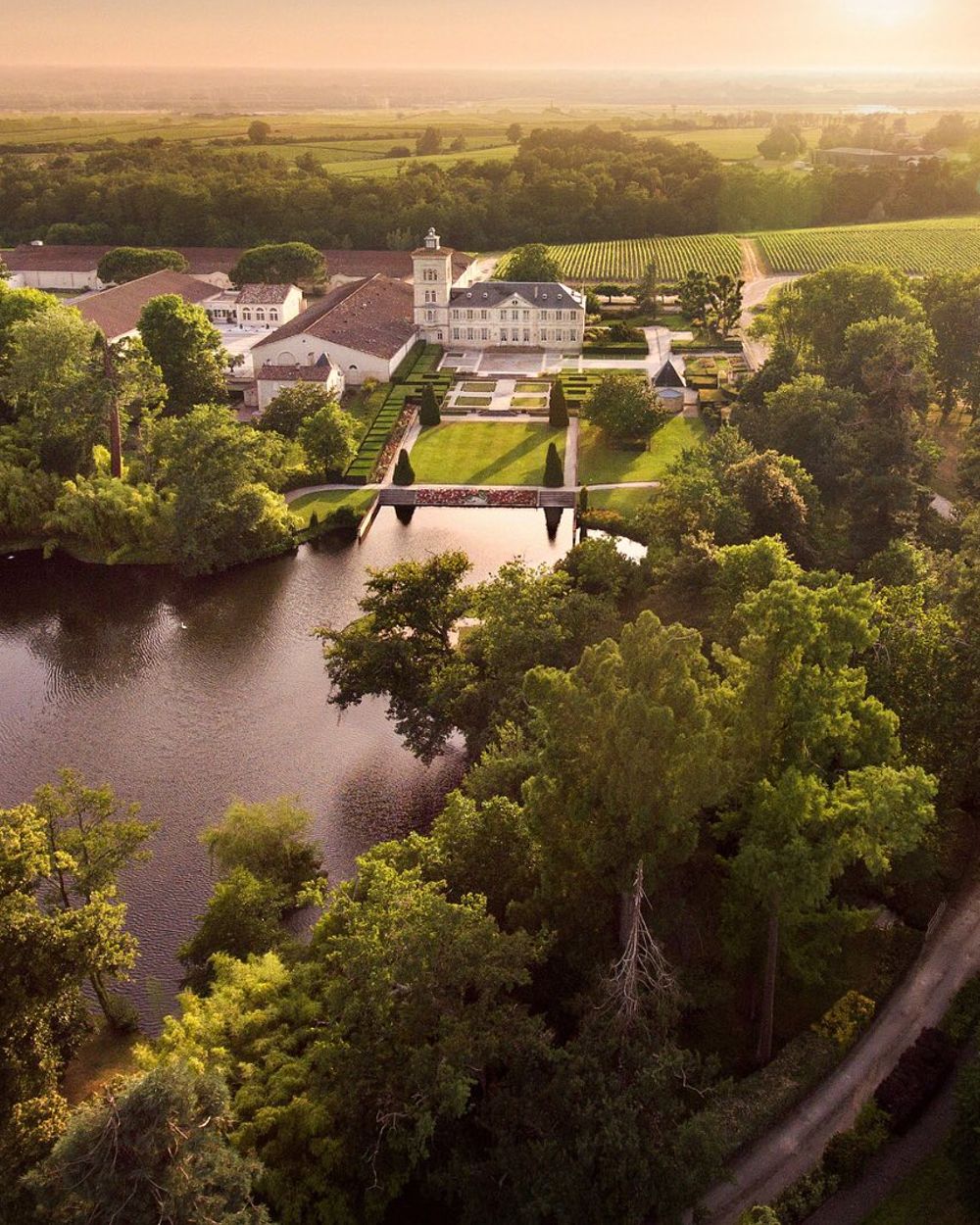
Rebirth of Château Lagrange: Suntory has invested heavily to return the property to its original glory
The expansion and replanting of the vineyards has been a key part of the strategy. Suntory paid $10m for Lagrange but then invested more than $30m in the first two years of ownership between 1983 and 1985.
“They invested in the vineyard, in the facilities, in the buildings, in the chateau as well. They remade everything, and they hired Marcel Ducasse, my predecessor, to upgrade the quality of Château Lagrange and make the rebirth of the estate,” Bordes explains.
Since the mid-1990s Suntory has continued to invest $1-2m each year until 2022 when the group invested a further $15m to refresh all the buildings, inside and outside offices, the chateau itself, the vat room, the barrel setup and so on. Of the 118 hectares of vineyards now planted there are currently 106 ha under vine for the two main reds, primarily consisting of 68% Cabernet Sauvignon, 28% Merlot, and 5% Petit Verdot. There are also 11.5 hectares of grapes to make a white wine.
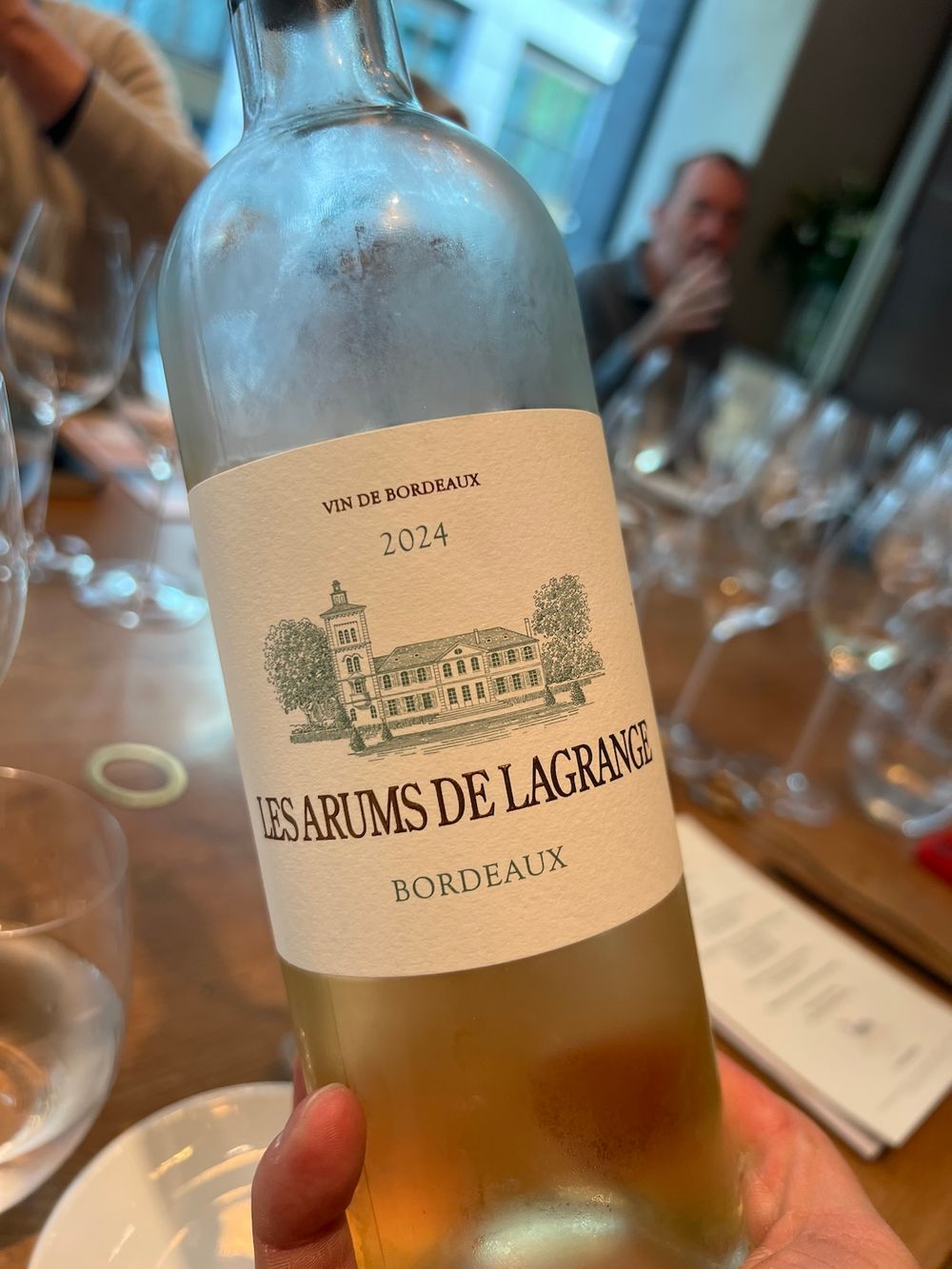
Les Arums - one of only two Saint Julien whites, and aimed at the Japanese market
Production of the white, Les Arums de Lagrange, restarted in 1996, a blend of Sauvignon Blanc (70%), Sauvignon Gris (14%), and Semillon (16%). Bordes points out that at this time there was just 15 whites being made in the Médoc, whereas now there’s over 100. Along with Talbot, Les Arums is the only white Saint Julien wine although this will be added to when Château Beychevelle launches its much-anticpiated white.
Les Arums is primarily made for the Japanese market where 70% of it is sold, supplementing the output of Suntory’s two domestic wine estates Tomi no Oka and Mercian. The export of used Lagrange barrels for Yamazaki whisky ageing is another example of the relationship between Lagrange and its owners but, apart from these Suntory is relatively ‘hands-off’.
Having said that Japan is also, along with France and the US, one of the top territories for all of Lagrange’s cuvées – out of the 100 countries reached by the estate’s 85 or so négociants.
Making up the en preimeur shortfall
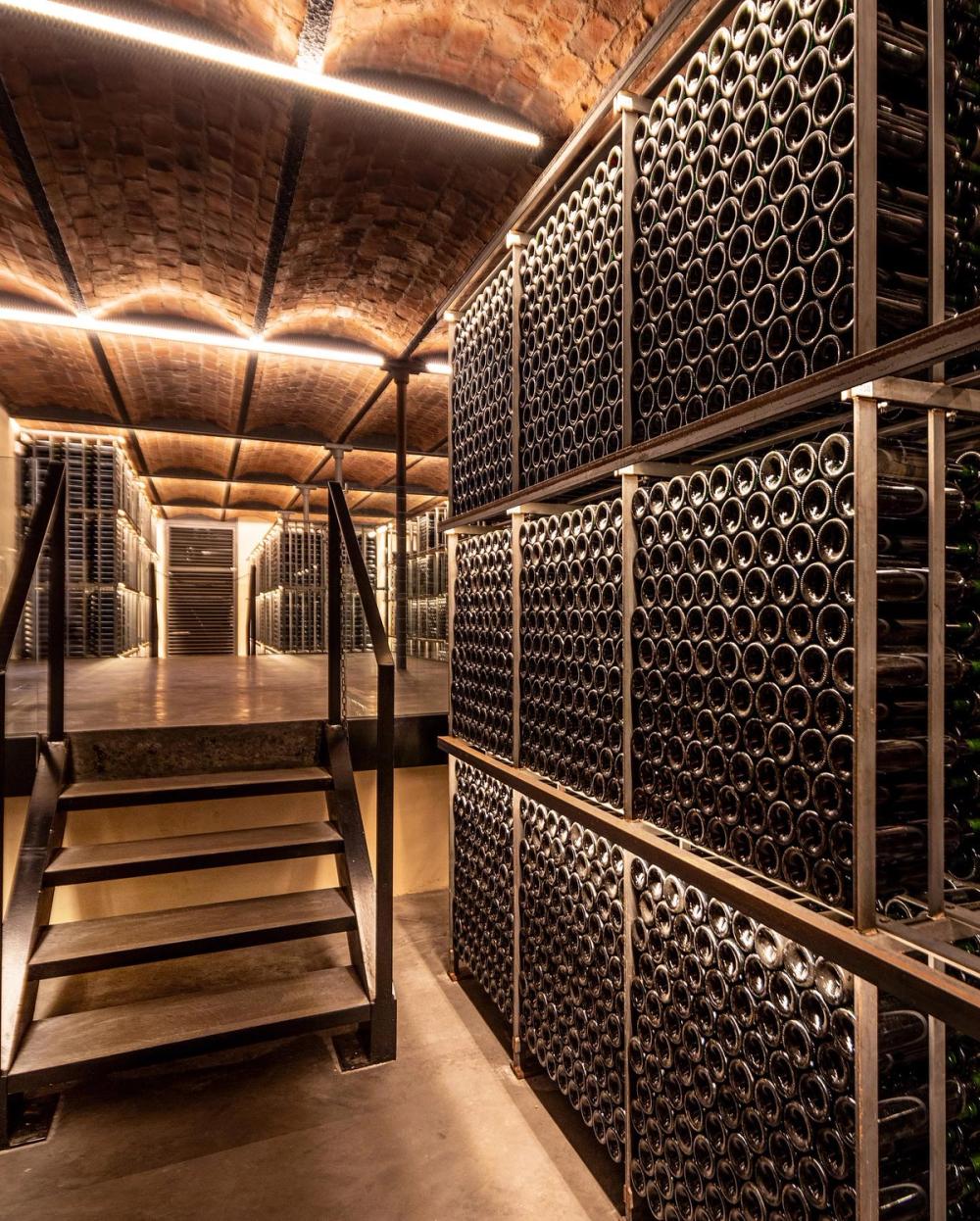
Longterm thinking: each year 20% of production is stored for back vintage sales.
Although 100% of sales goes through Bordeaux’s La Place system, Lagrange has never put all its eggs into the en primeur basket, holding back 20% of production for promotion and, most importantly, back vintage sales which in 2026 has had a bigger turnover than en primeur sales.
The fact that a significant portion of turnover now comes from back vintages rather than en primeur sales is down due to market instability, says Bordes.
“Until the 2022 vintage, so three years ago, we sold 80% en primeur and kept 20% back vintages. And at that time, en primeur represented almost 80% of turnover. This year, to give you an idea, I make more turnover with the back vintages compared to en primeurwhich now represents only 40% of the sales. Fortunately, I kept some back vintages, and I'm able to sell some 2005, 2009, 2010, 2014, etc. which represents 60 to 70% of the of the turnover nowadays. I think a lot has changed over the last few years in Bordeaux.”
Bordes says that it was the en primeur campaign for the 2024 vintage which saw the massive drop in sales from 80% to 40%. The better 2025 vintage saw a slight uptick in speculative sales but time will tell what is in store for the 2026 vintage next year.
“It'll be interesting. There is a lot of bad things in the world at the moment. We will also have an election as well in France next April during the en primeur period. And we know that, during this time, business is really tough, so we'll see. It will be a good test. To be honest, I'm not very confident, and I think en primeur will be close to 50% as well.”
Keeping back 20% of production over the years has been Lagrange’s ‘saving grace’, however, something that smaller estates, without wealthy owners, have been unable to do.
“So lucky me, because I have plenty of back vintages. For many chateaux, though, the transition was too quick, and they didn't have enough stock to survive. For us, it was not a problem, but even now, the sales of the back vintages could not succeed in helping us break-even. So, this year, maybe I will have lost a little bit of money – it will be the first time over the last 30 years – so even for Château Lagrange, which is one of the top 30 chateaux of Bordeaux, it's a tough period.”
Bordes puts the move away from speculative early purchases down to the shifting economic landscape particularly high interest rates and increased ‘cost of carry’. But one of the advantages of en primeur is that you still know a year in advance what your turnover is going to be and can therefore plan accordingly.
“We knew that this year I will have lost close to $4 million in January because the sales were so small, and they (Suntory) asked me to do only $1.5 million through back vintages. It would have been better to reach $4- $4.5 million to be able to reach break-even, but they say ‘No, no, Matthew I understand your explanation. Strategy is tough. It’s a hard time at the moment. $1.5 million is okay.’ Fortunately, I did already $3.6m, so much more than they would like (not enough to reach the break-even) and they still are very happy.”
Here Lagrange is blessed by size. In a small yielding growing season the estate will produce approximately 180,000 bottles of the grand vin compared to 270,000 bottles of Les Fiefs but in a bumper year that can rise to 300,000 of Lagrange and 450,000 bottles of Les Fiefs (admittedly this has only happened twice over the past 20 years). An average year for Les Arums would be 30,000 bottles.
Quite apart from the size of Lagrange, it is the size of the chateau’s parent company that is also significant in driving Bordes’ winemaking philosophy as well as them having a longterm, global outlook. After Diageo and Pernod Ricard, Suntory is the world’s largest drinks group with $2.2 billion profit generated from $16 billion turnover. Wine-wise, apart from the two Japanese estates, Suntory owns Weingut Robert Weil in the Rheingau and 50% (with Castel) of both chateaus Beychevelle and Beumont.
“In Santori’s world Lagrange is just a drop in the ocean,” explains Bordes, “We are just one company among the 249 companies worldwide that belong to Suntory. La Grange has a turnover of $7.8 million. Its profit was $280,000. So, you understand that we are a drop in the ocean of Suntory and they don't care if I produce 20,000 bottles more or less of the grand vin.”
“So, because I'm a drop in the ocean, they always ask me, please make the best wine that you can. We don't care about the quantity of 20,000 bottles more-or-less, just the quality. Because I have a free hand and can make the blend in the way we want I must be the luckiest winemaker there is in Bordeaux.”
Tasting the wines
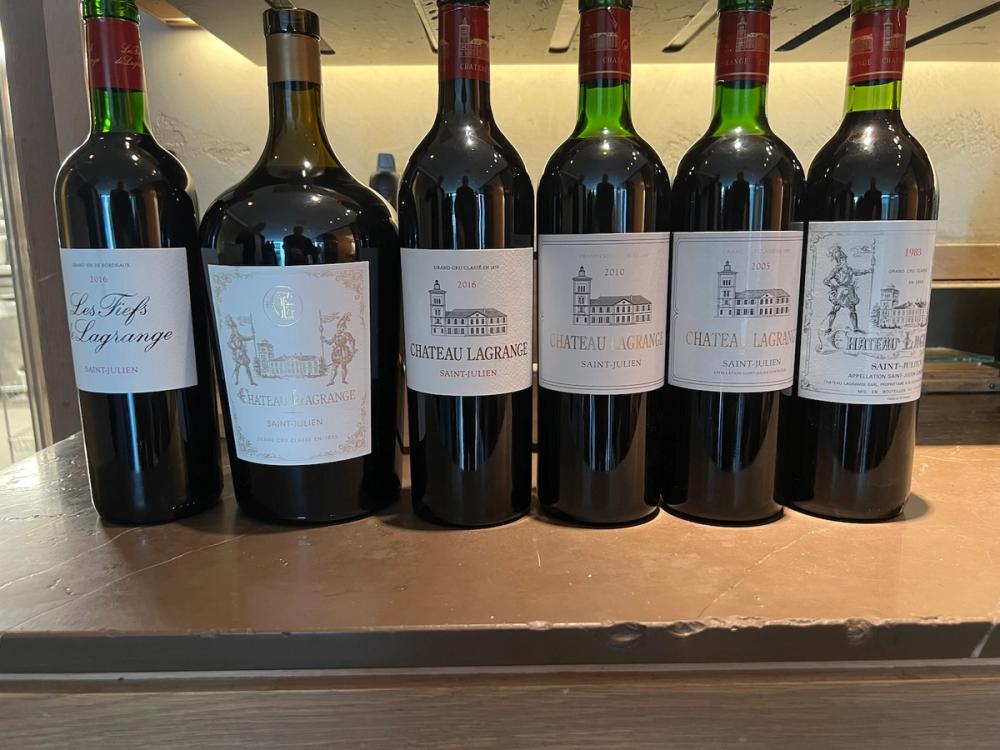
Les Fiefs de Lagrange 2016
55% Cabernet Sauvignon, 41% Merlot, 4% Petit Verdot
There’s a lovely fresh core of black fruit in this superb Fiefs, a second wine that has always been an insider’s smart buy, but I can’t remember one as good as this coming as it does from one of the hottest and driest summers ever in Bordeaux. Gorgeous aromas of black cherry, cassis and violets draw you in, the palate has good acidity and balance. Perfect drinking now. A must buy.
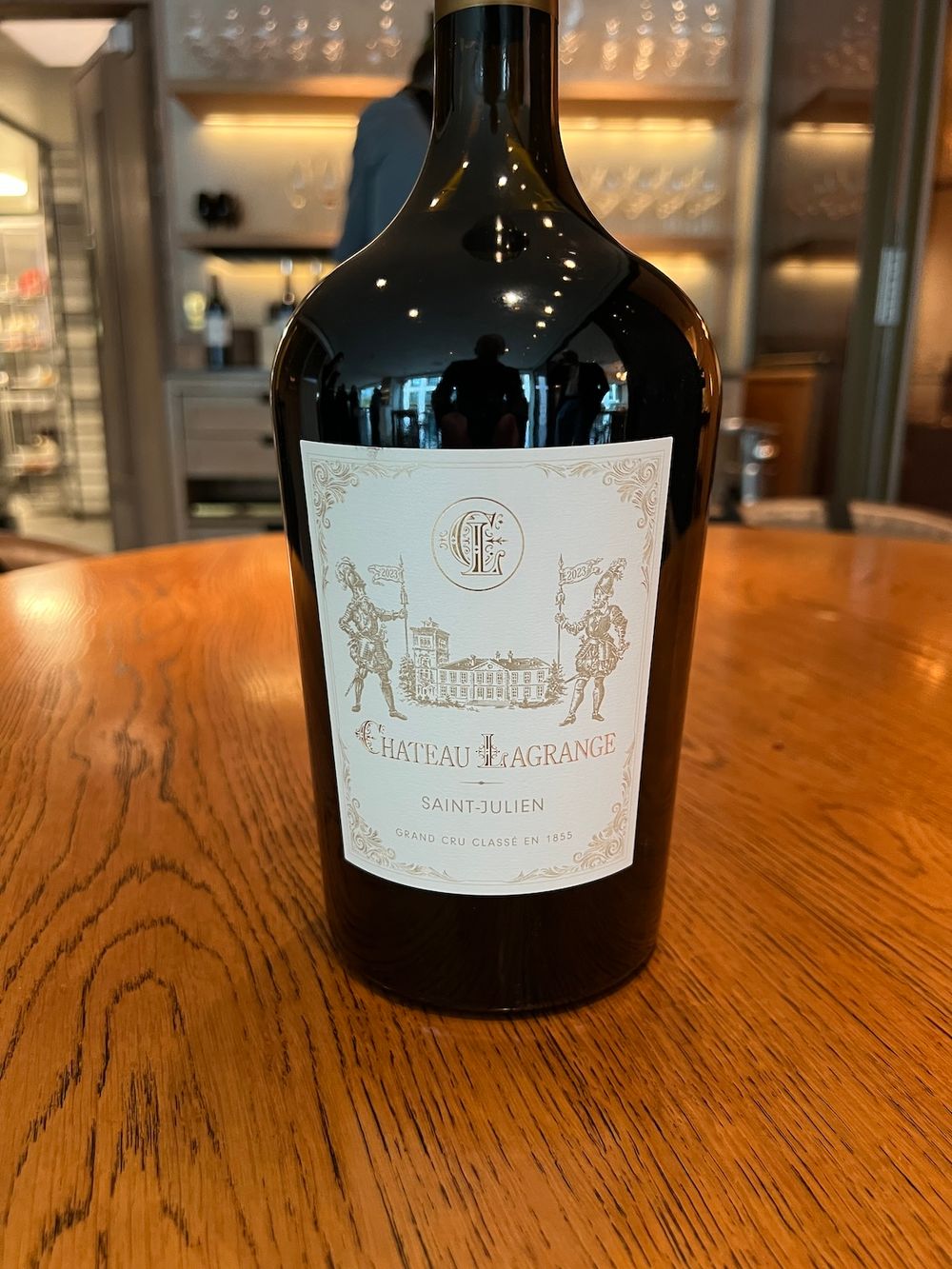
Collection Héritage 2023
54% Cabernet Sauvignon, 46% Merlot
A special cuvée and the third of a series of Collection Héritage – this is an homage to 40 years of Suntory ownership with the blend a carbon copy of the 1983 wine which at the time was made from the just 56 hectares that were planted to vines (out of a possible 118). In the 1980s the cépage was usually 50/50 Cab Sauv/ Merlot (now it’s much more Cab-dominant) so the ripeness of the 2023 Merlot helped bring opulence and red fruit to the wine. It’s drinking now but a tad green. There are only 3,000 numbered magnums in a stunning Japanese style pine box which will retail around €240 in France.
Chateau Lagrange 2016
70% Cabernet Sauvignon, 24% Merlot, 6% Petit Verdot
The silky tannins sit at the core of this great vintage which is drinking now but would prefer to wait a few more years. The harvest was late and long with low berry weights (30% below the average of the previous years). The nose is complex with black fruit, pepper and liquorice, the palate is full-bodied, dense with beautiful harmony and balance.
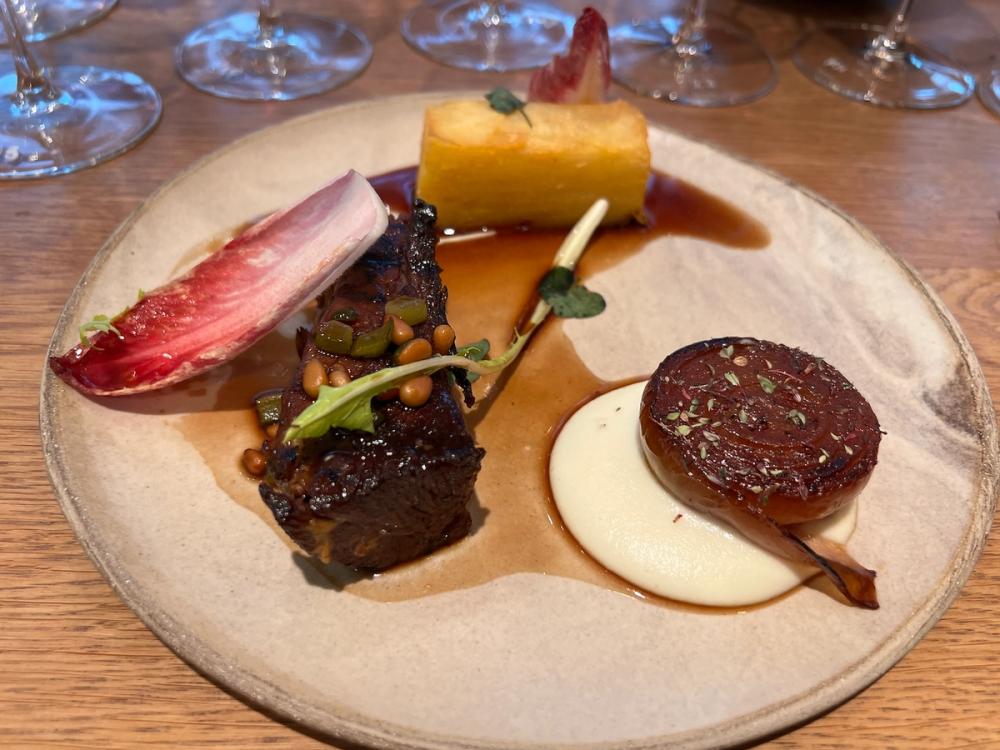
The Château Lagrange 2016, 2010 and 2005 were served with Lake District short rib of beef
Chateau Lagrange 2010
75% Cabernet Sauvignon, 25% Merlot
The growing season had non-stop sunshine from May ’til the end of October, but with cool nights. The harvest was late due to the drought which you detect from the concentrated, ripe nose of red and black fruit; suggestions of vanilla bean and toasted wood. The colour and the palate are deep, intense and structured with fine, pixilated tannins. It’s rich but fresh, complex, layered and beautifully balanced. One of the great Bordeaux vintages, just getting into its stride. “Unprecedented concentration of tannins of extreme fineness,” according to Bordes.
Chateau Lagrange 2005
46% Cabernet Sauvignon, 45% Merlot, 9% Petit Verdot
Quintessential Saint-Julien – showing the appellation’s mix of Pauillac power and Margaux elegance. It also comes from a growing season that used up every superlative in the book and, on release the vintage generated huge excitement. This carries across to the wine in the glass – a less powerful wine than the 2010 with extremely soft, well-integrated tannins. Truffle precedes red and black fruit, cedar, spice and a minty lift. In the mouth the wine is suave, fresh, with a beautiful elegance. Wow.
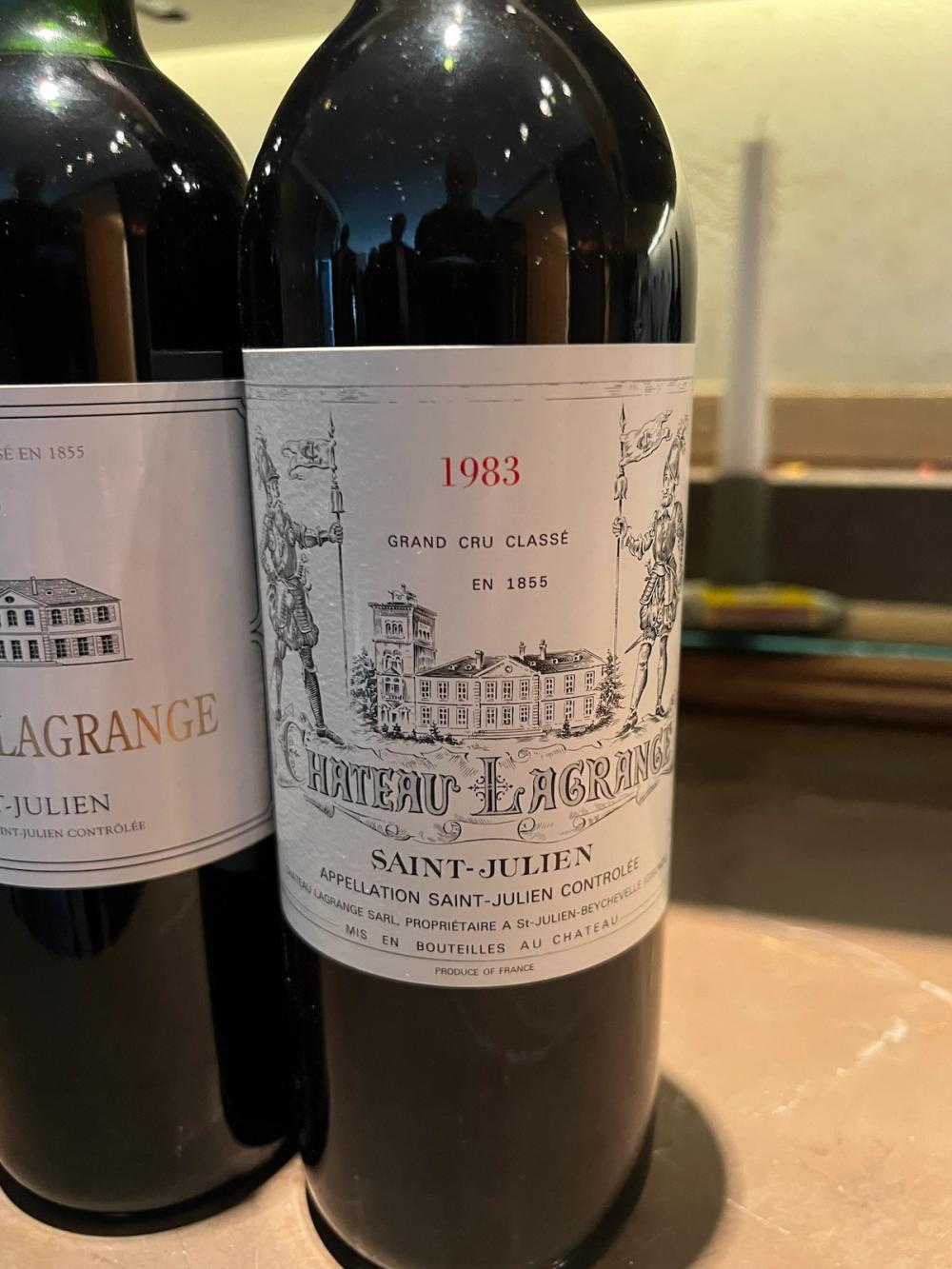
Chateau Lagrange 1983
54% Cabernet Sauvignon, 46% Merlot
The first vintage made under the new Suntory ownership is when the blend of the 1980s was basically 50/50 Cab Sauv to Merlot. The slight bricking on the eye was the only sign of this wine showing its age, on the nose it was more secondary than tertiary although it had been opened at the start of the lunch, not decanted and evolved on tasting. Blind I wouldd have put it in the 90s. There was black cherry, eau de vie and fresh white mushroom aromas while in the mouth the wine was fresh, nice acidity and balance with just enough fruit holding on. Good depth and in fine fettle – another decade to go I warrant.
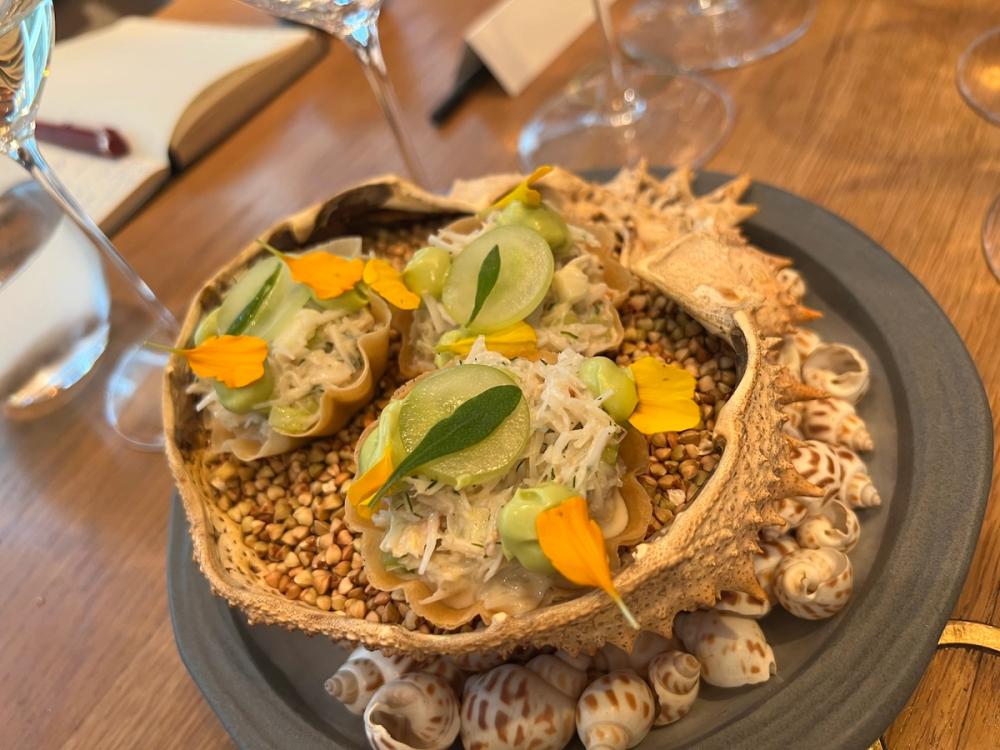
Les Arums was served with 'Land & Sea' - part of Hide's range of starters
Les Arums de Lagrange 2024
70% Sauvignon Blanc, 16% Semillon, 14% Sauvignon Gris
Along with Chateau Talbot, this is currently the only white wine in Saint-Julien (a Beychevelle white is coming we believe). It’s a classy, refreshing SB-led blend that is pretty on the nose with floral, citrus and tropical notes. It’s refreshing, balanced, beautifully dry and clipped on the palate, a result of its six months in oak (50% new) which is nowhere evident. Worth looking out – for before and during the meal.