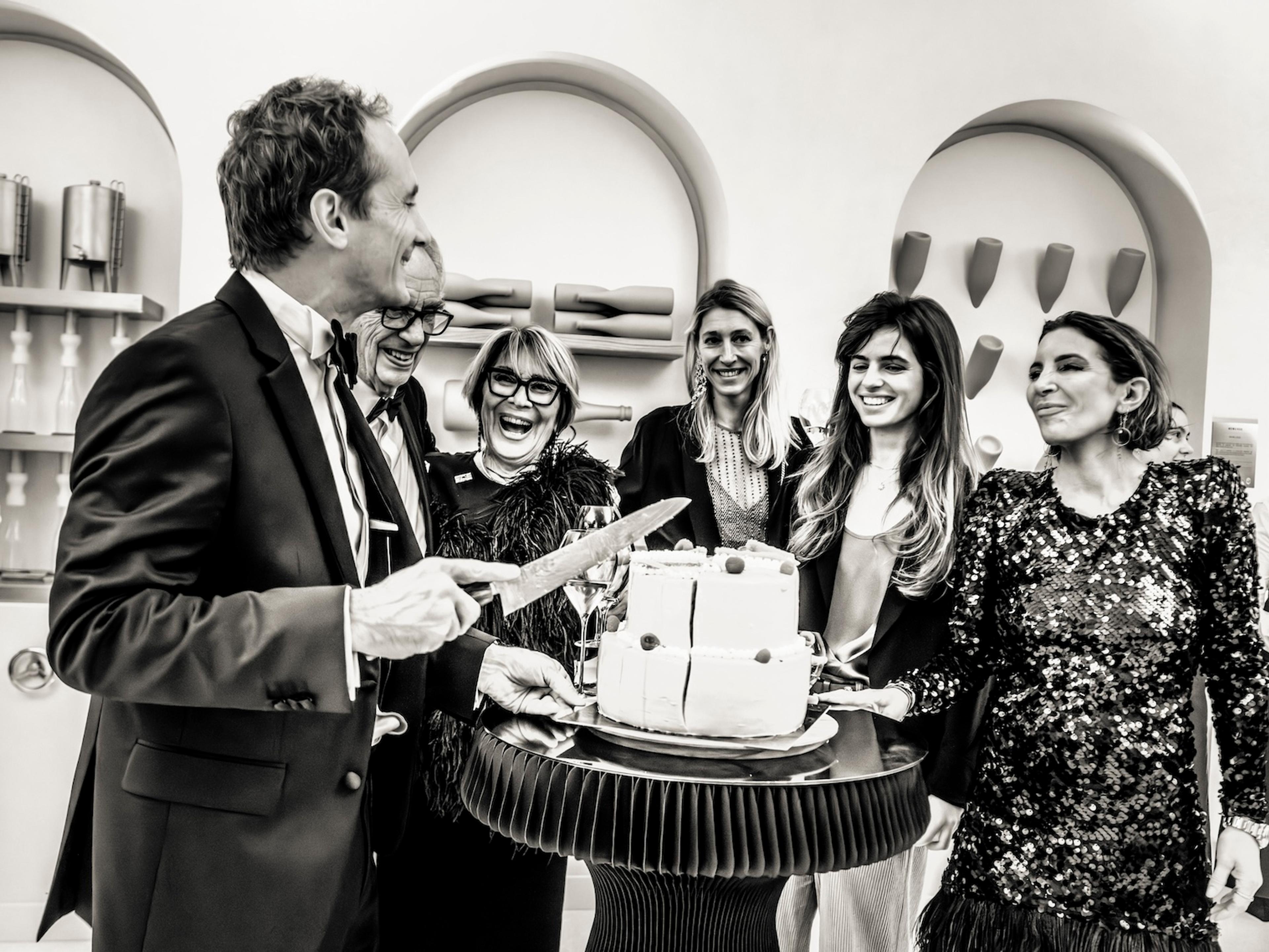

For many of my fellow guests, our December visit to Champagne Thiénot was centred around one night: a magnificent party to celebrate the launch of Le 3, Thiénot’s fabulous new oenotourism project in Reims.
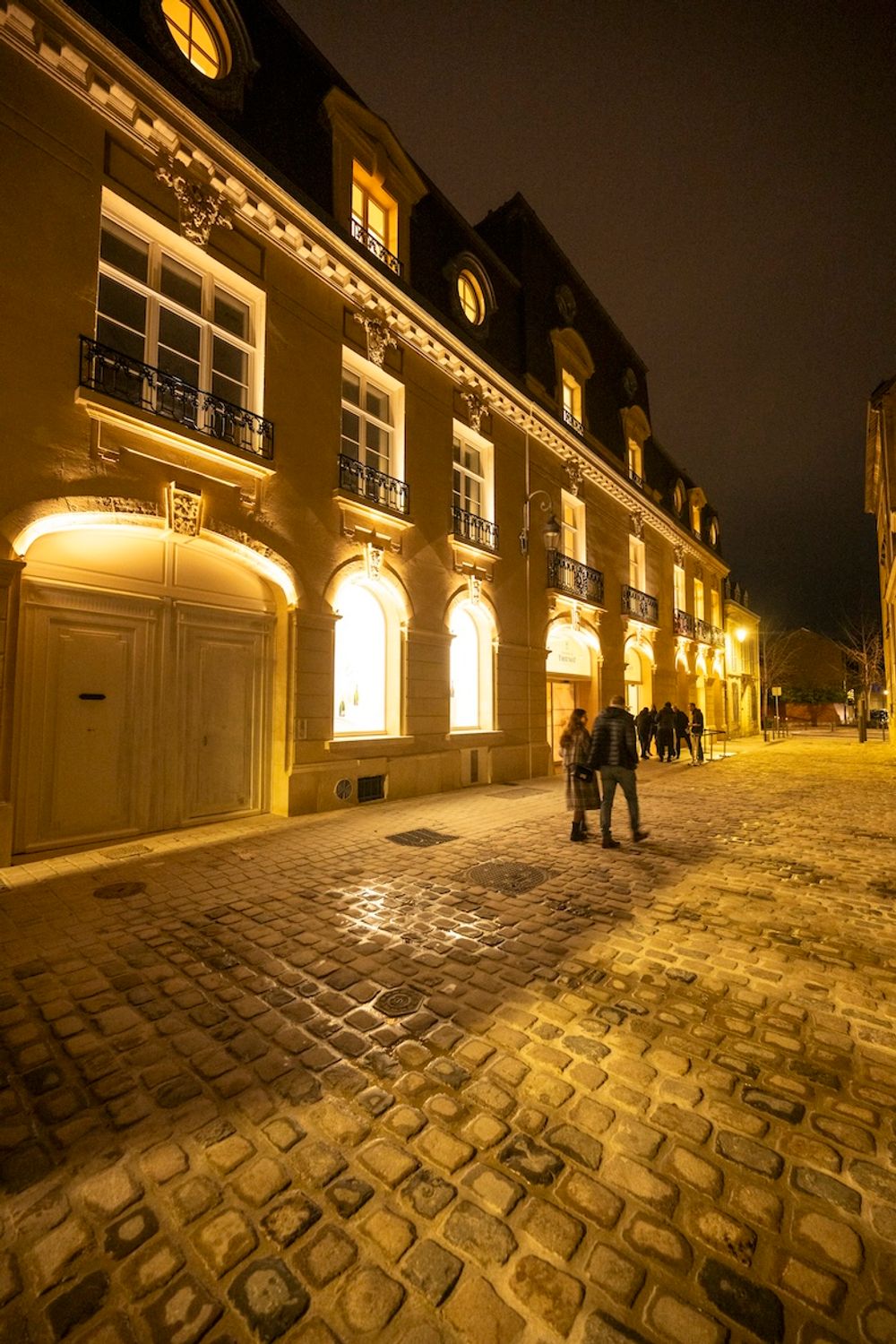
Open for tourists - the impressive home of Champagne Thiénot © STUDIO MB
Across three floors, two stories of underground cellars, and a subterranean cuverie equipped with stainless steel tanks illuminated with a light show of iridescent bubbles, Thiénot customers from all over the world sampled the family’s wines alongside a selection of gourmet eats.
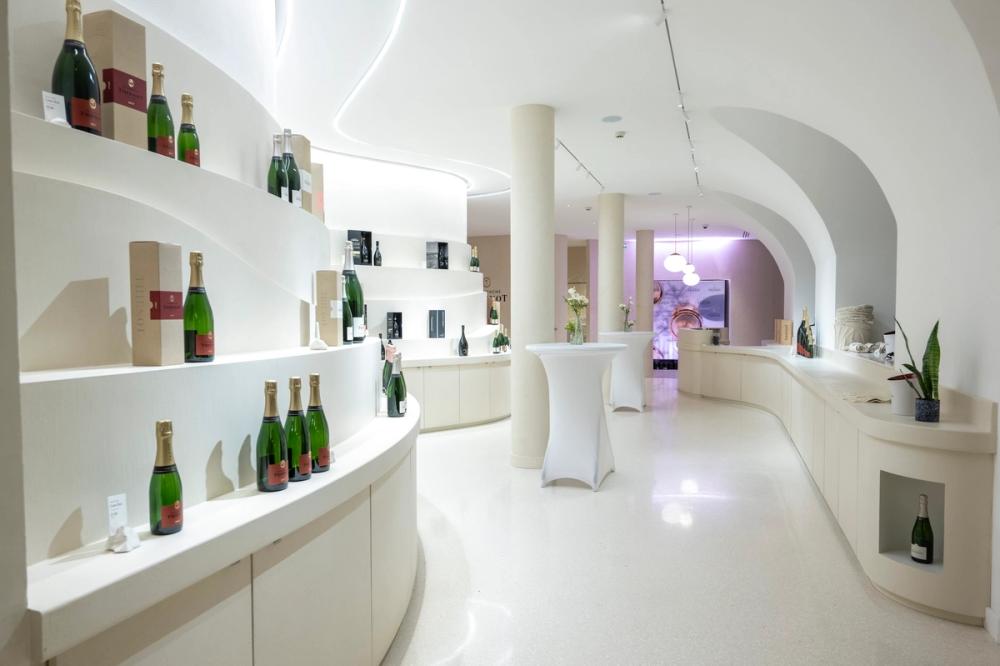
The impressive interior of Le 3 © STUDIO MB
By positioning canapé stations on different floors, guests were invited to taste their way around the building, which was all curved stone edges, understated neutral tones, and elegant black detailing. It was a festive occasion, and each room felt like a gift to be unwrapped, every door an advent calendar window onto a new view, cuvée, or light bite.
Interviewing Stanislas Thiénot
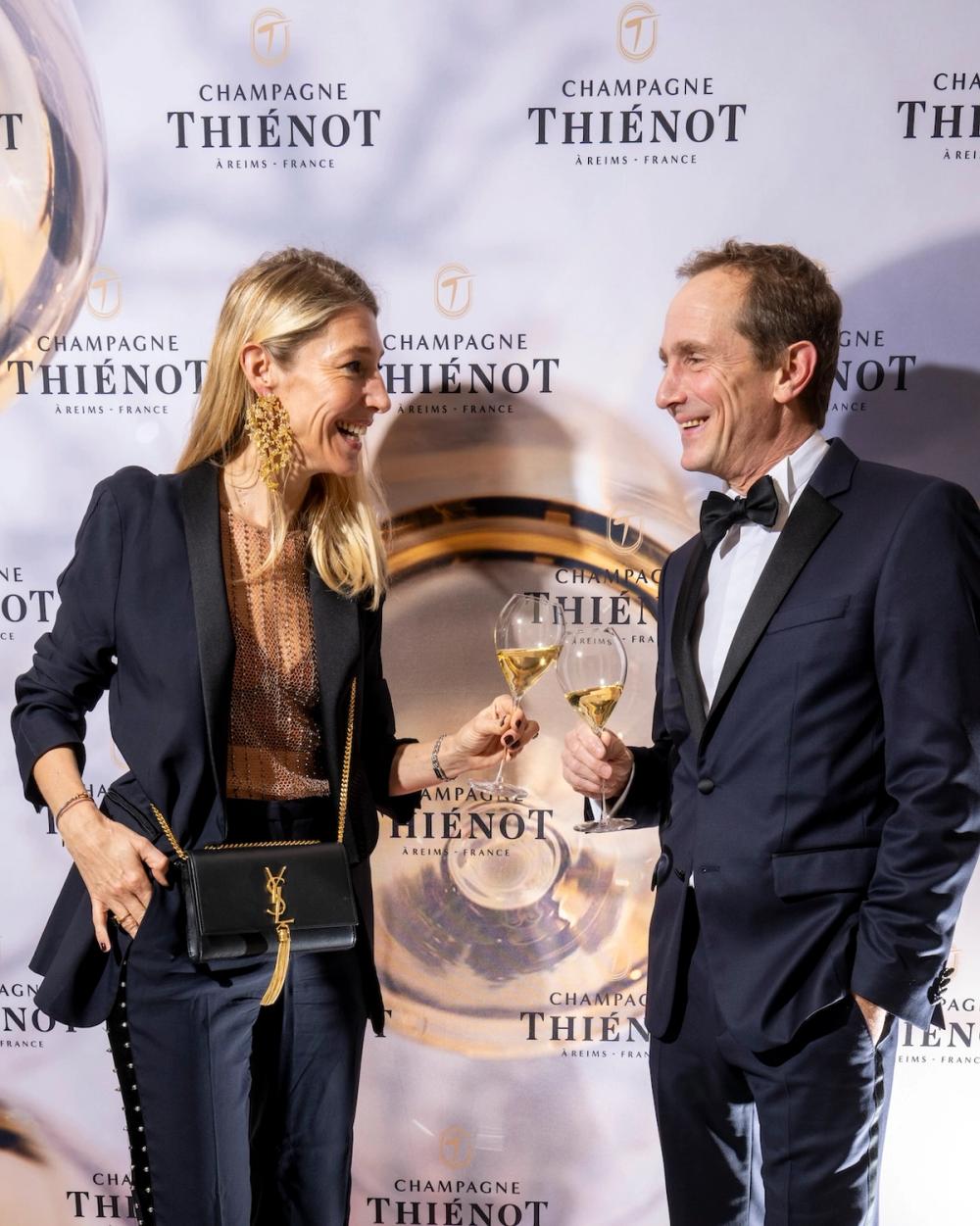
Champagne Thiénot CEO, Stanislas Thiénot and wife Magaly © STUDIO MB
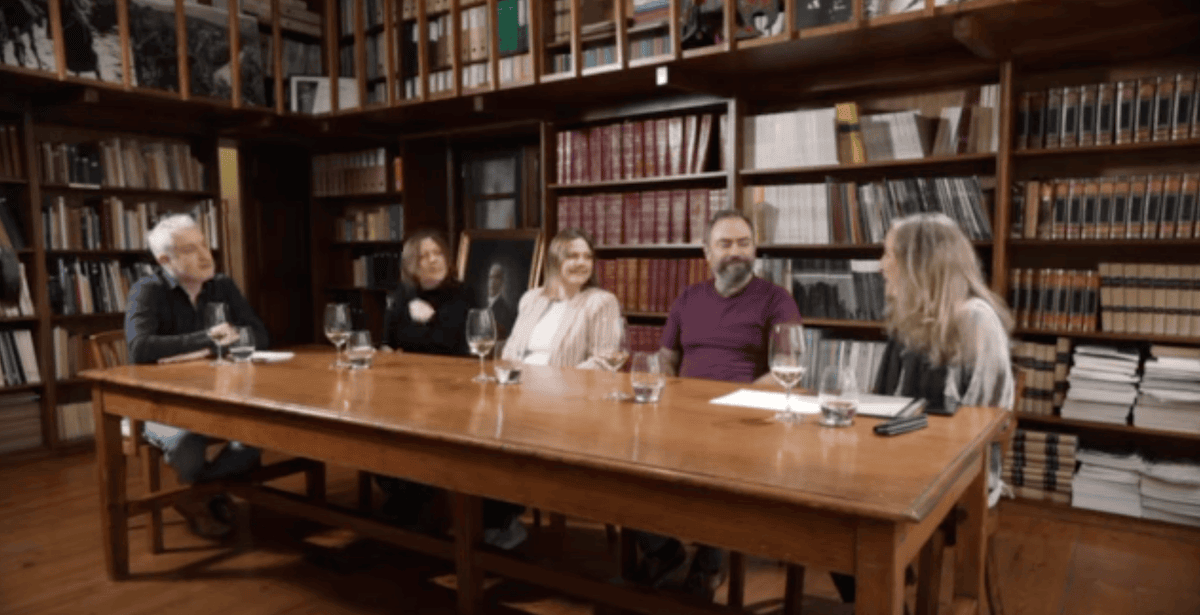
Before the visit I was a relative newcomer to Thiénot, so, as enraptured as I was by the splendour of the launch party, the true highlight of my trip came on day two, when I interviewed Thiénot’s current CEO, Stanislas Thiénot, and enjoyed a vertical tasting of one of the Maison’s most prestigious cuvées: Cuvée Alain Thiénot, named after Stanislas’s father and the founder of this family-run House.
Through this vertical, which included several wines that have never been made commercially available, I learned the history of Champagne Thiénot.
© STUDIO MB
Cuvée Alain Thiénot 1985 and the founding of Champagne Thiénot
Stanislas began our interview by telling me that his father founded Champagne Thiénot in 1985, having spent the previous 20 years working as a wine broker in Champagne. During this time, Alain had acquired 10ha of vines from one of his clients, but his ambition wasn’t simply to grow grapes: he wanted to control the production and sales of his wines. So, when an old champagne co-operative came up for sale in the centre of Reims – complete with all the necessary winemaking equipment – he jumped at the opportunity to buy it.
“We moved in, the whole family lived in the offices of the old co-operative; my parents turned the office into our home,” shared Stanislas. “The Thiénot adventure began like that, the family found itself living within the Maison’s walls […] there were more offices in the back, disgorgement and labelling machines, there was a cuverie and we could get into the cellars from there […] we were in the middle of it all.”
Stanislas would have been nine years old at the time, and I quip that it must have been an incredible place to play hide-and-seek. “Ah, oui!” he exclaimed, eyes bright, “there were 2km of cellars below the house, it was super fun! And we used to collect these red and blue crown caps – we had different colours for vintage or non-vintage – and we played on the Fenwick too,” he added, referring to a small forklift truck commonly used in cellars and wineries.
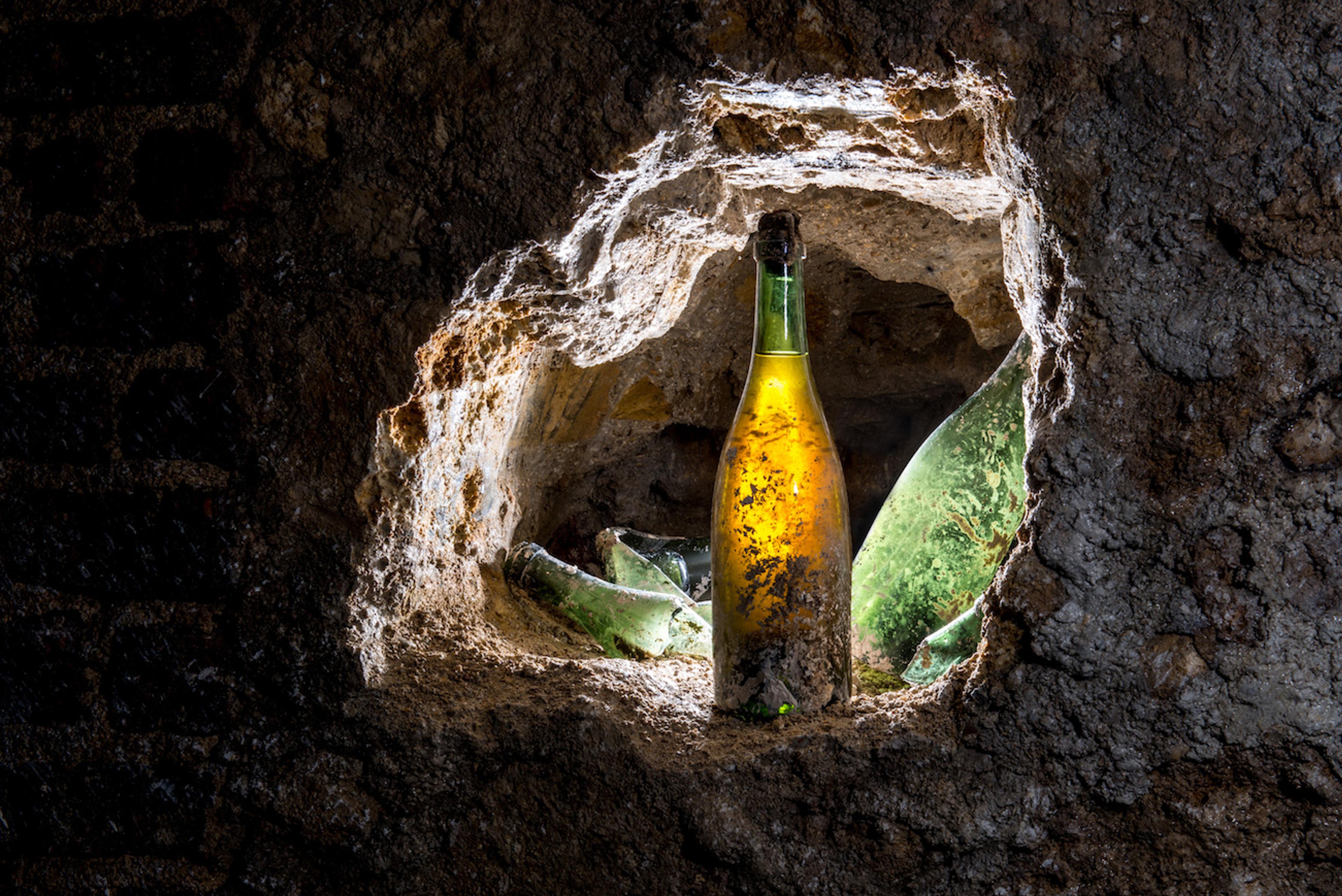
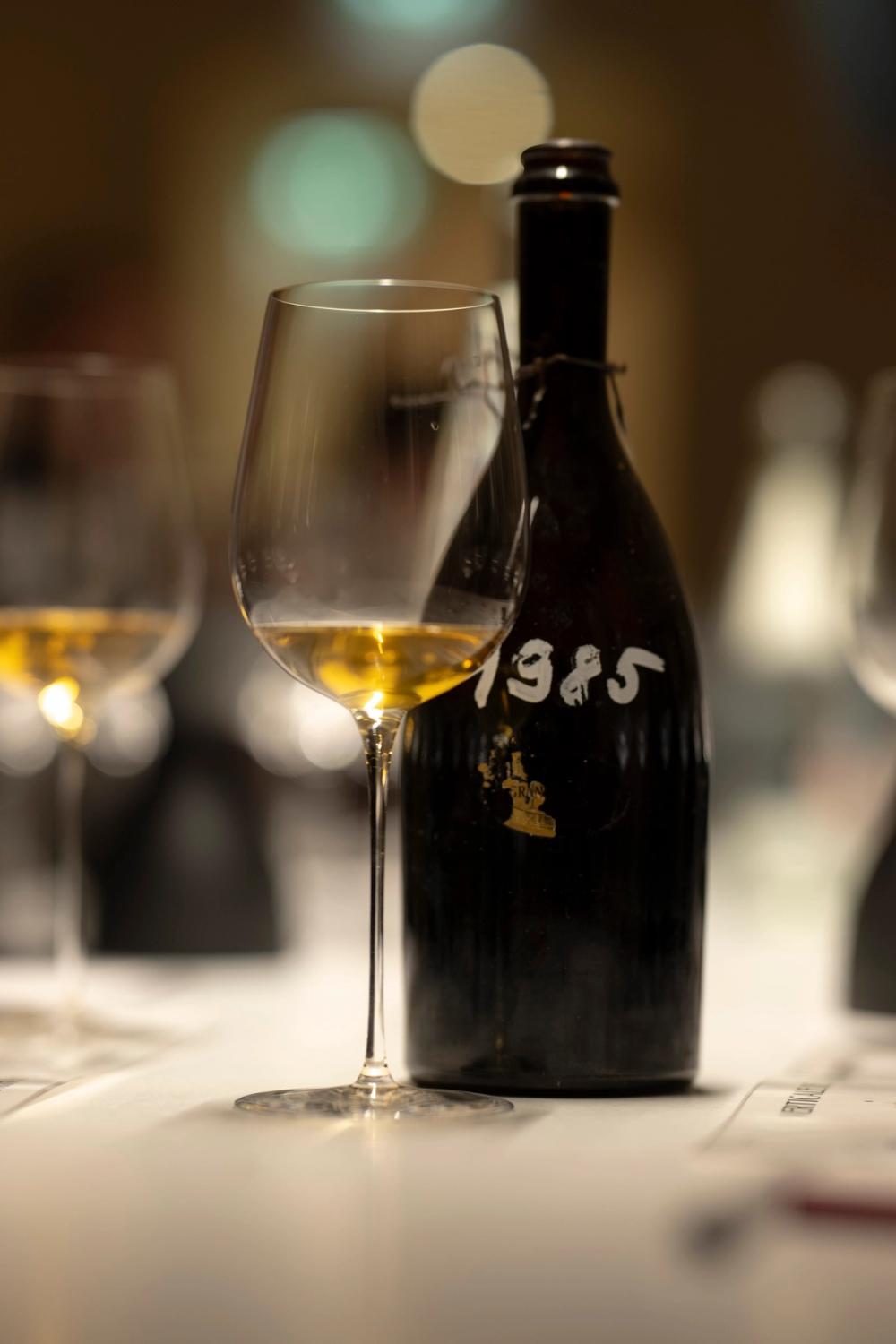
The never released Cuvée Alain Thiénot 1985 reflects the playfulness of these early days and reveals just how much the House has evolved. To quote Stanislas, “quality has improved a lot since this was made” because the Maison’s young years were spent experimenting with different assemblages and winemaking styles.
The ’85 was a blend of 40% Chardonnay and 60% Pinot Noir, with 95% malolactic fermentation, 10g/l of dosage, and some oak. Today almost all the bubbles have gone, and it is mature and toasty with flavours of dried apricots, beeswax, and green cocoa lifted by surprising freshness given its 40 years of age.
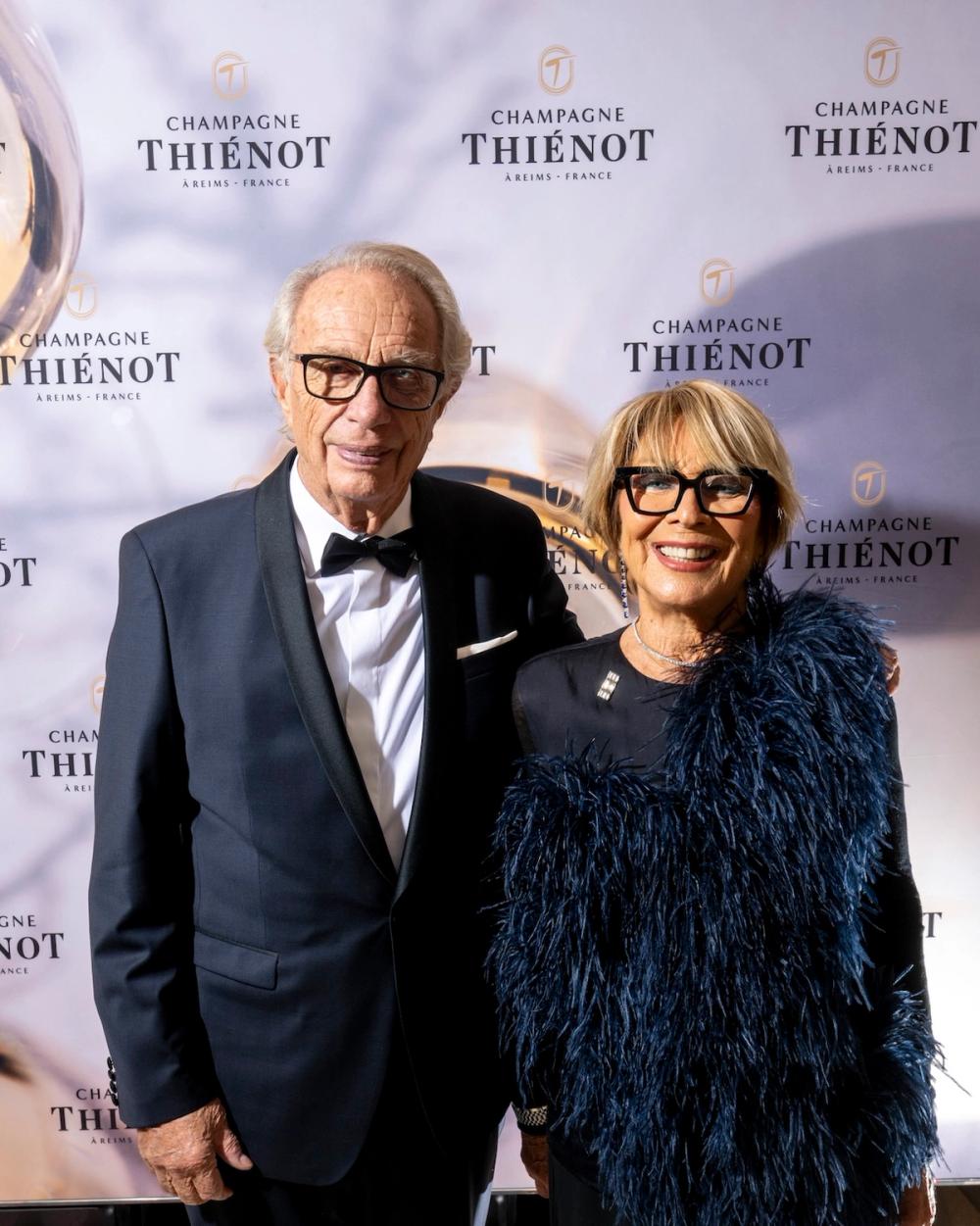
The man himself – Alain and Anne Thiénot © STUDIO MB
Cuvée Alain Thiénot 1988 and a time of family and experimentation
Now 12, Stanislas and his younger sister Garance would come home from school every lunchtime to share a meal with various Thiénot employees.
“My mum cooked something for my dad, for us, and for two, three, four people from the business. The Directeur Général [CEO] came every lunchtime, the cellarmaster came sometimes […] and over the next ten or so years we would mix family conversation with business discussions: that family dimension we talk about, it’s not just words, it’s really at the heart of everything.”
I imagine some of these lunchtime discussions would have revolved around Thiénot’s experiments with their still-developing house style. In ’88 they decided to play with oak and fermented the entire allocation for Cuvée Alan in barrel.
“This vintage is why we don’t do oak vinification,” Stanislas shared fondly, “it’s too much!” I tend to agree. A 50:50 split of Chardonnay and Pinot Noir with 10g/l dosage, the ’88 is dominated by toasty notes, melted butter, and dried fruit, with some green walnut and a touch of camphor. Like the ’85, the family chose never to release it, but it makes for a fascinating piece of history.
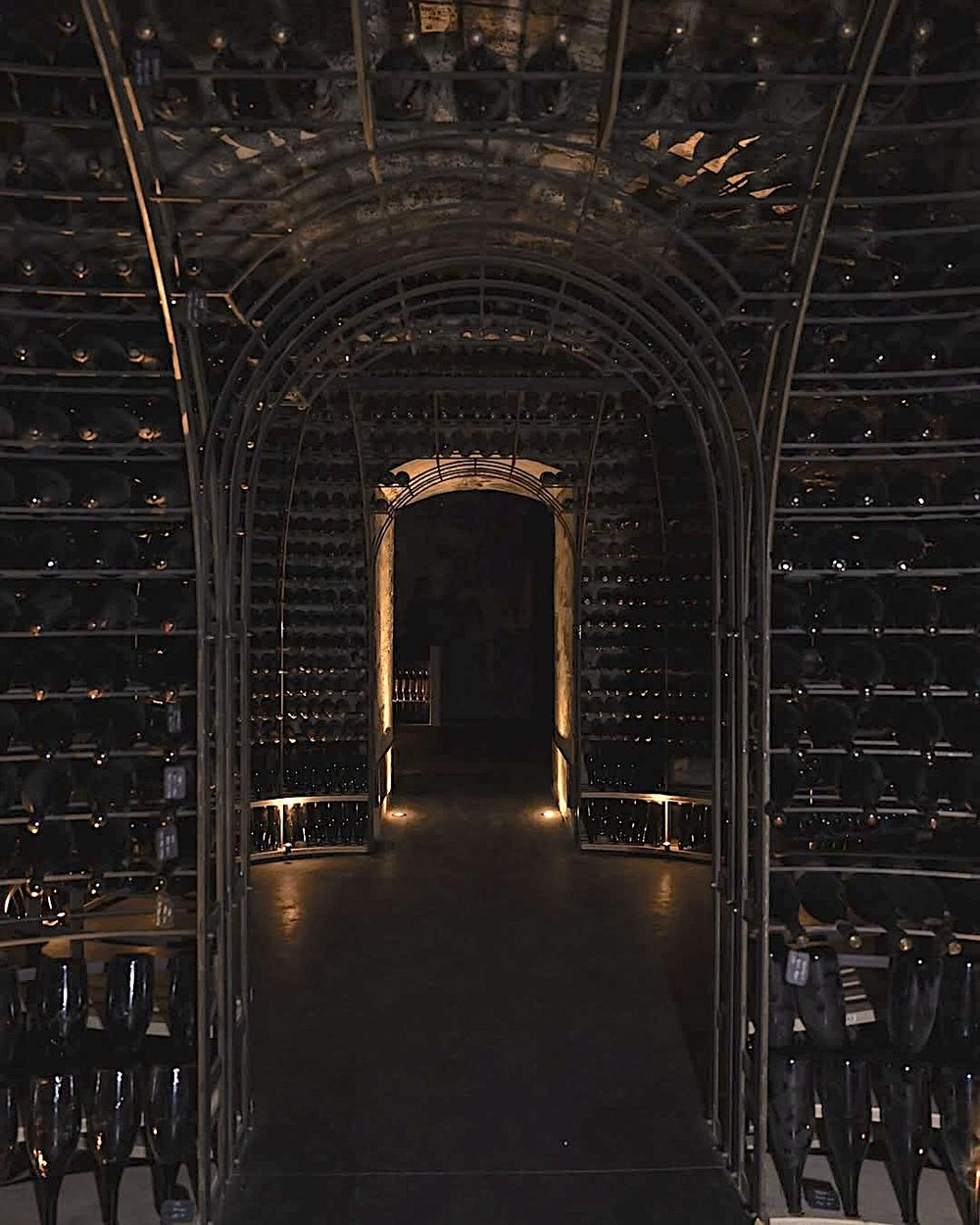
Part of the two-floor underground cellars at Champagne Thiénot ©Champagne Thiénot
Cuvée Alain Thiénot 1990 and an era of international expansion
Unfortunately, the 1990 was dominated by liège – a French term for when Chardonnay aromas evolve into pronounced mushroom notes that smell a little like cork taint. The resulting wine tells us little about the Maison’s style at this point, but 1990 was interesting in other ways: it was around this time, 1989 to be precise, that Alain opened Champagne et Château, a new UK subsidiary that would control the distribution of Thiénot’s Champagne and Bordeaux properties.
The family had been investing in Bordeaux since the 1980s, in part because Alan felt they complemented the work they were doing in Champagne, but also to make use of the distribution network the Bordelais had established with international markets, especially in the UK and Asia. This was Thiénot’s era of international expansion.
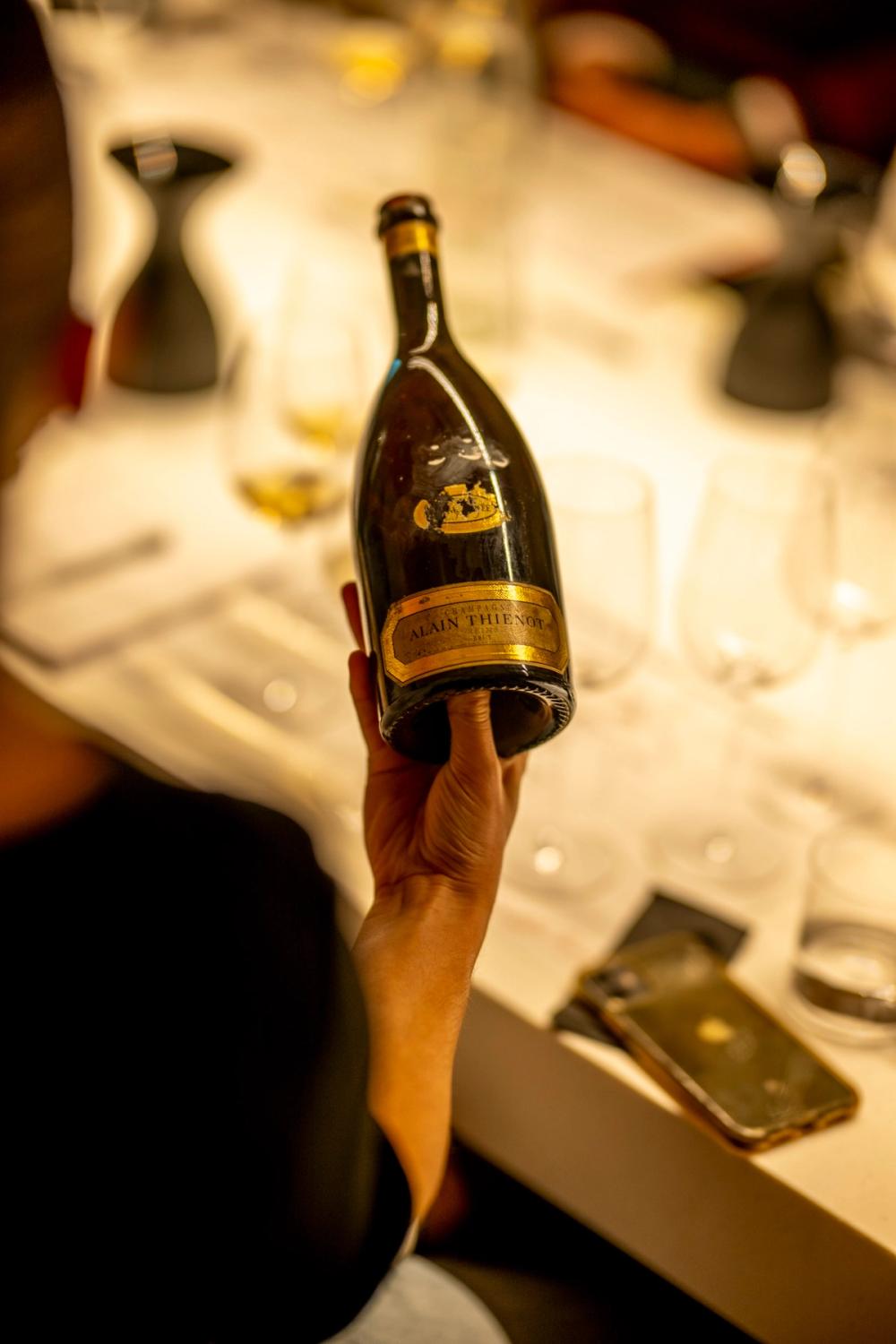
© STUDIO MB
Cuvée Alain Thiénot 2002 and hosting guests at home
While the 2002 was being harvested, bottled, and aged in the cellars, the Thiénots continued to invest in Bordeaux and to broaden their distribution abroad. In 2007, they acquired 80% of CVBG, Bordeaux’s biggest exporter of fine wine, a strategic move designed to raise their profile in international markets. At home, however, they remained a ‘family-sized’ operation: unlike many of the major Houses, the Thiénots welcomed their customers and the press in the understated comfort of their family house, a personal touch that continues to this day.
The bottle of 2002 we tasted was disgorged in 2025, and it revealed a step change in both quality and style. A blend of 70% Chardonnay and 30% Pinot Noir, 2002 was fermented and aged entirely in stainless steel, with just 4g/l of dosage. Completely different to its predecessors – in part because of late disgorgement but also because of the marked lack of oak – it is much more fruit-focussed, giving flavours of yellow fruit, apple compote, fig, yellow plum, marzipan, quince and mango.
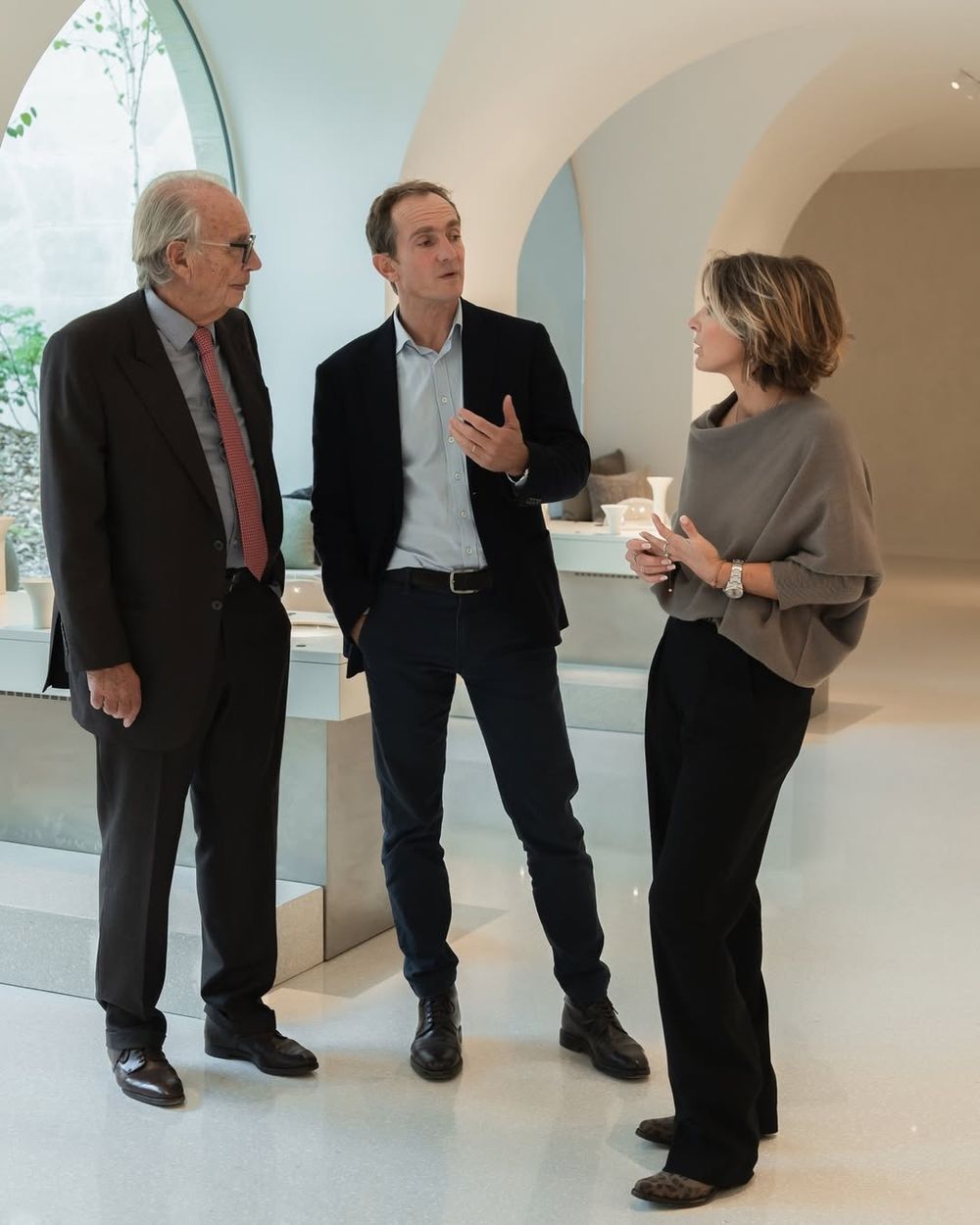
Passing the baton – Alain, Stanislas and Garance Thiénot (l-r) © Champagne Thiénot
Cuvée Alain Thiénot 2008 and passing on the baton
A lot has happened since the 2008 was picked. Despite its 17 years, this is the current release of Cuvée Alain, and in the intervening time the baton has passed from father to son and daughter, with Stanislas taking over as directeur générale of Artivis (the wider Thiénot group) in 2010, with Garance assuming the role of director of marketing. Many traditions have been carried forward, including the practice of hosting guests at the family home now occupied by Stanislas – even when dishing out the entrées clashed with his young family’s bath and bedtime routine.
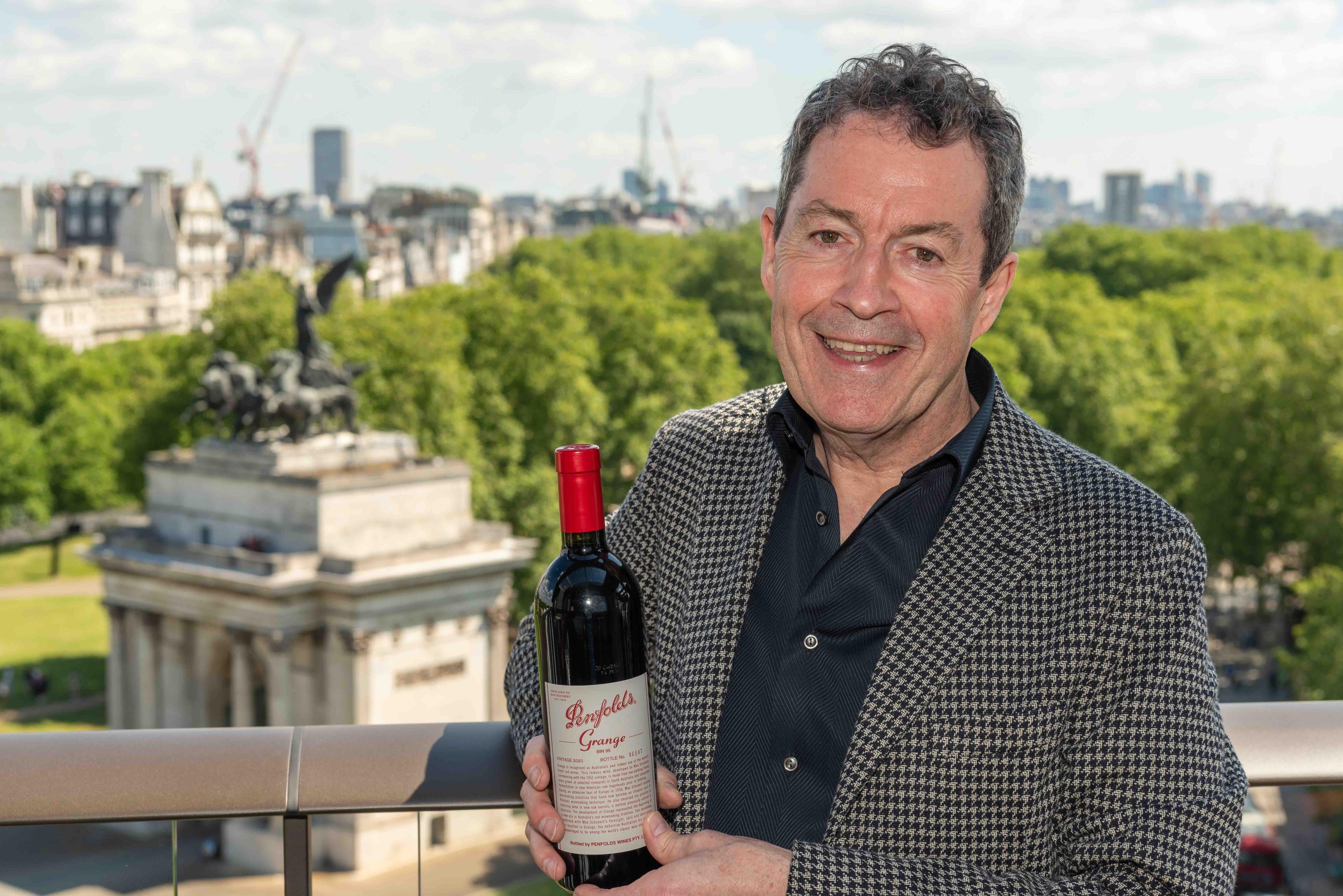
In the wider business, Thiénot established a partnership with Penfolds in 2019 – they now make a single vineyard Champagne together – and the family has established close relationships with restaurants and artists from all over the world. Today, the Maison maintains long-standing ties with local and international establishments like Devon’s Gara Rock, and the magnetic work of Brazilian-Mexican street artist Féfé Talavera adorns limited-edition magnums of Thiénot Brut NV and brings flashes of vivid colour to the neutral tones of Le 3.
Returning to the wine, the 2008 is a fresher and increasingly fruit-forward version of the 2002. Once again fermented and aged entirely in stainless steel, this blend of 60% Chardonnay and 40% Pinot Noir has a dosage of 6g/l. It’s elegant, with lovely golden fruit, almonds, a touch of salt, and a long, chalky finish.
Cuvée Alain Thiénot 2012, Le 3, and looking to the future
The yet-to-be released 2012 represents a coalescence of Thiénot’s past and future. With notes of yellow plum, lemon, apricot, chalk, and bright acidity, it epitomises the family’s now long-honed house style of yellow fruit and freshness.
When this wine eventually hits the shelves (not before 2027), Le 3 will have been accommodating guests for over a year. I asked Stanislas whether the transition from welcoming guests in the family home to hosting in a grand wine tourism project will change their identity as a House.
“We want to keep our family spirit,” he told me, “so we will still receive some clients in our home. And [at Le 3], my parents, my sister, and I will still be there. It will allow us to host many more people, because we were quite limited at home […] It also means the whole family can welcome guests, we can tag-team between us.”
Champagne Thiénot’s history, told through these six distinct vintages, reveals a Maison not only defined by family but also by drive and purpose. Le 3 is a logical and exciting leap forward for Champagne’s youngest House that, I don’t doubt, will see Thiénot running hot on the heels of its older, more established, Champenois siblings.