Climate change is dealing Rías Baixas a good hand in the short term, with increasingly hotter and drier summers resulting in better and bigger harvests. Located in Galicia in the north west of Spain, the region is renowned for its wild and wet weather but you have to go back four years to find the last cool ‘Atlantic’ vintage.
In the past decade temperatures have steadily risen with 2018 seeing the mercury hit 40°C for the first time and 2022 having hotter summer weather than Seville. 2014 was the last vintage where Albariño was picked in October, September is now most common with some producers picking in late August.
This is actually not bad news for a region that has annual rainfall of 1600mm – 2200mm a year (London has 650mm). In fact, the region's entire viticulture has historically been driven by this inclemency – the hardy, thick-skinned Albariño grape accounts for 97% of wines here and its training on ubiquitous granite pergolas helps to limit mildew.
It’s worth remembering how recent the region’s entry onto the global wine stage really is. Until the 1980s 70% of the wines here were red, unbottled and made to be consumed locally in bars. The D.O. Rías Baixas wasn’t formed until 1988.
Since their debut on the market in the 1980s, however, Rías Baixas wines have grown exponentially with sales having risen by 42% in the past decade to reach 28 million litres and exports tripling. With the warmer weather yields have also increased with the 2025 harvest breaking all records with 48m kilos of fruit picked.
“2025 poses a challenge for the region,” said Atkin, “there’s a place for 42 million kilos in the market but 2025 topped 48 million kilos, so one of the questions the region needs to need to ask itself is should they focus on quality? I think so.”
The wines at the event were chosen by Atkin from his fourth report of the region, the research facilitated by the Regulating Council of Rías Baixas.
Another side effect of the warmer weather has been the resurgence of red wines which currently account for just 1.5% of the region’s output, although Atkin clearly sees a promising future for the reds having over 16% of the wines shown at the Free Pour section of the tasting event taken up by red wines.
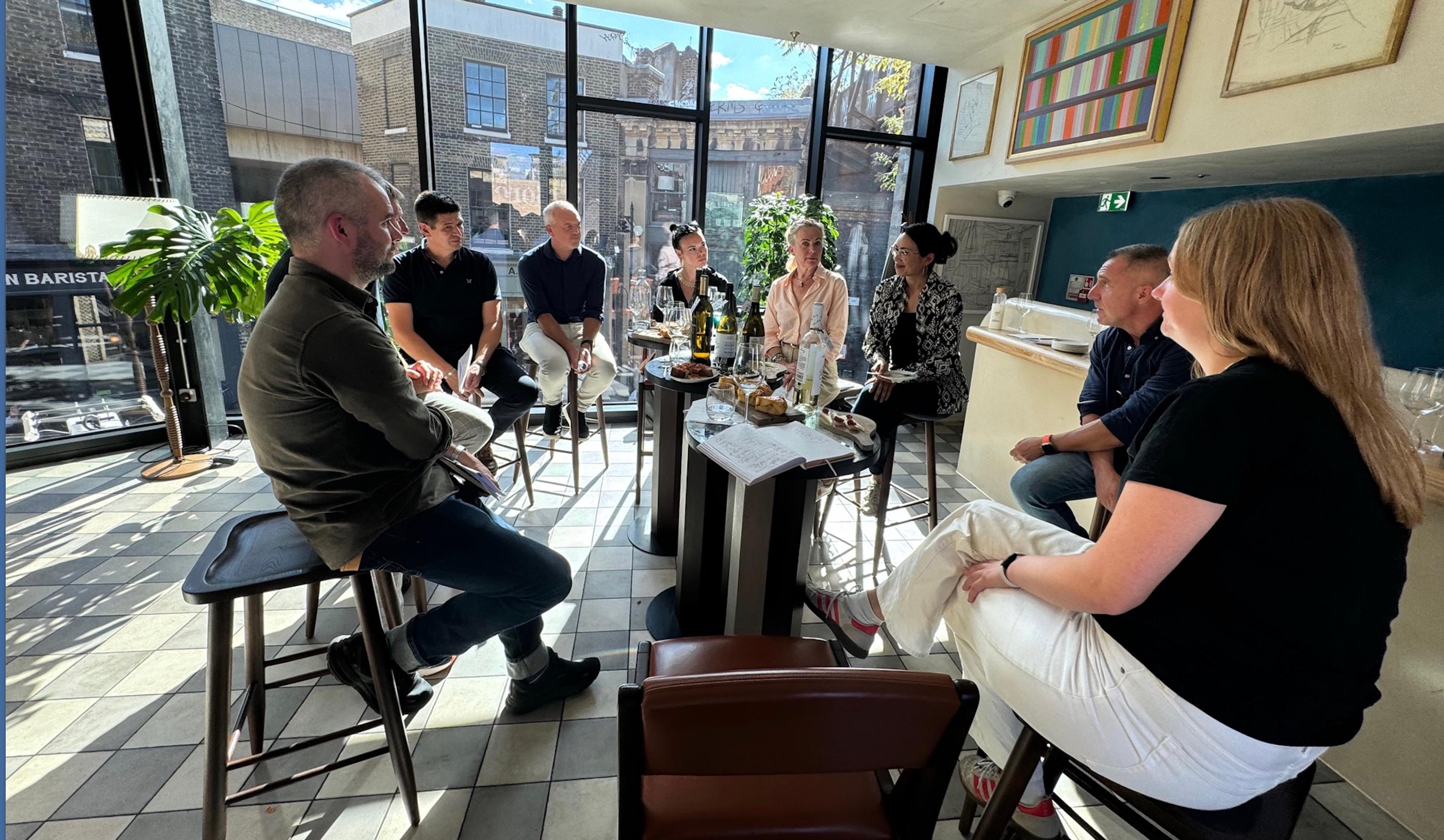
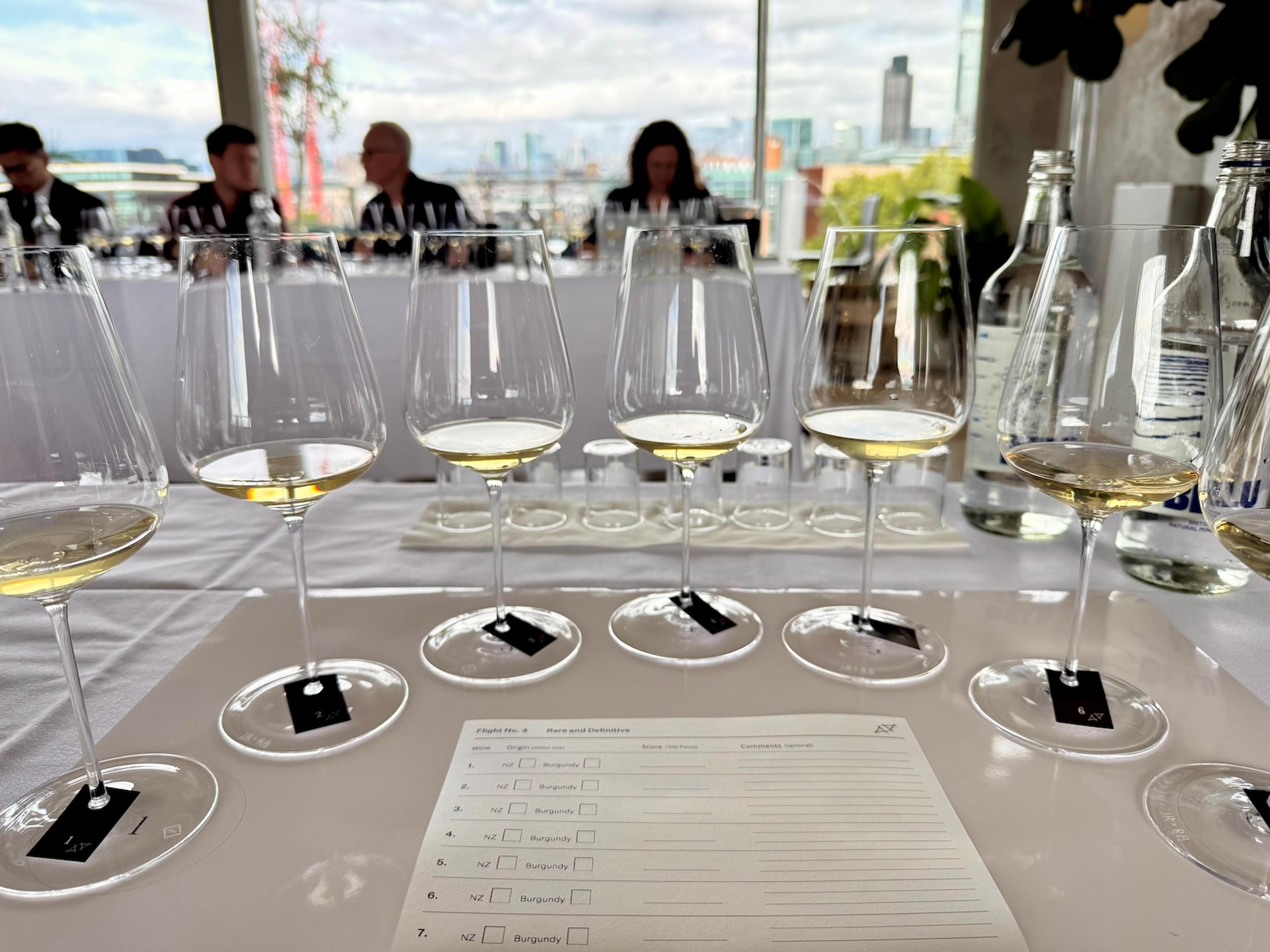
Nineteen wines were tasted before lunch and six more shown with lunch after an aperitif of the outstanding Martín Códax, Martín Códax Espumoso 85, Val do Salnés, NV. The menu was devised by the team at two-Michelin star restaurant Trivet to complement the wines, with co-owner Isa Bal MS explaining that is the structure of the Albariño wines rather than specific flavour profiles which informed the menu which had vinegar as a principal ingredient.
Tasting the new wines
Below is a full listing of the wines tasted with a focus on the five wines that were standouts.
Because a number of key winemakers release wines with barrel and bottle age Atkin’s new wine selection covered a span of 11 years.

Gerardo Méndez, Do Ferreiro Albariño Cepas Vellas, Val do Salnés, 2024
From a 1.7 ha vineyard planted in 1790 with some of the original vines still alive and producing fruit. Stainless steel ferment. Fresh, clean elegant wine with great presence and balance. Finely textured, fantastic finish, mouth-watering, ripe fruit and salinity. Atkin’s white wine of year. Seeking UK distribution.

Bodegas del Palacio de Fefiñanes, III Año Albariño de Fefiñanes, Val do Salnés, 2022
The oldest producer of Albariño allows its wines to spend seven months on lees and always releases new wines with bottle age. Riper, more golden, honeyed, notes of berries and sweet nut kernel. Fresh, balanced, more easy going than some of the younger vintages, more intensity. Winetraders.
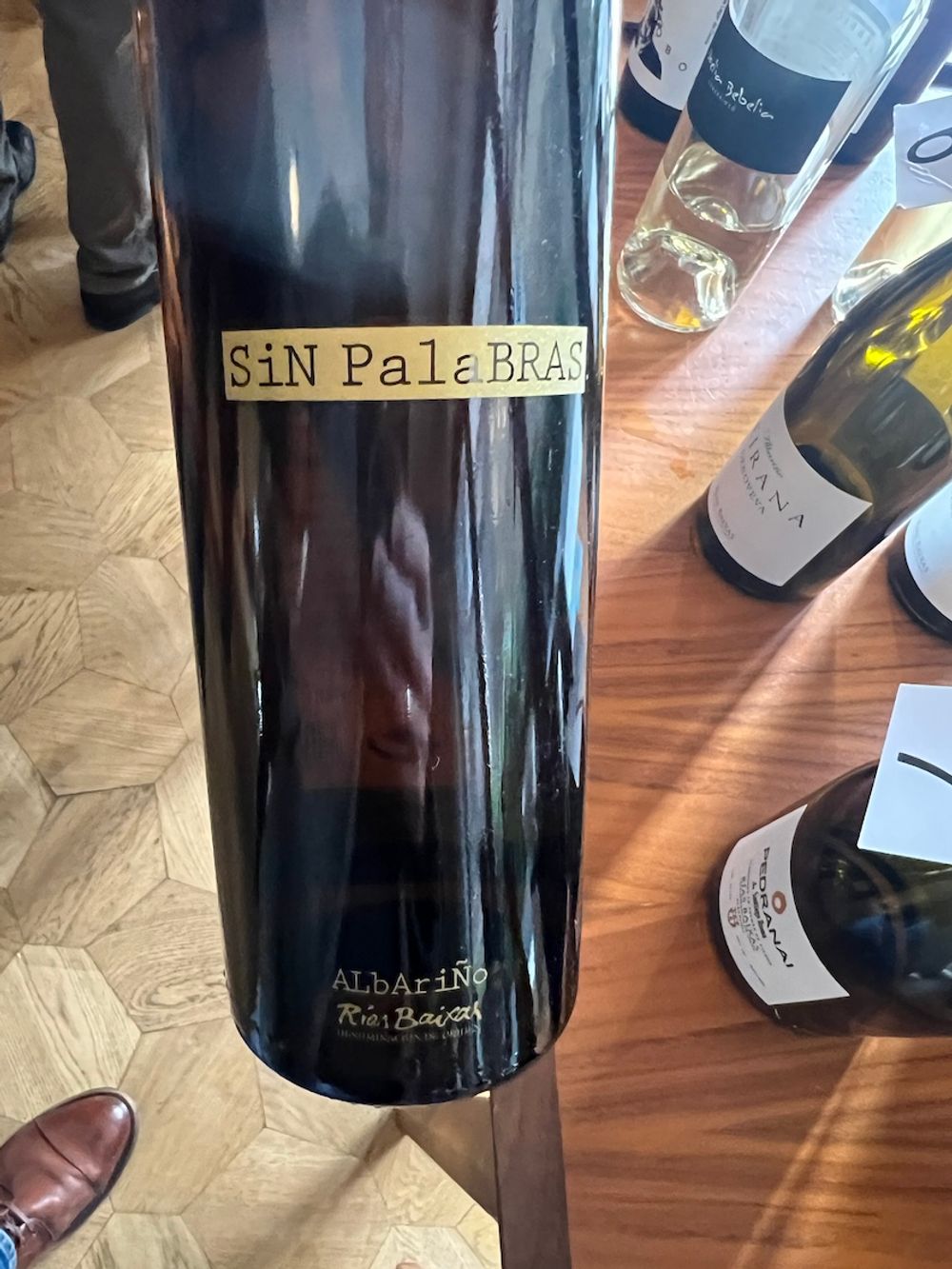
Adegas Castrobrey, Sin Palabras Edición Especial, Ulla 2013
A selection of fruit from eight parcels in this cool, wet vintage. Obviously more complex with more concentrated aromas, yellow stone fruit, dab of airplane glue. In the mouth the wine has a yin and yang balance with bright apples and ripe citrus framing a lean, granitic core. Very dry finish. Seeking UK distribution.
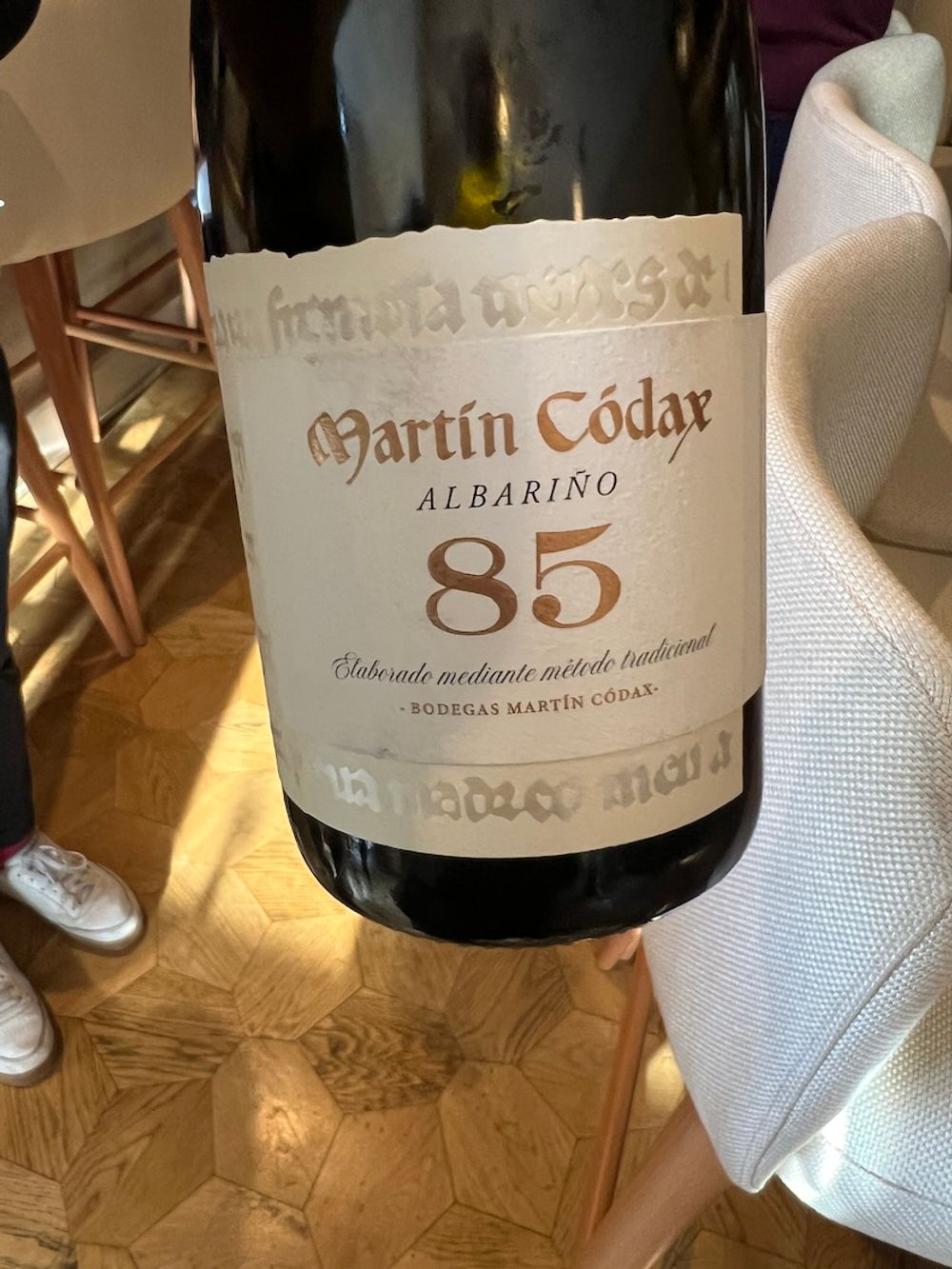
Martín Códax, Martín Códax Espumoso 85, Val do Salnés, NV
Sparkling Albariño that has spent 85 months on its lees. Golden yellow to look at, the nose is leesy with baked bread, marzipan and ripe citrus. Fine, energetic bead; beautifully balanced palate, good density, fruity and lip-smacking saline finish. Reminded me of a very fine Franciacorta. The winery sells it online at €120 a bottle. Enotria.
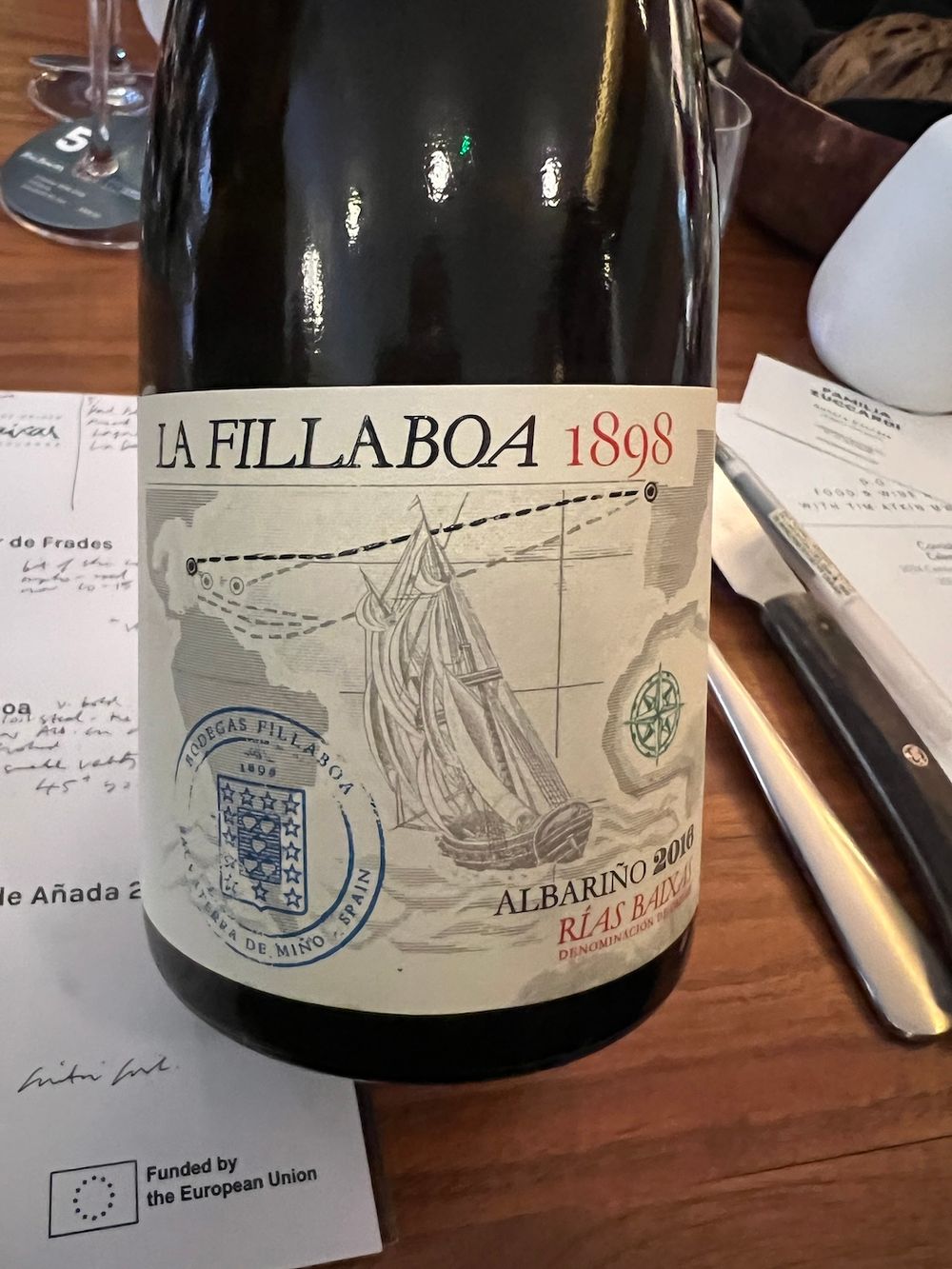
Fillaboa, Fillaboa 1898, Condado do Tea, 2016
Fruit hails from 45+ year old vines in a single parcel, steel-fermented with the wine spending over six years on its lees. Notes of nuts, toast and ripe stone fruit; in the mouth the wine is beautifully smooth and velvety, layered and structured, almost like Riesling. Great example of how well Albariño can age. Served with Chicken with a Vinegar Sauce alongside the 2015 Pazo Señoráns. I love the latter’s wines but the Fillaboa won it on the day for me. Charles Taylor Wines.
White wines also tasted:
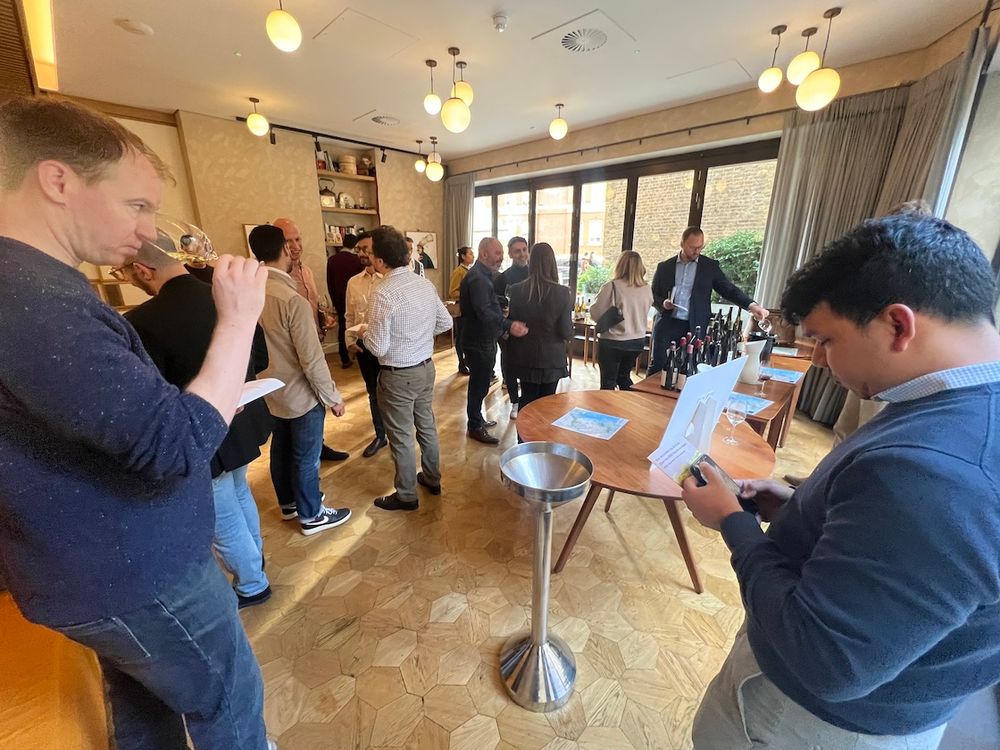
The wines all had a consistently high quality. Rías Baixas tasting, November 25, Trivet restaurant.
Zárate, Balado Albariño, Val do Salnés, 2024
From an estate close to the ocean.Vibrant acidity, saline. Lean, ripe citrus, extra texture.
Albamar, Finca O Pereiro, Val do Salnés, 2024
More intense, riper, more hints of tropical fruit. Lean on the palate, lemon pith, grapefruit, almost sour. Fruit hails from young vines grown on clay, steel and German foudres for ageing.
Lagar de Costa, Calabobos, Val do Salnés, 2023
Made inconcrete eggs; sweeter, riper, more tropical notes, mango, hints of banana, touch of honey. Clean, fresh, vibrant acidity, great balance, sweet touch on finish.
Noelia Bebelia, Soberbioso, Soutomaior 2023
Dumb nose, delicately floral -freisa/jasmine. Smooth on the palate, rounded, nicely-integrated acidity, decent concentration, good length and finish.
Forjas del Salnés, Leirana Genovena Albariño, Val do Salnés, 2023
Foudre-aged fruit from old vines. The nose is chalky with hawthorn; lean but balanced palate, ripe lime, grapefruit note on the finish.
Santiago Roma, Pedranai de Santiago Roma, Val do Salnés, 2023
Fruit from its own vines and aged in a (patented) granite egg. Leesy, almost grassy, note; Vibrant acidity, nice texture, tense, complex, lean-lemon-on-shellfish mouthfeel.
Veigamoura, Albarino, Condado do Tea, 2022
From the region’s warmest sub-region in a hot vintage; steel-aged; riper fruit notes, feels warm; on the palate there’s a nice balance between ripe fruit skin and leaner citrus; chiseled wine - tense dry finish.
Martín Códax, Arousa, Val do Salnés, 2022
The region’slargest producer, who can only get into the vineyards at low tide! Steel-fermented and aged; ripe fruit notes, white stone fruit, herbal note. Dry, nice balance.
Paco & Lola, Prime, Val do Salnés, 2021
Offers much more on the nose, this producer’s wines have a they have a distinctive, riper, more accessible style. Stone fruit, tropical notes; palate is less exciting, chalky, with lean lemon finish.
Granbazán, Don Álvaro de Bazán, Val do Salnés, 2021
Less on the nose; fresh, lean, mineral, salty, lean lemon zest fnish.
Maior de Mendoza, Finca Las Tablas, Val do Salnés, 2021
Hawthorne/ savoury note on the nose; in the mouth – refreshing, juicy, good balance with tasty fruit flavours, finely textured.
Compañía de Vinos Tricó, Claudia Albariño, Condado do Tea, 2019
Pink-skinned clone from a single high site (400m is high here). Unusual herbal note on the nose; same note following through on the palate, vinous, herbal. Good acidity but my least favourite white.
Red wines:
Interesting to try but not enamoured by the reds on show.
Albamar, O Esteiro Caíño Tinto, Val do Salnés, 2023
100% whole bunch, old vine Caíño Tinto. Wild as you like on the nose; light-bodied in the mouth, high acidity, unripe mulberry notes. A real Marmite wine.
Bodegas Fulcro, Fabaiños, Val do Salnés, 2022
From a tiny200 year old, 0.04 ha vineyard with 200 year old vines. This is 100% Espadeiro aged in seasoned French oak barrels – 300 bottles made. Distinctive nose, dark fruit; palate-cleansing high acidity, stark, lick of cream on the finish.
Attis, Pedral, Val do Salnés, 2020
100%Pedral, one of only eight permitted red grape varieties; Dolcetto-like – wild, light-bodied wine with bold, apparent tannins.
Other wines served with lunch:
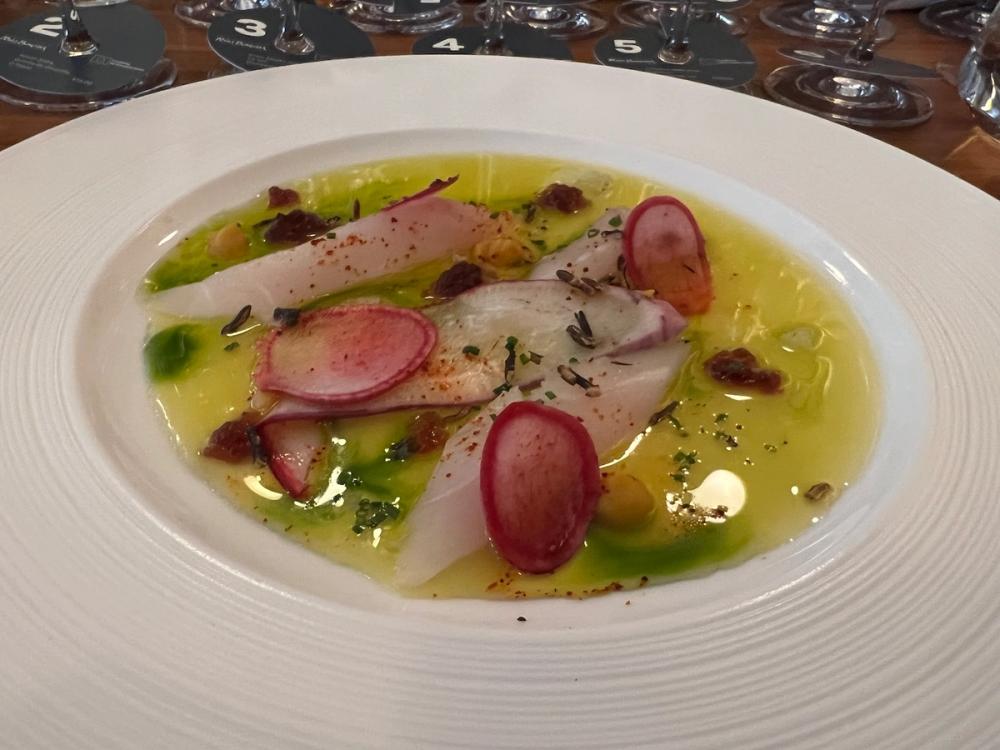
The two Albariño complemented and held their own against the powerful, citrus flavours of the Cornish sea bass crudo.
Cambados Urban Winery, Desconcierto Albariño, Val do Salnés, 2024
From an urban winery 10m above sea level. The wine spends seven months on its lees. Lifted aromatics, dry, fresh, easy to like and great paired with sea bass crudo.
Quinta de Couselo, Rosal, O Rosal, 2024
85% Albariño with two other varieties (Caíño Blanco, and Loureiro, the latter bringing laurel notes), the wine spends six months on lees. Intense, fresh, vibrant and structured.
La Val, Gran Añada, Condado do Tea, 2020
100% Albariño aged in steel and 500-litre foudres. Highly perfumed aromas of quince and lime blossom, good complexity and intensity with a rich palate balanced with vibrant acidity. Creamy finish.
Mar de Frades, Finca Valiñas, Val do Salnés, 2020
Bit of skin contact and 10-15% malo adds complexity here; on the nose linden tree notes, herbs, pink grapefruit. Juicy lemon and pear on the palate, spice, saline finish.
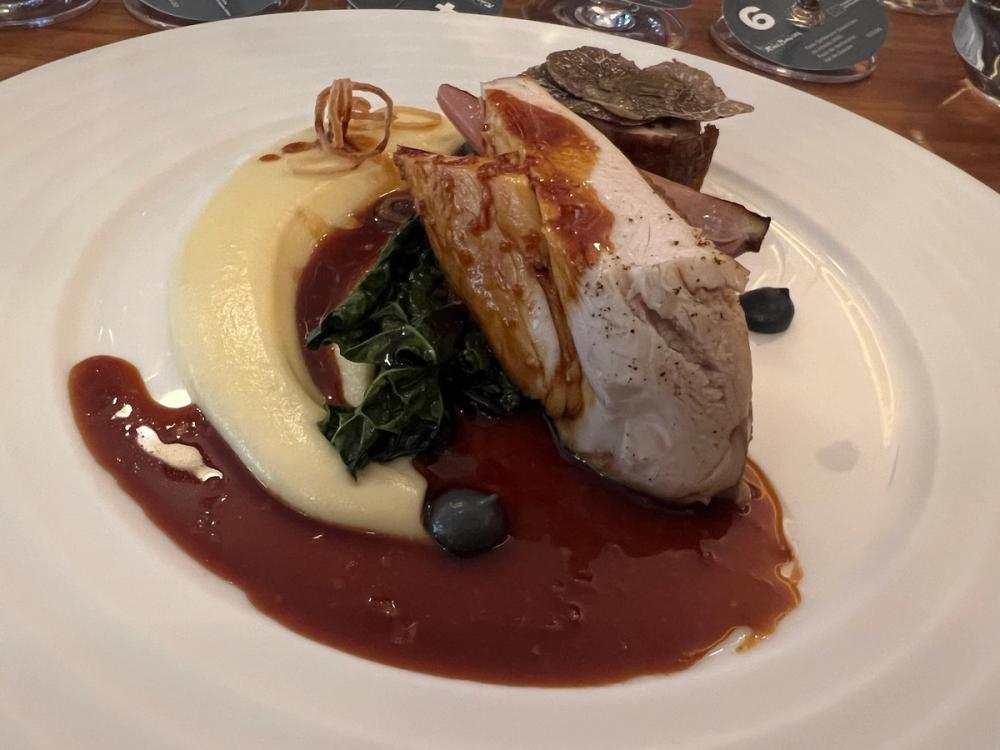
The two aged Albariño served with the Chicken with a Vinegar Sauce brought complexity, yet still had the structure to pair beautifully with the power of the sauce.
Pazo de Señorans, Pazo Señorans Selección de Añada, Val do Salnés, 2015
Big fan of this producer both with new vintages, the three-year old and this the 10 year old release. Served with the chicken/ vinegar dish it felt lighter and younger than the Fillaboa, Fillaboa 1898, Condado do Tea, 2016. Nose and palate are complex with baked apple, quince, tropical fruit, and nut shell; in the mouth the wine was mineral-charged, ripe fruit, grapefruit bitterness on the finish.