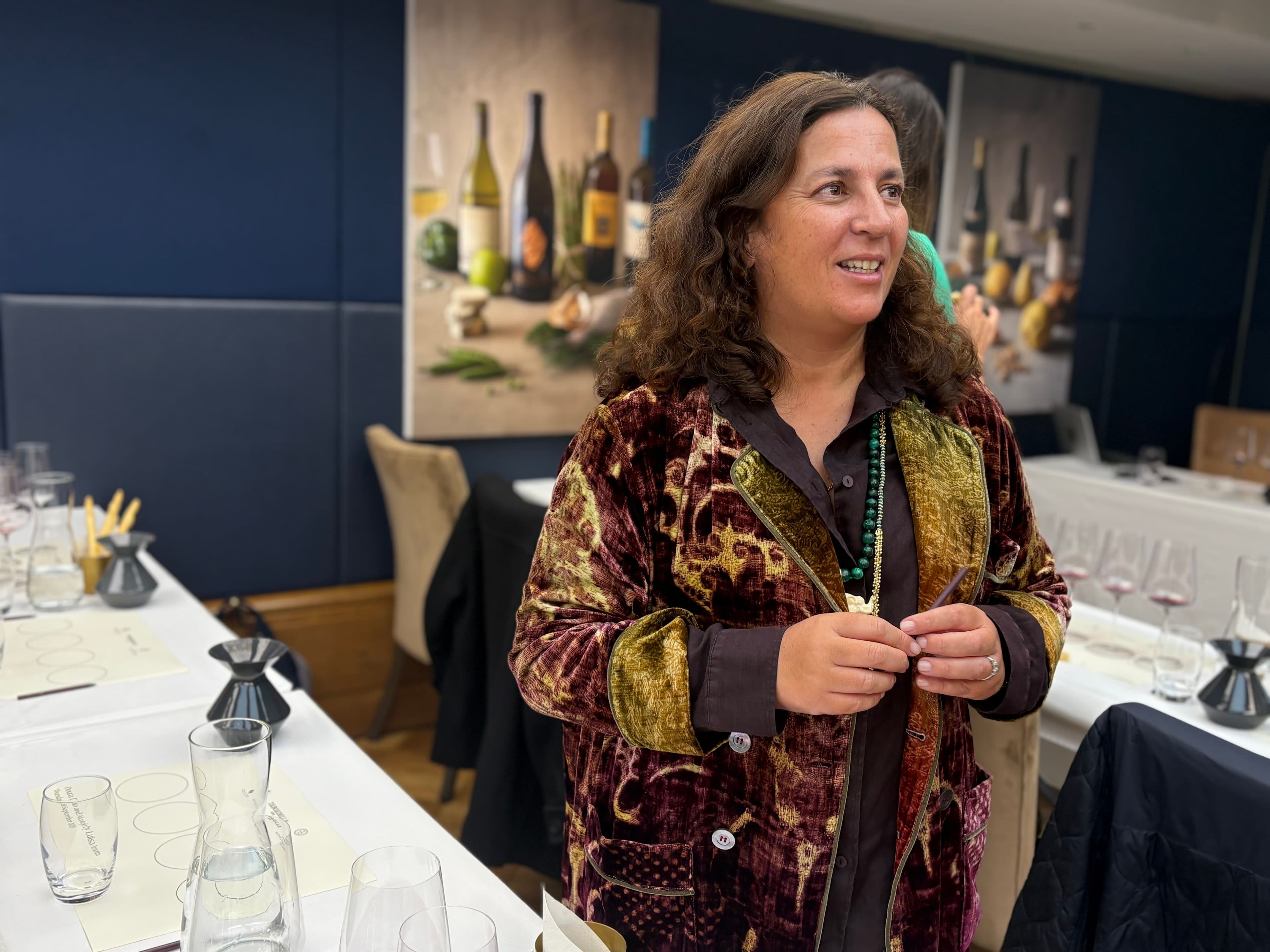

“I have a sense of what I call ‘Portugaliade’,” explains Luísa Amorim who heads her family’s estates. Portugal is one of the most genetically diverse wine regions with over 250 officially recognised native grape varieties across 14 regions. From the outset Amorim believed she could make a difference in the Douro region and has extended her vision to two other regions: Dão and Alentejo.
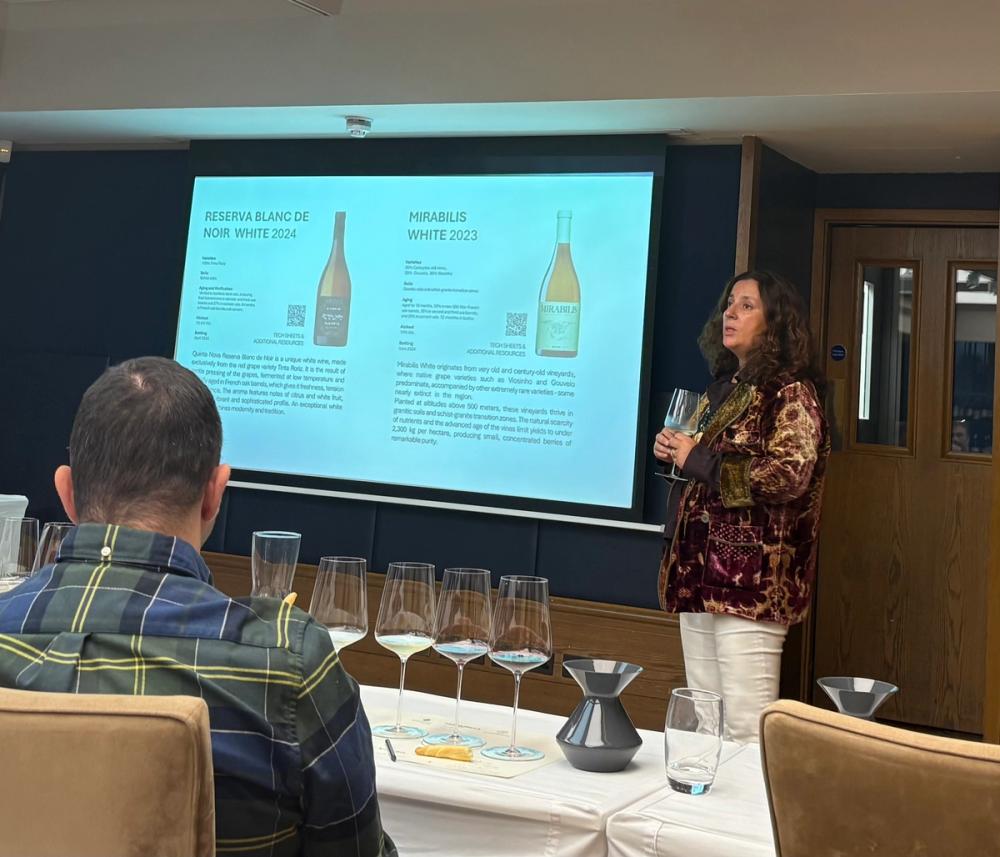
Luísa Amorim who heads the wine division and her family’s estates in Douro, Dao and Alentejo, led the masterclass
To help move Portugal’s historic reputation away simply for Port wine, Luísa is ambitious to create wines that reflect each regional distinct terroir, native grape varieties and cultural heritage. Her philosophy is ‘mosaic viticulture’: native grape varieties, grown in small plots 1.4 to 2.5 hectares with vineyard mosaics harmonised with surrounding natural forest (montado). Each plot is hand-harvested. Reflecting Portuguese identity, she wants to balance innovation with respect for heritage.
The three regions of mountain viticulture have distinct identities: steep schist slopes of the Douro, the granite altitude of the Dão, and the montado landscapes of the Alentejo.
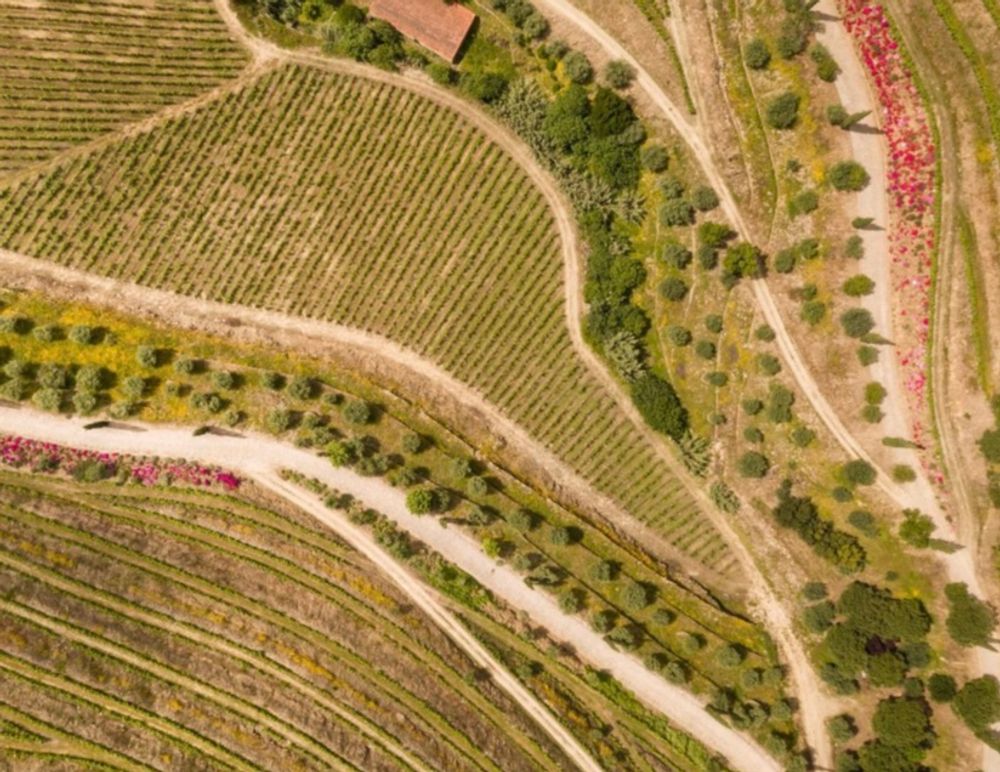
Mosaic viticulture with micro-plots surrounded by forests enhancing biodiversity.
Quinta Nova de Nossa Senhora Do Carmo (Douro)
Quinta Nova is the most well-known Amorim estate which extends beyond wine production into wine tourism with a Relais & Châteaux stunningly located boutique hotel. Historical records document it from the Pombaline demarcation of the Douro in 1756, and it belonged to the Portuguese royal family until 1725. The estate spans over 120 hectares, of which around 85 hectares are under vine, arrayed in 41 distinct plots along a 1.5 km stretch on the right bank of the Douro River. The vineyard slopes range from about 80 to 700 metres in elevation, with steep terraces and schist soils.
Sustainability is at the core of Amorim’s approach and traditional vineyard practices are preserved: horse-drawn ploughing, organic fertilisation using grape husks, and maintenance of existing terraces. The cellar combines historic structures (for instance, a wine cellar from 1764) with modern technology – tanks, AI-enabled monitoring systems, and precision sorting.
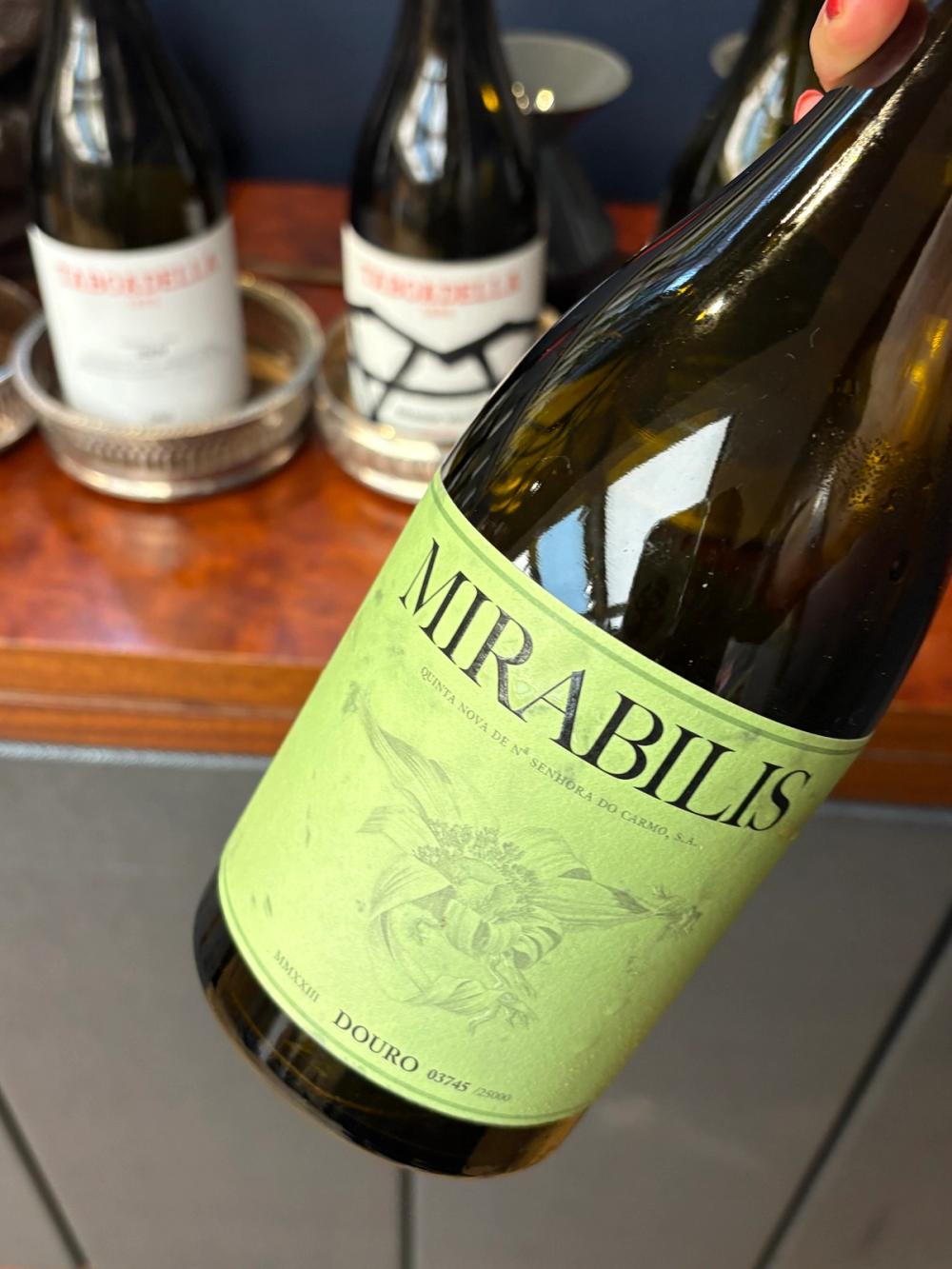
The masterclass is the rare chance to taste the flagship Mirabilis 2023 (made from indigenous varietals Rabigato, Viosinho and Gouveio) only made in vintages deemed exceptional. It has a very elegant schist-driven minerality and is fitting for its name which means ‘marvellous’. (€70 a bottle).
The Quinta Nova Reserva Touriga Nacional 2023 offered a pure, floral take on the region’s signature grape (which actually originates from the Dão region). It’s a lively expression – more fruit and terroir-forward – both good now and after a few years in the bottle. (€54).
Interestingly, Luísa is also experimenting producing a Blanc de Noir, 100% Tinta Roriz with whole cluster pressing. She admits it requires a lot of attention and temperature control. (Currently this is only available to the domestic Portuguese market).
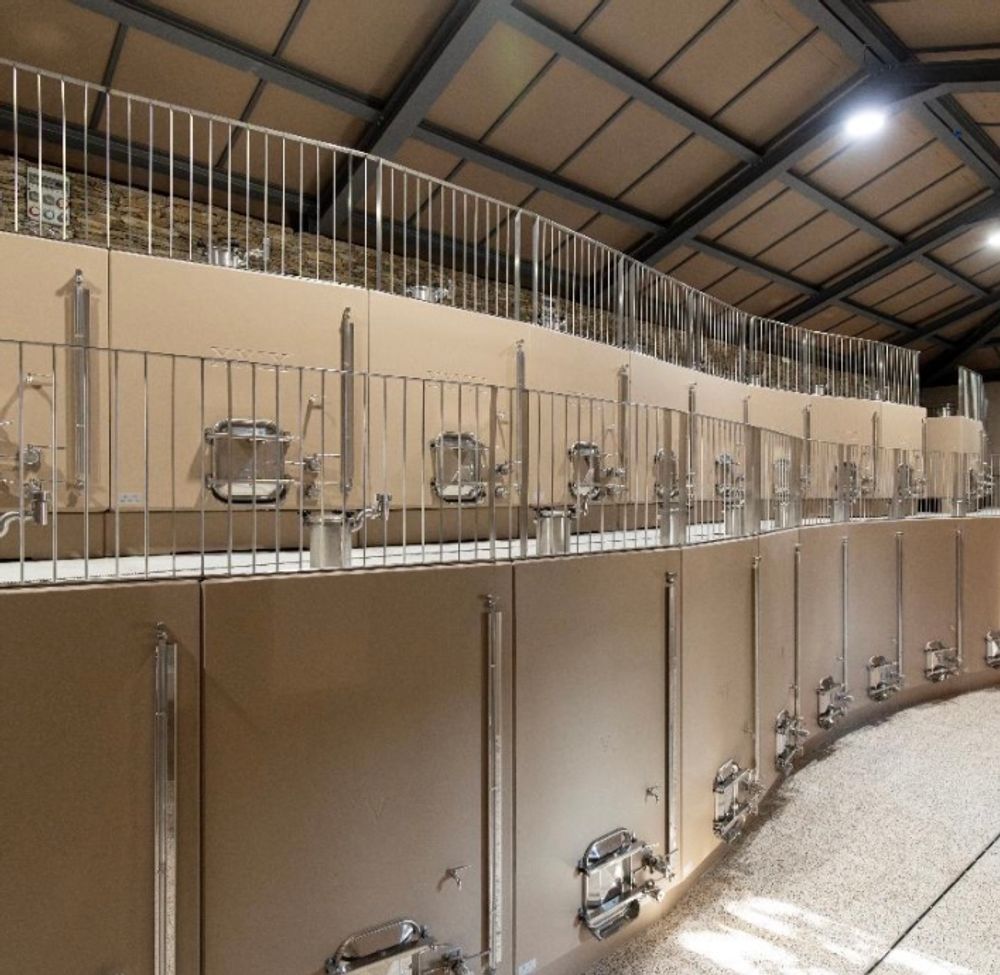
Luísa Amorim believe wineries should be beautiful as well as functional. The modern winery at Taboadella, has a “barreltop walkway” over the barrel rooms.
Taboadella (Dão)
The Taboadella estate is Amorim family’s bid to bring the same level of care to the Dão region – a region with profound tradition but less famed on the global stage. The land is a single stretch of about 40–42 hectares, located at altitudes between 400 and 530 metres above sea level, on a triangular plateau protected from Atlantic and continental winds. Its soils are granite-based, with fast drainage properties – making irrigation unnecessary under the estate’s dry-farmed philosophy.
Luísa believe wineries should be beautiful as well as functional. The modern winery at Taboadella, designed by architect Carlos Castanheira, makes extensive use of natural materials (cork, wood) in its structure, blending contemporary architecture with the landscape. The building is organised to optimise both sorting, fermentation and barrel ageing, with features like a “barreltop walkway” over the barrel rooms. Wine production focuses exclusively on indigenous grape varieties, emphasising character, complexity, elegance, and longevity. The estate also offers wine tourism through exclusive visits, tastings, and the Casa Villae 1255 guest house, converted from the original estate’s barns.
From the Dão, the Encruzado grape is increasingly seen as Portugal’s answer to Chardonnay. The Taboadella Reserva Encruzado 2024 has precision and freshness. (€18). The 2021 Taboadella Reserva Jaen (aka Mencia in Spain) stood out for highlighting a lighter, red-fruited side of the region, balancing elegance with depth. (€54).
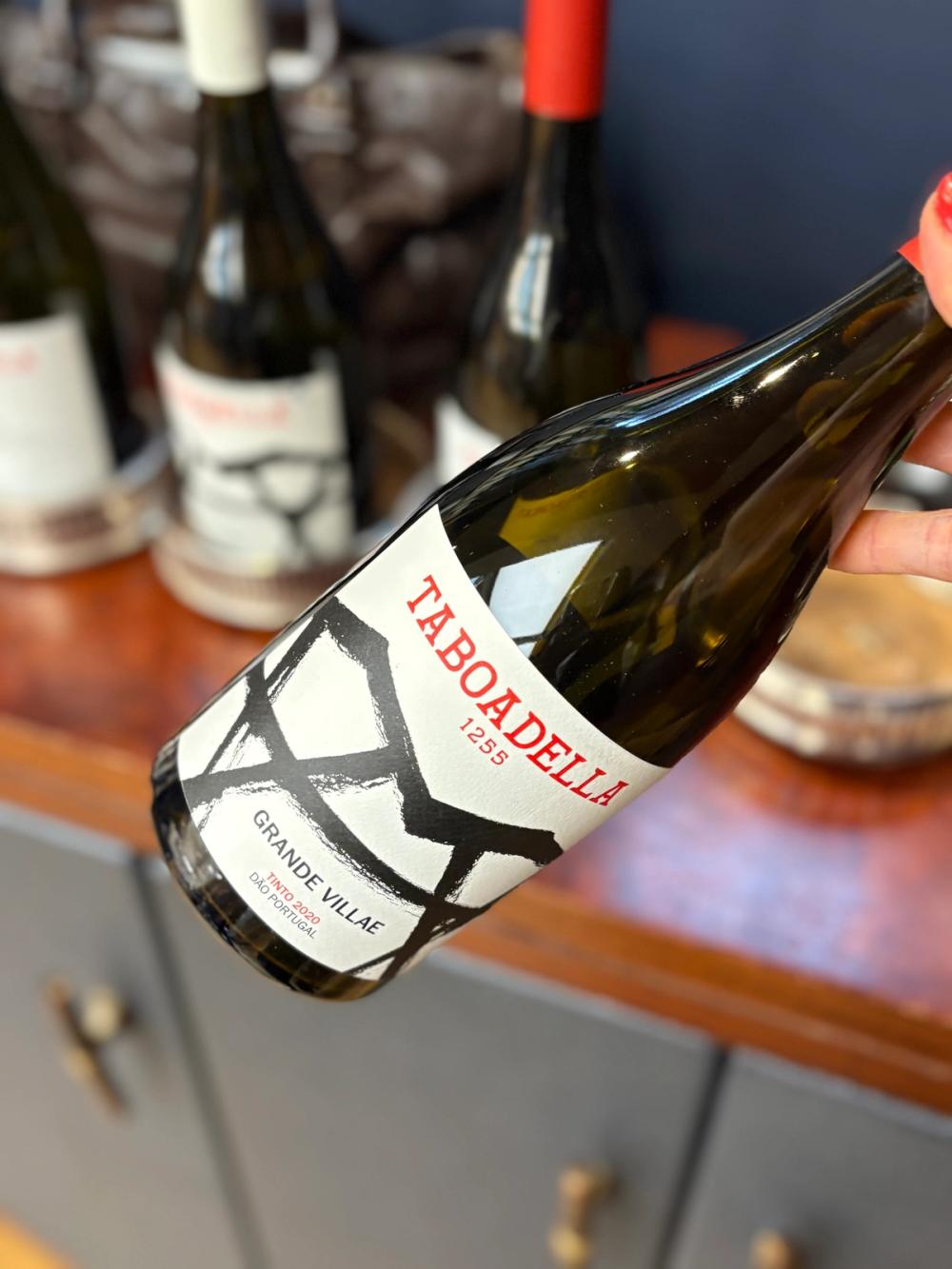
The Taboadella Grande Villae Red 2020 is a top‐tier red blend (Alfrocheiro, Touriga Nacional, Tinta Roriz aka Tempranillo,) with strong minerality (granite soils), great structure, depth, and very good ageing potential. It’s among its best red offerings. (€60).
Herdade Aldeia de Cima (Alentejo)
Beyond Douro and Dão, Luísa Amorim has a boutique project in the Alentejo: Herdade Aldeia de Cima. At the highest point of Serra do Mendro (424m), it reveals a ‘different’ Alentejo, cooler nights, strong terminal amplitude and skeletal schists generating natural freshness and density. The 3,500 hectare estate is a mosaic of diversity with montado forests and 36 micro-terroir micro-plots and varied soils. The low intervention dry-farmed Alentejo wines are vinified in a mix of plaster vessels, terracotta amphora, concrete, and large oak cask to create textural whites and reds marrying concentration and freshness.
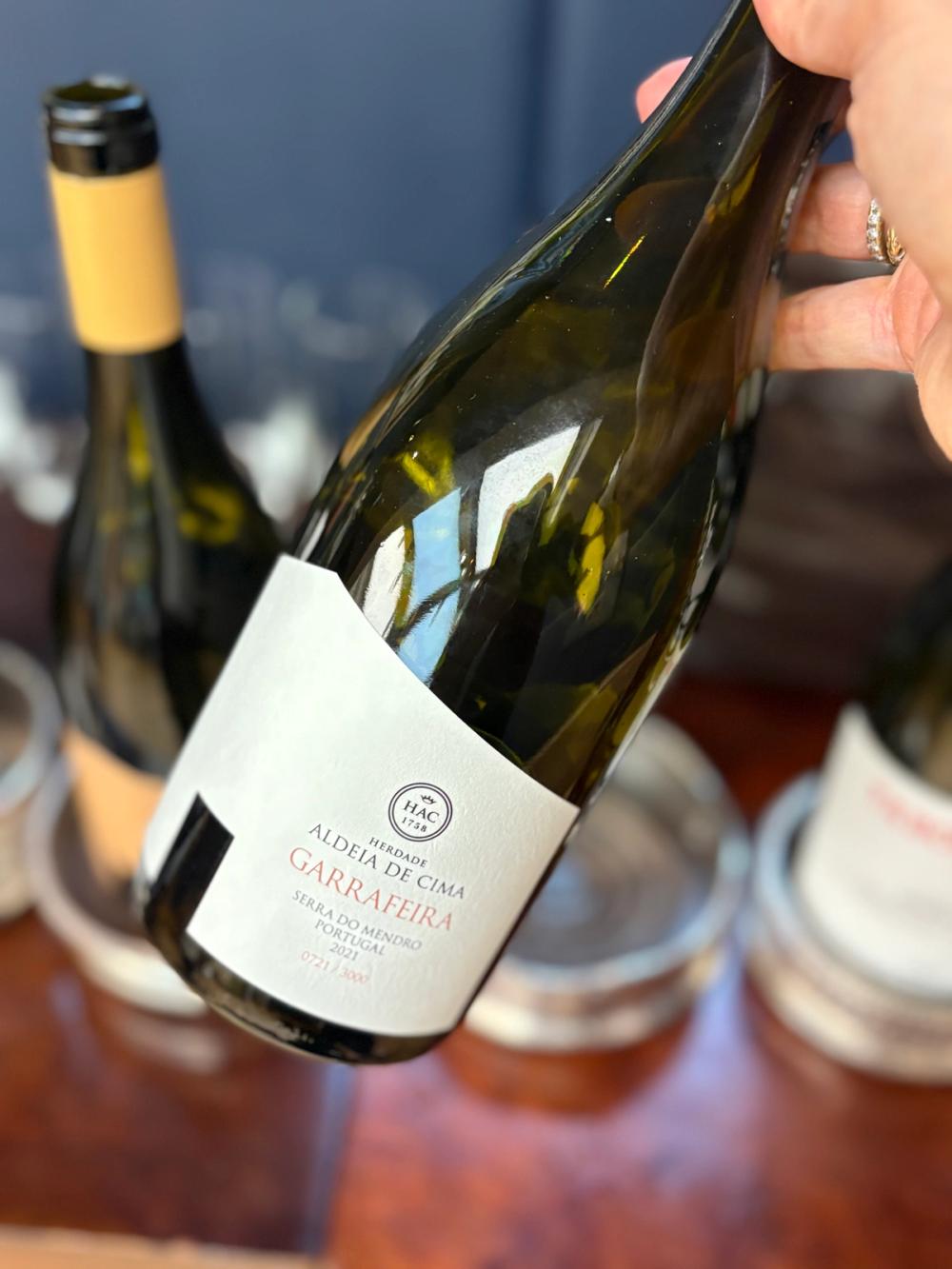
The Herdade Aldeia de Cima Reserva 2022 (white) blends Antão Vaz, Alvarinho, and Arinto for a textured yet vibrant profile (€16) , while the Tinto Reserva 2021 – based on Alicante Bouschet – has layered richness with a surprising lift thanks to ageing in amphorae, concrete and oak (€17). The Myndru Tinto 2021 is interestingly unoaked. (€70). An iconic wine is the Garrafeira 2021 (Alicante Bouschet, Aragonez aka Tempranillo) which spends18 months in 3000 litre wooden vats and 18 months in bottle. It is a fresh wine which will age even better. (€90).
Amorim ethos
“Climate change makes every harvest unpredictable” says Luísa. The three wineries are cutting-edge in their design she explains to maximise each year’s potential.
“We do manual harvesting and selection, and use Pellenc optical sorting to remove underripe, sunburnt, or dehydrated berries, choosing the best fruit to reflect its origin and achieve the best balance”.
More fermentation capacity has been built as small plots reach different grape maturation times in unpredictable ways. To guarantee perfect picking, enable pre-maceration for red grapes, and vinify white grapes with more flexibility, the wineries have increased fermentation capacity by 20% to provide the optimum stage for each blend separately, extending fermentation periods.
Concrete and large wooden vessels provide thermal stability and gentle oxygen ingress for micro-oxygenation. The slow controlled process polishes tannins, integrates aromas, and enhances longevity – while preserving the authentic expression of each grape and micro-terroir.
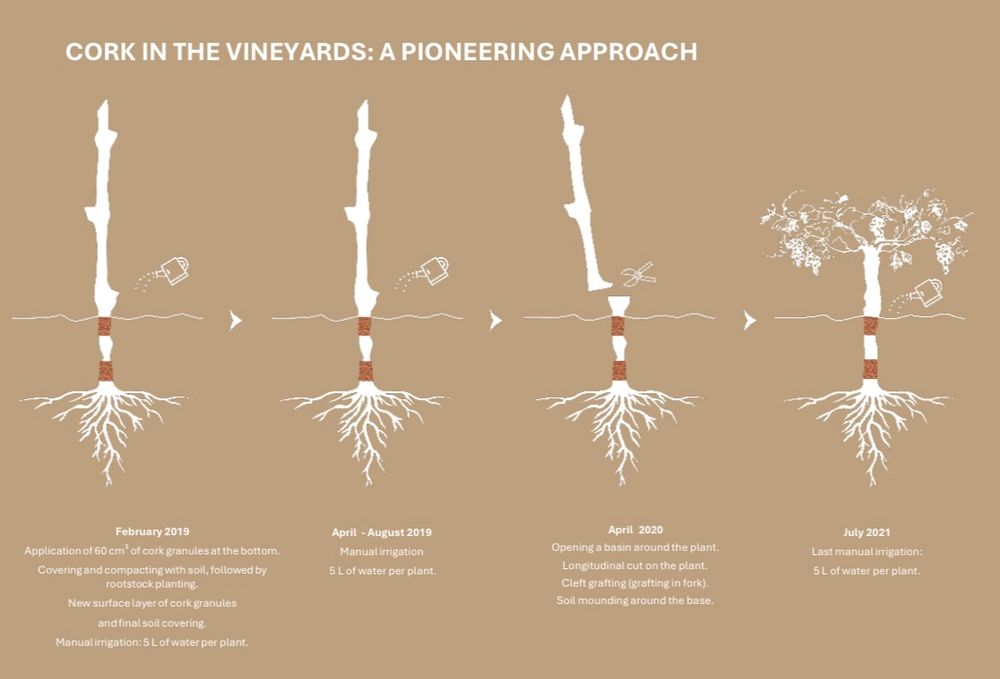
Cork is also being experimented with as ground-up granules placed in the soil and under the rootstock planting to help humidity and temperature control.
Cork in the vineyards?
A fascinating pioneering experiment Luísa explains to help tackle climate change is the use of cork not just as bottle stoppers but also as ground-up granules placed in the soil and under the rootstock planting. Remarkably evidence is showing that it helps preserve humidity and temperature control. The benefit too is that cork is a material that never breaks down, apparently.
Luísa’s passion wanting to revolutionise the perception of Portugal’s wine scene is palpable, whether it be from producing unoaked Douro reds to Burgundian-style Douro white Mirabilis. Her philosophy is “to have emotion” and to “identity wine like people rather than just a profile.” That’s appealing and working successfully.