You would think after over 10 years of trying to convince successive governments, numerous Chancellors and countless Treasury officials to listen to the needs of the wine and spirits industry - only to find so much of what you say falls on deaf ears - that you would cut a jaded, frustrated and despondent figure.
But spend any amount of time with Miles Beale and you are left wondering just what it is he is drinking over at the Wine & Spirit Trade Association to keep him quite so upbeat and positive about leading the drinks industry through some of its most difficult times in its history.
It helps that Beale is a career civil servant, ready to serve, come what may. His many years working for different Cabinet Ministers has left him hardened to the intricacies of government and regardless of how well you might make your case, how difficult it is to get Whitehall officials, ministers and departments of state all lined up to agree.
It does not make it any easier to accept when painfully researched, intrinsically detailed evidence is presented and then seemingly ignored by the powers that be. It also does not mean the argument was not adequately made or delivered. It just means you at least understand why those decisions have been made and what you need to do as an organisation, a sector, and as an industry to come back and make the case again.
It’s what makes Beale such a hugely important asset for the drinks industry. He knows the right buttons to press and what to do when it seems no-one is listening.
It’s why he remains surprisingly reflective on just where the drinks industry now sits with the government on the key issues of the day.
Can things get any worse?
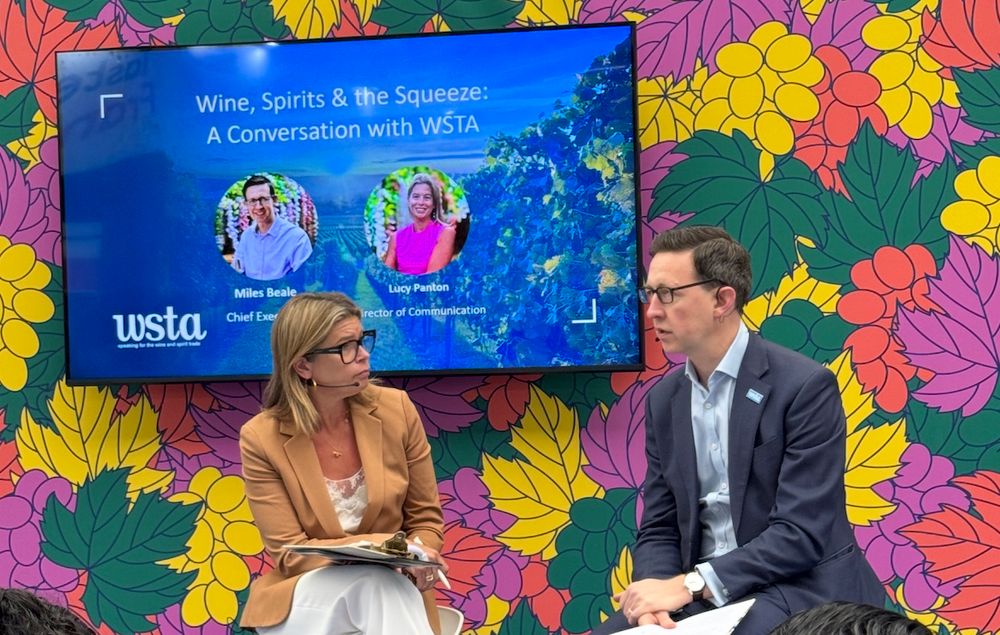
Miles Beale in conversation with the WSTA's director of communication Lucy Panton at last month's London Wine Fair
On the face of it things could hardly be worse. The wine and spirits industry has just been hit by yet another duty increase. The majority of drinks businesses are being hit by a wave of increased costs, with future energy and supply chain costs expected down the line.
The on and off-trade sectors are both still trying to manage the triple whammy of increased business rates, national insurance rises and minimum wage increases.
All of which means the WSTA, and the wine and spirits industry it serves, is having to cope with a multitude of negative issues all at the same time.
As Beale bluntly puts it: “We are hitting barriers at every turn and finding the way that government is handling things extremely unhelpful."
By that he means measures that he claims are “anti business” and we are left with a government “waiting for the economy to pick up but not doing anything to inspire it”.
He says the irony for a government that “says its priority is growth” is the wine and spirits industry is a sector “that could grow but is on the receiving end of everything the government is doing to business generally” but also throwing in extra costs such as duty and EPR on top.
Not helped either by the fact so much of the government “is not joined up” and there is simply not the awareness within Whitehall - be it amongst civil servants or ministers - of the knock-on effect all these cost increases are having.
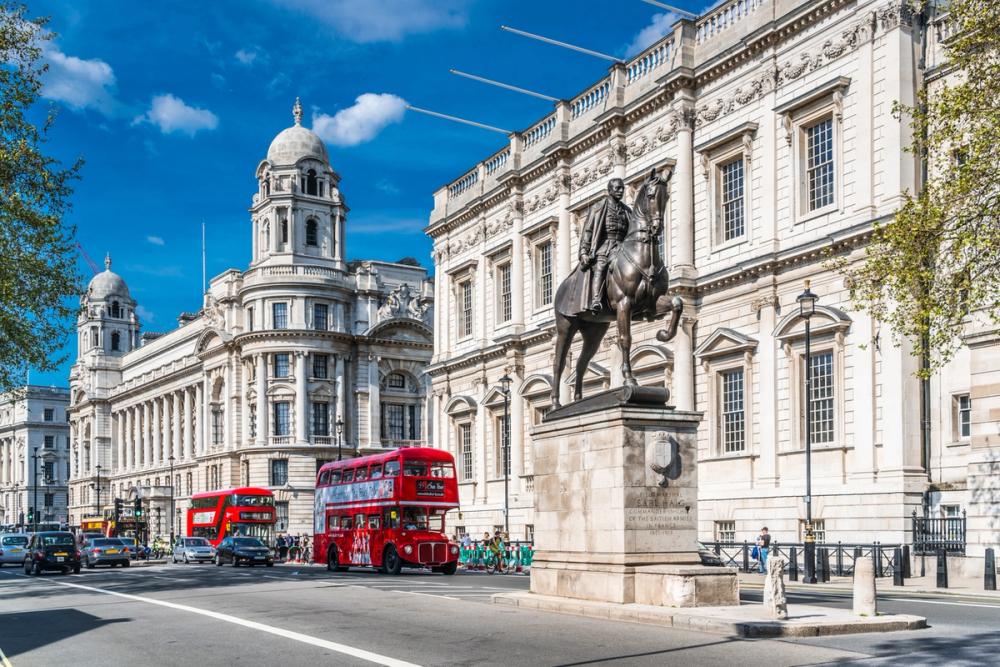
Miles Beale says the frustration of working with different government departments is how little communication there is between them
“No-one is keeping track of a balanced score card kind of approach that you would have thought they would have done,” he says.
“If I go into the Department of Health I am not allowed to make a point about economic growth because they are not interested,” he adds - even if it is pointing out the success of no and low alcohol products that are very much in tune with what the department wants to promote.
Or equally I can’t go into Defra and say the sector would be promoting no and low products more if it did not have its “arm tied behind its back” dealing with the cost of implementing new ERP legislation.
The task for Beale and his team, though, is to continue to make the government aware of just how bad things are for the drinks industry even if it is increasingly hard to do so.
A larger voice
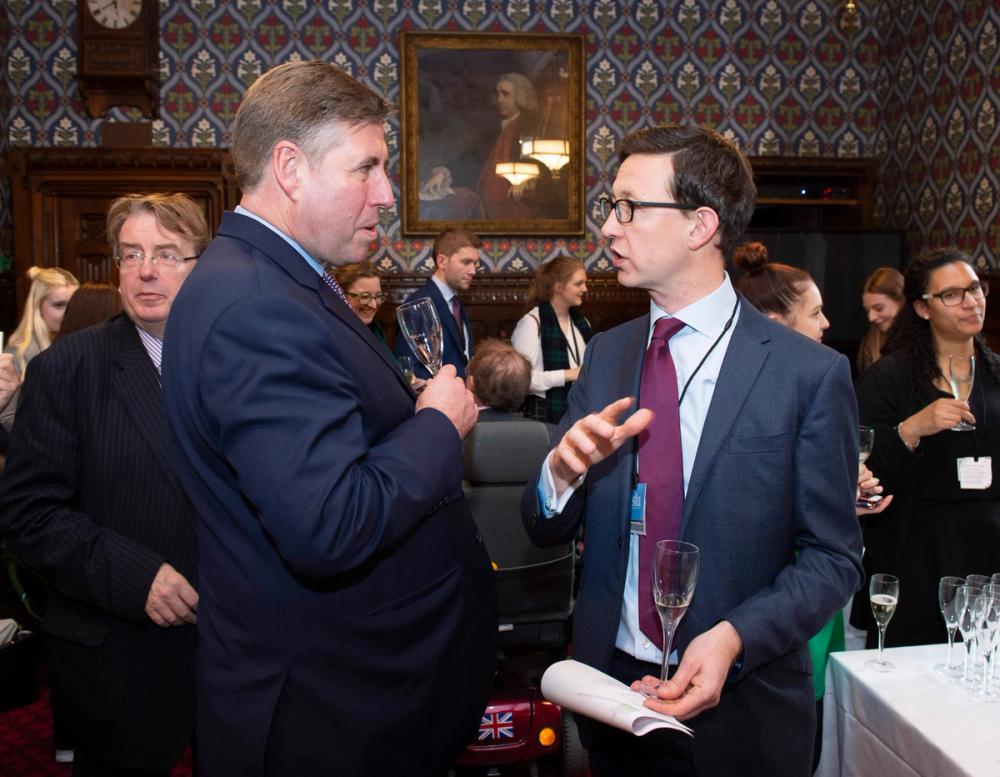
Miles Beale talking to Conservative MP and former chair of the All-Party Parliamentary Group for Wine and Spirits Sir Graham Brady at one of the WSTA's regular MPs receptions held at the House of Commons to get across the key issues facing the wine and spirits industry
The industry, though, is not going to get very far simply moaning and grumbling from the sidelines. Beale is quite clear the drinks, retail and hospitality sectors have to find more constructive ways to work together to present a united powerful voice to the government as “we are not currently getting any air time with ministers”.
He is currently working to get all the drinks, retail and hospitality trade bodies to work together as a united lobbying voice when it comes to presenting a combined case to government.
“If we want to get noticed it needs to be a cross category effort,” he says.
“We have to be a bigger lobby. We have to be uningnorable which is why I would like to be in a room in the Treasury with Kate Nicholls (chair of UK Hospitality) and others who can push the same agenda and say we are doing it together.”
It is not a given that trade bodies in broader sectors will all want to be quite as collaborative as Beale hopes they will be but he is certainly ready to make his case.
Not having a "joined up" government makes it even harder to make the wine and spirits industry's case to government says Miles Beale
“The difference is we were usually aligned [on previous lobbying] and trying to influence separately whereas I am now saying we all need to be in the same boat, on the same campaign, driving exactly the same messages, sharing our data, and our case studies and our businesses examples. And drinks is not enough. It has to be broader than that. It’s hospitality and its supply chain and it could involve off-trade retail as well,” he explains.
We also need to be realistic that we are not going to get all the things we might want in one budget.
As Beale explains: “We need a much broader lobby and ask for changes that come in over the rest of this parliament.”
So for the drinks industry the best it could hope for would be a multi-year freeze on alcohol duty which would give businesses the chance to plan and take action over a longer period of time. Whilst hospitality might make the case for cuts in VAT and business rates as part of this united lobby.
That’ll do NEETly
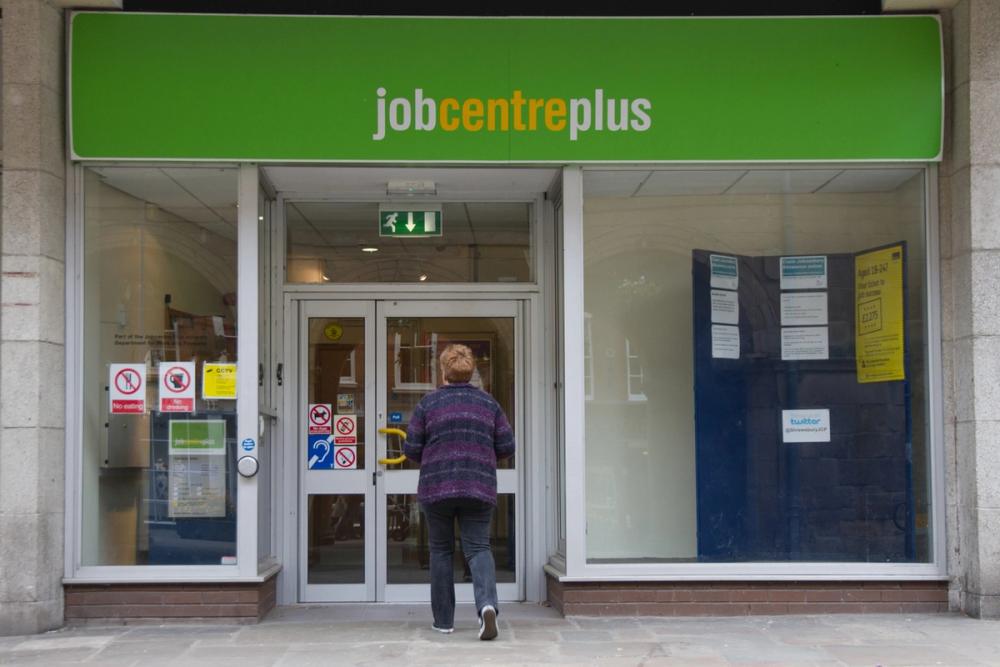
Miles Beale call to get involved with the governemnt to try and help with its NEETs crisis could not have been better timed with the release last week of Alan Milburn's NEETS report that says 1.25 million young people could be out of work, training or education within the next five years.
He also thinks there is a case for the combined drinks and hospitality sectors to make around helping the government cut the number of young people out of work - particularly in what is referred to as NEETs - those aged between 16 to 24 who are Not in Education, Employment, or Training.
His call is particularly well timed after the release of a government backed report last week that claims up to 1.25 million young people - a "lost generation" - could be out of work, training or education within the next five years.
“We might be able to be the answer to some of the things the government is worried about but only if they start treating us as a partner rather than a cash cow,” he says. “Something around NEETs is quite attractive. It would get us into the same room talking about something we both want to achieve rather than being in a room where we go you are asking for growth but you are tying our hands behind our backs - which is where we are now.”
But he adds: “Something would need to change [in terms of employment costs] to make it more attractive to do so,”
A more combined and effective joint drinks and hospitality trade lobby would also help promote the sector to a wider base of young people looking for careers, he says. A chance to promote the drinks and hospitality sectors as somewhere you can have a “full spectrum career”.
Pressing matters
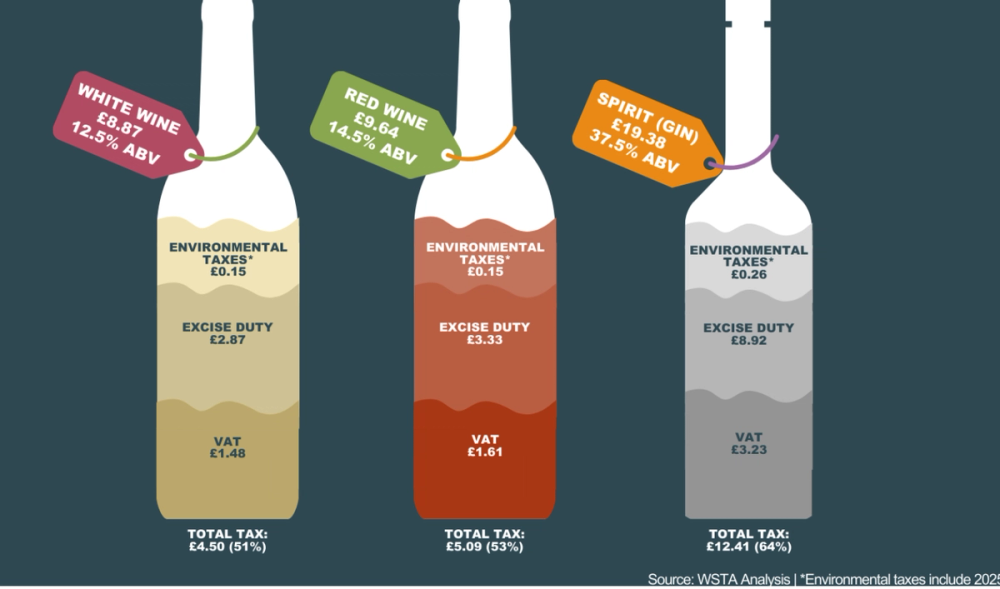
The WSTA is currently gathering evidence from the trade to assess the impact of the new ABV-driven alcohol duty system
Of immediate concern is the three year evaluation to the new ABV-duty system which the WSTA is looking to work with the other trade bodies to send in joint evidence of their combined members. The evaluation, Beale says, is focused not on what the industry would like to happen, but focused purely on what the impact the new duty legislation has had.
“We want to use to that to go back to talk about other things that would make a difference if you are trying to generate growth,” he says.
If that approach is successful it then puts it in a “better place” to have more pro-active talks about the roll out of EPR and how it can help the government row back and improve on what is widely regarded as a “badly designed policy”.
Which, in turn, could lead to similar more positive talks on how the government can work with the industry to implement its much heralded, but lamented deposit return scheme, which has already fallen into trouble in Scotland and now Wales.
Less intervention
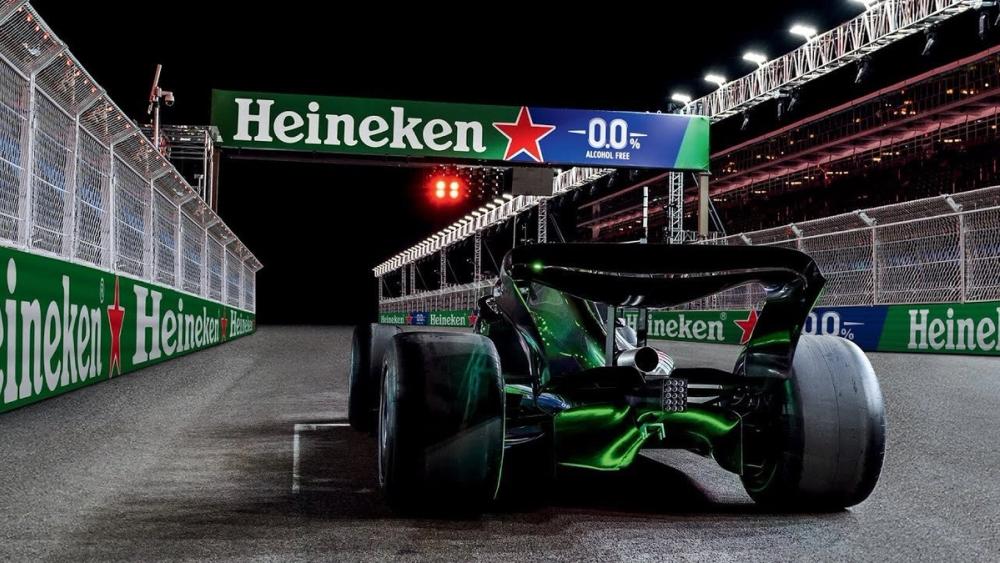
The steps taken by the alcohol industry to promote 0% alcohol drinks at high profile global events such as Formula 1 is evidence of how good it is at regulating itself says Miles Beale
When it comes to government intervention Beale also believes the drinks industry - and wider retail and hospitality lobby - needs to make the case far more strongly that it has got a great track record of governing itself.
Particularly around health and responsible drinking where overall consumer drinking habits are in decline and there has been a huge increase in the sales and interest in no and low alcohol products - particularly amongst traditional alcohol drinkers switching to no and low.
The category might only account for 2.4% share of overall total off-trade alcohol volumes in the on-trade and 1.2% share in the on-trade (for 2025), but are on the back of a 17% 12% volume increase in the off-trade compared to 2022 to 2024 and 94% up 28% in the on-trade, he says.
“We need to be a bit more confident about saying to government - and making sure they listen - that actually they don’t need to do anything. There is no need to intervene. They are getting everything they want and they have been getting it over a sustained period of time because of things the industry is doing already and the way consumer trends are going. So doing nothing might not attract a lot of headlines, but it is exactly the right thing to do,” explains Beale.
The alcohol industry has also responded to the clamour for non alcohol sports advertising by having 0% drinks products promoting major events - like Heineken 0% for Formula 1 and Guinness 0% for Six Nations rugby.
“That’s an absolute stand out commercial success that’s also delivering public health objectives and you keep the sponsorships so sport does well. If you wanted a better example of win, win I don’t know what there is.”
That has all happened, he stresses, again by lack of government intervention. “Don’t mess with that formula,” warns Beale.
Being mobilised
It’s good to see Beale in such fighting form - despite all the frustrations working with a government machine that is “not listening” to its needs.
It’s clear he is galvanised to do all he can to help the industry first get the government’s attention and then drive through the policies its members need.
As he succinctly says: “We have to be a bigger lobby. We have to take a longer term view. And we need to be properly mobilised and spend some time thinking about what we are asking for and what we would offer in return. All of which needs investment. Which is why we need everyone to be behind it.”
- In part 2 of our Miles Beale interview we talk to him about the steps the WSTA is taking to get even closer to its members to fully understand what their business needs are and what further services the WSTA can provide to help them be more efficient and profitable.