We are just back from our final week of tastings in Burgundy. Winter has arrived properly now. The once-golden slopes are decidedly bleak, the odd plume of smoke from burning vine canes rising into a stone-grey sky.
Now that we are into December, Burgundy season is nigh. As I write, Domaine Leflaive is limbering up, preparing to open the batting for Corney&Barrow. We are expecting a stronger performance than from England’s cricketers in the current Ashes series in Australia.
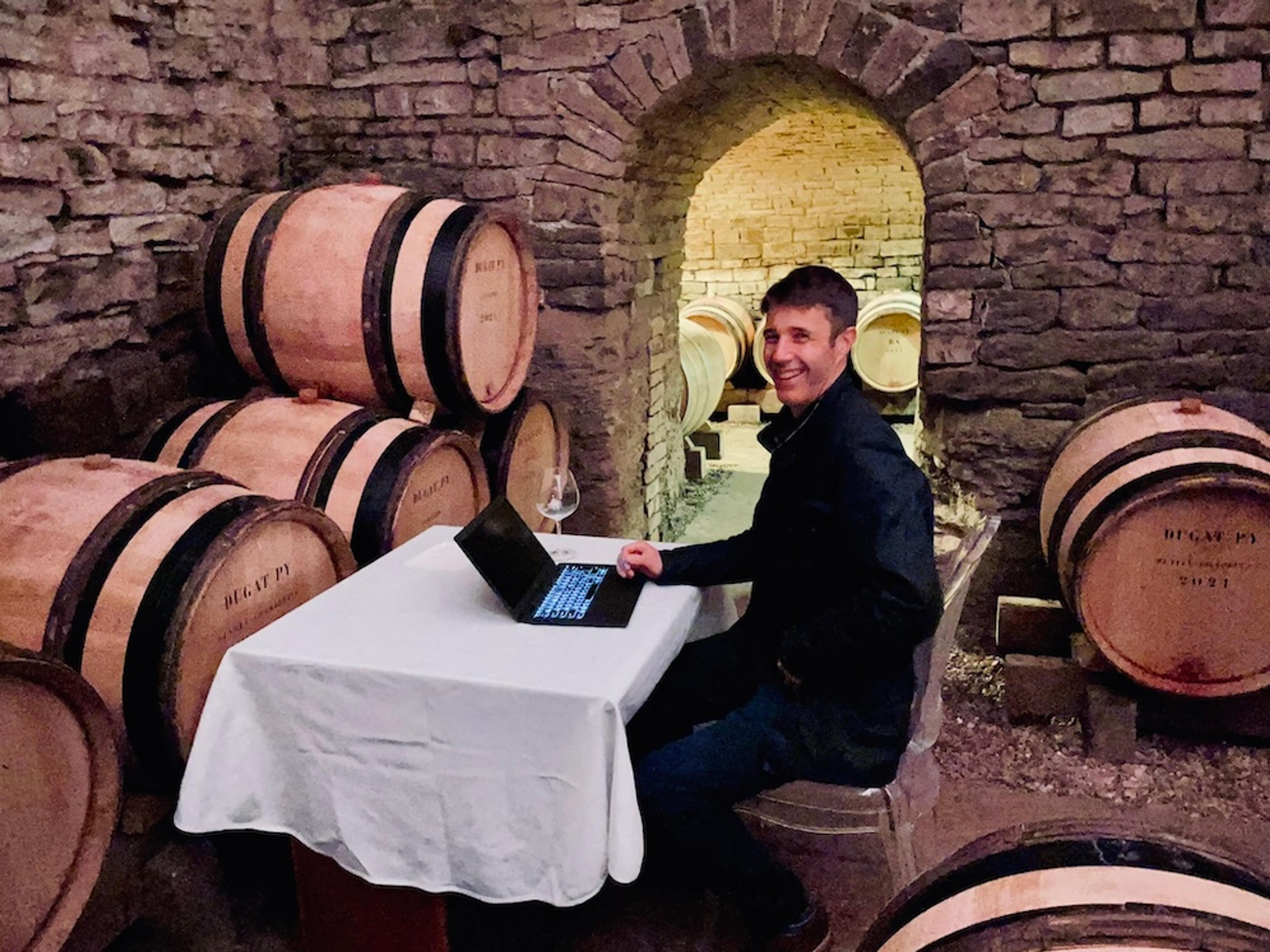
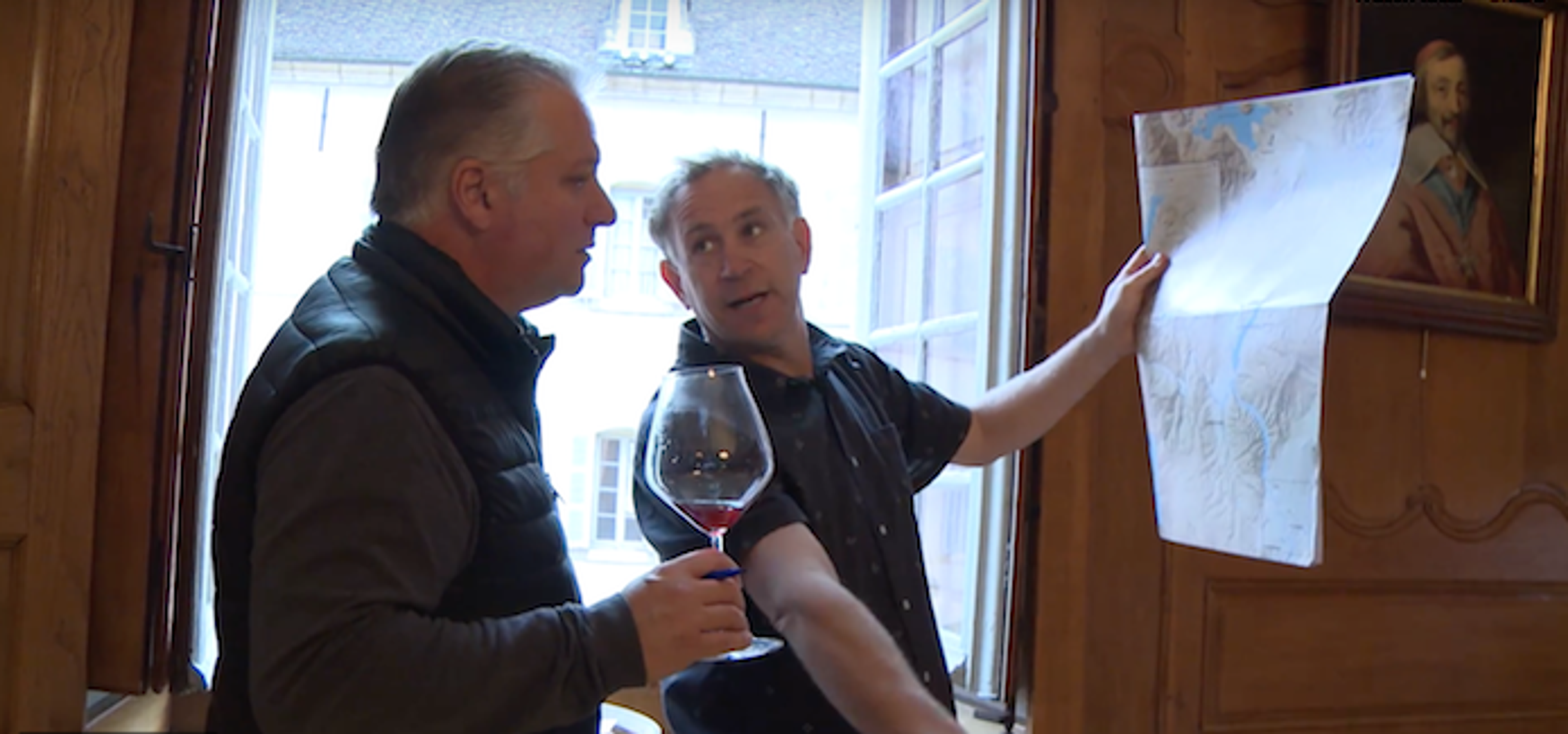
Our recent tasting delegation comprised MD Adam Brett-Smith, Asia MD Thibaut Mathieu, Head of Monopole Joe Muller and me. We returned in a positive mood, impressed with what has been achieved from a tricky season.
The wines
The wines are traditional, in the best sense. Cool conditions have made for a retro style of Pinot Noir that will appeal to Burgundy lovers seeking aroma, verve and fresh drinkability. We will be able to enjoy the 2024 reds while continuing to cellar the denser 2023s and 2022s. The whites deliver chiselled citrus fruit with an impressive acid backbone. The best will be among the stars of the vintage, rivalling the high-quality 2014s.
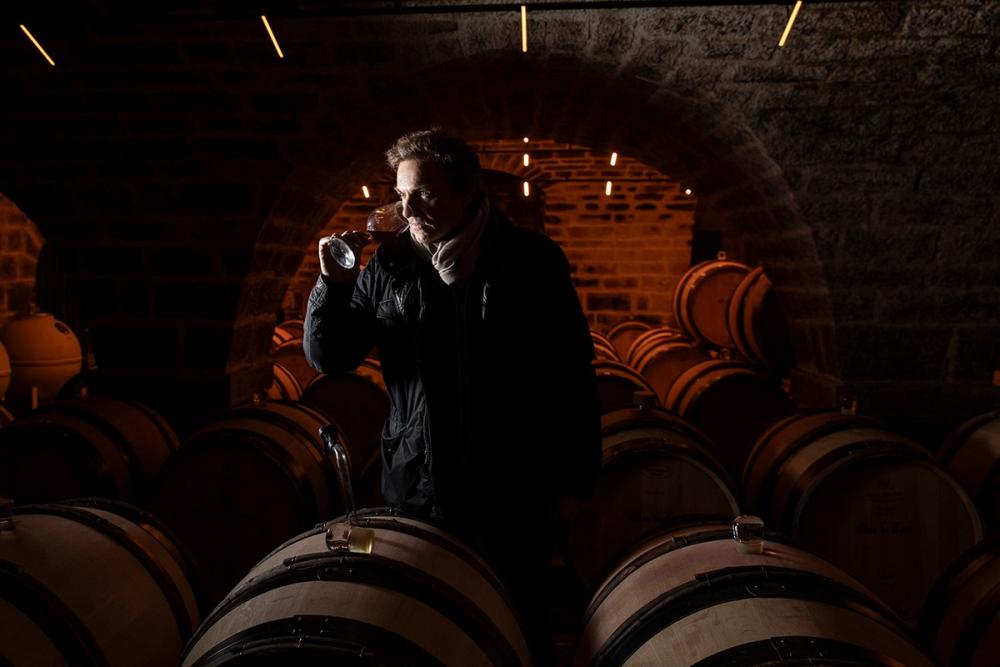
Clos de Tart
Let battle commence
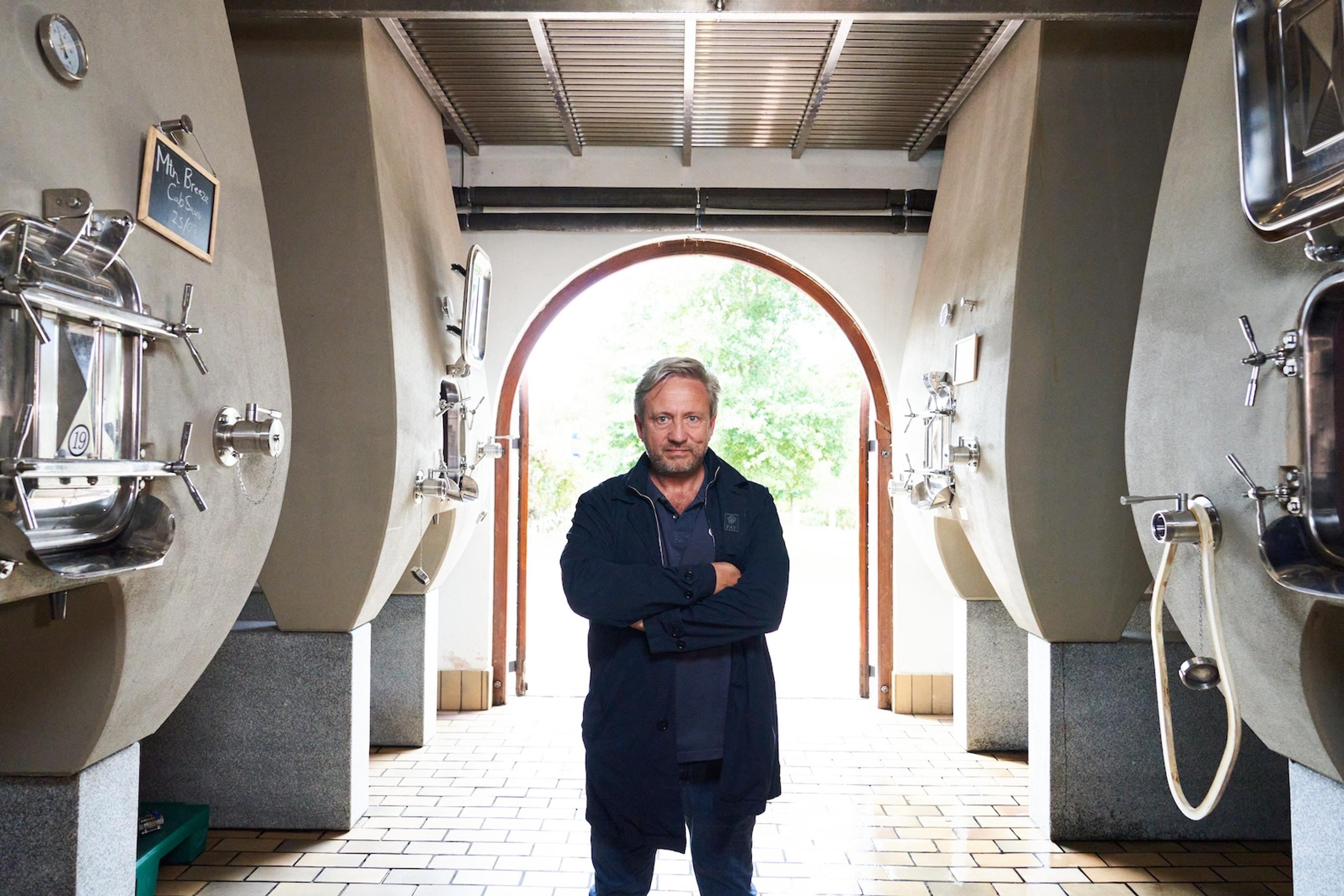
2024 was a series of battles, mostly caused by rain. Benoît Moreau called 2024 “the hardest vintage in 25 years.” Even more damningly, Alessandro Noli of Clos de Tart declared the weather “worse than in London.”
Cool, wet weather at flowering resulted in coulure (poor fruit set). That battle was lost, along with a fair proportion of the potential crop. However, given the meagre sunshine of the summer to come, it was a blessing in disguise, boosting the remaining berries’ chances of reaching ripeness.
A fight against mildew came next. Those practising organics, who must use contact sprays that are washed off by rain, spent much of the season in the vines reapplying these treatments. Clos de Tart was sprayed 19 times. François and Édouard Labet of Château de la Tour sprayed their Clos de Vougeot vines 23 times.
By contrast, synthetic or chemical sprays circulate within the vine, impervious to the weather. It is hard to say which is the lesser evil in such a season. Tractors compact the soil and squash cover crops, and organic sprays contain copper, a heavy metal that remains in the soil. Not to mention the mental toll on vineyard workers, who were regularly called out at weekends.
Our organic producers stuck with organic practices but, for some, it was more from pragmatism than ideology. Once the full extent of the mildew became apparent, it was too late to change course. Does it make sense to allow synthetic sprays at crucial periods of the year, such as flowering and bunch closure? Some I spoke to would welcome this, whilst others would resist on principle, such as Pierre de Benoist of Domaine de Villaine, who described himself as “very organic”.
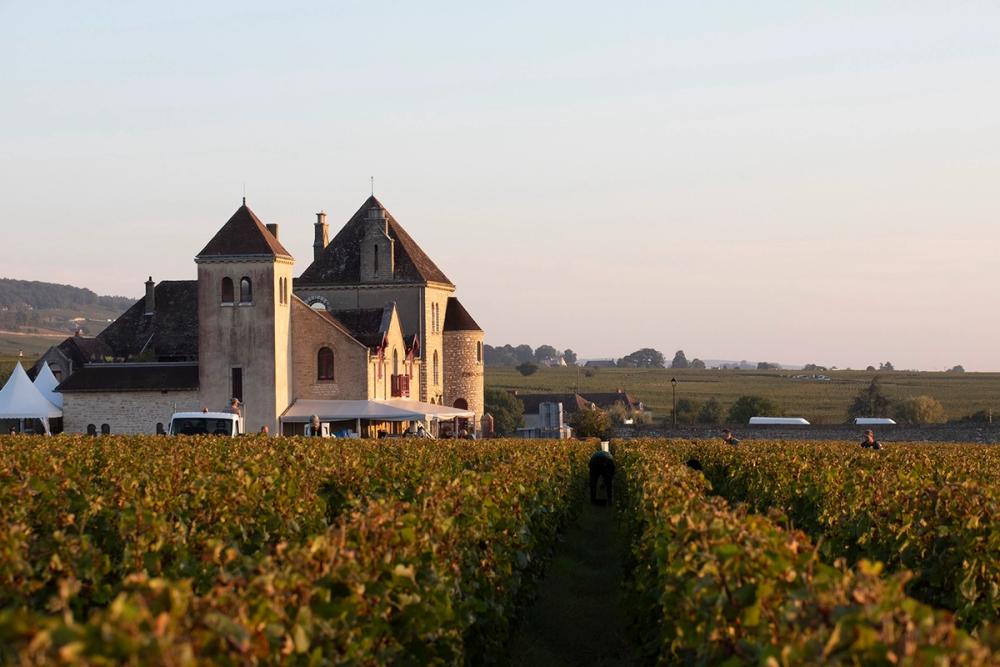
Château de la Tour
Yields
The full force of the mildew struck Pinot Noir vines in the Côte de Nuits. Some in Vosne-Romanée, Vougeot and Nuits-Saint-Georges lost 50-90% of their crop. Domaine de l’Arlot’s Nuits-Saint-Georges 1er Cru Clos des Forêts Saint-Georges yielded a paltry 3hl/ha. Christophe Perrot-Minot has made 9,500 bottles versus his usual 35,000.
By contrast, the hardier Chardonnay crop saw near-normal volumes in places, albeit with notable exceptions in Chablis, due to frost and hail, and parts of Puligny-Montrachet. Domaine Leflaive has made around half the volume of the abundant 2023, with Chevalier-Montrachet coming in at 6hl/ha.
In Moulin-à-Vent, Domaine Labruyère also averaged 6hl/ha. As owner Édouard Labruyère lamented, “it’s Sauternes”.
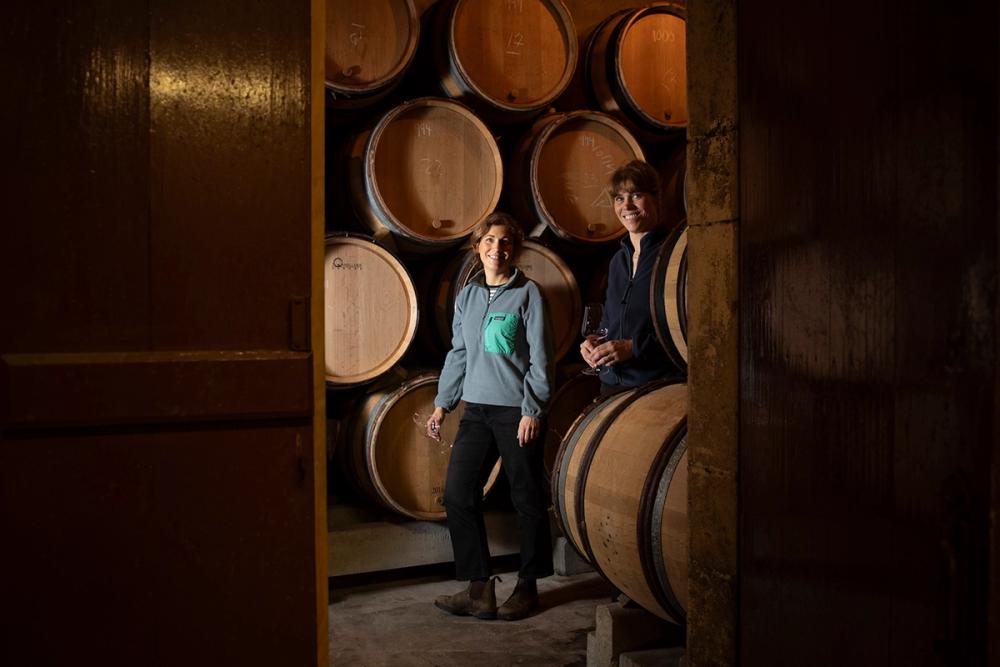
Domaine Matrot
Summer's lease hath all too short a date
Good weather finally arrived in August, a month which received above-average sunshine hours. Nadine Gublin of Domaine Jacques Prieur described the first three weeks of August as a “window of opportunity”, whilst Marion Javillier recalled this as a period of “sun and warmth”.
The beneficent effect of these conditions continued into September, whose sustained sunny, breezy weather kept botrytis at bay and brought ripeness within reach, aided by the lighter crop load. As Elsa Matrot at Domaine Matrot said, this ultimately saved the vintage.
Jean Orsoni, at Domaine du Puy de l’Ours, recalled unexpected ripeness levels at harvest: “What we didn’t expect was having something very complete in terms of phenolic maturity.” (Notwithstanding having lost 80% of the Pinot Noir crop and 40% overall). This was echoed by Jean Lupatelli at Comte Georges de Vogüé: “very small yields helped to get beautiful ripeness.”
Sorting
Equally as important as frequent vineyard treatments was rigorous sorting following harvest.
Édouard Labet said they practised ‘positive’ sorting at Château de la Tour in 2024, whereby good grapes are set aside, rather than the usual ‘negative’ approach of discarding substandard berries. Julien Millet of François Millet et Fils was upbeat, noting that berries affected by downy mildew fall off, rather than rotting on the vine, which makes sorting easier.
At some domaines, traditional hand triaging is now enhanced by automated optical and density sorters. Christophe Perrot-Minot sorts whole clusters manually, whilst destemmed grapes pass through an optical sorter. What a difference the technology of today’s winemakers would have made to the wines of their parents. Vintages like 2024 are much the better for it.
Shades of 2021?
Comparisons with 2021, as the most recent ‘cool’ vintage, are inevitable. Neither vintage conforms to the modern stereotype of warm ‘climate change’ years (although their atypical weather is no doubt equally attributable to the changing climate). Both years saw cool, wet summers.
But there are key differences: 2021 began with the trauma of frost, whereas 2024 was a battle of attrition against mildew. Whilst frost and coulure are very hard to mitigate against, the worst ravages of 2024’s mildew were staved off by constant spraying, combined with the clement late summer weather and rigorous sorting.
In short, much as I like the 2021s for their old school freshness, the 2024s have greater density and panache. In Jean-Baptiste Boudier’s words, “2024 is 2021 with more concentration.”

Domaine Jean-Baptiste Boudier
In the cellar
Potential alcohol levels at harvest, even though bolstered by the lighter crop on the vines, tended to fall short of 13% abv. A small degree of selective chaptalisation – adding sugar to the grape juice or fermenting must – was therefore widely practised.
Acidities were higher than in 2023, both tartaric and malic. Nadine Gublin at Domaine Jacques Prieur said they had 6g/L tartaric acidity at harvest, rather than the usual 5g/L. This, she said, “makes a difference”. Malic acid turns to softer, creamier lactic acid during the malolactic fermentation, whilst tartaric acid drops away during levage on lees. The result is wines with fresh zip that were nonetheless not tooth-aching to taste from barrel (as the 2014s and 2013s were). Louis Trapet noted that the pHs are slightly higher than usual. There may be an element of dilution from the rain.
There was less whole-bunch fermentation in 2024, because of mildew on the stems. Nicolas Rossignol at Domaine Rossignol-Trapet destemmed everything for the first time since 2004 (is there some pattern to vintages ending in ‘4’…?). However, here too, there are exceptions: with lower-than-usual yields, some were obliged to use whole bunches to fill fixed-volume fermentation vessels.
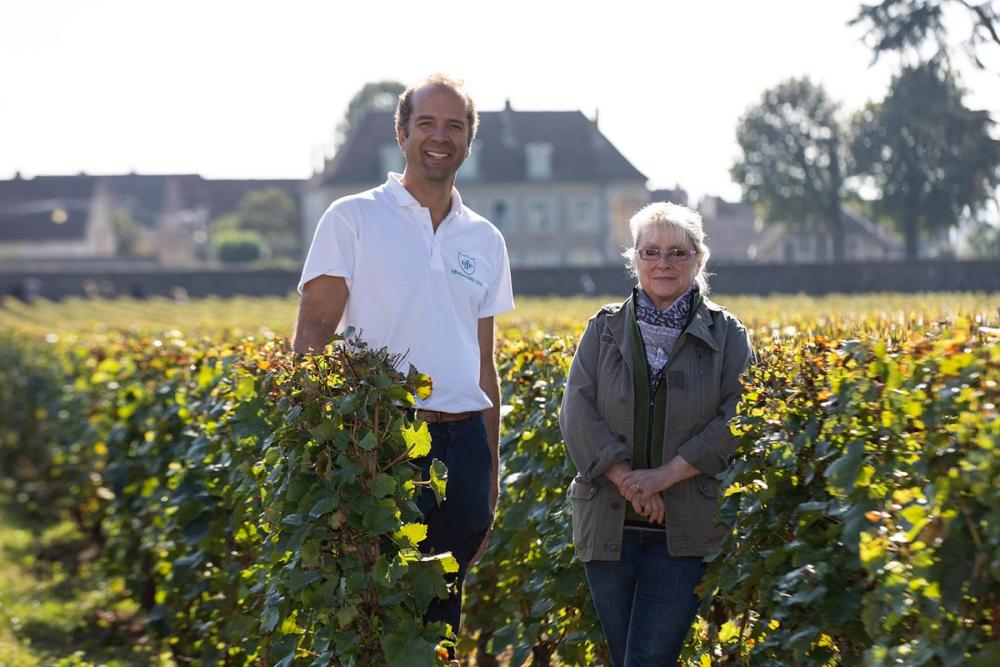
Domaine Jacques Prieur
A silver lining for the market?
As Paul Chéron at Domaine du Couvent philosophically put it, we have had “two generous vintages… working with Mother Nature also means accepting her difficult years.” Which, with thanks to Paul, leads me onto the market. Much as we feel for our friends in Burgundy, a short crop in the current market is perhaps not entirely unwelcome.
What customers would find hard to swallow, however, is price rises. As we saw in the 2021 vintage, using lower yields as a justification for higher prices doesn’t wash. Even more importantly, the values of comparable previous vintages should inform new release prices. I say this with some awareness of the squeeze on margins for producers as well as for merchants. But bottles stuck in the supply chain are no use to anyone. They are made to be uncorked.
Drinkers still love Burgundy, but will not buy it at any price. There is a cautionary tale 500km to the southwest: Bordeaux has seen its customer base dwindle over the past decade, through an approach to en primeur pricing that has largely removed the incentive to buy upfront. Although there are big structural differences between the two regions, not least in the vastly greater quantities produced in Bordeaux, the same principle applies. Nobody wants to feel that they are overpaying. Happily, the 2024 pricing we have seen so far indicates that producers get it. I am cautiously optimistic.
At the right prices – which we are doing everything we can to facilitate – Burgundy 2024 will be a vintage to dive into. The best wines are both beautiful and cellar-worthy. Low yields have ensured there will be stiff competition (and 2025 volumes are not much better). The top 2024s, which have been made in tiny volumes, will be fought over. One battle after another.
Corney&Barrow is a commercial partner of The Buyer. To discover more about them click here.