
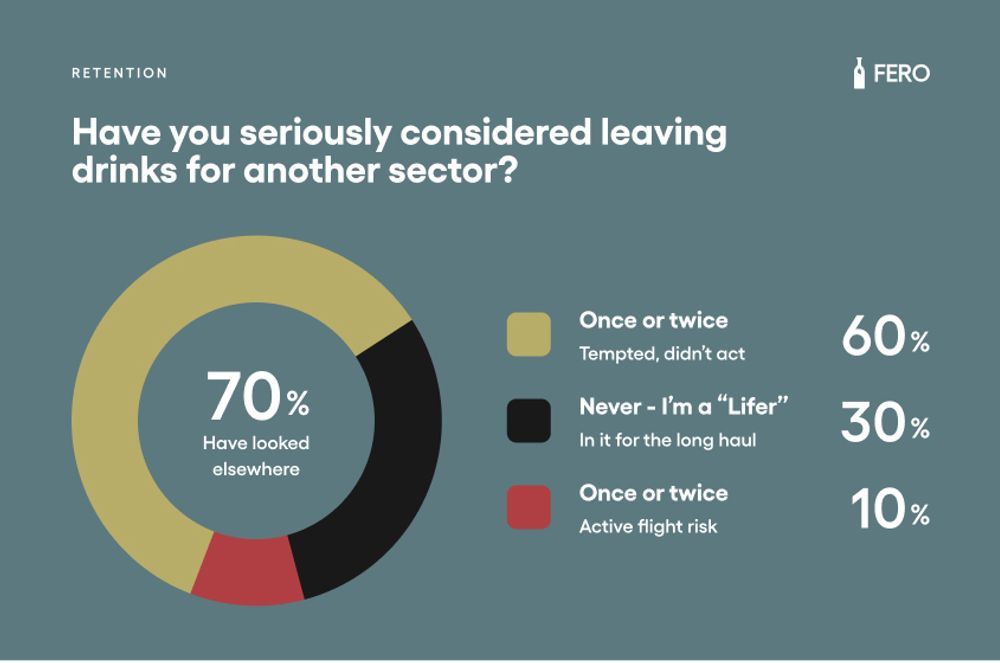
If you read some of the trade press in early 2026, the picture was bleak: An industry in peril and haemorrhaging valuable talent. The industry faces serious challenges: there are layoffs, consolidation, hospitality workforce data suggesting nearly 70% of professionals are considering leaving within the next two years, the balance sheets of the majors backing up with inventories.
A recent Drinks United survey found that nearly a quarter of people in the wine trade in the UK have seriously considered leaving because of harassment or discrimination; a figure that rises to two in five among Gen Z.
That is the backdrop.
These are serious issues that the industry needs to address. We ignore them at our peril. A few weeks ago, hosted an inaugural Young Leaders event at Fero (spearheaded by two of our own rising stars). At this event, we had a room full of young professionals, after work, on a weekday and despite a tube strike, they all showed up.
Engaged, opinionated, candid; and, when you look at the polling data we gathered (see full results below), considerably more optimistic than the headlines about them might suggest.
Thankfully, nobody, when asked about a 20-year career path, said "get me out now". Quite the opposite, which I found encouraging and validating, given the overly stark backdrop.
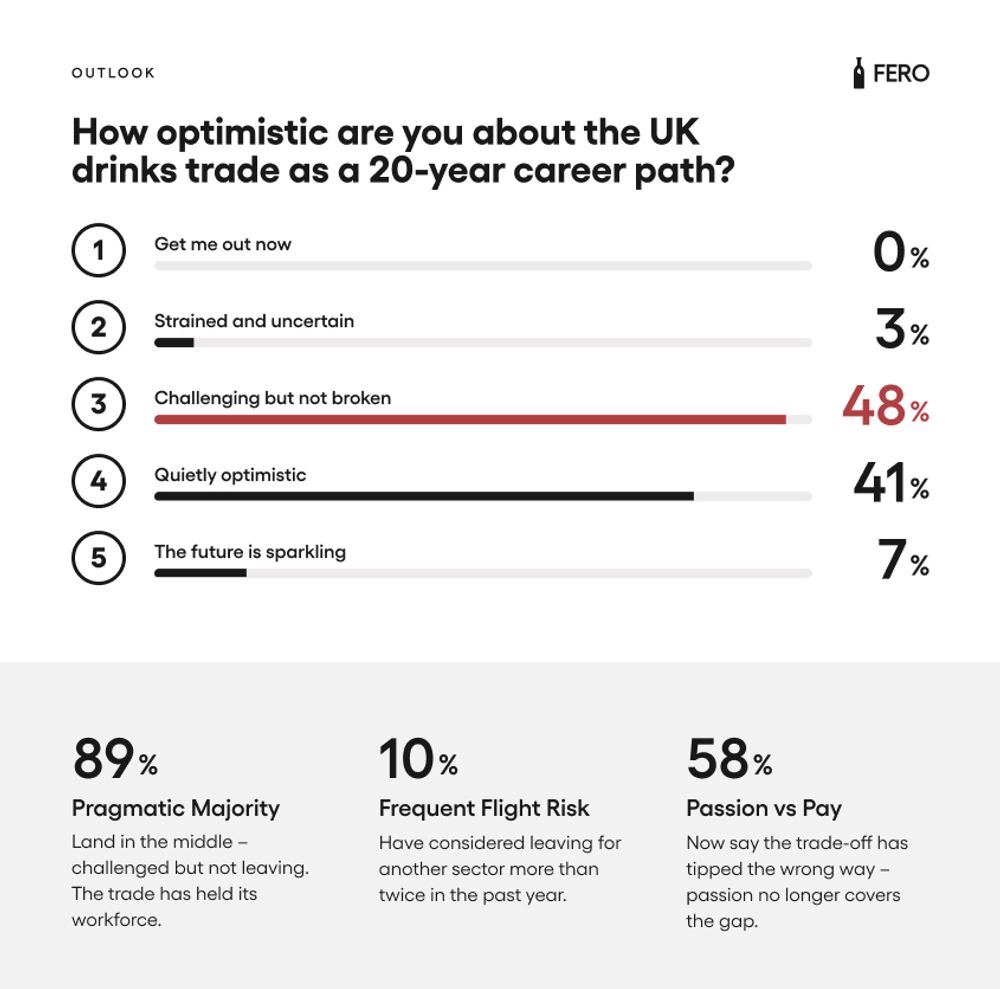
Nearly half sat in the "challenging, but not broken" camp when it comes to a 20-year career path and another 41% said they were ‘quietly optimistic’.
A less positive datapoint was that only 7% cent of our young leaders selected the most positive response, that the future is sparkling.
These are, however, not the responses of a generation that has given up on us. They are the responses of people who still believe in what this industry can be. But who are also paying close attention to whether the industry reciprocates with trust and belief, and invites them onto the platform, from which we’re building the future.
Pulling power
Because somewhere underlying the frustration and the financial pressure and the sense that the ladder has a few rungs missing, there is a genuine love for what the drinks industry does. The way our industry brings people together ‘IRL’ to tell stories, share experiences and create memories.
This is what makes the industry great, is the most extraordinary asset we have and is why this industry is more relevant now than ever. But this aspect of our industry should not be taken for granted, or be a source of complacency around the things we still need to fix. We mustbe honest about what those things are.
We can’t use our greatest strength as a substitute for not providing a set up where young professionals can succeed and be paid accordingly. When asked if the ‘passion’ aspect of the drinks trade justified lower salaries compared to other industries, 58% of those young professionals in attendance said “No, the balance is way off.”
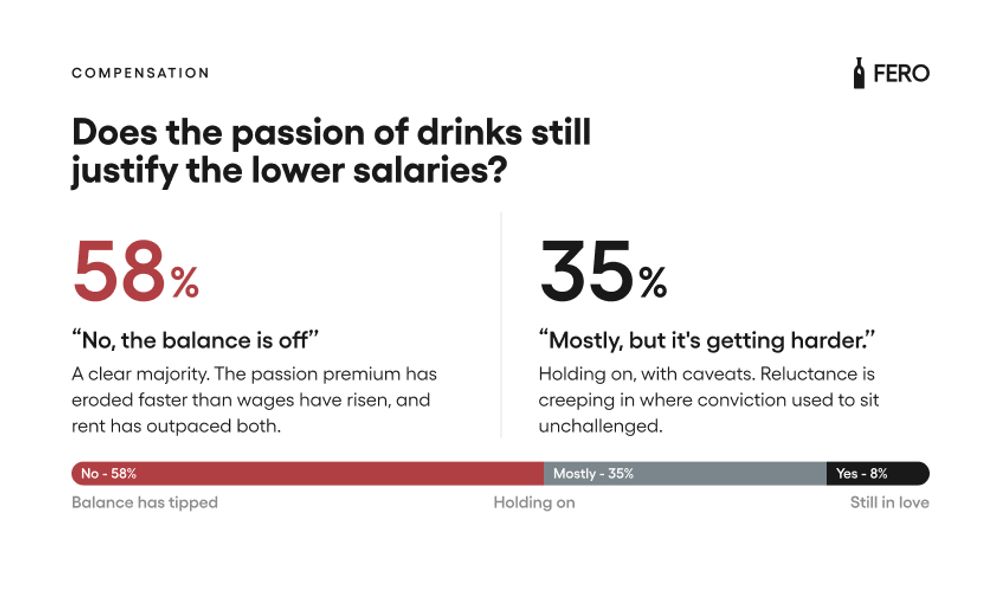
No surprise given the macro economic backdrop and resulting cost-of-living pressure built up in recent years. That said, 35% of people agreed that lower salaries were okay, saying “mostly, but it’s getting harder”.
While this may be okay, is it really that healthy for our industry? Is that really how we attract the best talent? One to seriously consider.
Clear career path
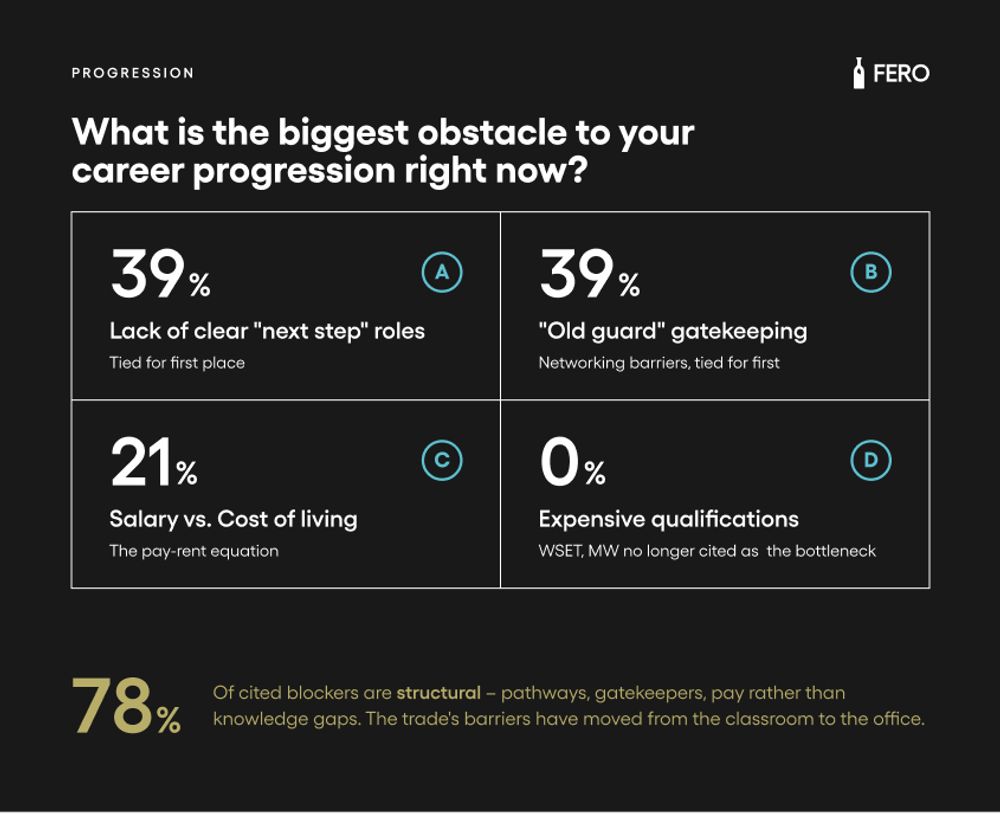
Thirty-nine per cent of the room cited “lack of clear next-step roles” as their biggest career obstacle. Another 39% named “old-guard gatekeeping and networking barriers”.
These are fixable. Both on a business level, but also as an industry, we have the tools to fix these problems and provide a platform for a whole new breed of professionals and businesses to thrive.
That tie is not a coincidence: It exposes an industry that has too often confused product knowledge with professional and commercial development.
Knowing your Burgundy appellations is not the same as knowing how to engage a new generation of consumers. Understanding the nuances of each Bordeaux vintage is not the same as understanding how to strike a commercial partnership, or how AI is transforming the commercial landscape.
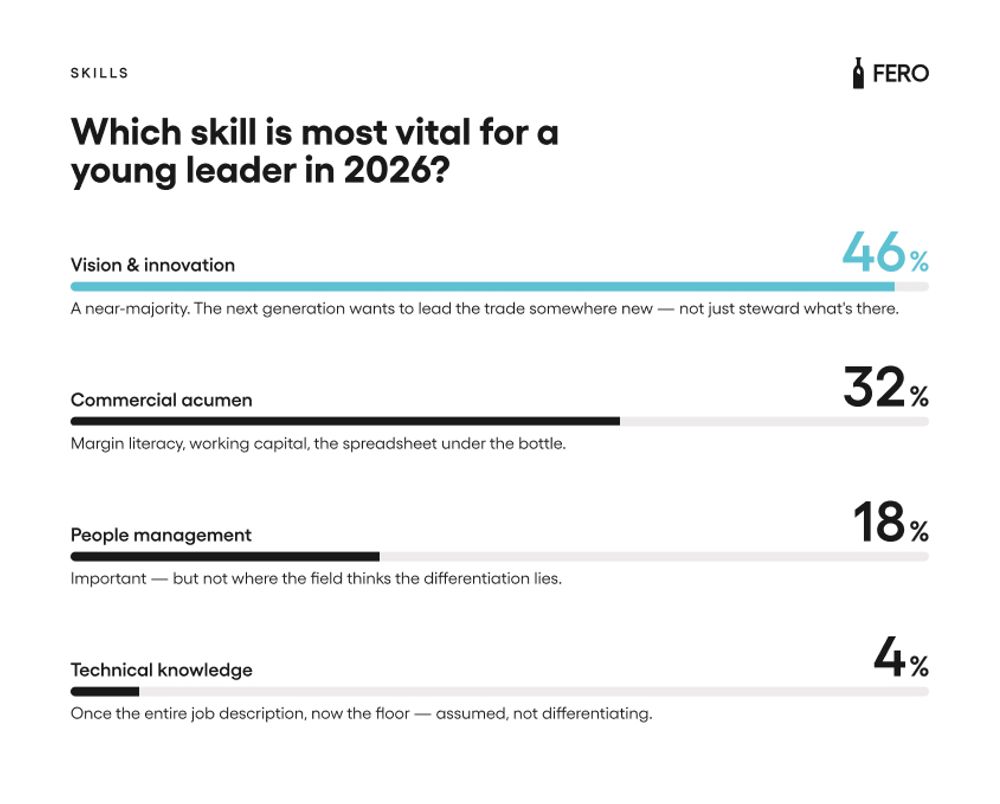
When we asked what skill matters most for a Young Leader in 2026, only 4% said technical product knowledge. This resonates with our industry's biggest challenges, particularly in wine. Forty-six per cent said vision and innovation was the most vital skill. Thirty-two per cent said commercial acumen. The people in that room are not asking the industry to make them better mixologists or sommeliers. They are a group of people focused on what matters, keen to drive change and make them better business leaders.
What we can do next
Innovation came up repeatedly in conversation, and it was rarely about the liquid. It was about AI and what it means for the way we sell. It was about formats that unlock new occasions, about new routes to market, about reaching consumers in channels the trade has historically treated as afterthoughts. Nowhere is this more urgent than in wine, where the drift in relevance with younger consumers is real and growing; and where the gap will be closed by engagement and discovery, not by another vintage chart.
And then there is the human dimension. Thirty-nine per cent of respondents said that if this event became a regular fixture, mentorship was what they most wanted from it. Almost as many, 32%, said they simply want a space to network with their peers. This is exactly why we built the Fero Lounge and why we’ll keep running these events.
The industry talks a great deal about culture. The data from Drinks United is a reminder that culture can be a reason people leave as much as a reason they stay. What that room full of young professionals showed me is that the ingredients for a genuinely great culture are already present in this generation. The curiosity is there. The ambition is there. The passion for the experiences and human connection that this industry enables is very much there.
What is needed now is the infrastructure to support change and innovation within the industry. Clear pathways and the right conditions to support and reward commercial skills, not just product knowledge. Senior figures who open doors rather than guard them. And regular, deliberate spaces where the next generation gets to find each other, challenge each other and remember why they chose this world.
The room was full. Our job is to make sure it stays that way.
Fero is looking to expand its ‘Young Leaders’ programme by holding future events including keynote talks, debates and networking events. If you or someone on your team would benefit from taking part then contact Fero by emailing Olly Lawson (Olly.lawson@ferodrinks.com) and Hamish Kirwan (hamish.kirwan@ferodrinks.com).
Fero Young Leader Poll April 2026
Here are the full results from the Fero Young Leaders survey that was a key part of its inaugural event. The session saw representatives from a number of leading drinks companies take part including Gallo, Diageo,Vinarchy and Freixenet Copestick, Treasury Wine Estates, Berry Bros & Rudd, Hatch Mansfield, Hedonism, Champagne Lanson and Champagne Billecart-Salmon amongst others.
1. On a scale of 1–5, how optimistic are you about the UK Drinks Trade as a 20-year career path?
2. Have you seriously considered leaving the drinks industry for another sector in the last 12 months?
3. Do you feel the "passion" aspect of drinks justifies the generally lower salaries compared to other industries?
- A) Yes, I love what I do. - 8%
- B) Mostly, but it’s getting harder. - 35%
- C) No, the balance is off. - 58%
4. How much has the industry's inclusivity improved since you started your career?
- A) Transformed completely - 0%
- B) Significant progress - 31%
- C) Slow, superficial change - 50%
- D) Stagnant / No change - 19%
5. In five years, how much will a company's sustainability credentials influence your decision to work for them?
- A) A dealbreaker – They must be a leader. - 0%
- B) Important – but salary and role come first. - 67%
- C) A "nice to have" only. - 26%
- D) Irrelevant – I focus on business health. - 7%
6. What is the biggest obstacle to your career progression right now?
7. Which skill is most vital for a "Young Leader" in 2026?
- A) Technical knowledge - 4%
- B) Commercial acumen - 32%
- C) Vision and innovation - 46%
- D) People management - 18%
8. If an event like this was to become a regular fixture, what would you most like to see from it?
- A) Mentorship opportunities - 39%
- B) Practical business skills (P&L, Logistics) - 14%
- C) Socialising with peers - 32%
- D) Access to senior decision-makers - 14%
9. Will the UK’s standing as a major drinks hub diminish or strengthen by 2035?
- Diminish - 43%
- Remain as is - 43%
- Strengthen - 14%
10. In one word, what excites you most about the future of wine?
(Most common words in use)
- Innovation - 22%
- Connection - 6%
- Diversification- 6%
- New Regions - 6%