Robert Bodenstein wants to visit Wrexham. I could hardly believe my ears when I heard this. Here I was in Weissenkirchen, a village in the famous and beautiful Austrian wine region of Wachau, and a winemaker wanted to see Wrexham. He had shown me great generosity in opening a number of special bottles, so I felt I owed him some candour. As a native of the United Kingdom, I said do not go.
He is a fan of the TV series Welcome to Wrexham, which explained his interest. I was not in the Wachau to chat about a once obscure Welsh town and its football team brought to prominence by the American actor Ryan Reynolds, of course, but to see Ried Achleiten, a famous vineyard.
Michael Walker was blown away by the wines and vineyards of Wachau but most of all the Achleiten vineyard
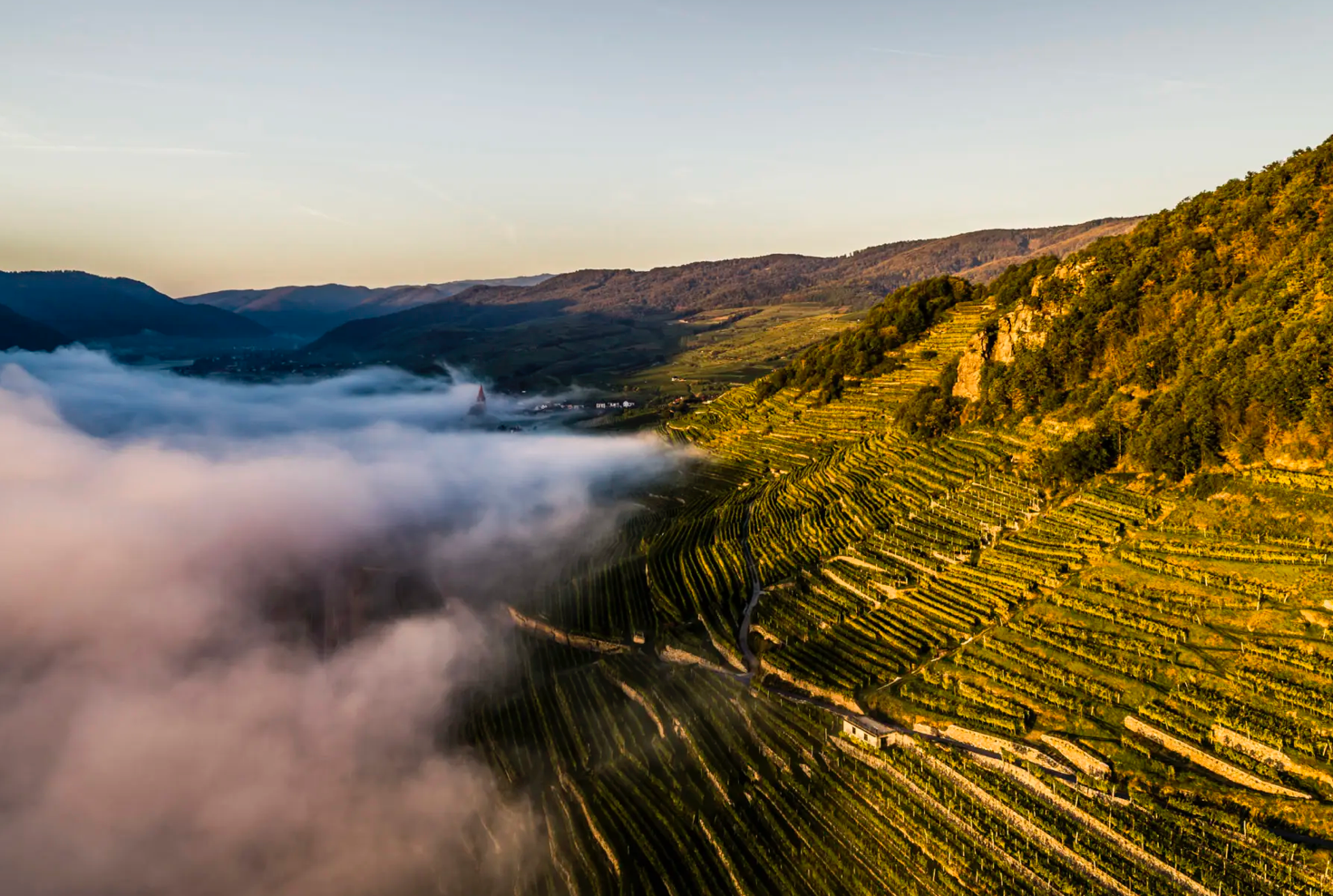
My enthusiasm stemmed from a masterclass on Austrian wines I had attended in 2024 in which the presenter, a Master of Wine, had remarked that Rieslings from Achleiten could last 40 or 50 years. That piqued my interest. Then I saw a picture of the place: beneath a forest, green rows of vines spread across a long slope and downhill all the way to the River Danube. It’s a lovely setting.
Robert Bodenstein is the son of Toni Bodenstein, one of Austria’s most respected winemakers who has followed in the footsteps of his father-in-law, Franz Prager, at Weingut Prager. It’s on the main road which passes through Weissenkirchen and along the Danube, which, on the day in question, was brown and muddy rather than blue. At least I think so. As was customary during my time in Austria, I was focused like a laser on finding the winery, rather than enjoying the magnificent surroundings. When I arrived, it didn’t even occur to me to look up to the vineyards above.
Being so close to the river, Weingut Prager is protected by a flood wall. This proved to be a blessing in September 2024 when torrential rain hit the Wachau for four days, destroying the cellars at some other estates. I had been under the impression that the Wachau was a dry area, and indeed the average annual rainfall is low, in the region of 400 to 600 mm. However, rain totals are “very vintage dependent”, in the words of Robert Bodenstein, while the warming climate is “a big challenge”. As for floods, the Wachau “has been living with them for centuries”.
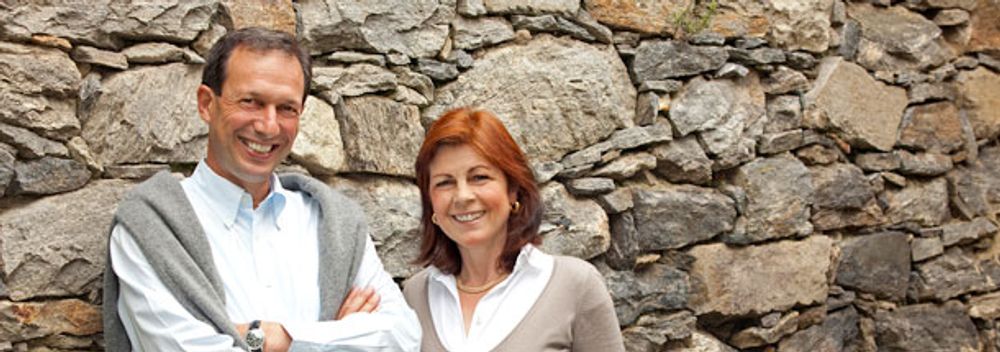
Toni and Ilse Bodenstein of Weingut Prager
I tasted a number of wines from Achleiten at Weingut Prager, all of which were classified as ‘Smaragd’. Such wines are from the Wachau’s top vineyards, must have an abv of at least 12.5% and are the best the region has to offer. As I later discovered first-hand, they do last a long time in the bottle. Bodenstein told me that wines from Achleiten are very distinctive and that he could tell immediately if a wine was made with grapes from that vineyard. Achleiten “obviously has this smokiness to it,” he said.
Prager’s Riesling Smaragd Achleiten 2024 had the characteristic apricot note of the Wachau. It also had a shocking amount of acidity – ‘off the scale’, to use my own tasting note.
Sampling a Grüner Veltliner Smaragd from the same vintage and vineyard was fascinating, for it showed the stark difference in acidity between the two grapes. I also experienced just how good an aged Grüner Veltliner can be when we had a Smaragd from Achleiten from the 2011 harvest.
Apparently, it wasn’t even a particularly great year. 2021 was “the most beautiful vintage this century”, 2014 was “horrible” and 2013 was “really beautiful”, but Bodenstein had to consult his phone to jog his memory about 2011.
Simply the best
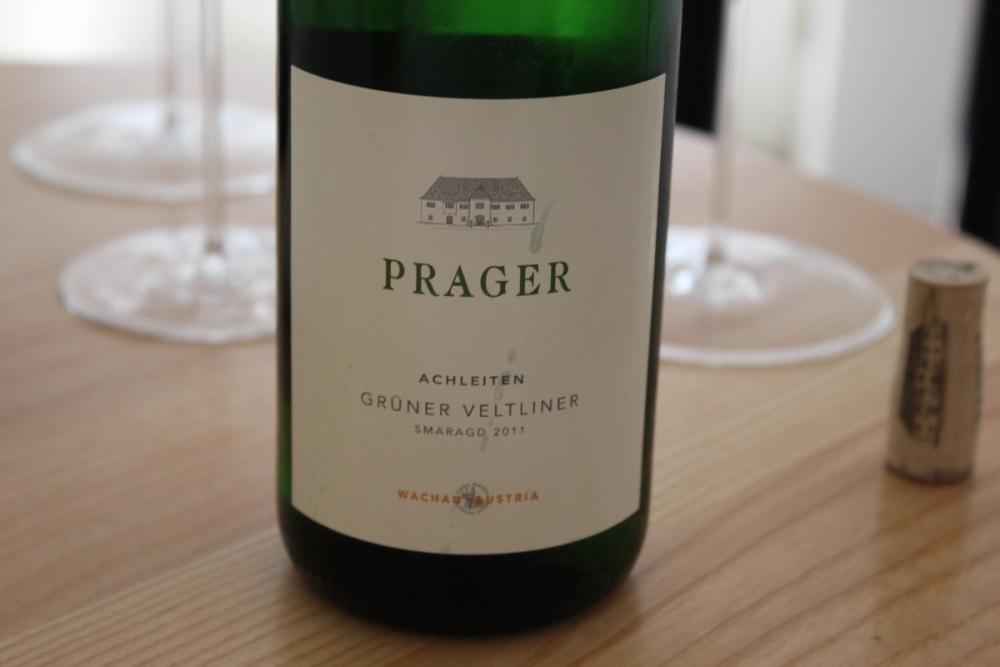
Possibly the best wine that Michael Walker has ever tasted...
As I tasted Prager’s Grüner Veltliner Smaragd Achleiten 2011, I felt like the jaded food critic Anton Ego in the film Ratatouille, who is so stunned by the brilliance of the unknown chef’s dish that it jolts his memory back to his childhood.]
I wrote at the time that the wine had an ‘amazing nose’, which I felt incapable of describing, so I asked Bodenstein for his opinion. Honeysuckle and chamomile, he suggested. On the palate, the trademark Achleiten smoky note came in after a while. The mouthfeel was very soft initially, but then the acidity crept in, lingering on the front of my tongue. As for the finish, it seemed never-ending. It was the best Grüner Veltliner I had ever had, and I wasn’t being fulsome. Maybe it was the best wine I have ever had.
They make another Grüner Veltliner Smaragd from Achleiten at Weingut Prager called ‘Stockkultur’, which means ‘pole culture’ in English. All the vines are trained on poles, rather like the stakes used in Côte-Rôtie.
This part of Achleiten is by the woods and above the fog line, at 360 metres above sea level. The oldest vines were planted long ago, in the 1930s. I assumed that it would be a very steep site, given its elevation, but this is not the case.
Ried Klaus, the neighbouring vineyard to the east, has a more pronounced gradient of up to 70%. Prager’s Grüner Veltliner Smaragd Achleiten Stockkultur 2024 was even more acidic than its counterpart from further down the slope.
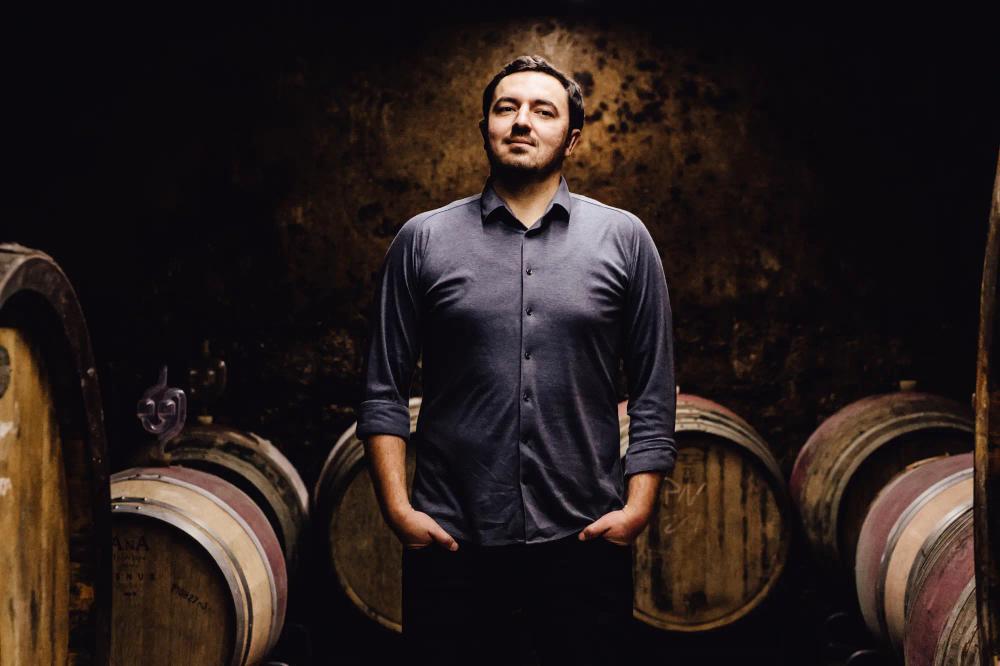
David Juen of Weingut Wess
Later that day, I went to Krems where I asked the very interesting David Juen of Weingut Wess about 2011, for the Grüner Veltliner at Weingut Prager had made such an impression on me. The wines from that harvest “needed a lot of time to develop”, he said. They clearly developed extremely well.
Terrace winemaking
About five minutes along the road from Weissenkirchen is the village of Dürnstein. From the vineyard behind Domäne Wachau, which is probably the most respected co-operative in Austria, you can see the ruins of Dürnstein Castle atop a hill to the west. Most of my countrymen are probably unaware that Richard the Lionheart was once imprisoned in that lofty fortress.
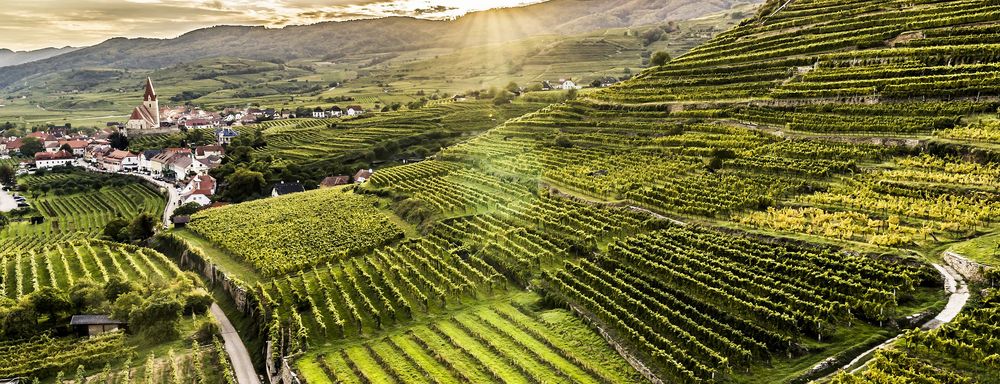
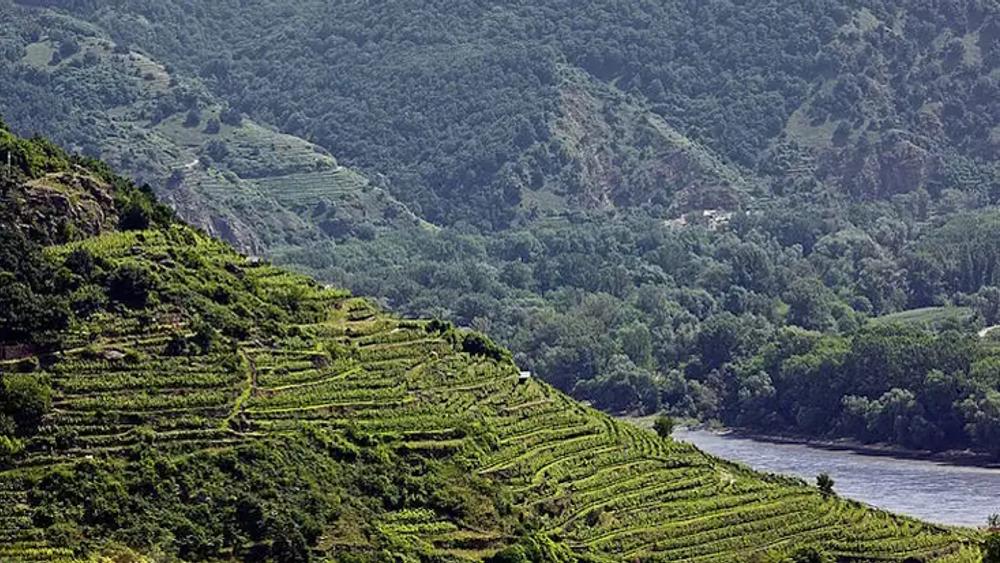
The arid slopes behind Domäne Wachau feature the stone terrace walls for which the Wachau is famous. The stones have no uniformity in size or shape, and look as if they were grabbed in desperation. Rows of vines are planted on the terraces atop the walls.
I had been told at Weingut Prager that some of the walls have to be rebuilt every winter, and that 30 to 40 sections in their vineyards were damaged in the biblical rains of September 2024. The rows between the vines on the flat land below the slope at Domäne Wachau were a riot of grass and flowers, like a garden in need of a lawnmower.
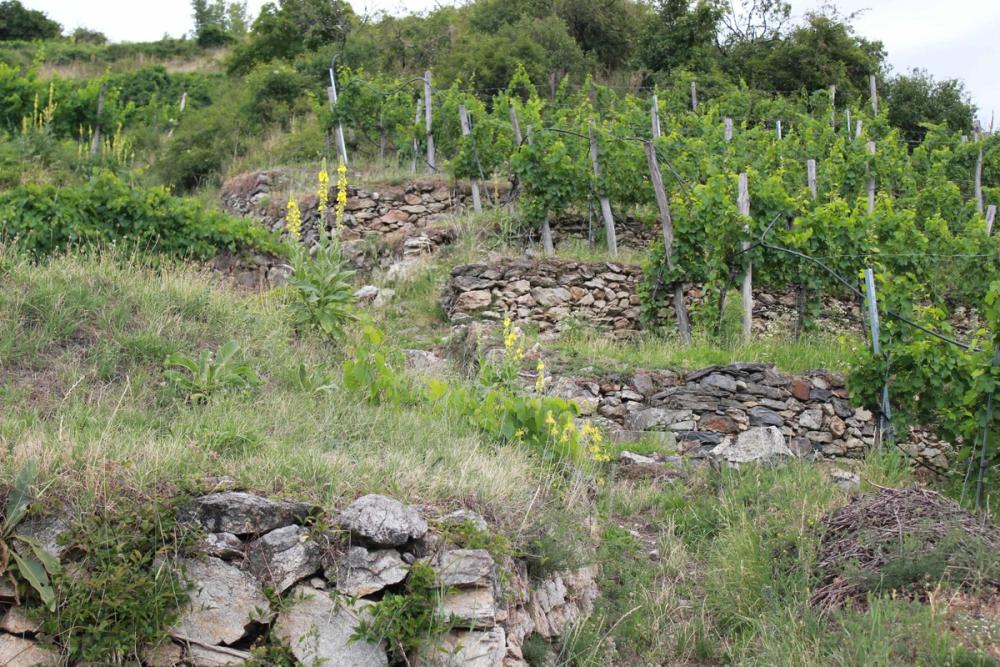
Some of the terrace vineyards that are such a feature of the Wachau region
As the biggest name in the area, Domäne Wachau makes wines from grapes grown in Ried Achleiten. Madeleine Ströbl, who gave me a tour of the winery, presented me with two young Grüner Veltliners, both classified Smaragd, but from different vineyards: one from Achleiten, the other from Ried Kirnberg, a nearby vineyard on the opposite side of the River Danube.
The one from Achleiten, I wrote, was ‘smoky and mineral’, with much higher acidity than the one from Kirnberg. I also tasted two Rieslings, both of which were labelled as Smaragd: one from Achleiten, the other from Ried Singerriedel, a vineyard in Spitz, at the western end of the Wachau.
Remarkably, the harvest in Spitz occurs two weeks after the grapes are picked in Dürnstein, despite the short distance between the two villages. I wrote that the two Rieslings were ‘super dry’, and the one from Singerriedel had 'quite a lot of body' and a 'classic Riesling nose'.
I didn’t get to see Ried Achleiten, sadly. It felt like I was almost close enough to touch it, but I ran out of time as a result of my intriguing conversation with Robert Bodenstein. As was the case with all my discussions with winemakers in Austria, I could have spent another couple of hours tasting wines with him.
When I got back to the UK I went to a local branch of Majestic and cleaned them out of Domäne Wachau’s Grüner Veltliner Smaragd Achleiten 2021. I will try to hold on to them for a decade; easier said than done.
* Michael Walker was a guest of the Austrian Wine Marketing Board who are a commercial partner to The Buyer.