
Tell us about the new seal initiative you have introduced?
The creation and growth of the Old Vine Registry has always been predicated on the idea that we can’t preserve or value what we don’t know about. So our first and ongoing goal has been to catalogue old vine vineyards everywhere.
In addition to knowing they exist, however, to keep them in the ground we have to make sure they remain economically sustainable for those who farm them, and one of the ways to do this is to drive increased awareness and sales of the wines that get made from old vineyards.
In order to do that, the Old Vine Registry had to get out of the internet and into the real world, and the OVR Seal is our attempt to do that—to start having the conversation about old vines at the shelf level.
What do you hope to achieve with it that you can’t currently do with the Registry?

The Old Vine Registery now has the records of nearly 5,000 producers in its database
By allowing registered producers to put the OVR Seal on their bottles, we are giving wineries around the world the chance to declare how old their vineyards are and to give interested consumers a destination to learn more, in the form of the Old Vine Registry listing for their vineyard.
This offers an opportunity for consumers to learn and engage in a way that the use of words such as “vieilles vignes” or “old vines” don’t offer. Also unlike those terms, which mostly have no legal meaning or regulation guiding their usage around the world, the OVR Seal offers a more concrete and legitimate declaration that a vineyard truly is old.
What do producers or winemakers need to do in order to use the seal?
In order to use the seal, producers must have their vineyard(s) listed in the Old Vine Registry, which is free and easy to do. Once that has occurred, a producer must simply pay a one-time fee of $300 to get access to seal artwork that corresponds to the age of their registered vines.
They are then free to use the seal on their packaging and digital marketing materials associated with wines made from their registered vineyard.
You are launching the seal with a few initial producers - who are they and why have they come on first?
We teased the fact that the Seal was coming back in June, and a number of wineries immediately reached out asking how they might get access to the seal. We offered the opportunity to get early access to the seal to all the producers who made such inquiries, and eleven of them stepped up and said they wanted to particpate.
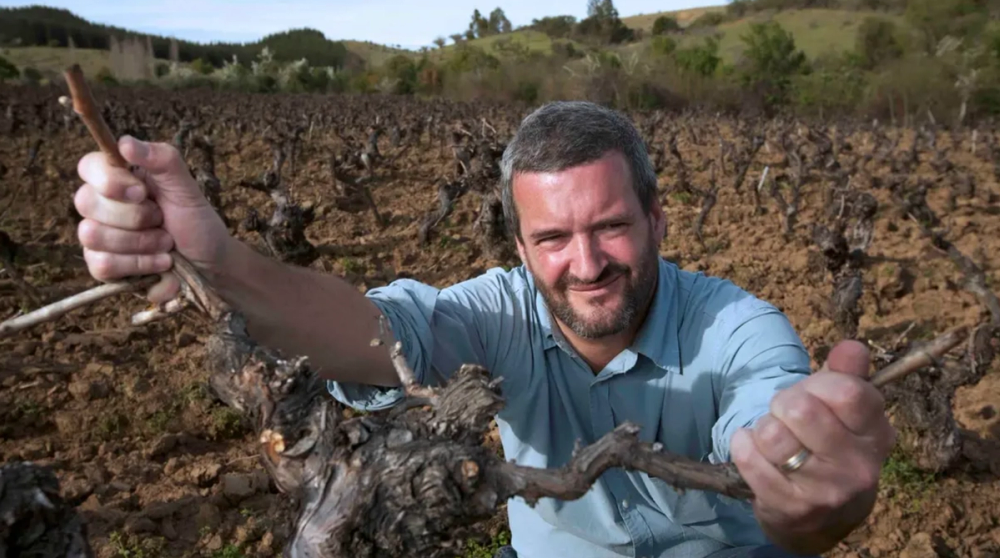
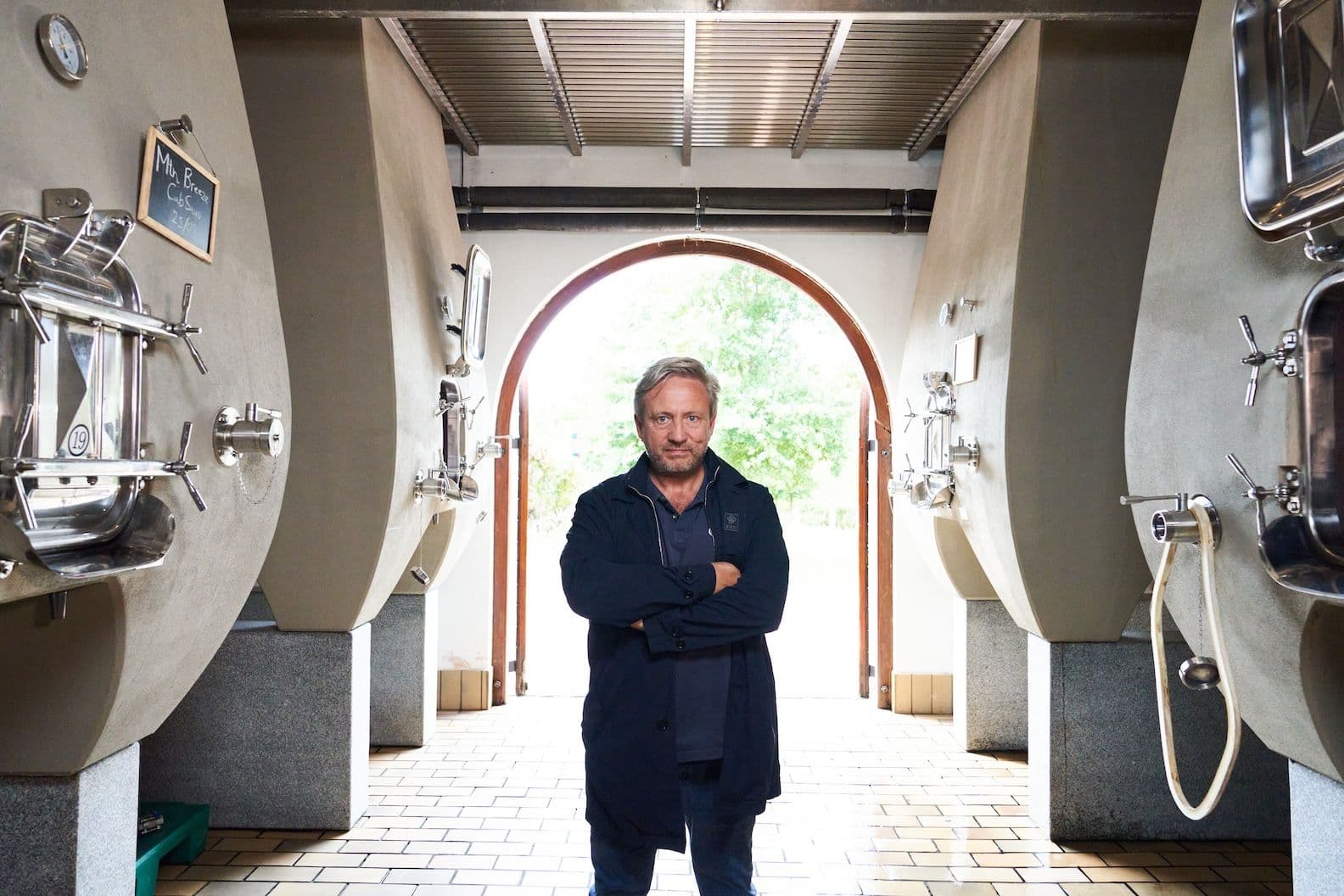
Derek Mossman Knapp of Chile's Garage Wine Company is one of the first producers to take on the Old Vine Registery seal
Our launch partners are: Seghesio Family Vineyards and Bedrock Wine Company in Sonoma, Garage Wine Company in Chile, Versado and Ciclo Andino in Mendoza, AYA Estate in Bulgaria, Sown Estate in Napa, Woldridge Creek Winery in Oregon, Methymnaeos Organic Vineyards in Greece, Plaimont in Gascony, and Tenuta Santa Maria in Soave.
These are all wineries that have, at a minimum, made commitments to making old vineyards a key part of their philosophical approach to winemaking. Some of them, like Bedrock Wine Company or Garage Wine Company, go much further than that, as shepherds of some of the world’s oldest and most storied vineyards.
How will producers be able to use it in their marketing and on their labels?
The seal is available for use in the context of products and marketing that are specific to one or more vineyards that are recorded in the Old Vine Registry. The age-specific seal can be used on wine packaging if 85% of the grapes come from one or more registered vineyards that are at least as old as the age-mark on the seal. In the same fashion, the seal may also be used on technical sheets or sell-sheets or even e-commerce product pages for specific individual wines.
We also anticipate producers using the seal in the context of marketing a specific registered vineyard, perhaps on websites or in print marketing, or even by putting a sign in the vineyard itself. We’re really open to however wineries want to use the seal, provided it is always in the context of mentioning or referencing a specific vineyard rather than generic marketing about the brand as a whole.
What percentage of producers who are in the registry do you hope to sign up to use the seal?
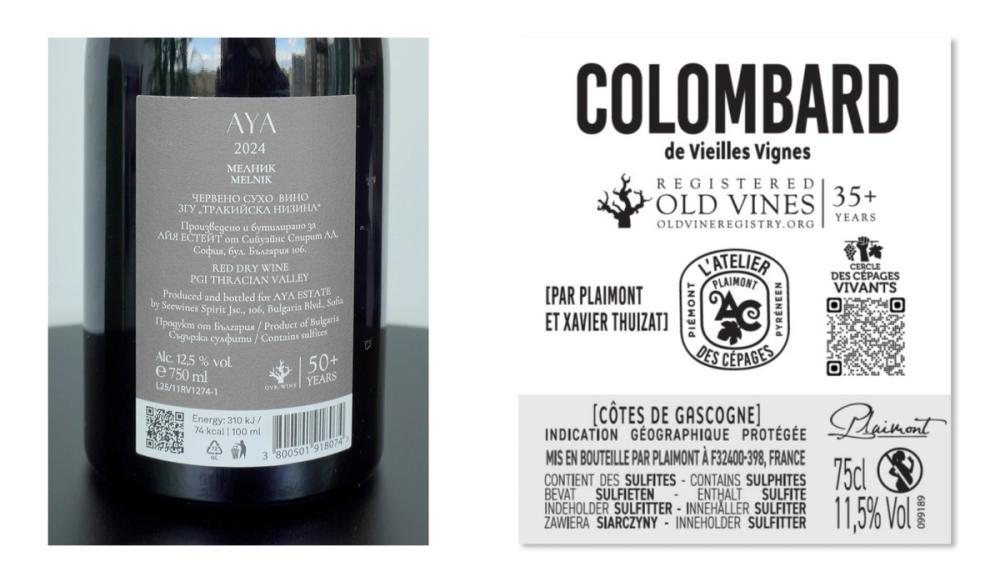
Examples of how producers are using the Old Vine Registry seal on their labels
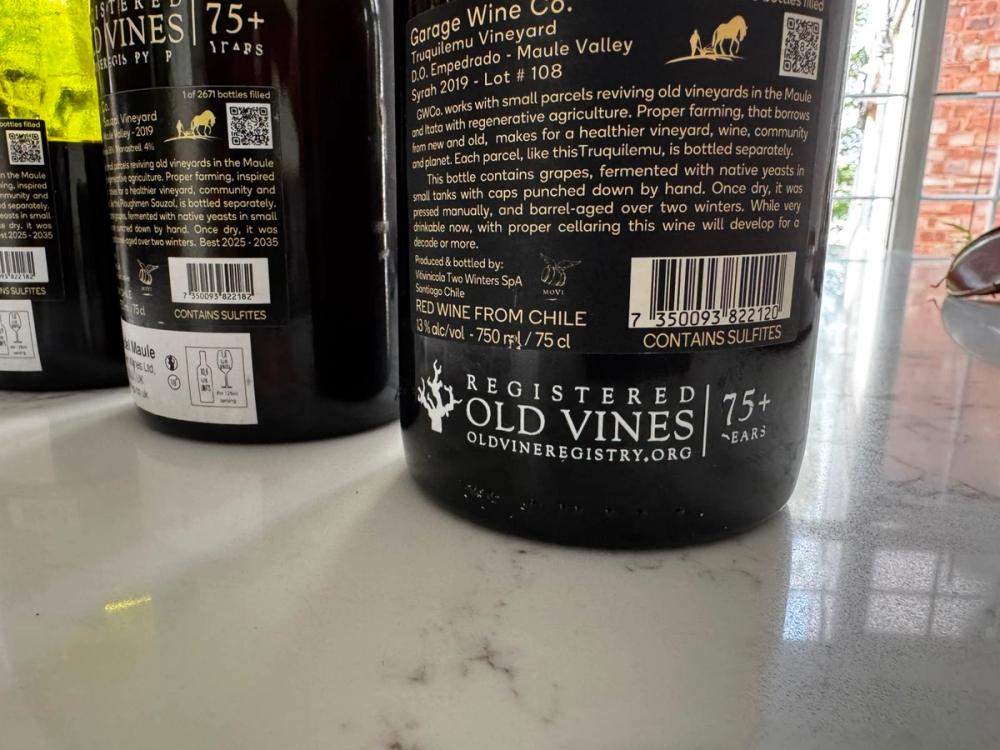
We honestly have no idea how many wineries are going to be excited about this seal. Many producers don’t even know that their vineyards are listed in the Old Vine Registry. Of the 5,474 unique producers listed in the Old Vine Registry, if we got 10% of them using the seal, I would consider that a smashing success.
Is there a registration cost to use the seal?
Yes, we’ve settled on a one-time $300 registration cost to use the seal. This amount was chosen to be affordable to even the smallest producers, while making sure that everyone who registers has at least a little skin in the game. The fee is not a recurring subscription, and registered producers are free to use the seal providing they have a qualified, registered vineyard that is still in the ground.
For those that don’t know the Old Vine Registry - what are your primary objectives?
As a registered nonprofit, Old Vine Registry exists to catalog the world’s vineyards over 35 years-old. Once recorded, we hope to drive awareness of and an increased appreciation for the value of old vineyards with the hopes that this leads to increased sales of the wines they produce, and ultimately their preservation.
How do you hope the seal will help your overall work?
The seal will hopefully become a point of difference and an opportunity for conversation between producers and their customers that brings the idea of old vines and what makes them special into the spotlight. If using the seal can get some of wine lovers to be more curious about old vines and why they matter we’re on our way to the ultimate outcome, which would be to create a legitimate commercial category for old vine wines.
We’re working towards a day when every serious wine list, every retailer, importer, and distributor, should have an old-vine section that is used to highlight the incredible wines made from the world’s old vineyards.
What other initiatives do you have planned for the OVR?

Alder Yarrow is manager of the Old Vine Registry - a role he is prepared to do on a voluntary basis
Once the OVR Seal program is up and running smoothly, we’re going to go back to making improvements to the Old Vine Registry website that will make it an even more valuable resource for the industry and academia. This will include publishing analysis on the increasingly sizeable set of data that the registry collects and different ways of interrogating that data.
And of course, we’re going to continue adding more and more vineyards to the registry. We’re not anywhere close to having even a quarter of the world’s old vineyards catalogued.
Anything else to say?
In October of 2024, the OIV published Resolution OIV-VITI 703-2024 which for the first time established an official definition of what “old vines” means for European wine. More importantly that resolution recommended "the cataloguing of old vineyards and old grapevines" and "to make openly available official data from the vineyard register to draw up vineyard maps and ascertain the age of vineyards.”
To our knowledge, the Old Vine Registry is the only significant project in existence that is making progress towards that recommendation in any substantive way. And we’re doing it all through donor-funded volunteer work, by which I mean I’m doing it pretty much singlehandedly without compensation and on the most limited of budgets.
It’s both a labour of love and an intense dedication to the cause of old-vines.
* You can find out more about the Old Vine Registry here.