Why did you want to conduct this research and why now?
The UK drinks market is evolving rapidly, shaped by moderation trends, digital influence, changing generational behaviours and growing consumer expectations around quality and experience. Following the launch of the first UK edition last year, we wanted to continue building a clearer long-term picture of how British consumers are reshaping their relationship with wine and drinks more broadly.
At SOWINE, we have been conducting this Barometer in France for more than 15 years, where it has become a key reference study for the industry. Expanding and developing it in the UK felt like a natural next step given the importance and influence of the British market internationally.
How did you choose the 1,000 plus consumers you interviewed?
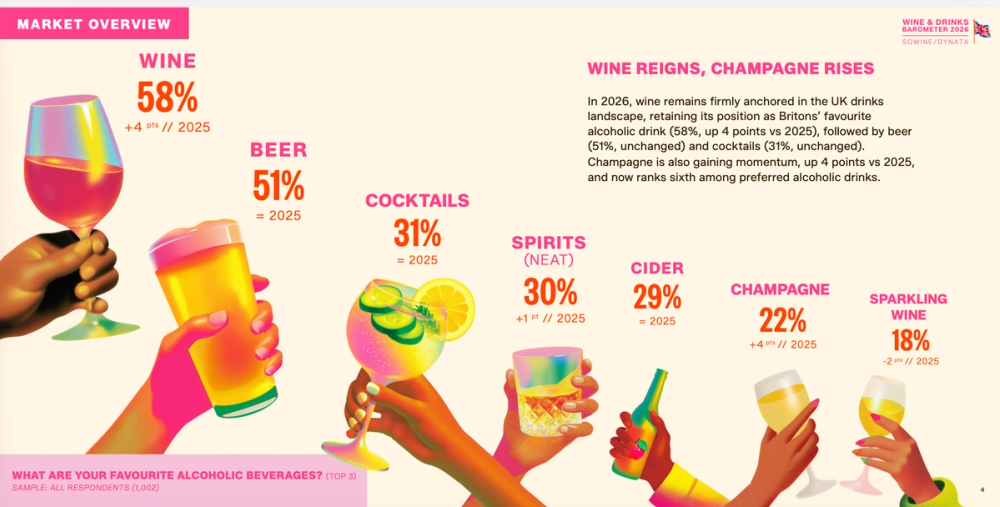
The survey was conducted in partnership with Dynata, the world’s largest first-party data platform, among a representative sample of 1,002 UK consumers aged 18-65. Quota sampling was applied based on gender, age and geographic location to ensure the robustness and representativeness of the results.
Can you let us know more about who the consumers were in terms of their age and other determining factors?
The panel was designed to reflect the UK population as closely as possible across key demographic criteria, including gender, age groups and regional distribution. The study included consumers aged 18 to 65 from across the UK, with balanced representation between male and female respondents.
All respondents were UK consumers living in the UK. The research was specifically designed to analyse British drinking habits and consumer behaviour.
Are they all regular beer, wine and spirits drinkers?
No, the base sample includes the general UK population aged 18-65. Certain questions were then asked specifically to relevant consumer groups (for example wine drinkers, beer drinkers or no-low consumers), which is indicated throughout the report. It is also worth noting that occasional drinkers (those drinking wine or spirits only a few times a year) still represent a significant proportion of consumers, accounting for roughly one third of respondents across both wine and spirits categories.
What for you were the stand out areas of the findings that most surprised you vs previous research?
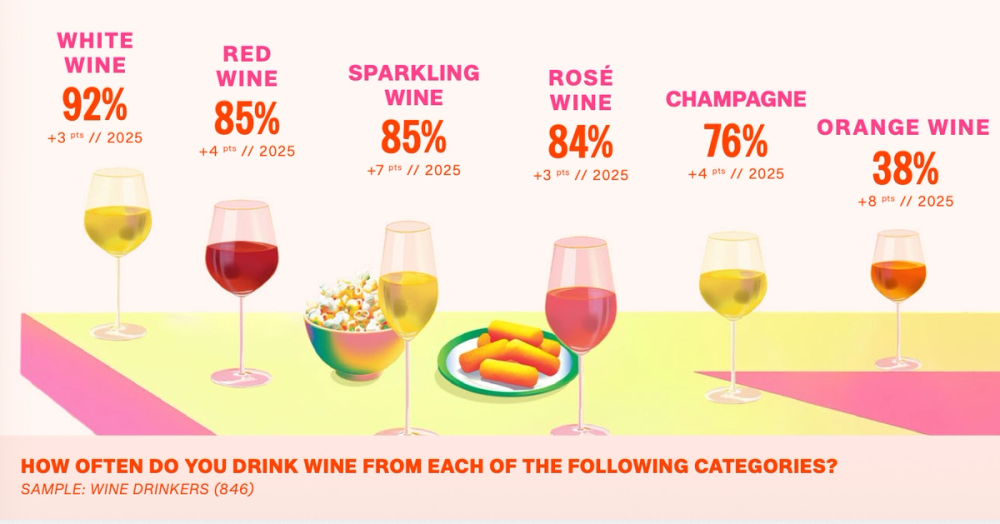
One of the most striking shifts was the sharp rise in consumer engagement and curiosity around wine. We found 72% of consumers now believe wine knowledge is essential to appreciation (+20 pts vs 2025), while the proportion of self-declared wine experts has doubled. Consumers increasingly want not just to drink wine, but to understand it.
The continued rise of no-low alcohol was also particularly notable. The category is clearly evolving beyond moderation alone into a genuine lifestyle and taste-driven choice, especially among younger consumers.
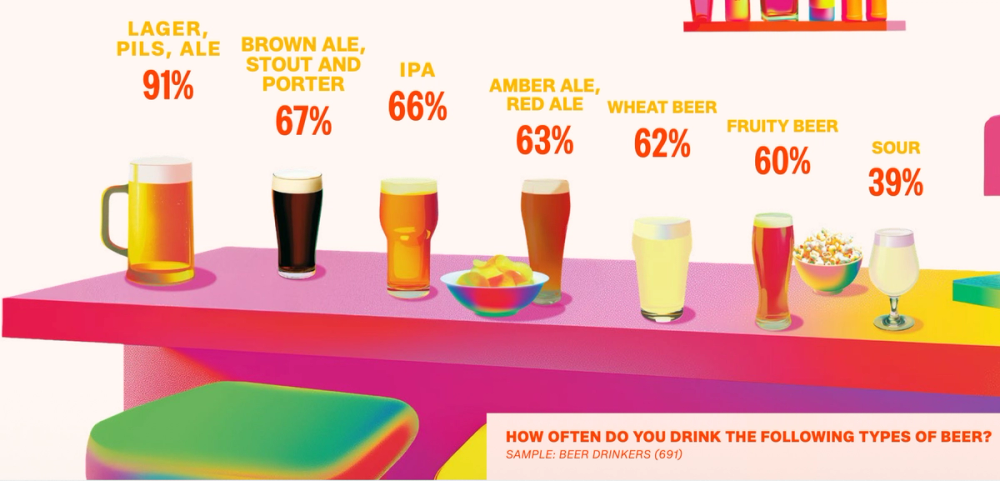
We also noted the contrasting dynamics between categories: wine is becoming more exploratory and experience-driven, while beer appears to be returning towards more familiar and traditional consumption patterns.
You explored the role of digital influence - what stood out for you there in the findings?
Digital influence is becoming increasingly embedded in the purchasing journey. Up to 37% of socially active wine buyers say they have already purchased a wine recommended online, while 60% of UK consumers now consider influencer recommendations important.
What is particularly interesting, however, is that influence is becoming more nuanced. Engagement remains extremely strong among 26-35-year-olds, while younger consumers (18-25) are simultaneously becoming more sceptical and selective about influencer content.
You mention AI as a way of choosing wine - do you know what sort of uses people are using AI for?
Yes, the study explored several concrete use cases around AI and alcoholic drinks. Among AI users, the most common use is seeking information about quality (53%). Consumers are also using AI for wine or spirit recommendations (40%), general advice such as appellation or tasting guidance (33%), food and drink pairings (29%), information about estates, brands or winemakers (28%), and cocktail recipes (22%).
What is particularly significant for us is not only the diversity of these use cases, but the fact that AI is already becoming integrated into the discovery and purchasing journey. Nearly a third (32%) of UK consumers say they have already used AI for alcoholic drinks advice, which would have seemed very marginal not a long time ago.
No and low trends are clearly on the up - do you have data from previous years to show how far it has come?
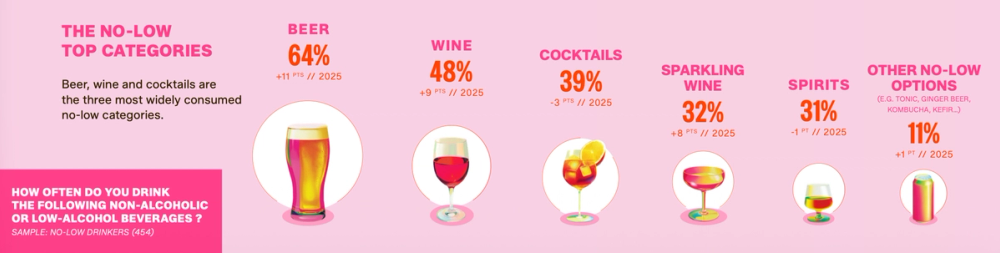
Yes, this is the second UK edition of the Barometer, which allows us to begin tracking a year-on-year evolution. Consumption of no/low alcohol drinks has risen from 38% to 45% in just one year (+7 pts). Growth is especially strong among younger consumers: +20 pts among 26–35-year-olds and +13 pts among 18–25-year-olds.
We are also seeing strong progression in perceptions of quality, particularly for no-low wine, where appreciation of taste rose by 11 points vs 2025.
In the question about no and low and how often do you drink those products - what time frame are you using here?
The results communicated in the report around no/low alcohol consumption are based on the question: “Which non-alcoholic or low-alcohol beverage(s) do you drink?”
These figures reflect whether consumers drink these categories at all, rather than the frequency of consumption.
Anything else to say?
Overall, what emerges from the study is a UK consumer who is becoming simultaneously more selective, more informed and more experience-driven. Moderation remains important, but consumers are not disengaging from drinks culture but they are rather redefining what quality, discovery and enjoyment mean to them. That is creating both challenges and opportunities for producers, retailers and brands across all categories.
* You can access the full report via the SOWINE website .