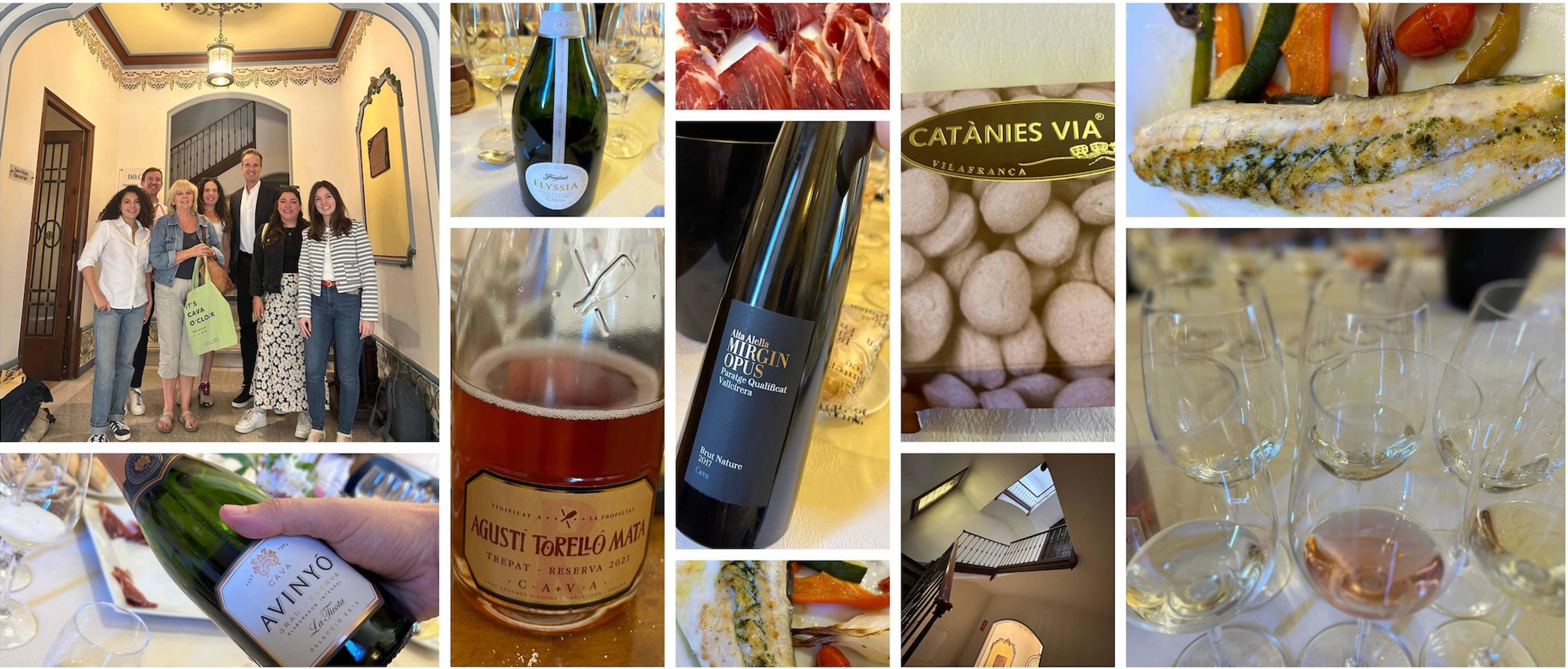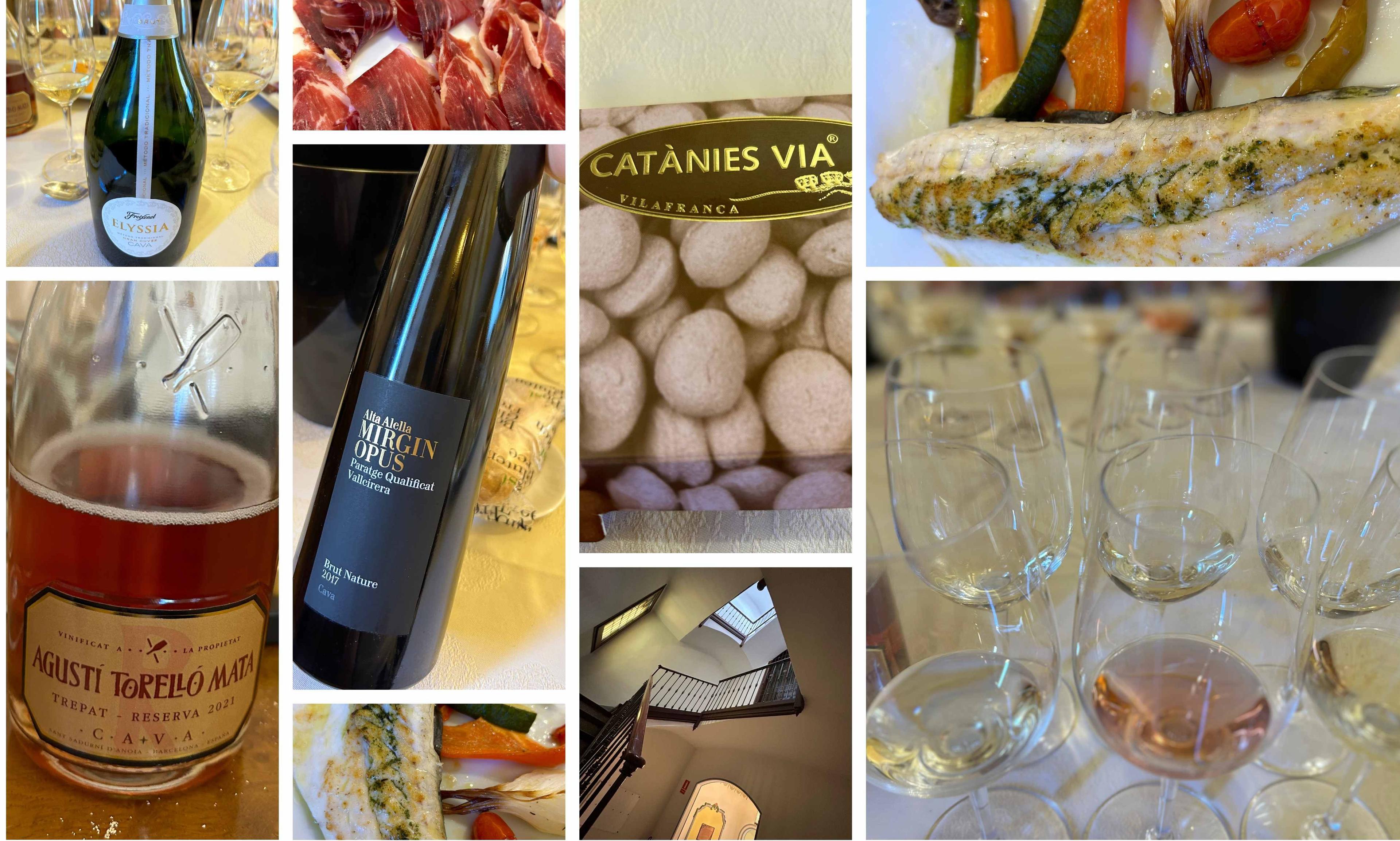
The light in Penedès has a certain generosity. It softens edges and sharpens outlines; gently rolling vineyards, the porous, springy soils that vary from clay to limestone depending on the fold of the land, and, above it all, the authoritative silhouette of Montserrat holding the horizon. It is a light that reveals rather than flatters. And at the second Cava Meeting, held just outside Vilafranca, it revealed a denomination with more intellectual ambition, scientific rigour, yet still carrying the fragilities of a region negotiating its identity.
Much of the heavy lifting has already been done. The DO’s legislative reforms – a new ageing pyramid, mandatory organics for Guarda Superior from 2025, the elaborador integral seal, Paraje classifications – have created a skeleton robust enough to support a genuine premium narrative. As I explored in earlier reporting for The Buyer, the architecture is there; the question is whether the region can inhabit it convincingly.
This year’s Meeting did not seek to reinvent the structure. Instead, it asked a more difficult question: ‘Now that the rules are in place, what story do they tell?’
As so often in wine the most revealing answers came not from the stage, but from the vineyard, the cellar, the tasting table and the half-whispered conversations between producers.
The disconnect between quality ambition and grower remuneration was the quiet undertone of the entire Meeting.
When science sets the tone
The first day’s intellectual foundation was laid by three scientists, each approaching sparkling wine through neurobiology, physiology and chemistry rather than tradition.
A neural map of flavour
Professor Charles Zuker (Columbia University), one of the architects of modern taste neuroscience, began by disassembling flavour into its neurological building blocks. Taste, he reminded the room, is not a direct reflection of molecules but a construction of the brain. Sweet, sour, bitter, salty and umami each travel along distinct receptor pathways. Cultural and contextual expectations: a celebratory setting, a cold glass, or the ritual of opening a bottle, shape perception as much as chemistry.
Zuker emphasised that taste is not a fixed sensory fact but a neural construction – “our view of the world exists only in our mind,” as he put it. For sparkling wine, this matters because carbonation changes the very pathways through which the brain interprets acidity, freshness and pleasure. The key point for Cava was simple and profound: carbonation itself is a taste. Through carbonic anhydrase, CO₂ becomes carbonic acid in the mouth, stimulating sour receptors. Sparkling wine’s signature “bite” is a taste, not just a tactile effect.
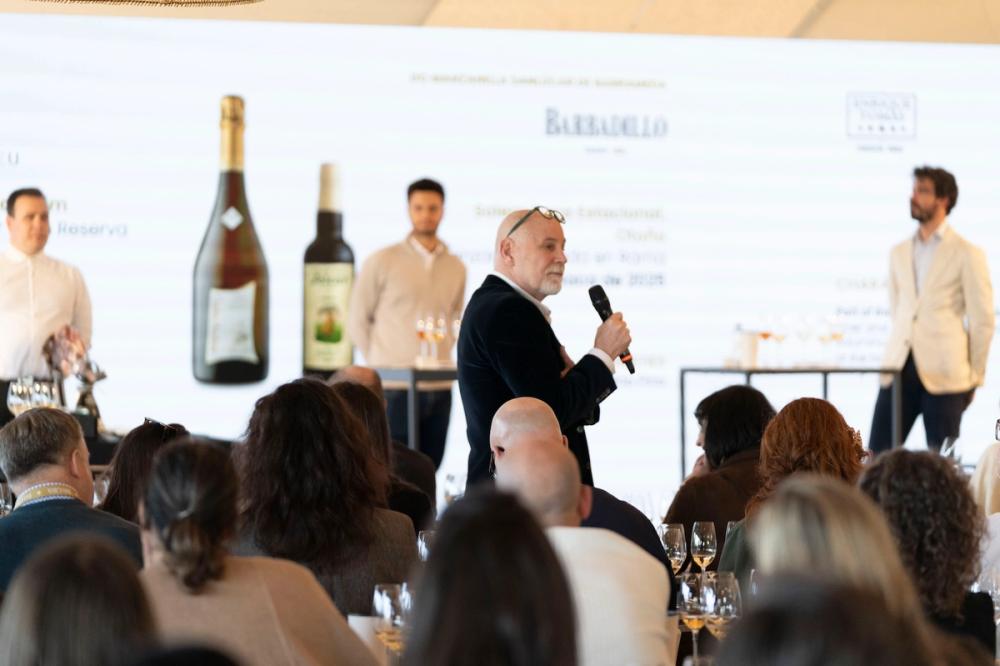
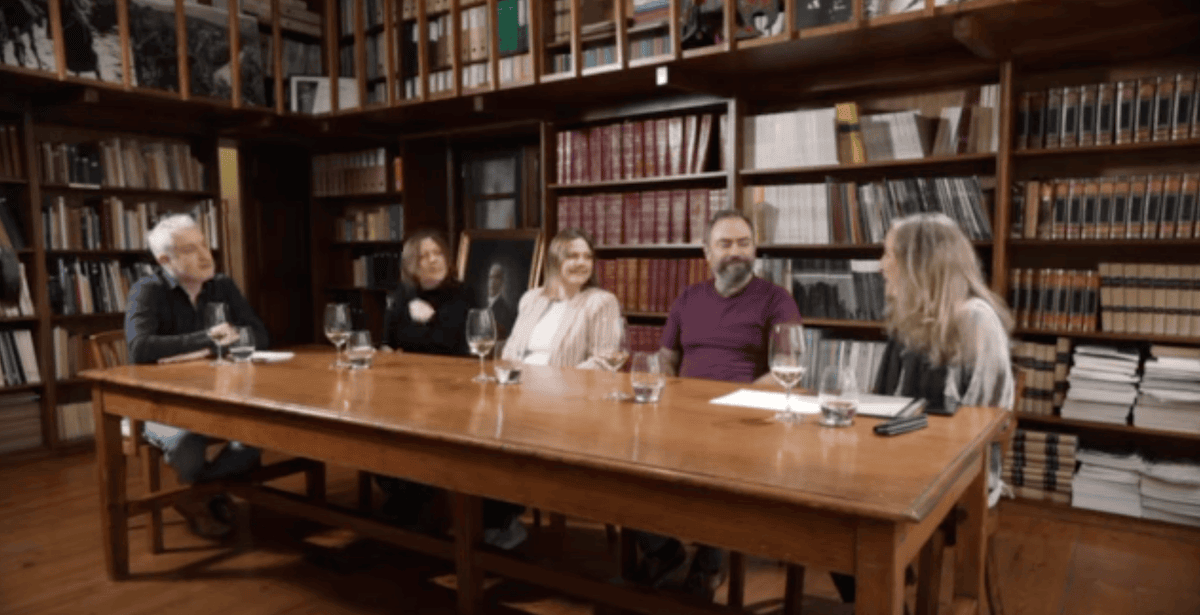
Charles Zuker, Ferran Centelles, Robert Tetas and Albert Tomás discuss Cava's relationship with sherry
Bubbles as emotion
Dr Gabriel Lepousez (Pasteur Institute) took over, describing effervescence as “emotion in molecular form”. Bubbles, he explained, are tiny aromatic projectors: as they rupture, they aerosolise volatile compounds, intensifying aroma. They also stimulate trigeminal pathways, heightening freshness and perceived acidity while adding a slight astringent edge.
Ageing, in Lepousez’s view, is not simply the steady build-up of autolytic compounds but a gradual transformation of texture. As proteins and polysaccharides evolve, the bubbles become smaller, finer and more even, changing the sensation of the wine without altering its ingredients. He likened the shift to “the difference between lager and Guinness” – a change in structure rather than flavour. And in one of the day’s most memorable lines, he summed up the sensory arc of sparkling wine: “The first ten seconds belong to the bubbles; after that, the wine speaks.”
Finally, Dr Pere Pons Mercadé presented new work on autolysis that subtly complicates the DO’s emphasis on extended ageing. His research shows that the flavour impact of lees ageing is strongest in the first 15 to 24 months; beyond that, the sensory curve flattens.
“Additional time on lees does not necessarily increase flavour complexity, even if it continues to refine the mousse,” he explained.
It was a crucial nuance. Texture continues to evolve; flavour does not march upward indefinitely!
Together, the scientific sessions reframed a long-standing assumption: if Cava wants to build its premium tiers around time, it must be precise about what time contributes — texture, yes; finesse, yes; flavour, only up to a point.
Time is a tool. It is not the whole story.
In the vineyard: where Cava’s identity is clearest
From science, the Meeting moved to terroir. The tasting “Great Cavas born in the vineyard”, led by Sarah Jane Evans MW and Roberto Durán MS, showcased the denomination’s most terroir-expressive wines and an essential counterpoint to the earlier discussions of mousse and molecules.
Xarel·lo commands the room
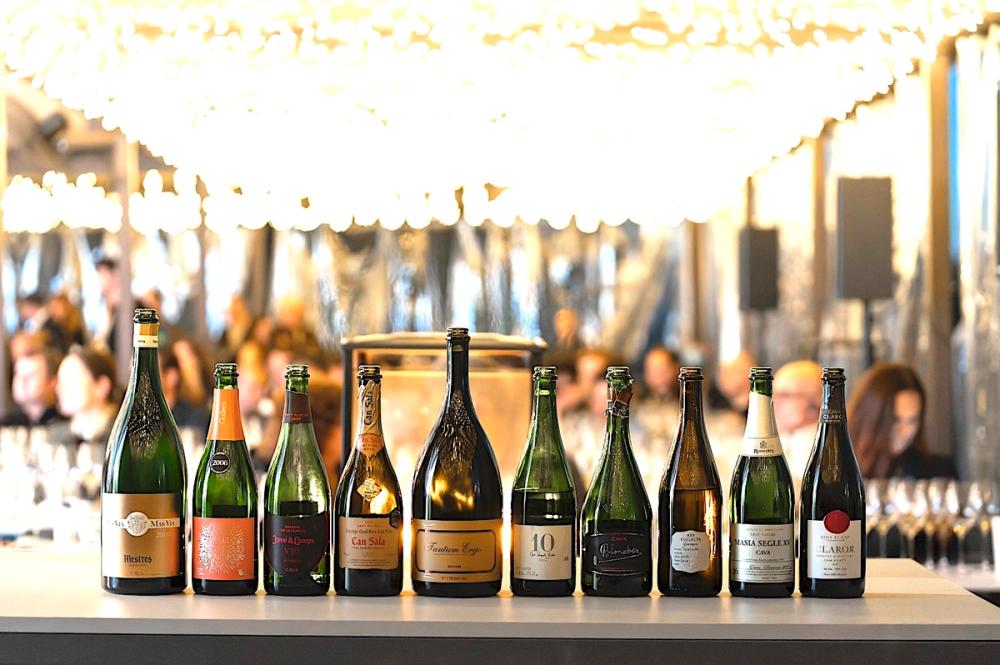
Cava still struggles to communicate the significance of Guarda Superior internationally
Across the board, Xarel·lo confirmed its status as the backbone of premium Cava. At Vins El Cep, the Claror 2019 (Paraje Calificado) carried biscuit, farmyard nuance, fine mousse and a mineral line that felt chiselled.
Sumarroca’s Núria Claverol Homenatge 2016 showed a saline, reductive precision that would impress in any traditional-method region. The grape’s phenolic structure and acid profile provided a clarity and elasticity that Chardonnay, in this climate, seldom matches.
'Freshness as identity'
Parés Baltà Bassegues 2010 was a study in tension – oxidative notes and olives set against electric acidity.
Codorníu’s El Tros Nou 2011 (100% Pinot Noir), with its pH of 2.9 and herbal tightness, demonstrated a structure-first approach that felt almost Burgundian in its restraint.
'Wood as an accent, not an agenda'
Gatell’s Heretatge 2017 wore its oak lightly – nutmeg, almond and smoke shaping rather than dominating the wine.
Vilarnau’s chestnut-wood ferment added a savoury, spicy note that gave the wine an almost Jurançon-like edge.
'Paraje as shape'
Can Sala Vinyes de Can Sala 2015 (Paraje Calificado), with mandarin peel, vanilla and a refined nutty tail, reminded the room that terroir in sparkling wine is as much about structural signature as it is about flavour descriptors.
This tasting offered the Meeting’s first clear conclusion: Cava’s most distinctive path to premium identity is vineyard-led, not time-led.
Cava & Sherry: two regions under the same ancient sea
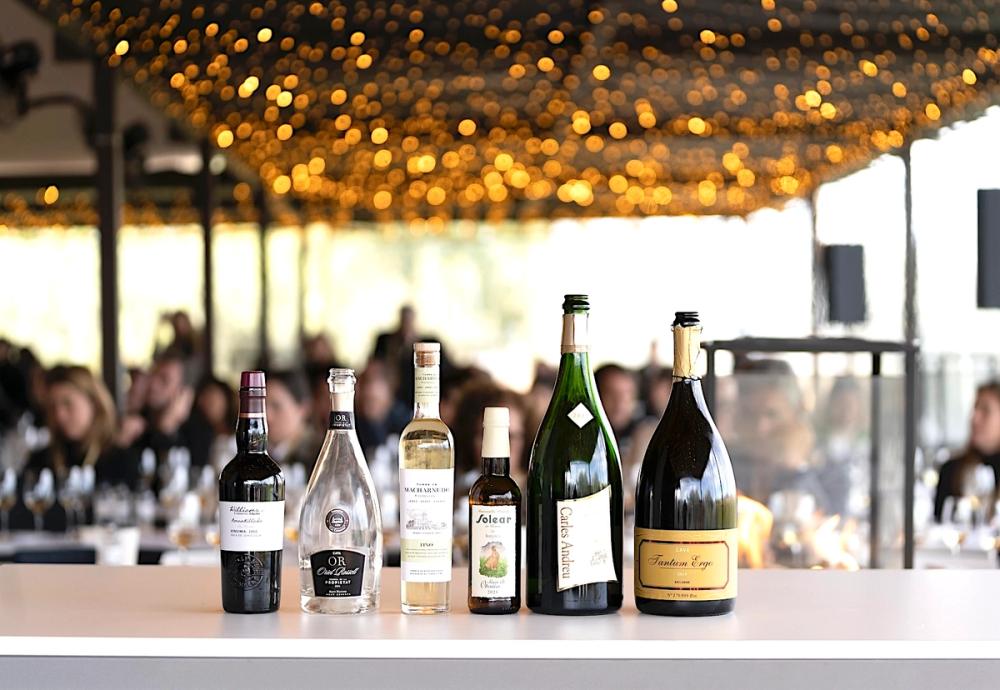
Sherry, Cava, jamon
The most compelling demonstration of Cava’s gastronomic potential came in the Cava & Sherry masterclass, led by Ferran Centelles and Robert Tetas, with Albert Tomás of Enrique Tomás. It paired traditionally made sparkling wine with Ibérico ham in a way that felt tactile, intuitive and unexpectedly instructive.
Centelles and Tetas began by grounding the session in geology: both Penedès and Jerez sit on ancient marine sediments, and both regions make wines defined by yeast and time. But it was Tomás who unlocked the tasting by reframing the ham itself: not as a single flavour, but as a landscape.
Ibérico ham contains multiple cuts, each a different ingredient.
The maza, the broad central muscle, is laced with fine fat and tastes naturally sweet. The babilla is leaner, saltier and more intense. The punta, the tip, is the darkest, most aged, most umami-rich cut of all. To taste them properly, Tomás insisted, you must use your hands, never fold the slice, and let the fat melt against the palate before judging anything. It was as much a sensory lesson as a gastronomic one.
And then came the moment that broke the room; Professor Charles Zuker jumped in to deliver his verdict: “He’s absolutely right. Folding the ham changes the entire neural sequence. Also… using a fork should probably be a crime.”
With this reset of expectations, the pairings began to land.
Long-aged, Xarel·lo-based Cavas with their firm acidity, citrus pith and umami undercurrent that cut through the richness of the maza with the same authority that biologically aged Sherry brings to fried fish or cured roe. Their finer mousse lifted the fat rather than fighting it.
The drier, saltier cuts nearer the bone told a different story: they met the oxidative notes of Manzanilla Pasada and Amontillado head-on, their savouriness echoing the wines’ nutty, sun-warmed edges.
And in the space between these extremes sat Cava itself: not replacing Sherry, nor mimicking it, but offering an architecture of savoury and precise refreshment all its own.
A standout pairing was Oriol Rossell’s Reserva de la Propietat 2016, matched with the punta – the longest-cured, most flavour-concentrated tip of the ham. Few Cavas have the depth, texture and quiet power to meet that cut head-on; this one did, its saline length and gentle autolytic complexity allowing it to sit comfortably alongside an Amontillado en rama without losing its identity as Cava. It was a rare, revealing and unexpectedly joyful pairing – helped along, no doubt, by the welcome comic timing of a neuroscientist who clearly knows how to eat jamón.
Icons of Time: ambition, patience and pressure
The Icons of Time tasting, led by Essi Avellan MW and Ramon Francàs, displayed the denomination’s longest-aged wines, some spending more than a decade on lees. Con Sala 2013 floated with vanilla, peach and a coffee-like precision; Alta Alella 10 2014 offered lemon drizzle and wet wool.
Mestres added a different register altogether – a reminder that when Cava is conceived for gastronomy rather than the mass market, it occupies a very different sensory and commercial space. The Cavateca Mas Via Magnum 2002 balanced toffee, dried apricot, mango and walnut skin with an almost weightless finesse, its bubbles silk fine. It was the kind of integration that only long ageing and long memory can deliver. The house’s historic commitment to no dosage, maintained for more than 80 years, gives these wines a structural clarity that explains why Mestres is positioned almost exclusively in fine dining: a Cava equivalent of a Szepsy, niche, age-worthy and respected.
On a completely different pricing spectrum, Cava Guilera’s Agosarat 2006 offered its own kind of depth: 230 months on lees revealing apricot, orange peel, coffee, olives and a quietly agricultural honesty.
But wines of this ambition demand capital, cellar space and patience. These costs are often borne by growers producing at 7,000–10,000 kg/ha, at grape prices consistently below sustainability thresholds.
And here the economics intrude.
Grape prices: the contradiction at the heart of Cava
If Cava is to position Guarda Superior as a premium category, its economics must reflect that ambition.
Data referenced during the Meeting – supported by sector reports – paints a concerning picture:
- DO Cava average grape price: around €0.30–€0.40 per kg
- Higher-quality parcels reported by producers: €0.40–€0.60 per kg
- Growers for long-aged producers: €0.70+ per kg
- Corpinnat grower rates: approx. €0.80 per kg
(Sources: Wein+.com Jan 2024; AgroCLM Aug 2025; CREDA/INCAVI cost study Jul 2024)
For comparison, Champagne growers typically earn €7–€8 per kg. Even allowing for regional differences, the disparity is stark.
The DO’s premium tiers ask growers to farm organically, limit yields and maintain vineyard age (all correct decisions for quality) yet the prices paid for the resulting fruit often remain low enough to make these practices economically precarious.
This disconnect between quality ambition and grower remuneration was the quiet undertone of the entire Meeting.
Business and responsibility: two panels, one unresolved question
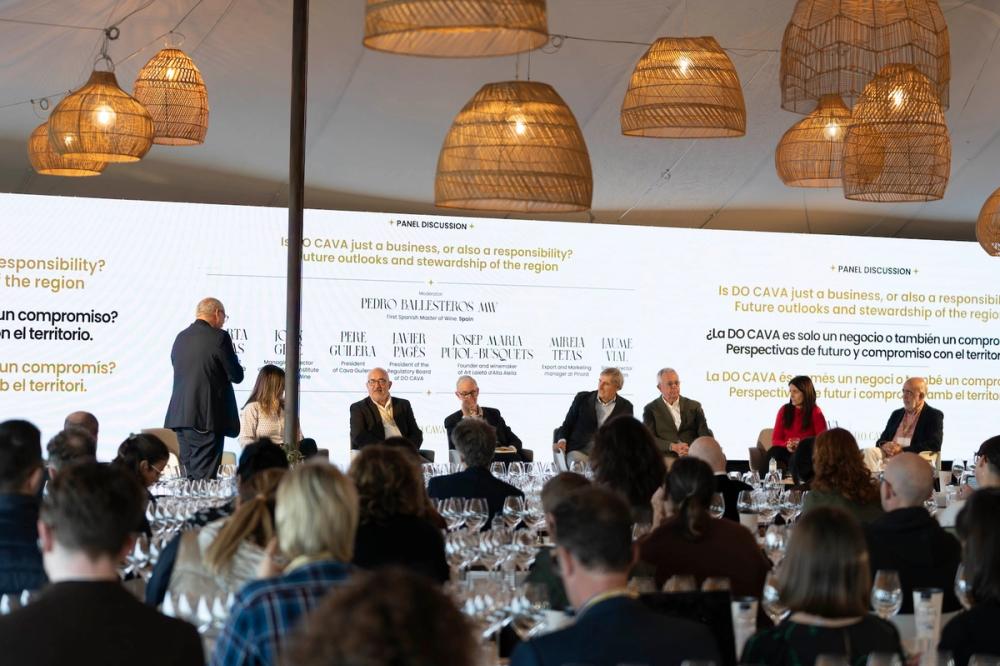
Two separate sessions tackled Cava’s future from different angles: María Naranjo’s business-focused panel and Pedro Ballesteros MW’s broader discussion on responsibility. Despite their framing, both circled the same issue: value.
Producers and buyers acknowledged that Cava still struggles to communicate the significance of Guarda Superior internationally. The term does not carry intuitive meaning for consumers or even some sommeliers. The DO’s promotional budget – reportedly four to ten times lower than Rioja’s – limits the ability to build recognition abroad.
Sergio Fuster (Raventós Codorníu) observed that Cava is gaining global market share relative to Prosecco and Champagne but warned that momentum alone does not create premium positioning. “We need to value our product,” he said. A plea as much as a principle?
Josep Palau of Freixenet emphasised Cava’s versatility, noting that few sparkling regions can offer both entry-level wines and serious long-aged bottles under one appellation. But versatility, he admitted, often weakens the clarity of message.
Then Pere Ventura cut through the diplomatic language:
“What is happening to Cava isn’t fair. The problem is doubt — internal doubt.”
His argument was simple. Champagne’s rising prestige prices have long opened international attention to traditional-method wines beyond France. But the opportunity is not as straightforward as “Cava replacing Champagne”. Supermarket Champagne still often undercuts Guarda Superior on price. The real opportunity lies in the qualitative space between mass-market Prosecco and the world’s most famous sparkling wine: an area Cava can legitimately occupy if it speaks clearly about origin, farming and purpose.
The C word
Corpinnat was never mentioned, but everyone knew it was in the room. In fact, it shaped most of the backstage conversations of the Meeting. The emphasis on territory, integrity, long ageing and elaboradores integrales felt at times like a carefully choreographed counter-narrative to the breakaway group – a reminder that DO Cava has its own claim to precision and provenance.
The reasons for the split still resonate. Corpinnat was formed by producers who felt the DO was not moving fast enough on terroir, hand-harvesting, sustainability and minimum grape prices. That tension has never fully disappeared, even if the DO has since adopted many of the reforms those producers once demanded.
Growers were candid during vineyard visits. One elaborador integral put it bluntly: “Everybody talks about unity,” the producer said, “but you can’t build unity on €0.40 a kilo.”
A moment later – half-smiling, half-weary – came a quieter admission about identity:
“Corpinnat has clear rules. But if I leave Cava, nobody knows my name. I lose my identity to gain another.”
For this producer, as for many, the calculation is not philosophical but practical. The DO still provides a level of recognition that a small family winery cannot replicate alone. At the same time, the 100% hand-harvest requirement of Corpinnat, admirable in principle, would be unworkable for a household already stretched between vineyard, cellar and daily life.
Others felt that the DO’s reforms finally offer the differentiation they had been asking for 20 years ago. The implicit message was: “Give us the tools and let us stay.”
But beneath all of this, a harder truth ran through every conversation: Unity without fair pricing is not unity at all.
In the vineyards
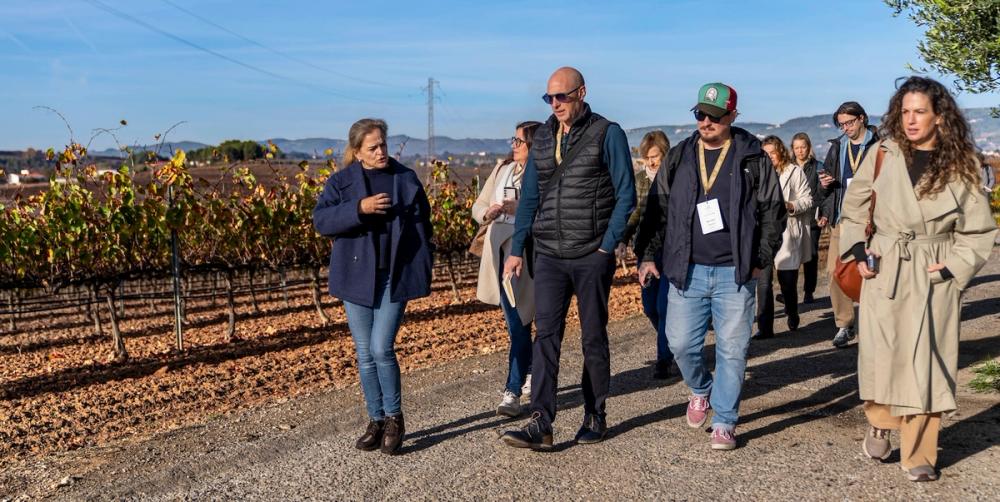
Out in the vineyards, far from the stage and the panels, the theory dissolved and the reality of Cava’s future became unmistakably human.
At a small family estate, the kind where the same hands prune, pick and later rack bottles, the conversations felt unhurried and grounded. Cava Guilera, for example, offered a masterclass in identity.
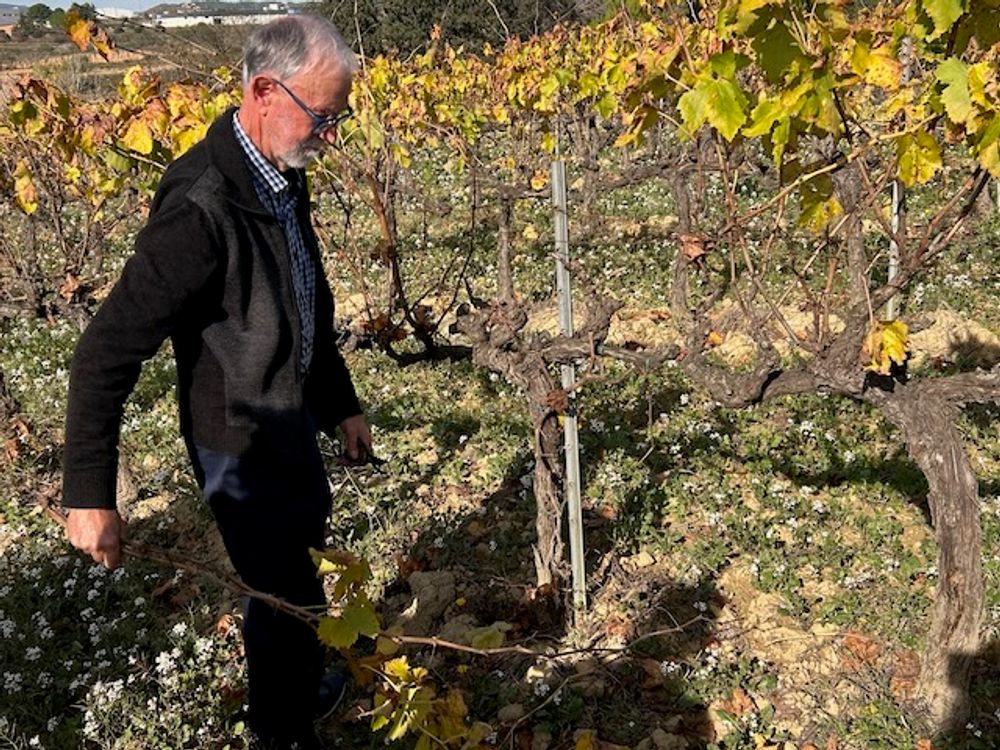
“Treat the landscape like a mosaic. The whole matters more than the pieces.” Pere Guilera pruning the old vines whilst talking
Founded in 1927 and still quietly family-run, the estate produces around 40,000 bottles a year – yet nearly 200,000 rest in its cellars at any one time. Long ageing is not a marketing strategy here but a philosophy. Pere Guilera summed it up as we walked the vineyards: “Treat the landscape like a mosaic. The whole matters more than the pieces.”
The organic vineyards in Lavern-Subirats are farmed with the lightest touch: sheep graze through winter and spring, shaping the canopy naturally; old Xarel·lo vines, many now producing under 8,000 kg/ha after recent droughts, form the backbone of the estate’s wines. Guilera ages its Cavas with uncommon patience, even when that means wrestling with the practicalities of pressure and bottle weight.
The results speak for themselves. Musivari 2007 showed creamy elegance and quiet depth, while Agosarat 2006 with fresh and finely structured after 230 months on lees was one of the most coherent long-aged Cavas of my visit at incredible value. If the UK needs an ambassador for this style, Guilera is ready.
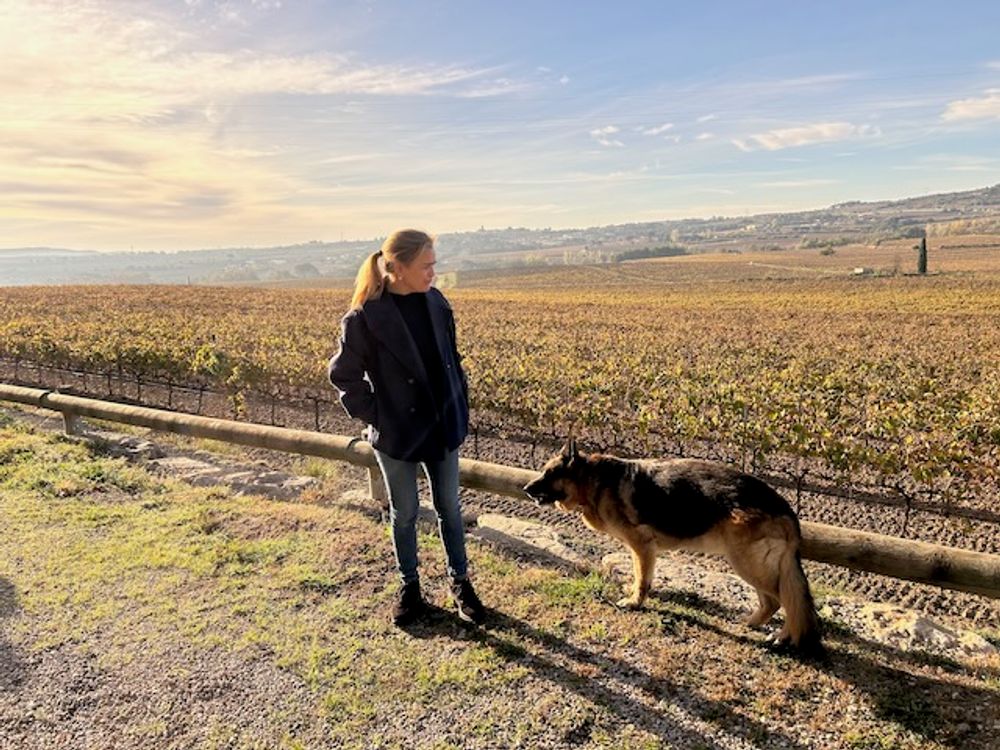
Marta Giró
Giró del Gorner offered another, deeply personal expression of estate-grown Cava. The estate is led today by Marta Giró, who walked us through her family’s vineyards with a quiet, disarming honesty. Her family has farmed here since 1595, and the vines feel like a living archive of that continuity: Macabeo planted in 1976, Parellada in 1974, and Xarel·lo in 1918. One small vineyard house – la Caseta – carries particular emotional weight. Built originally for pressing grapes brought by horse and cart, it was sold in 1971 to a German composer who used it as a creative refuge for decades. Recovering it last year, Giró said, “felt like bringing a missing part of the family home,” with chuckling voice and a tear in her eyes.
The estate produces around 70,000 bottles a year, roughly 50,000 of them Cava, all from its own vineyards. Bottling happens each spring, and decisions about ageing are made through blind tastings held with the whole family – a ritual that blends continuity, craft and memory. Recognised as an elaborador integral since the seal was introduced in 2021, Giró del Gorner’s wines have a precision and quiet assurance that feel inseparable from the landscape itself. It is Cava made with an unusual sense of place and with an emotional clarity that stays with you long after leaving the vineyard.
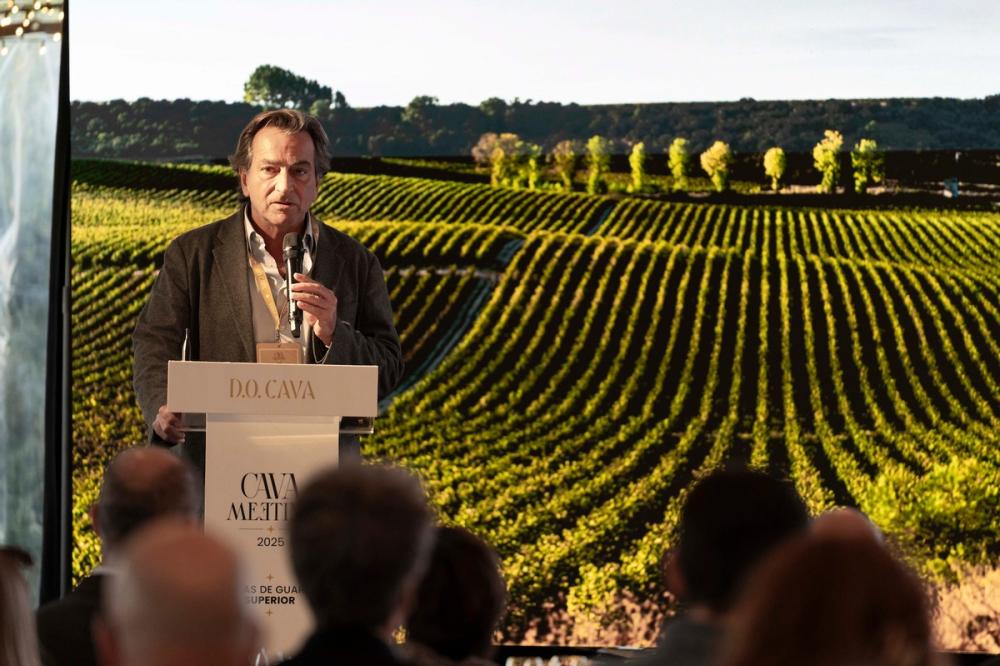
Bruno Colomer from Codorniu
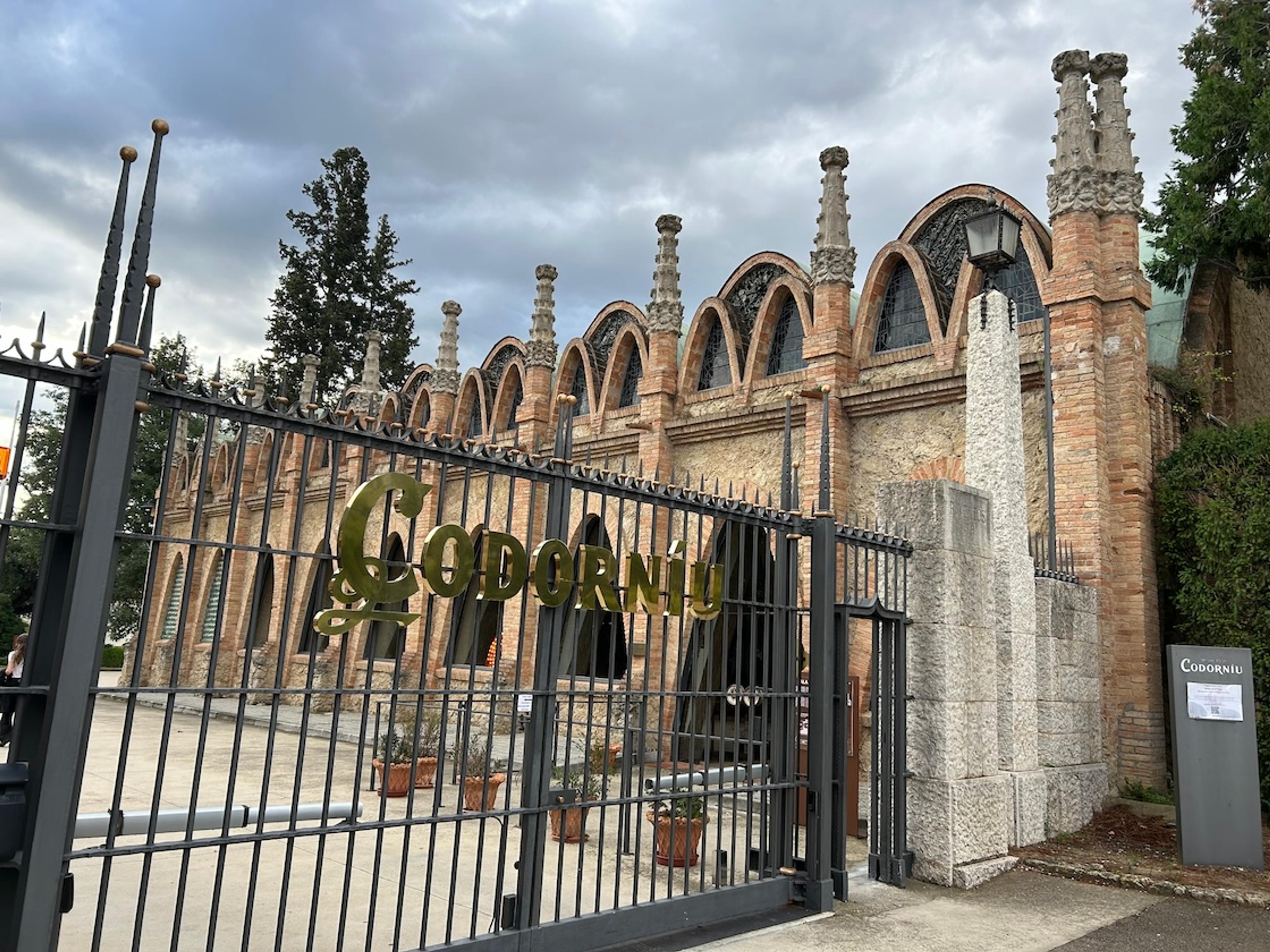
At the opposite end of the spectrum, Codorníu demonstrated how scale and precision can coexist when the architecture is built for it. Their use of microvinifications and precise parcel handling, combined with a quietly obsessive approach to ageing, remains a benchmark within the denomination. In the glass, the detail was unmistakable: Xarel·lo shaped through low pH and firm acidity; Pinot Noir providing structure and lift; Chardonnay contributing tension rather than weight. The Ars Collecta 459, a blend of three outstanding sites from the 2010 harvest (a wine that might be assumed to be a paraje but cannot qualify because it combines fruit from multiple single vineyards) showed this precision in full: melon, vanilla, white chocolate and peach, carried by fine, lively bubbles and a creamy, architectural finish. For all the conversations about identity and fragmentation, Codorníu’s work made it clear that the large houses can and should, help define Cava’s premium-facing global narrative.
Where Cava goes next
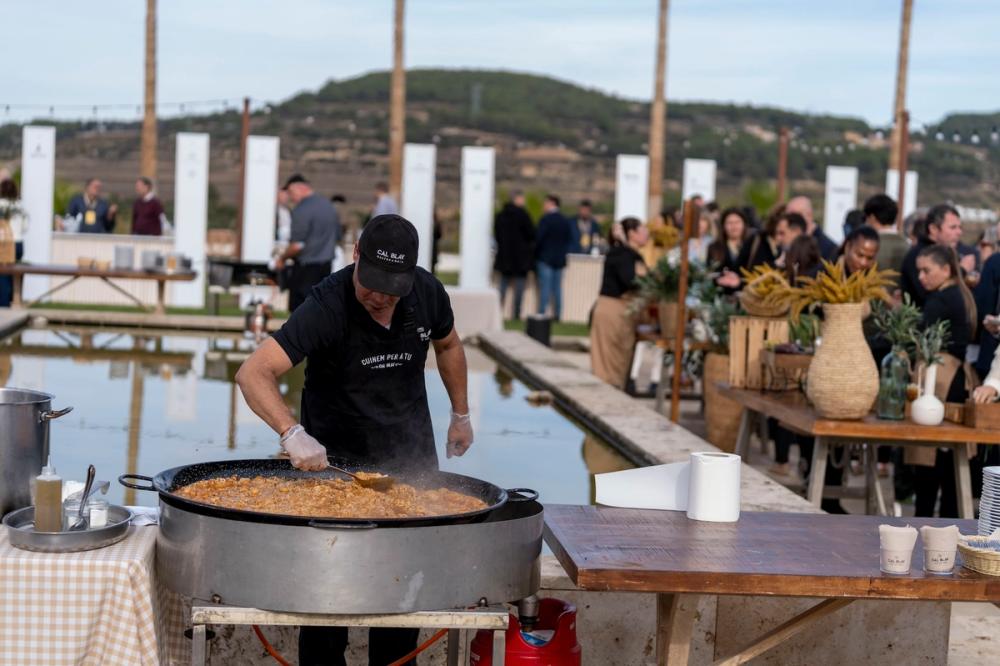
The gala dinner begins
The end of the Meeting crowned a year of intensive work for Cava. The awards and the Roca-designed dinner closed the event in suitably celebratory style, with canapés drifting through the crowd before a late 9.30pm start that carried well into the night. The awards underscored the breadth of effort behind the DO: Marta Torné of Caves Torné i Bel was named Young Talent; the José Andrés Group, represented by Jordi Paronella, took the Restaurant Award; Josep Roca was recognised as Cava Sommelier of the Year; Celler Mestres received the Historic Winery Award; and Josep Buján of Freixenet was honoured with the Lifetime Achievement Award.
One element the Meeting delivered with real success was its audience: over a hundred international visitors, many of them buyers, sommeliers and educators of unusually high calibre. Their presence mattered. These are the people who shape lists, influence consumers and calibrate expectations. But most of their insights were exchanged in corridors rather than on the stage. A future Meeting that invites them into pricing debates, positioning workshops or live comparative tastings would turn attendance into alignment – and, crucially, help the DO understand what the market will actually support.
Three truths stood out:
First, the raw materials are remarkable: Xarel·lo, Macabeo and Parellada… pockets of limestone; altitude; old vines; a climate capable of delivering both freshness and depth.
Second, the legislative framework is now strong. The DO has done the difficult work of building its premium architecture.
Third, economics and communication remain misaligned.
The question remains, how can producers pay growers more if the market will not pay producers more?
Without sustainable grape prices, without a clear global narrative, without a unified presentation of terroir and identity, even the most elegant ageing tiers risk becoming theoretical rather than transformative.
More substance, more alignment and Cava may yet shine with the same clarity as the evening light in Penedès, illuminating everything without fear.