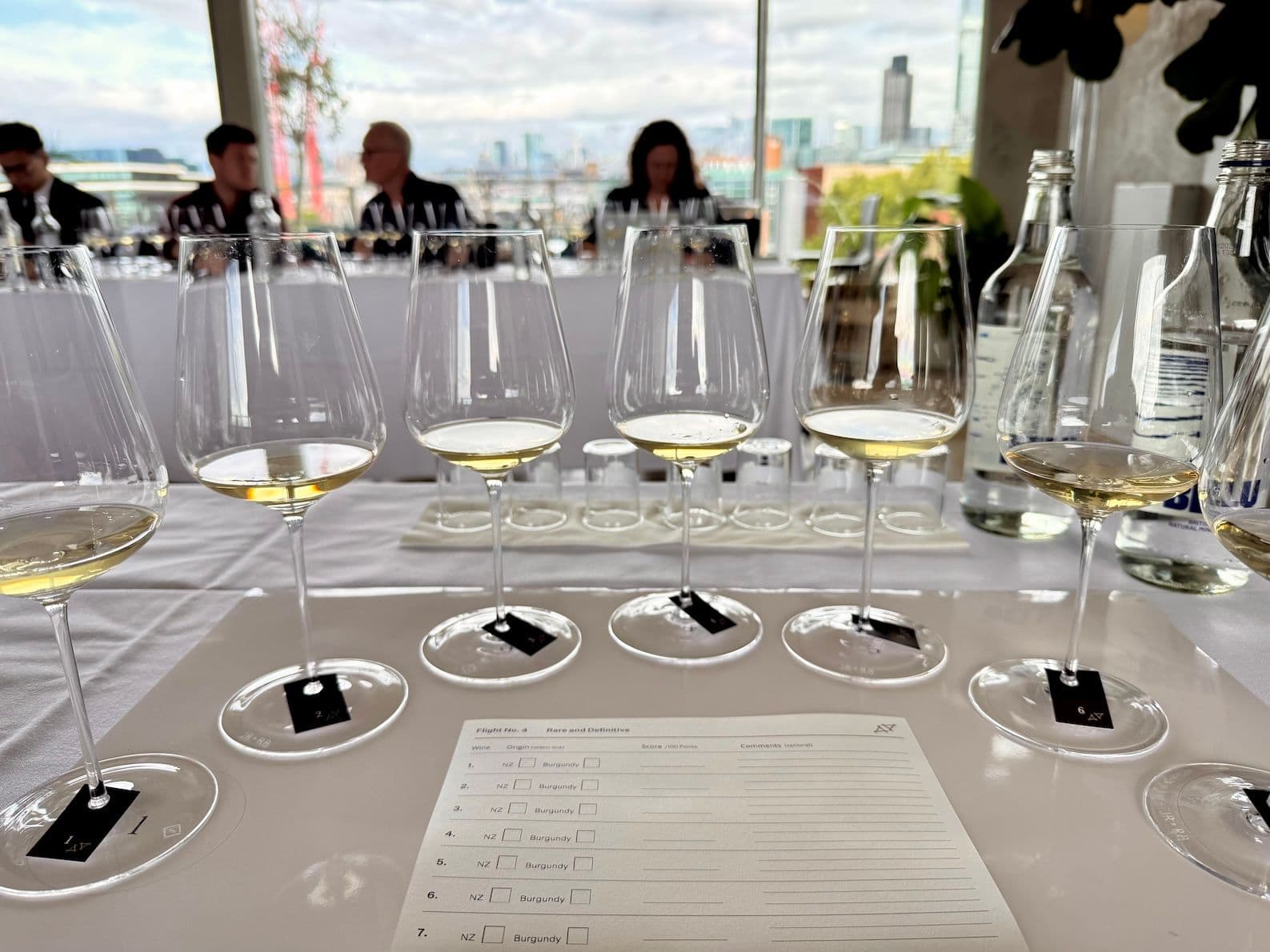
Séverine Frerson, chef de cave of Maison Perrier-Jouët, has in front of her potentially three of the most important glasses of still wine in Champagne. These are the pre-effervescent wines, the ‘vins clairs’, that in the future could go on to become one of Perrier-Jouet’s renowned Champagnes and even, perhaps, the plaudited Vintage Belle Epoque. Two of these wines could not be more different to what has gone before, if they tried.
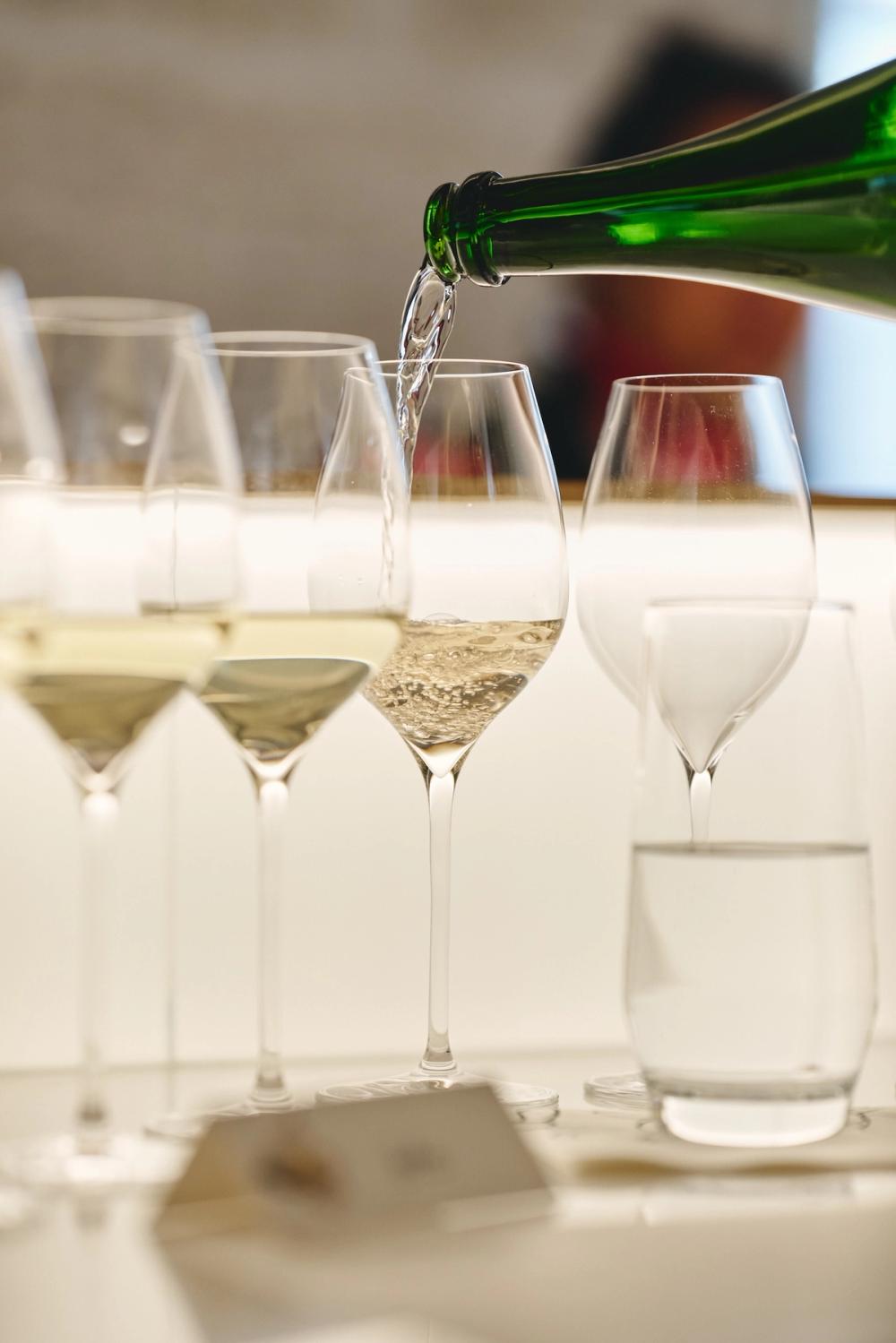
The different cover crops used add further diversity to the taste profile of the vins clairs, due to their effects on the soil and water retention
Three very different plots
The story of these wines begins on a parcel of land in Ambonnay on the Montagne de Reims. South-East facing and sloping away into the distance, the hillside, other than being classified as Grand Cru, could be deemed no more remarkable than others in the region. However, it is clear on observation that there are three very different one-hectare strips in front of me on this warm afternoon. There are two that appear to have more vegetation than vine, and one with, in comparison, somewhat barren soil, except for the traditionally guyot-trained vines.
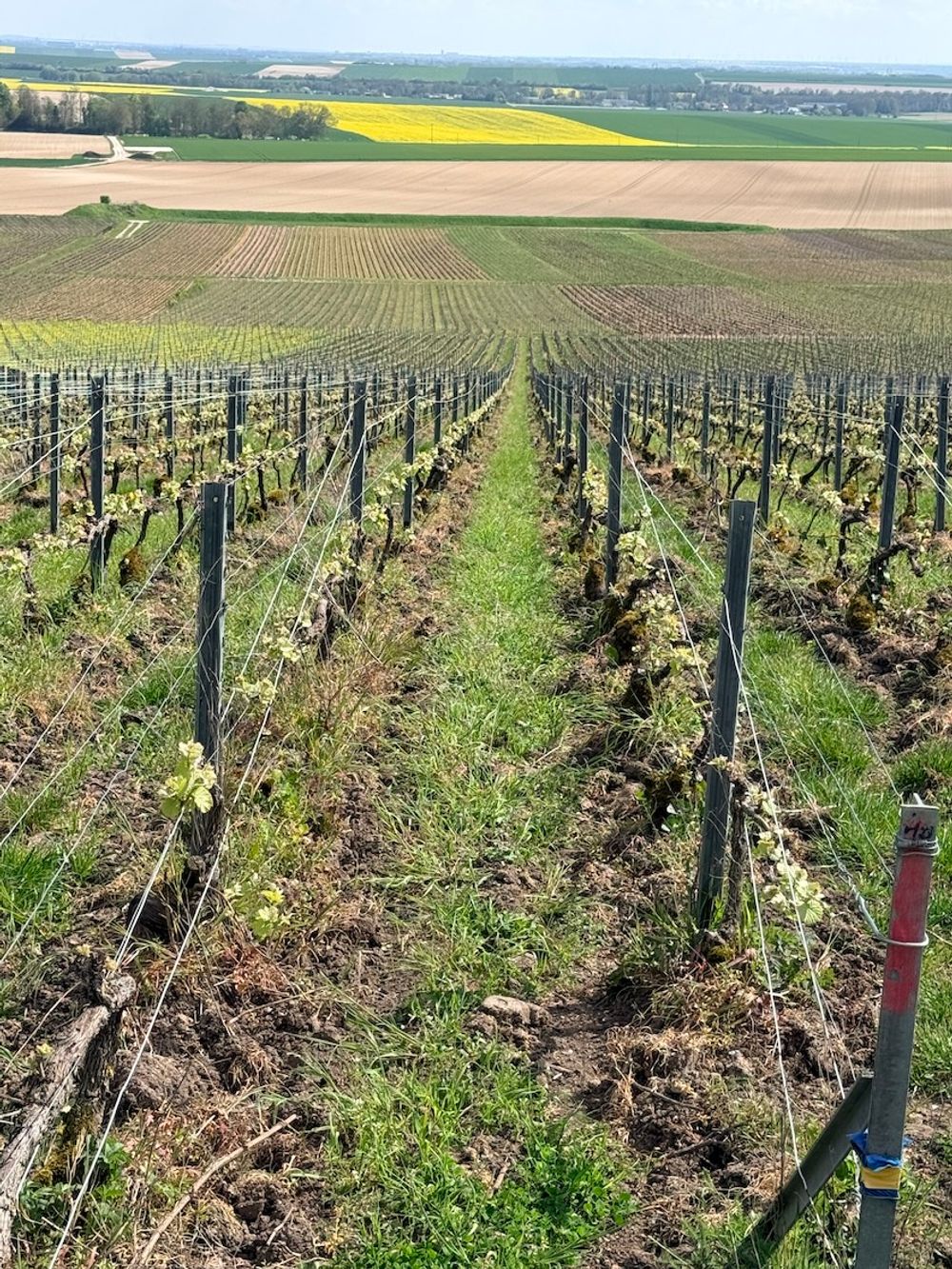
The control plot
Sonia Le Masne, Perrier-Jouët's director of sustainability and responsibility, explains that what I am looking at are two experimental regenerative plots and a more traditionally managed control plot. The need for experimentation, she says, is clear as “yields in the Champagne region have declined by 25% over the last 15 years. Our vineyards are increasingly vulnerable also because conventional practices have depleted the environment and degraded the soils.” Additionally, thanks to climate change, the vines must withstand multiple climatic pressures: heatwaves, drought, intense rainfall and increased episodes of hail and frost.
A regenerative approach aims to restore and improve the health of the entire vineyard ecosystem, thereby making the vines more resilient to environmental and climatic stresses. It also allows the operator flexibility in choosing which approaches to adopt. Dr Jamie Goode is clearly a fan of the approach and cites that the reason he finds it exciting is that “whatever scale or size you are, you can adapt regenerative practices immediately without having to sign up to anything.” Under this multifaceted approach, Perrier-Jouët prioritised restoring the health of its soils, improving the nutrition of the vines, and preserving the biodiversity of the surrounding area.
Two styles being tested
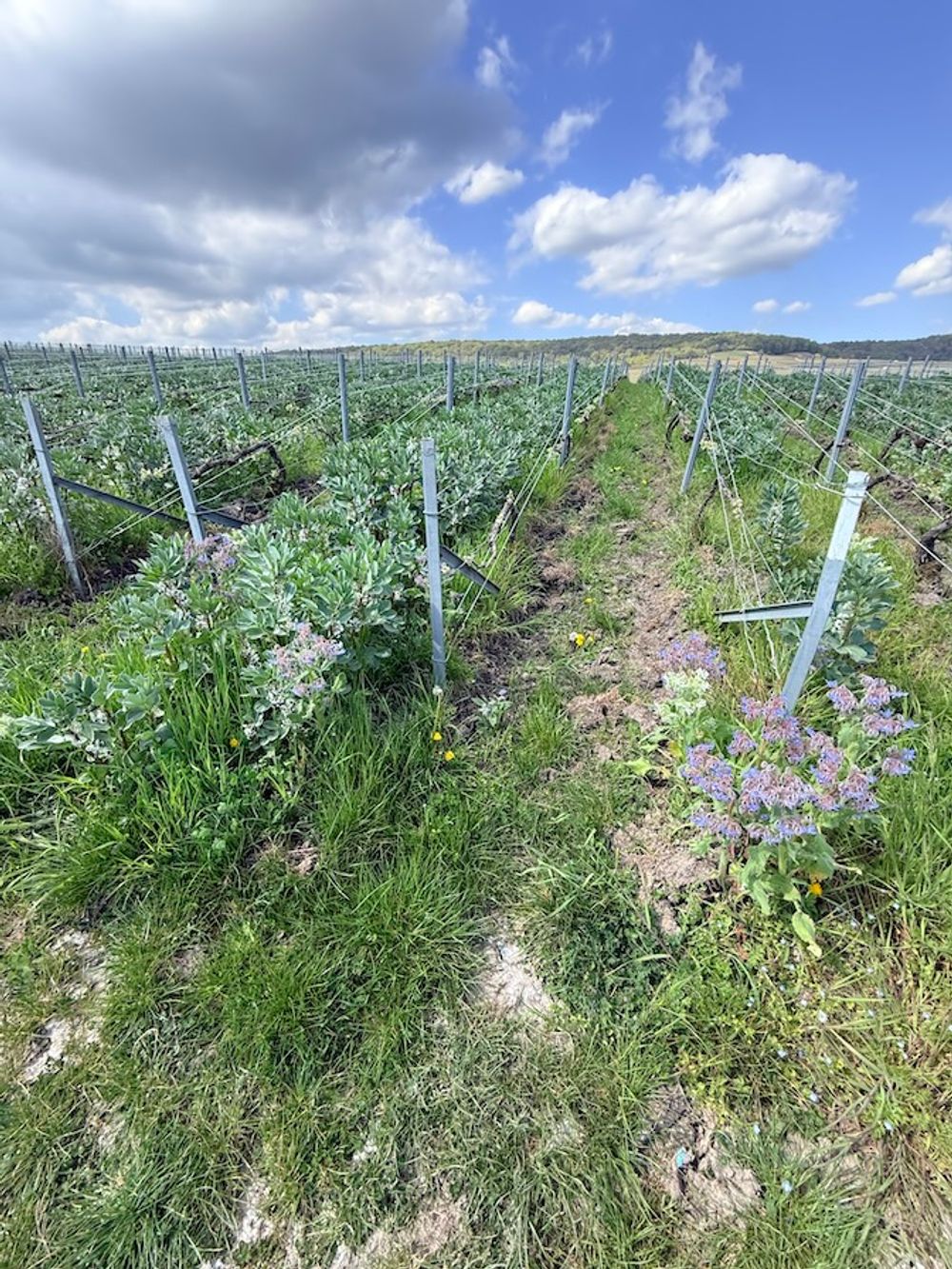
The plot with biomass cover - the ideal cover crop planting pattern seems to be every other row
The result of these endeavours is evident in the two experimental plots using biomass and floral plant covers. There are two styles in use: one leguminous and the other more floral. The legume mix contains broad beans, various clovers, and turnip rape, all of which will help enhance nitrogen in the soil. The floral mix aims to restore biodiversity and provide food and shelter for insects. This highly colourful and perfumic 14 variety melange includes borage, coriander, fennel, mallow and vetch.
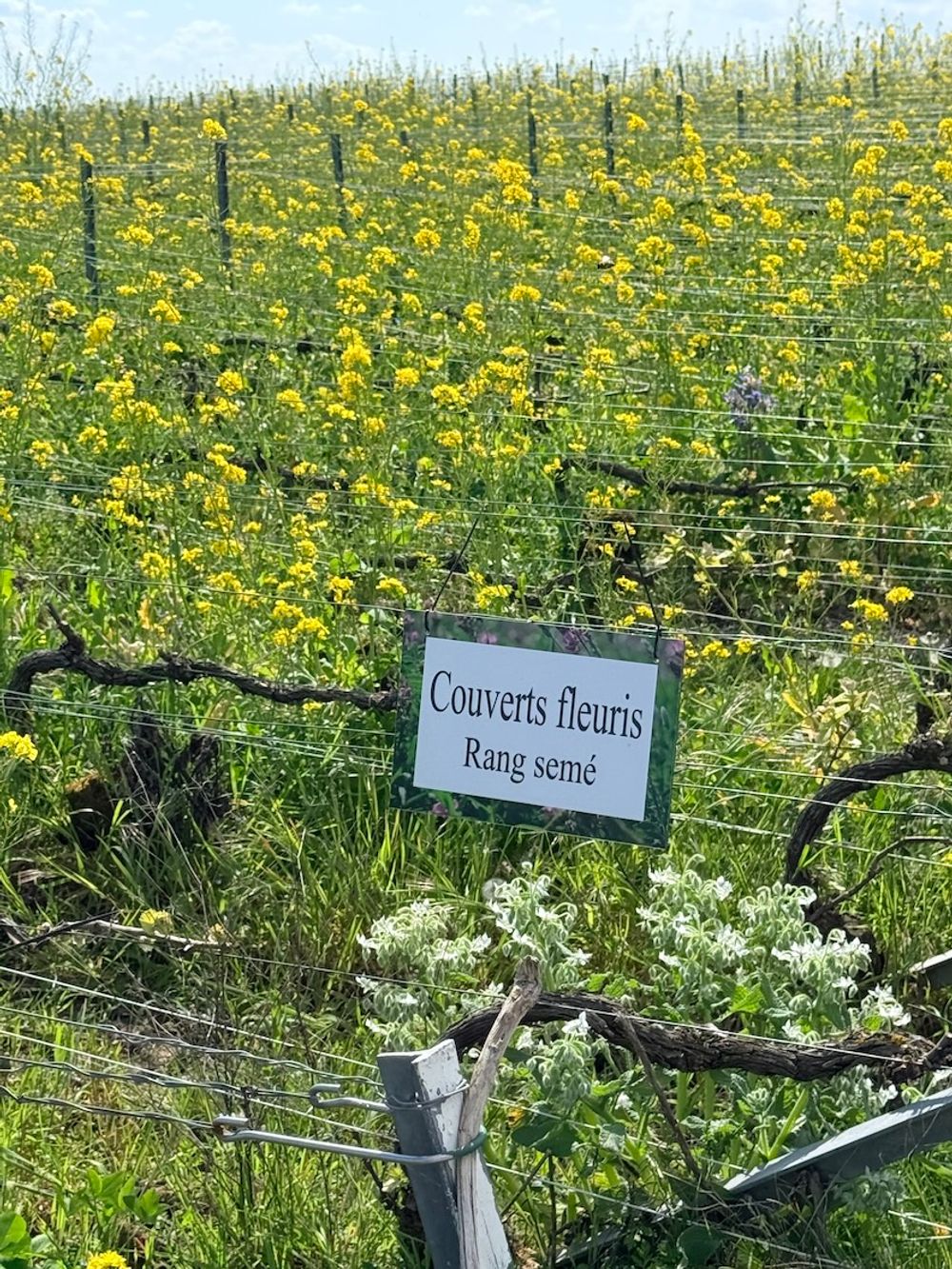
Floral cover crop
Around the vineyard, green corridors have now been established for animal, bird, insect, and plant life to thrive and transit unimpeded. There has also been use of a Champenoise-style ‘set aside’, where, through vitiforestry, natural vegetation and native trees have been allowed to grow, and insect housing has been created to encourage biodiversity. The impact is noticeable in the variety of bird and insect life in this immediate area compared with that in surrounding plots.
When looking at the soil structure across all three plots, the differences are marked. The control plot breaks apart very easily, and there is little life or structure. On the biomass-enhanced plots, root systems are clearly better structured, and on the floral plot, the root systems are intertwined, with the most worms and insects visible. The resulting structures help with water retention and stabilising the vineyards themselves. Reducing soil compaction and sympathetic maintenance is also important to ensure soils are not compacted, as in the more traditional control plot. In due course, the cover crops are carefully ‘folded over’ to return their nutrients to the soil with minimised heavy traffic between the vines.
Interestingly, in frost-prone areas with sensitive grapes like Chardonnay in Avize, planting cover crops in every row increased susceptibility. To lessen the risk of damage, the ideal cover crop planting pattern seems to be every other row in similar areas.
Designated roles within the company
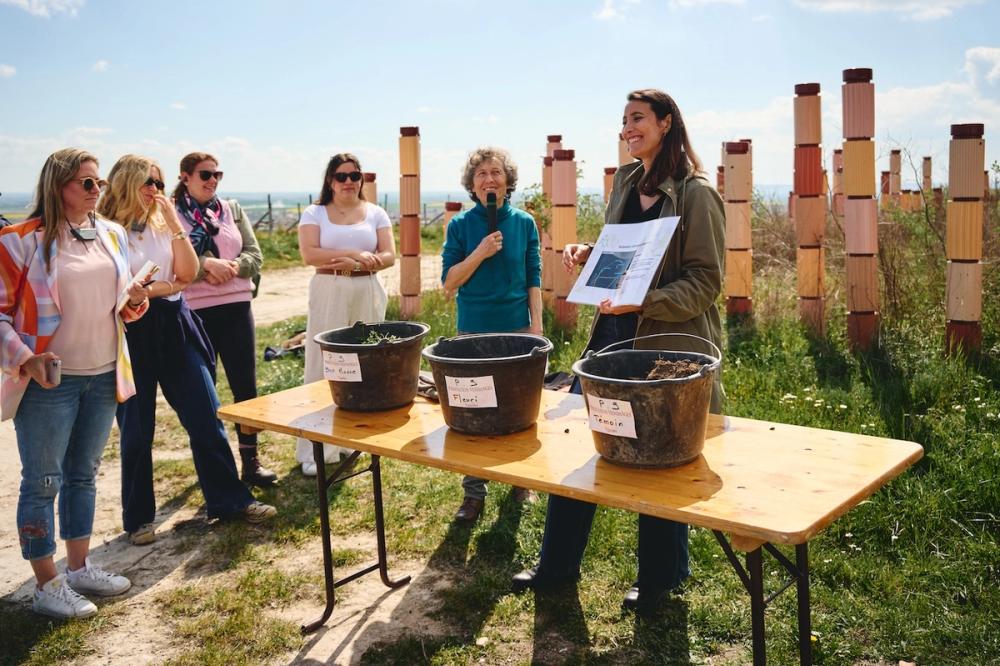
Seeing firsthand the differences in soil structure with vineyard transformation manager, Jessica Jazeron-Schneider
By assigning designated roles to apply and monitor these principles, this shows that it is not just conjecture or environmental box-ticking on Perrier-Jouët's part. There are now 33 hectares, some 50% of the House’s vineyards, under this husbandry. The maison’s objective is to have 100% of its own vineyard in regenerative viticulture by 2030. Additionally, they have established their own academy, rolling out its knowledge to their growers, and aim to have 100% of them certified in sustainable viticulture.
Jessica Jazeron-Schneider, vineyard transformation manager, explained that the specific seed mixes and data are also shared with their growing partners. In 2025, they had over 200 delegates visit from their ‘Pioneer Club’ to pool learning between each other. This is an approach which could see the Champagne region's landscape greener, literally, than ever before.
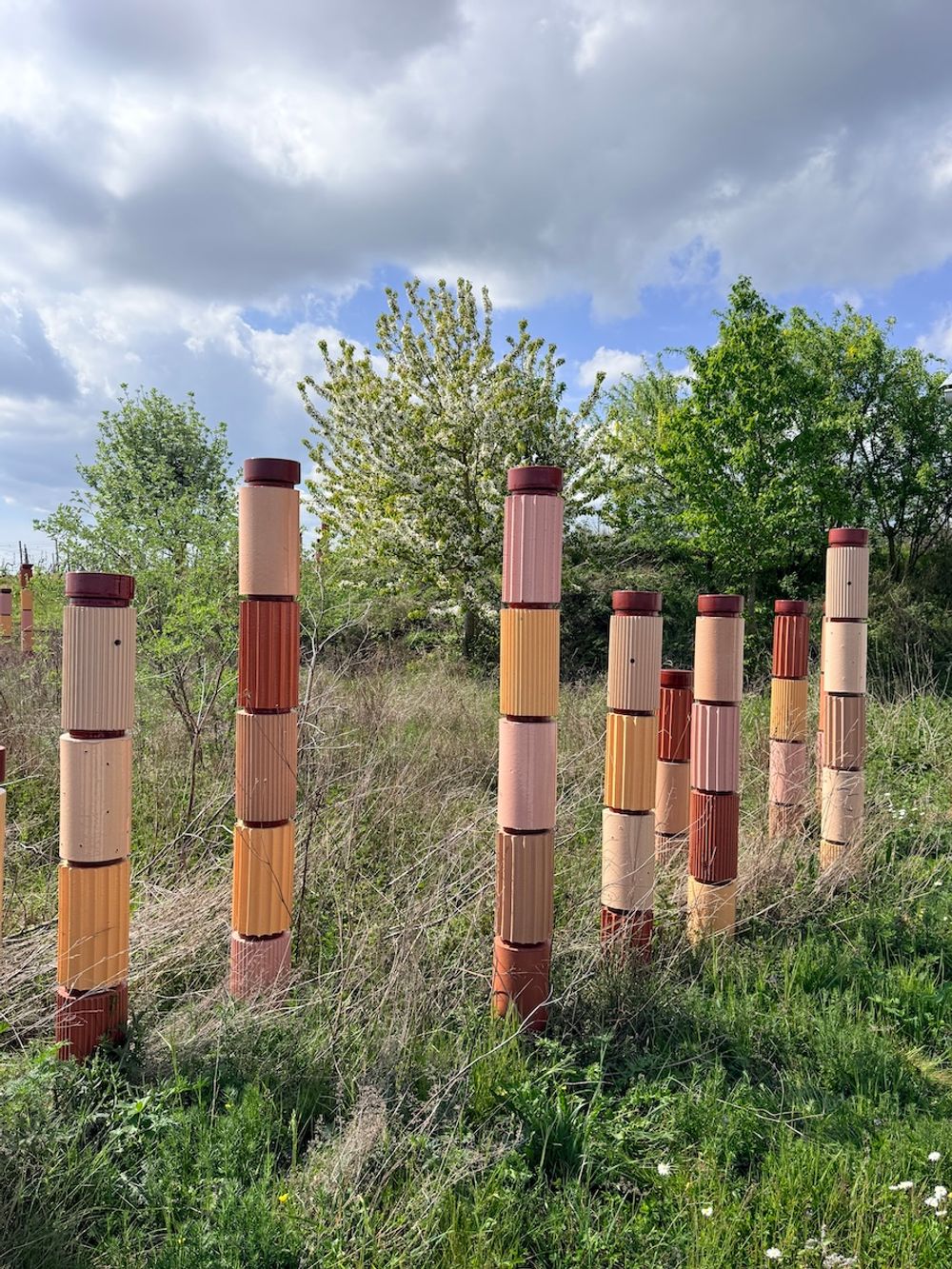
Insect Cohabitare by Formafantasma
Despite being thought of as the doyennes of the Art Nouveau period, along with its anemone-clad bottle by Emile Gallé, forward-thinking and environmentally led approaches are nothing new at Perrier-Jouët. Both founder Pierre-Nicolas Perrier and his son Charles were known as botanists and horticulturists. Charles Perrier, for example, advocated steam treatment to eliminate woodworm on the stakes supporting the vines. In 1853, he also published a paper entitled ‘De la maladie de la vigne’, explaining how to tackle the fungus that caused powdery mildew, and later championed the ‘Picot technique’ for pruning vine tips and trellising to prevent frost damage.
Tasting the difference between the three plots
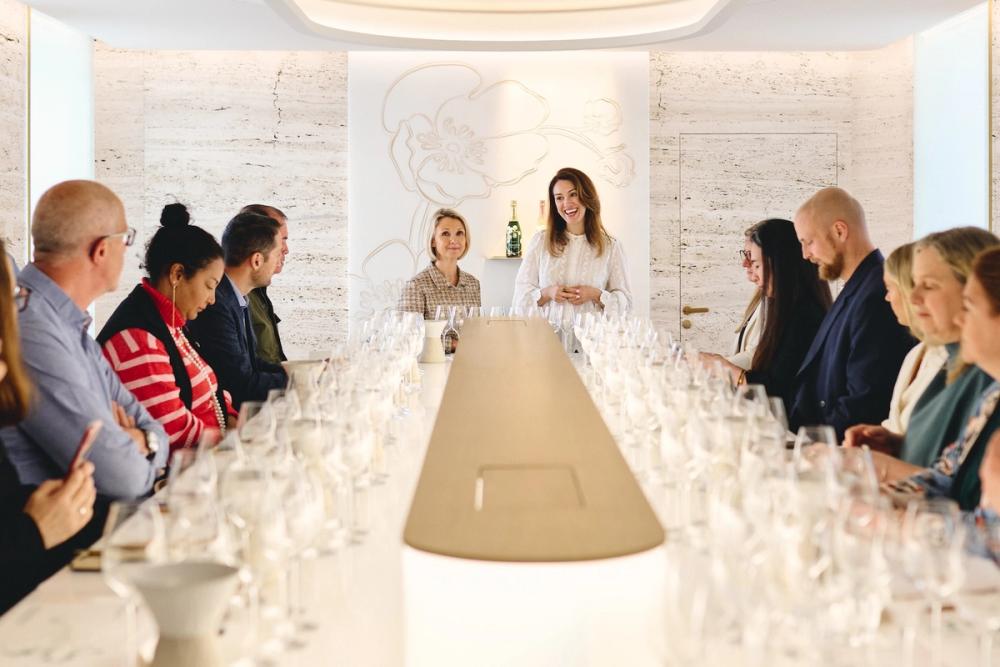
Conducting an unique regenerative tasting - comparing vins clairs from three different plant covers
Back in the tasting room, the three glasses in front of Séverine enable her to conduct an unique regenerative tasting, allowing her to compare three plots. The wines have been vinified in her new cellar, “dedicated to the viticulture of the future.” A specific area of this cellar is set aside solely for wines from regenerative parcels. These wines are vinified separately in small stainless-steel vats, parcel by parcel, differentiating between the plant covers. The wines are all pressed in the same equipment to maintain equilibrium and ensure uniformity in their vinification.
The 2025 harvest was full of challenges with early maturity and a relatively short growing cycle. From the 11th to the 18th of August, the grapes quickly gained a final 2.6 degrees of sugar content whilst most French people were still on holiday, causing a scramble back to the vines for some. Picking commenced at Perrier-Jouët on 21st August for Pinot Noir and was closely followed on the 24th by the lower-yielding Chardonnay.
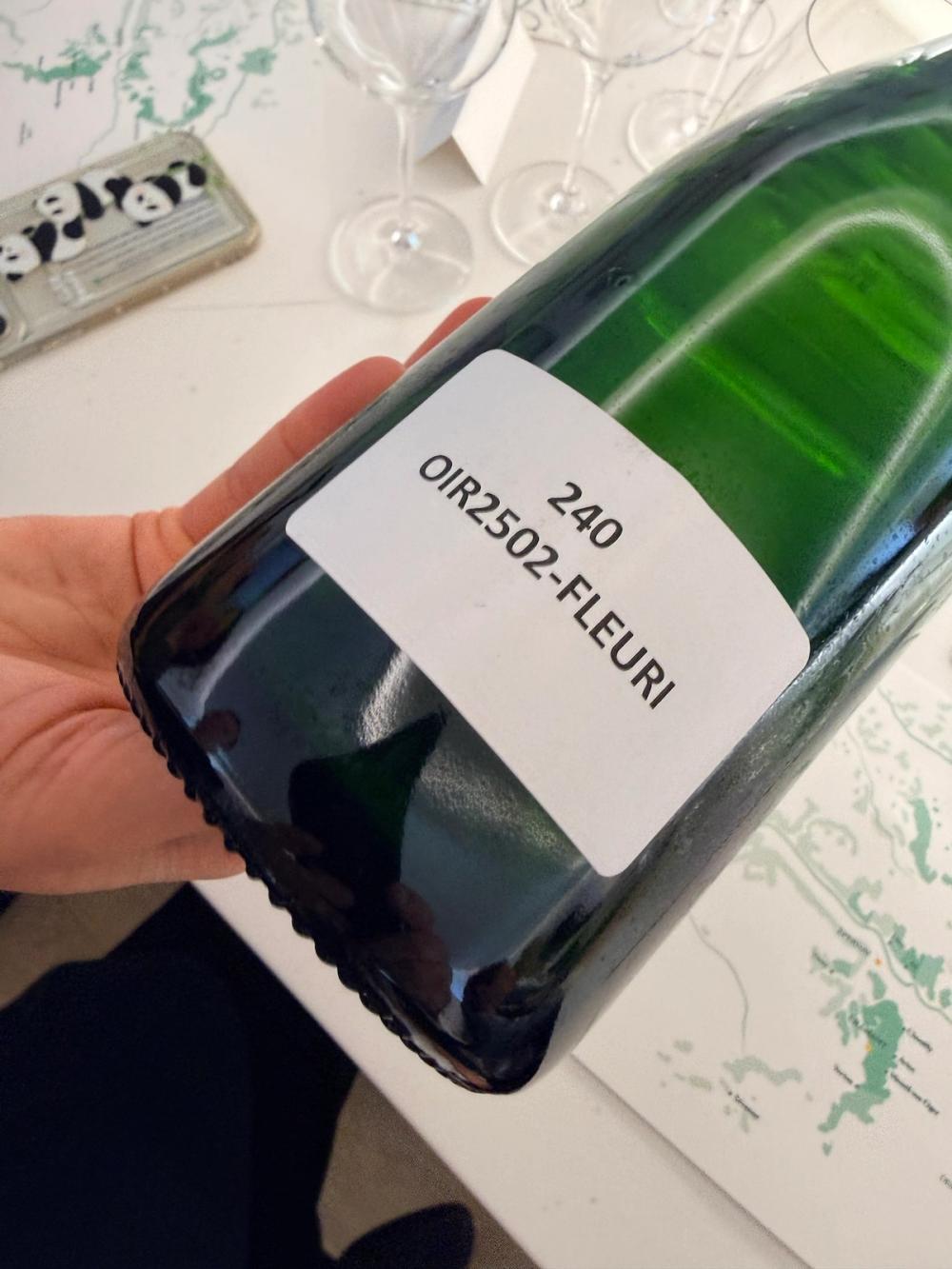
These wines are vinified separately in small stainless-steel vats, parcel by parcel, differentiating between the plant covers.
When applied in the glass, the resulting outputs, some 5 years into the 8-year study, are impressive. The floral cover adds a distinct elegance and complexity to the wines. The biomass wines have a very vertical quality with a lot of structure, tension and increased freshness. Frerson also feels the latter will give great ageing potential due to its evident enhanced backbone. Acidity is lower in the resulting wines under both biomass and fleur, and yields on both cover crop plots are consistently higher than the now somewhat barren-looking traditional counterpart.
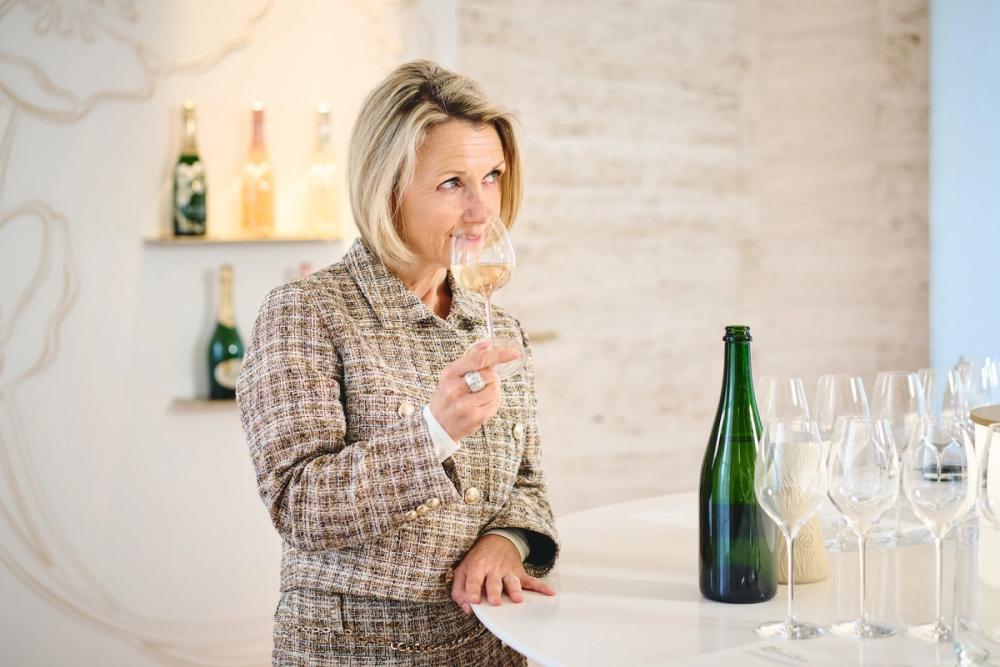
The new agricultural approach offers more diversity in the base wines for Séverine Frerson to harness in due course
Séverine Frerson is undoubtedly stimulating wholesale change in the viticulture at the heart of Champagne itself. This is an approach wholly supported and encouraged by the CIVC, the region's governing body. This, in turn, refreshes her role and offers more diversity in the base wines for her to harness in due course, thereby maintaining and developing the house style. However, she does not favour one type of cover crop over the other, as there is an obvious improvement under both; they also add further diversity to the taste profile due to their effects on the soil and water retention. Asked about this further layer of complexity in relation to the overall approach, she says, ultimately, she finds “mixing nature and wine, great and magical”.
Whilst there are other ‘green’ initiatives in Champagne; with these trailblazing agro-ecological practices, it seems Perrier-Jouët is at the heart of the ‘nouveau’ world once more. As if it had ever left it!