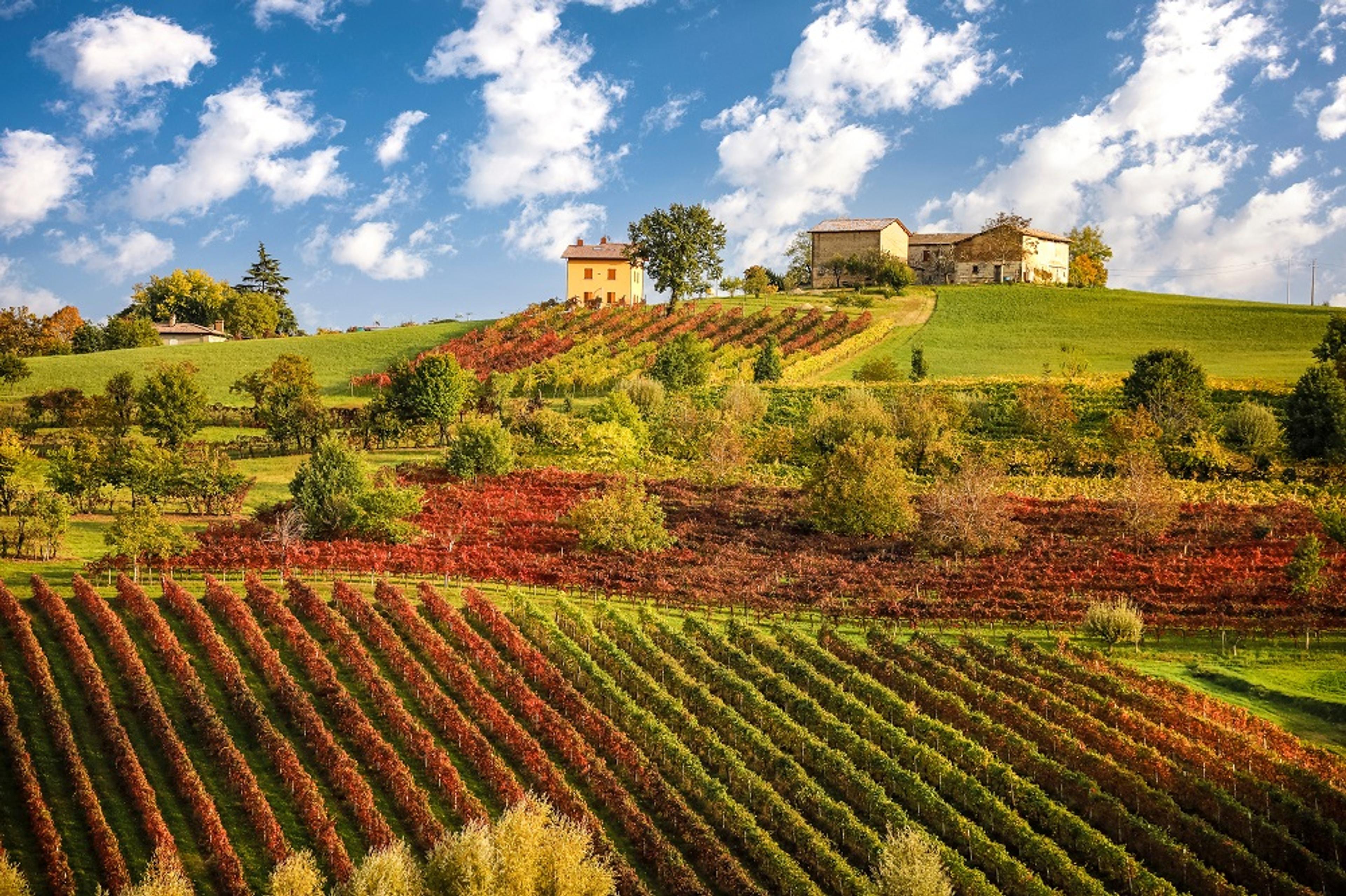
The road runs straight across the plains of Emilia-Romagna. Drive it and you will see vines almost everywhere, stretching across the flat, up the slopes, tucked between orchards and olive groves. Then, as the land begins to rise, the folds of the Apennines come into view: gullies carved into grey clay, ridges of sandstone, slopes that catch the evening light.
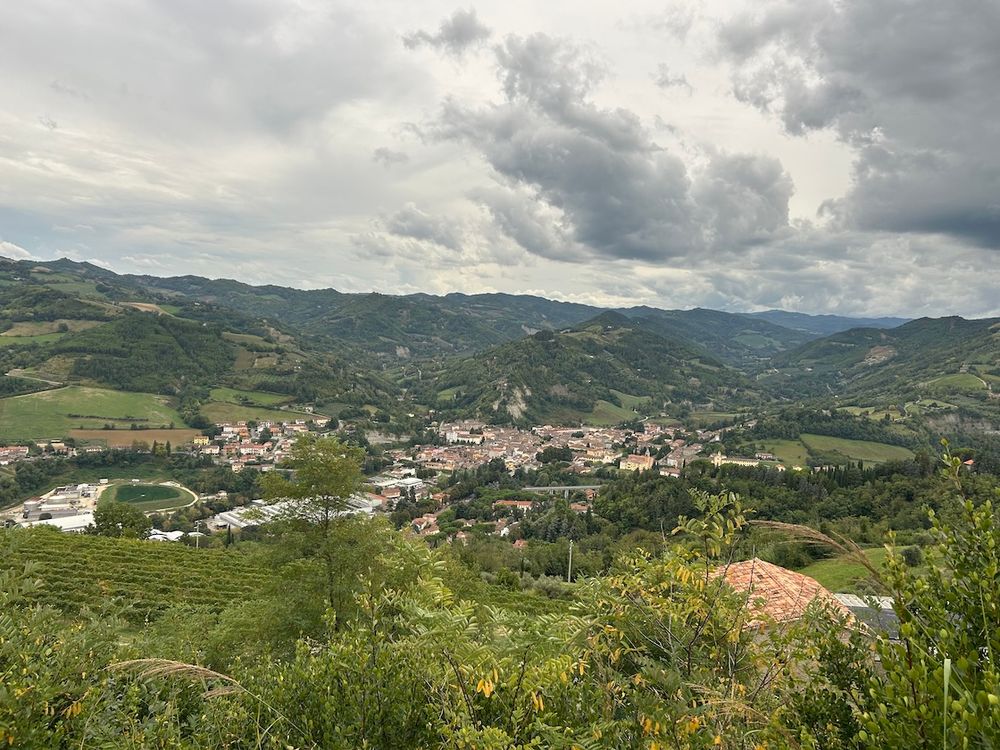
Typical Romagna view - you could be in Tuscany
From certain vantage points, it could be Tuscany. And, in fact, for centuries parts of Romagna were Tuscany. Modigliana, today one of the most celebrated subzones for Sangiovese, was Florentine territory for five hundred years. Mussolini re-drew the borders in the twentieth century, shifting it east into Romagna by just a few kilometres. Now, Modigliana is Romagnolo, but its wines still carry Tuscan perfume and altitude in their bones.
This dual identity – Emilia and Romagna, plains and hills, mass production and individuality – is the heart of the region’s story today.
Four faces of Emilia-Romagna
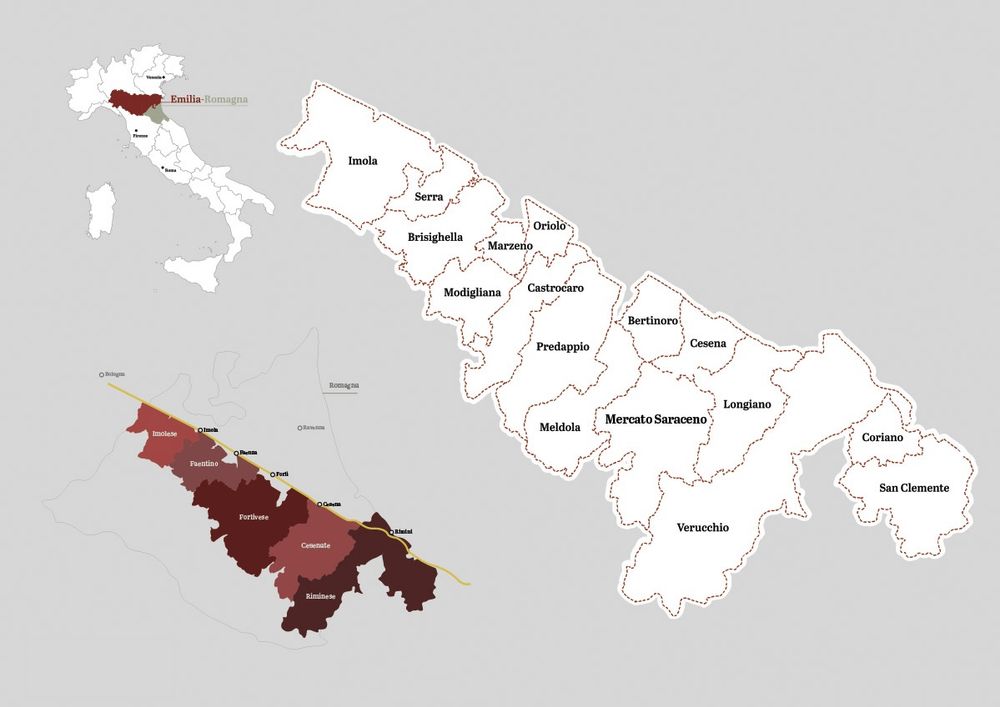
The region stretches across the middle of northern Italy, from the Adriatic coast to the borders of Lombardy and Liguria. It can be thought of in four very different parts:
Colli Piacentini in the far north-west, producing frizzante Malvasia, Ortrugo and Gutturnio (a blend of Barbera and Croatina).
The flatlands of Emilia, home of Lambrusco in all its forms, from industrial sweet fizz to artisanal dry bottle-ferments.
The Colli Bolognesi, where Pignoletto (Grechetto Gentile) thrives alongside Cabernet, Merlot and Chardonnay.
The hills of Romagna, between Imola and Rimini, where Albana and Sangiovese dominate.
Attention now centres on the Romagna hills, stretching from Faenza across Predappio to Modigliana.
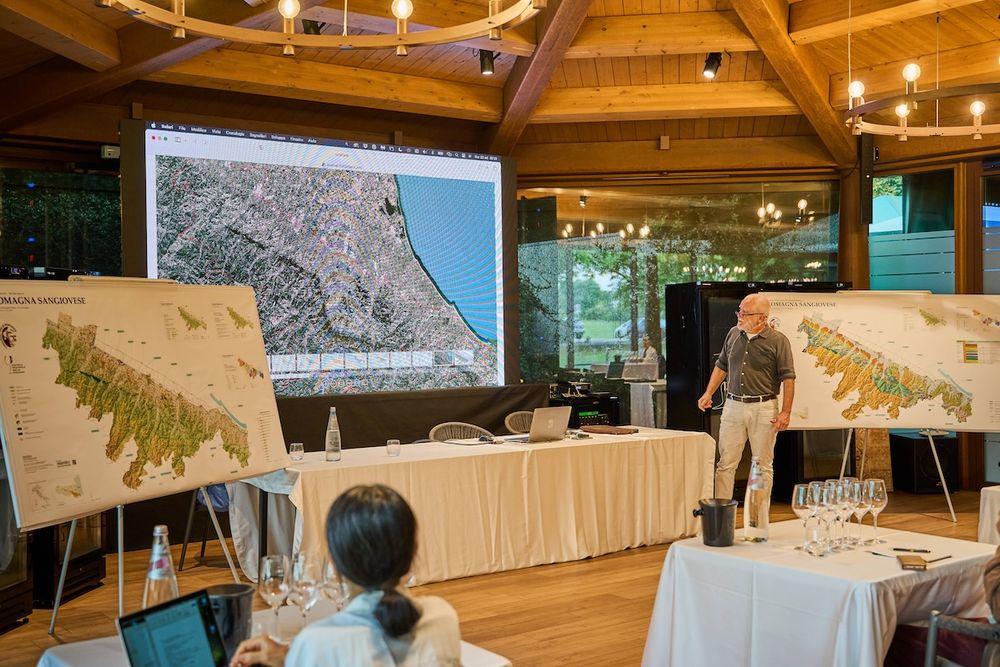
Presentation of Romagna subzones map by Alessandro Masnaghetti
Soils and landscapes: clay, sandstone, spungone
Romagna is not a monolith. The hills are carved from marl, calcareous clay and sandstone, punctuated by dramatic features such as the calanchi and the spungone.
The calanchi are jagged gullies of grey clay, formed six million years ago. One side may be too harsh for vines, the other perfect.
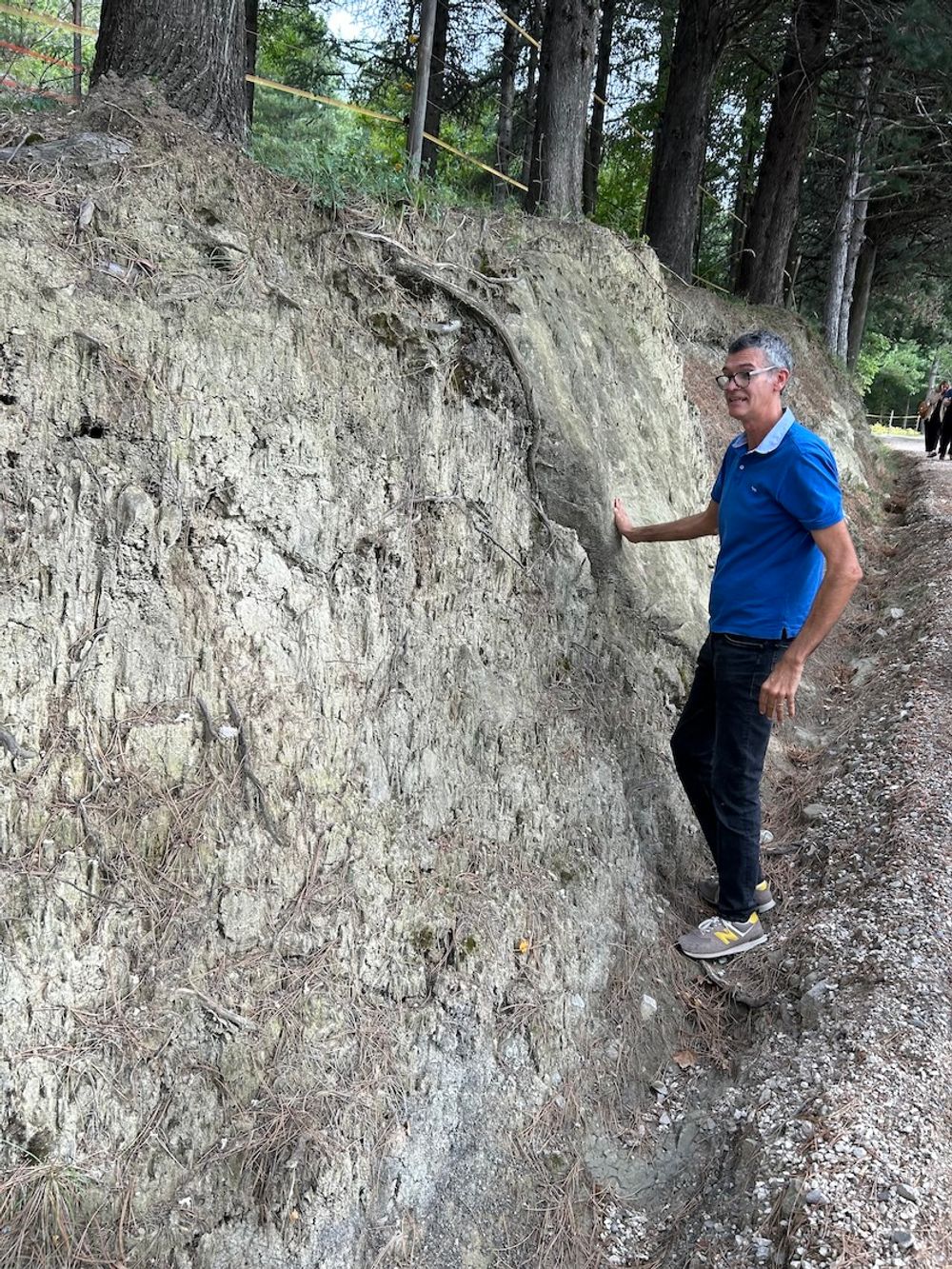
The typical sandstone soils of Modigliana
The spungone, a porous fossil-rich sandstone from the same era, is prized for Sangiovese: well-draining, mineral, retaining freshness even in heat.
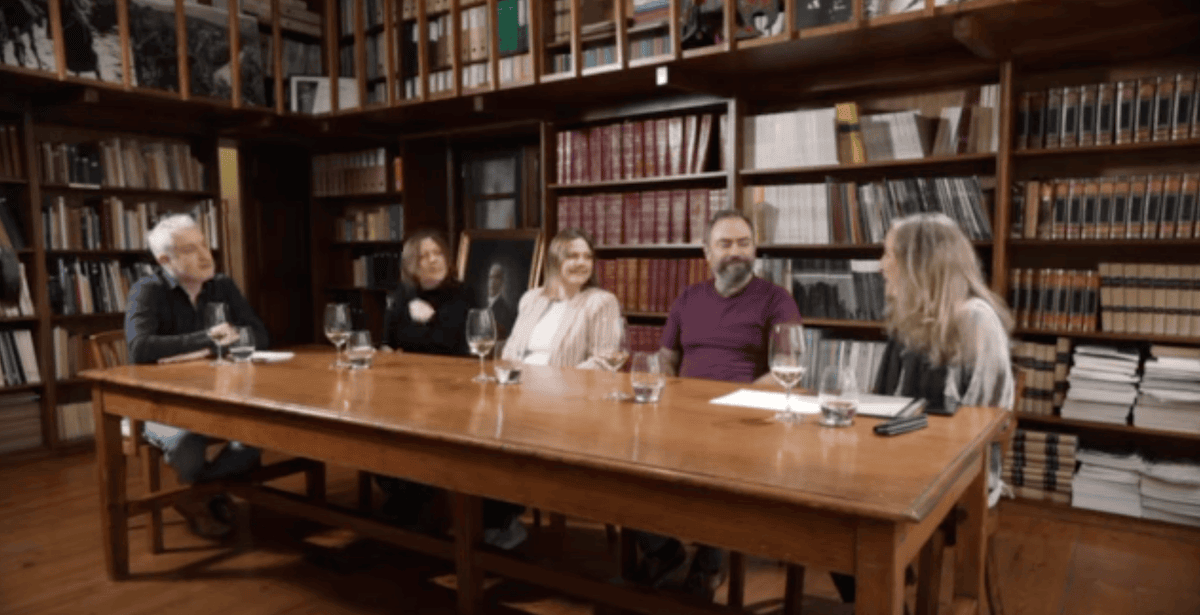
As Alessandro Masnaghetti explained at a map presentation in Faenza, Romagna is not a single hillside but a curtain: pull back one fold and a new landscape appears. That patchwork is what makes the wines both challenging and exciting.
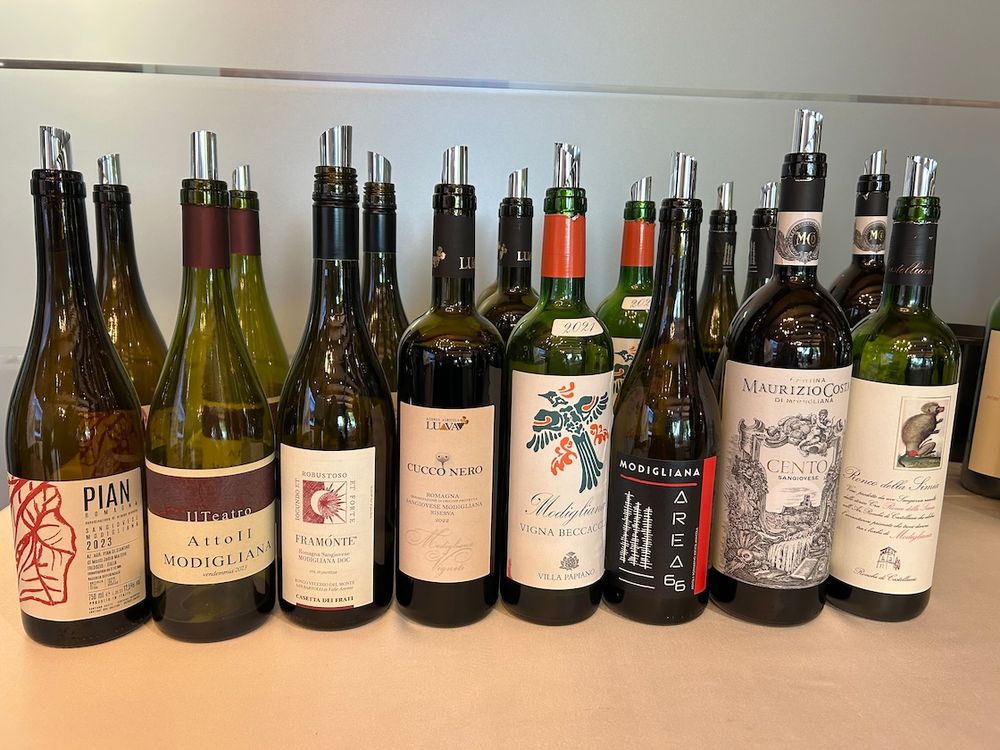
A world of difference - Predappio, Bertinoro, Brisighella, Castrocaro masterclass
Romagna Sangiovese – a patchwork of subzones
Sangiovese is the backbone of Romagna, covering over six thousand hectares. But unlike its Tuscan cousins, it has long suffered from a poor reputation: thin, rustic, anonymous.
That is changing thanks to the Romagna Sangiovese DOC, which allows producers to specify one of sixteen subzones on the label. Each has its own soils, altitudes and styles:
Predappio – ancient iron-rich sandstone; structured wines with spice and longevity.
Modigliana – higher altitude sandstone; perfumed, nervy, elegant, closer to Chianti Rufina in style.
Bertinoro – calcareous clays; salty, powerful, long-finishing reds.
Castrocaro – lighter, crunchier wines, often fresh and floral.
Serra and Marzeno – balance of depth and freshness depending on slope.
Brisighella – denser, often with a savoury, umami character.
The disciplinare requires 95% minimum Sangiovese. Yields for subzone wines are capped at about ninety quintals per hectare, stricter than the base DOC. Many must undergo longer ageing before release.
To help communication, the Consorzio has launched a collective brand, Rocche di Romagna, grouping all sixteen subzones under one umbrella, a way of showing consumers that Romagna Sangiovese is not a generic red, but a tapestry of terroirs.
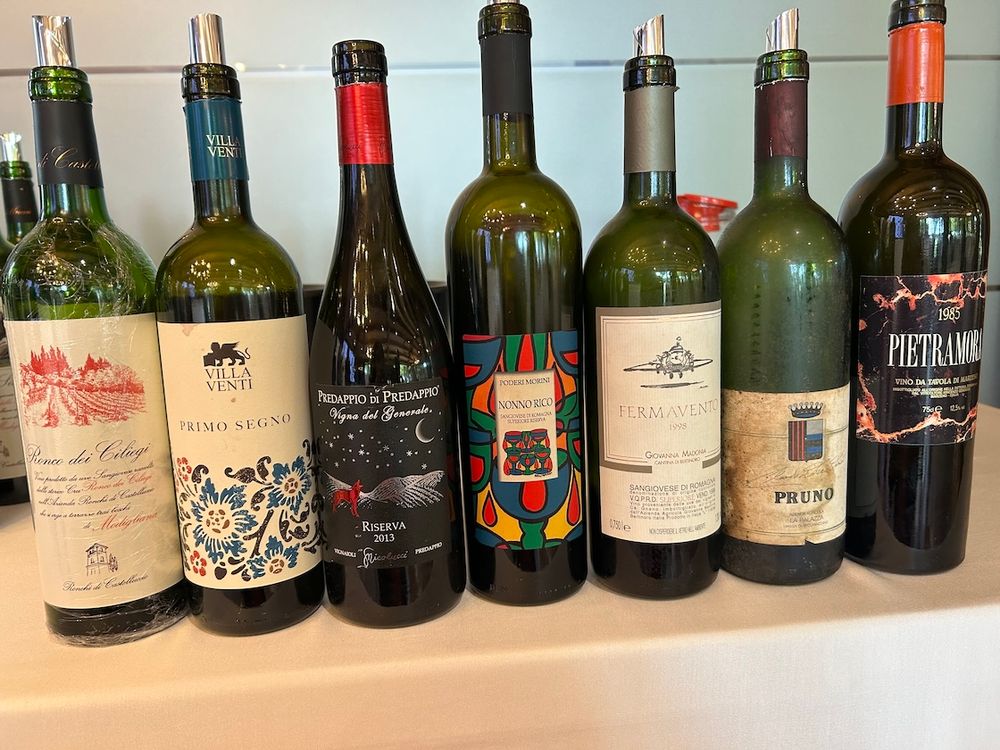
Aged Sangiovese masterclass
Sangiovese with staying power
If Romagna’s Sangiovese has often been dismissed as rustic or short-lived, a look at older bottles tells another story. A tasting of aged wines revealed just how gracefully they evolve. Ronchi di Castelluccio’s Ronco dei Ciliegi 2020 was taut with cherries and raspberries, its acidity linear and elegant. Villa Venti Primo Segno 2016 had developed savoury layers of almonds, figs and herbs while retaining balance and length. Going further back, Fattoria Nicolucci’s Vigna del Generale 2013 still showed lively red fruit and refreshing acidity, its tannins smooth yet gripping.
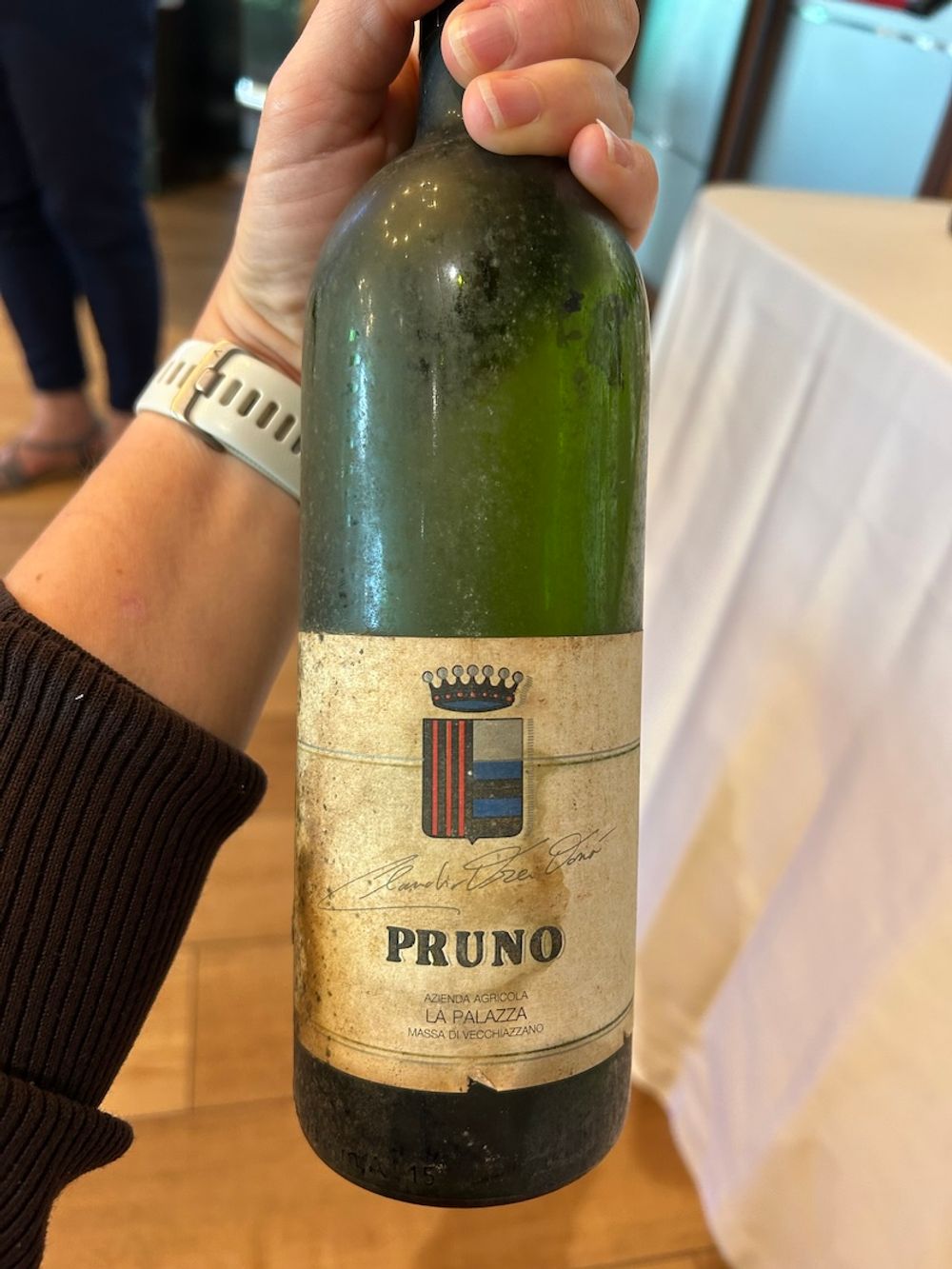
The surprises came with real maturity. Poderi Morini’s Nonno Rico 2001 offered smoky figs, iron and violets, still lush and fresh. Giovanna Madonia’s Fermavento 1998 carried balsamic depth and a saline finish. But the standout was Drei Donà’s Vigna del Pruno 1993– powerful and graceful, its morello cherries framed by elegant tannins that had softened with time yet still carried firm structure. It was proof that Romagna’s Sangiovese can endure and transcend expectation.
At the pinnacle of history, Fattoria Zerbina’s Pietramora 1985: figgy, bright, perfectly balanced – reminded us how long the revolution has been underway. Together, these bottles make the case better than any argument: Romagna Sangiovese has the bones to age, to deepen, and to rival its Tuscan neighbour in longevity.
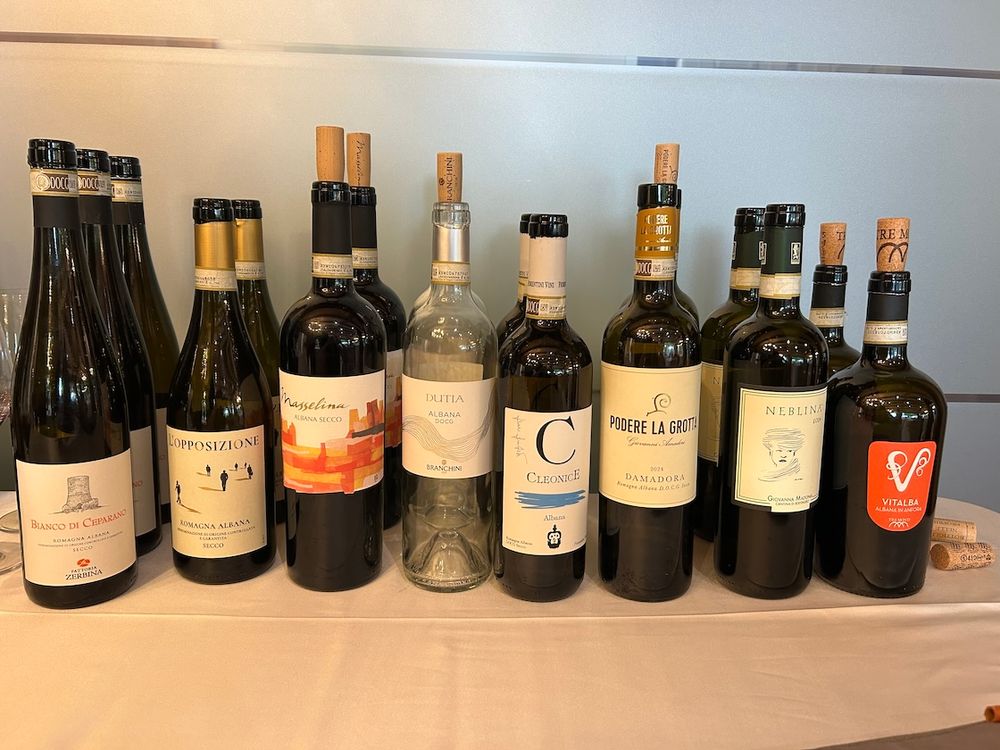
Albana - rediscovery of a white grape
Albana was Italy’s first white DOCG in 1986… to much scepticism at the time. Many saw it as a political award rather than a recognition of quality. For years, the wines did little to prove otherwise.
The DOCG rules allow a wide spread of styles: secco, amabile, dolce, passito and passito riserva. Albana must be at least 95% Albana, with minimum alcohol of 12% abv for dry wines and much higher potential sugar for passito. The best passiti involve noble rot, strict berry-by-berry selection and long ageing before release.
For a long time, this flexibility led to confusion. But in recent years, Albana has begun to prove its worth, not least through skin-contact and amphora-fermented dry styles.
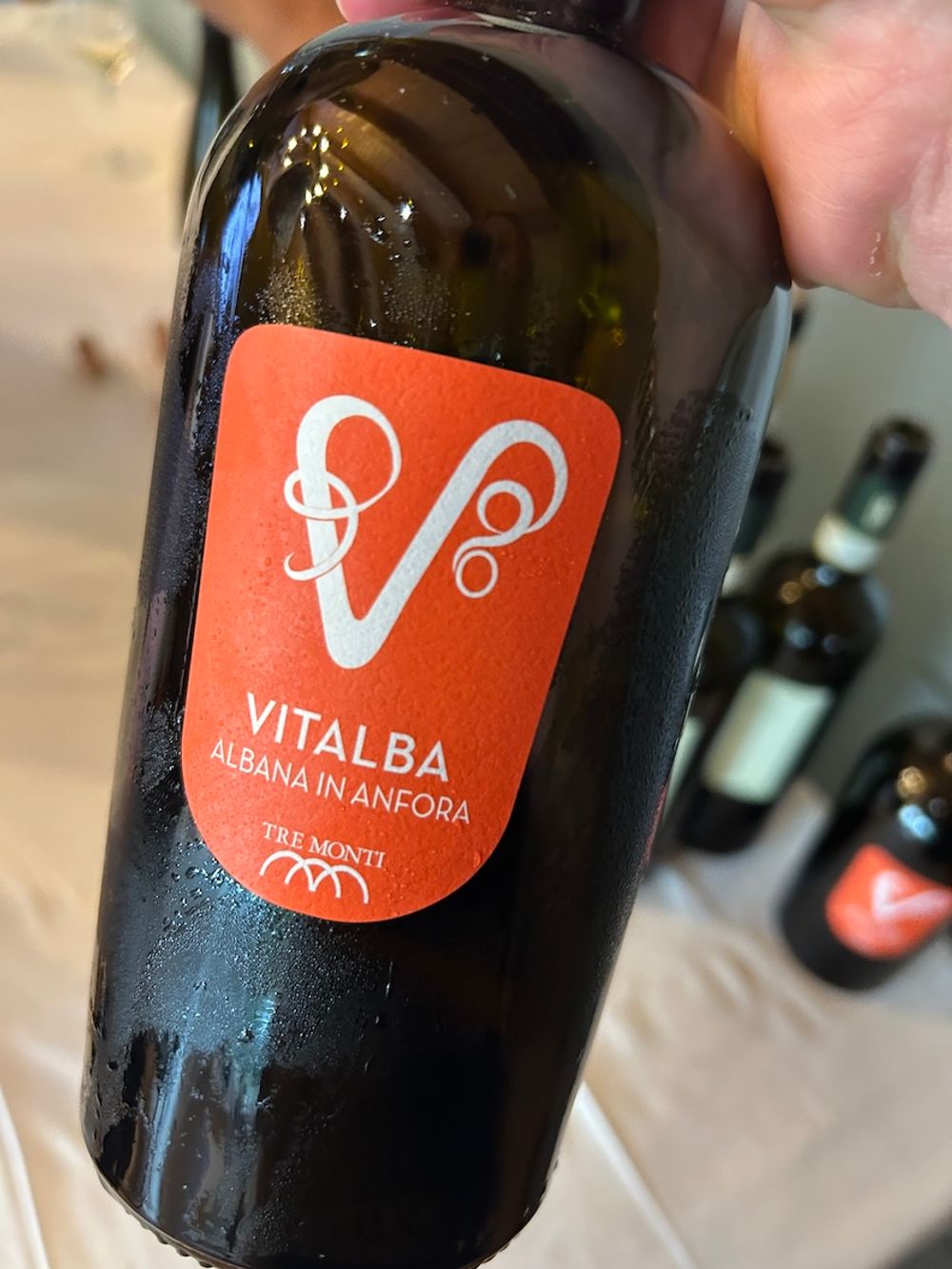
At a masterclass I was struck by how well Albana responds to skin contact. Vitalba, Romagna Albana DOCG Secco, Tre Monti, 2024 had the grip of peach tea and marmalade, structured and textured like a fine orange wine. Neblina, Romagna Albana DOCG Secco, Giovanna Madonia, 2024 showed reductive tension and tea-like tannins, saline and taut. Cleonice, Romagna Albana DOCG Secco, Fiorentini, 2024, with jasmine, sage and a salty edge, was floral but firmly structured.
These wines showed Albana as a grape with identity and longevity.
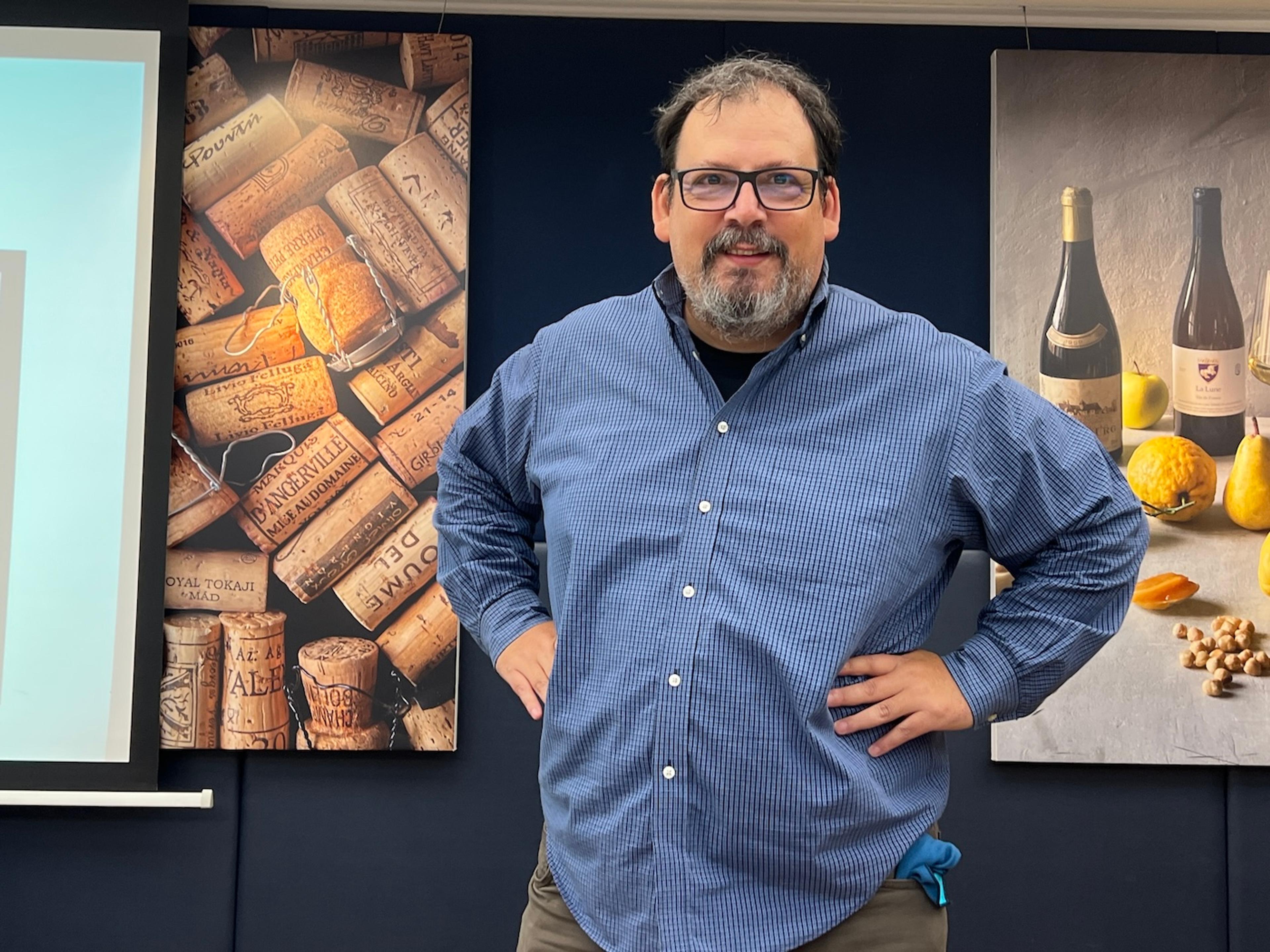
Throughout the trip I tasted alongside Benjamin Hasko, the world’s newest MS/MW. His perspective added weight to what many of us were already finding in the glass. As he put it: “Albana shows everything from crisp citrus to orange wine to passito. The most commercially viable are the fresh styles, but the most complex are the experimental.”
For me, the energy and complexity of the skin-contact wines were the most convincing.
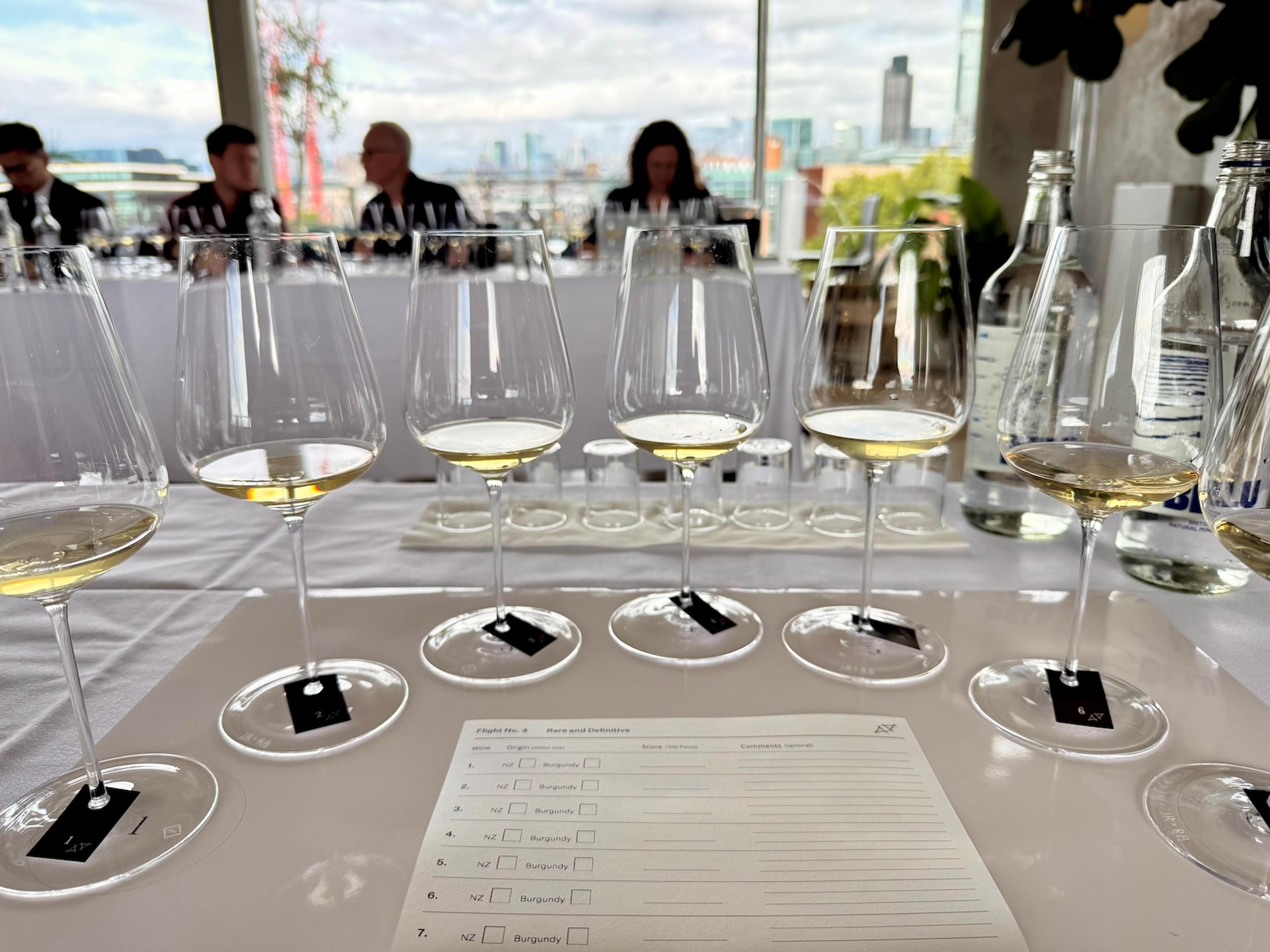
On the final day we faced a line-up of more than 230 wines - an extraordinary closure to the programme. I managed around 180 wines; Hasko, remarkably, tasted them all. It was the clearest view yet of the region’s strengths and inconsistencies, a panorama of where Romagna stands today.
All for one – the collective brand launched by the consorzio
Between potential and identity
The legislation gives Romagna structure. The subzones provide terroir stories. Albana has found a serious voice. And yet, the region is still finding its identity.
My impression, echoed by Cristina Geminiani of Fattoria Zerbina, is that many producers are still playing it safe. “Producers here need to explore more, to stretch their boundaries. If we only stay within safe practices, we won’t see the full potential.”
Benjamin Hasko added: “There’s beautiful, approachable, untapped potential here. The upside is strong because the terroir is real but to some extent underexploited.” With just over 6,200 hectares of Sangiovese planted, vast stretches of hillside remain unplanted – a visible reminder of how much potential still lies dormant.
The wines today are varied, sometimes brilliantly, sometimes confusingly. Homogeneity is a risk; inconsistency another. But the best wines – from Modigliana’s perfumed heights, Bertinoro’s saline clays, Castrocaro’s crunchy reds or Albana’s textured experiments show a region on the cusp of definition.
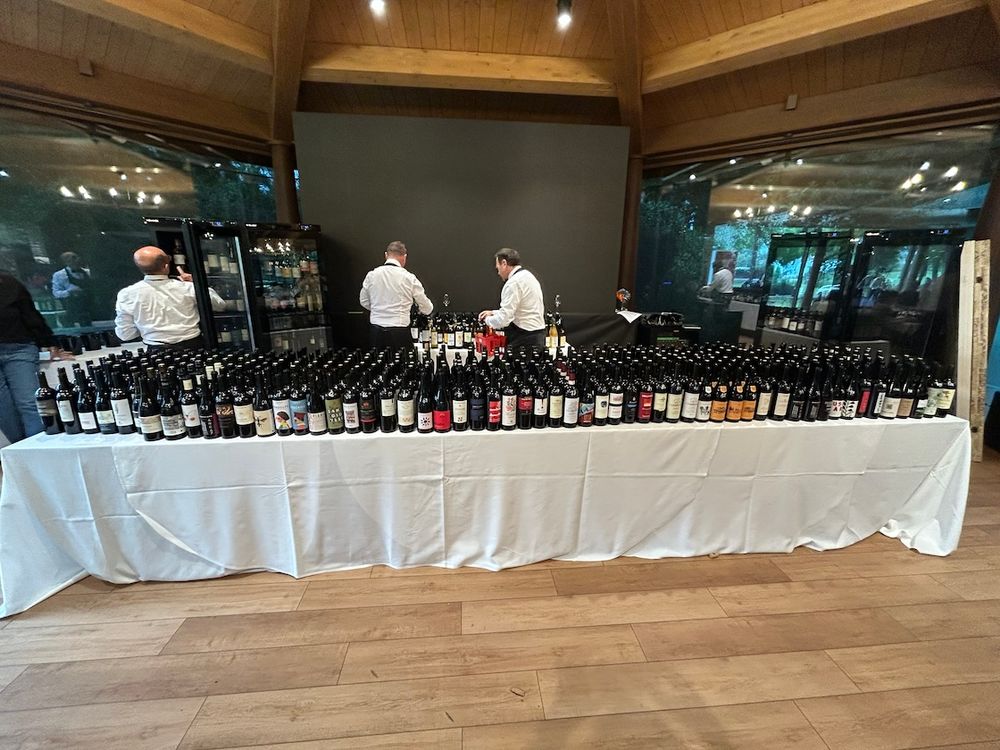
Preparing for the final tasting
Romagna is no longer just Emilia’s other half, or Tuscany’s forgotten cousin. Its hills are beginning to speak clearly, ‘one-fold’ at a time. Modigliana is no longer Florence’s outpost, but a nerve-centre of perfume and altitude. Predappio is reclaiming its reputation with structured reds. Bertinoro is carving a name for salinity. And Albana (once mocked) is now making wines that surprise and compel.
The ingredients are here: soils, slopes, grapes, climate. The laws and subzones give shape but also not overly restrictive. What remains is the task of turning that patchwork into an identity strong enough to stand on its own.
The land is ready. The grapes are waiting. What Romagna needs now is not another revolution in the vineyard, but a clearer voice in the world: to communicate its subzones with confidence, to show Albana in all its modern guises, and to prove that its Sangiovese is more than ‘Tuscany’s neighbour’.
That spirit of unity was on display at Vini ad Arte 2025, which marked the event’s twentieth anniversary. From a handful of producers two decades ago, it has grown to more than 60 wineries, all presenting their wines under one roof. Experimentation is flourishing, but so too is the desire to speak with an unified voice. If Emilia Romagna can continue in that spirit – reaching out, listening, refining and uniting its messaging – it has every chance of proving itself to the wider world.
To be continued.... in Part Two of this in-depth study Lilla O'Connor examines how the region is managing to speak with one voice.