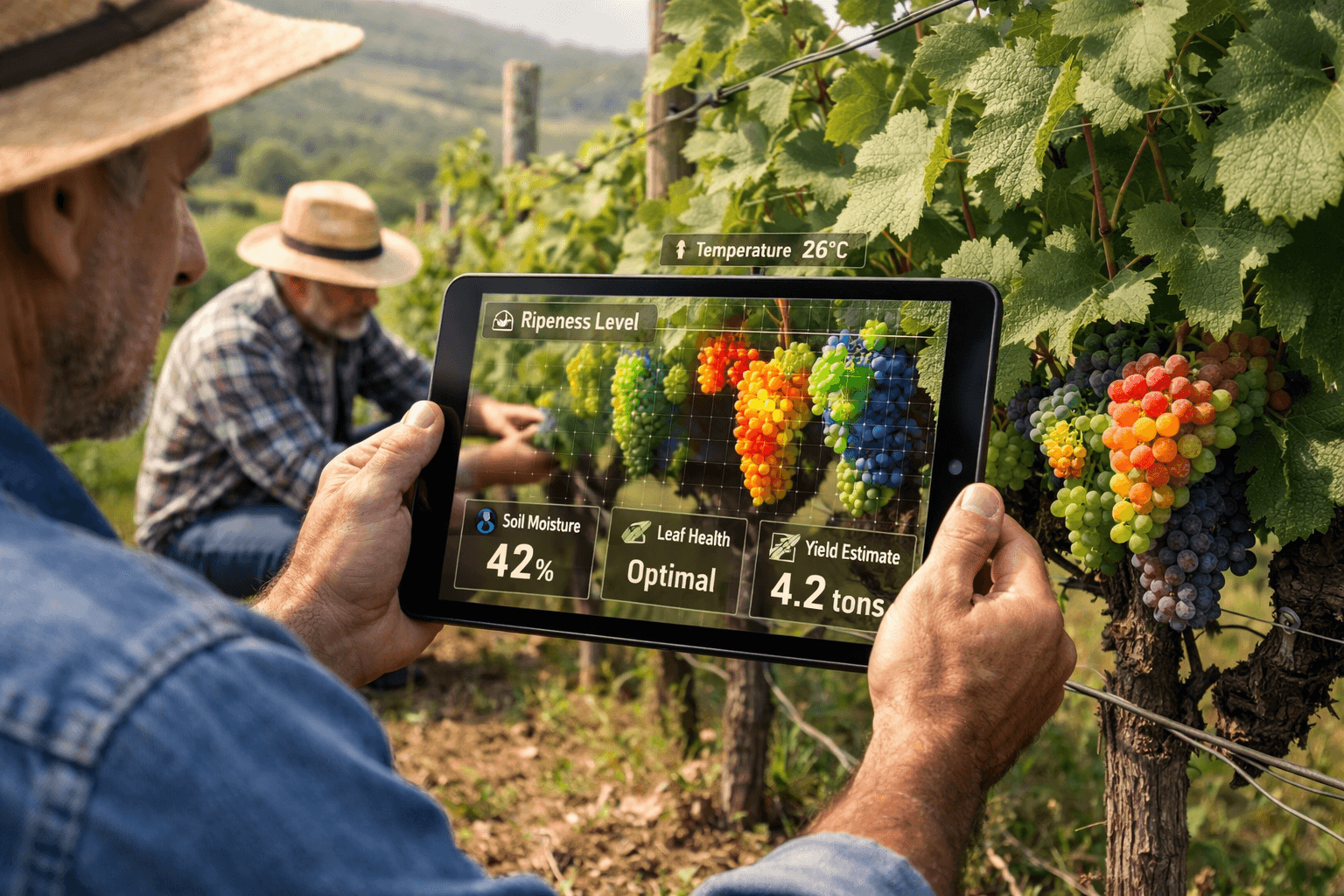

If someone had told me a few years ago that one day I would be writing about AI implementation, opportunities and challenges in the wine industry, I would probably not have believed it. I would have been excited, but also hesitant.
Excited, because I have spent 15 years working in AI, analytics and data science, across companies including Amazon Web Services, PwC, Deloitte and Expedia. In each of these, I led complex projects, from proof of concept through to enterprise transformation. And in every single one, the first thing to fix was data, and how it was being used. We call this data literacy.
Hesitant, because I had no real background in wine beyond frequent visits to Porto wineries as a student, and later vineyard visits and tastings as a young professional. At that point, I had the impression that the wine industry relied more on relationships than on data. It took formal wine study, and a few industry tastings, to realise quite how much data exists in wine, and how little of it is used effectively.

Data scientist and AI expert Joanna Dabrowska is looking to help wine businesses best implement AI in their companies
Today, I bring these two perspectives together, combining data and AI expertise with wine journalism, judging, and speaking engagements.
However, whenever I introduce the topic of AI in wine, something shifts in the room. Most people are already using it, yet few talk about it openly, and fewer still question its limitations. Instead, the conversation often defaults to risk. AI makes mistakes. It can be confidently wrong.
But underneath that sits something else. Fear. Fear of replacement, fear of losing craft, fear of a future in which algorithms write tasting notes and ChatGPT sells the latest release of Burgundy.
It is understandable. The coverage so far has been relentlessly dramatic. But it is also, in my view, unhelpful. The more useful question is what AI actually does well, where it creates value, and how the wine trade can use it, and is already using it, in practice.
What AI is, and what it is not
The AI most people in the wine trade are encountering daily is generative AI.
Generative AI is a branch of artificial intelligence designed to create entirely new content such as text, images, or video, by learning patterns from existing data. Common examples include Large Language Models (LLMs) like ChatGPT and Claude for writing, Diffusion Models like Midjourney and DALL-E for creating visuals, and Video Generation Models like Sora or Runway for moving imagery.
Generative AI, including Large Language Models (LLMs), excels at creating content by identifying patterns, whereas traditional machine learning is designed for predictive tasks like forecasting market trends. While AI can analyse data rapidly, it cannot replace the sensory expertise, interpersonal connection, and nuanced interpretation provided by a human.
A recent article in The New York Times suggested that AI was becoming the new sommelier, with guests turning to ChatGPT rather than engaging with staff. It is an interesting signal, but perhaps not for the reason implied.
When a customer reaches for their phone instead of asking the sommelier, the more accurately placed question seems to be why. In many cases, it reflects an experience that felt confusing or intimidating, which translates as a hospitality issue, not a technological one.
A good sommelier remains irreplaceable. The role is interpretive, relational, and sensory. AI does not operate in that space, and it is unlikely to. What we often describe as intuition is not something we fully understand from a scientific perspective. Replicating it in a machine is therefore far more complex than simply modelling data or patterns.
The more useful question, then, is where AI can actually help the wine trade.
What the trade is actually doing
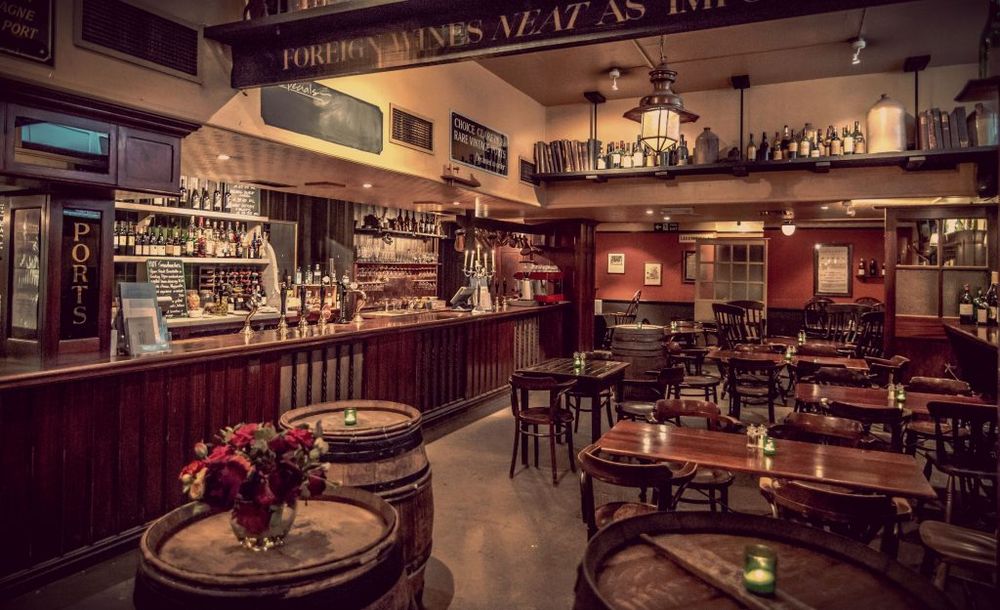
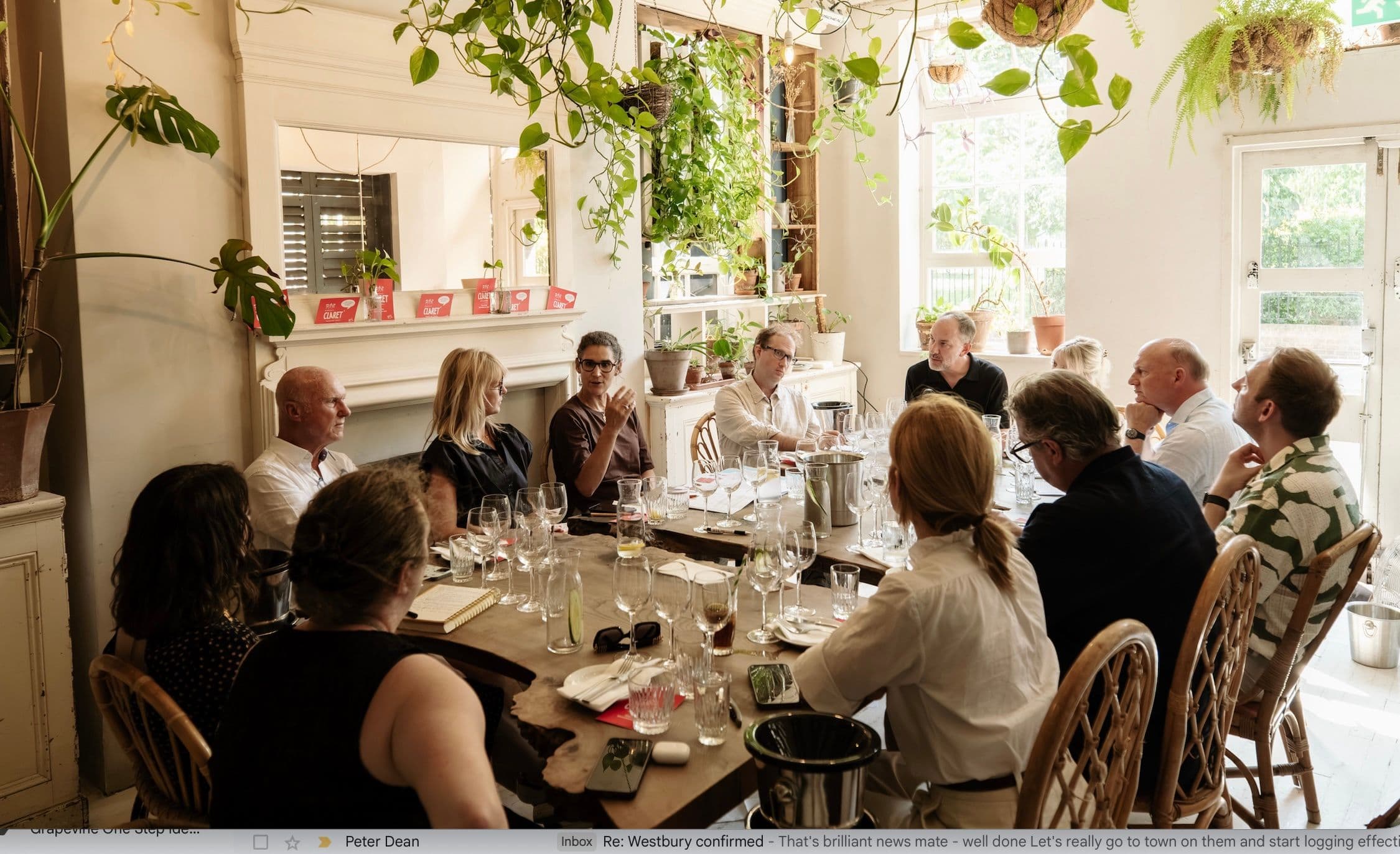
Davy's is looking at how best to use AI in its multi-faceted business as a wholesaler, retailer and on-trade operator
I’ve spoken to Luma Monteiro, head of marketing at Davy's, to understand whether she is using AI in her daily tasks and, if so, how.
She uses generative AI daily, but deliberately as an editor rather than an originator. “
You have to have the knowledge,” she says. “Otherwise you can get very wrong information. I use it for editing. You need to be the creator.”
What she is describing, in AI terms, is augmentation. The model can only be as good as the data it has been trained on. One of the most common sayings in the data and AI world is “garbage in, garbage out”, which translates into poor results when algorithms are trained on poor-quality data. The model is not replacing your expertise. It is accelerating the process around it.
One of the other areas where Monteiro uses AI is image generation. Rather than commissioning multiple new shoots, her team reworks some of the existing brand assets using AI tools to create seasonal variations of previously successful assets. Through this, the value of existing assets is extended across multiple campaigns.
I have been working on a similar project recently, and it is also possible to learn a great deal about how audiences interact with creative assets and what their preferences are.
She is also using AI to interrogate large datasets. Instead of building complex spreadsheets, she asks the model to identify patterns in sales and behaviour. The outputs are checked, but the time saved on routine analysis is significant.
Here, I would remain cautious. These tools are useful for exploring patterns and testing hypotheses, but the findings should be validated through more structured, analytics-driven work.
Monteiro’s usage clearly highlights that the division of labour is important. AI handles the processing. Judgement and decision-making remain human. Other successful examples I see across the trade are businesses that derive value from AI, but do not outsource their thinking. They reduce the time spent on mechanical work so that expertise can be applied where it matters.
In the vineyard
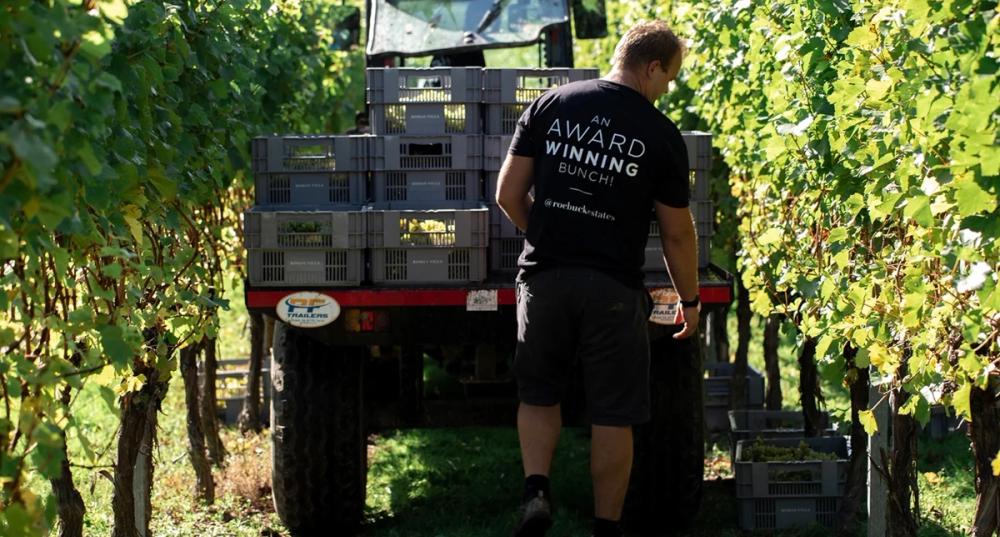
English wine proucer Roebuck Estates is using AI and data modellling tools to analyse its vineyards, its vines and the grapes it is growing
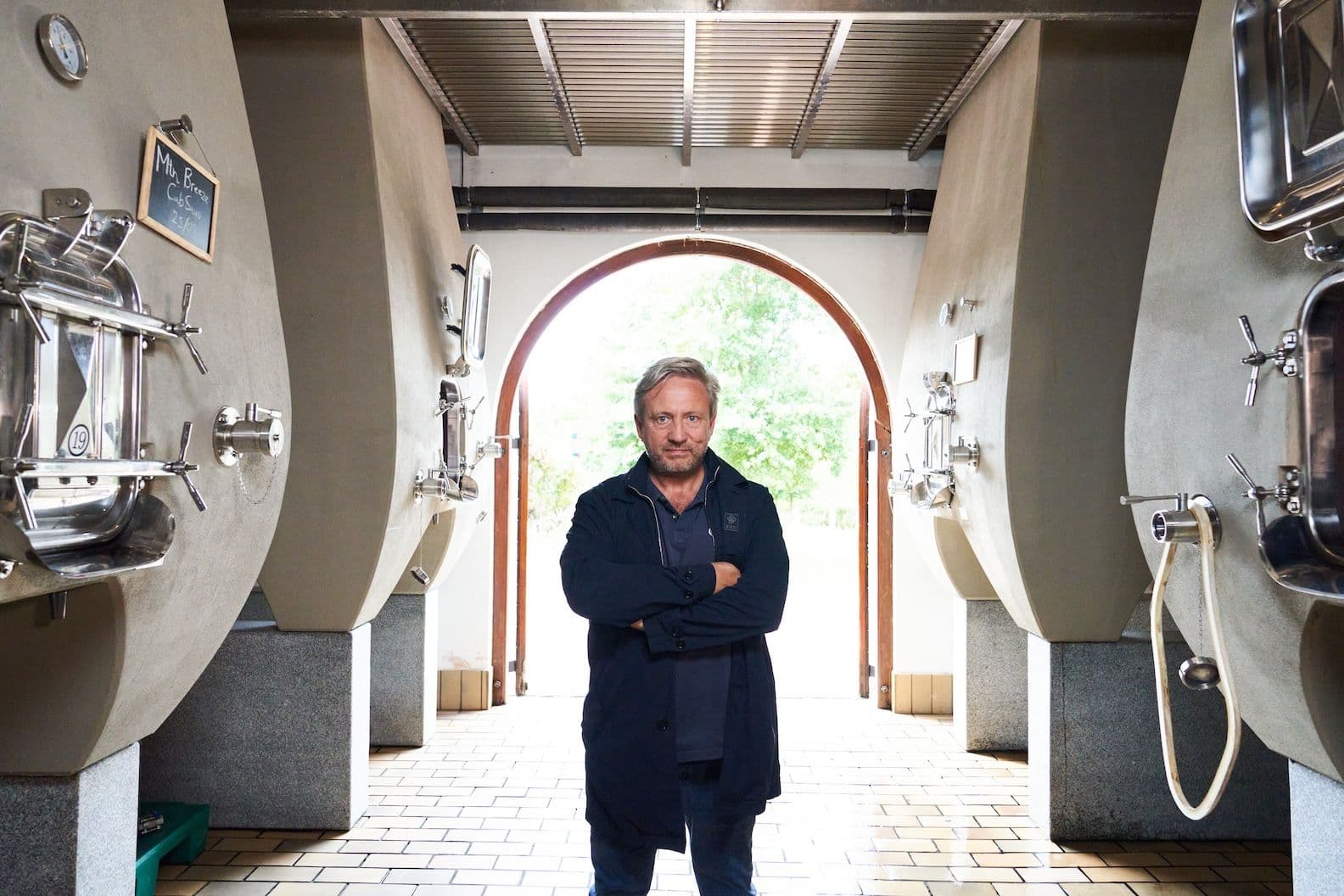
At Roebuck Estates, the context is different but the principle is the same. Chief executive, Michael Kennedy, has been building a structured data approach in the vineyard for several years, using tools such as Sectormentor to capture daily observations across vine health, fruit quality, soil conditions, and biodiversity.
Their six vineyards are divided into 82 individual blocks, each tracked separately. This allows decisions to be made at a much more granular level, from pruning through to harvest, based on the specific conditions and performance of each block rather than broad assumptions across a site.
Alongside this, weather stations have been collecting data on temperature, rainfall, wind and humidity since 2013, creating a consistent historical record of how each growing season has evolved.
What is particularly instructive is how this approach has developed over time. Initially, the focus was on collecting as much data as possible. Over time, this has been refined to focus on the data that is actually useful in decision-making. That shift, from data collection to data relevance, is a critical step in any AI or analytics journey.
“There will be no substitute for the experience of a well-trained team,” says Kennedy, “and the data removes any guesswork from the process.”
From an AI perspective, this is where the real value begins. Machine learning systems are only as good as the data they are built on. In wine, that data has often been inconsistent or fragmented. What Roebuck has done is build a structured and reliable foundation.
While they are not currently using AI-driven tools for ripeness modelling, the underlying conditions are already in place. With multiple years of consistent, structured data, they are able to model ripening curves based on weather patterns and yield, supporting more informed harvest decisions.
This is how AI enters the vineyard in practice. Not as a sudden transformation, but as a continuation of data that has been carefully collected, refined, and understood over time.
Where the real opportunity lies
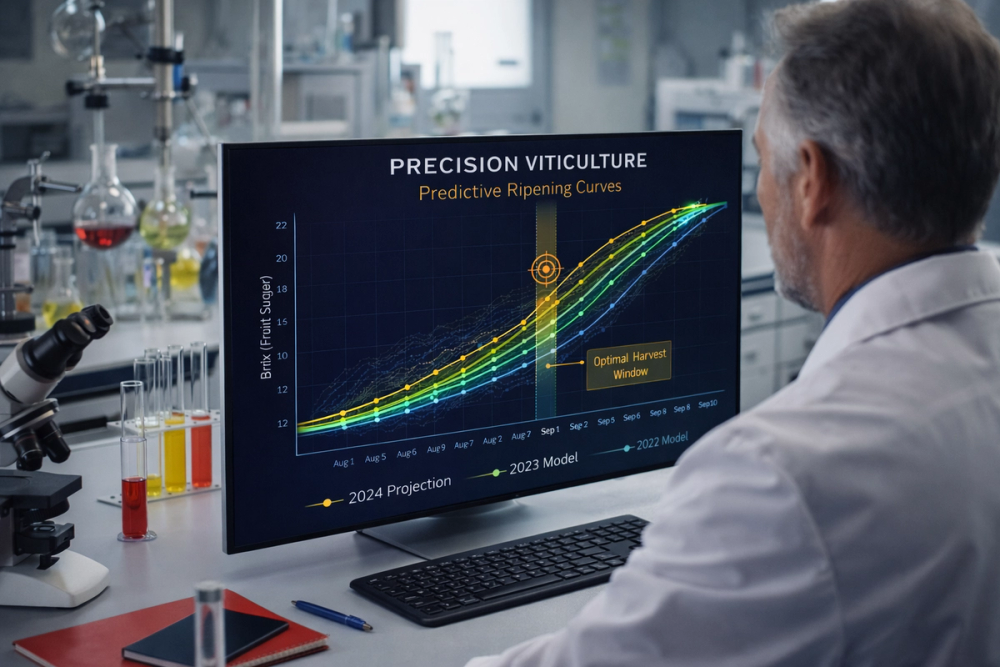
A lot of AI use is currently around creating content - like with this AI produced image
Across the trade, the opportunity is less about novelty and more about application.
Customer segmentation is one of the most immediate areas. Most businesses already hold the relevant data, including purchase history, bookings, and email engagement, but lack the capacity to process it effectively. AI allows that data to be translated into meaningful customer groups, making communication and range decisions more precise.
Content production is another area. Not generating content from nothing, but adapting strong source material for different audiences and formats. Producing variations of a campaign, testing messaging across segments, and doing so at scale.
For smaller producers and importers, the gains are often operational. Reformatting product data, drafting communications, summarising documents, or generating first drafts of technical sheets. None of this is particularly visible or groundbreaking. All of it saves time.
The fear, in context
The concerns around AI are not without foundation. Used carelessly, these tools can introduce errors. As Monteiro points out, models can fabricate information with confidence.\
“I have been tricked,” she says. “You have to be careful.”
In the data world, we call this hallucination. It relates back to the well-known principle of “garbage in, garbage out.” If you do not have control over your data sources and infrastructure, you risk not only incorrect outputs, but also bias, security concerns, intellectual property issues, and system instability.
In a category where trust and accuracy are critical, this matters tremendously. However, the answer is not avoidance. It is transparency, clear guardrails, and strong data foundations. It is important to verify outputs and maintain editorial control. Large language models are designed to work with text, not as general intelligence, so they should be used to accelerate work you already understand, not to replace knowledge.
Monteiro makes a broader point worth noting. “People will get fed up with everything AI,” she says. “They will rely on people again. As soon as things start to go wrong, people will want someone they can trust.”
I agree, to a point. AI will not replace humans, but it will become a tool we use more frequently. Trust in business relationships will remain, and may become even more important than it is today.
A final thought
As with the internet, and the shift to digital that followed, each wave of change brings a degree of fear. That is, in many ways, human nature.
But as with those earlier shifts, the more useful approach is to remain open and observant, and to understand how AI can help, rather than avoiding it altogether.
The wine trade has always been a human business, built on knowledge, relationships, and experience. AI will not change that. Designed around your business needs and implemented in the right places, it can reduce the time spent on the work that surrounds it.
And I am happy to help you with that.
* Joanna Dabrowska is a data and AI strategist and the founder of consultancy VerAlsonio. She works at the intersection of applied data science and the wine trade, combining experience at AWS, PwC, and Deloitte with wine journalism, judging, and industry advisory. Her work focuses on helping wine businesses better understand their customers, make more informed commercial decisions, and apply AI in a way that is practical, effective, and aligned with the realities of broader wine industry. She will be delivering a Masterclass on AI at the London Wine Fair in May. You can contact her at linkedin.com/in/jodabrowska or joanna@veraison.io.