Just the name of Lake Garda immediately conjures up images of Riva speedboats and speedo-clad water skiers effortlessly scything the lake with equally impressive quantities of spritz to hand.
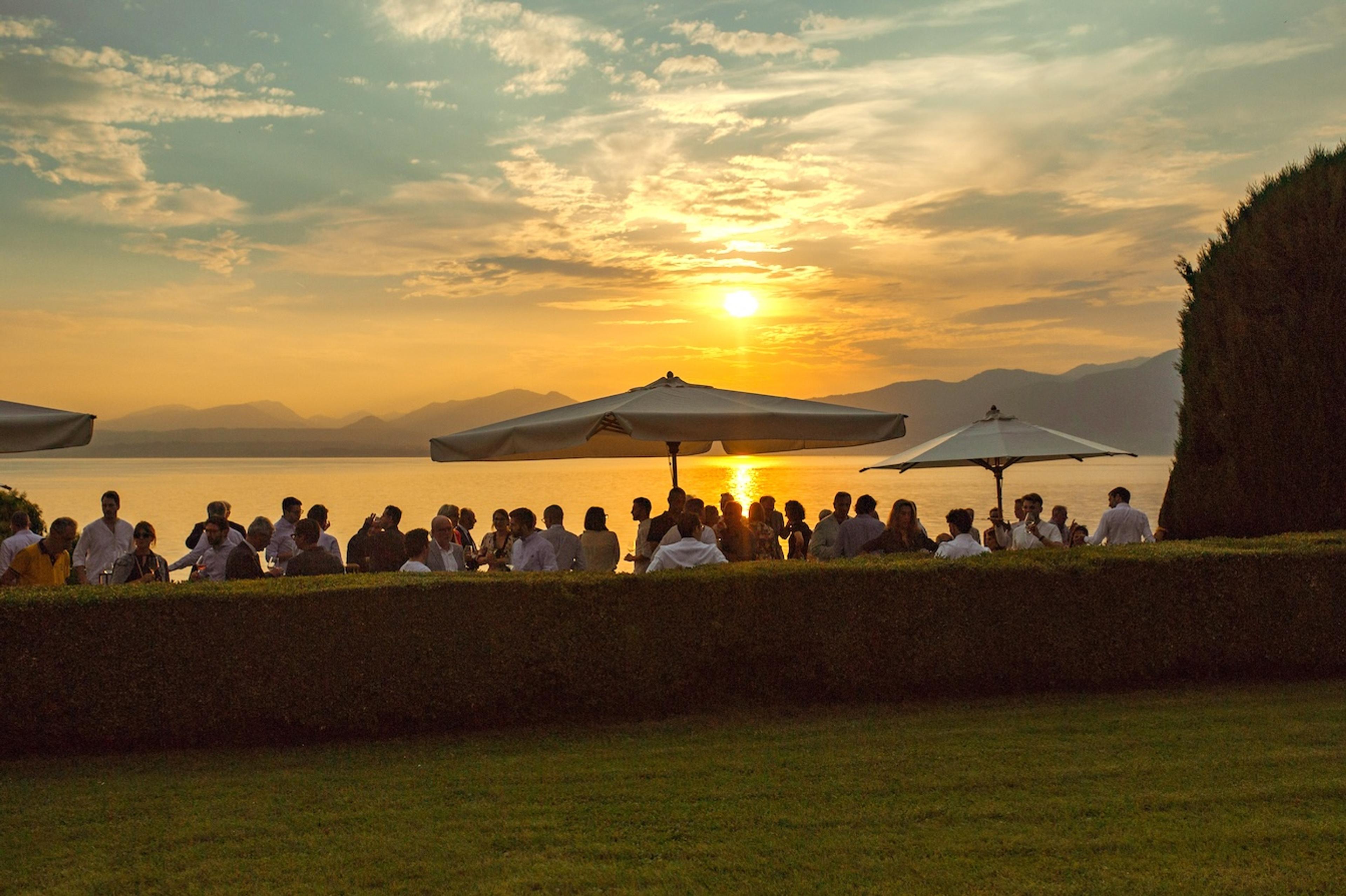
Whilst life here revolves around the water, the area is, however, more understated than its Como cousin. It has quietly hosted the modern glitterati, including Bradley Cooper, the Beckhams, and Tom Cruise, with great aplomb. Garda is a place that whispers rather than shouts, unlike Como’s promotion of George Clooney’s erstwhile residency, which ultimately led to his relocation despite previous pleas for assistance with privacy.
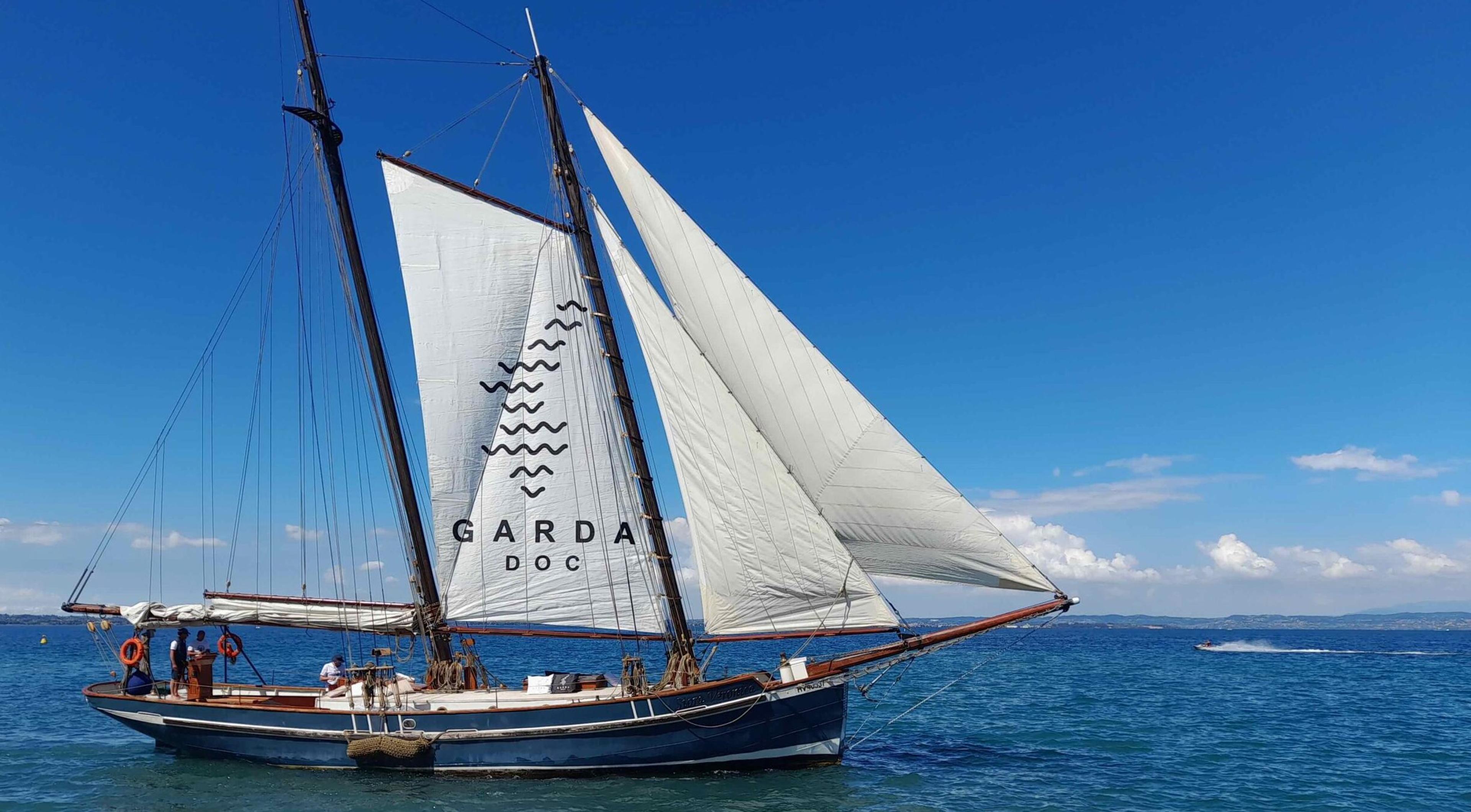
The wines from the Garda appellation are discreet and approachable, and have been steadily gaining appreciation and new devotees, much like sailing and free-diving on the water.
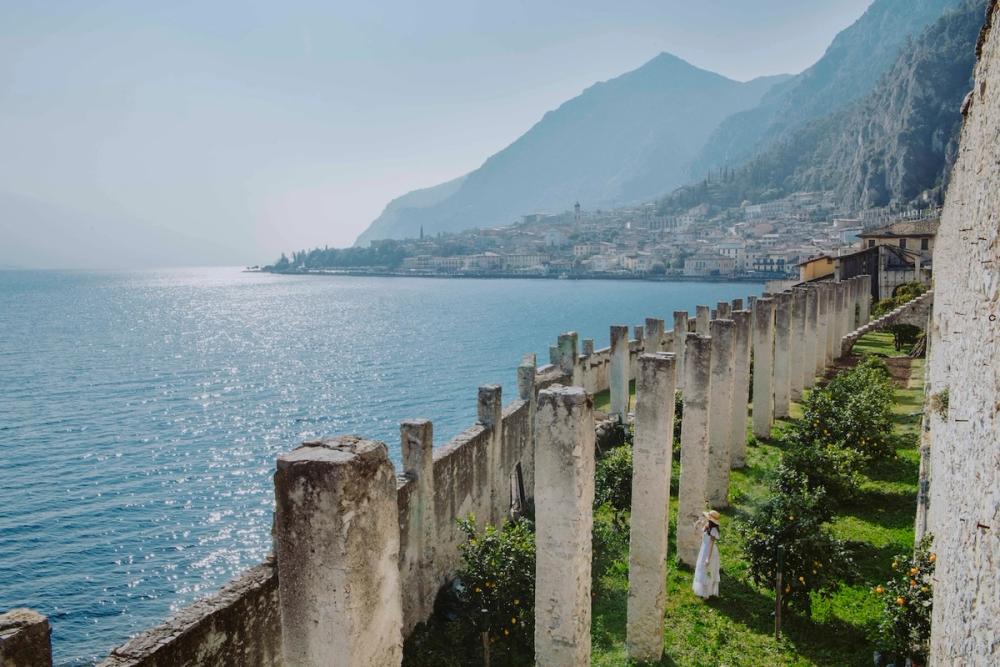
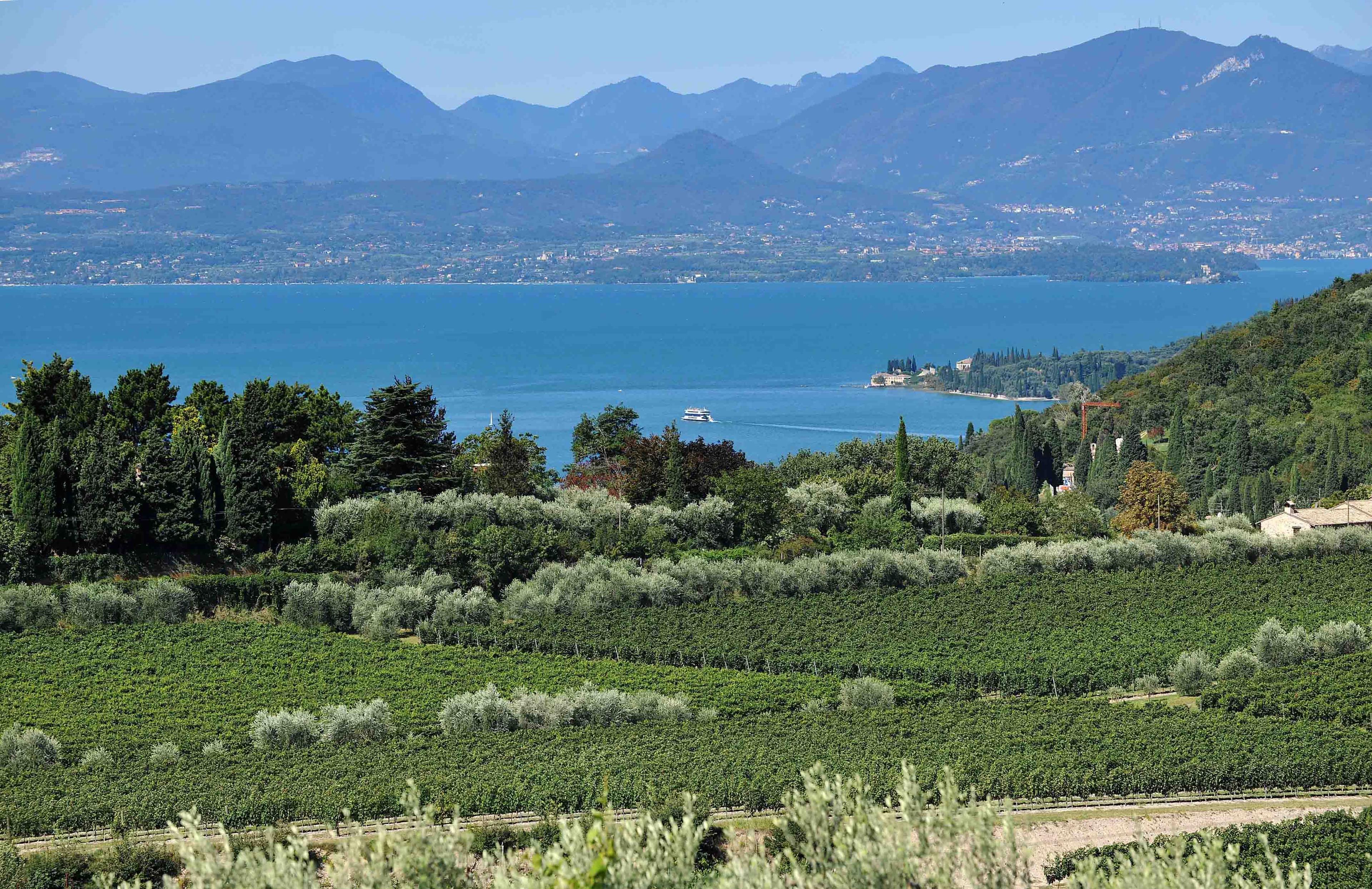
There are no hydro-thermal concerns here, as the lake is the largest body of water in Italy. It’s 50.35 trillion litres of water that help provide a buffer, maintaining a sub-Mediterranean microclimate all year round. This, previously, translated into predictable mild winters and warm summers. Now, the changing meso-climate has become a little more unpredictable with occasional, sudden fluctuations in temperature and tropical rainfall interrupting the previously experienced nirvana.
Citrus, cypress and agave grow well here and, of course, it is the ideal area for viticulture despite recent meteorological concerns. These have led to the grape harvest no longer being wholly focused on sugar levels but also on chemical, physical, and sensorial evaluation.
The lake itself is seen by the region's growers as central to their lives and as both “an origin and inspiration.” Verona and the immediate area, which attracts 28 million visitors annually, provide a ready-made audience for its wines, with Germany and the UK as its two main export markets.
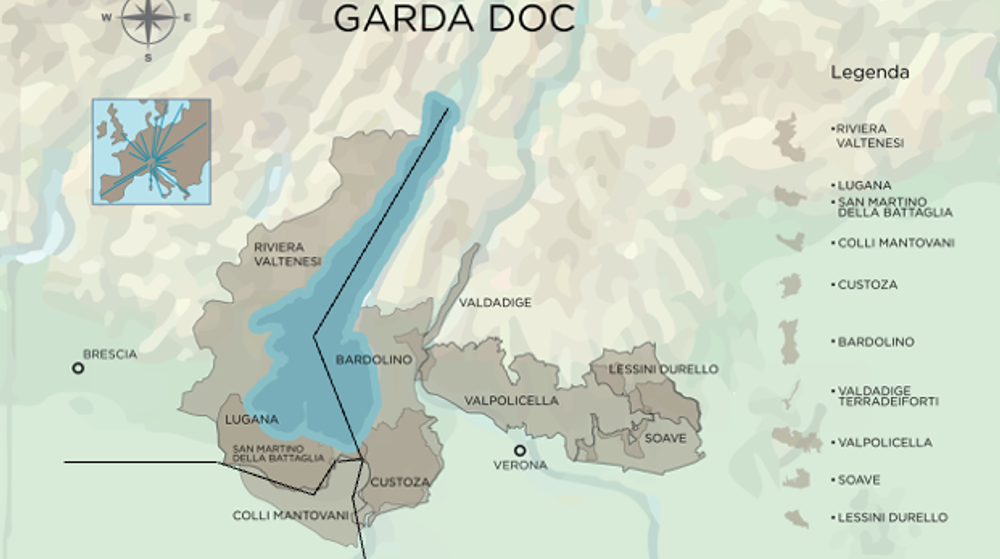
The Garda production area
Putting Garda on the map
Located midway between Milan and Venice, the Garda DOC appellation covers the provinces of Verona, Brescia, and Mantua, extending from Valtènesi to Valpolicella and from the banks of the Mincio River to Verona. The northern shore of the lake rises to the Prealpi Gardesane mountains and eventually the Alps themselves beyond, in a decidedly Norwegian Fjord style. This gives a fresher, breezier shore in contrast to the warmer South, with its more classic beach leisure.
In fact, the prevailing winds are so predictable that they are named; the morning Pelér blowing South in the morning, and in the afternoon the Ora blowing North from the warmer plains. As these breezes move, they also traverse the predominantly hilly area surrounding the lake, where the vineyards are found, warming and cooling them in turn.
Garda, a protected DOC (Denominazione di Origine Controllata), was established in 1996, and the surrounding lake is home to the ten winemaking areas that form it. These include the names of immediately recognisable Soave, Bardolino and Valpolicella. It also encompasses the much-acclaimed elegant, mineral, and saline whites of Custoza.
The vineyards share a common theme: they are planted in morainic soils. These soils extend to a reasonable depth of 2-400 metres and, as a result of their composition, are free draining. They were formed from a mixture of glacial debris that later became the lake, incorporating sand, stone, clay, and silt. Within this melange are low levels of limestone and rocks partly composed of calcium carbonate. The latter are responsible for the evident fresh minerality in the resulting white wines.
In 2016, the denomination was ratified, adding Garda Sparkling, and additional white and red wines were brought under its remit. With some 31,000 hectares, mostly in the province of Verona (27,889 hectares), and the remaining 3,211 hectares divided between the provinces of Mantua and Brescia, the region has some eight core grape varieties. These are Garganega, Trebbiano, Chardonnay, and Pinot Grigio in white, and Corvina, Marzemino, Merlot, and Cabernet Sauvignon in red. In addition to these core grapes, there are various other indigenous varieties cultivated in the area.
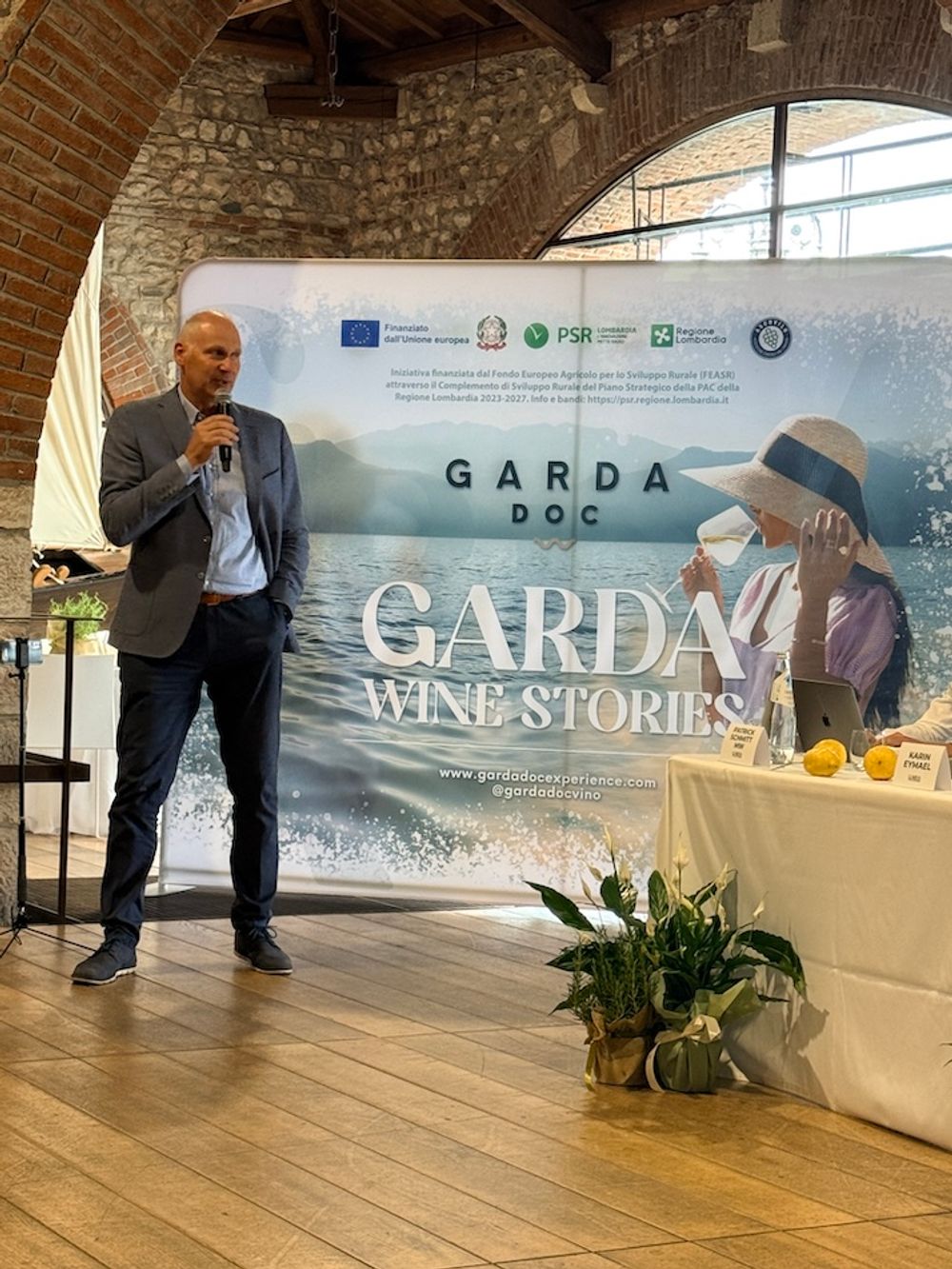
Paolo Fiorini, president of Garda DOC at regional focus – Garda Wine Stories
Changes coming into effect
For the 2026 harvest, many of the changes outlined by the region in 2025 have now come into effect, allowing greater flexibility for the grower and broadening the offering to satisfy modern palates. Pinot Grigio has long been a favourite in the region and has assisted in Guarda’s visibility. To build on the success achieved with the white wines, both rosé and Ramato (skin-contact wines), with their copper hue, are now admissible under the DOC in Pinot Grigio form.
“Corvina”, with its almond hints and fruitiness, now serves as a varietal designation, highlighted as a showcase grape among the region's local varieties. This highlights a new focus by the appellation on celebrating its local grapes and presenting its unique offering. Across the board, Müller Thurgau has been accepted for all wine types, and the plummy blackberry-edged Rebo is now admitted within the still wine category. Garganega and Chardonnay are also permitted as single varietal designations in sparkling and semi-sparkling form.
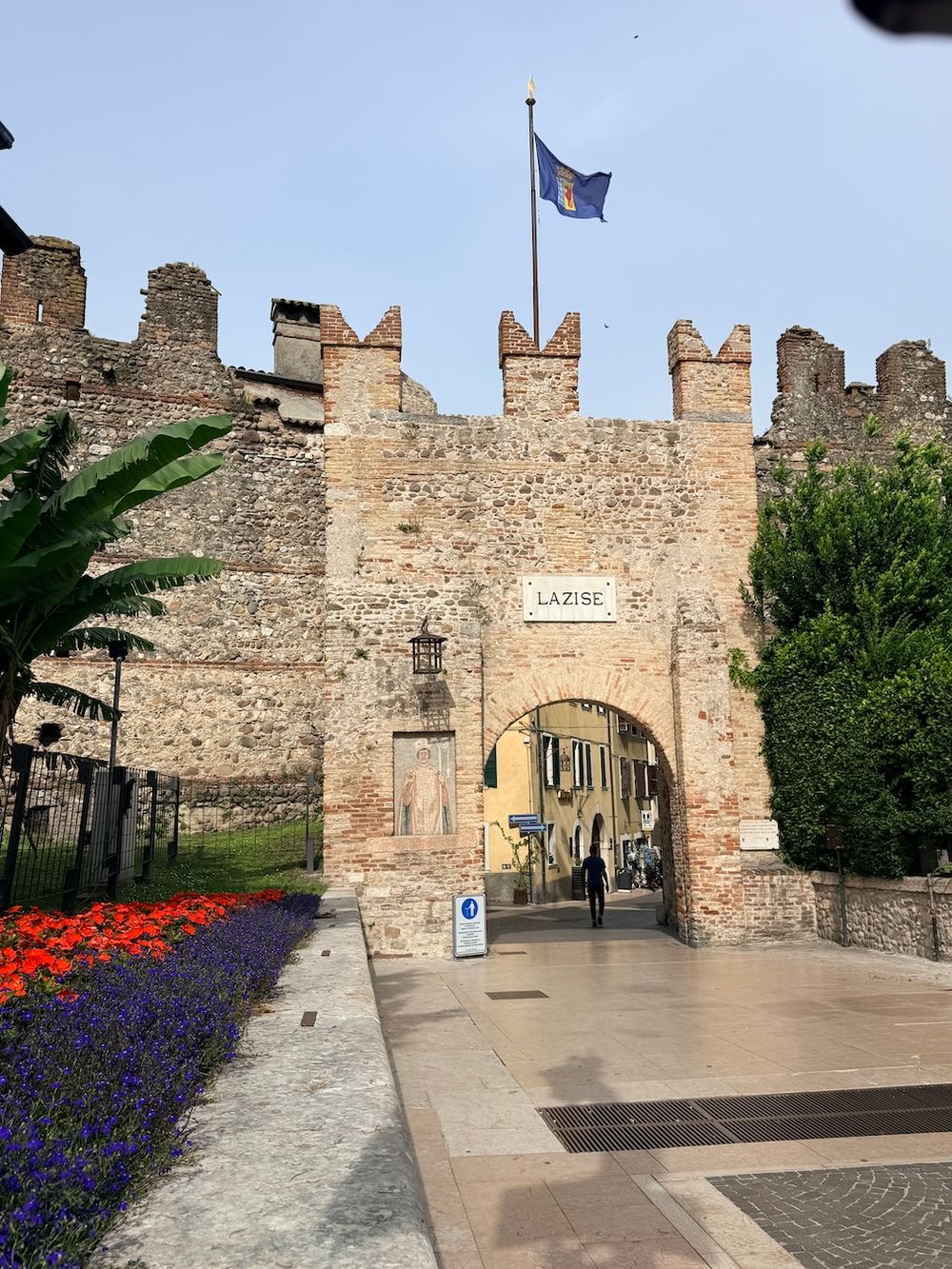
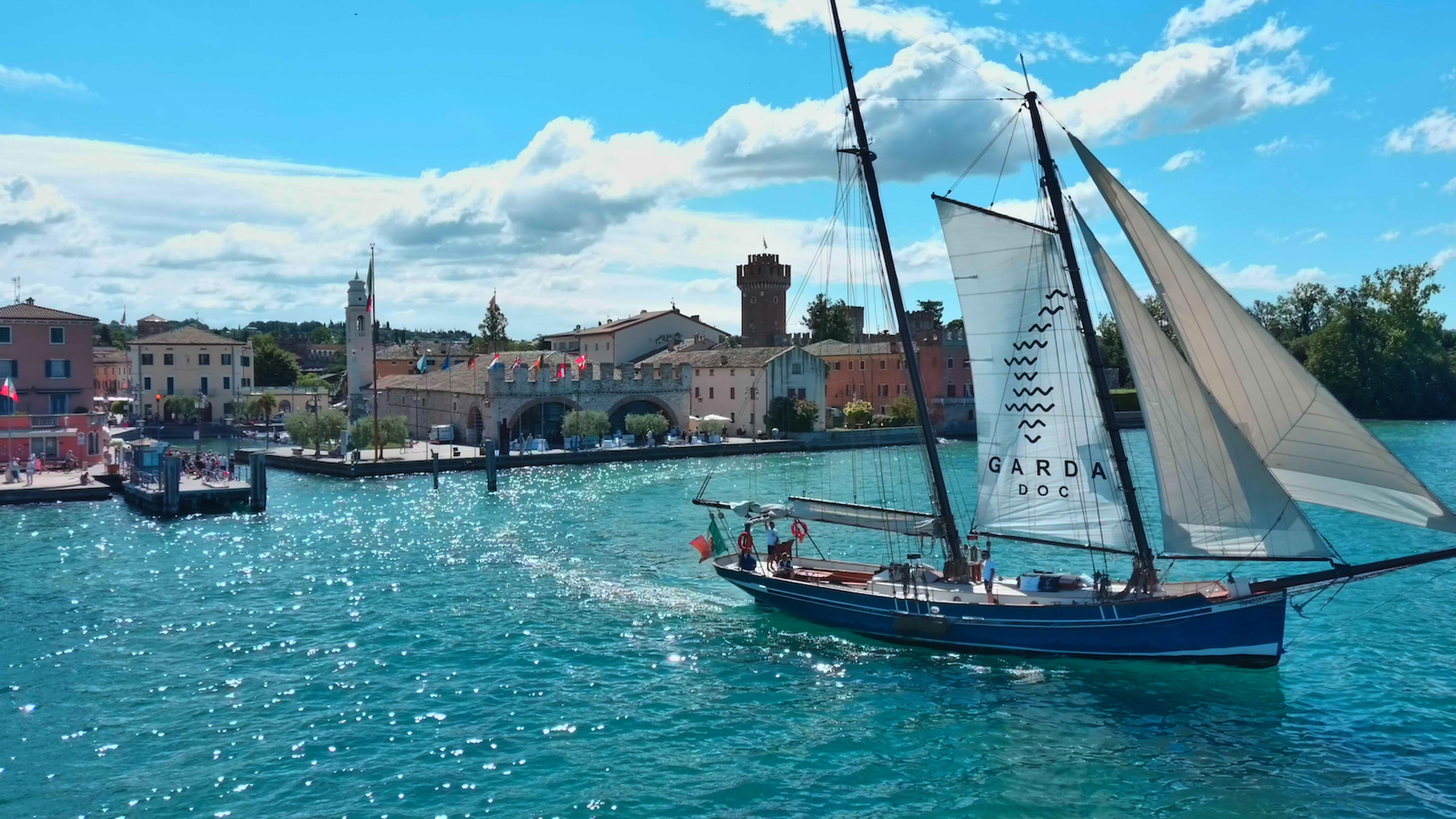
Lazise - home to the Garda Wine Stories conference
As part of ‘Garda Wine Stories’, an event hosted by the Consortium, they put on an impressive conference to highlight the region's achievements and future plans. Rather aptly, the forum was held in the ‘Dogana Veneta’, a building dating from the 1300s, which was originally an old customs house that controlled local trade, including wine, in the medieval castellated village of Lazise.
I met with Paolo Fiorini, the president of the Garda DOC consortium, himself an agronomist and oenologist. He enthusiastically explained their mission: “Our ambition is to imprint upon the imagination of the public the identity of our wines, both varietal and sparkling expressions of excellence, intrinsically connected to our enchanting territory, whose unique geographical and climatic characteristics make it not only one of the most sought-after tourist destinations nationally and internationally, but also a privileged area for viticulture.”
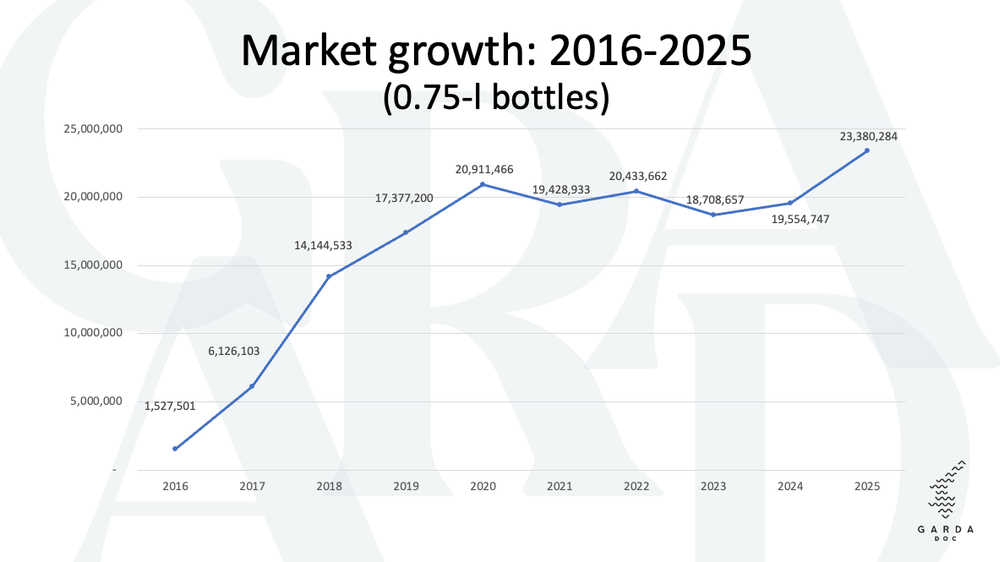
In 2024, the region set out its goal of raising annual production from 20 to 40 million bottles. In 2025, just over 23 million bottles were produced, with 89% being white wine. This translates to some 8 million bottles of Pinot Grigio being the leading growth category. Chardonnay sales are stable at 3.9 million bottles, with growth showing in both the Garda Bianco and Native Varietal categories. To be labelled by variety, the wine must contain 85% of the designated grape.
From the 2025 harvest, new production rules have been adopted, widening the remit of the DOC’s winemakers. This came from experimental and technical trials, some ten years after the last regulatory changes. Once again, the Consortium, as both protector and promoter, saw its opportunity to metamorphose and broaden the region's appeal and reach. This is to allow value to be built for both consumer and winemaker alike whilst consolidating and strengthening Garda wines' brand identity.
Amongst the major adjustments, a pathfinding move in the Italian DOC landscape was made by allowing white wines to be approved for status with naturally low alcohol. The region had already been making some of these wines but started to refine its offering. Having looked at alcohol duty across its markets, the company will be able to enter a previously unexplored and important market for many with the appropriate designation.
Secondarily, a Crémant designation has been added in the traditional-method sparkling wine category for both white and rosé wines. This was designed to align with the most prestigious European traditions and to sit alongside existing Charmat and traditional-Method wines.
Thirdly, an additional 90 hectares in Castenedolo, Brescia, were added to further enhance the denomination due to the quality of its wines and its sharing of the favoured Morenic hillside terroir.
In conclusion
In the wine world, there have been many cases (like Clooney’s in Como) where there has been an intense focus, resulting in a demand for change by an individual or in regulation by a region's growers, that has never come to fruition.
Garda DOC is wholly driven by its people and its heart – the lake. The region's representatives are rising to the market challenges and trends it has identified and are quietly adapting and innovating around these to continually create opportunities for the region.
Of all that I saw in Italy, the Consorzio Garda DOC is helping its members reposition toward a clearer more distinctive mission. If it continues at its current momentum, they will find like their most famous modern film-star visitor, it is certainly not one that is impossible.