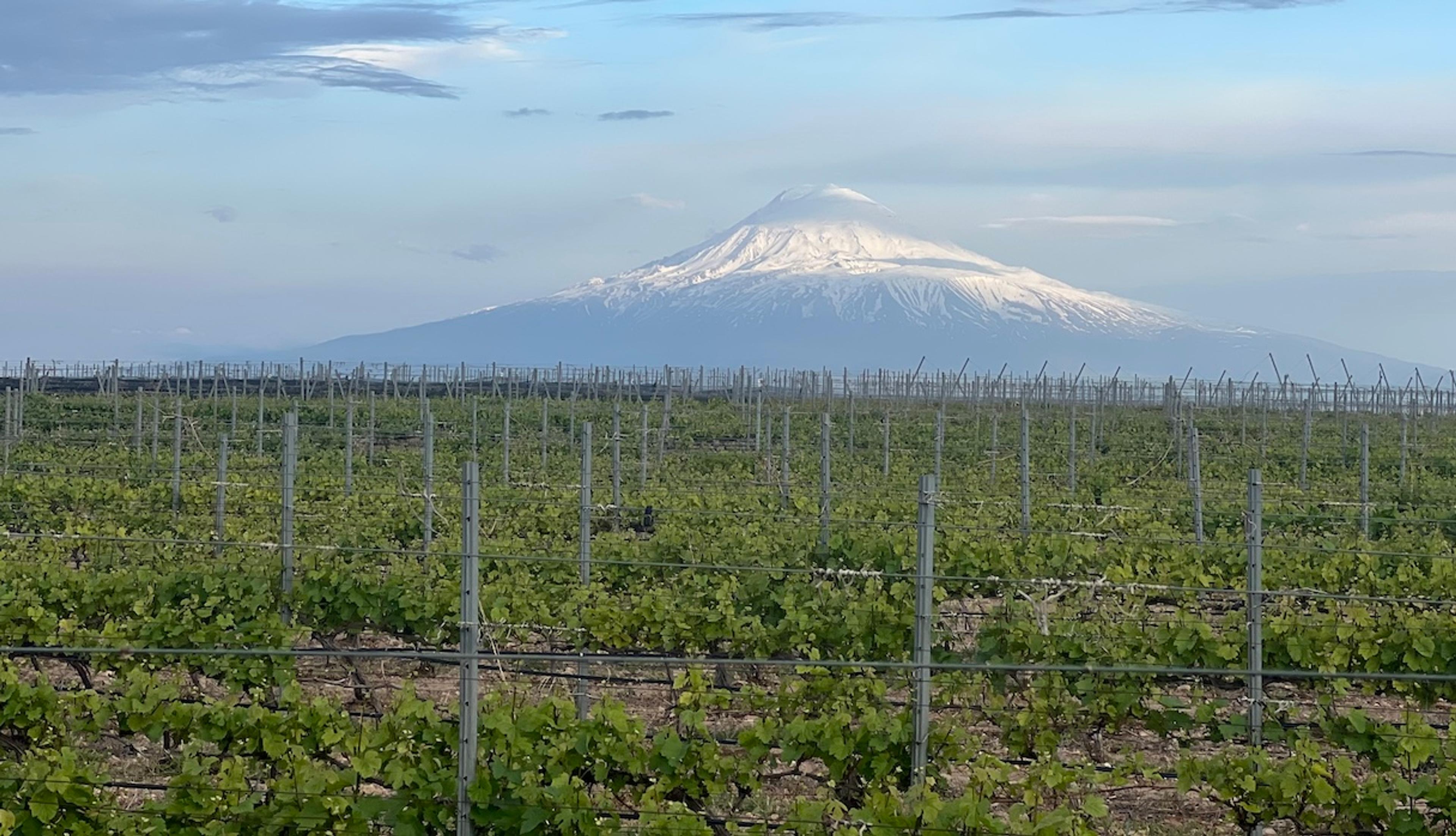

When I learned I would be travelling to Armenia, I realised how little I actually knew about the country beyond its ancient history and dramatic mountain landscapes. Landlocked in the South Caucasus and bordered by Turkey, Azerbaijan, Iran and Georgia, Armenia remains geographically and politically isolated, with only its border with Georgia fully open.
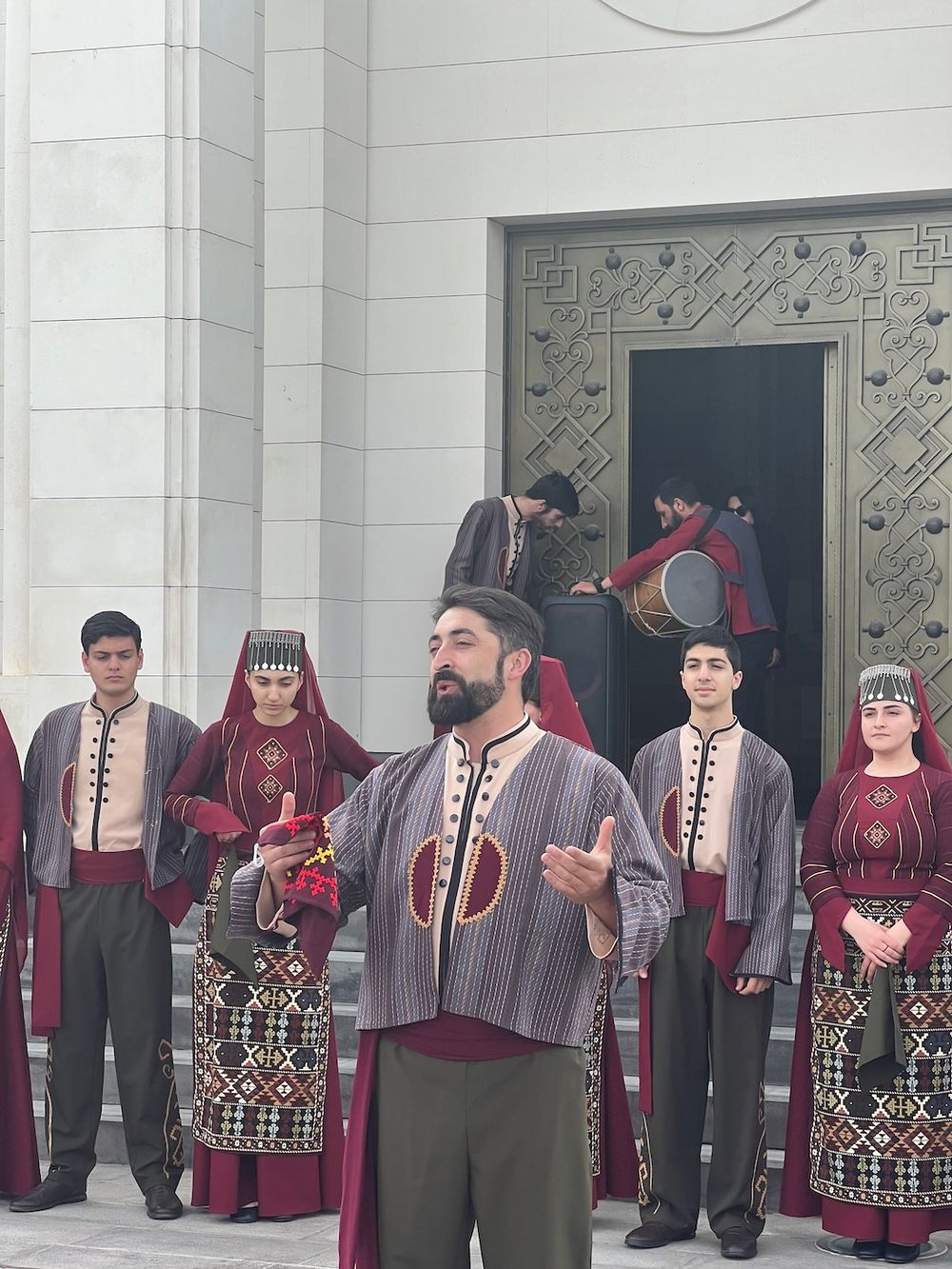
Armenian folk dancers
This isolation has profoundly shaped both its economy and wine industry. During the Soviet era, Armenian alcohol production focused heavily on brandy, while many historic vineyards were replanted or abandoned in favour of varieties and styles that suited Soviet demand. Since independence in 1991, however, Armenia has been steadily rediscovering its viticultural identity, reviving indigenous grape varieties and rebuilding a wine culture whose origins date back thousands of years.
Armenian winemaking history
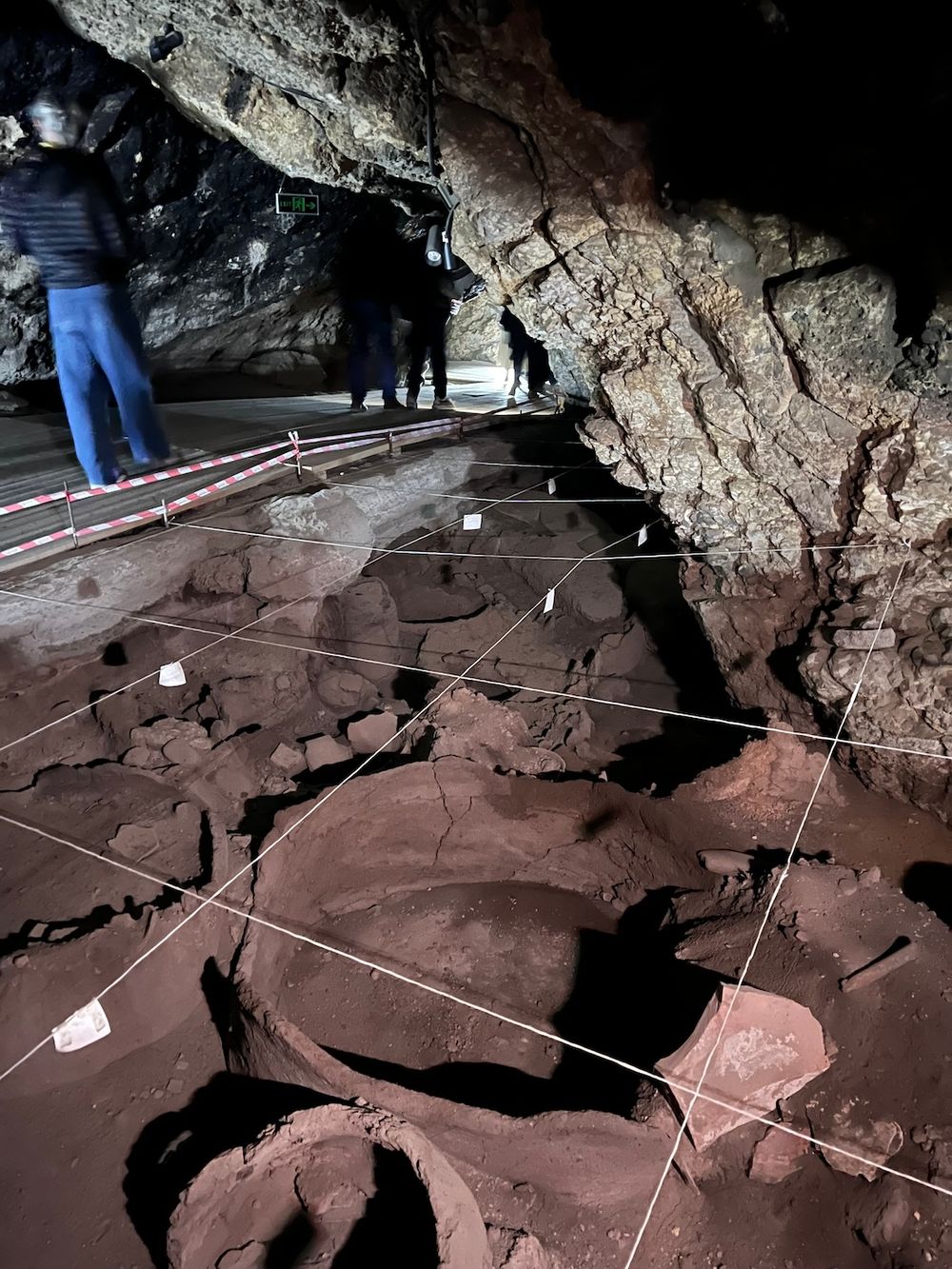
Areni 1 wine press and karas
One of the clearest examples of Armenia’s ancient winemaking heritage is the Areni-1 cave complex in the Arpa Canyon region.
Research conducted by teams from the University of Oxford and the University of California dated the site to the late 5th and early 4th millennium BCE, making it home to what is widely considered the world’s oldest known winery. Archaeologists uncovered a primitive wine press, fermentation vessels, storage amphorae and grape seeds, demonstrating the central role wine already played in Armenian culture and spirituality.
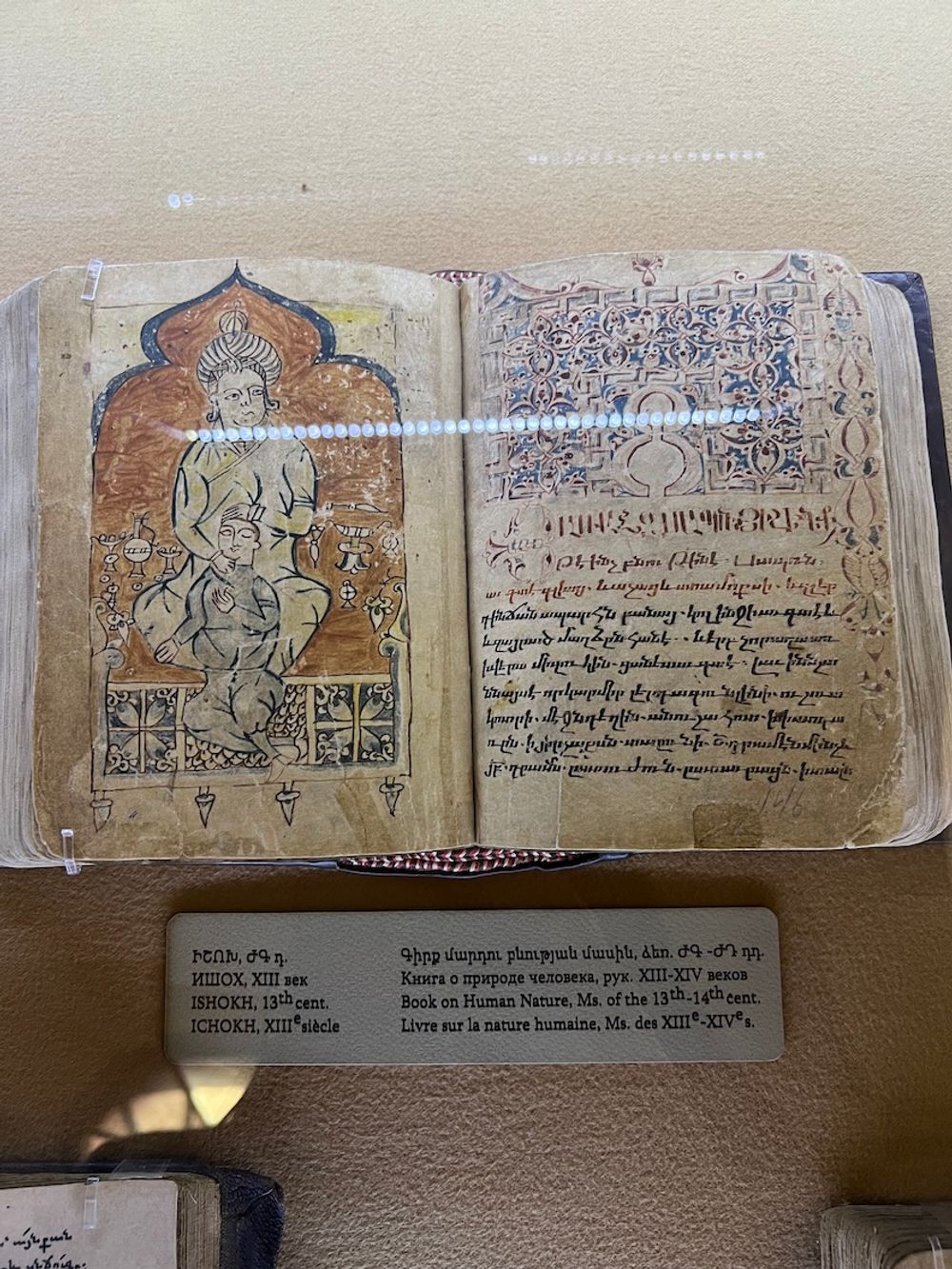
Matanadaram museum and first mentions of wine as medicine
Armenian wine was later referenced by ancient historians including Herodotus, who described its presence in Mesopotamia. Following Armenia’s adoption of Christianity in the early 4th century, wine became even more deeply embedded in religious and cultural life, symbolising celebration, protection and continuity.
Indigenous varieties
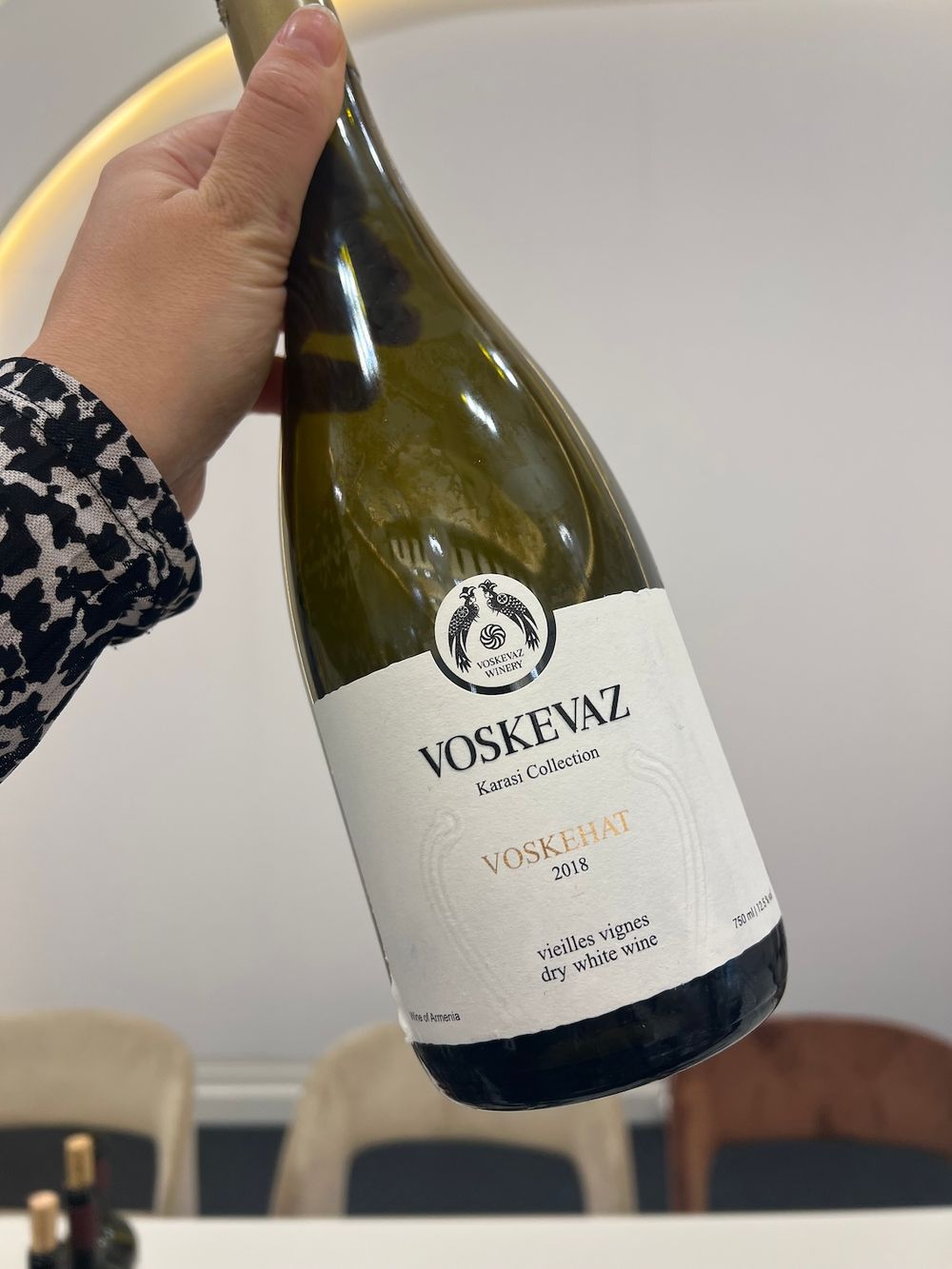
Armenia counts more than 450 recorded indigenous grape varieties, although only a fraction are cultivated commercially today. The Vine and Wine Foundation of Armenia (VWFA) has played a major role in promoting native grapes internationally, particularly Areni Noir and Voskehat.
Often referred to as the “queen of Armenian grapes”, Voskehat produces structured, high-acid whites with citrus, floral and honeyed characteristics capable of ageing remarkably well. Areni Noir, Armenia’s flagship red variety, is especially associated with the Vayots Dzor region and combines bright acidity with notes of red cherry, pomegranate and spice, often drawing comparisons to Nebbiolo in style and structure.
Visited regions
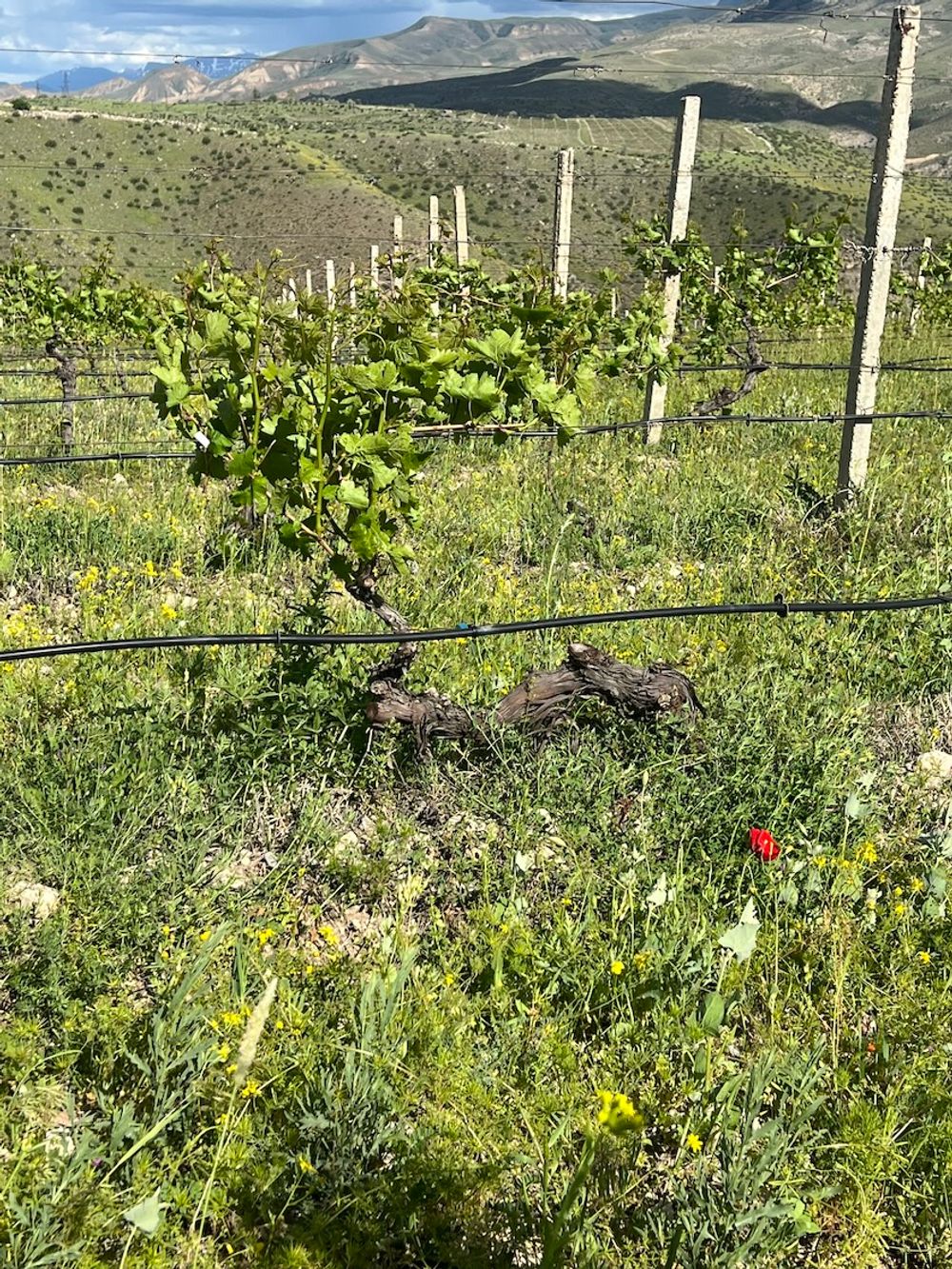
Hin Areni Vineyard in Vayots Dzor
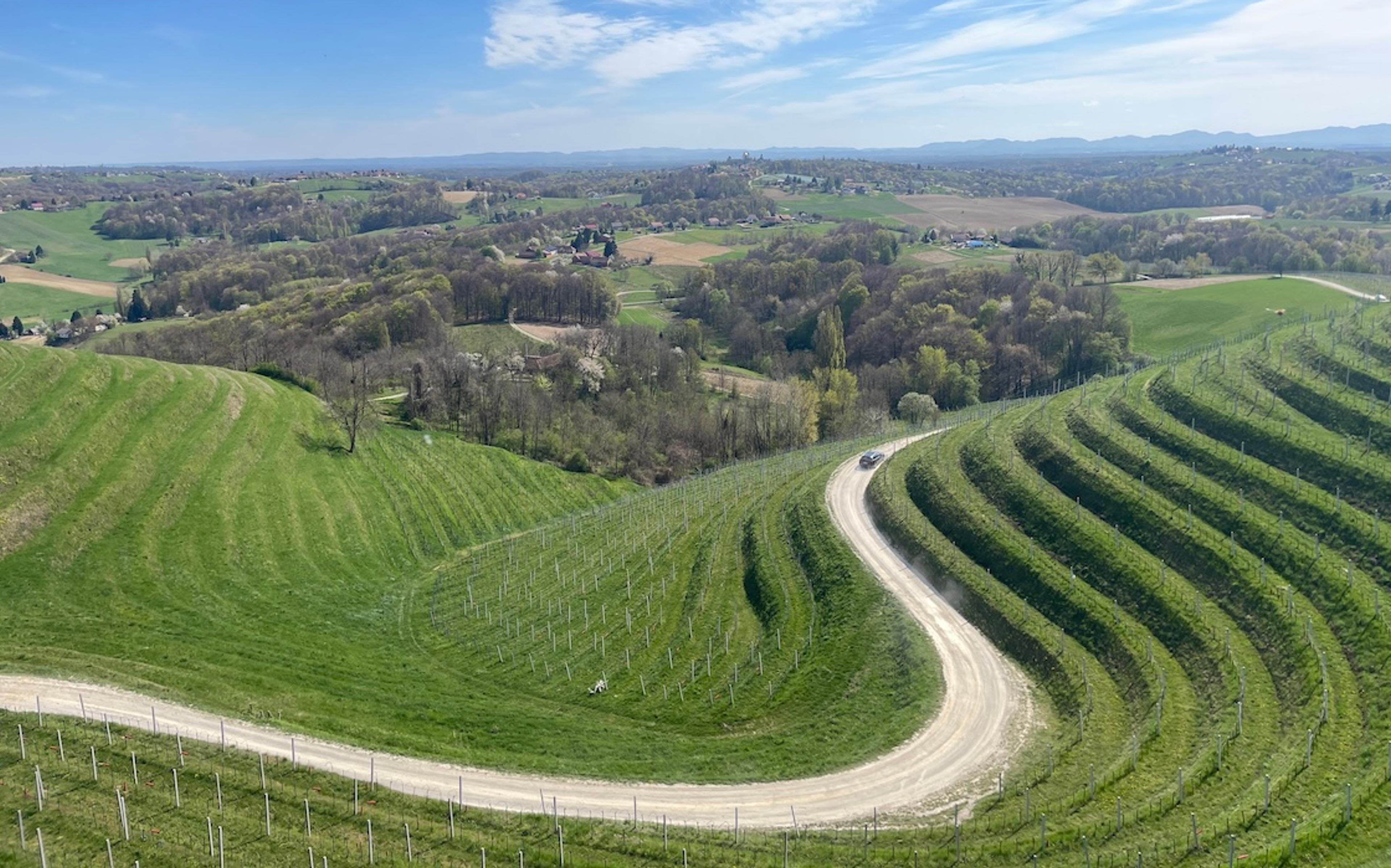
Vayots Dzor remains Armenia’s best-known wine region, combining dramatic mountain landscapes with vineyards planted between 950 and 1,800 metres above sea level. Rocky volcanic soils, dry conditions and significant diurnal shifts produce wines with freshness, structure and ageing potential.
Armenia’s soils are particularly rich in volcanic residues and minerals, while the country’s long geographical isolation helped it avoid the devastating phylloxera epidemic that reshaped most European vineyards in the late 19th century. As a result, an estimated 90% of Armenia’s 15,000–16,500 hectares of vineyards remain planted on their original rootstocks as ungrafted vines, preserving many indigenous varieties on their historic roots and adding another distinctive dimension to the country’s wine offering. Interestingly, local producers noted that Voskehat grapes now command almost double the price of Areni Noir, encouraging many growers to expand white plantings.

Vayots Dzor dramatic views
Armavir and Ararat, located within the Ararat Valley, remain Armenia’s largest viticultural zones and historically supplied fruit for brandy production. Today, they cultivate a broad mix of indigenous varieties including Kangoun, Mskhali and Garan Dmak. Further north, Aragatsotn’s high-altitude vineyards and limestone-rich soils are increasingly associated with fresh, aromatic wines and traditional method sparkling production.
Armenian winemaking techniques
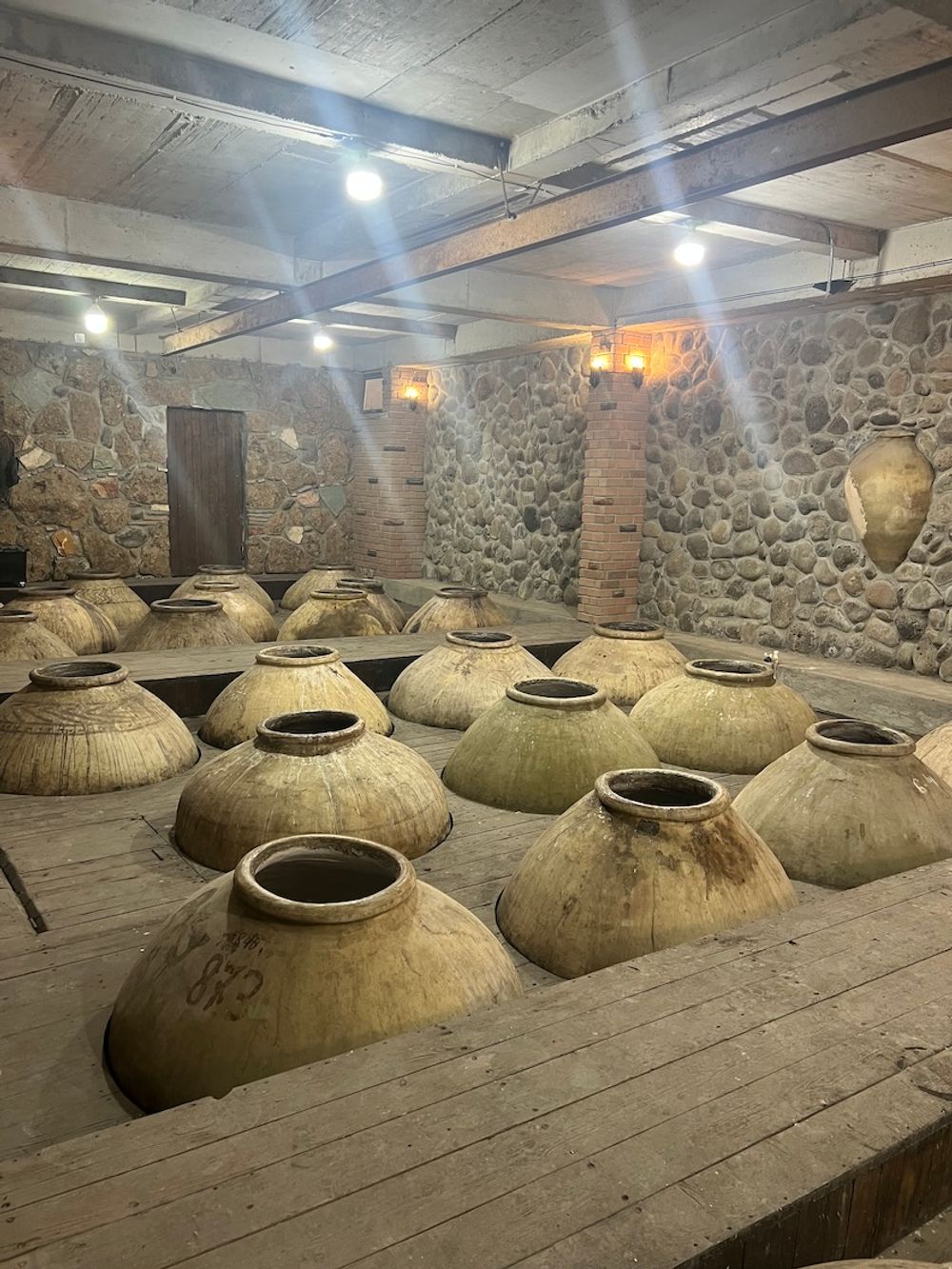
Karas room at Voskevaz Winery
The wines tasted ranged from traditional method sparkling and fresh, still whites and reds to oak-aged wines, alongside sweet pomegranate wine, which proved far more enjoyable than expected.
One notable consequence of Armenia’s isolation was limited access to traditional French oak, leading many local producers to age their wines in indigenous Caucasian, or Armenian, oak instead. Because this local wood has distinct structural characteristics, the barrels are crafted with bespoke toasting profiles tailored to the tight grain. After multiple vintages, these hand-assembled staves naturally shift, giving the barrels a rustic, slightly uneven appearance. Yet, as long as the seal remains perfectly watertight, the structural integrity and flavour delivery remain uncompromised. As one winemaker put it: “As long as it doesn’t leak, it is fine.”
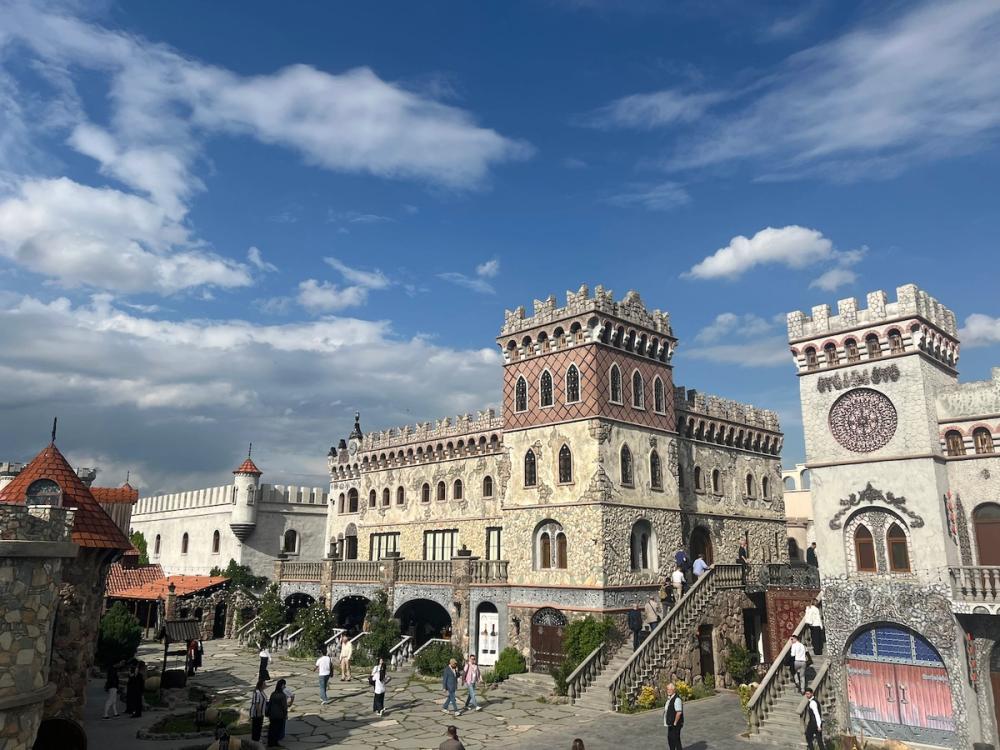
Voskevaz Winery
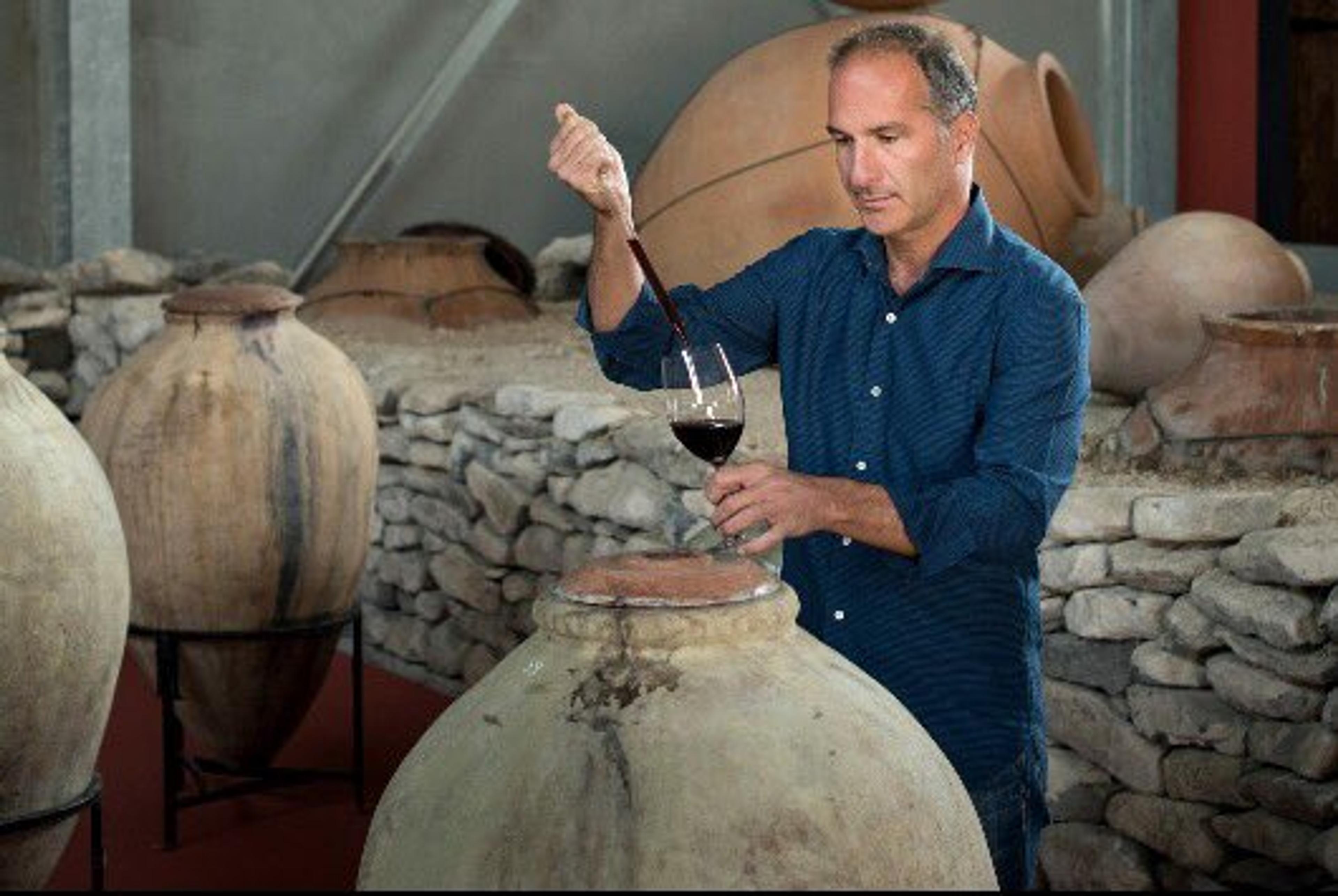
Armenia’s proximity to Georgia naturally invites comparisons between the two countries’ ancient winemaking traditions, particularly their use of clay vessels for fermentation and ageing. While Georgia is known for its qvevri, Armenia’s equivalent vessels are called karas.
Karas differ noticeably in both appearance and construction. Their lighter colour comes from limestone-rich clay, and the vessels are traditionally coated and sealed with beeswax before use. Unlike Georgian qvevri, which are buried underground, Armenian karas are often stored in elevated rows or terraces, allowing easier access during vinification.
During a visit to the Armenia Wine Company museum, it also became clear that these vessels historically served multiple purposes beyond winemaking, including food storage and even burials.
Modern Armenia
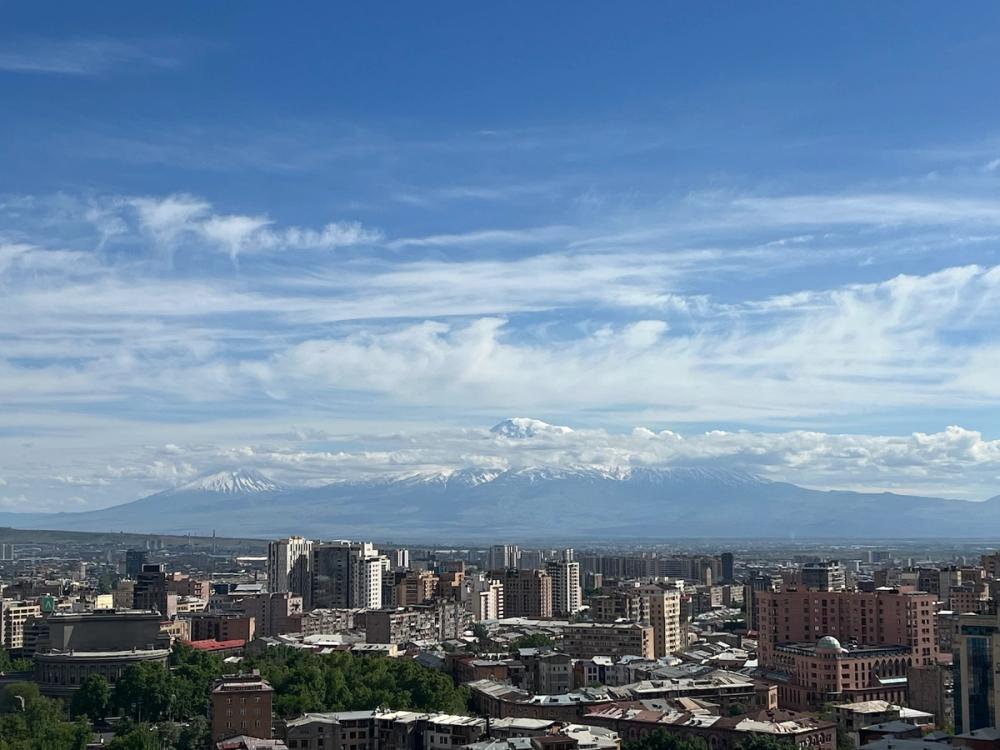
Yerevan - hosting the 33rd edition of the Concours Mondial de Bruxelles (CMB)
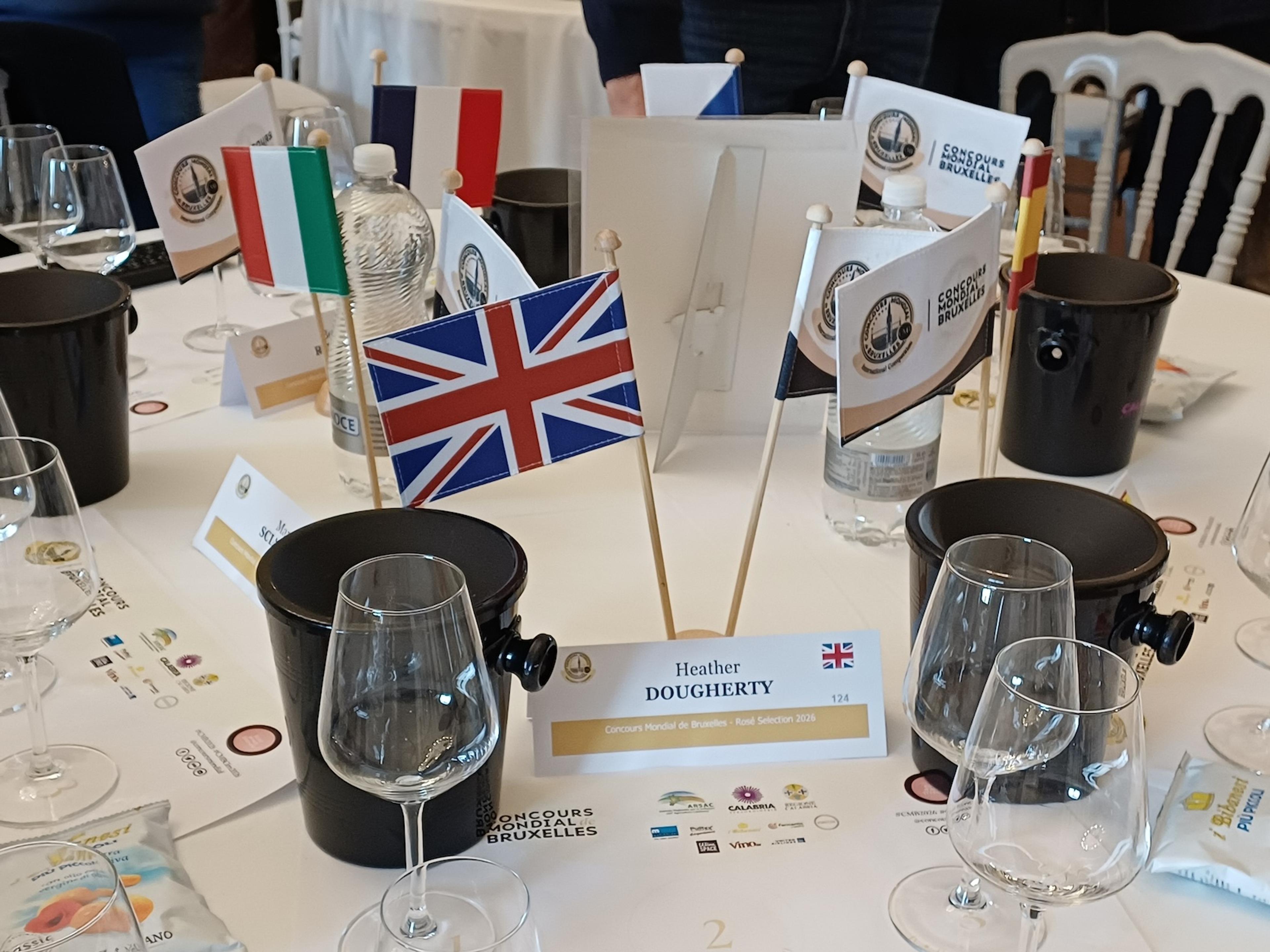
Armenia’s growing international profile was reinforced this year by hosting the 33rd edition of the Concours Mondial de Bruxelles (CMB) in Yerevan. For the first time in the competition’s history, the Red & White Wine Session and the Sparkling Wine Session were held simultaneously, bringing together more than 320 wine professionals from 56 countries to assess close to 8,000 wines from 51 nations over three days.
The choice of Armenia as host was far from symbolic. While the country increasingly positions itself as “the oldest newest wine country in the world”, it is also undergoing a modern wine renaissance driven by investment, international expertise and renewed interest in indigenous grape varieties. Alongside its historical significance, Armenia is steadily building a reputation for high-altitude viticulture, ungrafted old vines and distinctive native grapes such as Areni Noir and Voskehat.
Zaruhi Muradyan, executive director of the Vine and Wine Foundation of Armenia, described hosting the competition as both “an honour and a strategic opportunity” to showcase Armenia’s terroirs and strengthen the country’s visibility on the international wine scene. Armenian Minister of Economy, Gevorg Papoyan, also highlighted wine as an increasingly important export category, with Armenia actively seeking stronger trade relationships with European markets and greater international recognition for its producers.
AI and tasting notes
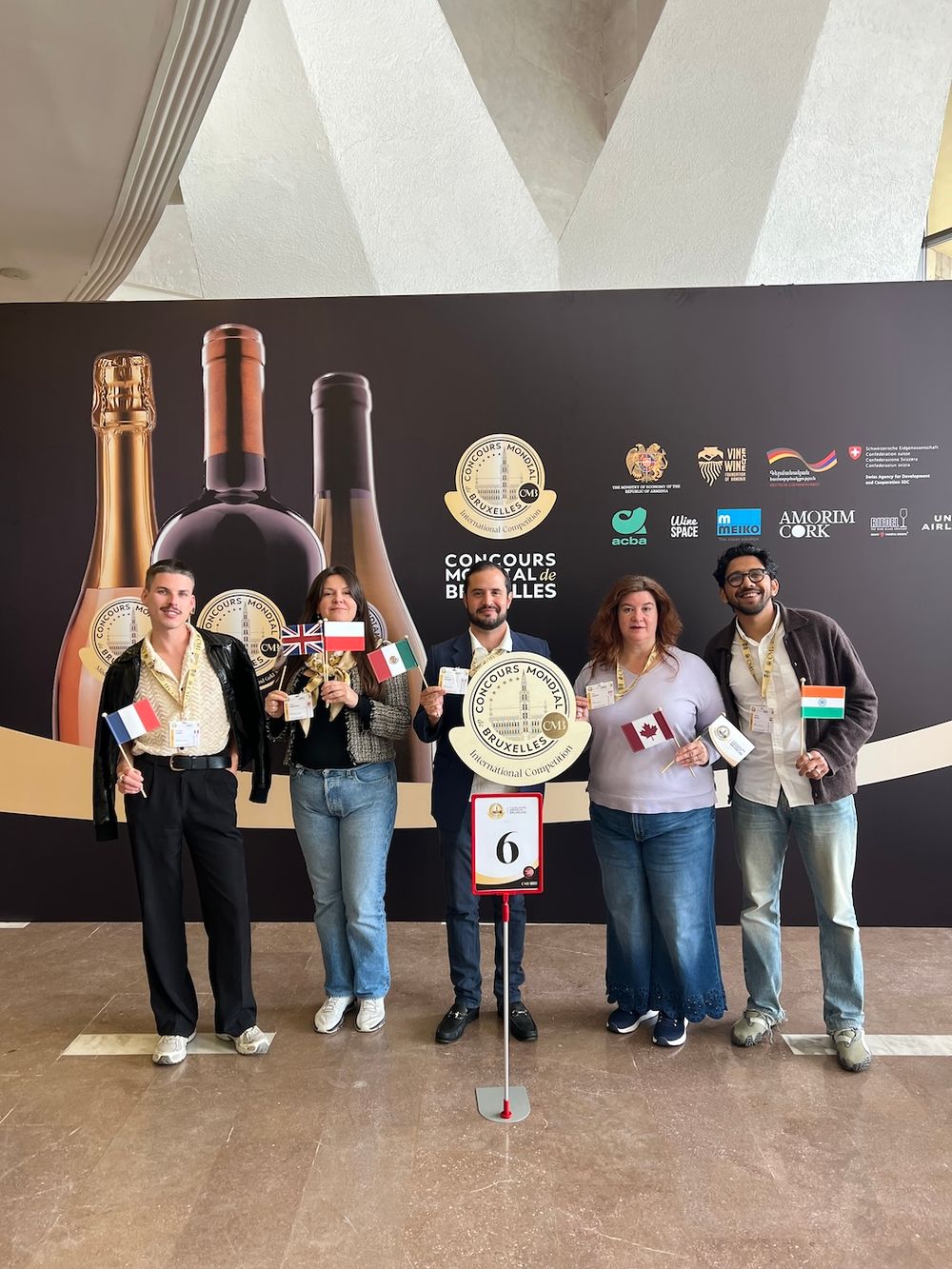
Joanna Dabrowska (second from left) and her CMB judging team
Beyond the competition itself, the CMB highlighted how data and technology are becoming increasingly important in wine communication and sales. CEO Quentin Havaux explained that the organisation is placing greater emphasis on transforming tasting evaluations into practical commercial tools, including sensory profiles and educational materials designed for distributors, retailers and HoReCa professionals.
As a data scientist, this was one of the most interesting aspects of the event for me, particularly seeing how tasting analysis is evolving beyond medal rankings into broader commercial and educational applications. The competition also introduced CMB MERIT, a new label recognising high-quality wines that narrowly missed medal status, alongside the CMB Experience Certified initiative for restaurants and wine bars offering award-winning wines.
Armenia’s future
Armenia describes itself as “the oldest newest wine country in the world”, and after several days at CMB it is difficult not to see the potential. While the country is unlikely to compete on scale or entry-level pricing, its strength lies in originality, quality and identity.
Particularly striking is the number of internationally trained Armenian winemakers returning home to revive local viticulture with a modern perspective. Combined with ungrafted old vines, indigenous varieties and growing international visibility, Armenia is steadily positioning itself as one of the wine world’s most intriguing emerging regions.
Notable wines
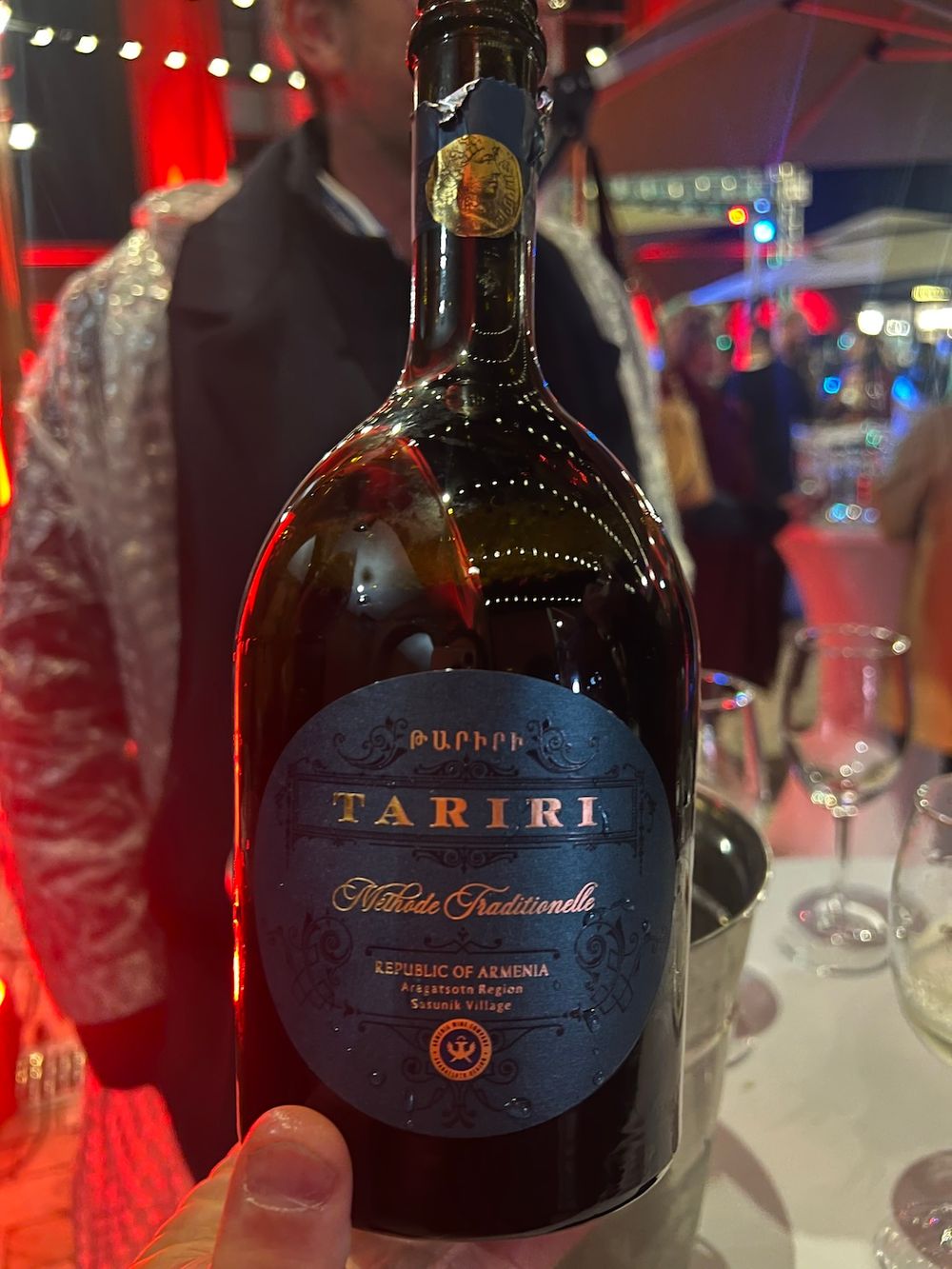
Armenia Wine Company, Tariri Brut (Kangun): traditional method sparkling wine with vibrant acidity, chalky minerality and fresh lemon and green apple notes.
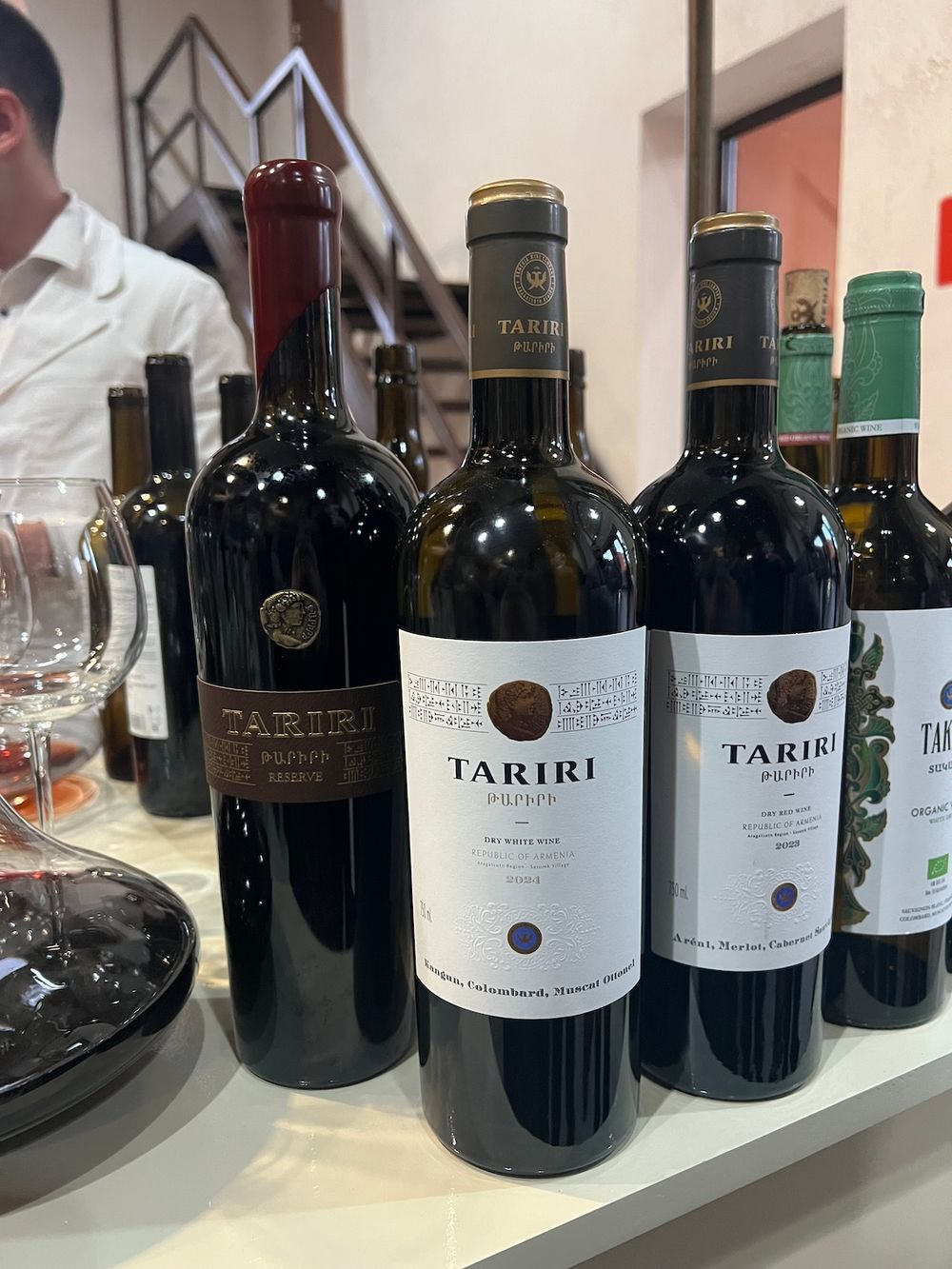
Armenia Wine Company, Tariri Reserve Red Dry (Petit Verdot, Tannat, Areni): full-bodied and structured, with ripe dark fruit, toasted oak and cocoa notes.
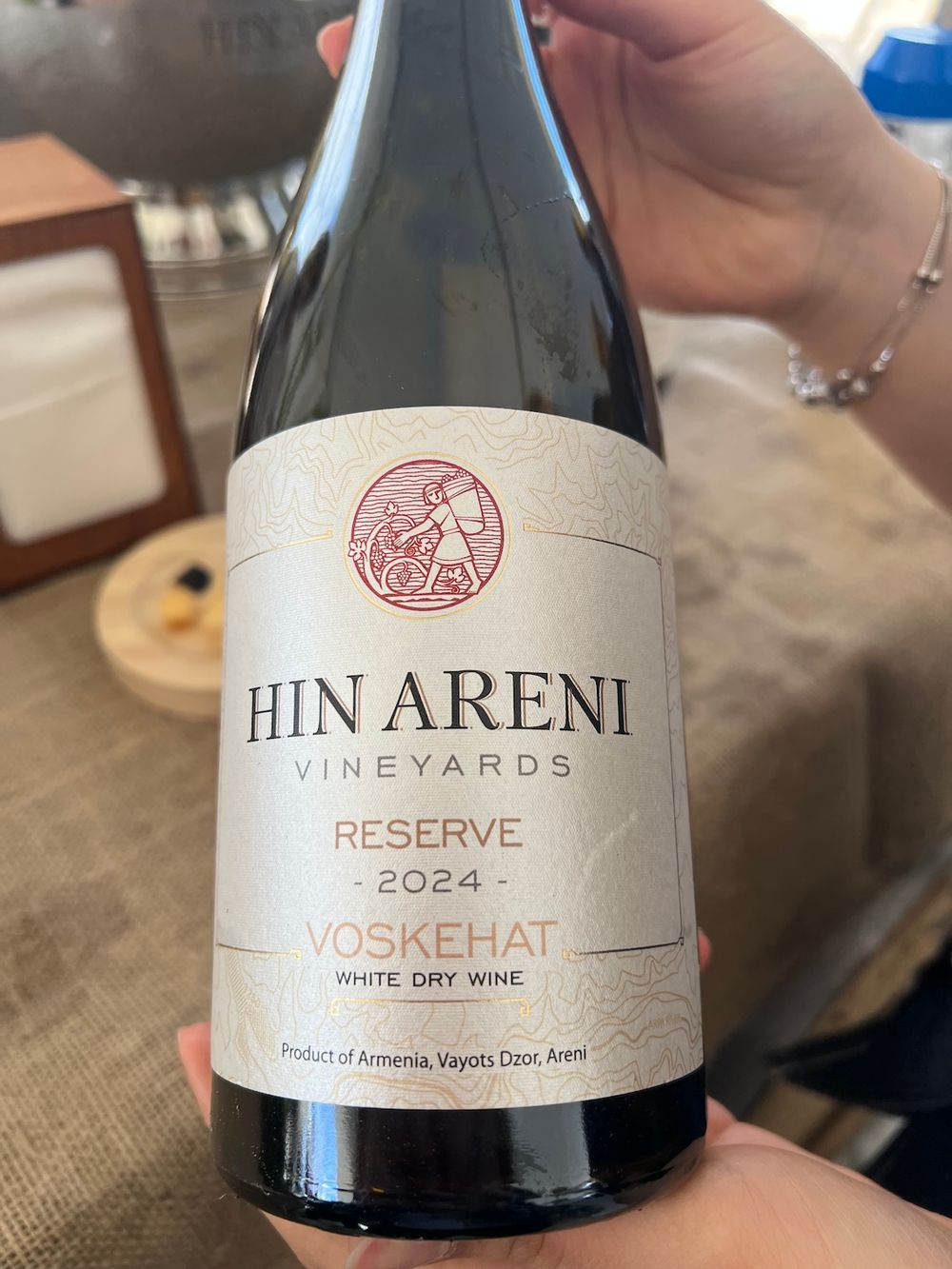
Hin Areni Vineyards, Voskehat Reserve 2024 (Voskehat): intensely fresh and textured, combining bright acidity with kerosene, oak and citrus aromas.
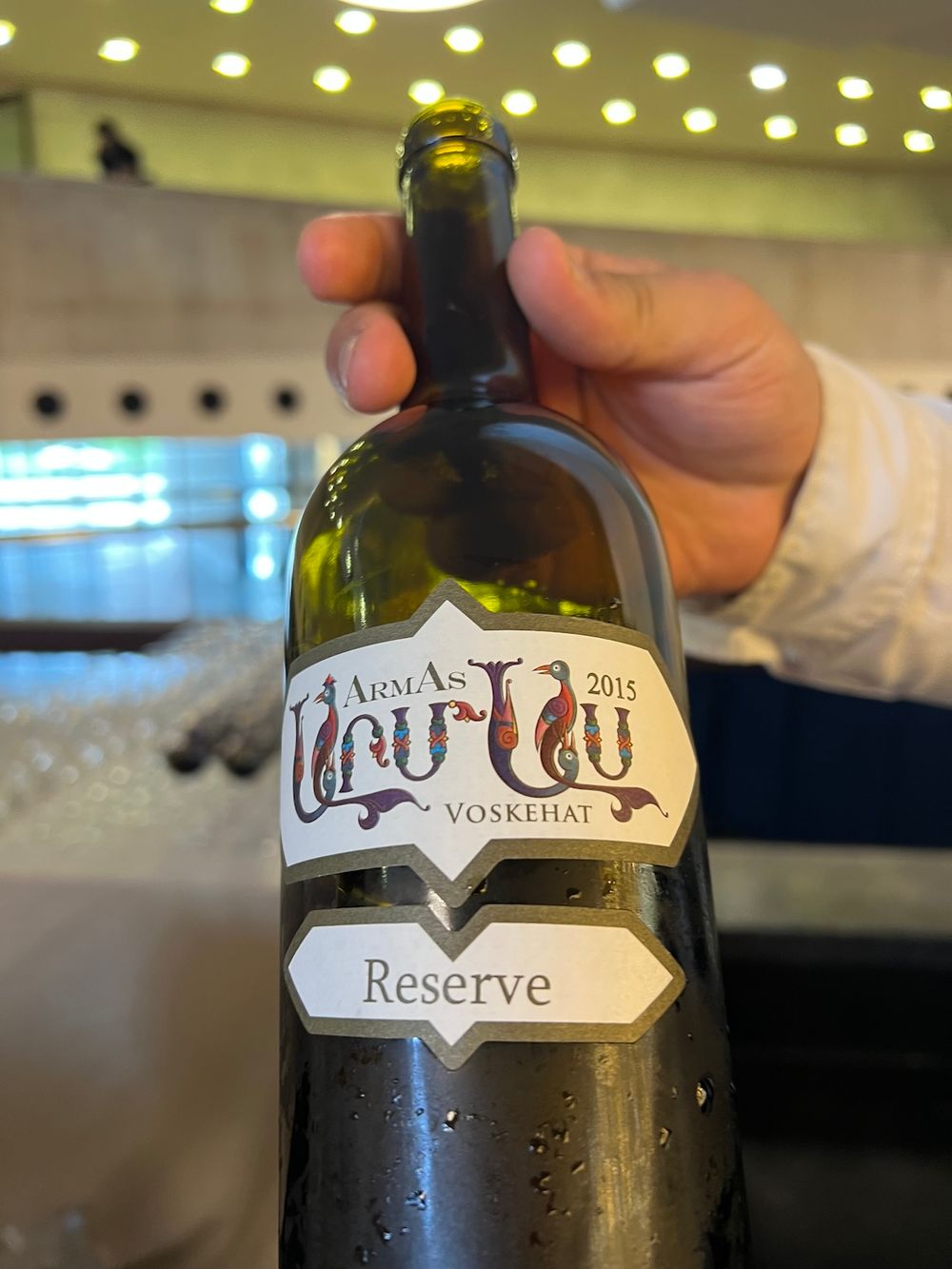
ArmAs Voskehat Reserve 2015 (Voskehat): mineral and remarkably youthful, showcasing the grape’s ageing potential through layered acidity and structure.
Manukyan Brandy Factory, Anamor Reserve 2021 (Chenin Blanc, Aligoté, Kangun): complex and oak-influenced, balancing richness with freshness.
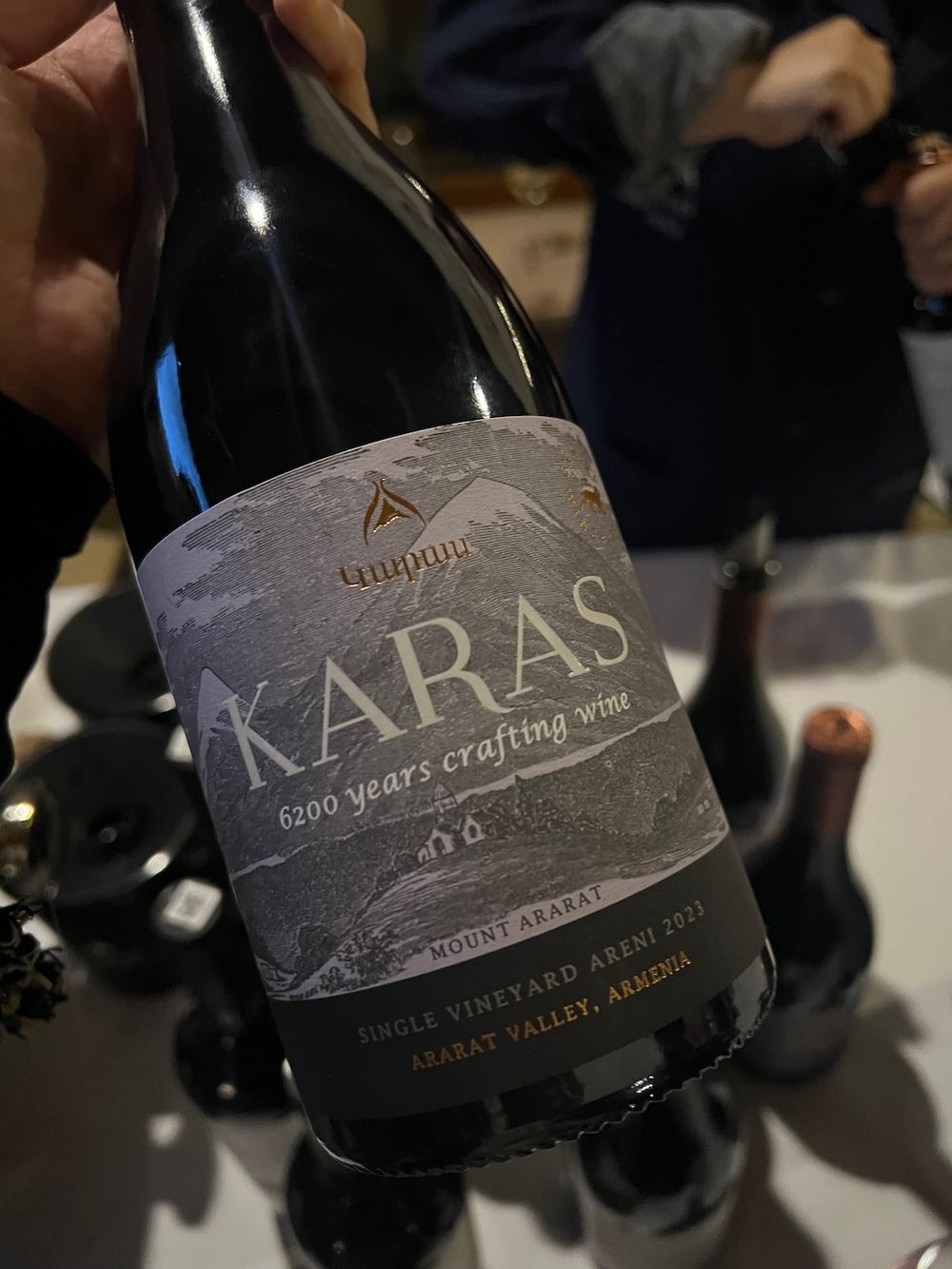
Karas, Mount Ararat Single Vineyard Areni 2023 (Areni): vibrant and refreshing, with cherry fruit, soft tannins and lifted acidity, reminiscent of Nebbiolo.