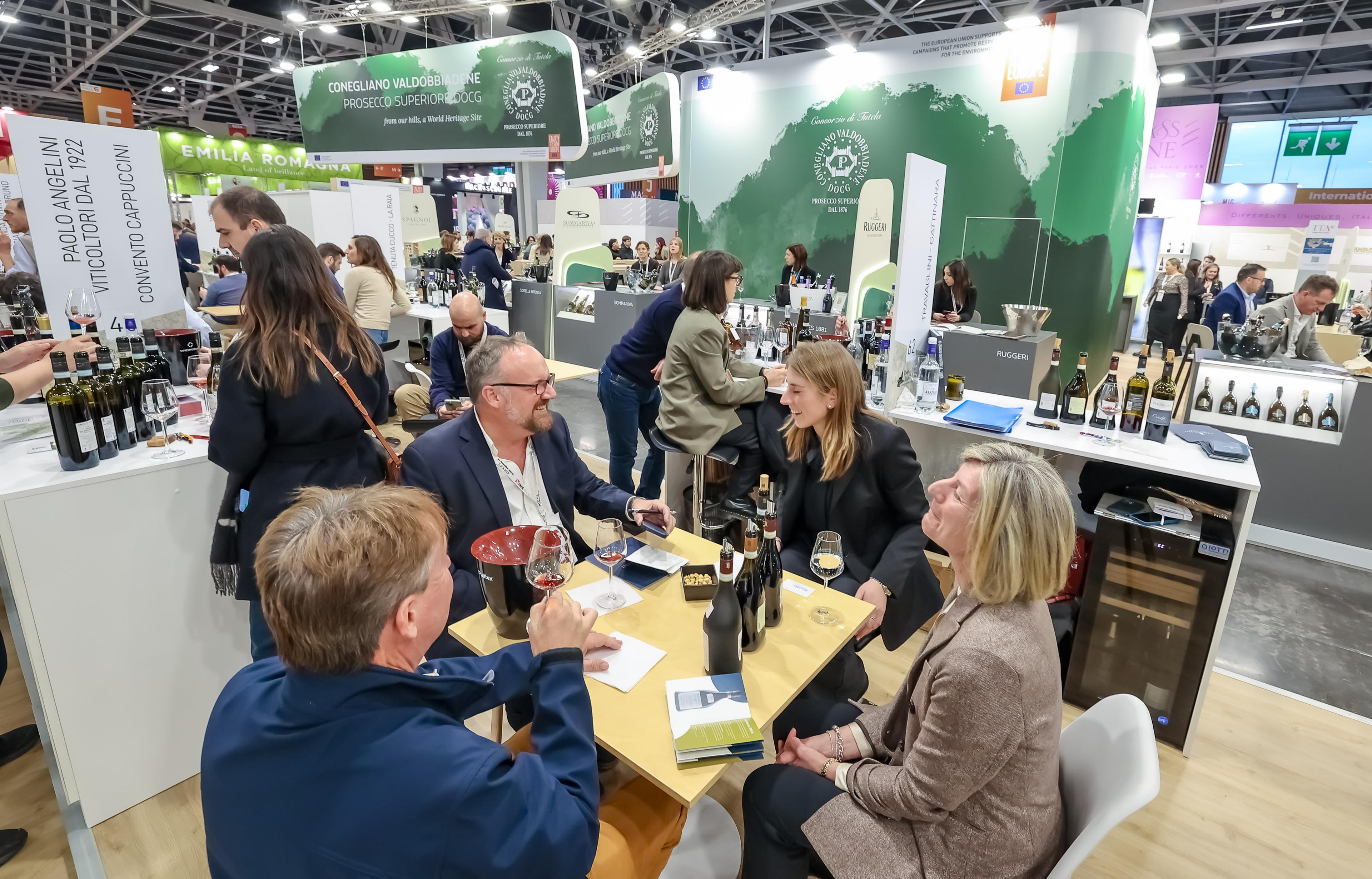
President Macron might have only spent a few hours at Wine Paris in February, but he left the show with a crucial message for the international wine and spirits industry. Do all you can to protect your products in the markets they are in, but now is the time to focus on the future and what new opportunities lie elsewhere.

President Macron came to Wine Paris in February with a rallying cry to wine producers to look to new markets to protect their own futures in Europe. Photo Sébastien d'Halloy
As he explained: “One of the key challenges is to export successfully within Europe, to defend our wines internationally when they come under attack from aggressive practices and then to move forward and conquer new markets – India, Canada and Brazil for example.”
It’s an issue that Lamberto Frescobaldi, president of Italy’s biggest trade association for wine and spirits producers, the Unione Italiana Vini, seized upon during a so-called “Tariff Task Force” meeting in Rome also in February.
He set out the predicament facing most traditional European wine producing countries: “The wine sector desperately needs to broaden its scope of action…We must accelerate trade agreements (Mercosur and India, first and foremost), and invest in being ever more present on key and emerging markets…The future will depend more and more on third-party markets.”
He was speaking in response to what had been a 23% reduction in Italian wine exports to the US in the second half of 2025 after being hit by the 15% tariffs placed on all EU wine by President Trump - now reduced to 10%. A move Italian wine bodies said had cost the country at least €300m in the last 12 months.
Analyse the import and export figures of all major traditional wine and spirits producing countries and it is a similar story as producers all over Europe, Australia, New Zealand, South Africa, the US and South America are reeling from the fall out of Trump’s global tariffs and the knock-on effect it has had on other trading restrictions around the world.
The Trump factor

The impact of President Trump's global tariffs on the international drinks supply chain is forcing wine and spirits producers to fast track moves into new and emerging markets around the world. Picutre istock/ Sinenkiy
The impact Trump’s tariffs have had on the performance of the world’s biggest drinks companies are eye watering. Research from Citi Analysys, for example, claims: Diageo’s figures were hit by $200m on an annualised basis; Pernod Ricard by €18m; Campari by €37m; and around €20m for Rémy Cointreau.
It’s why the chief executives and boards of all those drinks multinationals have publicly declared increased investment in developing new markets and the need to diversify its interest and performance in all the target emerging countries around the world.
Just look at Rémy Cointreau. It announced a major senior management re-structure last week as part of a wider company “Forward Plan” rethink which sees the highly respected Ian McLernon, appointed chief markets officer with a specific brief to oversee new emerging markets and “strengthen the development of these high-potential markets”.
After all it is these drinks giants that between them are reportedly stuck with $22 billion worth of aging inventory, according to Financial Times.
Big wine companies are also being hit hard by the collapse in US wine sales. Casella Family Brands, maker of Yellow Tail, that has enjoyed huge success in the US, has reported its first loss in 13 years as sales to the US plummeted 17% last year resulting in a A$5.5m loss vs A$18.6m profits in 2024 and A$26.5m in 2023. Casella’s Australia sales are now bigger than in the US for the first time.
Which is not surprising when the market for total imported wine in the US in 2025 was down 8.3% year-on-year to $6.22 billion (The American Association of Wine Economists).
What imported wine there is in the market is having to be sold at higher prices with US wholesalers reporting average increases in 2025 of 5%-12%, with further increases expected this year. Southern Glazer's Wine and Spirits says its imported wine sales volumes were down around 8% between October 2025 and January 2026.
US producers are also feeling the pain. The California Wine Institute says US wine exports to Canada have plummeted 78% year-on-year on the back of Trump’s tariffs, resulting in a $357m loss in export value - turning a $254m US wine trade surplus in 2024 into a $90m trade deficit in a single year.
The knock-on effect of declining US wine imports can’t be over estimated as it is such an important market for so many wine producing countries across Europe, but also in South America, Australia, New Zealand and South Africa.
The US is by far the number one market, for example, for New Zealand’s Babich Wines and it is having to manage increased prices for its wines into to its suppliers and distributors, says chief executive, David Babich.
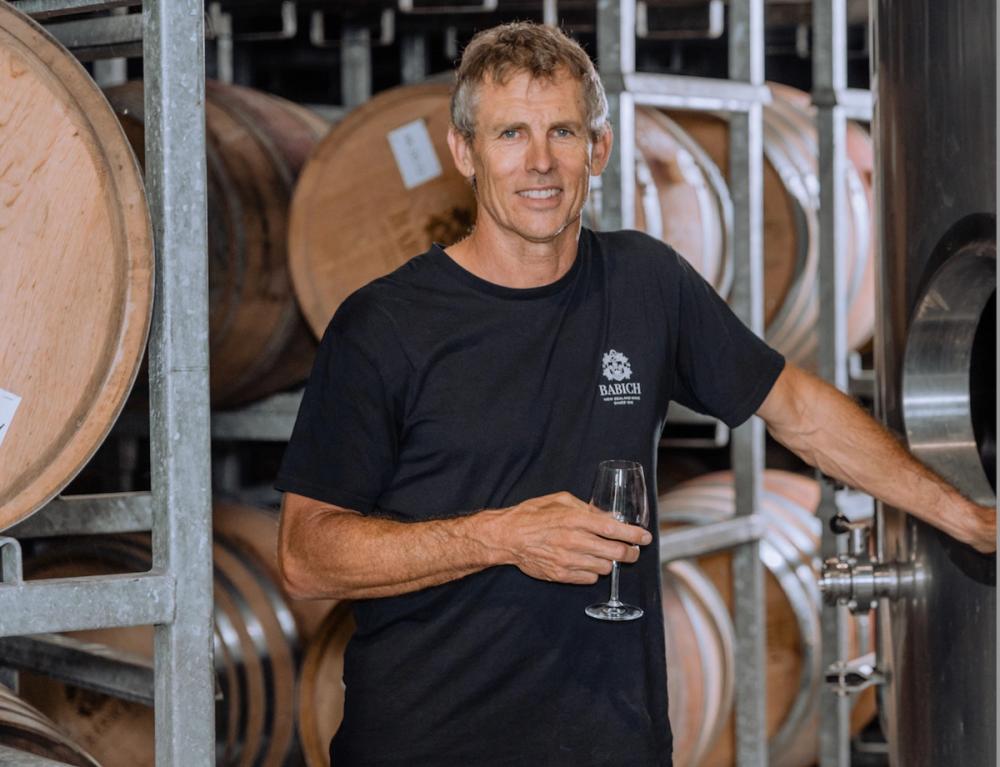
David Babich of Babich Wines says it is having to step up its export plans to emerging markets in response to price increases for New Zealand wine in the US - its number one export market
“There has been lot of disruption there in the last 12 months,” he says, much of which it has been able to handle thanks to having its own dedicated US team.
But because its US business is down it “needs to focus more on other markets” with a renewed focus on Asia and China, in particular, says Babich. “We have also got ourselves set up in India and are looking more at smaller markets where we can develop our business,” he adds.
Time to act
Producers and their domestic generic bodies are having to act fast to try and plug the gaping holes in their export sales.
As Siobhan Thompson, chief executive of Wines of South Africa, explains: “Building demand in developing and emerging markets is central to our export strategy. These markets present opportunities for sustainable growth over the long term, particularly as global consumption patterns evolve.”
It’s why we are seeing increased activity by the likes of California Wine Institute to explore new export opportunities in Asia, the Middle East, Africa and India. With domestic sales on a seemingly long term downwards trajectory, US and Californian producers now have no choice but seriously look to open up new routes to market.
It is set, for example, to host its next Global Buyers Marketplace initiative in Dubai in October and is looking to recruit up to 75 leading buyers from across Africa, Central Asia, Eastern Europe, India and the Middle East to attend and get the chance to meet and taste wines from over 50 Californian producers.
Such activity is part of a $13m funding from the USDA to help the Wine Institute host events and activities that drives exports specifically into targeted emerging markets. Most notably Africa, South East Asia, India, non-European Union countries like the UK, Switzerland and Norway, the Caribbean and Latin and South America.

The California Wine Institute is takings its producers directly to meet potential buyers in new markets by holding dedicated Global Buyers Marketplace events like here in Korea last autumn and is holding a similar event in Dubai in October
It held a similar Global Buyers Marketplace in Seoul, South Korea last September that brought buyers from across Asia together to meet directly with Californian producers.
Chuck Cramer, director of sales and marketing, EMEA and Asia at the US’s Terlato Wines, said his role is now to increasingly look to build business in new and emerging markets, particularly in the Middle East -where it already has “a good footprint” in travel retail - and Asia.
He said the impact of Trump’s tariffs had made it particularly hard for US producers, but it meant it was even more important for wineries such as Terlato to be exploring new opportunities.
“We have to try and open up new markets. That’s why we were at Wine Paris,” he says, where he was able to have good meetings with a number of Asian distributors and is looking to open up opportunities in Japan, Singapore and South Korea in particular. “We are also knocking on the door in Thailand.”
It’s a similar story for Napa Valley’s Trinchero Family Estates, says Adrian Atkinson, the producer’s UK and Ireland sales director, with a more focused strategy to drive exports in key markets for both its leading wines and spirits brands - including a revived push into the UK, Europe and Asia and other potential markets.
“We are looking at where is the right fit for our brands, but also what the market needs in terms of NPD,” says Atkinson, which fits nicely into its wider company strategy to be seen as more of a drinks business than a wine company.
Go where the action is

Boland Cellars' chief Ross Sleet is heading to ProWine in Tokyo this week as part of his strategy to build sales in key growing markets like Japan
It’s a similar strategy for Ross Sleet, chief executive of Boland Cellars in South Africa, who has made the commitment over the last year to not only do the big European trade shows, but was also present at ProWine São Paulo last andOctober.
“Our focus this year in new and emerging markets principally covers four territories: Brazil, East Africa, the Gulf, and the “East” - east of Mumbai,” he says. “We have seen some excellent growth and an acceptance of Pinotage in Brazil and the Far East in particular which is obviously a great win for us. Chenin Blanc is fast becoming the big calling card that we hoped for with multiple markets from Brazil, Australia, China, Japan etc all specifically demanding Chenin Blanc.”
By targeting new markets it is also opening up new brand opportunities that are more relevant and easier to introduce in these emerging markets rather than in developed, established countries.
“We are looking at labels and brands that are relevant for that country,” pointing to the Auro Collection it has designed just for Japan and South East Asia markets.
He explains: “The real surprise has been the huge growth in our Coffee Pinotage brand which has exploded, and is soon to be in China for the first time. So much so that we are launching a Coffee Pinotage can and BIB product later this year to specifically expand the category. The former trend can be explained by category South Africa acceptance, but the latter trend seems to be natural expansion of coffee ‘culture’ which is now prevalent in many emerging markets?”
Andrew Porton, group director of wine at Lanchester Wines, says there is still a lot of wine in the market - you only had to be at the World Bulk Wine Exhibition in Amsterdam in November to see that - the skill now is knowing which partnerships and contracts to get into and how to work with the new tariffs and trading arrangements around the world.
Those with long-standing relationships between producers and suppliers are well placed to then work together to plot which markets to target and how they can work together to both achieve their goals, he says.
Barry Dick MW at Fero, the new fintech, supply chain and investment business, says the challenge for all the traditional wine markets is “to figure all this out” and realise there are so many other strong markets for producers to go to.
“People in this industry are super resourceful and will look to open up new opportunities in different parts of the world,” says Dick.
But, as he told The Buyer at WBWE, there is a “monumental challenge in front of everyone” and a “resignation there’s going to be fundamental changes in the industry to alter its size and shape”.
“The industry is going to contract, but who goes and who stays and who are the ones who are going to dictate that?” asked Dick.
Putting in the hard work
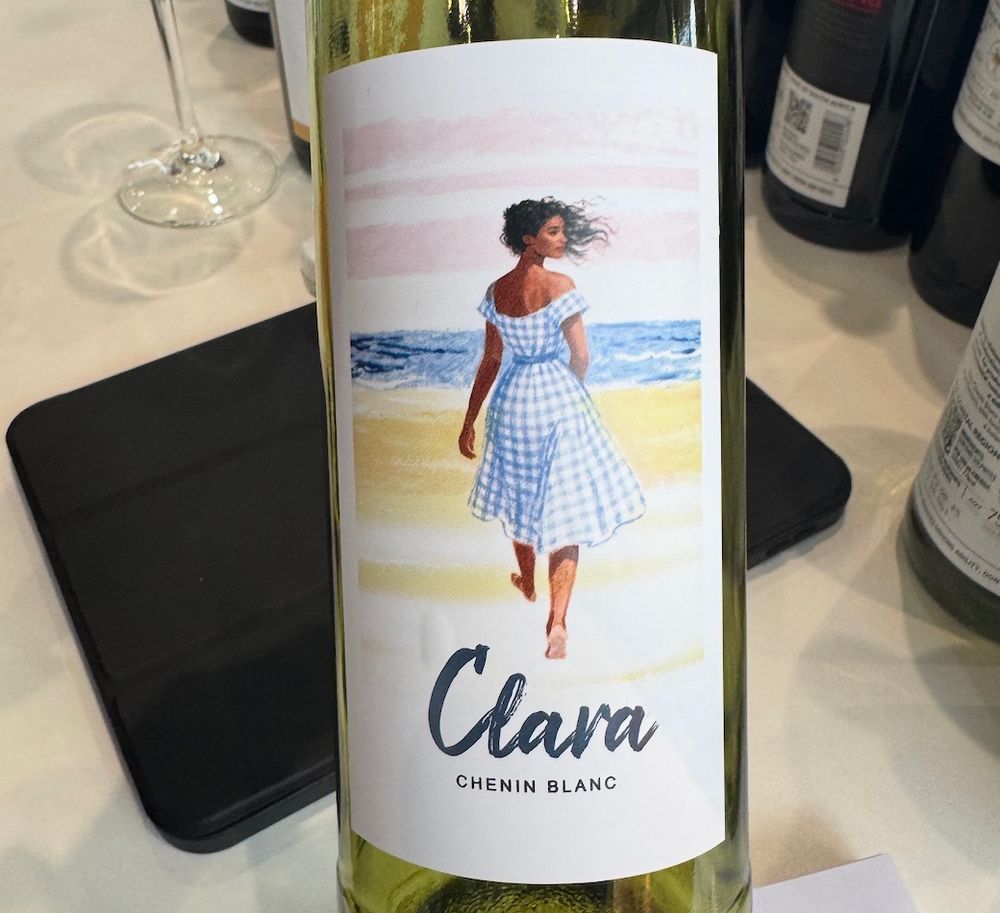
Boland Cellars has developed new brands and labels for particular key export markets - like Clara which is selling well in Brazil
Opening up these opportunities in new markets takes hard work, and good old shoe leather, says Sleet.
“Keeping in touch with the market is vital, so this means being present in the market, and travelling regularly. We need to keep in touch with rapidly changing consumer behaviour patterns that occur in emerging markets. My experience of having lived and worked in East Africa for example, is that wine consumers there react far more rapidly to trends than ‘traditional’ markets, and that in turn drives rapid growth.”
He adds: “Being ready for this is crucial so timing is critical. Your importer and distributor needs to be geared to react accordingly and need to be sensitive to the market fluctuations i.e. they should not over invest in a category or brand but execute investment over time so that the brands get real traction and staying power and not just flavour of the month.”
Sleet says it has always been important to look at new market opportunities, but the tariffs and trading restrictions in more established markets makes it even more important.
“During the past two to three years emerging markets have increasingly been seen as avenues where global political fallout is less of an issue than in Europe or North America,” he says. “As a South African brand, in particular, we need to diversify our footprint to avoid these systemic issues as we cannot influence them, however we can prepare for and react to demands as they occur.”
He says it is an eye opener to see how well South African wines now compete on the global stage.
As he explains: “As the market is demanding lower prices, we have seen that our very positive quality: price ratio has been our biggest win. Customers are constantly surprised at our value proposition especially with regards to our Chenin Blanc wines for example.”
Bruce Jack, winemaker and founder of Bruce Jack Wines in South Africa, says the producers and buyers best placed to make the most of hitting the countries on the up, and moving away from countries in decline and the ones operating in and close to the international bulk wine market.
They are the players who are seeing the trends and the markets move a year to 18 months before the rest of the industry does. They are having to navigate the best routes to market for their bulk wines before the grapes are even grown for next year’s harvest. They are not fixated on what is the best market to be in terms of prestige or reputation, their decisions are being made on purely commercial and business grounds.
Breaking new ground
It is not just international producers that are looking to break into new ground. A number of UK wine distributors have long seen the opportunities of making and selling wine around the world.
Boutinot, Alliance Wine, Ehrmanns, ABS Wine Agencies, Off Piste Wines, Lanchester Wines and Bibendum, amongst others, are all regular exhibitors at either ProWein in Dusseldorf or Wine Paris - or both.

Some of the core Boutinot team that were at Wine Paris for the first time in February after many years building its international division at ProWein
Boutinot’s international business has now grown to be worth over £20m a year and it now has a winemaking team of over 20 -spread mainly across France, England, South Africa and New Zealand -and total international team of 50 covering 40 countries around the world.
Boutinot’s main ambition for having an international arm is to be able to control the quality and pricing of as much of its wine as it can, says head of marketing, Deborah Brooks. By either making the wines itself, or working with long term growers and partners on a joint venture basis across its target countries.
“Having boots on the ground is really important as that is how you overcome local problems,” she says.
It is also able to sell the wines of its agency producer partners in the UK to other markets around the world.
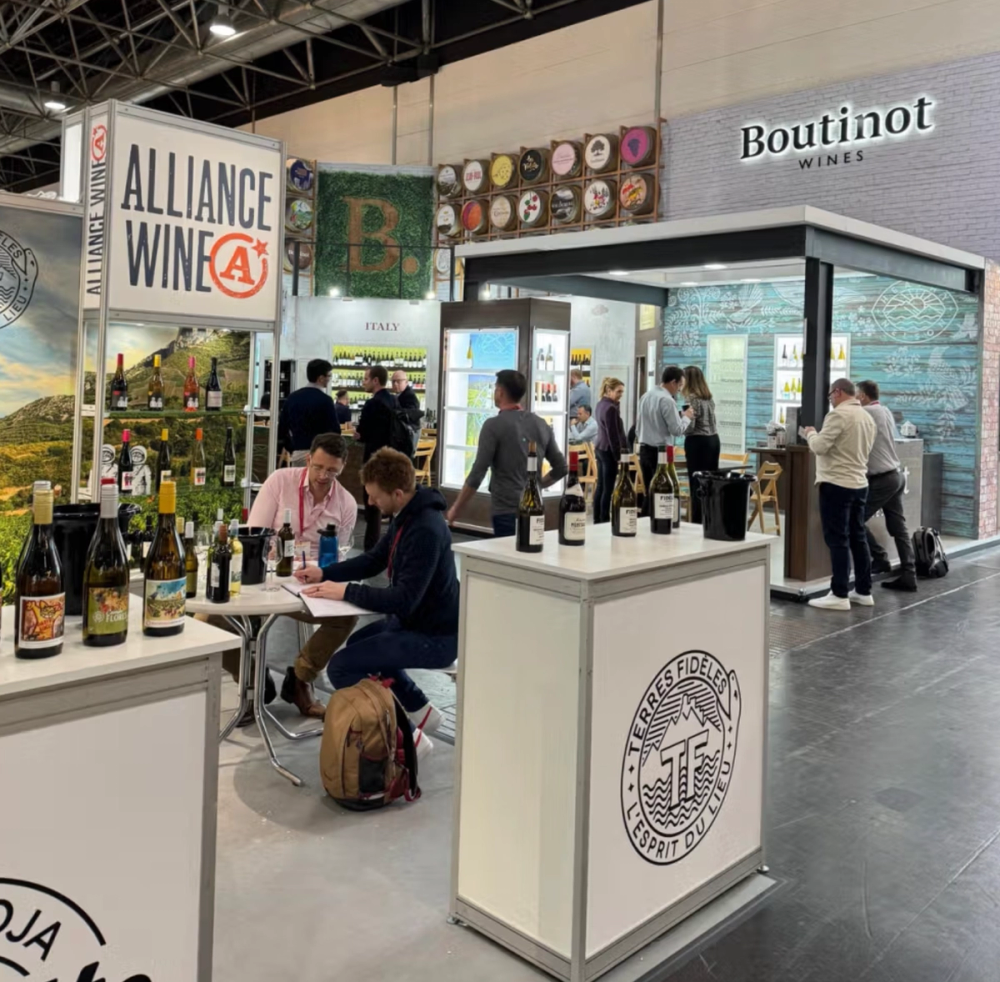
A number of UK distribuors now have strong international arms that you can see at the major trade shows
Alliance Wine’s international division now accounts for 10% of its total turnover. It has operations in Europe for both producing and bottling wine, including its own winery in the Languedoc, Terres Fidèles, and warehouses in Spain and Italy, and works with a number of partner wineries around the world. It is therefore well placed to service major retailers, like Royal Ahold and Delhaize, with bespoke own label projects which they, in turn, can sell into their international businesses.
Its biggest market is in the US thanks to its long-standing relationship with Total Wine.
The key to its international success has been building a network of loyal, committed growers and partner wineries that it can rely on to build relationships with its overseas customers, says Mike Colquitt, vice president of international sales.
“There is a lot more potential to grow the international business,” says Rémy Moens, general manager of Alliance’s Terres Fidèles facility. “We have got the scale and the opportunity to grow and are looking at new markets like Japan and emerging African markets.”
New sourcing opportunities

Origin Wines' Bernard Fontannaz says it is even more important than ever to be pushing into new markets and coming up with new solutions for your customers
Major producers are also now looking at their own winemaking and sourcing opportunities outside of where they traditionally make their wine.
Bernard Fontannaz says that whilst Origin Wine is known for making and sourcing its wine from South Africa and South America it is now open to look at other wine producing countries so that it can go to its key retail customers in different markets with new, relevant and different ideas.
It is, for example, actively look to source more Greek wines and take advantage of what buyers are looking for from there.
If that means finding new commercially competitive sources for Assyrtiko from Greece, or white and red wines from Australia and New Zealand then so be it.
“Twenty per cent of our business is now not from Argentina or South Africa,” says Fontannaz.
He speaks for the whole drinks industry when he so succinctly says: “You have to be willing to change. It is a different market now and you can’t afford to get caught out. Supermarkets need to have suppliers who can come to them with solutions. That is how we grow,” he says.
“The market has never been as fast changing as it is now. There are lots of opportunities for people who want to try and do things differently.You can’t put your head in the sand. It is exciting. It is difficult. It forces you to act differently.”
It is the producers, distributors and buyers willing to take those risks and explore new opportunities in emerging market that will be rewarded in the years ahead. The big danger rests in those companies that are not prepared to change, or don’t know what changes to make.
* In part two of this report to be published later in the week, The Buyer analyses in more depth what opportunities there are in each of the main emerging markets and countries around the world.