Abruzzo, wedged between the Apennines and the Adriatic, produces some of Italy’s most famous white wines (Pepe, Valentini), some of its best value reds (Montepulciano d’Abruzzo DOC) and surely its most distinctive rosato (Cerasuolo d’Abruzzo DOC). Although the whites tend to get the column inches, Montepulciano dominates plantings and remains the region’s commercial engine.
The variety is a household name in the UK largely due to the region’s 35 co-operatives, which account for around 75% of production and collectively established the DOC’s profile. As global consumption softens and wine drinkers’ budgets are squeezed, good, inexpensive Montepulciano remains strategically important. Buyers rely on it and punters like it.
Abruzzo’s current challenge is keeping that base strong while giving the new generation of grower-producers room to build new identities.

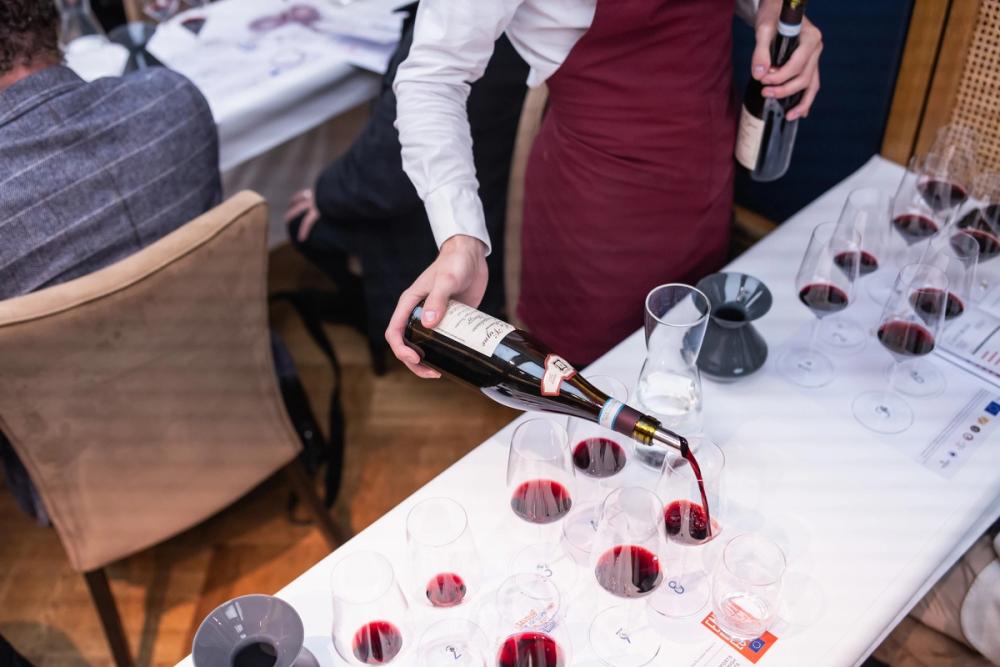
There's a new breadth of Montepulciano styles now emerging in the region. Valentina di Camillo of I Fauri pictured during walk-around tasting, London, November 24, 2024.
Premiumising Montepulciano d’Abruzzo
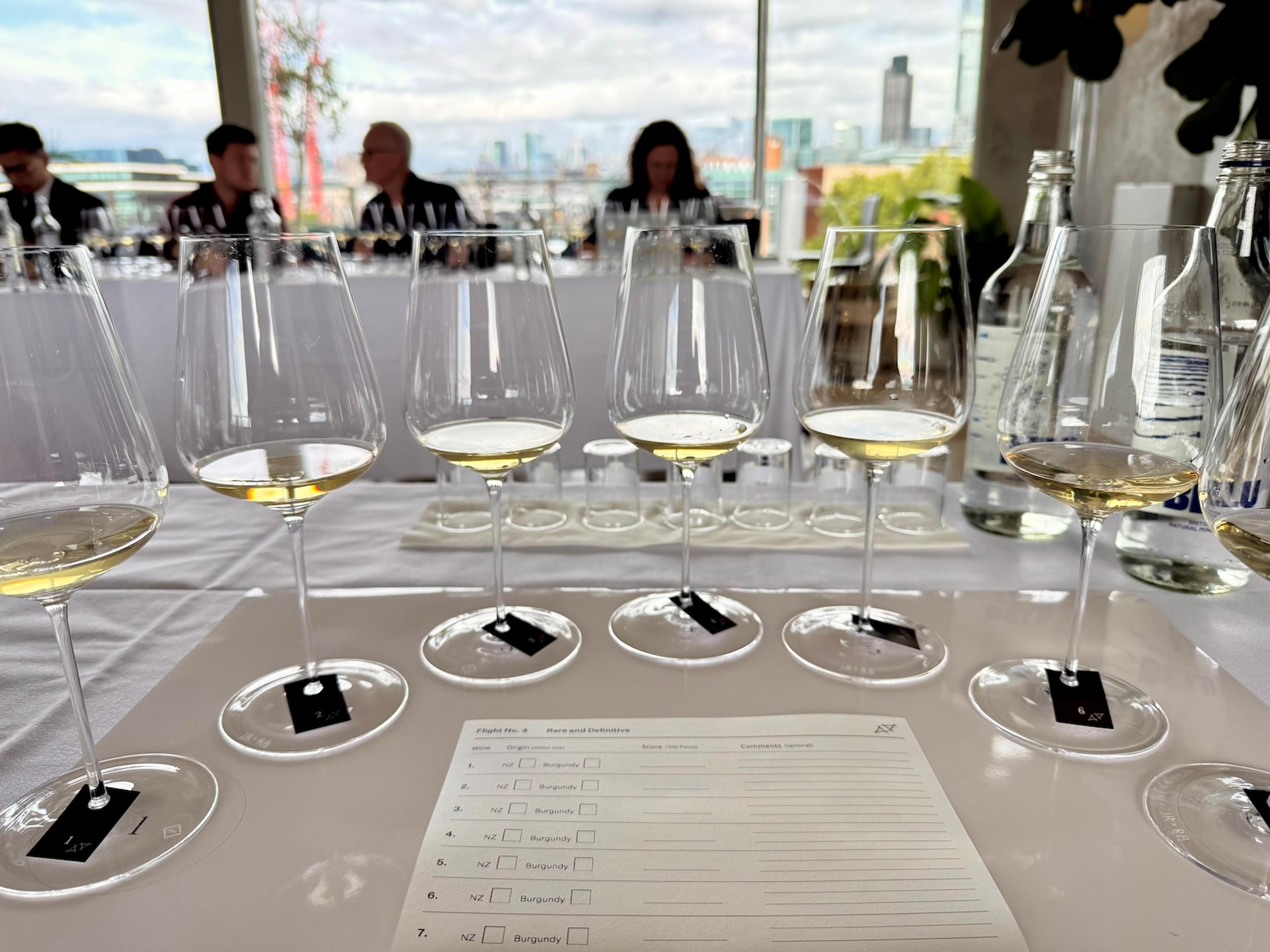
One path has been to premiumise Montepulciano d’Abruzzo DOC and improve the viticulture and winemaking. A morning masterclass at an all-day event in London, organised by the Consorzio Vini d’Abruzzo, aimed to highlight the breadth of Montepulciano styles now emerging through elevation, zoning and winemaking choices. Progress is clear. Alongside the export workhorses there now sits a growing number of ambitious, more individuated wines.
Abruzzo’s better producers naturally want Montepulciano to be taken seriously as a native Italian variety with real quality potential. Winemaking and oak remains the locus of experimentation. The tasting showed nearly every permutation: barriques and botti, French and American, new and used – with mixed results. The best were highly distinctive, concentrated reds with black fruit, liquorice and spice notes, the less successful were more generically oaky.
Some of the most compelling wines avoided oak entirely. Montepulciano can be vivid and expressive when it foregrounds bright fruit and fresh herbs, with concrete or steel helping the grape to articulate its personality. Tenuta Tre Gemme’s juicy Montepulciano d’Abruzzo DOC 2022 was a great example, while Ciavolich’s more oxidative, all-concrete Montepulciano d’Abruzzo DOC ‘Fosso Cancelli’ 2019 skirted brett but still had personality to burn.

"As global consumption softens and wine drinkers’ budgets are squeezed, good, inexpensive Montepulciano remains strategically important."Masterclass at Abruzzo event, London, November 24, 2024.
Abruzzo’s dark (pink) horse
The difficulty for both Abruzzo and UK buyers is that every Italian region is telling a similar story: more quality, more zoning, more Riserva, more Superiore. It’s a textbook approach and it works – up to a saturation point. What it doesn’t do is command attention in the competitive British market where buyers see a dozen regions a month saying similar things.
But what if we put down the textbook and ask whether the answer might be more than better quality red Montepulciano? It sounds almost heretical in Italy, where rosso riserva still connotes prestige. But Italian wine history is full of once-heretical ideas – Cabernet Sauvignon, barriques, Sangiovese and botti grande have all been considered bad ideas at one point or another.
If Montepulciano d’Abruzzo is trying to move from bulk to boutique, perhaps the fastest way to cut the Gordian knot is not to make it into red wine at all.
Step up Cerasuolo d’Abruzzo DOC, one of the few Italian rosés that existed and thrived before pink wine was a global money maker. It’s as rooted in Abruzzo as Provence’s rosé is in the Côte d’Azur. The styles differ – Cerasuolo is a deeper shade of pink with a more assertive flavour, closer to a light red – but the point is the same: it has roots here and no one else makes it. While most Italian regions don’t have much alternative to the red wine premiumisation pyramid, Abruzzo does.
Cerasuolo originally existed as an official style within Montepulciano d’Abruzzo and was given its own DOC in 2010 – the first pink DOC in Italy. No other region in the country has a rosato category with its depth, history or consistency. Volumes aren’t huge – around 9 million bottles a year – but in a rosé category hungry for mid-priced wines with character, the market potential is obvious.

“It’s not an aperitivo, it’s not something just for women,” Annamaria Sorricchio di Valforte on her Cerasuolo.
Local favourite
The winemakers also happen to love it, and it shows. At the walk-around tasting, asking growers about Cerasuolo produced near-identical reactions: “It’s my favourite,” producer after producer said with a bashful smile (perhaps they felt that the messaging focus should be on the premium reds).
The Abruzzese drink the majority themselves, but interest in Italy is growing while exports were up 15% in 2024, according to the Consorzio, against a tough market backdrop for wine. Japan, a stronghold for lighter reds, rose 20%.
The Consorzio is now working to protect the style, concerned about Provençal imitations diluting the category’s distinctive identity. A colour-range definition is being created. Provence-pink interpretations won’t qualify as Cerasuolo d’Abruzzo DOC, although they could be bottled as rosato under Terre d’Abruzzo, the region’s intelligent new catch-all IGT that is active from the 2024 vintage.
Faraone's traditionally styled Cerasuolo “always sells out.”
Market potential
Not everyone agrees that the style will work in the UK.“I love this wine but I could never sell it. The colour is out of fashion. That’s why we don’t list it,” one buyer admitted.
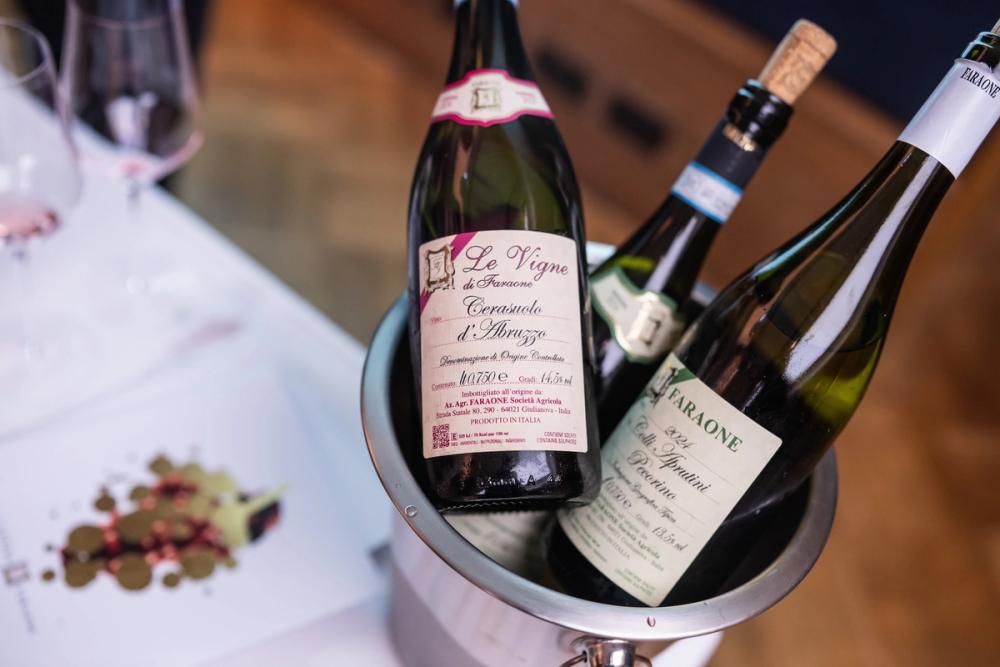
But across the room, Faraone had the opposite story. Its traditionally styled Cerasuolo “always sells out,” according to Federico Faraone. One importer has even asked for jeroboams because the magnums disappeared so quickly.
“It’s a serious wine,” he shrugged. “There are plenty of reds in the world, but very few serious rosé. You can drink it cold in summer or cool in winter. It goes with everything.”
Cerasuolo’s versatility with mixed dishes and non-European cuisines is a major advantage in helping it find placements in retailers and in modern restaurants with their magpie menus.
Red wines will remain the commercial bedrock solely through volume, yet it’s Cerasuolo that gives Abruzzo the clearest chance to build something new: a distinctive category with real headroom in the middle of the market.
The next step should be an association of producers dedicated to championing Cerasuolo. The Consorzio will always prioritise red Montepulciano in the interests of the majority of its members, but a producer-led Cerasuolo movement would give the category the strategic push it deserves.
Provence has become the template for rosé success, but the real lesson of Château d’Esclans is not imitation. It is the ability to see what others overlook or take for granted and persuade the market that it matters.
Montepulciano built Abruzzo; Valentini and Pepe premiumised it. But Cerasuolo could make the region relevant to a new generation of drinkers.
Five Cerasuolo d’Abruzzo DOC to try
Cerasuolo could make the region relevant to a new generation of drinkers.
Federico Faraone’s Cerasuolo d’Abruzzo DOC ‘Le Vigne’ 2024 is given a hefty 48 hours on the skins. It’s not really a rosé in the popular sense, he remarks. There is something beautifully uncompromising about this Cerasuolo, with its whiff of white pepper, lively acidity and uncompromisingly dry palate. There are some exfoliating tannins, and at 14.5% it is undoubtedly pushing towards red more than rosato, but it is a wine you really want to sit down to dinner with. Importer: Berry Bros & Rudd
Valentina di Camillo is another winemaker who declares Cerasuolo to be her favourite, and the organic Cerasuolo d’Abruzzo ‘Baldovino’ 2024 was her bestselling wine in Italy last year, helped by a Tre Bicchieri from Gambero Rosso. It is bottled in dark glass and explodes with vibrant raspberry fruit and a crisply dry palate. “This is the wine we drink every day,” Valentina says. It is hard to understand why, but the wines are not yet imported into the UK. Her juicy, unoaked and organic Montepulciano d’Abruzzo DOC ‘Octobre Rosso’ 2022 was also a stand out and has been impressive across multiple tastings. Seeking representation
Located in Pescara, this medium-sized estate is a good example of the new, more quality-minded producer in Abruzzo, moving away from volume. Not much more than 6,000 bottles of its Cerasuolo d’Abruzzo Superiore DOC ‘Fattore’ 2024 get bottled each year. Just five months in concrete means that this juicy, bone-dry rosato majors on a hint of Mediterranean herbs, crunchy, just-ripe cherries and invigorating energy. Importer: Tanners
A young winery founded a decade ago, Caprera’s plantings come from Emidio Pepe clones and the style is confident, low-intervention and just a little bit wild. There is not one but two Cerasuolo: the first, Cerasuolo d’Abruzzo DOC ‘Le Vasche’ 2023, from his own fruit, in a bright, spiky style with lots of tang and herbs. The second, Cerasuolo d’Abruzzo DOC ‘Sotto il Ceraso’ 2022, comes from a friend’s vineyard pushing 100 years old. The result is a Cerasuolo for red wine drinkers, with rosehips, spice, dried orange and fine, assertive tannins. Importer: The Winemakers Club
Annamaria Sorricchio di Valforte was another winemaker who declared Cerasuolo her favourite of her wines. “It’s not an aperitivo, it’s not something just for women,” she says adamantly of her Cerasuolo d’Abruzzo DOC 2024. She fully supports the Consorzio’s plan to delimit the colour. “People are making it like Provence wine which undermines the story of our region.” Her estate is located in the Colline Teramane DOCG and her Cerasuolo is the wine, as she puts it, “that starts where the white stops and before the red begins.” It is absolutely typical of the style, abundantly juicy and rounded with cool, just-ripe cherry fruit and a thirst-slaking dryness on the finish. Seeking representation