Cava’s premium category, Cava de Guarda Superior, has recently become fully organic, and while total Cava sales have dipped by around 15% in the year to 2024, within the premium sector sales have bucked this trend and actually surged by a similar percentage, albeit from a much smaller base, accounting for 37m bottles of the 218m total.
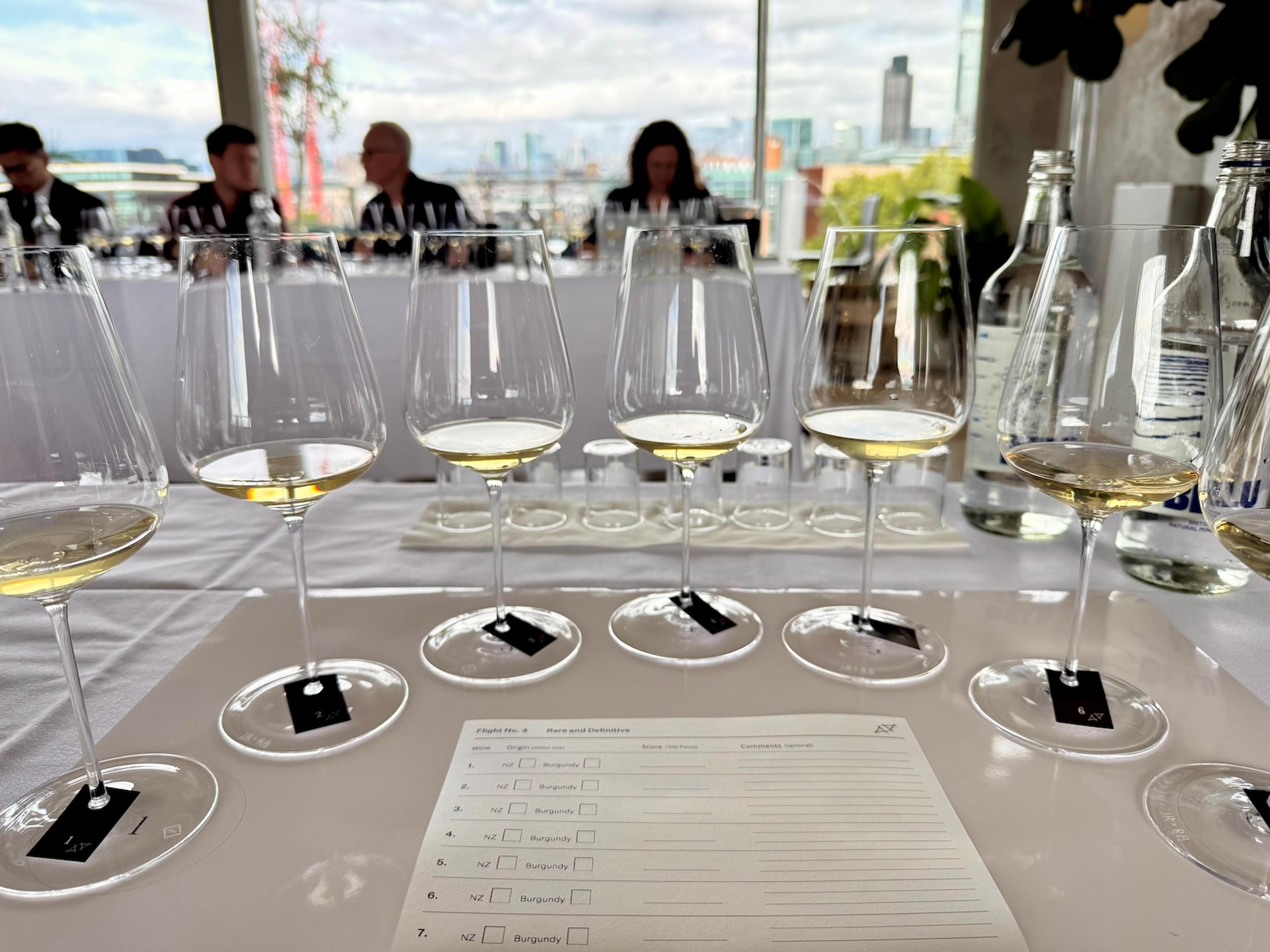
To mark the conversion to organic production and shine the light on its premium wines, a trade tasting was held at Carousel in London for up to 30 of the region’s top-tier producers to showcase their wines to the trade.
After a hard day of swirling and spitting their way through a selection of the top Cavas, The Buyer and DO Cava invited a select panel of buyers to take part in a wide ranging debate on what opportunities and potential they see for the region’s top Guarda Superior Cava. The panel included:
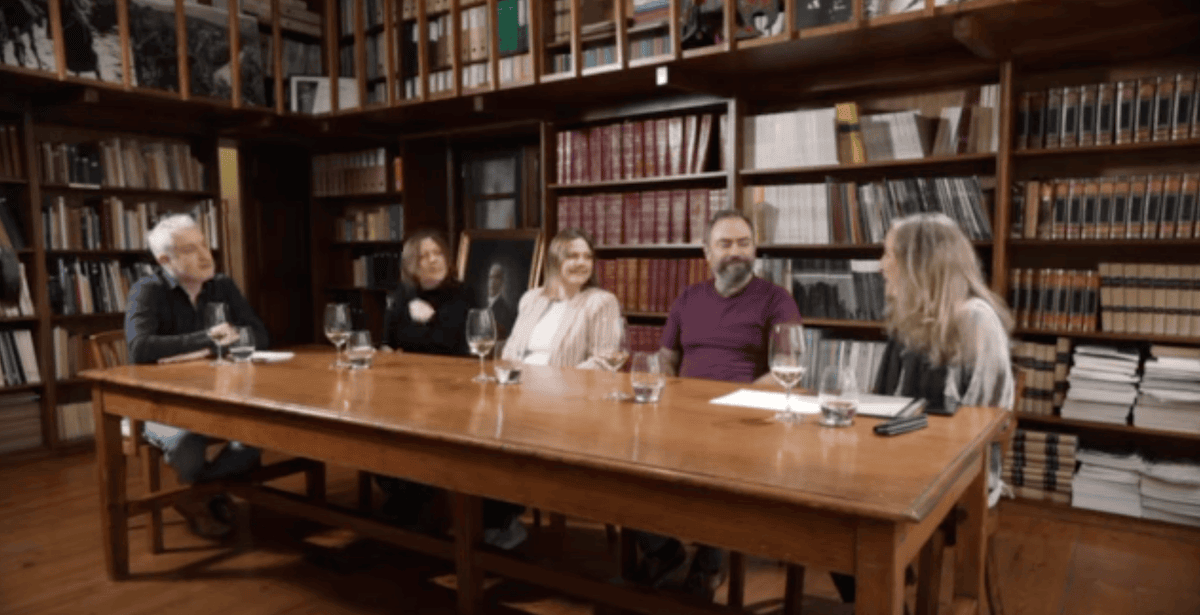
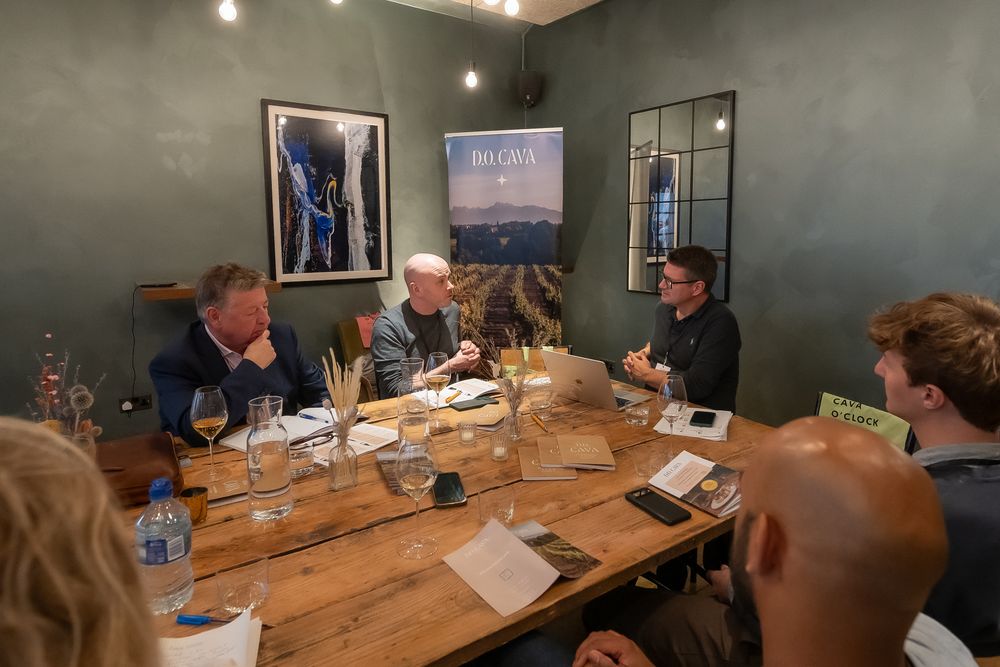
The panel of buyers who took part in the DO Cava Debate
- Roger Jones: former Michelin chef and now wine consultant and editor-at-large at The Buyer.
- Richard Masterson: wine buyer C&C Group.
- Joshua Castle: head wine buyer Keeling Andrew.
- Sunny Hodge: owner, Diogenes The Dog.
- Chaired by: Guy Woodward, writer, broadcaster and consultant with Grand Cru Creative
“There are some really top wines out there,” says Richard Masterton, wine buyer at C&C Group which includes Matthew Clark, Bibendum and Walker & Wodehouse.
“There is a range of different sizes of producers, but the quality runs through all of them,” he adds.
“The thing I love about Cava is that it seems to carry a vein of fruit through in a way that other sparkling wines don’t. In the younger Cava that have been aged for nine months you get a really nice, bright fresh fruit and then the older wines have even more character. And there’s complexity there as well, thanks to the range of different grapes it is produced from. Even the wines that have been aged for longer still have that freshness of the fruit which is quite impressive,” says Masterton.
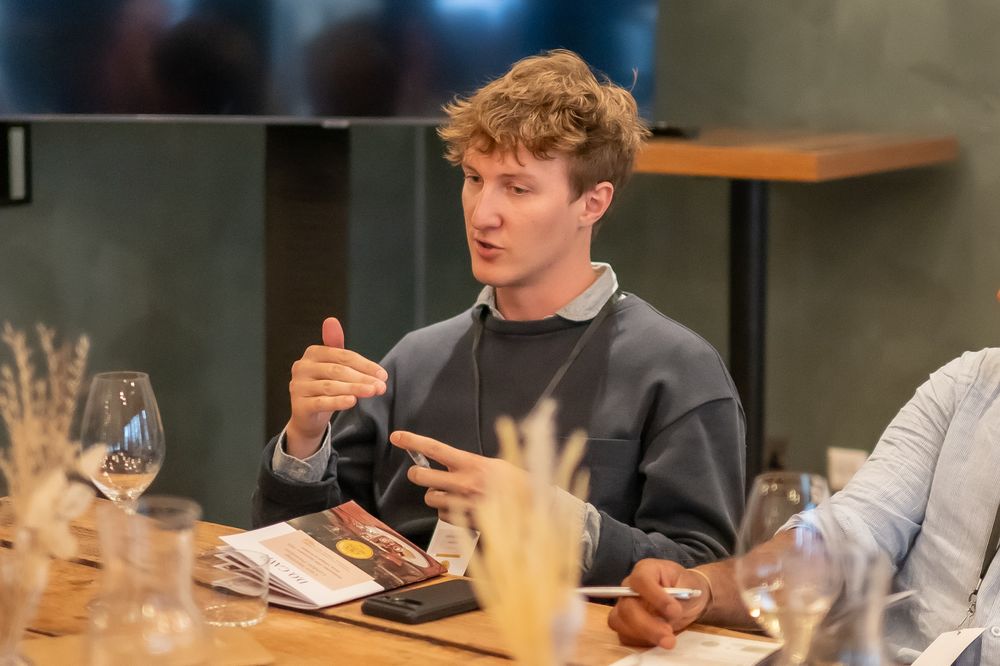
Keeling Andrews' head wine buyer Joshua Castle was able to share his experiences as a buyer but also a sommelier at Noble Rot
Joshua Castle, wine buyer for Keeling Andrew and former head sommelier at Noble Rot, agreed the quality was high, while also pointing out that there is a “lot of pretty average Cava out there in the market”, which he concedes “serves a purpose”.
But the selection today, he says “was really good, and there’s a clear differentiation as you move up the hierarchy in quality terms, which is quite rewarding – I like the obviousness to it”.
He adds: “What I love about Guarda Superior is their ability to retain a natural chalky texture which you get with great Champagnes, along with that core of ripe fruit which they marry together in a really unique way – you’ve got this gorgeous sumptuous ripe fruit character, which you can get fromCalifornia, but they don’t come with that same tension.”
Understanding classifications
While the panel were full of praise for the wines, they acknowledged that the Cava classification system introduced in 2020 - a three-tier structure based on ageing - will take time to fully bed in.
The categorisation runs from Cava de Guarda which must be aged for a minimum of nine months and comprises the bulk – over 90% - of total production, through to the prestigious Cava de Guarda Superior de Paraje Calificado which must be aged for at least 36 months, and is produced with grapes from single estate vineyards.
In between lies Cava de Guarda Superior Reserva (which requires a minimum of 18 months ageing), and Guarda Superior Gran Reserva, (more than 30 months).
And, as from 2025, in a bold move from DO Cava, Guarda Superior Cava must now be 100% organic.
These categories are more specific than the previous rules which focused on age for Reserva (15 plus months) and Gran Reserva (30 plus months).
The wines are additionally categorised according to their levels of residual sugar, ranging from Brut Nature (0-3g/l) to Dulce (over 50g/l).
The purpose and drive or the DO Cava behind these changes is very much around underlining the premium qualities of Cava as you move up the different tiers and hopefully to re-inforce its relevance for the on-trade in particular.
“It’s not a quality classification, it’s to do with ageing. and I’m not being negative when I say that as I’ve tried some amazing wines, but it will be an educational process to get the public to understand it,” says Roger Jones, who is ambassador for Champagne & Sparkling Wine World Championships.
Castle agrees that the different classifications will benefit from ongoing explanation as they become more established in the market.
Masterton adds: “Everyone knows Reserva is good, Gran Reserva is better and that something with a big long name that is quite expensive is going to be something quite fancy. We might laugh but I think that’s exactly how most consumers will approach it.”
Sunny Hodge, owner of award-winning London wine bar Diogenes The Dog, was particularly enthusiastic about the new system: “I think there’s a lot of value in a system based on production as opposed to quality, because at the end of the day quality is in many ways highly subjective.”
However, while he is in favour of the way the wines are classified, he agrees that when it came to comprehension, “people in the trade find it a bit confusing”.
“A lot of work needs to be done to get this all out there, but it makes sense in my mind - these things take a lot of time to communicate.”
The panel also saw the value in holding such open debates as it gets the wider trade talking about what DO Cava is doing to push the parameters of the region and ensure it is doing what it can to raise the overall premium offer and by having the additional classification tiers it will, in time, help the trade get behind different styles and ages of Cavas.
On-trade opportunity
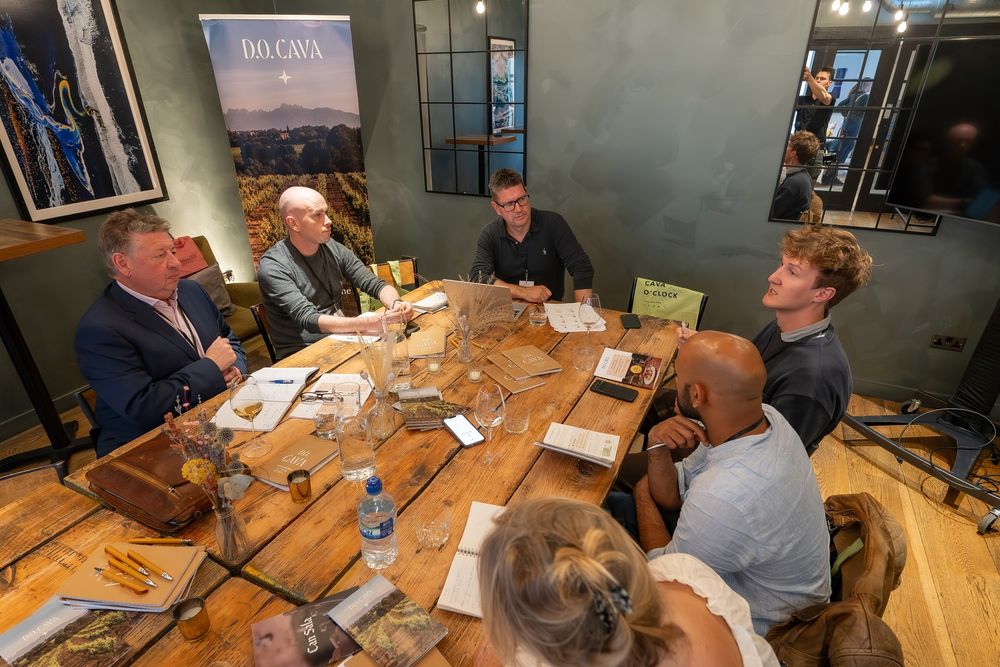
The panel welcomed the premium steps being taken by DO Cava
The panel also saw the best opportunities for Guarda Superior, which is a very food friendly wine, are in the on-trade as the wines need to be hand-sold, and customers are more prepared to trade up.
“I think it’s definitely an on-trade proposition, whether it’s something entry level that is a by the glass alternative to Prosecco or a Champagne through to the more gastronomic styles,” says Masterton.
“I think that a consumer in a retail position faced with a £50 or £60 price tag is probably going to go with something more familiar – a big name brand.”
Not only does serving Cava de Guarda Superior with food in a restaurant environment give it the edge, according to the panel, but the fact that the Cava category in the multiple retailers is dominated by a few big producer brands makes it far more difficult for the higher tier wines to get the listings they need.
This lack of strong brand presence within the Cava de Guarda Superior category is a big challenge that the sector faces, according to Castle.
“All the premium categories and smaller producers are spinning this narrative around organic production and lees ageing that far exceed the minimum requirements for each category. But I think that if Cava wants to successfully compete with £80, 90 or £100 wines on a list, or for a shelf for that matter, then it needs the strength of the DO and individual brands behind it,” he explains.
Jones also believes the best prospects for premium Cava lie with restaurants and bars: “In a restaurant it’s a far easier sell. A great wine needs good food and these aged wines need food which is an easier concept to sell in a restaurant compared to in a wine shop or online where it’s pretty impossible.”

Sunny Hodge is pleased to see the steps being taken by DO Cava to premiumise the category further
It’s when drinking these Cavas alongside great food that they fully come to life and can be seen at their very best, he adds.
Jones also doesn’t believe there is any particular cuisine which Cava is most well matched with as it can work with any “quality” food.
“Quality food and quality wine go together, as long as they’re in balance, it’s as simple as that,” he says. “Any chef or sommelier knows that if you’ve got great food and wine the chef can pretend he's matched them especially because it will always work.”
Masterton says he has noticed a growing trend towards teaming Cava with more powerful flavours, not traditionally associated with sparkling wine.
“The sheer versatility of Cava styles means that pairing Cava with food is pretty simple,” continues Castle. “I think there’s a huge opportunity with consumers in restaurants to taste old wines and given the additional maturity of some of the Cava categories, regardless of what you’re pairing them with, they can be a really amazing tool in a sommelier’s arsenal to offer something with some serious maturity on it, which will go with a more robust set of flavours.”
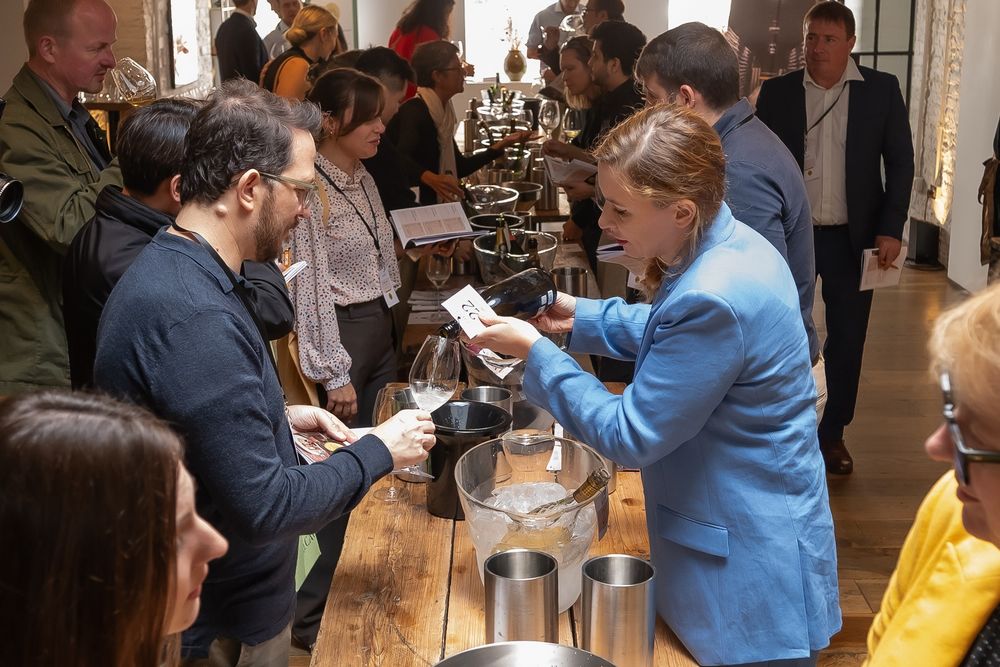
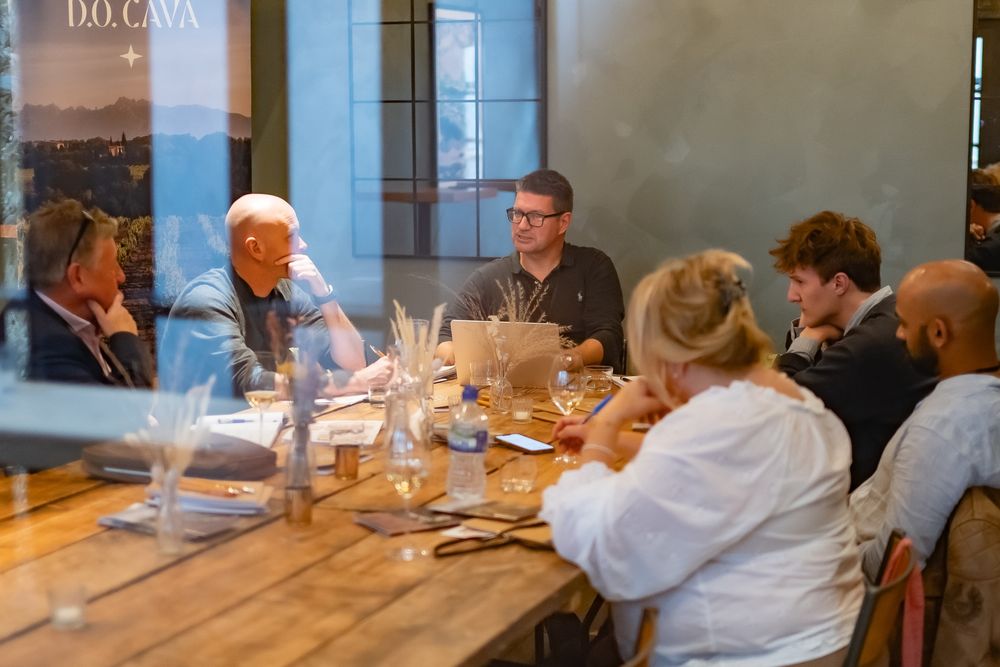
The panel debate was held on the same day and the same venue as a major DO Cava trade tasting at Carousel in London
An organic future
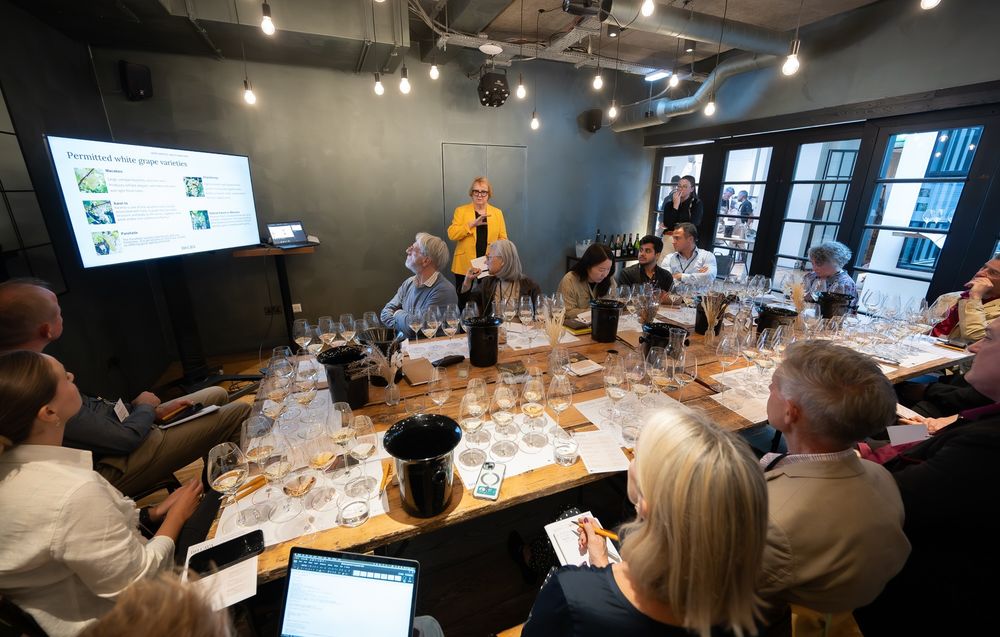
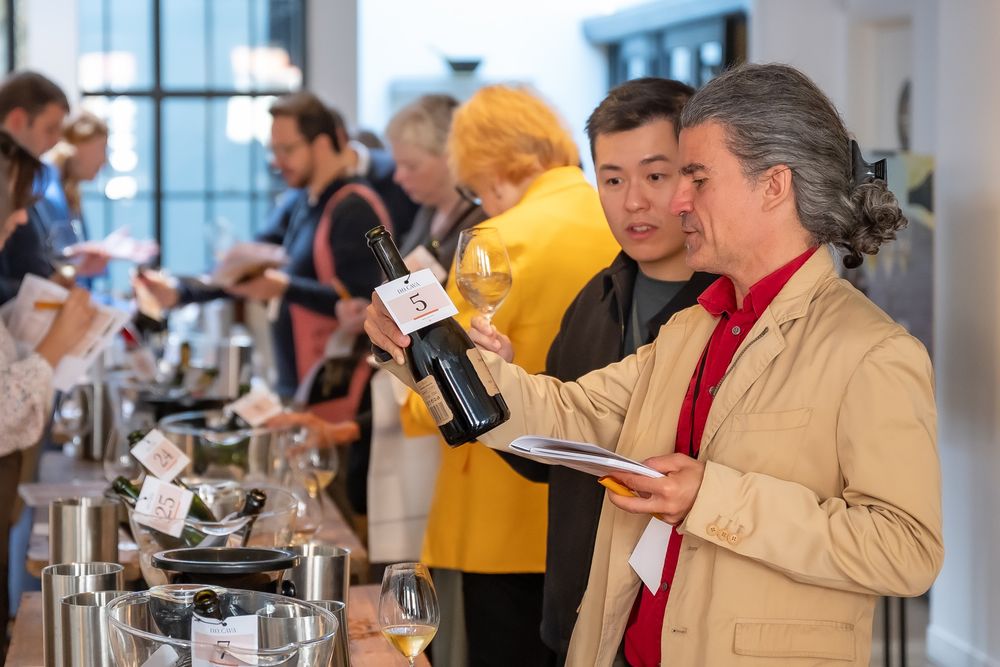
The DO Cava trade tasting included masterclasses from Sarah Jane Evans MW
The fact that superior Cava must now be produced organically, is a fairly radical step by DO Cava, according to Castle, and not one undertaken by any other DO or region, he believes.
But he thinks it will definitely help increase its appeal to consumers: “I think it’s a really positive step,” he says.
“From a sustainability, ethical point of view, if not from a flavour viewpoint, it will help spread the message of top tier Cavas amongst consumers. While just as longer ageing doesn’t mean quality, nor does organic mean quality, but the perception amongst many consumers is that it’s a positive and they want to be associated with products that are good for the planet and don’t use pesticides. And organic is just one of the strands making up the whole picture, it’s just one of the pillars of a higher quality wine.”
Cava Statistics (Source: DO Cava)
Surface area in 2024 planted to Cava: 37,502,000 ha.
Number of holdings 5,874.
219.5m kg of grapes harvested in 2024.
Indigenous varieties make up 82.1% of production:
Macabeu: 13,728 ha.
Xarel-lo 9,847 ha.
Parellada 7,189 ha.
Other varieties account for 17.9%:
Chardonnay 2,617 ha.
Garnacha Tinta 1,797 ha.
Trepat 1,179 ha.
Pinot Noir 823 ha.
Subirat Parent 243 ha.
Monastrell 79 ha.
Cava categories
According to minimum months of ageing in bottle.
Cava de Guarda: minimum of nine months.
Cava de Guarda Superior Reserva: minimum 18 months.
Cava de Guarda Superior Gran Reserva: more than 30 months.
Cava de Guarda Superior de Paraje Calificado: more than 36 months.
* You can find out more about DO Cava at its website here.
* Our thanks go to DO Cava and Hopscotch Season for working with The Buyer on this debate and to Carousel for hosting it.