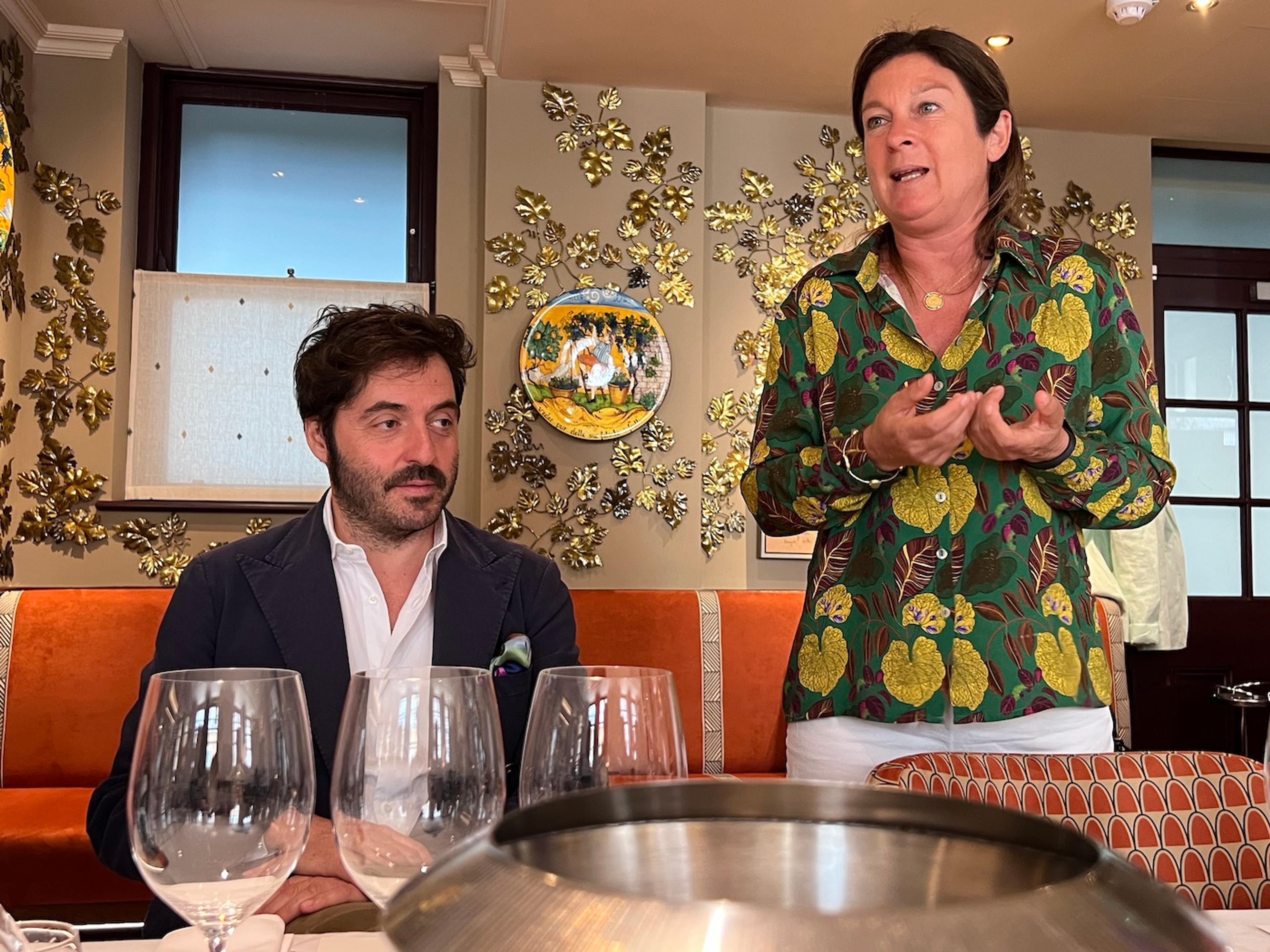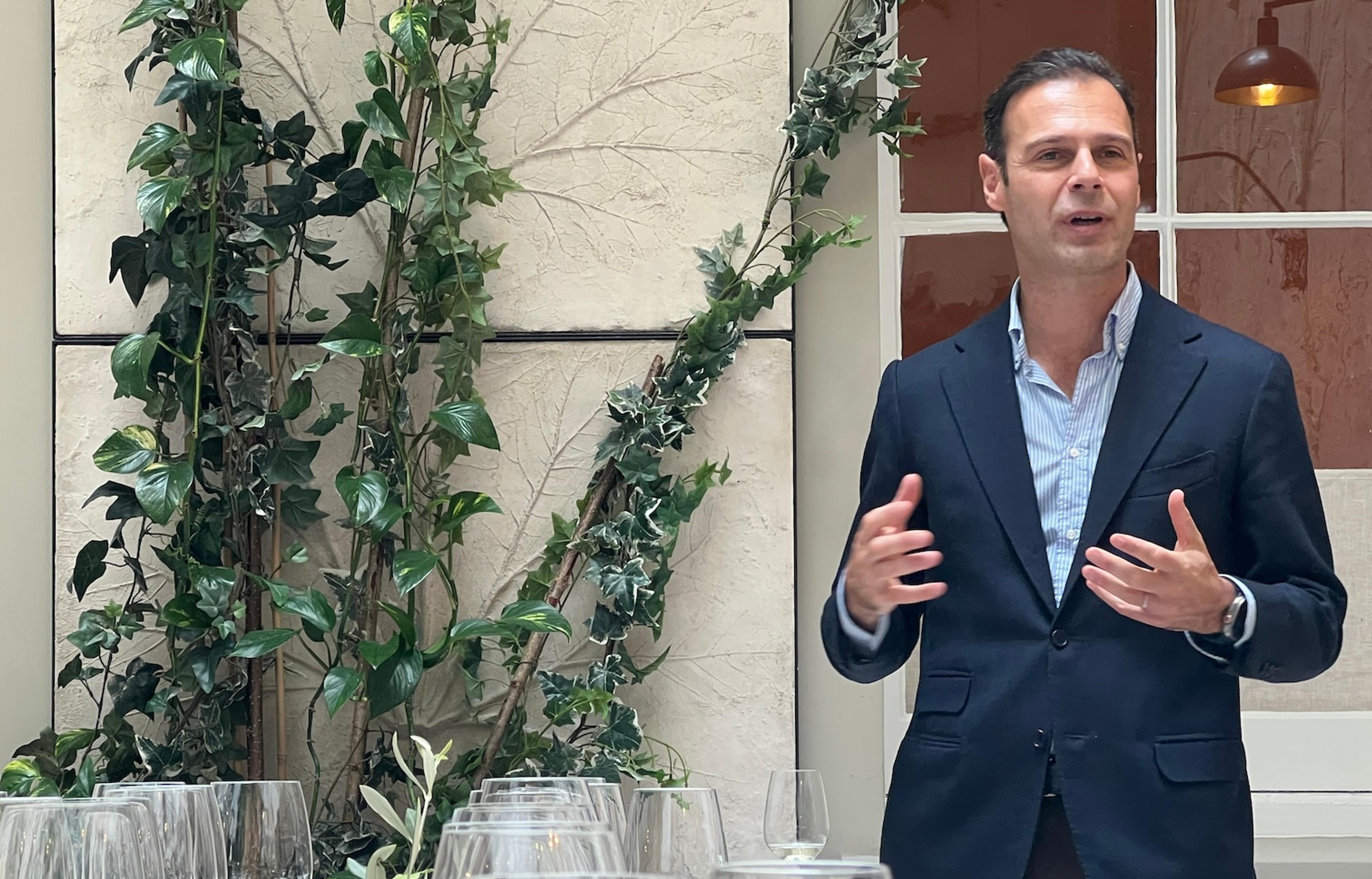

Lunch with Niccolò Marzichi Lenzi, CEO of Tuscany’s Tenuta di Biserno was a real first. Having finished a first rate showing of the three premium wines of the estate and tasted various vintages of them with a variety of different Italian dishes at London eaterie Spring, his parting gift was a bottle of rum and a cigar.
At these events it’s not uncommon to be gifted a bottle of wine or, increasingly, the estate’s olive oil but I’ve never left a wine tasting with a smoke and a bottle of the hard stuff.
“I think it is the perfect way to finish a tasting like this,” he smiles.
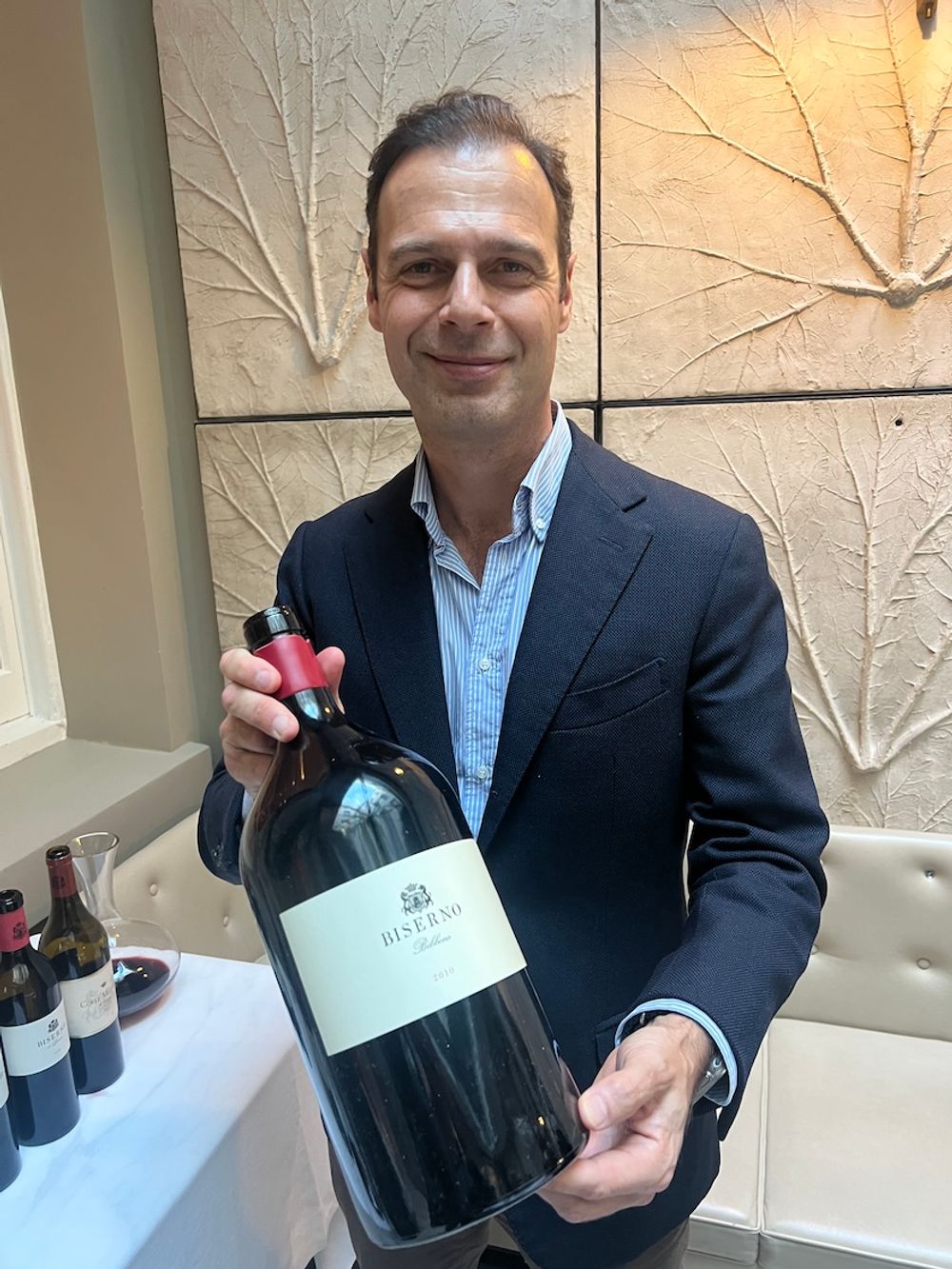
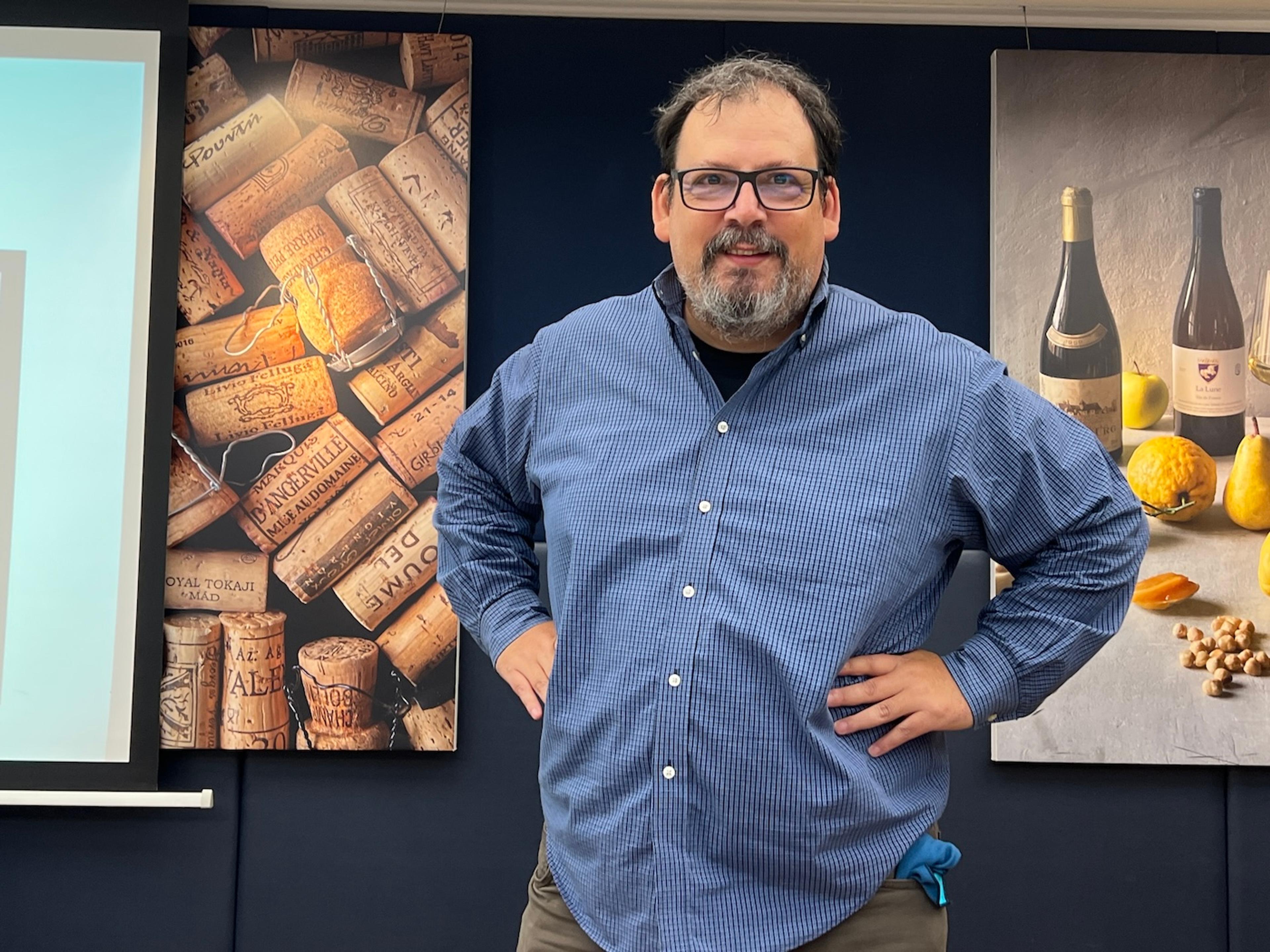
An individual style: Tenuta di Biserno chief, Niccolò Marzichi Lenzi
The gesture was totally in keeping with Lenzi’s maverick style, after all, this is man who credits the turning point in his life – towards winemaking – as the the time when a friend of his showed up at his house with a pizza and a bottle of wine… the wine being a 1982 Haut Brion.
The wines he makes at Biserno and, perhaps even more so, at the Burgundian-style winery project he runs with his wife, Le Crocine are equally singular and individual and, although they probably would work with pizza, are destined for more rarified cuisine.
Lenzi’s father had died prematurely leaving him a 10-hectare vineyard. Asking his uncle Piero Antinori whether he could make wine there, he was diplomatically informed that the soil would be perfect for a pottery business. Piero Antinori had become like a father figure to Lenzi and, as the world knows, he has a skill in being able to seek out incredible terroir with a vinous vision to match.
“I told him I need to sell my father's property as soon as I turn 21, I can't sell it before that,” Lenzi explains, “but after that, I'd like to invest with you on a project. So you know you can be a mentor and it would be a learning process. And at exactly the same time I was able to sell the property, Ludovico had parted away from Ornellaia, and himself showed interest in starting a new project.”
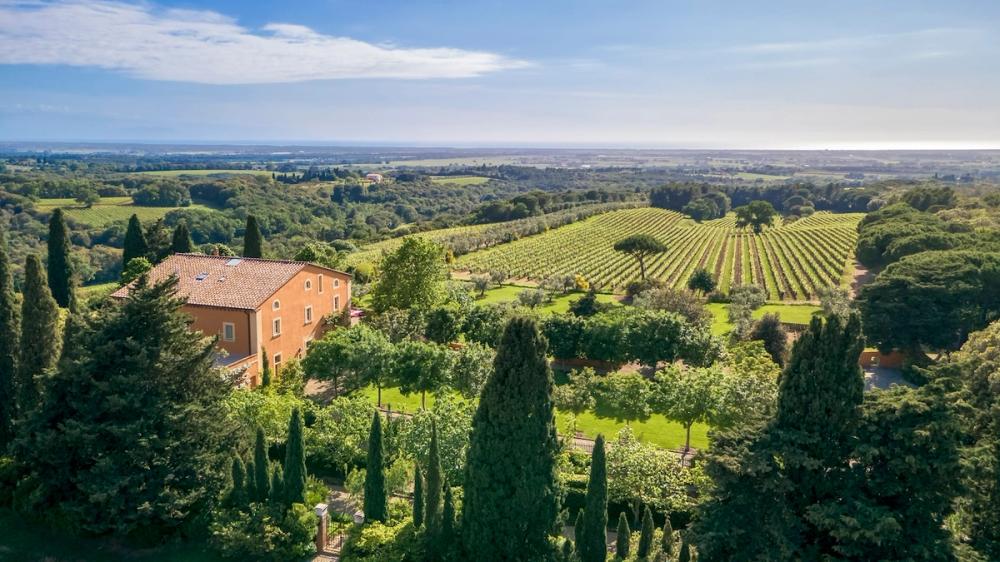
Tenuta di Biserno: birth of a new estate
So Biserno was born – founded by Lenzi’s mother Ilaria and her two brothers Lodovico and Piero Antinori in 2001. Biserno is made up of three estates that sit in the Bibbona hills of the upper Maremma on the edge of Bolgheri –Tenuta di Biserno a 40-hectare estate that produces Il Pino and Biserno which was first discovered in 1994 when Lodovico was looking to add to Ornellaia’s holdings; Tenuta Campo di Sasso which is a 56-hectare estate that produces Insoglio del Cinghiale, Occhione and Rissoa, and the most recent Tenuta Collemezzano, a 5-hectare plot that produces ‘Super Tuscan’ Colle Mezzano whose first vintage was 2021.
Collemezzano and Biserno only utilise the four Bordeaux varieties, Cabernet Franc, Cabernet Sauvignon, Merlot and Petit Verdot in varying configurations across their three wines, while Tenuta Campo di Sasso, which produces lower-tier wines grows Syrah, Merlot, Sangiovese and Petit Verdot for the red and Vermentino for the two white wines. Because of the locality’s natural warmth Cabernet Franc is the grape variety of focus because of its freshness and ability to convey terroir.
I refer to Colle Mazzano as a ‘Super Tuscan’ but it’s very hard to pigeon-hole the premium Biserno wines (which obviously has pluses and minuses) because they have their own distinct identities and play by their own rules – they seem happy to be Toscana IGTs – using Bordeaux varieties in varying blends.
Where would they sit on a wine list? They may well indeed end up as Super Tuscans on a menu but that cloth isn’t tailor-made. I put it to Lenzi that to me they sit alongside other great, individual Tuscan wines like Tenuta di Trinoro, Petrolo’s Galatrona, Montevertine and the wines of Bibi Graetz and, further afield, the wines of San Leornardo.
Lenzi is on the same page: “I like your approach. Look, I share with San Leonardo and Tenuta di Trinoro a similar philosophy. They put their face behind that label. They put their tradition. They have a vision, and they have beautiful expressions of their very own single terroir, and this is exactly what we want to represent as well. We are talking about two different geographical areas, San Leonardo being much cooler. And that also has to be said about Trinoro, who maybe share the same region, but very different climate.”
Building up the reputation of the Biserno wines from scratch, without an appellation and Antinori mentioned on the label was hard graft, Lenzi says.
“When I started selling this wine on the on the streets of New York City and everywhere in the world initially, not having an appellation or a claim of the Antinori family behind it was definitely a challenge.”
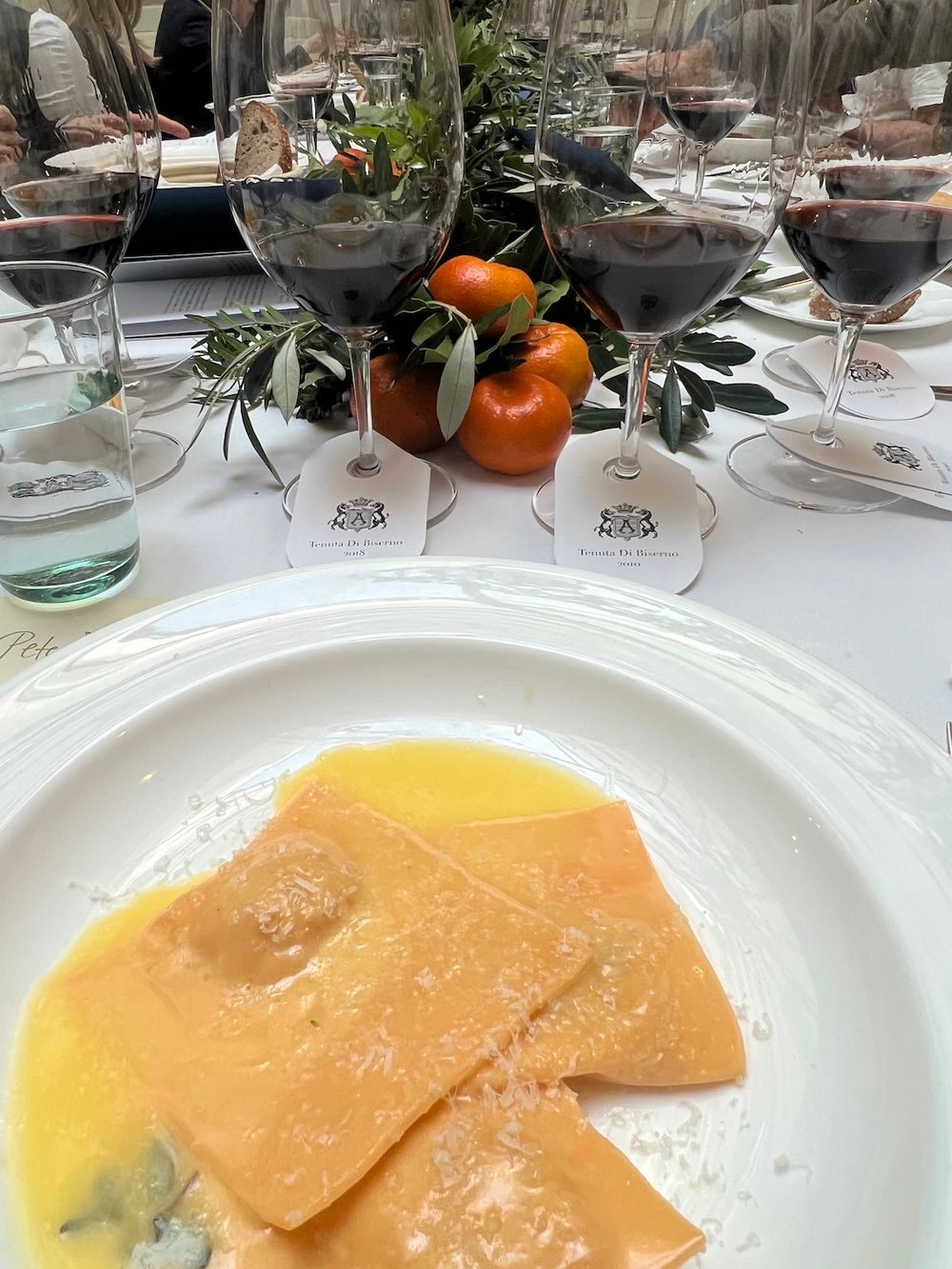
Perfect pairing: Biserno 2018 and 2010 with pumpkin ravioli
Like all great wines, the top Biserno wines are their own masters – they might all be made from Bordeaux varieties, but those varieties have been planted in Italy for generations, a distinction Lenzi is keen to highlight.
“We have to admit Bordeaux has 300 years of history or more and and they've been a benchmark for all of us in quality wines and in making wines that have a very particular expression, I think, on the other hand, it would be silly on our side, if we tried to make a Bordeaux wine.”
To him the consumer choice between one of his wines and a Bordeaux is not an ‘either/ or’ decision.
“I think that's complementary for a drinker. We must not be an alternative – if you want to taste something different but similar. I always like it when people ask me, ‘Oh, I like this Chateau and I like your wine. Which one should I buy?’ I say, ‘Look, and it's horrible to say, but if you have the means, if you like a Ferrari, but you also like a Lamborghini, why don't you buy both, you know?’”
Winemaking style
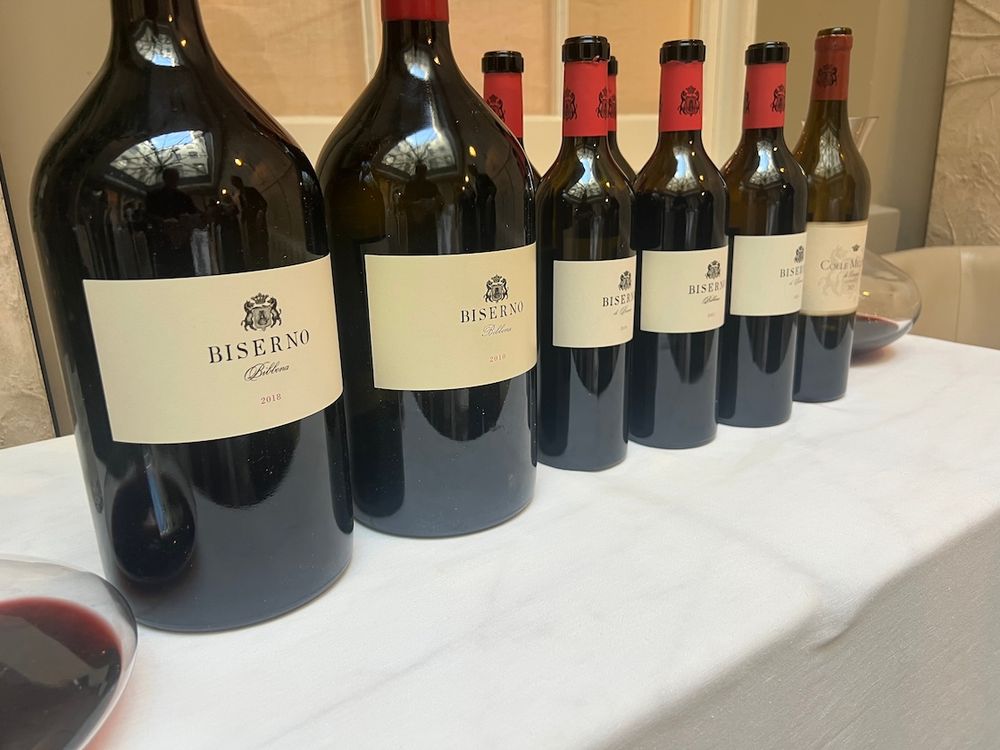
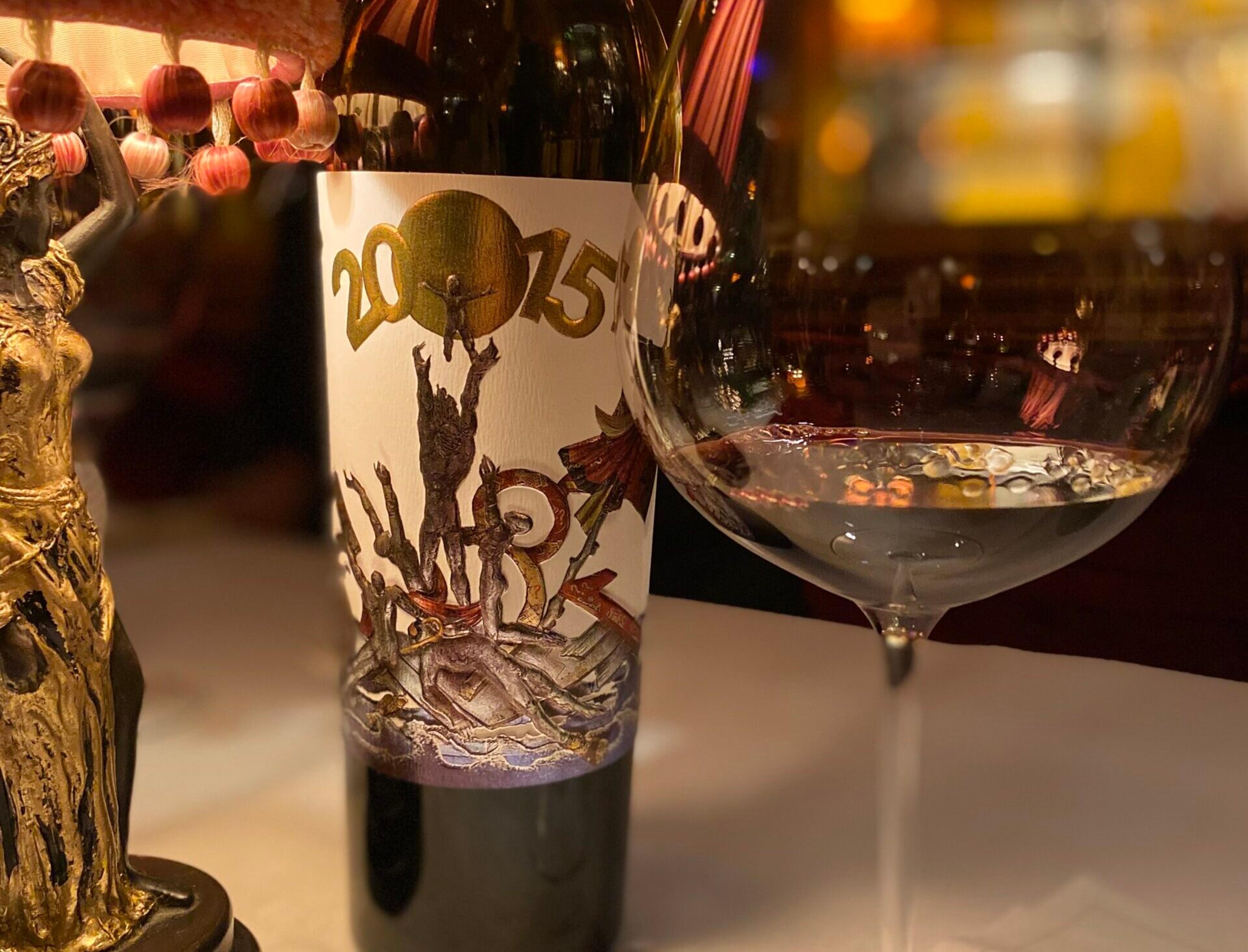
Line up of Tenuta di Biserno wines for lunch: Biserno is one of the great, individual Italian wines that can stand on its own two feet
As for the winemaking process, Lenzi explains that it is extremely traditional where the team relies more on work in the vineyard than in the winery.
“I'm not a believer of too much technology, because I think that some of the greatest wines I've tasted in my short life have been from vintages in which they hardly even had a de-stemmer.”
“So we try to leave the skins as much as we can. But as soon as we feel that the structure is reaching the limit we remove the skins, we try to keep the components separate as much as we can – the varietals set apart – not extracting too much, try to make them very good quality. Quality presses is also an aspect that I like very much. I think that the first presses have a tendency in the blending process to add that special richness in the center palette.”
The wines are aged in 225-litre barrels, 70% second and third fill and 30% new. Interestingly they wait until November when they have a better idea of the vintage before the coopers toast the new barrels “giving us the final touch, as we call it. And the 30% new comes between January and February, and those are the ones that are going to help us and compensate whatever the vintage needs.”
Lenzi eschews the use of natural yeast describing it as “romantic but a lot of risk.”
The top Biserno wines have a rough drinking window of five years from harvest, the Il Pino which has about 100,000 bottles produced per annum (compared to Biserno’s rough 30,000) can be drunk much earlier. That said, all of the wines are totally approachable on release given their meticulous tannin management.
“You're not going to be disappointed, because it's very pleasing, it's very immediate but, having said that, you're missing out on the full potential of the wine, because it will release its complexity, all the different layers with time. But there's nothing harsh about our wines. So even the the tannic structure, which is present, it's not bothering and it's beautiful for a food, friendly wine.”
The migration away from firm tannic structure in Italian wine generally is partly dictated by climate change and the commercial pressure to have earlier drinking wines but Lenzi points out that the style of cuisine in Italy has also changed considerably over recent years from bolder, richer foods which necessitated more structured tannins.
“It wasn't a question of necessarily terroir or incapacity on our part. I think that the habits of people have changed tremendously. We used to eat much richer dishes in general and therefore the tiny structure was not even possible, perceivable. And I'm taking the example of Taurasi – if you have a Parmesan and you have a Taurasi you think you're drinking a Pinot Noir.”
Tasting the Tenuta di Biserno wines
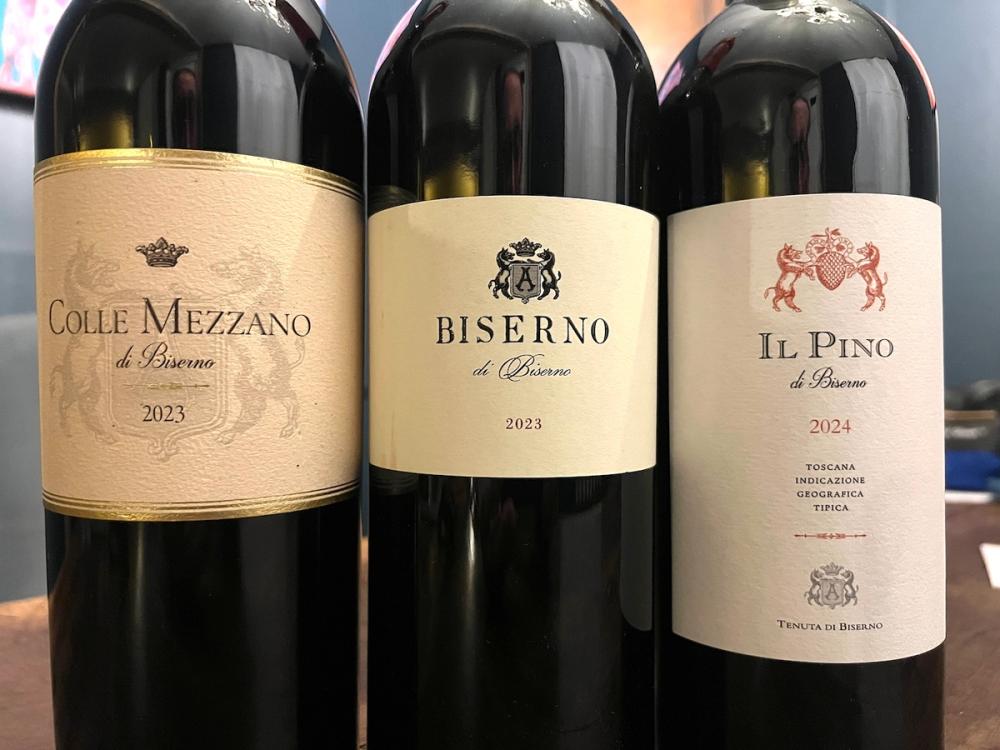
Il Pino di Biserno 2024, Toscana IGT
Made primarily from Cabernet Franc followed by Cabernet Sauvignon, Merlot and a small amount of Petit Verdot. After fermentation in steel tanks and maceration for 3-4 weeks, the wine is then matured for 12 months in new and aged French oak barriques (85%), the remaining 15% in steel.
The growing season was varied with abundant rain spurring vigorous vine growth, yields were up and above average temperatures in summer facilitated early ripening with rains returning in September.
Deep ruby to look at, attractive bouquet, nice intensity, classy with a hint of rusticity, bramble fruit, black cherries, Mediterranean herbs, pot pourri, subtle spicy oak; in the mouth the wine is medium bodied, a fresh core framed by generous, perfectly ripe black fruit with an attractive tart edge, young, soft tannins are very well integrated, great balance. Ideal drinking window may be in three years but this is drinking so well now. 14% abv (£225 IB 6 x 75cl)
Biserno di Biserno 2023, Toscana IGT
Made from Cabernet Sauvignon, Cabernet Franc, Merlot and Petit Verdot in varying percentages vintage by vintage, the wine was fermented in steel tanks and macereated for 3-4 weeks, spontaneous malolactic fermentation took place partly in barriques, partly in steel. The wine was matured in mostly new French oak barrels for 16 months and then has an extra year in bottle.
The 2023 vintage was challenging with late Spring rains and sporadic hailstorms. Overall the yields were down in the region by about 10-15%, wines tended towards bright acidity, approachability and elegance.
Deep ruby-blood red, purple edging; serious and fascinating nose – like top end Bordeaux with nuances of Italian herbs, sunny red and black fruit – pomegranate and blackberry juice – nutmeg. There’s a lovely complexity here with extra layers revealed in time – wet earth, black pepper, toasted cedar spice, dark chocolate perhaps. In the mouth the wine is generous, juicy, concentrated with great depth and purity, iodine, black berries, young, ripe tannins slowly take an attractive, blood-orange-rind grip, with a long, mineral finish. 14.5% abv (£650 IB 6 x 75cl)
Colle Mezzano di Biserno 2023, Toscana IGT
Made from 36-year-old, south-west facing Cabernet Franc, Merlot and Cabernet Sauvignon vines at 80-120m altitude on clay-sandy soils. The exact proportions in the blend vary year by year. Fermented in steel vats, macerated for 3-4 weeks then aged in French oak barriques for 12-16 months followed by another year in bottle.
Deep ruby-blood red, purple edging, a tad shy on the nose at this stage, broody, opens out with time to be fresh with incredible purity, mineral, sweet-spiced, red fruits. In the mouth the wine goes on a journey, glides with silky, soft, pillowy tannins; there’s an intense rich core of dark fruit, powerful yet finessed, perfectly judged concentration that’s got an intoxicating depth and structure. At this stage hidden depths. 14.5% abv. (Price tbc)
The wines of Tenuta di Biserno are imported and sold in the UK by Corney & Barrow which is a commercial partner of The Buyer. To discover more about them click here.